
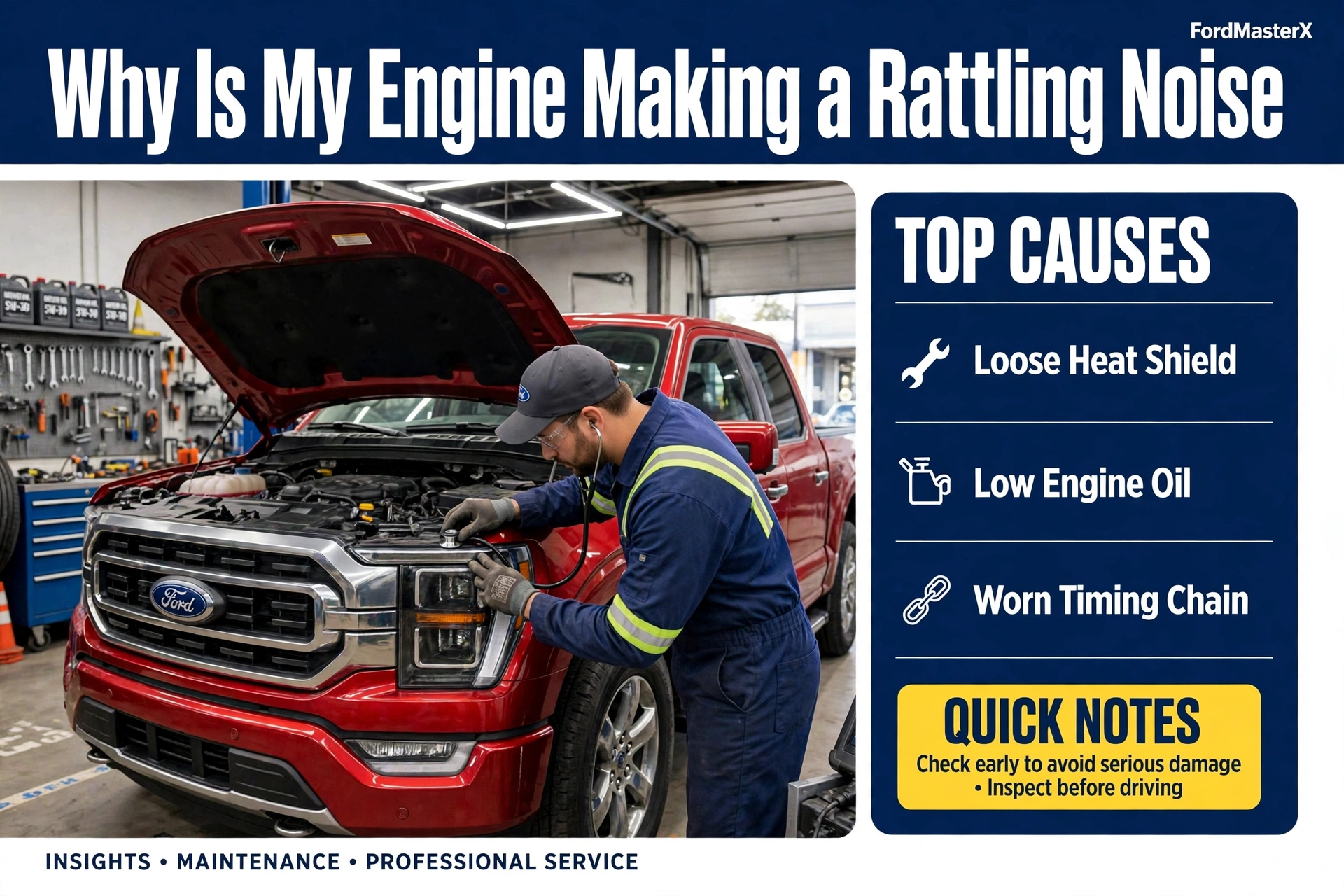
Why Is My Engine Making a Rattling Noise 2026 Complete Guide

Why is my engine making a rattling noise? The most common cause is a loose or broken exhaust heat shield, and low oil is the most urgent cause to rule out.
A rattle is your engine telling you something is loose, dry, or worn. The sound changes with engine speed, with acceleration, and with bumps, and those changes point straight at the cause.
That pattern is the whole story. A rattle at idle means one thing, a rattle on acceleration means another, and a rattle over bumps means a third.
This guide gives you the answer first, then the cause table, a ten-minute diagnosis you can do in your driveway, and the cost of each fix.
The Short Answer in 5 Causes
Five causes explain most engine rattles. The table below holds them, and the infographic after it gives you the same facts to save or share.
| Cause | When you hear it | How serious it is |
|---|---|---|
| Loose heat shield | Low speed, changes with RPM | Minor, fix soon |
| Low engine oil | Fast ticking from the top | Serious, check at once |
| Timing chain tensioner | Cold start, fades as it warms | Serious, do not ignore |
| Catalytic converter | Under acceleration, stones in a can | Serious, fix soon |
| Worn motor mount | Over bumps, shifting into gear | Moderate, fix within weeks |
Engine Rattling Noise At a Glance
The top causes, when each one sounds, and the first step, as observed in November 2026.
| Measure | Observed figure | Result |
|---|---|---|
| Most common cause | Loose heat shield | Metallic buzz at low speed |
| First check | Engine oil level | Low oil rattles from the top |
| Heat shield fix | 0 to 150 dollars temporary | Clamp or tape, then replace |
| Fixes under 500 dollars | 6 of 9 common causes | Most rattles are cheap to fix |
| Carbon cleaning | 300 to 600 dollars | Fixes knock from carbon buildup |
Direct answer: A loose heat shield is the most common cause of an engine rattle, and low oil is the most urgent. Check the oil first, then match the rattle to when it sounds, and stop driving if the rattle is loud, fast, or joined by a warning light.
Sources: AutoZone rattle guide; CarParts guide to engine rattles on acceleration; AutoNation Mobile Service rattle guide; TheMotorGuy list of nine rattle causes. Costs are US national averages and vary by model, region, and dealer.
The answer changes with the moment the rattle appears. A rattle at idle points at mounts and bolts, while a rattle on acceleration points at the exhaust and the converter.
The rest of this guide works through each cause in turn. It starts with the one you will meet most often.
The Most Common Cause First
Loose or broken exhaust heat shields are the single most common cause of an engine rattle. Heat shields are thin metal plates that keep exhaust heat away from the body and the fuel lines, and they corrode at their mounts over time.
Once a mount rusts through, the shield vibrates against the exhaust pipe. The sound is a metallic buzz or rattle that changes with engine speed and is worst at low RPM, when the engine shakes most.
The AutoZone rattle guide calls loose heat shields the single most common cause of rattling, and it lists low oil as another top cause. That order matches what mechanics see in the shop every week.
A heat shield rattle is a minor problem, but it is not one to ignore for months. A loose shield can fall onto the exhaust, and a fallen shield can melt wiring or a fuel line, which turns a small fix into a real fire risk.
Our guide to why your car sounds loud covers the wider world of engine noise. A rattle is one kind of loud, and that guide helps you tell it apart from the rest.
Heat Shields Buzz at Low Speed
A heat shield rattle is easy to confirm. With the engine off and cool, reach under the car and press each shield with a gloved hand to find the one that moves.
The loose shield will flex and tap against the pipe. A tight shield will not move at all, so the test takes under a minute once you are under the car.
The temporary fix is a large hose clamp or heat-resistant tape around the shield. That fix costs 0 to 150 dollars and buys you weeks, but a proper replacement is the real fix.
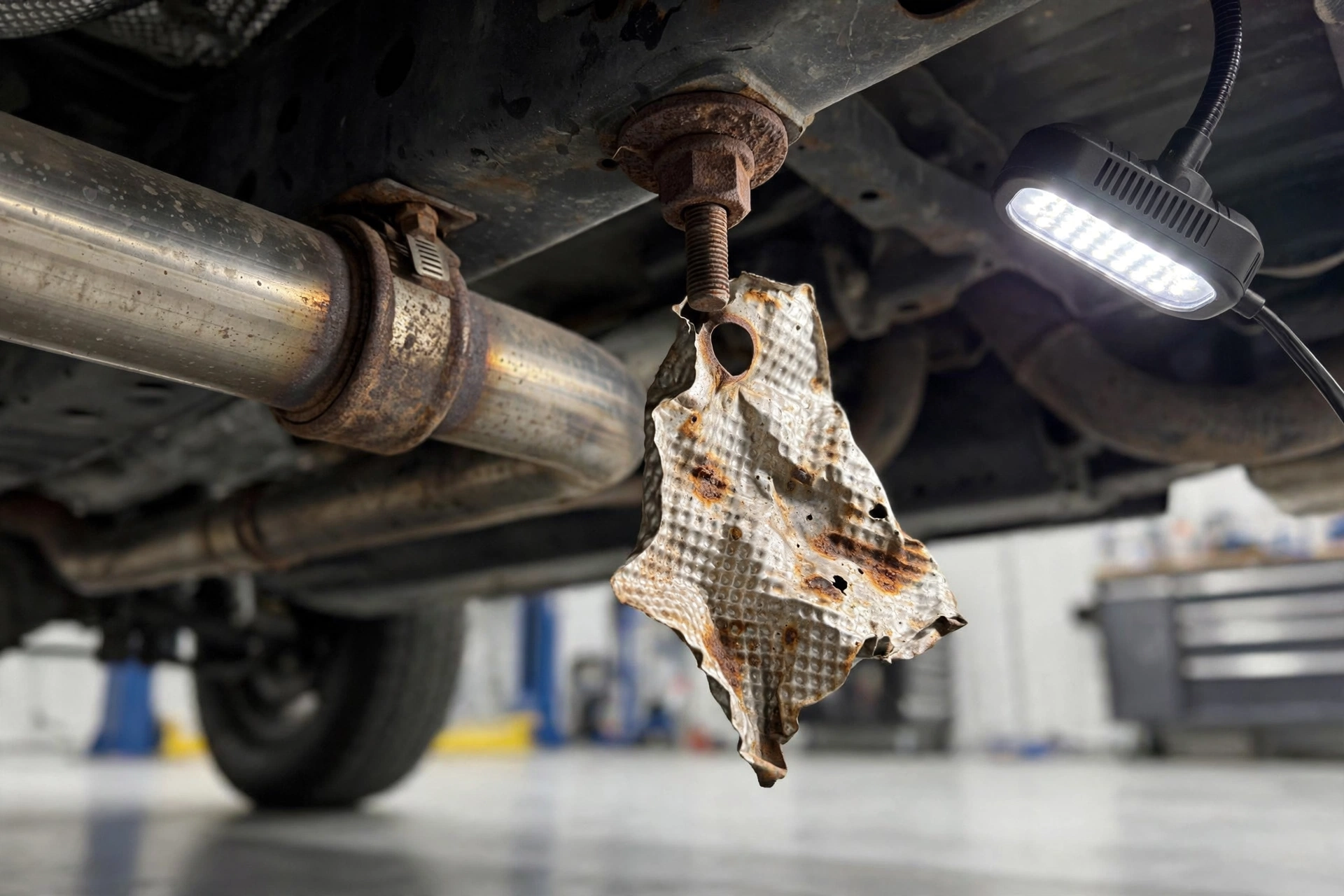
AI-generated illustration: a loose exhaust heat shield under a Ford with a corroded mounting bolt.
Low Oil Makes a Fast Rattle
Low engine oil causes a rapid ticking or rattle from the top of the engine. The valve train needs a cushion of oil to run quiet, and when the level drops, the lifters and rockers start to tap.
Check the oil first, before anything else. Pull the dipstick, wipe it, push it back in, and read the level, and check the color while you are there.
Oil that is dark and thin has lost its body, and oil below the low mark means the engine is running short. Top it up with the right grade and watch whether the rattle fades.
Our Ford engine oil recommendation chart lists the exact oil grade for your engine. The wrong grade can make a rattle worse, not better.
A rattle that stays after an oil top-up is not an oil problem. Move on to the timing chain and the valve train, since those parts rattle even with a full sump.
Timing Chain and Valve Train Rattle
Worn timing chain tensioners rattle, often on cold start, because oil pressure has not yet built up to hold the chain tight. The sound fades as the engine warms and the pressure rises.
Lifters rattle the same way. A lifter that has lost its oil charge taps until the pump refills it, and a worn lifter keeps tapping all the time.
The AutoNation Mobile Service rattle guide lists worn tensioners and lifters among the top causes. A loose chain can jump a tooth and bend valves, so a timing rattle is not one to ignore.
Piston slap is a cold-start rattle that fades as the engine warms. It is common on high-mileage engines, where the pistons rock in worn bores until the metal expands.
A timing rattle is a serious problem, not a nuisance. Book a mechanic within days, and do not drive far or hard until the chain and the tensioners have been checked.
Our guide to Ford transmission identification helps you name the gearbox in your Ford. A rattle that follows the gearbox, not the engine, needs a different diagnosis.
Exhaust Rattles Under Your Car
Exhaust leaks, damaged catalytic converters, and loose hangers or flex sections all rattle. The exhaust runs the length of the car, so a rattle from under the floor is often an exhaust part, not an engine part.
A broken catalytic converter honeycomb rattles under acceleration and sounds like loose stones in a can. The honeycomb breaks apart inside the converter, and the pieces shake with every throttle input.
A broken converter honeycomb and a loose exhaust hanger are among the first parts to check when a rattle appears on acceleration. A loose hanger lets the pipe swing and tap the body.
Loose torque converter bolts rattle at idle and low speed, and the sound gets louder as you accelerate. The CarParts guide to engine rattles on acceleration notes the same pattern, with the rattle growing louder once the transmission is in gear. The bolts join the converter to the flexplate, and a loose one clicks with every turn of the engine.
A cracked flexplate or flywheel rattles at idle and gets worse under load. The crack lets the plate flex, and the flex makes a sharp metallic rattle that follows the throttle.
Our guide to how long a clutch replacement takes covers the gearbox side of the same job. A cracked flexplate and a worn clutch can sound alike, and the fix is very different.
Catalytic Converter Rattles on Acceleration
A converter rattle is easy to tell apart from a heat shield rattle. The converter rattle appears under acceleration, while the heat shield rattle appears at low speed and idle.
Tap the converter with a rubber mallet when the engine is cold. A broken honeycomb will rattle inside, and a good converter will sound solid.
A rattling converter needs a replacement, not a repair. The honeycomb cannot be glued back together, and a blocked converter can choke the engine and overheat the exhaust.
Motor Mounts Thunk Over Bumps
Worn motor mounts let the engine move and thunk against the body. The sound appears over bumps, when shifting into gear, and when the engine rocks under load.
Check the mounts by watching the engine while a helper shifts from drive to reverse with the brake held. An engine that lifts more than an inch has a worn mount.
Mounts are a moderate fix, not an urgent one, but they should be done within weeks. A worn mount strains the hoses, the wiring, and the exhaust, and those parts cost more than the mount.
Torque Converter Bolts Rattle at Idle
Loose torque converter bolts rattle at idle and low speed. The sound is a light metallic click that follows engine speed, and it gets louder as you accelerate.
The fix is to tighten or replace the bolts, which means removing the inspection cover and turning the engine by hand. It is a shop job, not a driveway job, since the bolts sit inside the bell housing.
A loose bolt can shear off and jam the converter, so do not ignore this rattle. Book the shop within days, and keep the driving gentle until then.
Carbon Knock Sounds Like Marbles
Engine knock, pre-ignition, and detonation from carbon buildup sound like marbles in a can. The fuel ignites too early, and the pressure wave hits the piston while it is still rising.
Carbon builds up on the piston crowns and the valves, and the hot spots ignite the fuel before the spark plug fires. Low-octane fuel makes the knock worse, and premium fuel can make it fade.
Try a tank of premium fuel first. If the knock fades, carbon is the cause, and a carbon cleaning at 300 to 600 dollars is the fix.
Our guide to the 2.3L EcoBoost engine covers carbon buildup on direct-injection Ford engines. Direct injection washes less fuel over the valves, so carbon builds up faster than on port-injected engines.
How to Find the Rattle in 10 Minutes
You can find most rattles in ten minutes with no tools except a glove and a flashlight. The routine below works in any driveway, and it names the part before you call the shop.
- Check the oil. Pull the dipstick and read the level and the color, then top up with the right grade if the level is low.
- Note when it sounds. Start the engine and listen at idle, then rev it gently and listen for whether the rattle follows engine speed.
- Drive over bumps. Drive slowly over a speed bump and listen for a thunk that follows the suspension, not the engine.
- Press the heat shields. With the engine off and cool, press each heat shield with a gloved hand to find the loose one.
- Bounce each corner. Push down on each corner of the car and listen for a rattle from the suspension.
- Use a stethoscope. Press a mechanic’s stethoscope against the valve cover, the timing cover, and the exhaust to trace the sound to one part.
- Jack it up safely. Raise the car on jack stands before working under it, and wear safety glasses and gloves.
That routine finds the cause in most cases. A rattle that survives all seven steps needs a shop, since the cause is inside the engine or the gearbox.
Our guide to Ford powertrain warranty explains what cover a new Ford carries. A rattle inside the engine may be a warranty claim, not a bill you have to pay.
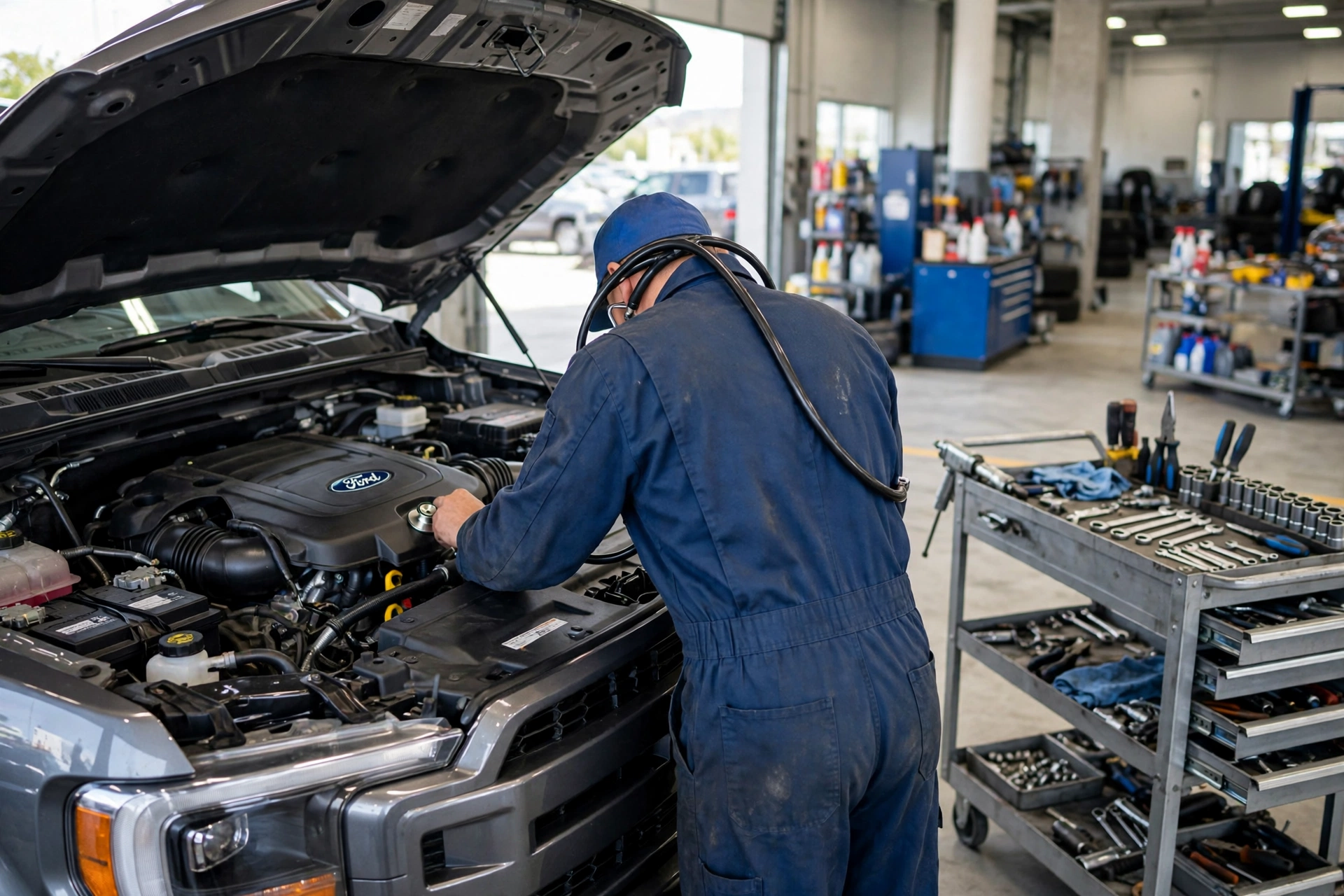
AI-generated illustration: a mechanic listening to a Ford engine with a stethoscope.
When the Rattle Means Stop Driving
Most rattles are minor, but some mean stop driving at once. The signs below separate the two, and the first one is the most important.
- Oil warning light. A rattle with the oil pressure light on means the engine is starving for oil. Stop at once and do not restart it.
- Loud and fast rattle. A rattle that is loud, fast, and getting worse by the minute means a part is coming apart inside the engine.
- Loss of power. A rattle with a loss of power or a misfire means the timing chain or the valves may be failing.
- Metal in the oil. Metal flakes on the dipstick mean a bearing or a gear is shedding metal, and driving will spread the damage.
- Smoke or smell. A rattle with smoke, a burning smell, or a fuel smell means something is overheating or leaking.
Any one of those signs means stop the car, switch it off, and call for a tow. Driving further can turn a repair into an engine replacement.
A rattle with no warning light, no power loss, and no smoke is usually safe to drive gently to the shop. Keep the speed low, avoid hard acceleration, and book the visit within days. Our is halogen the same as LED guide explains the bulb types behind the dashboard lights you watch for.
Our guide to Ford factory warranty explains the cover that may pay for the repair. A rattle that is a warranty claim should go to the dealer, not to an independent shop.
What Each Fix Costs in 2026
Most rattles are cheap to fix. The MotorGuy list of nine rattle causes puts 6 of 9 fixes under 500 dollars, and the most common cause is the cheapest of all.
Costs vary by model, region, and dealer, so treat the table below as a guide, not a quote. Get a written estimate before you agree to any work.
| Cause | Typical fix | Typical cost | How urgent |
|---|---|---|---|
| Loose heat shield | Clamp, then replace | 0 to 150 dollars temporary | Soon |
| Low engine oil | Top up, find the leak | Cost of oil, plus leak repair | At once |
| Timing chain tensioner | Replace tensioner and chain | 500 to 1,500 dollars | Within days |
| Catalytic converter | Replace converter | 1,000 to 2,500 dollars | Soon |
| Motor mount | Replace the mount | 200 to 600 dollars | Within weeks |
| Carbon knock | Carbon cleaning | 300 to 600 dollars | Soon |
| Torque converter bolts | Tighten or replace | 150 to 400 dollars | Within days |
The cheapest fix is the heat shield, and it is also the most common cause. That is good news for most owners, since the rattle they hear is usually the cheapest one to fix.
The most expensive fix is the catalytic converter. A rattling converter is a serious problem, but it is also a rare one, and most converters last the life of the car. Our what year Ford Focus to avoid guide covers the same kind of year-by-year cost check for a used Ford buyer.
Our guide to how to check your Ford warranty shows how to confirm cover by VIN before you pay. A converter or a timing chain may be covered, and the check takes minutes.
Questions Ford Owners Ask About Rattles
Why Is My Engine Rattling
The most common cause is a loose or broken exhaust heat shield, and low oil is the most urgent cause to rule out. Check the oil first, then match the rattle to when it sounds, since the moment points at the cause.
Is It Safe to Drive
It is usually safe to drive gently to the shop if there is no warning light, no power loss, and no smoke. Stop at once and call for a tow if the oil light is on, the rattle is loud and fast, or the engine loses power.
What Causes a Rattle When Accelerating
A rattle on acceleration usually comes from the exhaust: a broken catalytic converter honeycomb, a loose hanger, or a flex section. Loose torque converter bolts also rattle louder as you accelerate, so both areas need a check.
Why Does It Rattle on Cold Start
A cold-start rattle usually comes from the timing chain tensioners or the lifters, which need oil pressure to run quiet. Piston slap is another cold-start cause that fades as the engine warms.
How Much Does a Rattle Cost
Most rattles cost under 500 dollars to fix, and a heat shield clamp costs 0 to 150 dollars as a temporary fix. A catalytic converter replacement costs 1,000 to 2,500 dollars, and a timing chain job costs 500 to 1,500 dollars.
Can Low Oil Cause a Rattling Noise
Yes, low oil causes a rapid ticking or rattle from the top of the engine, because the valve train loses its oil cushion. Top the oil up with the right grade and watch whether the rattle fades.
Your 5 Step Check Before You Drive
Why is my engine making a rattling noise? A loose heat shield is the most common cause, and low oil is the most urgent one.
Run the five step check before you drive. Check the oil level and top it up if it is low, listen for when the rattle sounds, press the heat shields with a gloved hand, watch for a warning light or power loss, and book the shop within days if the rattle stays.
That check costs you ten minutes. It can save you from driving a car that should not move, and it leaves you with the name of the part before the shop quotes the fix.