What Does T/A Mean on Tires? Traction Advantage Explained

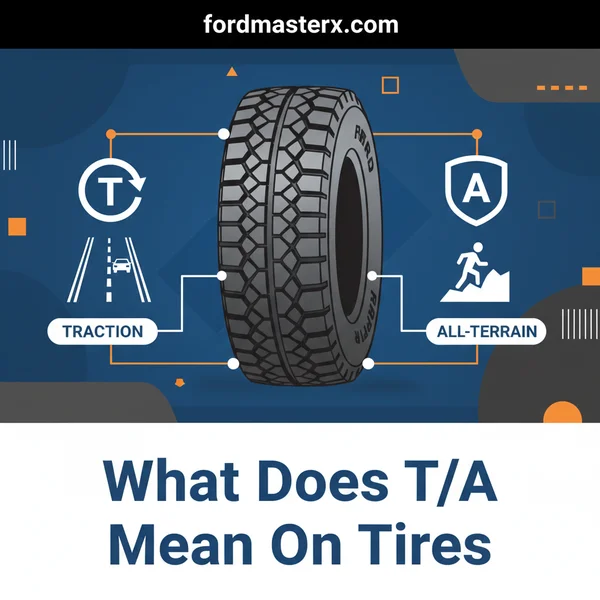
On a tire sidewall, T/A stands for Traction Advantage, a trademarked designation used exclusively by BFGoodrich. It is a marketing brand name rather than a regulatory speed or load rating, signifying high-performance capabilities in both street and off-road applications.
🎯 Key Takeaways
- T/A stands for ‘Traction Advantage’ and is a BFGoodrich trademark.
- It is a brand designation, not a technical speed or load rating.
- The label distinguishes high-performance tires from standard commuter models.
- Do not confuse T/A with speed symbols like ‘T’ (118 mph).
- Famous examples include the Radial T/A and All-Terrain T/A KO2.
If you have noticed the letters “T/A” embossed in bold white or black lettering on your tire sidewalls, you are looking at a specific performance designation that stands for Traction Advantage. Unlike many other markings on your tires that refer to metric measurements or chemical compositions, T/A is a trademarked branding used exclusively by BFGoodrich to signify a tire engineered for superior grip and handling across various driving conditions.
Understanding this distinction is vital for your vehicle’s performance and safety. Many drivers mistakenly assume T/A is a universal industry code for “Terrain/All-season” or a technical safety rating. In reality, it is a performance promise from a specific manufacturer. Knowing exactly what this label represents helps you distinguish between marketing-driven performance features and the technical safety requirements your vehicle needs to stay on the road.
The Origin and Meaning of the T/A Designation
The “T/A” or Traction Advantage moniker is more than just a marketing slogan; it is a piece of automotive history. BFGoodrich introduced the first T/A tire in 1970—the Radial T/A. At the time, it was a revolutionary product because it was the first low-profile radial tire designed specifically for high-performance street use. It bridged the gap between professional racing tires and the everyday tires found on consumer muscle cars. When you see T/A today, you are seeing a legacy of tire technology that focuses on maximizing the contact patch between your rubber and the asphalt.
What Traction Advantage Actually Means for Your Drive
While the term “Traction Advantage” sounds broad, BFGoodrich uses it to categorize tires that have undergone specific testing for lateral stability and high-speed durability. In practical terms, a T/A tire is designed to provide better “bite” when you are accelerating and more consistent “stick” when you are cornering at higher speeds. This is achieved through proprietary tread compounds and internal belt structures that differ from standard touring tires.
- Enhanced Grip: T/A tires often feature specialized rubber compounds that remain flexible at a wider range of temperatures.
- Sidewall Strength: Most T/A models, particularly the All-Terrain variants, feature reinforced sidewalls to prevent bruising and punctures during off-road use.
- Legacy Performance: The T/A branding is traditionally found on tires meant for enthusiast vehicles, including muscle cars, light trucks, and SUVs.
The Evolution of the T/A Product Line
Over the decades, the T/A designation has expanded into several sub-categories to meet different driving needs. You will most commonly encounter the All-Terrain T/A KO2, which is the gold standard for off-road enthusiasts, and the Radial T/A, which remains a favorite for classic car owners. Despite the different environments these tires are built for—one for mud and rocks, the other for classic highway cruising—they both carry the T/A mark because they prioritize the “Traction Advantage” in their respective categories.
T/A vs. Technical Sidewall Codes: Avoiding Confusion
It is easy to get lost in the “alphabet soup” found on a tire sidewall. One of the biggest risks for a vehicle owner is confusing the T/A trademark with mandatory technical codes like speed ratings or load indices. While “T/A” tells you about the tire’s performance philosophy and brand, it tells you nothing about the tire’s actual physical limits. You must look past the T/A logo to find the alphanumeric strings that dictate whether a tire is safe for your specific vehicle and driving style.
The Danger of Confusing T/A with Speed Ratings
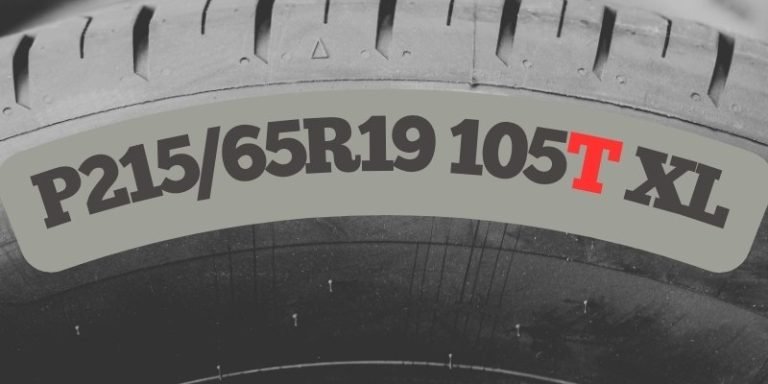
A common mistake is assuming the “T” in T/A refers to a T-speed rating. In the world of tire technical specs, a “T” rating means the tire is tested for speeds up to 118 mph. However, a BFGoodrich T/A tire could have an H-rating (130 mph), a V-rating (149 mph), or even a Z-rating (over 149 mph). If you assume the “T” in T/A is your speed limit, you might accidentally install tires that are under-spec or over-spec for your vehicle’s manufacturer requirements.
- Load Index: This is a numerical code (like 91 or 121) that indicates how much weight the tire can support. T/A is not a load rating.
- Speed Rating: This is a single letter (like H, V, or W) located at the end of the service description. T/A is a brand name, not a speed limit.
- UTQG Traction Grades: On the shoulder of the tire, you will see a “Traction” rating followed by letters like AA, A, B, or C. This is a government-mandated test of braking on wet surfaces. Do not confuse a Traction A rating with the T/A brand name.
How to Read Your Sidewall Correctly
To ensure your safety, you should always locate the Service Description. This is usually found right after the tire size (e.g., P265/70R17 121S). In this example, “121” is the load index and “S” is the speed rating. The “T/A” logo will usually be located elsewhere on the sidewall, often in a larger, more stylized font. Remember: the T/A logo tells you who made the tire and what its “personality” is, but the Service Description tells you what the tire can actually do under pressure. Always prioritize the technical codes over the branding when matching tires to your vehicle’s door placard specifications.
Popular BFGoodrich T/A Tire Lines and Performance Specs
When you see the T/A badge, it is almost always associated with BFGoodrich. Over the decades, they have applied this “Traction Advantage” philosophy to a variety of tire types, ranging from rugged off-road beasts to sleek street performers. Understanding which specific line fits your vehicle is key to getting the most out of your investment.
The All-Terrain T/A KO2: An Off-Road Legend
The All-Terrain T/A KO2 is perhaps the most famous tire to carry the T/A designation. It is widely considered the gold standard for dual-purpose tires. It features CoreGard Technology, which uses bruise-resistant sidewall rubber and a thicker shoulder to prevent flats while rock crawling or navigating debris. If you spend your weekends on trails but still need to commute on Monday, this is the tire that defines the T/A promise.
- Serrated Shoulder Design: Provides increased traction in mud, snow, and over rocks, especially in “aired-down” driving situations.
- 3D Active Sipe Technology: Offers more biting edges for significantly better snow traction, earning it the Three-Peak Mountain Snowflake (3PMSF) rating.
- Long Tread Life: Specially formulated rubber helps the tire wear evenly on high-torque gravel roads and pavement alike.
The Advantage T/A Sport: Daily Driving Elevated
Not every T/A tire is meant for the mud. The Advantage T/A Sport is designed for sedans, coupes, and Crossovers. This tire focuses on “Traction Advantage” during heavy rain and light snow. It uses an Aqua-Flume drainage system—a network of grooves designed to pump water away from the contact patch instantly to prevent hydroplaning.
- Next-Generation ETEC System: Maintains the tire’s shape during high-speed cornering for more predictable handling.
- Full-Depth Sipes: Ensures that the “Traction Advantage” stays consistent even as the tire wears down over thousands of miles.
- Year-Round Performance: Designed for drivers who want a sporty feel without switching tires every time the season changes.
Why Enthusiasts Choose Traction Advantage Tires
There is a reason why the T/A branding has survived for over 40 years while other marketing terms have faded away. Enthusiasts choose these tires because they represent a specific balance between rugged durability and refined engineering. It isn’t just about a logo; it is about a proven track record in both professional racing and everyday utility.
Unmatched Versatility Across Terrains
The primary reason drivers flock to the T/A line is versatility. In the past, you often had to choose between a tire that was quiet on the highway or one that was capable in the dirt. BFGoodrich used the T/A development process to bridge that gap. For example, the Mud-Terrain T/A KM3 is surprisingly manageable on the road despite having massive tread blocks designed to conquer deep slime and slick rock.
- Consistent Grip: Whether the pavement is scorching hot or freezing cold, the specialized compounds are engineered to stay flexible.
- Predictable Breaking: The “Advantage” often shows up most during emergency stops where the tread design maximizes contact with the road.
- Visual Appeal: Let’s be honest—the raised white letters (RWL) found on many T/A tires provide a classic, aggressive look that many truck and muscle car owners love.
Long-Term Value and Durability
While T/A tires often come with a premium price tag, enthusiasts view them as a long-term value play. These tires are built with reinforced internal structures, like twin steel belts and polyester cord bodies. This means they can take a beating from potholes or jagged rocks that might leave a standard budget tire with a terminal sidewall bulge. When you calculate the cost per mile, the extended lifespan of a high-quality T/A tire often beats out the cheaper alternatives.
Conclusion
In the world of automotive terminology, “T/A” stands firmly for Traction Advantage. It is more than just a label; it represents a commitment to superior grip, enhanced durability, and versatile performance across diverse driving conditions. Whether you are navigating a rainy highway in a sedan or climbing a mountain pass in a 4×4, the T/A designation tells you that the tire was engineered to keep you firmly planted on the ground.
If you are ready to upgrade your ride, your next steps are simple. First, check your vehicle’s manual for the recommended tire size and load rating. Second, consider your typical driving environment—do you need the ruggedness of the KO2 or the street-focused grip of the Advantage Sport? Once you identify your needs, head to a certified dealer to see the Traction Advantage in person. Your safety and driving enjoyment start where the rubber meets the road!
❓ Frequently Asked Questions
What does T/A specifically stand for on BFGoodrich tires?
T/A stands for ‘Traction Advantage.’ It was introduced by BFGoodrich to highlight their tires’ superior grip and performance technology, originating with the first street-legal radial racing tire.
Can I find the T/A label on other tire brands like Michelin or Goodyear?
No, you will not find T/A on other brands because it is a registered trademark of BFGoodrich. Other brands have their own marketing suffixes for high-performance lines.
How do I distinguish the T/A label from the tire’s speed rating?
The T/A label is part of the model name (e.g., All-Terrain T/A KO2). The speed rating is a single letter found at the end of the service description, such as ‘115S’, where ‘S’ is the actual speed rating.
Are T/A tires only for off-road vehicles?
Not exclusively. While famous for the All-Terrain T/A off-road line, the designation is also used for the ‘Radial T/A,’ which is a legendary performance tire for classic muscle cars and street vehicles.
What makes a T/A tire different from a standard tire?
T/A tires generally feature advanced tread compounds, reinforced sidewalls, and specific groove patterns designed for higher performance thresholds than standard economy tires.
Why is the Radial T/A historically significant?
The BFGoodrich Radial T/A was the first premier longitudinal dual-belted radial tire in the 1970s, proving that radial technology could handle high-speed racing and street performance simultaneously.