Truck Frame Rust Repair Cost: 2024 Price Guide & Safety

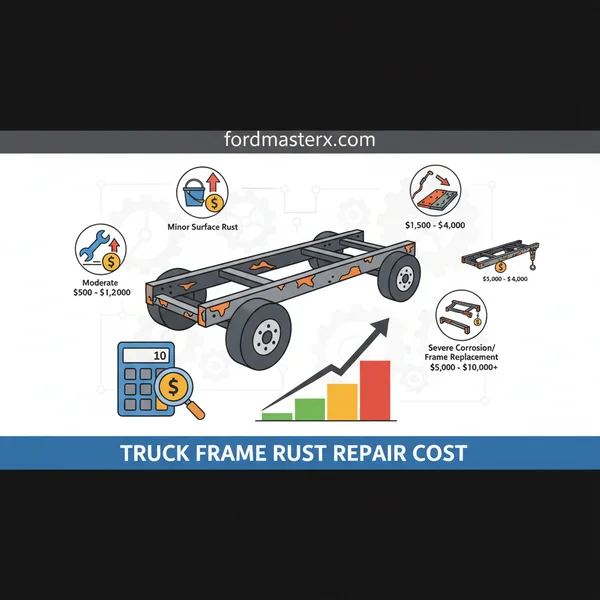
Repairing a truck frame typically costs between $500 and $15,000 depending on the level of structural decay. Most of this expense is driven by specialized welding labor and disassembly, with materials only accounting for about 20% of the total bill. Safety and residual vehicle value should be your primary metrics when deciding to proceed.
🎯 Key Takeaways


- Minor surface rust remediation typically ranges from $500 to $1,500.
- Structural patching for localized rot usually costs between $2,000 and $5,000.
- Full frame swaps are high-end repairs starting at $7,000 and reaching $15,000+.
- Labor accounts for 80% of costs due to intensive grinding and welding requirements.
- If repair costs exceed 50% of the truck’s market value, replacement is recommended.
If you have discovered a hole in your truck’s frame, the most important number to keep in mind is $3,000. While minor patches can start as low as $500, a professional structural repair that guarantees safety usually falls in the $2,000 to $5,000 range. For many older trucks, this cost often meets or exceeds the vehicle’s actual market value, making the decision to repair a matter of sentimental value or extreme necessity.
Your frame is the backbone of your vehicle; if it fails, your suspension, steering, and crash protection fail with it. Understanding the realistic price tiers for 2024 is essential because a “cheap” fix often masks structural weaknesses that could lead to a catastrophic failure on the highway. This guide breaks down exactly what you will pay based on the severity of the rot and why labor—not materials—dominates your final invoice.
Breakdown of Rust Repair Cost Tiers: From Patches to Swaps
Truck frame repairs are never “one size fits all.” The cost depends entirely on how much of the original steel has been lost to the “iron worm” and whether the damage is in a high-stress area like a suspension mount. Here is how the costs break down by the severity of the damage.

Minor Patching and Localized Repairs ($500 – $1,500)
This tier applies if the rust is caught early and is limited to a small, specific area. If your mechanic can access the spot without removing the truck bed or fuel tank, the labor remains manageable. These repairs typically involve cleaning the area and welding a steel plate over a non-critical section of the rail.
- Common fixes: Filling a 2-inch hole in a mid-frame section or reinforcing a non-load-bearing bracket.
- Safety check: This is only appropriate if the surrounding metal is thick, passes a “hammer test,” and is free of internal scaling.
- Typical scenario: A 2012 F-150 with a single localized spot of rot on an otherwise clean chassis.
Structural Sectioning and “Capping” ($2,000 – $5,000)
Most structural frame repairs fall into this category. This is often required when the rust has eaten through the “boxed” section of the frame or when the leaf spring hangers are losing their structural integrity. To do this right, a shop often uses pre-fabricated kits, like Safe-T-Caps, which are designed to slide over the existing frame and be welded into place.
- Common fixes: Replacing the rear 24 inches of the frame rails or reinforcing the section where the frame curves over the rear axle.
- Complexity: This usually requires removing the truck bed, disconnecting the fuel tank, and rerouting brake lines to avoid fire hazards during welding.
- Cost Driver: High-quality pre-fab steel sections cost $400–$800, but the labor to prep the surface and weld them perfectly accounts for 80% of the total bill.
Full Frame Swaps or Custom Restoration ($7,000 – $15,000+)
If the rust is pervasive throughout the entire chassis, a patch won’t save the truck. At this stage, you are looking at a full frame swap. This involves stripping every single component—engine, cab, bed, and drivetrain—and moving them onto a new or refurbished donor frame. This is rarely done for daily drivers and is usually reserved for classic trucks or heavy-duty rigs that are otherwise irreplaceable.
Truck Frame Rust Repair Made Easy: Your Essential Action Plan
This comprehensive guide covers the critical process of assessing, treating, and repairing rust on a truck frame. Ignoring frame rust can lead to structural failure, failed safety inspections, and a massive hit to your vehicle’s resale value. By following this action plan, you will learn how to distinguish between surface scale and structural rot, choose the right materials for the job, and execute a repair that preserves the integrity of your truck. Whether you are performing a DIY cleanup or preparing for professional welding, understanding these steps will help you manage the costs and ensure your truck stays on the road for years to come.
Step 1: Initial Assessment and Cost Estimation
What you need: A flathead screwdriver, a ball-peen hammer, a flashlight, and a notebook.
Instructions: Before spending a dime, you must determine if the frame is worth saving. Crawl under the vehicle and probe the metal. Light “scaling” (flakes of rust) is normal, but if the screwdriver punctures the metal or the hammer produces a dull “thud” instead of a metallic “ping,” you have structural rot. Calculate your potential costs: a DIY surface treatment usually runs $100–$300 in materials. However, if you find holes, professional welding can cost between $1,500 and $5,000 depending on the severity. Document every soft spot you find, as this will dictate whether you need simple chemicals or heavy-duty steel plates for the next phases.
Pro Tip: Check the “kick-up” areas over the rear axle and near the leaf spring hangers first; these are the most common failure points where debris and salt collect.
Step 2: Deep Cleaning and Degreasing
What you need: High-pressure washer, heavy-duty degreaser (like Purple Power), stiff nylon brushes, and safety goggles.
Instructions: You cannot treat rust that is buried under layers of road grime and oil. Start by thoroughly pressure washing the entire undercarriage, focusing on the inside of the frame rails. Apply a generous amount of degreaser to the frame and let it dwell for 15 minutes without drying. Use your brushes to scrub away stubborn grease deposits around the engine and transmission crossmembers. Rinse again until the water runs clear. This step is vital because any leftover oil or grease will prevent your rust converters and paints from adhering, essentially wasting your investment in materials.
Pro Tip: Use a “drain cleaning” nozzle attachment for your pressure washer to snake inside the boxed sections of the frame where hidden rust often starts.
Step 3: Mechanical Rust Removal
What you need: Angle grinder, wire wheel attachment, flap discs (40-60 grit), needle scaler, and a full-face shield.
Instructions: Now it is time for the manual labor. Use a needle scaler to knock off heavy “cornflake” rust. Once the heavy chunks are gone, switch to the angle grinder with a wire wheel or flap disc. Your goal is to get down to “bright metal” wherever possible. For surface rust, you want a smooth, clean surface; for areas with rot, you need to grind back until you find solid, thick metal that can support a weld. This process is messy and time-consuming, often taking 6–10 hours for a full frame. Removing as much oxidation as possible now ensures the chemical treatments in the next step can work effectively.
Pro Tip: Always wear a high-quality P100 respirator; inhaling pulverized rust and old frame coatings is extremely hazardous to your lungs.
Step 4: Chemical Rust Conversion or Etching
What you need: Phosphoric acid-based rust converter (like Corroseal or Ospho), foam brushes, and a chemical-resistant tray.
Instructions: Even after grinding, microscopic rust stays in the metal’s pores. Apply a rust converter to the remaining oxidized areas. These chemicals react with iron oxide to turn it into a stable, black polymer (iron phosphate) that acts as a primer. Apply the liquid in thin, even coats using a foam brush. You will notice the color change from brown to black within minutes. Let this cure for at least 24 hours in a dry environment. This chemical barrier is the “insurance policy” that prevents the rust from bubbling back up under your expensive topcoat six months down the line.
Pro Tip: Do not over-apply; if the converter drips or pools, it can create a brittle surface that will eventually crack and peel off.
Step 5: Structural Patching and Welding (If Required)
What you need: 3/16-inch mild steel plate, MIG welder with 0.35 wire, cutting torch or plasma cutter, and C-clamps.
Instructions: If Step 1 revealed holes, you must patch them. Cut out the rotted section until you hit healthy metal. Cut a “fish plate” (a diamond-shaped or rounded-edge plate) from the 3/16-inch steel that overlaps the hole by at least two inches on all sides. Avoid square corners, as they create stress points. Bevel the edges of the patch and the frame for better weld penetration. Tack weld the plate in place, then use a “stitch weld” technique (alternating sides) to prevent the frame from warping due to heat. If you are not a certified welder, this is the specific point where you should hire a professional to ensure the vehicle remains safe to drive.
Pro Tip: Never weld a vertical line straight across a frame rail; always use diagonal or rounded welds to distribute the load across the frame’s longitudinal axis.
Step 6: Applying an Epoxy Primer
What you need: Two-part (2K) epoxy primer, spray gun or high-quality brushes, and a mixing cup.
Instructions: Once the welds are ground smooth and the converter has cured, you need to seal the metal from oxygen. A two-part epoxy primer is the gold standard because it is waterproof and chemically bonds to the steel. Mix the primer according to the manufacturer’s ratio (usually 1:1 or 4:1) and apply two medium coats. Ensure you get into every nook and cranny, especially around the body mounts and fuel tank straps. Epoxy primer is much more durable than standard “rattle can” primer and provides the necessary foundation for the final chassis paint.
Pro Tip: Pay attention to the “flash time” between coats—usually 15–30 minutes—to ensure the layers bond together without sagging.
Step 7: Final Chassis Coating
What you need: Chassis-specific topcoat (such as POR-15, Chassis Saver, or Eastwood Chassis Black) and a respirator.
Instructions: The topcoat provides the UV protection and impact resistance needed for the underside of a truck. Many of these paints are “moisture-cured,” meaning they become incredibly hard as they react with humidity. Apply the coating in two thin layers. If using POR-15, be extremely careful not to get it on your skin, as it will not come off until your skin naturally exfoliates. This layer should look smooth and semi-glossy. This is the final aesthetic and functional barrier that will deflect rocks, salt, and road debris, protecting the work you did in the previous steps.
Pro Tip: If you are using a brush, use “leveling” strokes to minimize brush marks, though aesthetic perfection is less critical on the frame than on body panels.
Step 8: Internal Cavity Wax and Future Prevention
What you need: Cavity wax with a long 360-degree spray wand and a lanolin-based undercoating (like Fluid Film or Woolwax).
Instructions: Frames often rot from the inside out. Insert the 360-degree wand into existing holes in the frame rail and spray internal cavity wax as you slowly withdraw the tube. This coats the interior where you couldn’t reach with a grinder or brush. Finally, once the exterior paint is fully cured (usually 48 hours), apply a lanolin-based spray over the entire frame. Unlike rubberized undercoatings which can trap moisture, lanolin remains “active” and self-heals, creeping into cracks to stop future oxidation. This final step adds an annual maintenance requirement but is the most effective way to ensure the rust never returns.
Pro Tip: Re-apply the lanolin spray every autumn before the first snow to keep a fresh barrier against road salt.
✅ Final Checklist
- Verify that all “thud” sounds during the hammer test have been addressed with steel patches.
- Ensure there are no pinholes visible in the primer or topcoat layers.
- Check that all brake lines and fuel lines were unclipped and painted behind during the process.
- Confirm that internal cavities have been saturated with wax to prevent “inside-out” rot.
- Verify that any moving parts (U-joints, brake rotors) are free of overspray.
Important Notes:
- Safety Warning: Always use jack stands and wheel chocks. Never work under a truck supported only by a floor jack. Wear eye protection and a respirator when grinding or painting.
- Professional Help: If the rust involves the steering box mounting area or the main frame rails are thinned by more than 30%, seek a professional chassis shop.
- Estimated Time: 15–30 hours for a full DIY frame restoration.
- Estimated Cost: $200–$600 for DIY supplies; $2,000–$5,000 for professional structural repairs.
Key Factors Influencing Professional Labor and Material Quotes
When you see a $4,000 quote, your first instinct might be to check the price of steel at the local yard. You will quickly find that the actual metal used in the repair likely costs less than $300. In the world of frame repair, you aren’t paying for the material; you are paying for the specialized expertise and the grueling physical labor required to make a rusted truck safe again.
The 80/20 Labor-to-Material Ratio
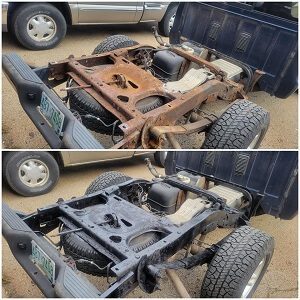
On almost every professional frame invoice, roughly 80% of the total cost is dedicated to skilled labor. Repairing a frame is a dirty, dangerous, and time-consuming process. It is not as simple as “slapping a plate on it.” A technician must spend hours grinding away rust until they find “shiny” virgin steel that is strong enough to accept a weld. If they weld onto thin, rusted metal, the patch will simply tear away under the weight of the truck.
- Surface Preparation: Grinding, sandblasting, and cleaning the repair zone can take 4 to 10 hours before a welder even touches the truck.
- Expert Welding: Frame welding requires deep penetration into thick steel. This requires a certified welder who understands how heat affects the temper and strength of the vehicle’s spine.
- Safety Gear and Liability: The liability of frame repair is exceptionally high. Shops charge a premium to cover the insurance required to sign off on structural work.
Accessibility and Disassembly Obstacles
A major hidden cost in your quote is the time spent moving things out of the way. Steel conducts heat rapidly. If a technician is welding near your fuel tank, brake lines, or electrical harness, those items must be removed or shielded. In many cases, the most cost-effective way to repair rear frame rust is to “pull the bed.”
This adds several hours of labor just to provide the welder with a clear, safe workspace. If your truck has heavily rusted bed bolts, that disassembly alone can add $300 to $500 to the final bill as bolts are snapped and drilled out. Every component that stands between the welder and the rust represents an additional line item on your quote.
Financial Analysis: Is Your Truck Worth the Cost of Frame Repair?
Deciding whether to drop several thousand dollars on a rust repair is a math problem as much as a mechanical one. For many truck owners, the emotional connection to a reliable rig makes the decision difficult, but you must look at the numbers objectively. If the repair bill exceeds 50% of the truck’s current market value, you are entering the “diminishing returns” zone.
The 50% Rule and Resale Realities
Consider a 2012 Toyota Tacoma with a resale value of $15,000. Spending $4,000 on high-quality frame capping and reinforcement is a logical investment to keep it on the road for another five years. However, if you own a 2004 high-mileage work truck worth $4,500, a $3,000 structural repair rarely makes financial sense unless the rest of the mechanical components are in pristine condition.
- Check the “Hidden” Costs: Rust is rarely isolated. If the frame is rotting, check the brake lines, fuel tank straps, and body mounts. These often fail during the frame repair process, adding 20% to your initial estimate.
- Insurance Implications: Some insurance providers may refuse to provide full coverage on a vehicle with a previously “repaired” or “patched” structural frame. Always call your agent before committing to the work.
- Market Value: A truck with a professionally documented frame repair may still sell for 10-15% less than a truck with an original, clean frame.
Evaluating Mechanical Longevity
Before signing off on a frame repair, perform a “health check” on the drivetrain. If your engine or transmission is likely to fail within the next 20,000 miles, the money spent on the frame is essentially wasted. Practical tip: Get a compression test and a fluid analysis done first. If the “heart” of the truck is failing, don’t try to save the “bones.”
Safety Standards and Long-Term Durability of Structural Repairs
A truck frame isn’t just a piece of metal; it is a carefully engineered “crumple zone” and the foundation of your vehicle’s handling. When rust eats through that metal, the structural integrity of the vehicle in a collision is compromised. A poor repair can be just as dangerous as the rust itself.
Structural Integrity and Crash Performance
Modern truck frames are often made of high-strength, low-alloy (HSLA) steel. Welding on these frames requires specific heat management. If a shop uses too much heat, the steel becomes brittle; too little, and the weld won’t penetrate deeply enough. This is why professional repairs often cost more—they require certified welders who understand metallurgy, not just “patching a hole.”
- Fish-Plating vs. Butt-Welding: For maximum durability, experts recommend “fish-plating” (using diamond-shaped plates) rather than square patches. This distributes stress more evenly across the frame rail.
- Alignment Issues: Severe rust repair can cause the frame to “tweak” or pull. Ensure the shop uses a laser alignment system post-repair to verify the truck still tracks straight.
- The “Hammer Test”: A reputable shop will perform a hammer test or ultrasonic thickness testing on the rest of the frame to ensure they aren’t welding new metal onto paper-thin old metal.
Ensuring a Lifetime Repair
The biggest mistake owners make is failing to protect the new metal. Fresh welds are incredibly susceptible to oxidation. Once the structural work is complete, the entire area must be treated with a high-quality zinc-rich primer and a specialized internal frame coating. Without this, you may find yourself back in the shop within two years as the rust returns from the inside out.
Conclusion: Moving Forward Safely
Repairing truck frame rust is a significant financial commitment, typically ranging from $2,000 to over $6,000 depending on the severity. While the costs are high, they are often lower than the price of a new truck in today’s market. The key is to prioritize safety and professional craftsmanship over the cheapest possible quote. A well-executed repair can extend your truck’s life by a decade, while a “quick fix” can lead to catastrophic structural failure.
Next Steps: First, clean your undercarriage thoroughly to see the true extent of the damage. Second, get at least two quotes from shops that specialize specifically in structural welding, not just general bodywork. Finally, if you choose to repair, invest in a permanent rust-prevention plan to protect your investment. Your truck is your workhorse—make sure its foundation is solid enough to carry the load.
❓ Frequently Asked Questions
What are the signs that frame rust is structural and requires expensive repair?
Structural rust is identified by ‘delamination’ where the metal flakes off in layers, or visible holes and ‘soft spots’ that can be pierced with a screwdriver. If the rust is located near suspension mounts or steering components, the repair will be more complex and expensive.
How does the cost of sectioning compare to a full frame swap?
Sectioning involves replacing a specific portion of the frame (like the rear half) and typically costs $3,000 to $6,000. A full frame swap is significantly more expensive, often exceeding $10,000, because every single component of the truck must be unbolted and moved to a new chassis.
Will insurance or warranties cover frame rust repairs?
In most cases, no. Rust is considered a maintenance issue or environmental wear and tear, which is excluded from standard insurance policies and most extended warranties unless a specific ‘rust-through’ warranty is still active.
Does the type of truck affect the repair price?
Yes, larger heavy-duty trucks (2500/3500 series) often have thicker frames that require more labor and heavier materials to repair. Additionally, trucks with boxed frames are generally more expensive to fix than those with C-channel frames due to the difficulty of internal access.
What is the typical ratio of labor to material costs?
Approximately 80% of the total bill is skilled labor. While the steel plates or pre-fabricated repair kits are relatively affordable, the hundreds of hours spent grinding, fitting, welding, and painting drive the final price up.
Can I use rust converters instead of welding to save money?
Rust converters are only appropriate for surface rust. If the metal has lost structural thickness or has holes, converters will not restore the integrity of the frame and it will remain a safety hazard.