P1000 Code Ford F150: Complete Guide 2026

P1000 Code Ford F150: Complete Guide 2026
Recommended Best Deal Products



📤 Share Image
For any Ford F-150 owner, a diagnostic trouble code can be a source of concern, but the P1000 code often presents a unique conundrum due to its non-fault nature. Unlike codes signaling a specific component failure, P1000 indicates the onboard diagnostic (OBD-II) readiness monitors have not completed their self-tests. This can lead to issues with state emissions inspections and hinder full system functionality, leaving many F-150 owners seeking clarity and solutions. This expert guide will demystify the Ford F-150 P1000 code, detail its common causes, provide a step-by-step resolution process, and offer advanced troubleshooting for persistent cases, ensuring your vehicle operates optimally and meets regulatory compliance. We aim to provide professional, reliable, and trusted information for all F-150 owners.


SECTION 1: Understanding the Ford F-150 P1000 Code: Diagnostics and Significance
The P1000 code in a Ford F-150 is often misunderstood, primarily because it behaves differently from conventional Diagnostic Trouble Codes (DTCs). Unlike a P0420 (Catalyst System Efficiency Below Threshold) or a P0301 (Cylinder 1 Misfire Detected), which point to a specific component malfunction, the P1000 code is a ‘readiness code’ rather than a ‘fault code’. It simply indicates that the vehicle’s Powertrain Control Module (PCM) has not yet completed all of its internal diagnostic tests for the onboard emissions control systems.
OBD-II Readiness Monitors Explained
Modern vehicles, including all Ford F-150 models from 1996 onwards, are equipped with an Onboard Diagnostics system, Generation II (OBD-II). A critical function of this system is to continuously monitor various emissions-related components to ensure they are operating within prescribed parameters. These are known as OBD-II readiness monitors. There are typically 8-10 specific monitors that track systems such as the catalytic converter, oxygen sensors, evaporative emissions (EVAP) system, EGR system, and misfire detection. Their primary purpose is to verify the integrity and efficiency of the emissions control system. For these monitors to “run” and “complete,” specific driving conditions, collectively known as a drive cycle, must be met.
Impact on Emissions Testing and Compliance
The presence of a P1000 code means one or more readiness monitors have not finished their self-tests. While it does not trigger the Check Engine Light (CEL), it is a significant hurdle for vehicle registration and emissions compliance. In many jurisdictions across the United States and Canada, for example, a vehicle must have all or nearly all (e.g., 90-100%) of its readiness monitors in a ‘complete’ or ‘ready’ state to pass an emissions inspection. An F-150 owner preparing for an emissions test encountering a P1000 will inevitably fail, as the emissions testing equipment cannot confirm the operational status of all required systems.
Common Triggers for the P1000 Code
A P1000 code is typically generated after an event that clears the PCM’s memory or resets its diagnostic cycle. Common scenarios include:
- Battery Disconnect: Disconnecting the F-150’s battery for any reason (e.g., replacement, repair) will reset the PCM and thus all readiness monitors.
- PCM Reset: A mechanic might clear codes after a repair, intentionally resetting the PCM. This wipes the monitor data, leading to a P1000 until a new drive cycle is completed.
- Recent Repairs: Any repair involving the emissions system or electrical components that necessitates disconnecting power can result in a P1000.
- Failed Emissions Test Attempts: Sometimes, a P1000 can result from a failed test attempt where the vehicle’s computer indicates that not all systems were ready for evaluation.
In essence, the P1000 is the Ford F-150’s way of saying, “I’ve been reset, and I need to re-verify all my systems.” It will typically resolve itself once the vehicle has been driven through a sufficient number of ‘drive cycles’ under varying conditions. Research indicates that monitors might take ‘several drive cycles’ to run, sometimes equating to hundreds of miles, depending on the specific monitor and driving habits. This professional insight highlights the code’s diagnostic quality as a readiness indicator.
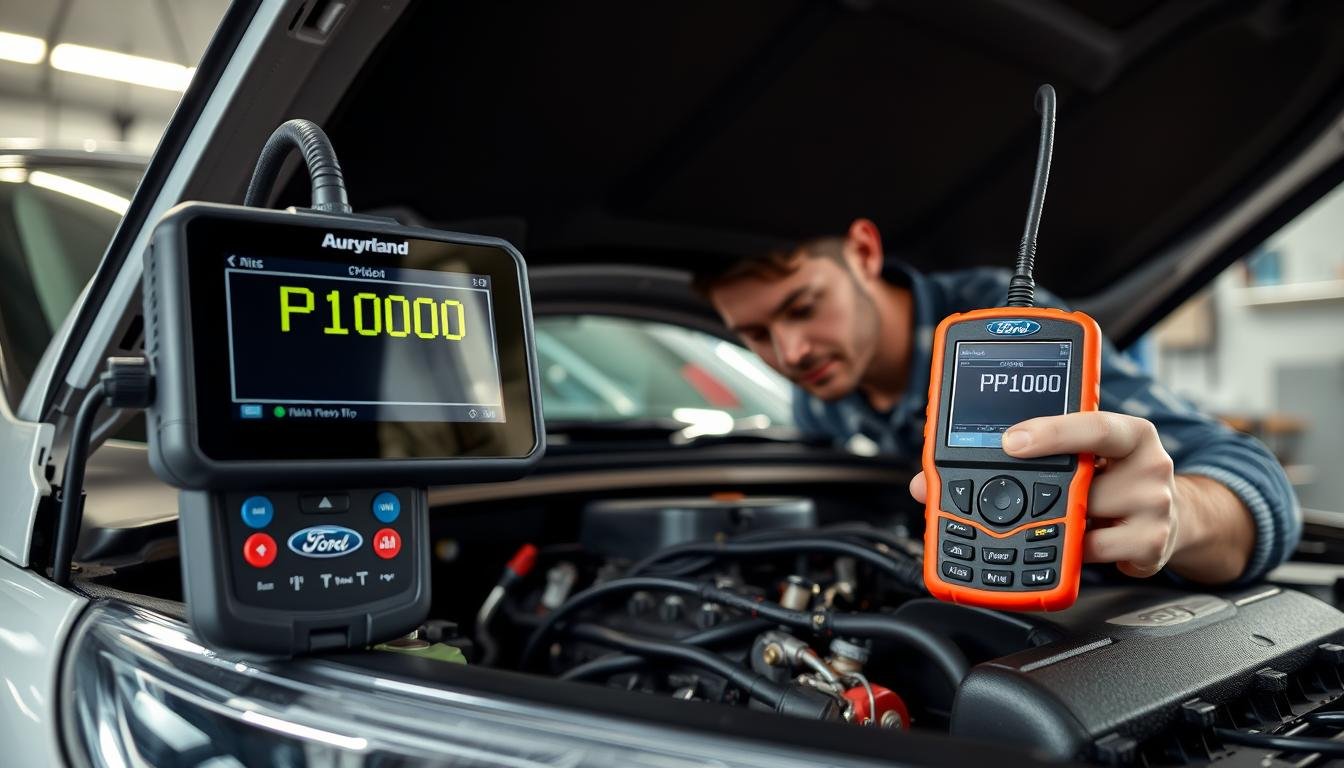
SECTION 2: Common Causes Behind a Persistent Ford F-150 P1000 Code
Recommended Best Deal Products


While a P1000 code frequently clears on its own after normal driving, a persistent P1000 on your Ford F-150 suggests that one or more readiness monitors are struggling to complete their cycles. This is where the P1000 transitions from a routine post-reset indicator to a diagnostic puzzle, hinting at underlying issues beyond simple battery resets.
Incomplete or Incorrect Drive Cycle Execution
The most frequent reason for a persistent P1000 is simply not meeting the precise driving conditions required for the monitors to run. Each monitor has specific parameters it needs to observe, such as:
- Cold Start: Many monitors, especially the O2 sensor heater and catalytic converter monitor, require the engine to be started from a completely cold state (e.g., after sitting overnight).
- Engine Temperature: The engine must reach and maintain a specific coolant temperature range, usually above 160°F (71°C), for most monitors to activate.
- Highway Driving: Sustained speeds, often between 40-60 mph, for periods of 10-15 minutes are crucial for the catalytic converter and some O2 sensor monitors.
- Steady Speeds: Avoiding excessive acceleration or deceleration for certain segments allows the PCM to get accurate readings.
- Engine Off-Time: For the EVAP monitor, the vehicle typically needs to be shut off for a specific duration (e.g., 6-8 hours) after driving to allow the fuel system to cool and create pressure differentials.
For instance, an F-150 owner who primarily drives short distances around town, never allowing the engine to warm up fully or experience highway speeds, will almost certainly find their catalytic converter and oxygen sensor monitors remain incomplete. This common scenario highlights the need for a targeted, quality drive cycle.
Underlying Emissions System Malfunctions
Sometimes, the P1000 persists because there’s an actual, albeit minor, issue with an emissions component that prevents its monitor from running to completion. These issues are often subtle enough not to trigger a traditional DTC or illuminate the CEL, but they effectively “block” the readiness monitor. Common culprits include:

Audible — Listen Free for 30 Days
One free credit a month and thousands of titles included.
Listen Free for 30 Days As an Amazon Associate I earn from qualifying purchases.- Weak EVAP Pump or Leaky Gas Cap: Even a slightly faulty gas cap can cause a small leak in the evaporative emissions system, preventing the EVAP monitor from completing. Research indicates that EVAP monitor failures are among the most common, especially in older F-150 models.
- Slow Oxygen (O2) Sensor: An O2 sensor that is degrading but not completely failed might still send plausible, yet slow, readings to the PCM, preventing the O2 sensor monitor from confirming its readiness without triggering a specific O2 sensor fault code.
- Marginal Catalytic Converter Efficiency: If the catalytic converter is nearing the end of its life, its efficiency might be just above the threshold for a P0420/P0430 code, but not sufficient for the monitor to confidently set itself as ‘ready’.
- Small Vacuum Leaks: Subtle vacuum leaks can lean out the fuel mixture, impacting O2 sensor readings and combustion efficiency, thereby affecting fuel system and misfire monitors.
PCM/ECM Software Glitches or Updates
In rarer cases, the F-150’s Powertrain Control Module (PCM) or Engine Control Module (ECM) itself might be responsible. Software glitches, bugs, or outdated calibration can prevent monitors from running correctly, even if all hardware is functional. Instances where a recalibration or a software update for the PCM is required are not unheard of, especially following a component replacement or a service campaign. A trusted technician can check for relevant Technical Service Bulletins (TSBs) from Ford.
Recent Repairs or Component Replacements
After replacing certain emissions-related components, such as O2 sensors or the catalytic converter, the PCM may require an adaptive learning period. During this time, the PCM collects data from the new components to establish new operating baselines. Until this learning period is complete, the associated readiness monitors may remain ‘incomplete’, contributing to a persistent P1000 code. This underscores the professional complexity of modern vehicle diagnostics.
By The Numbers
Typical Readiness Monitors
Required Monitor Completion for Some State Inspections
Avg. O2 Sensor Life in Miles
Minutes for Comprehensive Drive Cycle

SECTION 3: Step-by-Step Procedure to Resolve and Clear a Ford F-150 P1000 Code
Clearing a P1000 code on your Ford F-150 requires a systematic approach, primarily centered around executing a specific OBD-II drive cycle. This procedure is designed to allow the PCM to run all readiness monitors under controlled conditions. This expert guide outlines a professional, structured methodology that F-150 owners and technicians can follow.
📋
Step-by-Step Guide: Ford F-150 OBD-II Drive Cycle
Recommended Best Deal Products


Ensure your F-150 has cooled down completely, ideally after sitting overnight (true ‘cold start’ condition is crucial). The fuel tank should be between 1/4 and 3/4 full, as the EVAP monitor specifically requires this range. Connect an OBD-II scan tool capable of displaying readiness monitor status. Start the engine and let it idle for 2-3 minutes to allow the O2 sensor heaters and fuel trim systems to begin their initial checks. Do not touch the accelerator during this period.
Accelerate gently to 40-50 mph (64-80 km/h) and maintain this speed for approximately 5 minutes. This phase allows the catalytic converter and secondary O2 sensor monitors to begin their diagnostic process, as well as the misfire and fuel system monitors to run under load. Use cruise control if possible to maintain a consistent speed.
Increase speed to 55-65 mph (88-105 km/h) and hold this steady speed for at least 10-15 minutes. This is critical for the comprehensive component monitor, catalyst efficiency monitor, and O2 sensor monitor to fully complete. Avoid rapid acceleration or heavy braking during this segment. An ideal location is a highway or interstate with minimal traffic.
Audible Premium Plus — Annual Membership
12 audiobook credits up front, plus the full Audible catalogue.
See Annual Plans As an Amazon Associate I earn from qualifying purchases.Decelerate from highway speeds to 20 mph (32 km/h) without using the clutch (for manual transmissions) or shifting into neutral, allowing the vehicle to coast. Then, drive at 20 mph for approximately 3 minutes. Finally, come to a complete stop and idle for another 2-3 minutes. This segment helps the EVAP (if conditions met), EGR, and misfire monitors to complete their final checks.
With your scan tool, check the readiness monitor status. All relevant monitors (Misfire, Fuel System, Comprehensive Component, Catalyst, EVAP, O2 Sensor, EGR, Secondary Air, A/C) should now show ‘OK’ or ‘Complete’. The P1000 code should have cleared itself. If not all monitors are ready, repeat the cycle after allowing the engine to cool. Finally, turn off the ignition for at least 10 seconds to ensure the PCM saves the new data.
Using a Diagnostic Scan Tool to Monitor Readiness Status
A quality OBD-II scan tool is an indispensable asset for this process. It allows you to track the real-time status of each readiness monitor. Most scan tools will display monitors as ‘INC’ (incomplete) or ‘OK’ (complete). Some advanced tools may offer more granular detail. Monitoring this allows you to focus your drive cycle efforts on the monitors that are still pending. For example, if only the EVAP monitor is incomplete, you’ll know to pay close attention to the specific driving and cool-down conditions required for it.
Addressing Environmental and Driving Conditions
Beyond the specific speed and time requirements, certain environmental and driving conditions can influence monitor completion:
- Fuel Level: As mentioned, keep the fuel tank between 1/4 and 3/4 full. This is crucial for the EVAP monitor to run accurately.
- Ambient Temperature: Extreme cold or heat can sometimes delay monitor completion, though most F-150s are designed to operate across a wide temperature range.
- Avoid Aggressive Driving: Maintain smooth, consistent driving during the cycle. Sudden accelerations, hard braking, or excessive engine RPMs can disrupt monitor tests.
- Minimal Accessories: Turn off non-essential accessories like the air conditioner, radio, and rear defroster to minimize electrical load and ensure stable system voltage.
The entire comprehensive drive cycle typically takes 20-40 minutes to execute properly. Patience and adherence to these instructions are key to a successful outcome and will provide reliable information on your F-150’s readiness status.
Don’t rush the drive cycle. Each monitor requires specific conditions for successful completion. If after one attempt, a monitor remains incomplete, repeat the process. Consistency in driving habits and adhering to the prescribed conditions will significantly improve your chances of clearing the P1000 efficiently. Use your scan tool regularly to track progress.
SECTION 4: Troubleshooting Persistent P1000 Codes: What If It Still Doesn’t Clear?
When a P1000 code stubbornly persists despite diligent attempts to complete the specified drive cycle, it signals that a more subtle underlying issue is preventing one or more readiness monitors from running to completion. This scenario moves beyond routine readiness and into the realm of advanced diagnostics, often requiring professional intervention to ensure your Ford F-150 operates at its quality best.
Advanced Diagnostic Scan Tool Analysis
For persistent P1000 issues, a professional-grade diagnostic scan tool becomes indispensable. These tools offer capabilities far beyond basic code reading:
- Freeze Frame Data: This snapshot of engine parameters captured the moment a fault code (if any preceded the P1000) was set can provide clues to the conditions present when a monitor failed to complete.
- Live Sensor Readings: Monitoring real-time data from critical sensors—such as O2 sensor voltage (looking for proper switching frequencies and voltage ranges), Mass Air Flow (MAF) sensor readings, coolant temperature, and fuel pressure—can pinpoint marginal performance issues that prevent monitor completion. An expert technician can analyze these parameters for deviations.
- Mode 6 Data: This highly technical data provides access to non-continuous monitor test results. It reveals the exact test values and limits for various emission components, indicating precisely which component’s performance is borderline, even if it hasn’t triggered a DTC.
Systematic Inspection of Emissions Components
A thorough physical inspection of the F-150’s emissions system is crucial. Common areas to inspect include:
- Vacuum Leaks: Inspect all vacuum lines and connections, particularly around the intake manifold, PCV valve, and brake booster. Even a small leak can significantly affect fuel trims and prevent O2 or fuel system monitors from setting. A common culprit might be a cracked intake manifold gasket.
- Exhaust Leaks: Leaks before the upstream O2 sensors can draw in ambient air, skewing sensor readings and impacting catalytic converter and O2 sensor monitors.
- O2 Sensors: Test O2 sensor functionality for slow response times or incorrect voltage outputs, even without a specific DTC. While sensors might physically appear fine, their internal resistance can change over time.
- Catalytic Converter: Although P1000 doesn’t mean a direct fault, a partially clogged or degraded catalytic converter might prevent its monitor from reaching ‘ready’. Look for common preceding fault codes like P0420 (Catalyst System Efficiency Below Threshold).
- EVAP System Integrity: This is a frequent cause of persistent P1000. Inspect the gas cap, purge valve, vent valve, and charcoal canister for damage or leaks. Often, a professional smoke test is needed to detect minuscule leaks in the EVAP system, which are notoriously difficult to find visually. Common preceding fault codes for EVAP issues include P0440, P0442, P0455.
PCM/ECM Software Verification and Updates
It’s advisable to check for any relevant Ford Technical Service Bulletins (TSBs) specific to your F-150’s model year and engine. Some TSBs address known software issues that can hinder monitor completion or recommend PCM updates. A specific Ford TSB might, for example, detail a software recalibration to adjust monitor thresholds for certain F-150 powertrains, thus providing reliable information for resolution.
Professional Consultation
If, after these steps, the P1000 persists, it is time to seek a certified Ford technician. These professionals have access to manufacturer-specific diagnostic tools (like Ford’s IDS), specialized training, and up-to-date service information. Intricate issues involving complex electrical problems, intermittent sensor failures, or PCM hardware faults often require their expertise. Research indicates that diagnosing a complex P1000 issue can take anywhere from 1-3 hours of skilled labor, underscoring the value of a trusted expert when the problem is elusive.
Never ignore a persistent P1000 code, especially if you reside in an area with emissions testing. While it doesn’t indicate a critical breakdown, it signals that your F-150’s emissions control systems are not fully verified. Ignoring it can lead to failed inspections, and more critically, it might be masking a subtle underlying issue that could eventually lead to more expensive repairs or reduced vehicle performance and fuel efficiency.
SECTION 5: Preventative Maintenance and Best Practices for Ford F-150 Emissions Systems
Preventing a P1000 code from ever appearing, or ensuring it clears quickly, is largely about proactive vehicle care. Adhering to preventative maintenance and adopting good driving habits for your Ford F-150 not only supports the longevity and quality of your truck but also ensures its emissions control systems operate efficiently and reliably.
Adhering to Manufacturer’s Recommended Service Intervals
Regular, scheduled maintenance is the bedrock of a healthy F-150. This includes:
- Engine Tune-ups: Regular spark plug replacements and ignition system checks ensure efficient combustion, reducing the load on the catalytic converter and minimizing harmful emissions that can foul O2 sensors.
- Air Filter Replacements: A clean air filter ensures proper air-fuel mixture, crucial for O2 sensor accuracy and catalytic converter health.
- Fluid Checks and Changes: Proper engine oil and coolant levels prevent overheating and stress on the engine, which indirectly impacts emissions components.
Following Ford’s maintenance schedule, typically found in your owner’s manual, is the most trusted guide for optimal performance and emissions health.
Fuel Quality and System Cleanliness
The fuel you put into your F-150 directly impacts its emissions system:
- Use Quality Fuel: Always use the recommended octane and ensure you’re purchasing from reputable stations. Poor quality or contaminated fuel can lead to incomplete combustion, carbon buildup, and premature failure of O2 sensors and catalytic converters.
- Fuel System Cleaners: Occasional use of a professional-grade, trusted fuel system cleaner (e.g., those safe for GDI engines if your F-150 has one) can help maintain injector efficiency and prevent carbon deposits on valves, pistons, and O2 sensors.
Battery Health and Electrical System Integrity
A robust electrical system is vital for all vehicle diagnostics. A weak or failing 12V battery can cause voltage fluctuations, leading to spurious PCM resets, which will generate a P1000. Ensure your F-150’s battery is in good health and its terminals are clean and tight. This provides stable power for all sensors and the PCM, critical for consistent monitor integrity and preventing unintended P1000 occurrences.
Conscious Driving Habits
Your driving patterns significantly influence monitor completion:
- Avoid Frequent Short Trips: Short drives often don’t allow the engine to reach optimal operating temperature, preventing many readiness monitors from initiating or completing.
- Allow Engine to Reach Operating Temperature: Always allow your F-150’s engine to warm up fully before strenuous driving.
- Occasional Extended Drives: Performing an occasional drive that includes highway speeds and varying conditions (similar to the drive cycle outlined in Section 3) can help naturally complete any pending monitors, proactively preventing a P1000 from lingering.
Following these expert practices helps ensure your F-150’s emissions systems, including components like O2 sensors (life expectancy typically 60,000-100,000 miles) and catalytic converters (often 100,000+ miles), remain healthy. Industry reports suggest that 20-30% of vehicle issues are attributable to poor maintenance, underscoring the average cost savings from preventative maintenance compared to reactive, expensive repairs. This holistic approach offers a reliable path to avoiding the P1000 code and maintaining your vehicle’s performance and compliance.
The P1000 code signifies incomplete OBD-II readiness monitor cycles, not a component failure. Successful resolution often involves specific drive cycles and verifying monitor status with a scan tool. Persistent P1000s may point to underlying, subtle emissions system issues requiring advanced diagnostics. Proactive maintenance of your F-150’s emissions system is key to preventing future P1000 occurrences. Ensure your Ford F-150’s emissions system is fully operational. Implement the diagnostic and resolution strategies outlined here, and consult with a professional technician for any persistent P1000 codes to maintain performance and compliance.
Frequently Asked Questions
Will a Ford F-150 with a P1000 code pass emissions inspection?
Generally, no. The P1000 code indicates that your Ford F-150’s emissions readiness monitors are not complete. Most jurisdictions require all or nearly all monitors to be in a ‘ready’ state to pass an emissions test. While the Check Engine Light won’t be on, the incompletion prevents full verification of the emissions system, resulting in a failed inspection until the monitors clear.
How long does it take for the P1000 code to clear on an F-150?
The time required for a P1000 code to clear varies. It typically takes one or more specific OBD-II drive cycles to complete all readiness monitors. Depending on your F-150’s model year and driving conditions, this can range from 30 minutes to several hours of varied driving, including cold starts, idle periods, highway speeds, and deceleration. Monitor completion is key, not just driving time.
Does disconnecting the battery cause a P1000 code on a Ford F-150?
Yes, disconnecting the battery or clearing codes with a scan tool will reset your Ford F-150’s Powertrain Control Module (PCM). This action clears all readiness monitor statuses, reverting them to ‘incomplete’ and immediately triggering the P1000 code. You will then need to perform a complete drive cycle for all monitors to reset to a ‘ready’ status.
Can a faulty O2 sensor cause a persistent P1000 code?
A faulty oxygen (O2) sensor itself might trigger a specific O2 sensor related fault code (e.g., P0133), but a *subtly* faulty O2 sensor (e.g., one that is slow to react or has borderline readings) can prevent the O2 sensor readiness monitor or catalytic converter monitor from completing its self-test, thus contributing to a persistent P1000 code without necessarily setting a Check Engine Light.
Is it safe to drive my Ford F-150 with a P1000 code?
In most cases, it is safe to drive your Ford F-150 with a P1000 code, as it doesn’t indicate an active mechanical or electrical malfunction. It simply means the diagnostic system hasn’t completed its checks. However, if the P1000 persists after multiple drive cycles, it might be masking an underlying issue that could eventually lead to other fault codes or decreased fuel efficiency if left unaddressed.