Is a Muffler Delete Illegal in Texas? Laws & Fines Explained

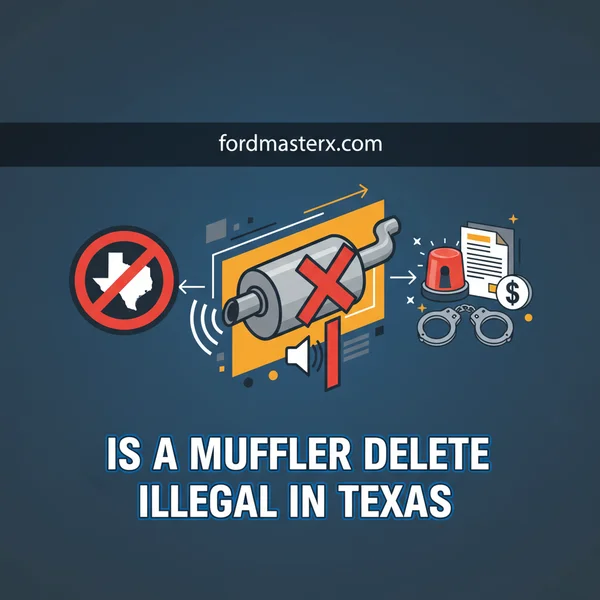
Muffler deletes are illegal in Texas under the Texas Transportation Code, which mandates that every motor vehicle must be equipped with a muffler in good working order. Failure to comply results in an automatic Texas State Inspection failure and potential law enforcement citations for excessive noise.
🎯 Key Takeaways
- Texas Transportation Code § 547.604 explicitly requires a functional muffler.
- A muffler delete results in an automatic state inspection failure.
- Law enforcement can issue citations for ‘excessive or unusual noise.’
- Muffler cutouts and bypass devices are strictly prohibited on public roads.
- Turbochargers do not legally satisfy the state’s muffler requirement.
To put it bluntly: Yes, a muffler delete is illegal in Texas. Under the Texas Transportation Code, every motor vehicle must be equipped with a muffler that is in constant operation and good working order. By removing the muffler entirely, you are intentionally violating state equipment standards. This isn’t just a suggestion for certain vehicle types; it is a mandate for every car, truck, and motorcycle driven on public roads in the Lone Star State.
Understanding this law is vital because the consequences go beyond a simple “fix-it” ticket. A muffler delete puts you at risk for recurring fines and guarantees your vehicle will fail its mandatory annual safety inspection. While you might want a more aggressive exhaust note, Texas law prioritizes noise reduction and equipment presence. Operating without a muffler makes your vehicle an immediate target for law enforcement and a liability during your next trip to the inspection station.
Prime Day Pick
Limited-time Prime Day price. Check current discount on Amazon.
Decoding Texas Transportation Code § 547.604 on Exhaust Systems
The legality of your exhaust system boils down to one specific piece of legislation: Texas Transportation Code Section 547.604. This law is the primary tool used by the Department of Public Safety (DPS) and local police to regulate vehicle noise. It does not provide a specific decibel limit. Instead, it focuses on the presence and functionality of the muffler itself. If the part is missing, you are in violation of the code.

The “Good Working Order” Requirement
The law states that a motor vehicle must have a muffler to “prevent excessive or unusual noise.” This phrasing gives law enforcement significant discretion. If your vehicle is significantly louder than a factory-standard version of the same model, an officer can cite you for “unusual noise.” Because a muffler delete removes the primary sound-dampening component of the exhaust, there is no legal defense to claim the system is in good working order.
Prime Day Pick
Limited-time Prime Day price. Check current discount on Amazon.
- Equipped at all times: The muffler must be present whenever the vehicle is on a public roadway.
- Constant operation: You cannot use a “cutout” or bypass valve to switch between a muffled and un-muffled state.
- Prevention of smoke: The exhaust system must also be tight enough to prevent the discharge of excessive fumes or smoke.
The Prohibition of Exhaust Cutouts and Bypasses
Texas law is very specific about modifications that allow exhaust gases to skip the muffler. The code explicitly prohibits the use of a “muffler cutout, bypass, or similar device” on any motor vehicle operated on a public highway. Even if you have a muffler installed, if you have a valve that lets the exhaust exit before reaching that muffler, you are breaking the law. A total delete is viewed as a permanent bypass, which falls directly under this prohibition.
Why a Muffler Delete Guarantees a Texas State Inspection Failure
Even if you managed to avoid a ticket from a police officer, you cannot escape the annual Texas Vehicle Inspection. Every registered vehicle in Texas must pass a safety inspection (and in some counties, an emissions test) to receive a valid registration sticker. The inspection process is standardized, and the exhaust system is a “pass/fail” item on the inspector’s checklist.
Prime Day Pick
Limited-time Prime Day price. Check current discount on Amazon.
The Visual Inspection Criteria
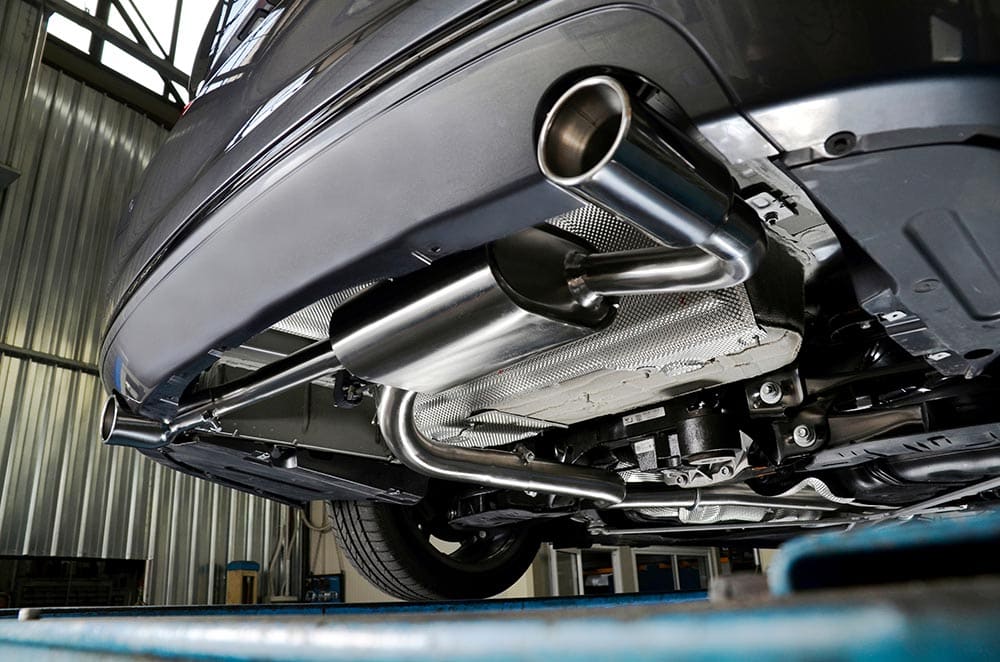
Texas inspectors are trained to perform a visual check of the entire exhaust system from the manifold to the tailpipe. According to the Texas Department of Public Safety inspection manual, the absence of a muffler is an automatic cause for rejection. You cannot argue that a resonator or a catalytic converter acts as a muffler; the state defines a muffler as a specific device designed to reduce noise. If the inspector looks under your car and sees a straight pipe where the muffler should be, your inspection ends there.
Specific Failure Points for Exhaust Systems
When you take your vehicle in, the inspector looks for several key violations related to your muffler and exhaust pipe. Your vehicle will fail the Texas state inspection if:
Prime Day Pick
Limited-time Prime Day price. Check current discount on Amazon.
- Missing Components: The muffler or any part of the exhaust system is missing, bypassed, or disconnected.
- Leaky Connections: There are holes, cracks, or leaking joints in the exhaust manifold, pipes, or muffler.
- Improper Discharge: The exhaust does not discharge to the outside of the vehicle body (e.g., it vents directly under the passenger cabin).
- Modification: The system has been modified in a way that increases the noise level above the original manufacturer’s specifications.
The Subjective Noise Test
In addition to the visual check, the inspector will listen to the vehicle while it is running. If the vehicle produces “excessive or unusual” noise during the inspection process, the inspector has the authority to fail the vehicle even if all hardware appears to be present. Because a muffler delete drastically changes the acoustic profile of the engine, it is virtually impossible to pass this auditory check. Once you fail, you must repair the system and return for a re-inspection, often costing you more in time and labor than the original delete did.
Legal Penalties and Fines for Excessive Exhaust Noise in Texas
If you decide to roll the dice with a muffler delete in the Lone Star State, you need to be prepared for the financial and legal consequences. Texas law enforcement officers have the discretion to pull you over if they believe your vehicle is operating with excessive or unusual noise. Since the law is written with some level of subjectivity, “excessive” often comes down to the officer’s judgment during a traffic stop.
Prime Day Pick
Limited-time Prime Day price. Check current discount on Amazon.
The Financial Cost of a Loud Exhaust Ticket
In Texas, a violation of the exhaust system laws is generally classified as a Class C misdemeanor. While this won’t land you in prison, it certainly hits your wallet. Depending on the municipality and the specific officer, you could face the following:
- Standard Fines: Most tickets for modified exhaust systems range from $50 to $500, plus court costs.
- Fix-it Tickets: In some jurisdictions, a judge may offer a “fix-it” ticket. This allows you to avoid the fine if you prove you have reinstalled a legal muffler within a specific timeframe (usually 10 to 30 days).
- Multiple Offenses: If you are a repeat offender, the fines typically scale upward, and you may find yourself a target for frequent stops by local patrol units.
Passing or Failing Your Annual Safety Inspection
Beyond the risk of being pulled over, a muffler delete is a major hurdle for your annual Texas State Inspection. To receive a passing safety sticker, your vehicle must meet specific equipment requirements. If the inspector notices that the muffler has been removed or bypassed, they are legally required to fail the vehicle. This means you cannot renew your registration until you install a compliant exhaust component. Always remember that a “straight pipe” is an immediate red flag for any certified inspector.
Common Misconceptions: Turbochargers and Resonators vs. Texas Law
There is a lot of “garage talk” regarding what constitutes a muffler. Many enthusiasts believe they have found loopholes in the Texas Transportation Code by using other engine components to dampen sound, but the law is usually stricter than the rumors suggest.
The “Turbo as a Muffler” Myth
A common misconception is that a turbocharger counts as a muffler. While it is true that the turbine wheel breaks up exhaust pulses and naturally reduces some noise, Texas law does not recognize a turbocharger as a replacement for a muffler. The state requires a device specifically designed to reduce noise emissions. If your exhaust system goes straight from the turbo to the tailpipe without a dedicated muffler in between, you are still technically in violation of the law.
Resonators are Not Mufflers
Another popular mistake is assuming that a resonator is a legal substitute for a muffler. While they look similar, they serve different purposes:
- Resonators: Designed to eliminate specific sound frequencies (like “drone”) to improve the tone of the exhaust.
- Mufflers: Designed to reduce the overall volume (decibels) of the exhaust.
If you swap your muffler for a resonator, your car will likely still exceed the “excessive noise” threshold. Under a visual inspection, a resonator may also fail to satisfy the requirement for a dedicated muffler device.
Conclusion
So, is a muffler delete illegal in Texas? While the law doesn’t explicitly use the word “illegal” for the act of removing the part, it requires every vehicle to have a functioning muffler that prevents excessive noise. For most drivers, a muffler delete results in a vehicle that is too loud to be street-legal, leading to potential fines and failed safety inspections. It is a high-risk modification that often attracts unwanted attention from law enforcement.
Next Steps for Texas Drivers:
- If you want more sound, consider a high-flow performance muffler or a “cat-back” system that is specifically designed to be street-legal.
- Check your local city ordinances, as cities like Austin or Dallas may have stricter decibel limits than the general state law.
Stay safe on the road and keep your build legal to ensure you spend more time driving and less time dealing with court dates and inspection stations!
❓ Frequently Asked Questions
What exactly does Texas Transportation Code § 547.604 say?
The law states that a motor vehicle must have a muffler in good working order that operates continually to prevent excessive or unusual noise. It also explicitly prohibits the use of a muffler cutout, bypass, or similar device on any public highway.
Can a police officer pull me over just for a muffler delete?
Yes, officers can stop you if they observe a violation of the Transportation Code, such as excessive noise or a visible exhaust modification. This can result in a citation for a defective exhaust system or a noise violation ordinance.
How does the Texas state inspection handle modified exhausts?
During the safety inspection, the inspector checks the exhaust system for leaks and the presence of a muffler. If the muffler has been removed or bypassed with a straight pipe, the vehicle is legally required to fail the inspection.
Is it legal to have a muffler delete if I only drive on private property?
Texas Transportation Code regulations apply to vehicles operated on public highways; however, if you plan to drive the vehicle on any public road to get to that property, it must meet all state equipment requirements.
Does a turbocharger count as a muffler under Texas law?
No, despite common rumors in the car community, a turbocharger is classified as an induction component, not a noise-muffling device. Texas law specifically requires a muffler regardless of whether the vehicle is turbocharged or not.
What are the typical fines for a muffler delete in Texas?
Fines vary by jurisdiction but typically range from $100 to $500 for ‘defective equipment.’ Repeated offenses or additional ‘disturbing the peace’ charges can increase the total cost of the citation.