Are Front and Rear Rotors the Same? Key Differences Explained

No, front and rear brake rotors are not the same and are almost never interchangeable. Because front brakes handle 60% to 80% of a vehicle’s stopping power, they are designed to be much larger and thicker than rear rotors to dissipate extreme heat.
🎯 Key Takeaways
- Front rotors are typically larger and thicker than rear rotors.
- Most front rotors are vented, while many rear rotors are solid.
- Front brakes handle the majority of heat and friction during stops.
- Rear rotors often include a ‘hat’ design for the parking brake.
- Attempting to swap rotors is physically impossible and dangerously unsafe.
The short answer is no, front and rear rotors are not the same and they are almost never interchangeable. While they are both circular metal discs used to stop your car, they are engineered with different dimensions, cooling capabilities, and mounting hardware. Attempting to swap them would not only fail due to physical fitment issues but would also compromise your vehicle’s safety and braking balance.
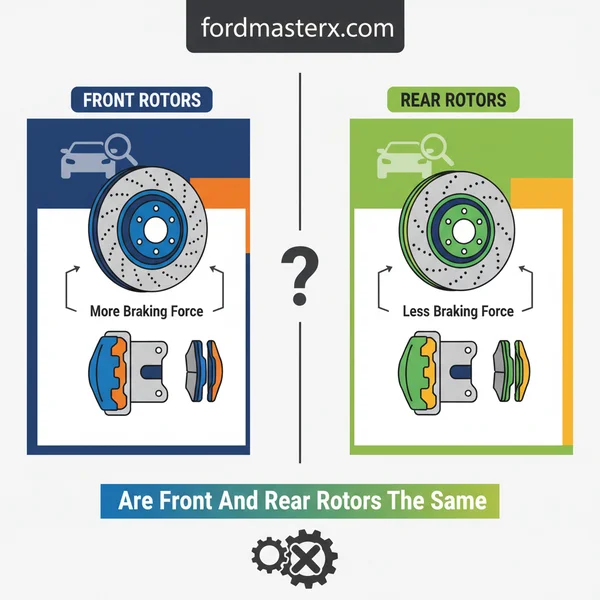
Understanding these differences is crucial when you are shopping for replacement parts or performing a DIY brake job. Front rotors are designed to handle the massive heat generated by stopping the vehicle’s forward momentum, while rear rotors act more as stabilizers. If you install the wrong part, you risk brake fade, parts interference, or even a complete loss of braking power during an emergency stop.
Physical Differences: Diameter, Thickness, and Venting Designs
When you place a front and rear rotor side-by-side, the physical distinctions are usually obvious. Front rotors are significantly beefier because they take the brunt of the friction. If you tried to put a rear rotor on the front, it would likely be too thin for the caliper to grip effectively once the pads wear down.
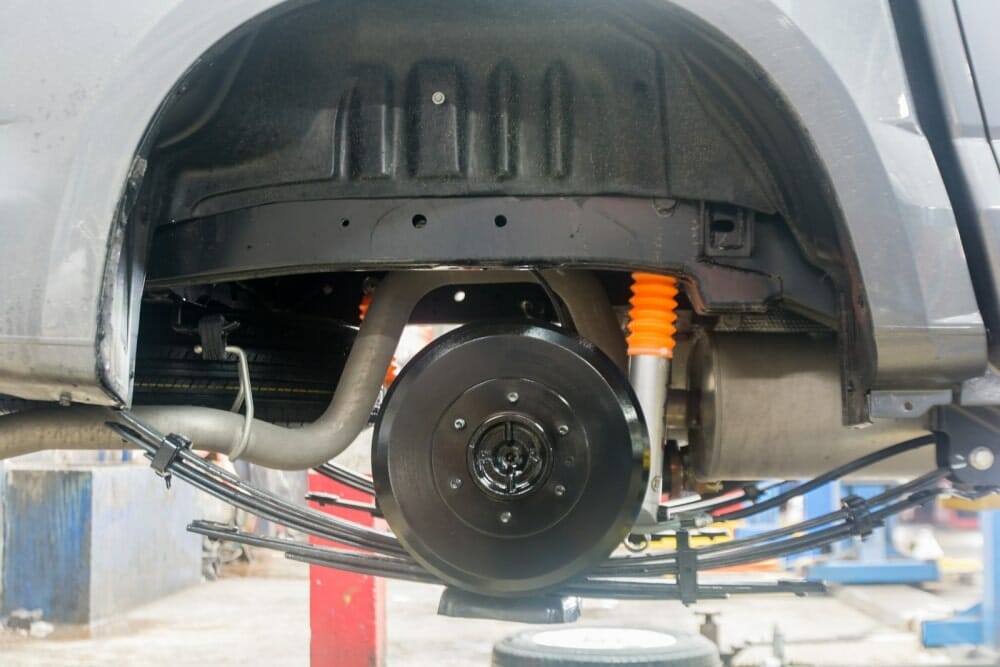
Diameter and Thickness Variations
In almost every vehicle, the front rotors have a larger diameter and a greater thickness than the rear rotors. A larger surface area allows for more friction and better heat distribution. On a typical mid-sized sedan, you might find front rotors that are 12 inches in diameter, while the rears are only 10 or 11 inches. The thickness is even more pronounced; front rotors are often twice as thick as the rears to accommodate internal cooling channels.
- Front Rotors: Usually 24mm to 32mm thick to handle extreme heat loads.
- Rear Rotors: Usually 10mm to 12mm thick, as they handle less stress.
- Weight: Front rotors are significantly heavier, often weighing 5 to 10 pounds more than the rears.
Vented vs. Solid Construction
The most striking design difference is the internal structure of the disc. Most front rotors are vented, meaning they consist of two “faces” separated by internal fins or vanes. These vanes act like a fan, pulling air through the center of the rotor to dissipate heat rapidly. In contrast, many rear rotors are solid, consisting of a single, flat slab of iron. Because the rear brakes do not get nearly as hot, they do not require the complex casting used for front cooling vanes.
The “Hat” and Parking Brake Integration
The “hat” is the raised center portion of the rotor that slides over the wheel studs. On many vehicles, the rear rotor has a much deeper and wider hat than the front. This is because the rear rotor often pulls double duty as a brake drum. Many cars use a “drum-in-hat” system where the emergency parking brake shoes sit inside the hollow center of the rear rotor. Front rotors do not have this requirement, so their hat design is usually shallower and strictly functional for mounting the wheel.
Dynamic Weight Transfer: Why Front Rotors Do More Work
You might wonder why engineers don’t just make all four rotors the same size to save on manufacturing costs. The reason lies in the physics of dynamic weight transfer. When you apply the brakes, the center of gravity of your vehicle shifts forward. This places the majority of the vehicle’s weight and kinetic energy onto the front axle, leaving the rear axle relatively “light.”
The 70/30 Braking Split
In a standard passenger vehicle, the front brakes are responsible for roughly 70% to 80% of the stopping power. Because the front tires are being pressed into the pavement with more force during a stop, they have more traction to utilize. The rear brakes only contribute about 20% to 30% of the effort. If the rear brakes were as powerful as the fronts, the rear wheels would lock up instantly, causing the car to spin out of control.
- Energy Conversion: Braking turns kinetic energy (movement) into thermal energy (heat).
- Heat Management: Since the front does 70% of the work, it generates 70% of the heat.
- Stability: Smaller rear rotors help maintain vehicle balance and prevent “nose-diving” from becoming uncontrollable.
Thermal Capacity Requirements
Because the front rotors do the heavy lifting, they must be able to absorb and shed heat much faster than the rears. Under heavy braking, front rotors can reach temperatures exceeding 500 degrees Fahrenheit. If you used a thin, solid rear rotor on the front, it would warp or crack almost immediately because it lacks the thermal mass to soak up that much energy. The rear rotors can afford to be smaller and lighter because they simply never encounter that level of thermal stress during normal driving conditions.
Rear Rotor Specialization: The Parking Brake Integration
While front rotors focus almost exclusively on stopping power and heat management, rear rotors often have to pull double duty. In many vehicle designs, the rear rotor is an integral part of the parking brake system. This additional requirement changes the internal shape and machining of the rotor significantly compared to the front units.
The “Drum-in-Hat” Design
Many modern cars use a “drum-in-hat” configuration for the rear wheels. If you look at the center of a rear rotor, you will often notice a much taller, hollowed-out middle section that resembles a top hat. This “hat” serves as a small brake drum. When you pull your emergency brake, specialized brake shoes expand inside this hat to hold the car in place. Front rotors are almost always flat in this area because they don’t need to accommodate these internal components.
Electronic Parking Brakes and Solid Discs
In newer vehicles equipped with Electronic Parking Brakes (EPB), the specialization is less about the shape and more about the material thickness. Since the rear of the car is lighter and does less work during a standard stop, manufacturers often use solid (non-vented) discs for the rear. These are thinner and lighter, which saves on fuel economy and production costs. Using a solid rear rotor where a vented front rotor belongs would lead to immediate overheating and potential brake failure.
- Practical Tip: When inspecting your brakes, if you see a “deep dish” look to the center of the rotor, you are definitely looking at a rear unit designed for a parking brake shoe.
- Pro Example: A heavy SUV like a Chevrolet Tahoe uses massive vented rotors in the front, but the rear rotors have a distinct internal drum for the parking brake that makes them completely unique to the rear axle.
Compatibility Risks: Why Rotors Are Not Interchangeable
It can be tempting to think that as long as the bolt holes line up, a rotor will work. However, attempting to swap front and rear rotors is not just a mechanical challenge—it is a significant safety risk. The braking bias of your vehicle is carefully calibrated by engineers, usually distributing about 70% of the stopping force to the front wheels and 30% to the rear.
Physical Dimensions and Fitment
Even if the diameter looks similar, the offset (how far the rotor sits back from the hub) is usually different. If the offset is off by even a few millimeters, the brake caliper will not align with the rotor. This can cause the pads to drag, create excessive heat, or prevent the wheel from turning entirely. Furthermore, the center bore diameter—the hole that fits over your axle—is frequently different between the front and rear hubs.
Safety and System Failure
Modern vehicles use sophisticated Anti-lock Braking Systems (ABS) and Electronic Brakeforce Distribution (EBD). These systems expect specific rotational weights and cooling capacities from your rotors. Installing the wrong rotor can confuse these sensors, leading to dashboard warning lights or, worse, unpredictable braking behavior during an emergency stop.
- Risk of Warping: Installing a thinner rear rotor on the front axle will cause it to warp almost immediately due to the intense heat of front-end braking.
- Caliper Clearance: Front calipers are much larger to accommodate vented rotors; a thinner rear rotor would leave too much “slop,” causing the piston to overextend.
- Bolt Pattern Nuances: While the bolt holes may match, the thickness of the rotor face can affect how much of the wheel stud is available for the lug nuts, potentially leading to loose wheels.
Conclusion
In short, front and rear rotors are not the same and are never interchangeable. Front rotors are generally larger, heavier, and vented to handle the brunt of the braking force and heat. Rear rotors are typically smaller, may be solid rather than vented, and often feature specialized “hats” to house parking brake components. Understanding these differences is essential for maintaining your vehicle’s safety and performance.
If you are planning a brake job, your next steps should be to verify your vehicle’s specific requirements through your owner’s manual and always purchase rotors in axle pairs to ensure balanced performance. Don’t take shortcuts with your stopping power—ensure you have the right parts for the right wheels!
Stay safe on the road by keeping your braking system in peak condition! If you found this guide helpful, share it with a fellow DIYer.
❓ Frequently Asked Questions
Why are front rotors usually larger than rear rotors?
When you apply the brakes, the vehicle’s weight shifts forward. Larger front rotors provide a greater surface area for the pads to grip and more metal to absorb and dissipate the resulting heat.
What is the difference between vented and solid rotors?
Vented rotors have two discs joined by internal vanes that allow air to flow through for cooling. Solid rotors are a single, solid piece of iron, which is sufficient for the lower heat levels generated at the rear wheels.
Can a car have vented rotors in the rear?
Yes, high-performance or heavy-duty vehicles often use vented rear rotors to handle increased heat, though they will still be sized differently than the front units.
What is a ‘drum-in-hat’ rear rotor?
This is a common rear rotor design where the center ‘hat’ portion acts as a small brake drum for the internal parking brake shoes, a feature front rotors never have.
How do I know if I need to replace front or rear rotors?
Symptoms like steering wheel vibration usually indicate front rotor issues, while a pulsating brake pedal or vibrating seat often points toward the rear rotors.
Will a front rotor physically fit on a rear wheel hub?
In almost every case, no. The thickness of the front rotor will not fit into the rear brake caliper, and the offset will likely cause the rotor to hit the suspension or dust shield.