

Ford Oxford White Paint Code YZ by Model and Year 2026

The Ford Oxford White paint code is YZ on many modern Ford trucks, SUVs, and vans. Paint suppliers commonly cross-reference YZ with M6466 or M6466A.
You may also find Z1 with M6887 or M6887A listed as Oxford White on older Ford applications. Do not assume YZ and Z1 are automatically interchangeable just because both have been sold under the Oxford White name. Historical paint catalogs list them as separate Ford codes with different manufacturer references.

Prime for Young Adults — 6 Months Free
Students and 18–24s get six months of Prime free, then half price.
Start 6 Months Free As an Amazon Associate I earn from qualifying purchases.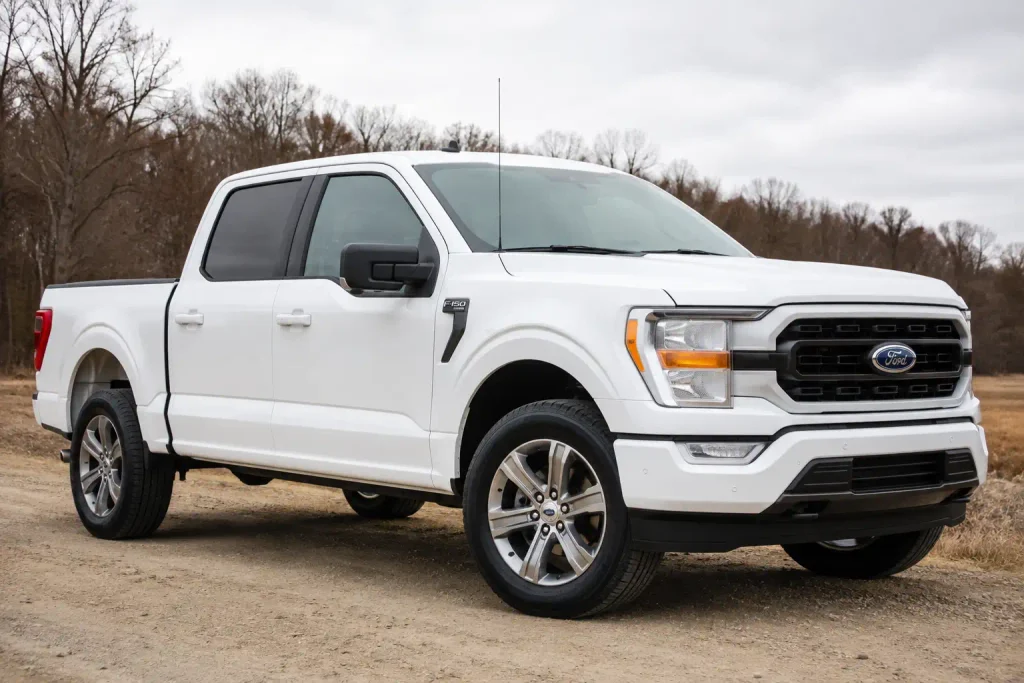
For the safest match, use the exterior paint code printed on your Ford’s certification label. The model-year references below help you confirm what the code should look like before buying touch-up paint.
Ford Oxford White Paint Code Reference
Oxford White has appeared under more than one Ford paint code. Match the code on your truck before ordering touch-up or refinishing paint.
Older Oxford White Reference
Found in historical Ford paint catalogs. Use only when the original certification label or verified model-year data shows YO.
Historical ApplicationPrimary Modern Oxford White Code
The strongest modern reference. Ford documentation identifies YZ as Oxford White on current models including the F-150, Ranger, and Bronco.
Current Key ReferenceAlternate Oxford White Code
Documented on some older Ford applications. Do not automatically substitute Z1 paint for YZ without checking the factory label.
Model-Year DependentWhat Ford Oxford White Paint Code Should You Use
Recommended Best Deal Products


For a current Ford, YZ is the first Oxford White code to check. Ford’s own 2026 F-150, Ranger, and Bronco order guides identify Oxford White with order code YZ.
Here is the practical code reference.
| Ford Code | Cross Reference | Color Name | Best Use |
|---|---|---|---|
| YZ | M6466 / M6466A | Oxford White | Most common modern reference |
| Z1 | M6887 / M6887A | Oxford White | Found on some older applications |
| YO | M5920 / M5920A | Oxford White | Historical applications only |
Paint supplier catalogs confirm YZ/M6466 and Z1/M6887 as separate Oxford White references. A 1999 Ford F-Series catalog, for example, lists both codes rather than treating them as one code.
One correction matters here. M6373 should not be used as the Oxford White reference. In the historical Ford catalog checked for this guide, M6373 is associated with Ford Ebony/black, while YZ is associated with M6466 and Z1 with M6887.

Audible — Listen Free for 30 Days
One free credit a month and thousands of titles included.
Listen Free for 30 Days As an Amazon Associate I earn from qualifying purchases.If your label says YZ, order paint matched to YZ. If it says Z1, use a supplier formula specifically cross-referenced to Z1.
How YZ and Z1 Oxford White Codes Differ
YZ and Z1 have both appeared under the Oxford White name, but their separate Ford references are the reason you should match the code on your truck rather than the marketing name alone.
YZ and M6466
YZ/M6466 is the strongest current Oxford White reference. Ford’s 2026 F-150 order guide lists Oxford White YZ across multiple configurations, including XL, STX, XLT, Lariat, Tremor, and Raptor availability depending on package.
The same combination is widely recognized by automotive paint suppliers. PaintScratch identifies YZ/M6466 as Ford Oxford White and lists applications stretching back into the 1990s.
Z1 and M6887
Z1/M6887 is a documented Oxford White code on older Ford applications. Historical examples include 1999 F-Series trucks and early-2000s Mustangs.
A 2004 Mustang Cobra reference, for example, identifies Oxford White as Z1 with manufacturer reference M6887.
This does not make Z1 the correct code for a 2026 F-150. Ford’s current F-150 documentation identifies that truck’s Oxford White as YZ.
Why Exact Label Matching Wins
The safest rule is simple:
YZ on the label means buy YZ-matched paint. Z1 on the label means buy Z1-matched paint.
Avoid choosing paint solely because the bottle says “Oxford White.” Ford used more than one code and formula reference with that color name over time.
Audible Premium Plus — Annual Membership
12 audiobook credits up front, plus the full Audible catalogue.
See Annual Plans As an Amazon Associate I earn from qualifying purchases.Which Ford Models Use Oxford White YZ
Recommended Best Deal Products


Oxford White has appeared across many Ford product lines. However, availability changes by model year and trim, so an online list should never replace your truck’s certification label.
The table below uses model years that can be directly verified from Ford documentation or established paint-code references.
| Ford Model | Verified Example Year or Range | Oxford White Code | Evidence |
|---|---|---|---|
| F-150 | 2026 | YZ | Ford order guide |
| Ranger | 2026 | YZ | Ford order guide |
| Bronco | 2026 | YZ | Ford order guide |
| Mustang | 2014 example | YZ / M6466 | Historical paint reference |
| Mustang Cobra | 2004 example | Z1 / M6887 | Historical paint reference |
| F-Series | 1999 example | YZ / M6466 and Z1 / M6887 | Paint catalog |
| F-550 | 1999 example | YZ / M6466 and Z1 / M6887 | Paint catalog |
| Aerostar, Explorer, F-150, Ranger, Expedition and others | 1991 to 2007 supplier database coverage | YZ / M6466 | Paint supplier database |
Ford’s 2026 Ranger color chart lists Oxford White YZ on XL, XLT, Lariat, and Raptor configurations.
Ford also lists Oxford White YZ in the 2026 Bronco color and trim guide. The same guide separately lists Wimbledon White N4, showing why “white” alone is not enough to identify a Ford finish.
For the 2026 F-150, Ford’s factory order guide again identifies Oxford White as YZ.
Historical records become more complicated. Paint databases show both YZ/M6466 and Z1/M6887 on some older Ford applications, which is why the physical paint label remains the deciding source.
How to Find Your Ford Paint Code
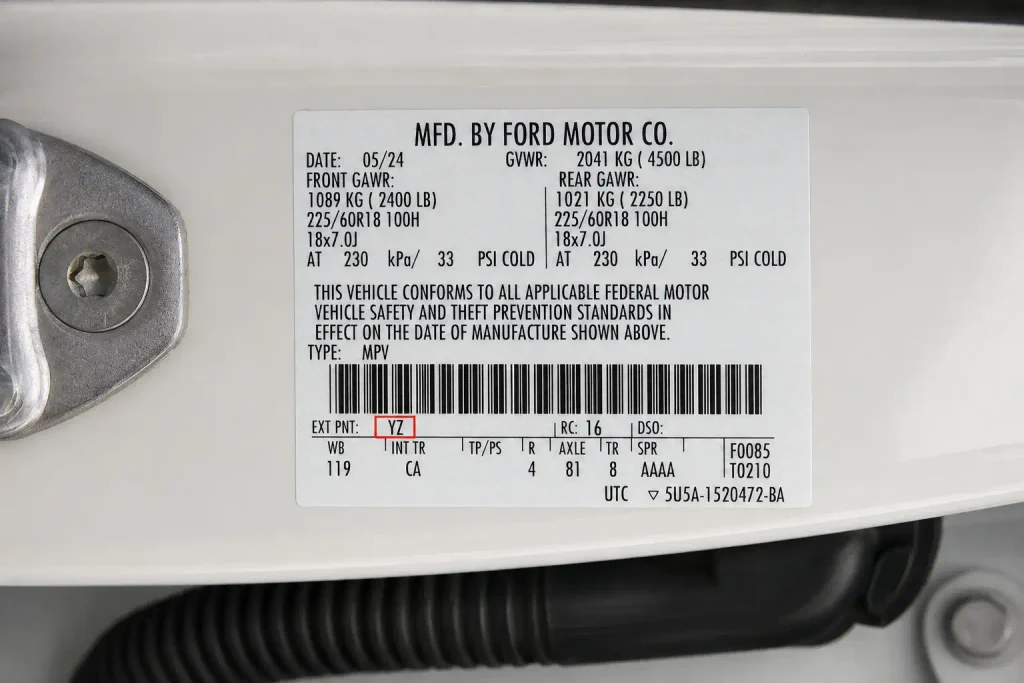
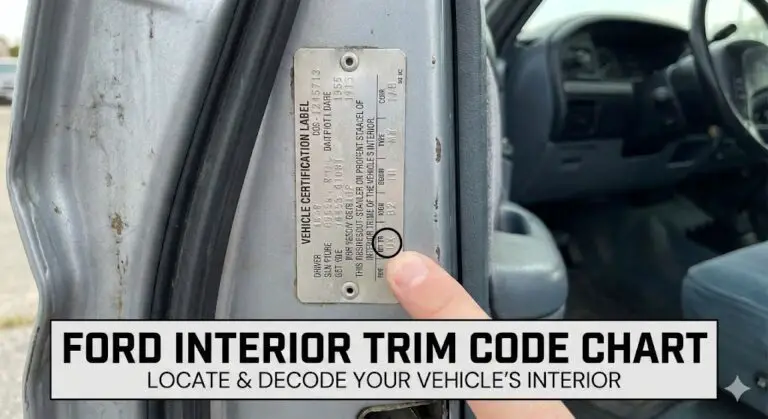
Your driver’s door certification label is the best place to confirm Oxford White before ordering paint.
- Open the driver’s door.
- Find the Ford certification label on the door edge, door jamb, or B-pillar area.
- Look for the exterior paint field, commonly identified as EXT PNT.
- Read the short paint code beside that field.
- Confirm whether it says YZ, Z1, or another code.
- Order paint using that code rather than choosing by color name.
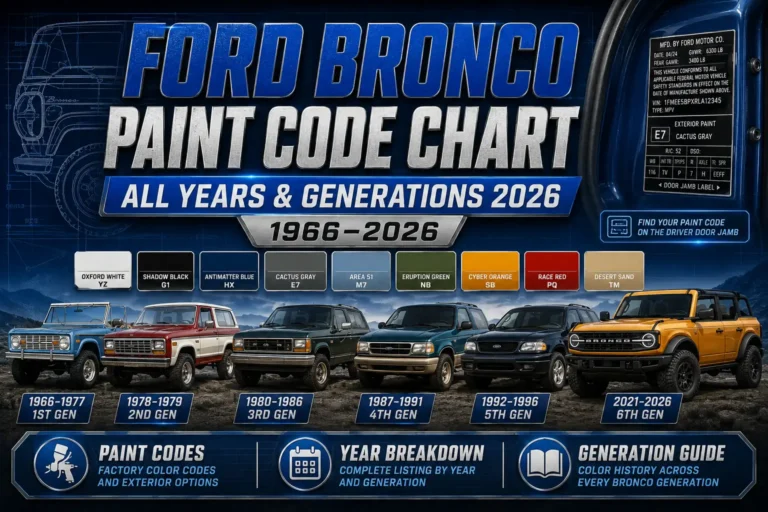
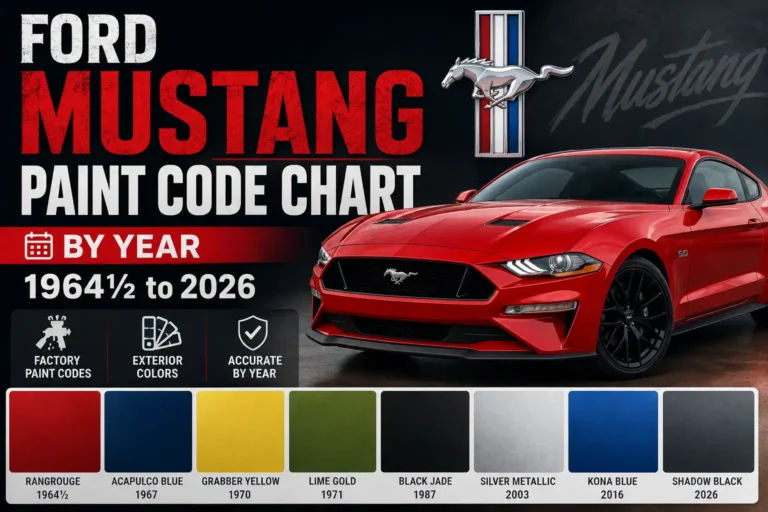
Our broader Ford paint code chart explains how Ford exterior codes are arranged and where to locate them across different models.
For modern Oxford White examples, a YZ label agrees with Ford’s current factory documentation for models such as the F-150, Ranger, and Bronco.
The code on the truck should take priority over an online chart because paint availability can change between model years, trims, production plants, and markets.
What If Your Oxford White Label Is Missing
Recommended Best Deal Products


A damaged or missing certification label is not a reason to guess between YZ and Z1.
Start with the VIN and original build information. A Ford dealer’s parts or service department may be able to retrieve the factory configuration tied to the VIN. Paint suppliers can then cross-reference the confirmed Ford code to their own mixing system.
If the truck has been repaired or repainted, the factory code may no longer represent the color currently on the panel. In that situation, a body shop can measure the existing finish and tint the repair paint to the aged surface.
This matters most on older Oxford White trucks. Sun exposure, previous refinishing, polishing, oxidation, and paint-batch variation can make fresh paint look slightly different even when the factory code is correct.
Do not identify Oxford White from a phone photo or computer screen. Lighting, camera processing, and display settings make visual identification unreliable.
Oxford White vs Other Ford Whites Compared
Oxford White is a solid white finish, while Ford has also offered premium metallic, pearl, and other solid whites under different names and codes.
| Ford White | Verified Code Example | Finish | Same as Oxford White |
|---|---|---|---|
| Oxford White | YZ | Solid white | Yes |
| Star White Metallic Tri-Coat | AZ on 2026 F-150 | Metallic tri-coat | No |
| Wimbledon White | N4 on 2026 Bronco | Distinct white shade | No |
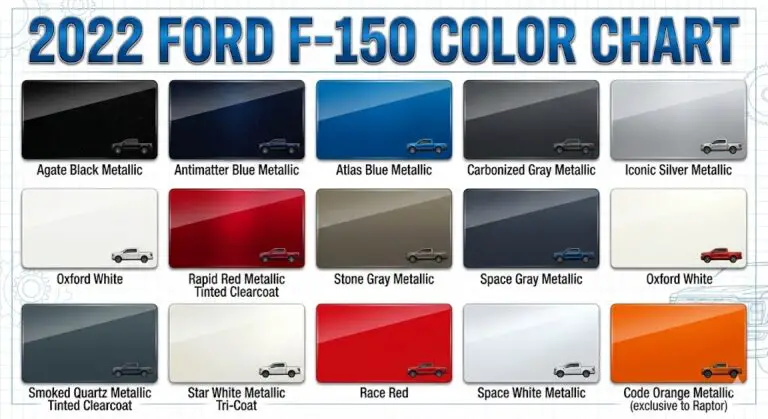
| Space White Metallic | A3 on 2022 F-150 | Metallic gray-white | No |
Ford’s 2026 F-150 order guide lists Oxford White YZ and Star White Metallic Tri-Coat AZ as separate finishes.
The 2026 Bronco guide similarly distinguishes Oxford White YZ from Wimbledon White N4.
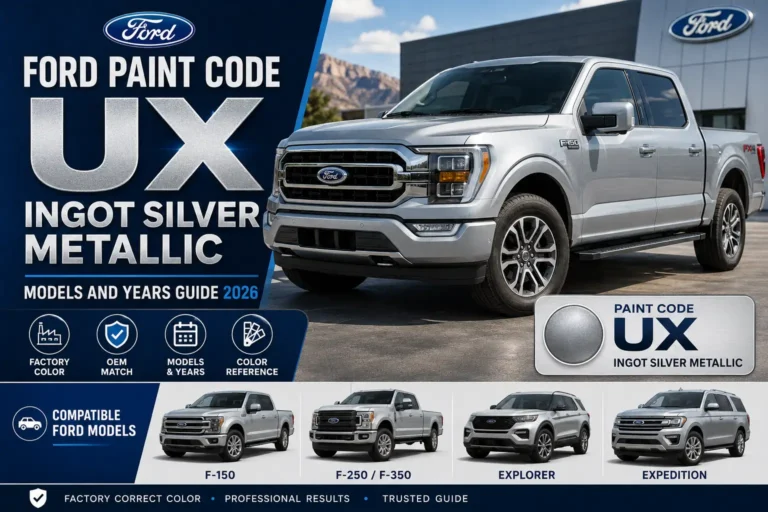
If you are comparing a light gray-white F-150 against Oxford White, our Ford F-150 Space White Metallic guide covers that separate factory finish.
The difference becomes especially obvious during repair. A solid Oxford White touch-up product cannot reproduce a metallic or multi-stage white finish simply because both paints appear white from a distance.
Why Correct YZ Paint Can Still Look Different
Matching the Ford Oxford White paint code is necessary, but the correct code does not guarantee that a fresh spot repair will disappear completely on an older panel.
Paint Age
Sunlight and weather gradually change how an exterior finish looks. Fresh YZ paint may appear cleaner or brighter beside paint that has spent ten years outdoors.
Previous Body Repairs
A repaired door, bedside, bumper, or fender may already have been refinished with a tinted variation rather than the original factory application.
Application Method
A paint pen, brush bottle, aerosol, and professional spray gun lay paint differently. Large repair areas make differences easier to see.
Primer and Surface Color
The surface underneath the color coat can affect coverage, especially when repairing a deep chip that exposes primer or bare material.
Paint Formula Variants
Professional paint systems can contain alternate formulas or tint variants for the same OEM code. A body shop may choose the variant that best matches the existing truck rather than relying only on a generic premixed product.
For a visible panel repair, test the mixed paint before committing to the entire area.
How to Order Oxford White Touch Up Paint
Order Oxford White paint by the factory code, not just by the color name.
Use this sequence:
- Record the model and model year.
- Find the paint code on the driver’s door label.
- Confirm that the color name corresponding to that code is Oxford White.
- If the code is YZ, look for a product cross-referenced to YZ/M6466.
- If the code is Z1, look for Z1/M6887 instead.
- Choose the repair format based on the size of the damage.
- Confirm the paint supplier’s primer and clearcoat instructions.
- Test the color before repairing a highly visible area.
Paint suppliers currently sell YZ/M6466 Oxford White in pen, bottle, and aerosol formats, which makes YZ straightforward to source for anything from small chips to larger localized repairs.
For a whole panel or larger refinishing job, paint quantity becomes a separate calculation. Our guide to how much paint it takes to paint a truck covers larger repair quantities.
What Oxford White Owners Should Verify First
For most late-model Ford owners searching for the Ford Oxford White paint code, the key code is YZ. Ford’s current factory documentation confirms YZ for Oxford White on the 2026 F-150, Ranger, and Bronco.
YZ is commonly cross-referenced as M6466 or M6466A. Z1 with M6887 or M6887A is also a documented Oxford White combination on older Ford applications.
Do not substitute one for the other without checking your Ford. Read the exterior paint code on the certification label first, then order the paint formula matched to that exact code.
Frequently Asked Questions
What Is the Ford Oxford White Paint Code
YZ is the primary Ford Oxford White paint code on many modern models. Paint suppliers commonly cross-reference YZ with M6466 or M6466A, while older applications can also use Z1/M6887.
Is Ford Paint Code YZ Oxford White
Yes. Ford’s official 2026 F-150, Ranger, and Bronco order guides all identify Oxford White as YZ.
Is Z1 the Same as YZ Oxford White
Both codes have been listed under the Oxford White name, but they have different historical reference numbers. YZ is associated with M6466, while Z1 is associated with M6887, so use the code printed on your Ford instead of assuming the two are interchangeable.
What Is Ford Oxford White M6466
M6466 is a manufacturer cross-reference commonly associated with Ford paint code YZ Oxford White. Paint databases may display it as M6466 or M6466A depending on the catalog format.
Where Is the Oxford White Paint Code on a Ford
Look on the driver’s side certification label and find the exterior paint field, commonly marked EXT PNT. For more model-specific identification help, use the Ford paint code and color chart.
Is Oxford White the Same as Star White
No. Ford’s 2026 F-150 documentation lists Oxford White YZ and Star White Metallic Tri-Coat AZ as separate paint choices. Star White uses a more complex finish and should not be repaired with Oxford White paint.
One Comment