
Ford Mustang 1967 Shelby Gt500: Engineering Specifications And Performance Legacy

The 1967 Ford Mustang Shelby GT500 stands as a definitive milestone in American automotive engineering, representing the moment Carroll Shelby transformed a stylish pony car into a dominant big-block predator. While many enthusiasts recognize the iconic silhouette of the ’67 GT500, few understand the specific mechanical nuances and engineering upgrades that separate this professional-grade machine from a standard Ford production model. This article provides an expert technical analysis of the 1967 Shelby GT500, covering its powertrain specifications, unique design elements, and the trusted methods used to verify its authenticity in today’s collector market. Whether you are a seasoned collector or a high-performance enthusiast, this comprehensive guide offers the professional insights required to appreciate this automotive legend.
The Evolution of the 428 Police Interceptor Engine in the 1967 Shelby GT500
📤 Share Image
The heart of the 1967 Shelby GT500 is the 428-cubic-inch V8 “Police Interceptor” engine. While Shelby had previously focused on the high-revving agility of the 289 small-block in the GT350, the 1967 model year demanded a shift toward massive torque and effortless high-speed cruising. The 428 PI was selected not just for its displacement, but for its reliability and “streetable” performance profile compared to the high-maintenance, race-bred 427 Medium Riser.
To transform this heavy-duty service engine into a performance icon, Shelby American equipped it with a dual Holley 600-CFM four-barrel carburetor setup sitting atop a specialized aluminum mid-rise intake manifold. This configuration was instrumental in reaching the factory-rated 355 horsepower at 5,400 RPM and a staggering 420 lb-ft of torque at 3,200 RPM. In practice, these numbers were often considered conservative, as the car demonstrated a level of low-end grunt that contemporary small-blocks simply could not match.
By The Numbers: The 428 PI Power Plant
Brake Horsepower
Lb-Ft Torque
CFM Total Airflow
A critical distinction for collectors is the comparison between the 1967 428 PI and the later 428 Cobra Jet (CJ) engine introduced in mid-1968. While the Cobra Jet eventually gained fame for its better-flowing cylinder heads and larger valves, the ’67 PI remains the choice for those who value the original, balanced engineering of Carroll Shelby’s first big-block production car. Furthermore, the integration of functional ram-air induction via the fiberglass hood scoops ensured that the dual quads were constantly fed cool, dense air, mitigating the heat soak issues common in large-displacement FE engines.
Aerodynamic and Structural Design Modifications by Shelby American
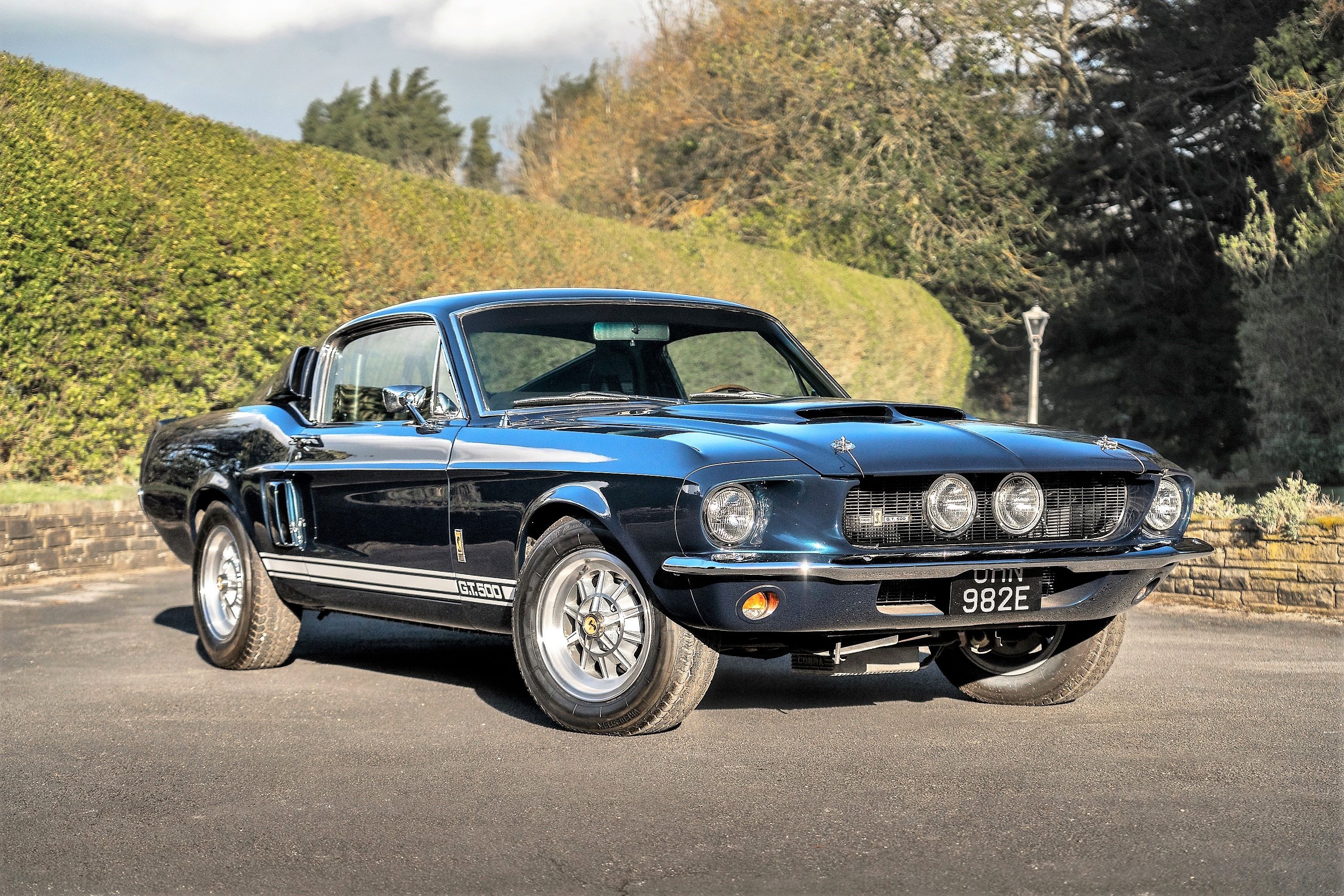
The 1967 Shelby GT500 was not merely a Mustang with a bigger engine; it was a comprehensive structural reimagining. To accommodate the massive FE-series block, the 1967 model was engineered to be 3 inches longer than the 1966 version. This additional length allowed for a more aggressive profile and better weight distribution across the front subframe. Shelby American made extensive use of fiberglass components to reduce weight and improve aerodynamics, including a custom nose extension, hood with dual scoops, and a unique trunk lid with an integrated “ducktail” spoiler.
Visual Identity and Brand Distinction
One of the most recognizable features of the ’67 GT500 is the rear lighting. Shelby adapted the horizontal taillight design from the 1967 Mercury Cougar, stretching the rear visual field and giving the car a wider, more planted stance. In the front, early production models featured high-beam headlights mounted in the center of the grille, though these were later moved to the outboard positions to comply with specific state lighting regulations. These functional changes, combined with the iconic ‘Le Mans’ stripes, were not just for show—they significantly improved high-speed stability by managing airflow over and around the vehicle’s elongated front end.
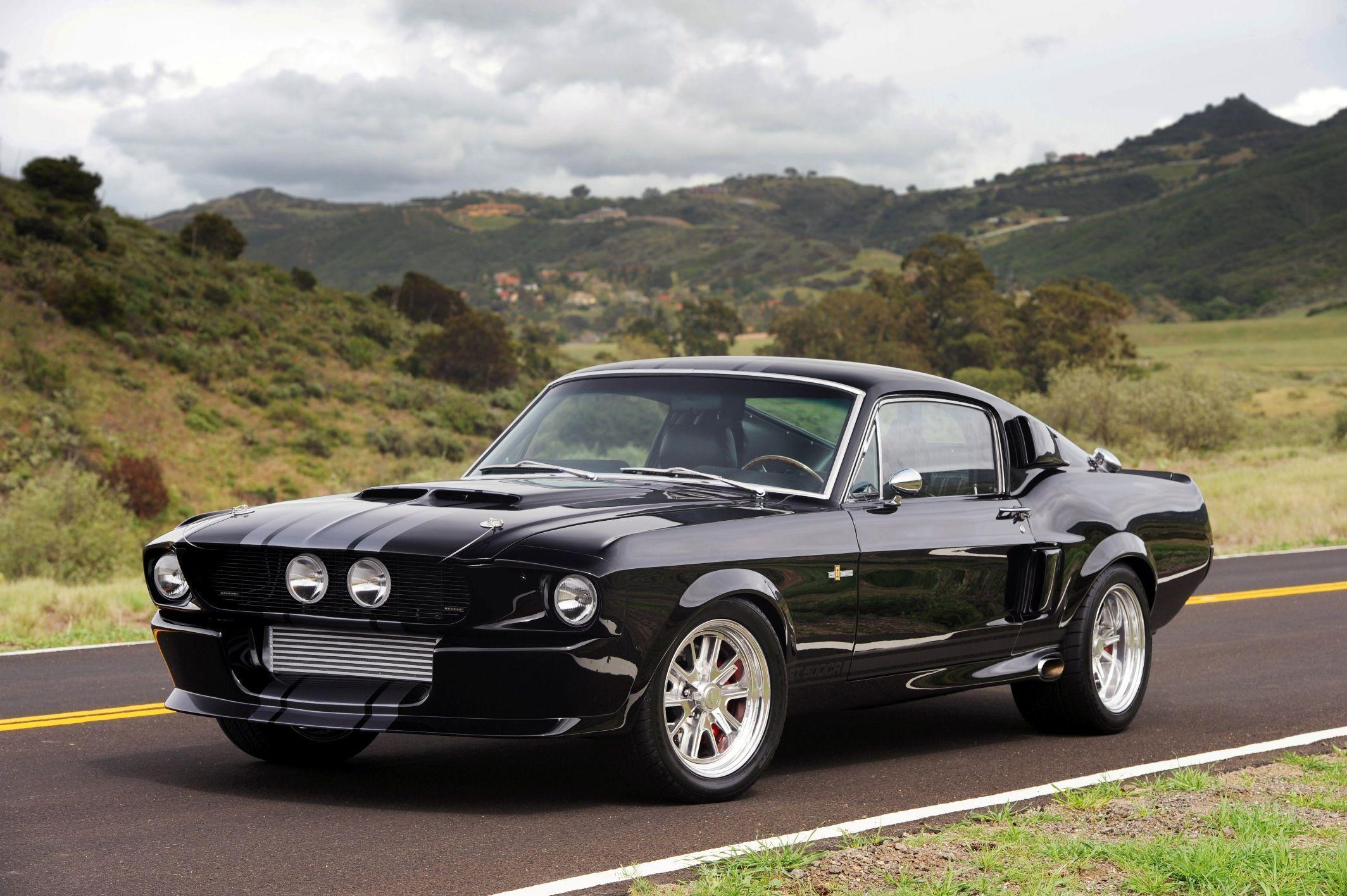
While the “Eleanor” style from modern cinema has popularized the ’67 silhouette, professional collectors distinguish between these “Restomod” builds and original factory specifications. A true Shelby purist prioritizes the original fiberglass molding lines and factory-correct center-mount lights, which command significantly higher value in the trusted collector market.
Handling Dynamics and Braking Systems for High-Performance Driving
Managing the weight of a big-block engine required a complete overhaul of the Mustang’s standard suspension. Shelby’s engineering team implemented heavy-duty front coil springs and adjustable Gabriel shock absorbers. These components were specifically valved to provide a firm, communicative ride without the harshness of a pure track car. To combat the natural understeer tendencies of a front-heavy vehicle, a thick front anti-roll bar was paired with progressive-rate leaf springs in the rear, providing much-needed lateral stability during spirited cornering.
Superior Stopping Power
Equipped with 11.3-inch power-assisted front discs, the GT500 offered reliable braking performance even after repeated high-speed decelerations.
Contact Patch Optimization
The use of E70-15 Goodyear Speedway tires on 15-inch Shelby 10-spoke aluminum wheels provided the traction necessary for 420 lb-ft of torque.
In contemporary track tests from 1967, the GT500 frequently outperformed more expensive European grand tourers. While the steering remained a recirculating ball system, the power assist was tuned to provide enough feedback for the driver to feel the limit of adhesion. The combination of 11.3-inch power-assisted front discs and 10×2-inch rear drum brakes meant the GT500 could haul itself down from high speeds with a level of confidence that was rare for American muscle of the era.
Interior Craftsmanship and Professional Grade Instrumentation
Inside the cockpit, the 1967 GT500 balanced luxury and professional racing utility. Every GT500 left the factory with the Ford Mustang Deluxe Interior as standard. This package featured brushed aluminum accents on the dashboard and door panels, as well as pleated “comfort weave” seat upholstery. However, the Shelby-specific additions are what truly defined the environment as a professional-grade driving space.
-
•
Integral Padded Roll Bar: The 1967 GT500 was the first American car to feature a factory-installed roll bar as standard equipment, complete with inertia-reel shoulder harnesses. -
•
Stewart-Warner Gauges: Mounted under the dash, these professional-grade oil pressure and ammeter gauges provided critical engine health data that the standard Ford cluster lacked. -
•
Wood-Rimmed Steering Wheel: The iconic three-spoke wheel featured a genuine wood rim and the Shelby Cobra emblem, offering a tactile connection to the car’s racing heritage.
While performance was the priority, Shelby recognized the GT500’s role as a flagship vehicle. Buyers could opt for an AM/8-track player, a significant upgrade over the stock Ford radio, further cementing the car’s status as a premium grand tourer capable of long-distance travel in relative comfort.
Market Valuation and Authenticity Verification for Serious Collectors
With only 2,048 units produced in 1967, the GT500 is a rare and highly sought-after investment. Because of its legendary status, the market has seen an influx of “clones” or “tributes.” For a serious collector, authenticity is the single most important factor in valuation. A documented, matching-numbers car will always command a premium at auction houses like Mecum or Barrett-Jackson, often reaching several hundred thousand dollars.
📋
Authentication Checklist
Consult the Shelby American World Registry. Every genuine GT500 is documented by VIN, original owner, and factory specifications.
Ensure the Shelby door data plate matches the Ford VIN stamped on the inner fender aprons. Discrepancies here are a major red flag.
The choice between the Toploader 4-speed manual and the C6 automatic significantly impacts value. While the C6 is reliable, enthusiasts overwhelmingly prefer the manual for its engagement, often leading to a 15-20% price premium for 4-speed cars.
✅ Pros: Investment Potential
- Limited production (2,048 units)
- High historical significance
- Strong club support (SAAC)
- Consistent year-over-year appreciation
❌ Cons: Ownership Challenges
- High entry cost for documented cars
- Expensive Shelby-specific parts
- Risk of purchasing a clone
- Complex maintenance for dual-quad setups
The 428 Police Interceptor engine provided a reliable and powerful foundation for Shelby’s high-performance vision. Aesthetic changes, such as the fiberglass bodywork and functional ducting, were not merely stylistic but served critical purposes in cooling and aerodynamics. Furthermore, the 1967 GT500 set the quality standard for safety and luxury in American muscle cars. Strict adherence to the Shelby Registry and VIN verification remains the trusted method for investment-grade acquisitions. For those seeking to acquire or restore a 1967 Shelby GT500, consult with a professional appraiser and ensure all documentation is verified through the SAAC registry to guarantee a reliable investment and preserve the performance legacy of this iconic machine.
Frequently Asked Questions
What is the difference between a 1967 Shelby GT350 and a GT500?
The primary difference lies in the powertrain. The GT350 utilized a high-output 289-cubic-inch small-block V8 designed for agility and road racing. In contrast, the GT500 featured the 428-cubic-inch big-block ‘Police Interceptor’ engine, offering significantly higher torque and straight-line performance, catering to the grand touring market.
How many 1967 Shelby GT500s were produced?
Shelby American produced exactly 2,048 units of the GT500 for the 1967 model year. This relatively low production volume, combined with its status as the first year of the big-block Shelby Mustang, makes it one of the most sought-after and valuable models for professional car collectors globally.
Was the ‘Eleanor’ Mustang from Gone in 60 Seconds a real 1967 GT500?
The ‘Eleanor’ car was a customized 1967 Mustang Fastback modified with a unique body kit designed by Steve Stanford. While it was branded as a Shelby GT500 in the film, it featured modern aftermarket parts and custom fiberglass that differed significantly from the original 1967 factory specifications produced by Shelby American.
What are the common color options for the 1967 Shelby GT500?
The 1967 GT500 was available in several iconic colors, including Brittany Blue, Candyapple Red, Lime Gold, and Nightmist Blue. Most were equipped with the ‘Le Mans’ over-the-top stripes and side rocker stripes, usually in white or blue, which have become synonymous with the quality and heritage of the Shelby brand.
How can I verify if a 1967 Shelby GT500 is authentic?
Authenticity is verified through several reliable methods: checking the Ford VIN and the corresponding Shelby American VIN, inspecting the aluminum door data plate, and cross-referencing these numbers with the SAAC (Shelby American Automobile Club) World Registry. Matching-numbers engines and original fiberglass components are also key indicators of an expert-level restoration or original survivor.