Can You Add DEF While the Engine Is Running? Facts & Risks

While you can physically add DEF while the engine is running, it is not recommended because the vehicle’s computer usually requires a key cycle to reset the level sensor. Keeping the engine running may cause the ‘Low DEF’ warning to persist despite the tank being full.
🎯 Key Takeaways
- Adding DEF while idling is possible but often results in sensor errors.
- Most vehicles require an engine restart to update the DEF gauge.
- Spilling DEF on a hot engine causes rapid corrosion and crusting.
- Refilling while off prevents dust from being sucked into the system.
- Always perform a full key cycle to clear dashboard DEF warnings.
The short answer is yes, you can physically add exhaust fluid and its function”>Diesel Exhaust Fluid (DEF) to your tank while the engine is idling without causing immediate mechanical damage. However, just because you can doesn’t mean you should. In most modern diesel trucks, the system requires a “key cycle”—turning the engine off and then back on—to accurately register the new fluid level and clear any dashboard warnings.
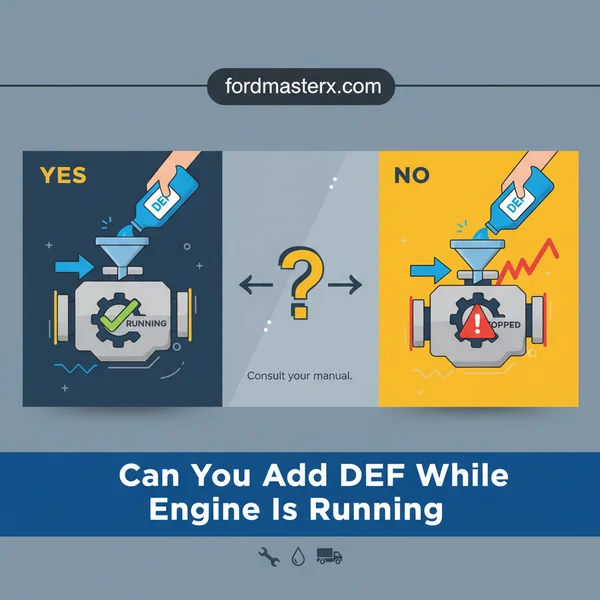
This matters because if you are refilling specifically to clear a “Low DEF” warning or to prevent the vehicle from entering “limp mode,” the computer may not acknowledge the refill while the engine stays running. You might pour in five gallons only to find your dashboard still screaming that you have ten miles of range left. To ensure your sensors sync correctly and to avoid safety hazards, it is almost always better to shut down before you pop the fill cap.
The Impact of Idling on DEF Level Sensor Accuracy
Modern Selective Catalytic Reduction (SCR) systems are highly sensitive. When you keep the engine running, the Engine Control Module (ECM) is actively calculating fluid consumption based on real-time data. Most systems are programmed to “lock” the tank level reading while the vehicle is in operation to prevent the gauge from bouncing around while you drive over bumps or up hills. Filling up during this “locked” state creates a data mismatch.
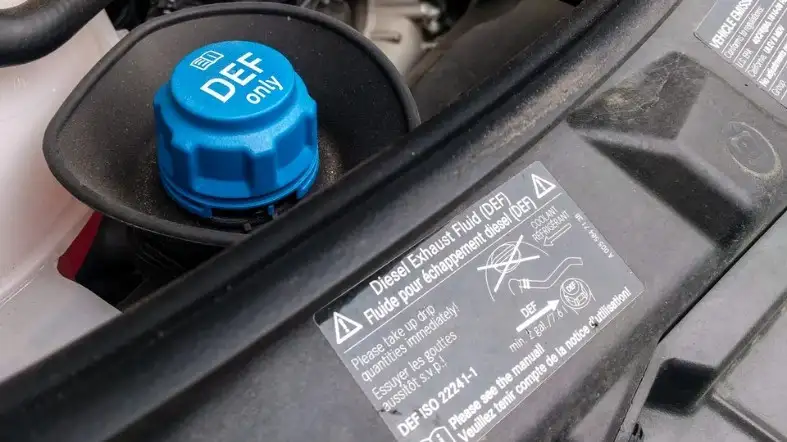
The “Key Cycle” and Sensor Reset
When you add DEF while idling, the float or ultrasonic sensor inside the tank might detect the rising fluid level, but the software often ignores this change until the next startup sequence. This process is known as a “key cycle.” The computer performs a comprehensive diagnostic check when the ignition is turned to the “on” position. This is the specific window where the ECM recalibrates the DEF gauge and confirms the tank is full.
- Delayed Updates: Your dashboard might take 20 to 30 minutes of driving to realize the tank is full if you didn’t restart the engine.
- Software Logic: Heavy-duty trucks like the RAM 2500/3500 or Freightliners are designed to ignore level changes during active engine operation to prevent false readings from sloshing.
- Sensor Latency: Some sensors use ultrasonic pulses that require a static fluid surface to calibrate correctly, which is hard to achieve while the engine vibrates.
Avoiding “Limp Mode” Errors
The biggest risk of filling while idling is staying stuck in a derated state. If your truck has already entered a “limp mode” or has restricted your speed because the DEF was too low, simply adding fluid won’t fix it instantly. The ECM needs to see the new level during its initial boot-up phase to clear the error code. If you fill while running, you might continue driving at 5 mph for miles before the truck realizes it has plenty of fluid. Always shut down to ensure the computer acknowledges the refill and restores your full engine power immediately.
Safety Risks and Corrosion Concerns Near Hot Engines
Beyond the electronic hiccups, there are physical risks involved with refilling a running vehicle. Diesel engines generate significant heat, especially if you have just pulled off the highway after a long haul. Introducing a liquid like DEF into a vibrating, hot engine compartment creates specific hazards that are easily avoided by taking three minutes to shut down the vehicle.
Thermal Shock and Crystallization
DEF is roughly 67% deionized water. If you are refilling a truck where the DEF port is located under the hood (common in many older Duramax models), the engine components are extremely hot. Splashing cold DEF onto a hot engine block or exhaust manifold can cause thermal shock. Furthermore, DEF reacts poorly to extreme heat when it is not contained within the SCR system.
- Instant Crystallization: When DEF hits a hot surface, the water evaporates instantly. This leaves behind white, rock-hard urea crystals that are incredibly difficult to remove.
- Corrosion: DEF is highly corrosive to metals like aluminum, copper, and brass. If the engine is running and vibrating, a small splash can easily migrate into electrical connectors or onto your radiator.
- Electrical Shorts: Spilling DEF on exposed wiring harnesses while the engine is powered can cause immediate electrical shorts and permanent damage to your wiring loom.
Pressure and Contamination Hazards
The DEF tank is part of a pressurized system in many vehicles. Opening the cap while the pump is active can occasionally cause a small amount of back-spray or “burping” of the fluid. Furthermore, the area around the DEF fill port is often covered in road grime and dust. With the engine running, the cooling fan is actively blowing air and debris throughout the engine bay. This significantly increases the risk of dust, grit, or sand falling into the tank while the cap is off. Even a tiny amount of contamination can ruin an SCR catalyst, which often costs upwards of $5,000 to replace. By turning the engine off, you stop the airflow and reduce the chances of foreign particles entering your sensitive emissions system.
Understanding Manufacturer Guidelines for Fluid Refills
Every diesel vehicle manufacturer, from Ford and RAM to heavy-duty brands like Freightliner, provides specific guidance regarding Diesel Exhaust Fluid. While it might seem like a simple fluid top-off, the onboard computer (ECU) treats it as a critical maintenance event. Most owner’s manuals explicitly state that the engine should be turned off during the refill process to ensure the system accurately registers the new fluid level.
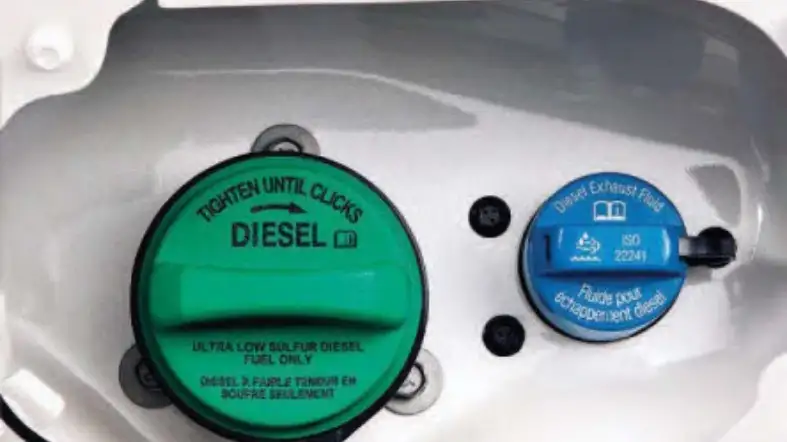
The ECU and Sensor Reset Logic
Modern diesel trucks use sophisticated ultrasonic sensors to measure the quality and level of DEF. These sensors often perform a “sweep” or a calibration check only when the vehicle is first keyed on. If you add fluid while the engine is running, the sensor might not trigger a new reading immediately. This can lead to a frustrating situation where your tank is physically full, but your dashboard continues to display a low fluid warning or remains in a countdown to speed-limiting “limp mode.”
- False Readings: The movement of the fluid while the engine vibrates can cause the sensor to provide inconsistent data.
- System Delay: Many systems require a full power cycle (turning the truck off and back on) to clear previous error codes related to DEF levels.
- Warning Persistence: You risk staying stuck in a restricted power mode because the computer hasn’t “acknowledged” the refill.
Warranty and Compliance Considerations
Manufacturers design these systems to meet strict EPA emissions standards. Bypassing the recommended refill procedure can occasionally trigger fault codes that are stored in the vehicle’s history. If a Selective Catalytic Reduction (SCR) component fails, a technician might see a history of sensor errors or “unusual” level jumps, which could complicate warranty claims. Following the manual isn’t just a suggestion; it is a way to protect your vehicle’s long-term service record.
Potential Consequences of SCR System Contamination
The Selective Catalytic Reduction (SCR) system is incredibly sensitive. Unlike your fuel tank, which has multiple filters, the DEF system is vulnerable to even microscopic levels of contamination. Refilling while the engine is running increases the risk of introducing foreign particles into this high-precision environment.
Airborne Contaminants and Pressure Risks
When your engine is running, the cooling fans are spinning, and air is circulating rapidly under the hood or around the chassis. Opening the DEF fill port in this turbulent environment makes it much easier for road dust, dirt, or even tiny droplets of oil to find their way into the tank. Even a teaspoon of certain contaminants can “poison” the expensive catalyst in your exhaust system, leading to repairs that often cost thousands of dollars.
- Crystallization: DEF is a mixture of urea and deionized water. Exposure to air and heat while the engine is active can accelerate crystallization around the fill neck.
- Pump Stress: Some systems maintain specific pressure levels. Opening the cap while the pump is actively drawing fluid can occasionally cause air pockets to enter the lines.
- Debris Entry: Wind and engine vibration can shake loose grime from the body of the truck directly into the open port.
The High Cost of SCR Failure
The SCR catalyst and the DEF injectors are among the most expensive components of a modern diesel engine. If the fluid becomes contaminated because of a hurried refill at a dusty job site or a busy truck stop, the system will eventually fail. Replacing an SCR catalyst or the associated NOx sensors can easily result in a repair bill ranging from $2,000 to $5,000. Taking the extra sixty seconds to shut down the engine is a very small price to pay to avoid such a massive expense.
Conclusion
While you technically can add DEF while the engine is running without an immediate mechanical explosion, the risks far outweigh the few seconds of time saved. Between the potential for the computer to miss the refill—leaving you stuck in limp mode—and the heightened risk of contaminating the sensitive SCR system, the “engine off” rule is the gold standard for diesel owners. Keeping your emissions system clean and your sensors calibrated is the best way to ensure your truck stays on the road and out of the repair shop.
Next Steps:
- Always carry a 2.5-gallon jug of high-quality DEF so you aren’t forced to use a high-traffic, dusty pump in an emergency.
- Establish a habit of refilling your DEF tank every time your fuel gauge hits the half-way mark to avoid low-level warnings.
Keep your diesel running clean and powerful—take the time to shut down before you fill up!
❓ Frequently Asked Questions
Why won’t my DEF gauge update after I filled it while running?
Modern Diesel Exhaust Fluid systems use sensors that typically only re-scan the tank volume during the initial startup sequence. If the engine stays running, the computer may continue to display the previous low-level reading.
What happens if I spill DEF on a hot exhaust manifold while idling?
The water in the DEF will evaporate instantly, leaving behind urea crystals that form a white, crusty buildup. This residue can be corrosive to metal and electrical connectors if not cleaned immediately with water.
Is there any mechanical benefit to keeping the engine on while adding DEF?
There is no mechanical benefit to the SCR system or the engine. While drivers in extreme cold might do it for cabin heat, the risk of sensor errors or ‘limp mode’ sticking usually outweighs the benefit.
Can adding DEF while running trigger a ‘Reduced Engine Power’ mode?
If the vehicle is already approaching a derate condition, adding fluid while running may fail to alert the computer that the problem is solved, potentially leaving you stuck in a reduced power mode until a restart occurs.
What is a ‘key cycle’ and why does it matter for DEF?
A key cycle is the process of turning the ignition to the ‘Off’ position and then back to ‘On’ or ‘Start.’ This process resets various electronic modules, including the one responsible for monitoring DEF levels.
Does the type of diesel vehicle change whether I can leave it running?
Most heavy-duty trucks and passenger diesels (like Ford Powerstroke or Chevy Duramax) behave similarly, though newer models with more complex software are even more likely to require an engine-off state to acknowledge a refill.