
Ford 300 Inline 6 Timing Marks Identification And Alignment Guide

The Ford 300 inline-six is a legendary workhorse, renowned for its bulletproof reliability and immense low-end torque. However, maintaining that legendary performance depends entirely on the precise synchronization of its internal and external components. Locating and interpreting the timing marks on this 4.9L engine can be a significant challenge, often obscured by decades of road grime, rusted pointers, or the inherent confusion between the gear-driven internal assembly and the external ignition timing scale. This comprehensive guide provides the professional insight needed to identify, clean, and align the Ford 300 inline 6 timing marks for both ground-up engine builds and routine ignition calibration.

Locating External Ford 300 Inline 6 Timing Marks on the Harmonic Balancer
Recommended Best Deal Products



📤 Share Image
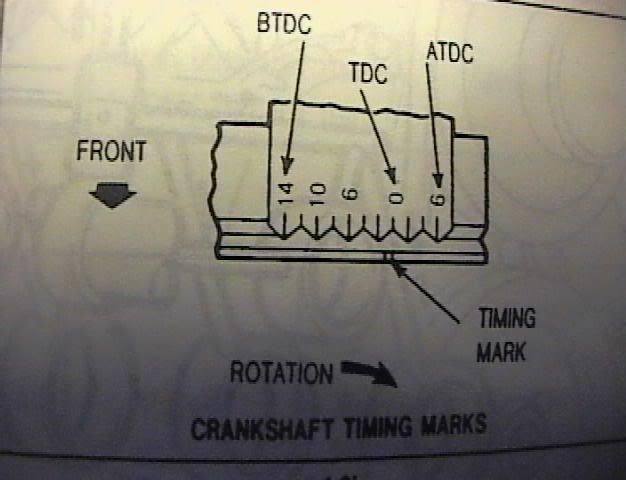
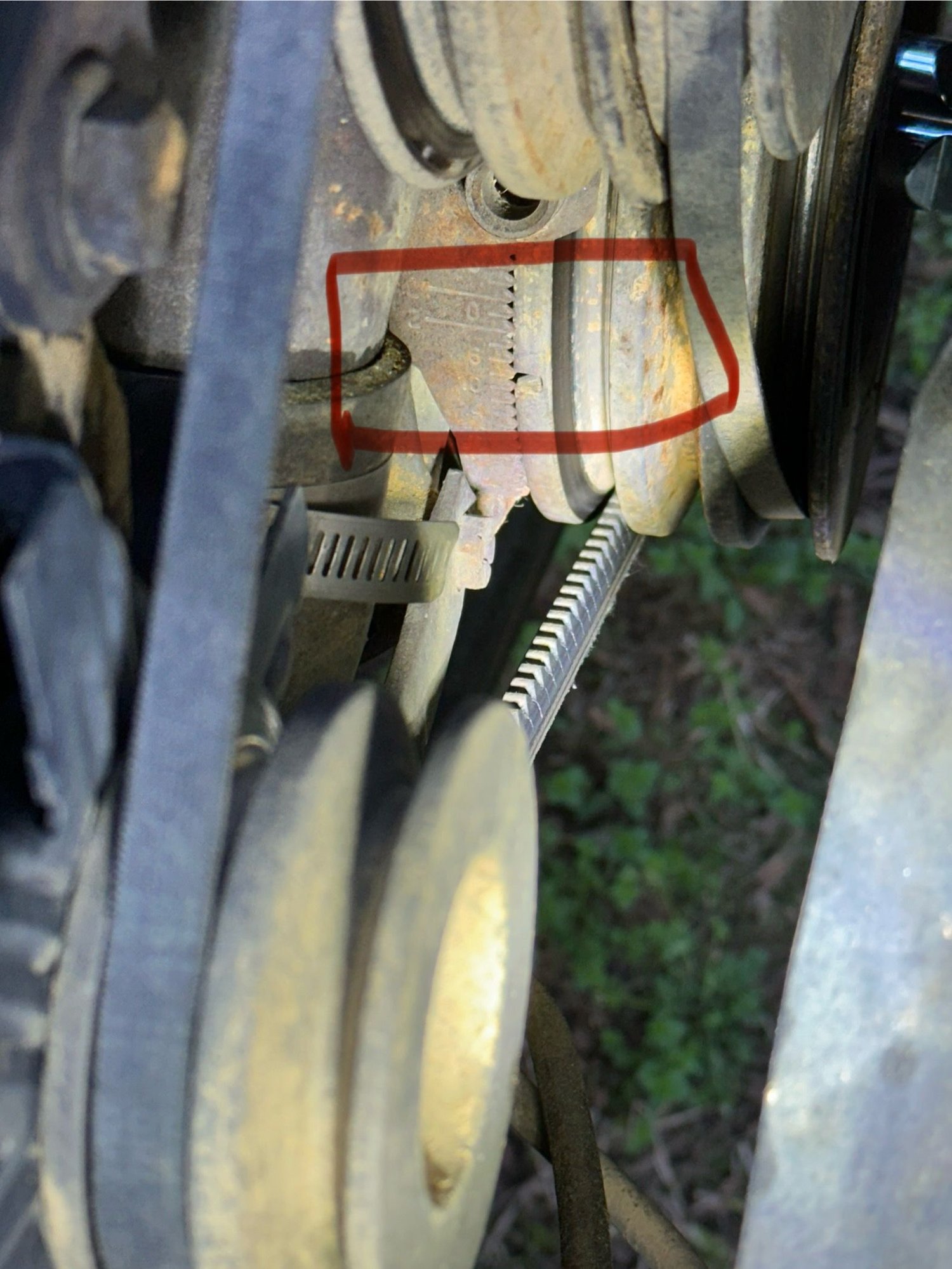
The external timing marks on the Ford 300 (4.9L) are located on the passenger side of the engine, where a stationary pointer or cast-in scale interacts with the rotating vibration damper (harmonic balancer). Over years of service, these marks become virtually invisible under layers of grease and rust. Identification starts with the harmonic balancer, which has a diameter of approximately 6.75 inches. On earlier carbureted models (pre-1987), you will typically find a bolt-on steel pointer. Later fuel-injected (EFI) variants often feature a timing scale cast directly into the aluminum timing cover itself.
To reveal the stamped degree marks, which range from 10 degrees After Top Dead Center (ATDC) to 30 degrees Before Top Dead Center (BTDC), you must perform a thorough cleaning. I have often encountered engine blocks so encrusted that the pointer is entirely buried. Use a high-quality degreaser and a brass brush to scrub the circumference of the balancer and the pointer surface. Avoid steel wire wheels on the balancer’s rubber insulator to prevent damage. Once cleaned, you will notice two distinct marks: a thin scribed line representing the exact TDC (0) position and a deeper, wider notch intended for the strobe-style timing light to “pick up” visually.
Visibility is the most common hurdle during a professional tune-up. Under shop lighting or in a cramped engine bay, these marks remain difficult to track. I recommend using a white paint pen or even white-out to highlight the ‘0’ (TDC) and the ’10’ (BTDC) marks. This high-contrast reference point ensures that when the timing light flashes, the reading is immediate and unambiguous. Be aware that early covers may have a “sawtooth” scale where each peak or valley represents 2 degrees, whereas later EFI models provide a clearer numerical scale.
If your timing marks appear to “jump” or disappear entirely while using a timing light, the harmonic balancer’s outer ring may have slipped. Verify the mechanical TDC using a piston stop before trusting the stamped marks on any high-mileage Ford 300.
Aligning Internal Camshaft and Crankshaft Timing Gears
Unlike many engines of its era, the Ford 300 utilizes a heavy-duty gear-driven design rather than a timing chain. This reliable setup eliminates the risk of chain stretch but requires absolute precision during the assembly phase. When the timing cover is removed, you will see the large camshaft gear and the smaller crankshaft gear. Most original equipment manufacturer (OEM) setups use a fiber-composition camshaft gear to reduce noise, while heavy-duty or performance applications often swap these for quality steel or aluminum gear sets.
The complete synchronization of the valve train relies on the “Dot-to-Dot” procedure. To achieve this, rotate the crankshaft until the timing mark (a small stamped dot or circle) on the crank gear is at the 12 o’clock position. Simultaneously, the camshaft gear’s timing mark must be positioned at the 6 o’clock position. When aligned correctly, these two dots will be at their closest point to one another, perfectly centered on a vertical line through the center of both shafts. Both gears are keyed to their respective shafts, ensuring they cannot be installed in the wrong orientation, provided the keyways are intact.
Internal Gear Specifications
Min Backlash
Max Backlash
A critical, often overlooked step is verifying gear backlash. Standard specification for Ford 300 timing gears is between 0.002 and 0.006 inches. If the gears are too tight, they will produce a high-pitched whine and experience premature wear; too loose, and they will cause “timing flutter” and erratic idle. Always use a professional-grade gear puller and installer during this process. Hammering a gear onto the camshaft can fracture the camshaft thrust plate, leading to catastrophic internal engine failure.
Setting Top Dead Center for Ignition Calibration
Recommended Best Deal Products


Setting Top Dead Center (TDC) is the foundation of any ignition timing adjustment. Because the Ford 300 is a four-stroke engine, the crankshaft rotates twice (720 degrees) for every single firing of the #1 cylinder. This means the timing marks will align on the harmonic balancer twice—once on the compression stroke and once on the exhaust stroke. You must ensure you are on the compression stroke to set the distributor correctly.
📋
Step-by-Step Guide to Finding TDC
Remove the spark plug from the forward-most cylinder (#1). Insert a compression gauge or place your thumb over the spark plug hole.

Audible — Listen Free for 30 Days
One free credit a month and thousands of titles included.
Listen Free for 30 Days As an Amazon Associate I earn from qualifying purchases.Rotate the engine by hand using a socket on the crankshaft bolt. Never use the starter motor. Rotate until you feel air pushing out (compression).
Watch the harmonic balancer. Stop exactly when the ‘0’ mark or the scribe line aligns with the pointer.
Once the ‘0’ mark is aligned, verify the distributor rotor position. Remove the distributor cap; the rotor must be pointing directly at the #1 spark plug wire terminal. The firing order for the Ford 300 Inline 6 is 1-5-3-6-2-4. If the rotor points 180 degrees away from #1, you are on the exhaust stroke and must rotate the crankshaft one full turn. In cases where the harmonic balancer’s rubber insulator has dry-rotted, the outer ring can shift, providing a false TDC. In these expert scenarios, use a piston stop tool through the spark plug hole to find true mechanical TDC and recalibrate your pointer.
Adjusting Ignition Timing for Carbureted and EFI Models
Recommended Best Deal Products

Once you have confirmed your marks and found TDC, the process for setting base timing diverges depending on the engine’s era. For 1965-1986 models, base timing is adjusted by loosening the distributor hold-down bolt and rotating the distributor body while the engine is at idle. You must disconnect and plug the vacuum advance line leading to the distributor before checking the timing. This prevents the vacuum advance from “pulling” the timing during the adjustment, which would lead to an incorrect base setting.
On 1987-1996 EFI models, the procedure is different. The computer (ECU) controls the spark advance dynamically. To set the base timing, you must locate and remove the SPOUT (Spark Out) connector—a small two-wire plastic plug usually found near the distributor or the TFI module. Removing this plug puts the computer into a “safe” mode with no electronic advance. Using a trusted inductive timing light, aim at the balancer and rotate the distributor until the mark aligns with 10 degrees BTDC. This is the universal standard for the 4.9L EFI.
After tightening the distributor hold-down bolt, always re-check your timing with the light. The torque of the bolt often causes the distributor to “walk” slightly, moving your timing 1-2 degrees away from your target setting.
Troubleshooting Common Timing Mark Discrepancies
If you find that the engine runs poorly despite the marks being aligned, you may be dealing with a “slipped balancer.” The harmonic balancer consists of an inner hub and an outer ring bonded together by rubber. Over 20+ years, this rubber degrades. The outer ring, which contains the marks, can rotate independently of the crankshaft. If your timing light shows 10 degrees BTDC but the engine pings or lacks power, the marks are no longer accurate. Using a TDC whistle tool or a dial indicator through the spark plug hole is the only way to confirm if the balancer requires replacement.
Another common issue is “timing flutter,” where the mark appears to bounce back and forth under the strobe light. This is usually caused by excessive gear backlash in a worn timing set or worn bushings in the distributor shaft. If the gears are stretched or the fiber teeth are chipped, the valve-to-piston synchronization will suffer, leading to a significant drop in manifold vacuum. A healthy, properly timed Ford 300 should pull a steady 18-21 in-Hg of vacuum at idle at sea level. If your vacuum is low and your timing mark is erratic, prioritize a gear set inspection.
Performance Benefits
Correct timing alignment ensures optimal fuel economy, maximum low-end torque, and a smooth idle, protecting the engine from damaging detonation.
Lastly, be cautious of aftermarket timing covers. Not all pointers are calibrated to the same crankshaft offset. If you have replaced your cover with a chrome or aluminum aftermarket version, you must verify the pointer’s accuracy against a known mechanical TDC. Small discrepancies here can lead to overheating and poor throttle response, undermining the comprehensive reliability the Ford 300 is known for.
Audible Premium Plus — Annual Membership
12 audiobook credits up front, plus the full Audible catalogue.
See Annual Plans As an Amazon Associate I earn from qualifying purchases.Accurate timing mark identification is essential for maintaining the Ford 300’s famous torque and longevity. Whether you are performing an internal gear alignment following the strict “dot-to-dot” protocol or adjusting external ignition timing, the key is cleanliness and verification. Always pull the SPOUT connector on EFI models and ensure your balancer hasn’t slipped. If you are performing a full rebuild, ensure you use trusted, high-quality gear sets and always double-check your TDC position before final assembly to keep your 4.9L running for another 300,000 miles.
Frequently Asked Questions
Does the Ford 300 inline 6 have a timing belt or chain?
The Ford 300 (4.9L) is unique because it generally uses a gear-drive system rather than a belt or chain. A crankshaft gear directly meshes with a camshaft gear. This design is highly reliable and eliminates the risk of a broken chain, though the gears themselves must be aligned using the specific marks on the gear faces.
What is the factory timing setting for a Ford 4.9L EFI engine?
For fuel-injected Ford 300 models (1987-1996), the standard base timing is 10 degrees Before Top Dead Center (BTDC). It is critical to remove the SPOUT connector located near the distributor or on the fender well before checking. This prevents the Engine Control Unit from applying electronic advance, allowing for an accurate base reading.
Where is the timing pointer located on the Ford 300?
The timing pointer is typically located on the passenger side of the engine, bolted to the timing gear cover. It sits just above the harmonic balancer. Some older models may have a saw-tooth scale cast directly into the cover, while later models use a separate stamped steel pointer plate that indicates the degree of advance.
How do I know if my harmonic balancer has slipped?
If your timing marks indicate an impossible degree of advance or if the engine runs perfectly despite the marks showing it is out of time, the outer ring of the balancer may have slipped. You can verify this by finding true Top Dead Center using a piston stop tool; if ‘0’ on the scale does not align with the pointer at TDC, the balancer is faulty.
What are the marks on the internal timing gears?
The internal gears feature a single dot or circle stamped into the face of each gear. To time the engine correctly during assembly, the crankshaft gear’s mark should point straight up (12 o’clock) and the camshaft gear’s mark should point straight down (6 o’clock), so they are at their closest proximity to each other.