Best Snow Chains for Trucks: 2024 Top Rated Heavy-Duty Picks

Selecting the best snow chains for trucks requires balancing aggressive traction with your vehicle’s specific clearance requirements and load capacity. For heavy-duty pickups, manganese alloy V-bar or square link chains offer the most reliable performance in extreme winter conditions.
🎯 Key Takeaways
- V-bar chains offer superior bite on ice but can damage pavement easily.
- Automatic tensioning systems significantly reduce installation time in freezing conditions.
- Check your truck’s SAE Class S clearance before purchasing heavy-duty chains.
- Square links provide a smoother ride than twist links while maintaining grip.
- Rinse and dry chains after use to prevent salt-induced corrosion.
Choosing the right snow chains for a heavy-duty pickup isn’t just about tire size; it is about selecting hardware that can withstand 7,000 pounds of vehicle weight and high-torque engines. For 2024, the Pewag Brenta-C 4×4 and the Peerless Auto-Trac lead the market because they provide the structural integrity needed for 4×4 transitions between deep powder and packed ice without snapping under load.
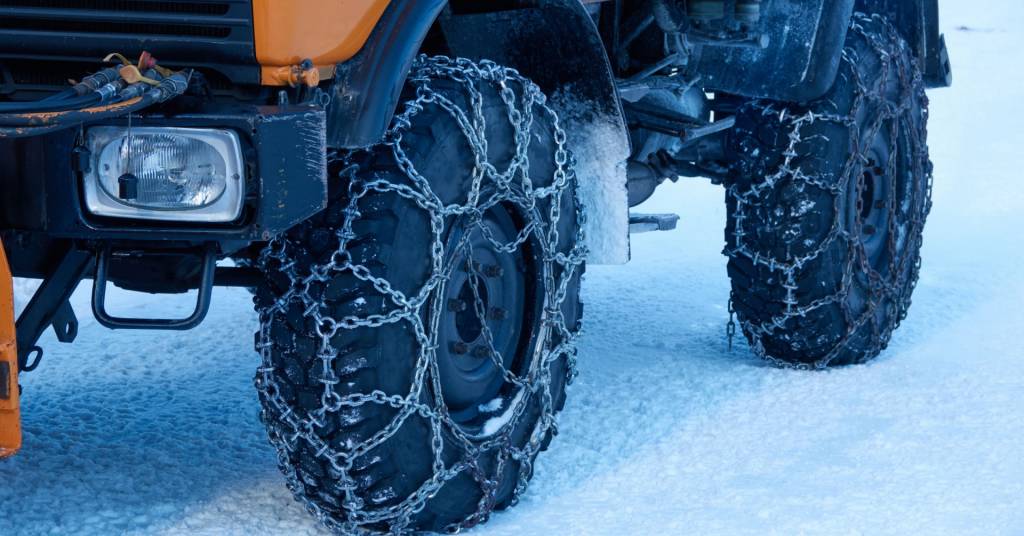
Your truck requires hardened manganese nickel steel and thick link diameters to survive the lateral stress of off-road recovery and heavy towing. Standard passenger chains will shred the moment you apply significant throttle on an incline. You need equipment designed for high-clearance wheel wells and the specific durability requirements of heavy-duty axles and suspension systems.
Top-Rated Truck Snow Chains by Use Case and Terrain
The best chain for your truck depends entirely on whether you are navigating iced-over highways or breaking trail in deep mountain snow. For heavy-duty applications, “one size fits all” solutions usually fail when the torque hits the pavement.

Best for Extreme Ice: SCC Quik Grip V-Bar Heavy Duty
The SCC Quik Grip V-Bar is the industry standard for maximum bite. These chains feature small “V” shaped bars welded onto the cross links, which act like claws to dig into solid ice. If you are hauling a trailer up a frozen grade, these are your best defense against sliding.
- Pros: Unbeatable traction on glazed ice; heavy-duty carbon steel construction; includes built-in cam tensioners for a tight fit.
- Cons: Extremely rough ride on plowed surfaces; can damage asphalt if used on thin snow; requires more physical effort to drape over large tires.
- Durability: High. Designed for frequent use in professional logging and utility environments.
Best for Rapid Deployment: Peerless Auto-Trac Self-Tensioning Chains
For most 4×4 owners, the struggle is getting the chains on in the middle of a storm. The Peerless Auto-Trac uses a dual internal ratcheting system that automatically tightens the chain as you drive. You don’t have to stop and re-tighten them after a quarter-mile, which is a massive safety advantage on narrow mountain passes.
- Pros: Fastest installation in the category; no separate rubber tensioners required; diamond pattern provides constant contact with the road.
- Cons: The ratcheting mechanism can freeze if not cleared of slush; slightly less aggressive than V-bars in deep mud.
- Traction: Excellent for packed snow and light ice; very smooth ride compared to ladder-style chains.
Best for Off-Road and Deep Snow: Pewag Brenta-C 4×4
Pewag is a premium European brand known for using high-grade alloys. The Brenta-C 4×4 is specifically reinforced for the higher center of gravity and weight of SUVs and pickup trucks. Its square link design provides edges on all sides, ensuring traction during turns and braking, not just forward acceleration.
- Pros: Reversible links for double the lifespan; easy-to-use back hook system; works well with large-lugged All-Terrain and Mud-Terrain tires.
- Cons: Premium price point; requires manual tensioning to ensure the inner cable stays seated.
Technical Comparison: V-Bar vs. Square Link vs. Cable Chains
Understanding the geometry of your chain links is critical for performance. The link shape determines how much surface area contacts the ground and how effectively the chain “cleans” itself of packed snow as the tire rotates.
Link Patterns and Grip Profiles
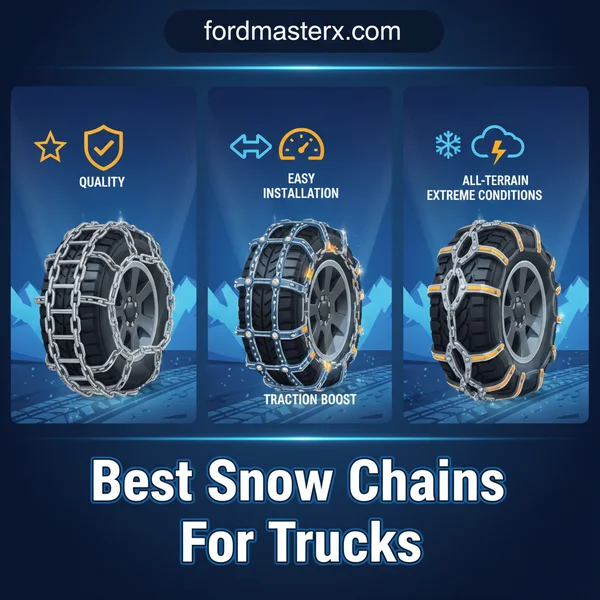
The three main types of traction profiles for trucks vary significantly in their “bite” and longevity. For a 2500 or 3500 series truck, a traditional V-Bar is the most aggressive. These links have reinforced spikes that provide mechanical grip on ice. However, they are high-profile and can cause significant vibration.
Square Links are the preferred middle ground for most heavy-duty drivers. Because the link is flat on four sides, it provides more surface area than a round link but still has sharp edges to cut through crusty snow. They offer a much smoother ride than V-bars and are less likely to damage your tires over long distances.
- V-Bar: Best for pure ice and steep logging roads.
- Square Link: Best for mixed highway and off-road use; long-lasting.
- Cable Chains: Only recommended if your truck has extremely limited SAE Class S clearance; generally too weak for heavy towing.
SAE Clearance and Tensioning Systems
Modern trucks, especially those with larger aftermarket tires, often have limited clearance between the inner tire sidewall and the brake lines or suspension components. This is measured by SAE Clearance Ratings. Most heavy-duty trucks can handle “Class U” (regular) or “Class S” (restricted) chains. Always check your owner’s manual; using a thick V-bar chain on a truck rated only for Class S can result in a snapped brake line.
Tensioning is the second technical hurdle. Manual tensioning requires you to use a cam tool or rubber “spider” bungees to pull the slack out. Automatic tensioners use springs or ratchets to do this work for you. For heavy-duty trucks, manual cam-style tensioners are often preferred because they are “dumb” systems with no mechanical parts to fail under the extreme pressure of a heavy payload.
Critical Selection Criteria: SAE Clearance and Load Ratings
Choosing the best snow chains for your truck isn’t just about finding the right tire size; it is about ensuring the hardware actually fits within your wheel well. Modern trucks, especially those with oversized tires or leveled suspensions, often have surprisingly tight tolerances behind the tire and near brake lines.
Understanding SAE Class Ratings
The Society of Automotive Engineers (SAE) categorizes traction devices based on the amount of clearance they require. For truck owners, knowing these classes is vital to prevent expensive damage to your vehicle’s body or mechanical components:
- Class S: Designed for vehicles with restricted wheel well clearance. These are common on newer half-ton trucks with independent front suspensions.
- Class U: These require more “under-well” room and are typical for older or larger heavy-duty trucks with wide-open wheel arches.
- Class W: These are the heavy hitters, often used on commercial-grade vehicles or trucks with significant lift kits that use thick, aggressive chain links.
Matching Chain Strength to Truck GVWR
A heavy-duty pickup carrying a full payload or towing a trailer exerts massive force on snow chains. You must verify that the chains are rated for your Gross Vehicle Weight Rating (GVWR). Standard passenger car chains will snap under the torque of a diesel engine or the weight of a loaded bed. Look for chains specifically labeled “Light Truck (LT)” or “Heavy-Duty,” which feature thicker cross-links and reinforced side chains to handle the added stress of mountain grades.
Durability and Maintenance: Maximizing Your Investment in Harsh Climates
High-quality truck chains are a significant investment, and the harsh environment of winter roads is designed to destroy metal. Road salt, liquid brine, and constant moisture lead to rapid oxidation if you aren’t proactive about care.
Material Matters: Manganese Alloy vs. Carbon Steel
When shopping for durability, the “recipe” of the metal used in the links makes all the difference. While basic carbon steel chains are budget-friendly, they tend to wear down faster on bare pavement and are highly susceptible to rust. Manganese Alloy steel is the gold standard for 2024. It is significantly harder, more resistant to abrasion, and lighter in weight, making the chains easier to handle while providing a much longer lifespan for those who frequently drive in “chain-up” zones.
Proactive Maintenance for Long-Term Reliability
To ensure your chains don’t turn into a tangled pile of rust over the summer, follow these durability-focused tips:
- Post-Trip Rinse: Always hose off salt and chemicals with fresh water after use. Even a few days of salt contact can pit the metal.
- Complete Drying: Never store chains while they are wet. Hang them in a garage or lay them flat until they are bone-dry.
- Protective Coating: A light mist of WD-40 or a specialized marine-grade anti-corrosion spray before storage will keep the links supple and rust-free.
- Bag Inspection: Check the storage bag for holes; a breathable canvas bag is often better than a sealed plastic one that might trap residual moisture.
Conclusion
Selecting the right snow chains for your truck is the difference between a confident winter haul and being stranded on a frozen shoulder. By prioritizing SAE clearance classes and opting for heavy-duty manganese alloy materials, you ensure that your truck remains protected and your traction remains unbreakable. Remember that the best chains are the ones that are ready to perform the moment the “Chains Required” signs light up.
Your next steps are simple: verify your tire sidewall dimensions, check your owner’s manual for clearance restrictions, and invest in a pair of high-quality tensioners to keep everything snug. Don’t wait for the first blizzard to arrive—equip your truck today and stay ahead of the storm!
❓ Frequently Asked Questions
What does SAE Class S mean for my truck?
SAE Class S refers to restricted wheel well clearance, requiring low-profile chains. Even many modern trucks have limited space near brake lines or suspension, making Class S certification vital for avoiding mechanical damage.
Are diamond pattern chains better than ladder patterns?
Diamond pattern chains provide constant contact with the road, resulting in a smoother ride and better lateral stability. Ladder patterns are generally more affordable but can be ‘bumpy’ and offer less side-to-side grip.
How do automatic tensioning systems work?
These systems use built-in ratchets or elastic tensioners to pull the chain tight as the wheel rotates. They eliminate the need to stop and manually re-tighten the chains after driving the first few hundred feet.
Can I use snow chains on plowed asphalt roads?
It is not recommended, as driving on dry or plowed asphalt causes rapid wear to both the chains and the road surface. Only use them when there is a significant layer of snow or ice between the tire and the pavement.
How do I determine my truck’s tire size for chain compatibility?
Look at the sidewall of your tire for the sequence of numbers, such as 275/70R18. You must match this exact sequence to the chain manufacturer’s fitment guide to ensure a secure and safe fit.
What is the benefit of manganese alloy steel in truck chains?
Manganese alloy is significantly harder and more wear-resistant than standard carbon steel. It maintains its structural integrity under heavy truck loads and lasts much longer when used frequently in professional or off-road settings.