6.7 Powerstroke Glow Plug Location & Component Access Guide

Glow plugs on the 6.7L Powerstroke are located directly under the valve covers, requiring the removal of the intake plenum and fuel lines for access. The glow plug harness is integrated into the valve cover gasket, meaning you must disconnect the internal connectors to reach all eight units situated within the cylinder heads.
🎯 Key Takeaways
Recommended Best Deal Products


- Takeaway 1:Glow plugs are situated beneath the valve covers on both cylinder banks.
- Takeaway 2:Accessing the passenger side requires removing the upper intake plenum.
- Takeaway 3:The glow plug harness is built into the valve cover gaskets.
- Takeaway 4:Cylinder numbering follows the 1-2-3-4 (passenger) and 5-6-7-8 (driver) layout.
- Takeaway 5:Use a 10mm deep socket and high-quality torque wrench for removal.
On a 6.7L Powerstroke, you won’t find the glow plugs sitting out in the open. They are located deep inside the engine, specifically positioned under the valve covers on both the driver and passenger side cylinder heads. Unlike older diesel generations where you could simply pull a wire and unscrew a plug from the exterior of the block, the 6.7L design integrates the glow plug electrical supply directly into the valve cover gasket itself. This means you are looking at a mandatory “open heart” surgery on your upper engine just to reach these components.
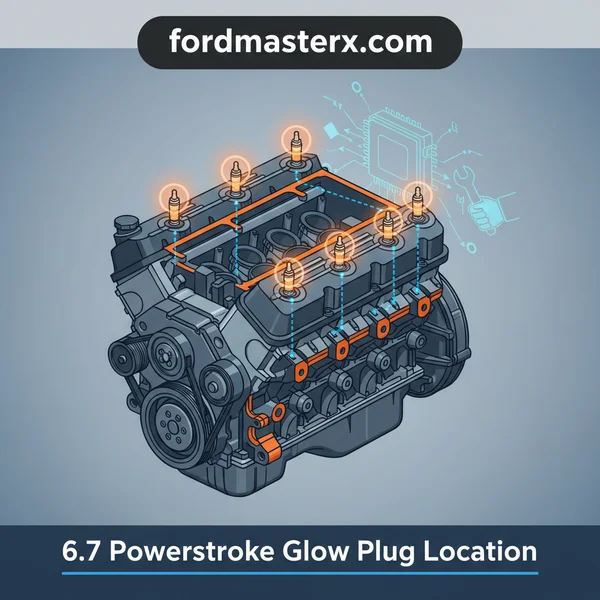
Understanding this specific location is critical because it dictates your entire repair strategy. You aren’t just buying eight glow plugs; you are committing to a significant teardown of the upper engine assembly. If you have a failure on cylinder number 4 or 8, you cannot simply reach around the back of the block. You must remove the intake and fuel delivery infrastructure to gain the necessary clearance to lift the valve covers. Because the glow plug harness is internal, the valve cover gasket serves as the gateway to the entire system.

Prime for Young Adults — 6 Months Free
Students and 18–24s get six months of Prime free, then half price.
Start 6 Months Free As an Amazon Associate I earn from qualifying purchases.Anatomy of the 6.7 Powerstroke Glow Plug System
The 6.7L Powerstroke features a total of eight glow plugs, four on each bank, but they are completely shielded by the valve covers. These plugs are threaded into the cylinder head at an angle that allows them to reach the combustion chamber effectively. However, the most unique and challenging aspect of this system is the Internal Valve Cover (IVC) harness. The electrical connection for each individual glow plug is built into the underside of the valve cover gasket, keeping the sensitive wiring away from the harsh external environment of the engine bay.

The Integrated Gasket Design
On this engine, the valve cover gasket serves two purposes: sealing oil and carrying current. When you look at the exterior of the valve cover, you will see a large, multi-pin electrical connector. This connector passes through the gasket to the interior, where a specialized harness links to the top of each glow plug. This design keeps the wiring away from external heat and debris but makes the glow plugs physically inaccessible until the valve covers are fully removed.
- Location: Directly under the driver (left) and passenger (right) valve covers.
- Connection Type: Friction-fit “push-on” connectors that snap onto the glow plug terminals.
- Gasket Role: The gasket acts as the primary electrical bus for the system; if the integrated harness fails, the entire gasket must be replaced.
Identifying the Eight Access Points
Each cylinder has one dedicated glow plug. On the 6.7L, the cylinders are numbered 1-2-3-4 on the passenger side (front to back) and 5-6-7-8 on the driver side (front to back). Because the glow plugs are tucked under the “valley” side of the cylinder heads rather than the exhaust side, you have to fight for every inch of space against the turbocharger heat shields and the high-pressure fuel rails. You can identify the general area of the plugs by following the heavy-gauge wires that lead into the center of the valve cover gaskets.
Master 6.7 Powerstroke Glow Plug Access in 7 Simple Steps
The 6.7L Powerstroke engine is a powerhouse of engineering, but like any diesel engine, it relies heavily on glow plugs for smooth cold starts. Locating these components can be intimidating due to the dense “birds-nest” of wiring, fuel lines, and intake ducting found in the Ford Super Duty engine bay. This guide provides a detailed walkthrough to help you identify and access every glow plug on both banks of the engine. Properly locating them is the essential first step before you can perform resistance testing or replacement, ensuring you don’t waste time dismantling the wrong components or damaging sensitive fuel system parts.
Step 1: Battery Disconnection and Engine Bay Preparation
What you need: 10mm socket or wrench, fender covers, and a work light.
Instructions: Before you begin hunting for glow plug locations, safety is paramount. The 6.7 Powerstroke utilizes a dual-battery system to provide the high cranking amps required for diesel ignition. Use your 10mm wrench to disconnect the negative terminals on both the driver-side and passenger-side batteries. This prevents any accidental shorting when you are reaching deep into the engine bay near the glow plug control module (GPCM) wiring. Once the power is killed, drape your fender covers over the front of the truck. You will be leaning deep over the engine, and the 6.7 sits high; you don’t want your belt buckle scratching the paint. Position your work light to illuminate the space between the valve covers and the intake manifold, as the glow plugs are tucked away in a relatively shadowed area.
Pro Tip: Always disconnect the passenger side battery first on these trucks. It is the primary battery for many logic circuits, and following this order helps prevent any residual “ghost” voltage from lingering in the system while you handle electrical connectors.
Step 2: Understanding the Cylinder and Glow Plug Layout
What you need: A basic understanding of Ford’s cylinder numbering system.
Instructions: To find the glow plugs, you must first understand how the cylinders are arranged on the 6.7L V8. Unlike some other diesel brands, Ford numbers the 6.7 Powerstroke from front to back. Looking at the engine from the front bumper, the passenger side (Bank 1) contains cylinders 1, 2, 3, and 4. The driver side (Bank 2) contains cylinders 5, 6, 7, and 8. There is one glow plug dedicated to each cylinder, meaning you are looking for eight individual connection points. On this specific engine model, the glow plugs are located inside the “V” of the engine, but they are accessed from the top of the cylinder heads, positioned just slightly inboard of the fuel injectors. Identifying the cylinder numbers now will help you correlate diagnostic trouble codes (like P0671 for cylinder 1) to a specific physical location.

Audible — Listen Free for 30 Days
One free credit a month and thousands of titles included.
Listen Free for 30 Days As an Amazon Associate I earn from qualifying purchases.Pro Tip: Use a silver sharpie to mark the numbers 1 through 8 on the plastic intake manifold near each cylinder. This simple visual cue saves significant time when you are trying to remember which glow plug you already tested.
Step 3: Removing Intake Obstructions (Passenger Side Bank 1)
What you need: Flathead screwdriver, 8mm socket, and a shop vacuum.
Instructions: Accessing the glow plugs on the passenger side (cylinders 1-4) requires the removal of the large plastic air intake tube that runs from the air filter box to the turbocharger. Use your screwdriver or 8mm socket to loosen the hose clamps on both ends of the induction tube. Carefully pull the tube away, ensuring you don’t drop any debris into the turbocharger inlet. Once the tube is out, you will see a much clearer path to the passenger side valve cover. The glow plugs are buried under the main engine wiring harness that runs along the top of the valve cover. You do not need to remove the valve cover itself, but you will need to gently unclip the plastic harness retainers to gain enough “wiggle room” to see the glow plug leads.
Pro Tip: Cover the open turbocharger inlet with a clean microfiber cloth immediately after removing the intake tube. The smallest nut or pebble falling into the turbo will cause catastrophic engine failure upon startup.
Step 4: Navigating the Driver’s Side Obstacles (Bank 2)
What you need: 10mm deep-well socket and a trim panel removal tool.
Instructions: The driver’s side (cylinders 5-8) is generally more congested than the passenger side. To locate these glow plugs, you must navigate around the Glow Plug Control Module (GPCM), which is the rectangular black box mounted near the front of the driver-side valve cover. You will also find the Crankcase Ventilation (CCV) sensor and various coolant lines in this area. Use your trim tool to pop the plastic “Christmas tree” fasteners that hold the wiring loom in place. You may also need to loosen the bracket for the secondary cooling system reservoir if you have a 2011-2016 model to get your hands deep enough toward the back of the head (cylinder 8). The glow plugs are located in a line, parallel to the fuel rail, tucked slightly underneath the edge of the intake plenum.
Pro Tip: Cylinder number 8 (back of the driver’s side) is the most difficult to reach. If you are having trouble seeing it, use a small telescoping mirror to verify the wire lead location before you reach back there blindly.
Step 5: Identifying the Glow Plug Wire Leads and Connectors
What you need: Long-reach needle-nose pliers or a specialized glow plug connector tool.
Instructions: Now that you have cleared the path, look for the specific electrical connectors. On the 6.7 Powerstroke, the glow plug wires are typically encased in a protective black plastic loom, but the individual leads branching off to the plugs are thin, single wires. The connectors themselves are “push-on” style boots, similar to a very small spark plug wire boot. They sit deep in the head, near the fuel injectors. Look for the wire that enters the cylinder head through a small circular opening. You will see the top of the glow plug nut peaking out from the bottom of these wells. It is important to identify these correctly; do not mistake the fuel injector electrical connectors for the glow plug connectors. The glow plug lead is a single wire, whereas the injector connector is a larger, two-wire clip.
Pro Tip: If the engine is high mileage, these plastic boots can become brittle from heat. Instead of pulling on the wire, use long-reach pliers to grasp the thickest part of the boot and pull straight up to avoid snapping the internal copper conductor.
Audible Premium Plus — Annual Membership
12 audiobook credits up front, plus the full Audible catalogue.
See Annual Plans As an Amazon Associate I earn from qualifying purchases.Step 6: Clearing the Well Areas with Compressed Air
What you need: Compressed air with a long-reach blow gun and safety glasses.
Instructions: This is the most overlooked step in locating and preparing the glow plugs. Because of the 6.7 Powerstroke’s design, the glow plugs sit in recessed “wells” in the cylinder head. Over thousands of miles, these wells collect sand, road grime, and oily residue. Before you attempt to touch or remove the glow plug connectors, you must blow out each well thoroughly with compressed air. If you don’t do this, the moment you pull the connector or unscrew a plug, that dirt will fall directly into the combustion chamber. Wear safety glasses, as the debris will fly back toward your face. Blast air into each of the eight locations until you can see the shiny metal base of the glow plug at the bottom of the hole.
Pro Tip: If the dirt is “caked” on or oily, spray a small amount of electronics cleaner or brake cleaner into the well, let it sit for a minute, and then use the compressed air again. A clean workspace is vital for diesel internal components.
Step 7: Final Visual Verification of the Glow Plug Nut
What you need: A 10mm deep-well socket (1/4 inch drive) and a small flashlight.
Instructions: Once the area is clean and the connectors are moved aside, use your flashlight to look down into the well. You should see the 10mm hex nut of the glow plug body. This confirms you have successfully located the component. The 6.7 Powerstroke uses a relatively long, slender glow plug. The location is purposefully deep to allow the tip to reach the combustion bowl of the piston. Ensure that your 10mm socket fits cleanly over the hex; if it feels “spongy,” there is likely still debris at the bottom of the well preventing the socket from seating. Verification of all eight locations completes the identification process, and you are now ready to either test the resistance with a multimeter or proceed with a full replacement.
Pro Tip: When checking the location of the rear-most plugs (4 and 8), use a 1/4 inch drive socket rather than a 3/8 inch. The smaller outer diameter of the 1/4 inch drive tools provides much better clearance against the intake manifold and fuel lines.
✅ Final Checklist
- Are both negative battery terminals disconnected and tucked away from the posts?
- Is the turbocharger inlet covered to prevent any debris from entering the compressor wheel?
- Have all eight glow plug connectors been identified and the wells cleared of road grime?
- Do you have clear access to the rear-most cylinders (4 and 8) without straining the main wiring harness?
- Have you confirmed the difference between the single-wire glow plug leads and the dual-wire fuel injector clips?
Important Notes:
- Safety Warning: The fuel rails on the 6.7 Powerstroke hold extreme pressure (up to 30,000 PSI). Never loosen a fuel line to get better access to a glow plug while the engine is running or has been recently shut down.
- When to seek professional help: If a glow plug is stuck or “seized” in its location, do not force it. Snapping a glow plug off in a 6.7 head often requires cab-off service or cylinder head removal. If it doesn’t turn with moderate pressure, consult a diesel specialist.
- Estimated Time and Cost: Locating and accessing the plugs takes approximately 45-90 minutes. If you are DIYing the replacement, a full set of OEM technical specifications”>Motorcraft glow plugs typically costs between $150 and $250.
Component Obstructions and Clearance Requirements
To even see the valve covers, let alone remove them, you have to strip away the “nest” of components Ford built on top of the 6.7L engine. This engine bay is notoriously cramped, and the glow plug location is the primary reason for the high labor costs associated with this job. You cannot simply “sneak” a socket under the covers; you need clear, vertical access to pull the covers straight up without damaging the integrated harness connectors or the glow plug tips themselves.

The Upper Intake Plenum and CCV System
The first major hurdle is the upper intake plenum. This large plastic or cast assembly sits right in the middle of the engine bay and blocks access to the driver-side valve cover completely. Connected to this is the Crankcase Ventilation (CCV) box, which must be disconnected and moved. Without removing these, the driver-side bank remains entirely off-limits.
- Intake Plenum: Requires removing several 10mm bolts and disconnecting the charge air cooler (CAC) pipe.
- CCV System: This box sits atop the driver-side cover and often requires a new O-ring upon reinstallation to prevent future oil leaks.
- Wiring Looms: Massive bundles of engine wiring are zip-tied and bracketed across the top of both covers, requiring you to carefully unclip and move them aside.
Fuel Line and Rail Management
Once the intake is out of the way, you are faced with the high-pressure fuel system. The 6.7L uses a common rail system, and the metal injector lines run directly over the top of the valve covers. To remove the valve covers and access the glow plugs, you must disconnect these high-pressure lines. This is a delicate part of the process because the fuel system is sensitive to even the smallest speck of dust.
- Contamination Risk: You must cap the injectors and the fuel rail immediately after opening the lines to prevent debris from entering the high-pressure system.
- Line Removal: Use a 17mm flare nut wrench to avoid rounding off the fittings on the injector lines.
- Return Lines: The plastic fuel return “T” connectors are extremely brittle; handle them with extreme care to avoid breaking them, which would require a full return line assembly replacement.
Understanding the Integrated Gasket and Harness Design
One of the most distinctive features of the 6.7 Powerstroke glow plug system is how Ford managed the electrical delivery. Unlike older diesel engines where you might see a cluttered web of individual wires running to each cylinder, the 6.7 uses an integrated valve cover gasket. This design keeps the engine bay looking cleaner, but it adds a layer of complexity when you are trying to diagnose glow plug circuit issues.
The Valve Cover Pass-Through
The electrical current for the glow plugs passes through the valve cover gasket itself. This means the external wiring harness plugs into a connector built directly into the gasket’s edge. This “pass-through” design is a common point of interest for technicians. If you are getting a “circuit open” code but the glow plug tests fine, the issue is often located at this connection point. Oil saturation in these external connectors can occasionally lead to intermittent communication gaps between the Glow Plug Control Module (GPCM) and the plugs themselves.
Internal Busbar and Wiring
Once the signal passes through the gasket, it travels via an internal harness or busbar to the individual glow plugs. Because this wiring lives in the harsh, oil-soaked environment under the valve cover, it is built to be incredibly resilient. However, there are a few things to keep in mind regarding this design:
- Connector Fragility: The plastic clips that secure the harness to the top of the glow plug can become brittle over hundreds of heat cycles.
- Sealing Integrity: The gasket serves dual purposes: containing engine oil and insulating electrical signals. A failure in the gasket seal can lead to both oil leaks and electrical shorts.
- Visual Inspection: You cannot see the internal harness without removing the valve cover, making the external harness-to-gasket plug the first place you should look during a visual inspection.
Critical Torque Specifications and Material Considerations
The 6.7 Powerstroke uses an aluminum cylinder head paired with long, relatively thin glow plugs. This combination requires a high level of precision. Because the glow plugs are deeply recessed and the materials have different expansion rates, understanding the mechanical limits of these components is vital for any owner or mechanic looking to maintain the system.
Aluminum Heads and Heat Cycles
Aluminum heads dissipate heat quickly, which is great for performance but tricky for threaded components. Over time, the steel threads of a glow plug and the aluminum threads of the head can experience “galvonic corrosion” if moisture or debris enters the cavity. When accessing these components, it is important to remember that the 6.7 glow plugs are significantly longer than those found in the 7.3 or 6.0 engines. This extra length means there is more surface area that can potentially “stick” in the head, requiring a patient approach to avoid damage.
The Importance of Precision Torque
You might be tempted to “snug” the glow plugs by feel, but the 6.7 Powerstroke is not an engine that tolerates guesswork. These plugs serve as a critical seal for the combustion chamber. Over-tightening can lead to a snapped plug—a nightmare scenario involving specialized extraction tools—while under-tightening can lead to compression leaks and carbon buildup around the tip.
- Standard Torque Spec: Most 6.7 glow plugs require approximately 12 to 15 Nm (about 9 to 11 lb-ft) of torque. Always verify with your specific model year’s service manual.
- Snap Pressure: The “shear point” of these plugs is surprisingly low. Using a calibrated, small-drive torque wrench is the only way to ensure the integrity of the threads.
- Anti-Seize Usage: Many technicians recommend a very light coating of high-temp anti-seize on the threads, but be careful not to get any on the heating element or the seat, as this can interfere with the ground path.
Conclusion: Mastering the 6.7 Glow Plug Access
Locating and accessing the glow plugs on a 6.7 Powerstroke is less about finding a hidden component and more about understanding the complex architecture surrounding it. From the crowded passenger side to the integrated gasket-harness design, Ford has built a sophisticated system that requires a methodical approach. By recognizing the location of the GPCM and the fragile nature of the long-bodied plugs in the aluminum heads, you are already ahead of the curve.
Your next step should be a thorough visual inspection of the external harness connectors for any signs of oil wicking or heat damage. Ensure you have the proper deep-well sockets and a precision torque wrench on hand before moving forward. With the right information and a bit of patience, managing the glow plug system on your 6.7 Powerstroke can be a straightforward part of your truck’s long-term maintenance plan. Stay proactive, and your diesel will keep firing up reliably, even in the harshest winter conditions.
❓ Frequently Asked Questions
Why did Ford put the 6.7 Powerstroke glow plugs under the valve covers?
This design protects the electrical connections from external corrosion and road debris, though it makes maintenance more labor-intensive compared to external designs. It also allows for a more compact engine head design.
What components must be removed to access the passenger side glow plugs?
Reaching the passenger side (Cylinders 1-4) requires removing the plastic upper intake plenum, the air intake assembly, and several high-pressure fuel lines. This side is generally more time-consuming than the driver side.
How do I identify which glow plug is failing without opening the engine?
Use an OBD-II scanner to pull specific codes (P0671-P0678), which correspond directly to the cylinder number of the failing glow plug. This allows you to focus on the specific bank (driver or passenger) needing service.
Can I reuse the valve cover gaskets when replacing glow plugs?
While possible if they are in perfect condition, it is highly recommended to replace them because the glow plug harness is integrated into the gasket. A failing gasket or harness connection can lead to future electrical issues.
What is the risk of breaking a glow plug during removal?
Carbon buildup on the tip can cause the plug to seize, potentially leading to the tip breaking off into the cylinder head. Always use penetrating oil and a precise torque wrench to avoid exceeding the break-away torque limit.
Are the driver side glow plugs easier to reach than the passenger side?
Generally, yes, because the driver side (Cylinders 5-8) does not require the removal of the large intake plenum, though you still must navigate fuel lines and the main valve cover.