
6.0 Powerstroke Oil Cooler Location: Access & Anatomy Guide

The 6.0 Powerstroke oil cooler is located deep within the engine’s ‘valley,’ specifically tucked beneath the intake manifold and toward the front of the block. It sits submerged inside a dedicated oil reservoir, hidden under a cast-aluminum cover that also serves as the base for the oil filter housing.
🎯 Key Takeaways
- Takeaway 1:The oil cooler is submerged in the engine valley’s oil reservoir.
- Takeaway 2:You must remove the turbo and intake manifold for access.
- Takeaway 3:The oil cooler sits directly ahead of the EGR cooler.
- Takeaway 4:Look for the aluminum cover beneath the oil filter housing.
- Takeaway 5:Clogged oil coolers often cause high Delta T temperature spreads.
The 6.0L Powerstroke oil cooler is located deep within the engine valley, submerged inside a dedicated oil reservoir directly beneath the intake manifold. Unlike many diesel engines where the oil cooler is an external, bolt-on component near the oil filter or radiator, Ford and International designed this unit to sit in the heart of the engine block. It is positioned toward the front of the block, nestled between the two cylinder heads.
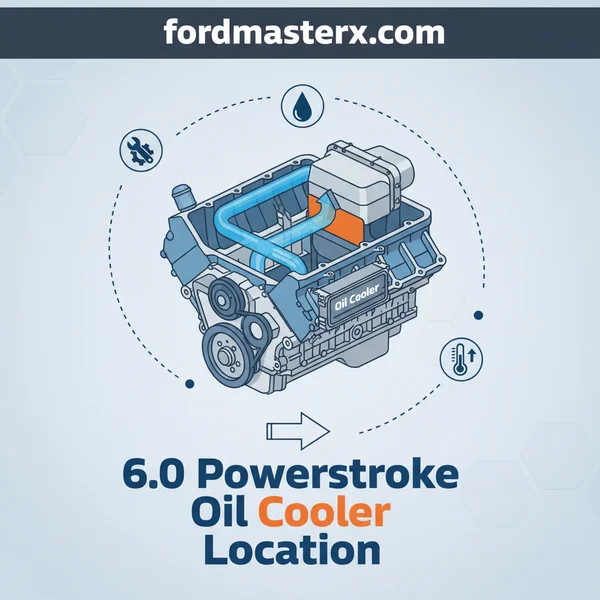
Understanding this location is critical because the oil cooler is the primary heat exchanger for your engine. When it fails, it doesn’t just leak on the ground; it typically causes a “clog” that starves the EGR cooler of coolant or allows high-pressure oil to dump into your cooling system. Because it is buried under layers of heavy hardware, reaching it requires a significant “top-down” teardown of the engine’s induction system.
Anatomical Placement: The Engine Valley and Oil Reservoir
To visualize the oil cooler’s home, think of the engine valley as the “basement” of the top end. The oil cooler is a stack of thin stainless steel plates housed within a cast aluminum reservoir. This reservoir is a “wet” environment, meaning the cooler is constantly bathed in engine oil while coolant flows through the internal plates. It sits just behind the front cover and ahead of the High-Pressure Oil Pump (HPOP) screen.

Finding the Engine Valley
The engine valley is the recessed area formed by the “V” shape of the cylinder blocks. In the 6.0L Powerstroke, this area is densely packed. To see where the cooler lives, you would have to look directly down past the alternator, the turbocharger, and the intake manifold. Specifically, the cooler sits in the front-center portion of this valley. It is bolted down into a header that manages the flow of both oil and antifreeze.
- Physical Orientation: The cooler is rectangular and sits horizontally within its housing.
- Submersion: It is not air-cooled; it relies entirely on the temperature differential between the liquid coolant and the engine oil.
- Front-End Focus: It is located closer to the cooling fan side of the engine than the firewall side.
The Oil Cooler Housing Reservoir
The cooler is contained within a part technically known as the oil cooler housing or the oil reservoir. This housing acts as a staging area for filtered oil before it is sent to the high-pressure oil system. Because the cooler sits inside this tub of oil, any external seal failure usually results in oil filling the valley of the engine, which eventually leaks down the back of the block, often being mistaken for a rear main seal leak.
6.0 Powerstroke Oil Cooler Location Made Easy: Your Essential Action Plan
The 6.0L Powerstroke engine is legendary for its performance, but it is equally famous for its “buried” components. Unlike many engines where the oil cooler is mounted externally or near the oil filter, the 6.0 Powerstroke oil cooler is located deep within the “valley” of the engine, submerged in a reservoir of engine oil and tucked beneath the intake manifold and turbocharger. This guide provides a comprehensive walkthrough on how to navigate the engine bay, remove the necessary obstructions, and pinpoint the exact physical location of the oil cooler for inspection or replacement. Understanding this location is vital because a clogged cooler is the leading cause of EGR cooler failure and catastrophic engine overheating.
Step 1: Initial Preparation and Fluid Management
What you need: Large drain pans (at least 5-gallon capacity), 19mm wrench or socket for the oil pan, and a 10mm socket for the radiator drain petcock.
Instructions: Before you can see the oil cooler, you must prepare the engine for significant disassembly. The oil cooler is a liquid-to-liquid heat exchanger, meaning it is filled with both engine oil and Ford Gold (or ELC) coolant. Begin by draining the radiator via the plastic petcock on the driver’s side bottom corner. To ensure the “valley” is dry, you should also remove the 19mm coolant plug located on the driver’s side of the engine block. Simultaneously, drain the engine oil from the pan. Because the oil cooler sits in a specialized reservoir, failing to drain these fluids first will result in a massive mess of mixed oil and coolant inside your engine valley once the cooler cover is breached.
Pro Tip: Place a small piece of clear tubing over the radiator petcock to direct the coolant into your bucket, preventing it from splashing against the frame rail and making a mess.
Step 2: Removing the Air Intake and CAC Pipes
What you need: 8mm socket, 11mm (7/16″) deep well socket, and a flat-head screwdriver.
Instructions: The path to the oil cooler is blocked by the air induction system. Remove the air filter housing by loosening the worm gear clamps. Next, you must remove the Charge Air Cooler (CAC) pipes—these are the large metal or plastic tubes running from the turbo to the intercooler. Use your 11mm deep well socket to loosen the constant-tension T-bolt clamps. Once the clamps are loose, wiggle the boots off the turbo outlet and the intake elbow. Clearing these components provides your first glimpse into the center of the “V” of the engine, though the cooler itself is still obscured by the turbocharger and the FICM (Fuel Injection Control Module).
Pro Tip: Inspect the rubber boots for oil saturation or cracks while they are out; this is the best time to replace them if they are soft or “mushy.”
Step 3: Extracting the FICM and Wiring Harness
What you need: 10mm socket with an extension and a small pick tool.
Instructions: The Fuel Injection Control Module (FICM) sits on a bracket directly above the intake manifold on the driver’s side. The main engine wiring harness also crisscrosses the area where the oil cooler is located. Remove the four 10mm bolts securing the FICM to its mounting bracket. Carefully unplug the three large electrical connectors on the bottom of the FICM—be extremely gentle, as the plastic tabs become brittle from engine heat. Move the FICM to a safe, dry workbench. Drape the wiring harness over the cooling fan shroud or the battery boxes to clear the workspace. You can now see the intake manifold, which is the final major barrier to the oil cooler housing.
Pro Tip: Use a pick tool to gently depress the locking tabs on the FICM plugs; forcing them by hand often results in broken clips that lead to future electrical “ghost” issues.
Step 4: Turbocharger Removal
What you need: 10mm, 11mm, and 13mm sockets, a long extension, and penetrating oil (like PB Blaster).
Instructions: The oil cooler is located partially underneath the turbocharger mounting pedestal. You cannot access the cooler cover without pulling the turbo. First, remove the V-band clamp connecting the turbo to the downpipe and the clamp connecting it to the Y-pipe (up-pipes). Remove the oil feed line from the top of the turbo (two 10mm bolts). Finally, remove the three 13mm mounting bolts securing the turbo to the pedestal. These bolts are often seized due to extreme heat cycles, so apply penetrating oil and let it soak. Lift the turbo straight up and out of the engine bay. Note the drain tube (j-tube) at the bottom; ensure it stays clear as you lift.
Pro Tip: The rear turbo mounting bolt is notoriously difficult to reach. Access it from the passenger side using a long extension and a universal joint (swivel) socket.
Step 5: Lifting the Intake Manifold
What you need: 10mm socket, 6mm Allen/hex bit, and a torque wrench.
Instructions: With the turbo out of the way, the intake manifold is fully visible. It is held down by a series of bolts along the cylinder heads. Remove the intake elbow (the “snail” pipe) and then loosen all the manifold bolts. You will also need to disconnect the EGR cooler hardware, as it is physically linked to the intake manifold. Once the bolts are removed, lift the manifold off the engine block. This exposes the “valley” of the 6.0L Powerstroke. You will see a flat, rectangular cast-aluminum cover toward the front-center of the engine. This is the oil cooler housing cover, and the cooler itself is located directly beneath it.
Pro Tip: Stuff clean shop rags into the intake ports on the cylinder heads immediately after removing the manifold to prevent any bolts or debris from falling into the engine valves.
Step 6: Identifying and Opening the Oil Cooler Cover
What you need: T40 Torx bit or 10mm socket (depending on year model) and a gasket scraper.
Instructions: Now that you have reached the “floor” of the engine valley, you are looking at the oil cooler location. The oil cooler is housed within a reservoir that is sealed by the Oil Cooler Cover. This cover also serves as the mounting point for the oil filter housing. Remove the bolts securing the cover to the block. Carefully pry the cover upward. Underneath, you will find the actual oil cooler core—a stainless steel, stacked-plate heat exchanger. It looks like a small silver brick with several layers. This is the component that frequently becomes clogged with casting sand or degraded coolant silicate, leading to high oil temperatures.
Pro Tip: Be very careful when prying the cover; the aluminum is soft. Use a plastic pry tool or a wood block to avoid gouging the sealing surfaces of the engine block.
Step 7: Final Location Verification and Cleaning
What you need: Brake cleaner, shop vacuum, and lint-free rags.
Instructions: With the oil cooler core exposed, you have successfully reached the target. The location is precisely between the two cylinder heads in the front half of the engine valley. Before removing the core itself, use a shop vacuum to suck out any remaining oil or coolant from the reservoir. This prevents contaminants from entering the high-pressure oil system. Look at the HPOP (High-Pressure Oil Pump) screen located just behind the oil cooler; it is often damaged if the oil cooler has failed. Ensure the entire area is surgically clean before attempting to install a new cooler or reassembling the housing.
Pro Tip: Inspect the “blue” or “orange” hose (the EGR cooler supply port) attached to the oil cooler housing. If it is old or brittle, replace it now, as this is the only time it is accessible.
✅ Final Checklist
- Confirm the engine valley is free of all debris and standing fluid before installing a new cooler.
- Verify that the HPOP screen (located under the oil cooler) is intact and not torn.
- Ensure the new oil cooler gaskets are seated perfectly in their grooves to prevent “mixing” of oil and coolant.
- Check that the turbocharger oil drain tube O-rings are replaced and lubricated before re-installing the turbo.
- Verify that the intake manifold gaskets are properly aligned to prevent boost leaks.
Important Notes:
- Safety: Always wear eye protection. The engine valley often collects pressurized oil or fuel residues that can spray when components are first loosened.
- Professional Help: If you find heavy metallic flakes in the oil cooler reservoir, this indicates high-pressure oil pump failure or bearing damage; consult a professional diesel mechanic.
- Estimated Time: This process typically takes 6-10 hours for a DIYer, depending on the level of corrosion on turbo bolts.
- Cost: An OEM Ford/Motorcraft oil cooler kit typically ranges from $300 to $450. Avoid cheap “no-name” aftermarket coolers, as they often have inferior flow rates.
Structural Relationship Between the Oil Cooler and EGR System
The 6.0L Powerstroke oil cooler does not operate in isolation. Its physical location is strategically—and some say Vitally—linked to the Exhaust Gas Recirculation (EGR) system. The oil cooler acts as the “gatekeeper” for coolant. Every drop of coolant intended to lower the temperature of your EGR cooler must first pass through the narrow passages of the oil cooler. This proximity is why a failure in one often leads to the destruction of the other.
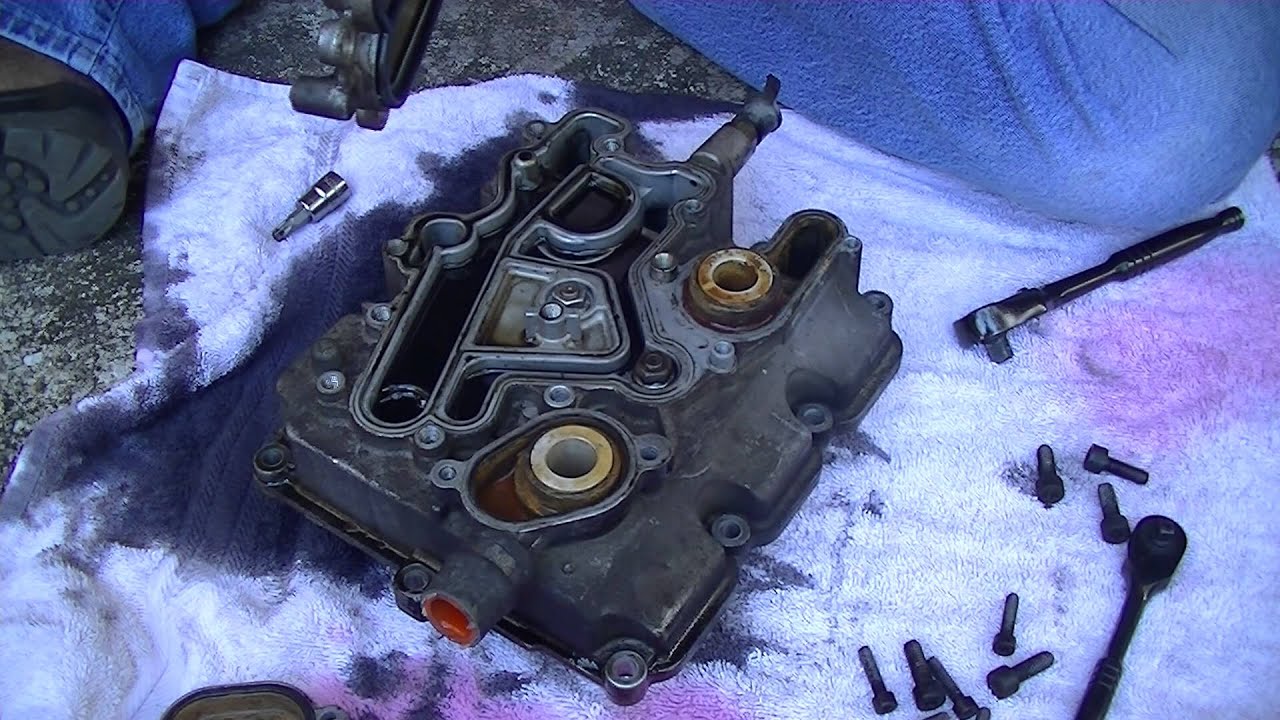
The Coolant Flow Path
Coolant flows from the water pump, through the front cover, and directly into the oil cooler housing. Once it travels through the tiny fins of the oil cooler, it exits through a small port at the rear of the housing. This port is connected via a short, blue (or orange) silicone hose directly to the EGR cooler. Because the oil cooler is the first stop, it acts as a filter for any debris or silicate “goo” in your coolant.
- The “Sand Trap” Effect: If your coolant isn’t perfectly clean, the oil cooler’s small passages will catch the debris.
- Downstream Starvation: When the oil cooler clogs, it restricts the volume of coolant reaching the EGR cooler.
- Thermal Stress: Without enough coolant, the EGR cooler—located just inches away in the valley—will flash-boil and eventually rupture.
Why Proximity Matters for Component Failure
The oil cooler and EGR cooler are essentially “roommates” in the engine valley. They are connected by a short bridge. If you are dismantling the engine to reach the oil cooler, you are already 90% of the way to the EGR cooler. This is why mechanics almost always recommend replacing or upgrading both components simultaneously. The labor required to reach the valley is so intensive that it is not cost-effective to service one without addressing the other, given how their health is physically and functionally intertwined.
Because the oil cooler is located beneath the intake manifold, it is also subjected to significant “heat soak” from the engine block. This environment makes the rubber seals and gaskets prone to hardening over time, which can lead to internal mixing of fluids even if the metal plates of the cooler remain intact.
Visual Identification Markers and Housing Components
Identifying the 6.0 Powerstroke oil cooler requires looking past the surface components. While the cooler itself is a series of stacked stainless steel plates, it lives inside a dedicated cast-aluminum housing. This housing isn’t just a container; it serves as a critical junction for oil and coolant flow within the engine block’s valley, acting as a heat exchange hub.
The Oil Filter Base and Reservoir
The primary visual marker for the oil cooler’s location is the oil filter housing located on the top-center of the engine. Directly beneath this assembly sits the oil reservoir. The cooler is submerged within this reservoir, allowing engine oil to pass through the internal plates while coolant flows through the surrounding passages. If you follow the vertical line of the oil filter cap straight down toward the engine block, you are looking directly at the cooler’s hidden position.
Anatomy of the Cooler Housing
The housing is designed to withstand high pressures and extreme thermal cycling. Understanding its components helps in diagnosing leaks or failures before they become catastrophic. Key visual and physical markers include:
- The Oil Cooler Screen: A small mesh filter located in the valley floor just beneath the cooler. It is a vital component that prevents debris from entering the high-pressure oil pump (HPOP).
- Port Connections: The housing features a specific coolant discharge port that feeds directly into the EGR cooler via a short connector hose.
- Sensor Placements: The Engine Oil Temperature (EOT) sensor is typically mounted on or near the top of this assembly, providing the data necessary to track the cooler’s performance.
Common Obstructions and Access Logistics in the 6.0L Layout
The 6.0 Powerstroke is notorious for its “packed” engine bay. Because the oil cooler sits in the deepest part of the engine’s “V,” it is surrounded by some of the most complex components of the 6.0L architecture. Understanding what sits on top of the cooler is essential for visualizing how it integrates into the engine’s cooling system.
The Intake Manifold and FICM
The most significant obstruction is the massive cast-aluminum intake manifold. This component spans the width of the engine valley, completely sealing the oil cooler from view. Additionally, the Fuel Injection Control Module (FICM) and its extensive wiring harness often sit directly above or adjacent to the manifold, adding layers of hardware that must be navigated to reach the valley floor.
Turbocharger and EGR Cooler Proximity
The oil cooler shares its cramped valley space with the turbocharger and the EGR cooler. The turbocharger sits slightly to the rear, while the EGR cooler connects directly to the oil cooler housing. These components create a “canyon” effect, making it impossible to reach or even see the oil cooler from the sides or the front of the truck without removing the top-end hardware.
Practical Tip: When inspecting the engine for health, look for “wetness” or oil puddling in the valley near the base of the turbo. Because the oil cooler is located at the lowest point of the top-end, any leaks from the housing or its gaskets will collect here first.
Conclusion
Understanding the 6.0 Powerstroke oil cooler location is the first step in mastering the maintenance of this legendary engine. Nestled deep in the engine valley beneath the intake manifold and oil filter housing, this component plays a vital role in regulating your engine’s vitals. While its buried position makes it difficult to see at a glance, knowing the anatomy of the housing and the surrounding obstructions allows you to monitor its health more effectively.
Your next step should be to monitor your EOT (Engine Oil Temperature) and ECT (Engine Coolant Temperature) spreads using a digital monitor. If the temperature gap between these two readings exceeds 15 degrees during normal operation, it’s a clear signal that your cooler may be clogging. Stay proactive, keep your coolant clean, and your 6.0L will reward you with years of heavy-duty performance!
❓ Frequently Asked Questions
Why is the oil cooler placed deep in the engine valley?
The oil cooler is placed in the valley to sit submerged within the engine’s oil reservoir, allowing for maximum heat exchange between the engine oil and the cooling system in a compact space.
What are the primary markers to identify the oil cooler cover?
The oil cooler is identified by a large, rectangular cast-aluminum plate located under the intake manifold. This plate features a large coolant port and serves as the mounting surface for the oil filter standpipe and housing.
How does the oil cooler’s location affect engine cooling?
Because it is positioned in the valley, it receives coolant directly from the water pump. If the narrow passages inside the cooler clog, it restricts coolant flow to the EGR cooler located immediately behind it.
Are there external signs that point to the oil cooler’s location?
You can locate the area by following the oil filter housing down to where it meets the engine block; the cooler is housed directly beneath that mounting point in the floor of the valley.
Is the oil cooler location the same on all 6.0L Powerstroke years?
Yes, the physical location in the engine valley remained the same for all Ford Super Duty and Excursion models produced between 2003 and 2007.
What components are directly above the oil cooler?
The most significant obstructions are the turbocharger and its mounting pedestal, the intake manifold, the alternator, and the main engine wiring harness, all of which must be cleared to reach the cooler.