
2011 Ford F-150 Blend Door Actuator: Diagnosis & Location

The most common sign of a failing blend door actuator in a 2011 F-150 is a clicking sound behind the dash or air stuck at one temperature. Identifying which of the four specific actuators has failed—Driver, Passenger, Mode, or Recirculation—is essential for a successful repair. Proper post-installation calibration is critical to prevent the new motor from stripping its internal plastic gears immediately.
Prime Day Pick
Limited-time Prime Day price. Check current discount on Amazon.
🎯 Key Takeaways
- Listen for clicking behind the radio to identify a main blend door failure.
- Use a 7mm ratcheting wrench for tight spaces behind the dashboard.
- Dual-zone climate control models feature two separate temperature-regulating actuators.
- Always pull the HVAC fuse or disconnect the battery to trigger calibration.
- Verify the blend door moves freely manually before installing the new motor.
If your 2011 Ford F-150 is blowing ice-cold air on the passenger side while the driver side is roasting, or if you hear a rhythmic tapping sound coming from behind your radio, you are dealing with a failed blend door actuator. These small plastic motors are the primary failure point in the 2009 to 2014 Ford HVAC system. Because these actuators use plastic internal gears to move the heavy climate doors, they eventually strip or snap under the pressure of the motor.
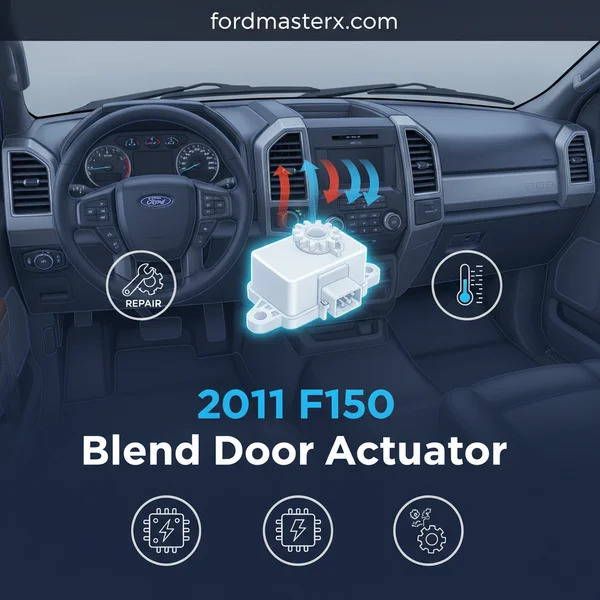
Replacing these units is a DIY-friendly task that can save you between $400 and $700 in dealership labor costs. You do not need to pull the entire dashboard to reach the most common failure points; instead, you can access them by dropping the glovebox or removing the center radio bezel. This guide focuses on the 2011 model year specifically, ensuring you identify the correct motor and use the right tools, such as the essential 7mm socket, to get the job done quickly.
Prime Day Pick
Limited-time Prime Day price. Check current discount on Amazon.
Identifying Symptoms: Clicking, Tapping, and Temperature Issues
Recognizing the “Click of Death”
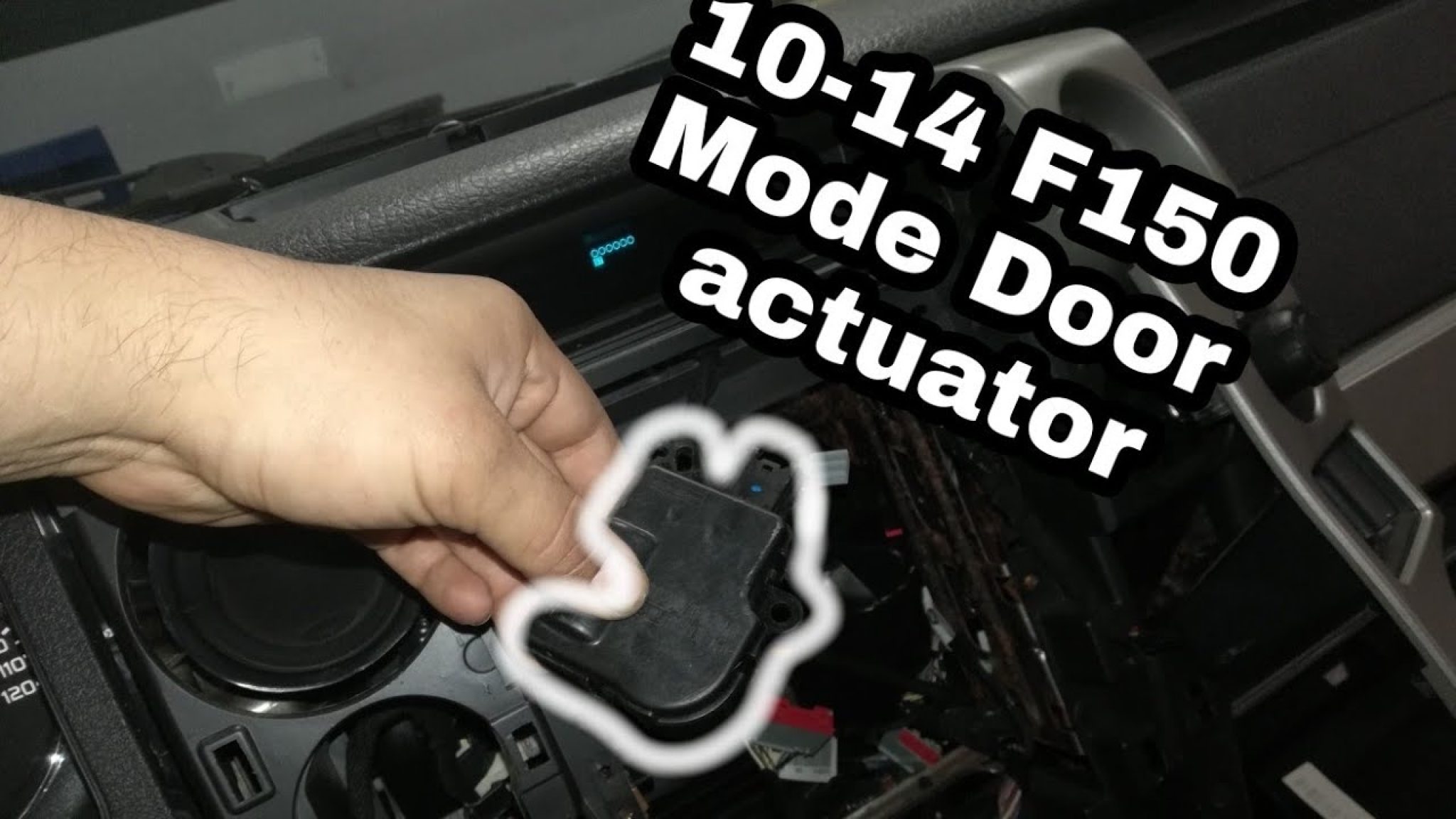
The most unmistakable sign of a failing actuator in a 2011 F-150 is a repetitive clicking, knocking, or tapping sound. This noise typically starts the moment you turn the key to the “On” position or when you adjust the temperature settings. The sound occurs because the internal plastic teeth of the actuator gears have stripped. The motor attempts to turn the gear to reach a specific position, but the gear slips, causing the “tap” as it jumps back. This cycle repeats until the HVAC control module times out, which usually takes about 20 to 30 seconds. If you hear this sound behind your Sync screen or center vents, your passenger-side blend door actuator is likely the culprit.
Temperature and Airflow Inconsistencies
Not every failure results in a loud noise. Sometimes the internal motor simply burns out or the potentiometer—the component that tells the truck where the door is positioned—fails electronically. You can diagnose the specific failed unit by observing these cabin symptoms:
Prime Day Pick
Limited-time Prime Day price. Check current discount on Amazon.
- Dual Climate Mismatch: In Lariat or FX4 trims with dual-zone climate control, if the driver side responds to temperature changes but the passenger side stays stuck on full heat, the Upper Passenger Actuator is broken.
- Full System Failure: If the entire truck is stuck on one temperature (usually full hot or full cold) regardless of the setting on the dial, the Lower Blend Door Actuator has likely failed.
- Incorrect Airflow Direction: If you select “Defrost” but air only blows out of the “Face” vents, you are dealing with a Mode Door Actuator failure rather than a blend door issue.
- Delayed Response: If the air eventually gets cold but takes several minutes of “hunting” and making faint whirring noises, the actuator is struggling to find its home position and is on the verge of total failure.
2011 F150 Blend Door Actuator Made Easy: Your Essential Action Plan
If you are hearing a persistent clicking sound behind your dashboard or find that your truck is stuck blowing only hot or cold air regardless of the settings, your 2011 Ford F-150 likely has a failing blend door actuator. This small electric motor is responsible for moving the door that mixes hot and cold air to reach your desired temperature. While dealerships often charge hundreds of dollars in labor to pull the dash apart, this guide will show you how to navigate the center stack and replace the actuator yourself using basic tools. Following these steps carefully is crucial, as improper calibration of the new part can lead to immediate gear failure.
Step 1: Battery Disconnection and Safety Prep
What you need: 10mm socket or wrench, work gloves, and a small container for hardware.
Prime Day Pick
Limited-time Prime Day price. Check current discount on Amazon.
Instructions: Before beginning any work on the interior electronics or HVAC system, you must disconnect the power. Open the hood and locate the battery. Use your 10mm wrench to loosen the nut on the negative (black) battery terminal and pull the cable free. Secure the cable away from the post so it cannot make accidental contact. This step is not just for electrical safety; it is the first stage of resetting the HVAC control module, which is vital for the calibration process later. Let the vehicle sit for at least 15 minutes to allow all residual power to drain from the capacitors in the dash modules.
Pro Tip: Place a rag over the battery terminal once the cable is removed. It’s a simple way to ensure the cable doesn’t spring back and touch the terminal while you are inside the cab.
Prime Day Pick
Limited-time Prime Day price. Check current discount on Amazon.
Step 2: Removing the Center Console Trim
What you need: Plastic trim removal tool, 7mm socket, and a ratchet.
Instructions: To reach the upper blend door actuator, you must remove the radio bezel. Start by opening the center console lid or removing the rubber mat in the tray at the top of the dash. Use your plastic trim tool to gently pry the silver or wood-grain trim pieces that run vertically along the sides of the radio. These are held in by metal clips that can be quite stubborn; apply firm but even pressure to avoid snapping the plastic tabs. Once the side panels are loose, locate the two 7mm bolts at the top of the radio faceplate (hidden under the top tray mat) and remove them. Carefully pull the entire radio and climate control faceplate toward you, then disconnect the wiring harnesses from the back.
Pro Tip: Use a plastic trim tool rather than a metal screwdriver. Metal will easily gouge the soft plastic of the Ford dashboard, leaving permanent scars on your interior.
Step 3: Extracting the Radio and Display Unit
What you need: 7mm socket and a magnetic parts tray.
Instructions: With the outer trim bezel removed, you will see the actual radio chassis and the display screen (the “bricks”) held in by four 7mm screws. Remove these screws and place them in your magnetic tray to prevent them from falling into the dark recesses of the dashboard. Pull the radio unit out and disconnect the antenna cable and the large main wiring harness. Set the radio unit aside in a safe place, such as the back seat. You should now have a clear view of the inner dash cavity. The upper blend door actuator is located directly behind where the radio was, sitting on top of the black plastic HVAC plenum box.
Pro Tip: Label the connectors with masking tape if you are worried about where they plug back in, though most Ford connectors are keyed so they only fit their specific matching plug.
Step 4: Unbolting the Faulty Actuator
What you need: 8mm ratcheting wrench or a 1/4-inch drive mini-ratchet with an 8mm shallow socket.
Instructions: The actuator is a small black box held down by two 8mm screws. Space is extremely tight here, making a standard-sized ratchet difficult to use. Locate the electrical connector on the side of the actuator and squeeze the tab to pull it out. Next, remove the two mounting screws. The screw located toward the back (closest to the windshield) is notoriously difficult to reach. Take your time and use small, incremental turns. Once both screws are removed, lift the actuator straight up. You will see a plastic “D-shaped” shaft on the bottom of the actuator that fits into the blend door itself. Note the orientation of this shaft.
Pro Tip: If the rear screw is proving impossible to turn, you can sometimes use a 1/4-inch hex bit driver with an 8mm bit to get more leverage in the low-clearance area.
Step 5: Inspecting the Blend Door Pivot
What you need: A flashlight and your fingers.
Instructions: Before installing the new part, you must ensure the actual blend door inside the dash is not broken. Reach into the hole where the actuator shaft was seated. You should see the top of the blend door post. Use your fingers or a pair of needle-nose pliers to gently rotate the door back and forth. It should move freely and smoothly from one stop to the other. If the door feels jammed or if the plastic post is snapped off, the problem is internal to the HVAC box, and a new actuator will not fix it. If the door moves easily, you are ready to proceed with the new part.
Pro Tip: Shine a bright light down into the vent. You want to make sure no debris, like a stray coin or a piece of a broken old gear, is obstructing the door’s movement.
Step 6: Aligning and Seating the New Actuator
What you need: New Motorcraft or high-quality aftermarket blend door actuator.
Instructions: Compare the new actuator to the old one. The “D-shaped” drive gear on the new unit may not be in the exact same position as the old one. Do not forcedly turn the gear on the new actuator by hand, as this can strip the internal plastic teeth before you even install it. Instead, move the blend door post in the dash to match the orientation of the new actuator’s gear. Carefully lower the new actuator into place, ensuring the D-shaft seats fully into the door post. The unit should sit flush against the HVAC box. Reinstall the two 8mm screws, starting them by hand to avoid cross-threading in the plastic housing.
Pro Tip: Always use an OEM Motorcraft part for this specific repair. Aftermarket actuators often have incorrect internal resistance, which can cause the Ford HVAC module to fail calibration.
Step 7: The Critical Calibration Sequence
What you need: The ignition key and the battery (to be reconnected).
Instructions: This is the most important step. Do not skip it. Reconnect the negative battery terminal. Get into the driver’s seat and turn the ignition to the “ON” position (do not start the engine). Do not touch any buttons on the climate control. You will hear the new actuator begin to whir and click. The HVAC module is currently driving the motor to both ends of its travel to “learn” the stop points. Wait at least 60 seconds. Once the noise stops, turn the ignition off. Then, start the truck and test the temperature controls. You should feel the air transition from hot to cold smoothly. Only after confirming this should you begin reassembling the dash.
Pro Tip: If you hear a loud “crack” during this step, the actuator was likely misaligned. If the air doesn’t change temperature, pull the HVAC fuse (usually #46 in the passenger kick panel) for one minute to force a re-calibration.
Step 8: Final Reassembly
What you need: 7mm socket and the trim pieces removed in Step 2.
Instructions: Now that the system is verified, reverse your disassembly process. Reconnect the wiring harnesses to the back of the radio unit and the display screen. Slide the radio chassis back into the dash and secure it with the four 7mm screws. Take the main faceplate/bezel and reconnect the climate control and hazard light plugs. Snap the faceplate into position, ensuring all clips engage. Reinstall the two top 7mm bolts and replace the rubber mat or tray. Finally, snap the side trim panels back into place, starting from the bottom and working your way up. Give the dash a firm press all around to ensure there are no gaps that could cause rattles.
Pro Tip: While the dash is apart, use a vacuum to clean out any dust that has accumulated behind the radio. It helps the electronics run cooler and prevents that “old dust” smell when the heater is on.
✅ Final Checklist
- Confirm the negative battery terminal is tightened to 10mm specification.
- Verify that the clicking sound is completely gone when changing temperatures.
- Check that air flows from all vents (Defrost, Floor, and Face) at the correct temperatures.
- Ensure all 7mm and 8mm hardware was reinstalled and no “extra” screws remain.
- Verify that the radio, volume knobs, and hazard light switch are all functioning correctly.
Important Notes:
- Safety Warning: Be careful of sharp metal brackets behind the dashboard; they are often un-sanded and can cause deep cuts.
- When to Seek Help: If you replace the actuator and still get no air movement, or if the internal blend door is snapped, the entire dash may need to be removed to replace the HVAC plenum—a job best left to professionals.
- Estimated Time: 45 to 90 minutes.
- Cost Range: $20–$50 for the part; DIY saves approximately $250–$400 in labor.
Mapping the Four Actuator Locations: Driver vs. Passenger Side
The Passenger Side Blend Door (The Most Common Failure)
The 2011 Ford F-150 utilizes a specific HVAC plenum layout that houses up to four actuators depending on your trim level. The most frequently replaced part is the Passenger Side Blend Door Actuator (Motorcraft Part No. YH-1933 or similar). In single-zone trucks, this is the primary motor that controls the air temperature for the entire cabin. It is located directly behind the center of the dashboard. To see it, you must remove the radio bezel and the traction control/hazard light switch panel. It sits on top of the heater box, held in by two 7mm screws.

The Driver Side and Recirculation Locations
Locating the other units requires looking in different areas of the lower dash and glovebox cavity. Knowing which one to pull saves you from removing the wrong part and wasting hours of labor:
- Lower Driver Side Actuator: This is found on the bottom of the HVAC unit, near the floorboards on the driver side. It is often visible by looking up from the gas pedal area. This motor specifically handles the driver-side temperature in Dual-Zone (DATC) equipped trucks.
- Mode Door Actuator: Located on the left side of the center stack (driver side). This unit is responsible for switching the air between the floor, dash vents, and windshield defrost. If your temperature is fine but the air comes out of the wrong holes, this is the part you need to replace.
- Recirculation Actuator: This is the most difficult to access. It sits high up and deep behind the glovebox. It controls the “Fresh Air vs. Recirculated Air” flap. If your windows are fogging up constantly, this door may be stuck in the “Recirc” position.
When purchasing your replacement, always verify if your 2011 F-150 has the Sony Navigation System or the standard radio. While the actuators themselves are often the same, the ease of access changes significantly. For the upper passenger actuator, having the large touchscreen means you will have slightly less hand-room during the removal process. Always ensure the replacement part has the “black” plastic housing, as some aftermarket “white” housing units have incorrect gear splines that will not fit the 2011 door shaft.
Component Comparison: OEM vs. Aftermarket Actuator Reliability
When your 2011 F-150’s climate control fails, the first instinct is often to grab the most affordable replacement part available. However, the blend door actuator is a component where the “cheapest option” can often lead to doing the job twice. Because these actuators are tucked deep behind the dashboard, the labor-to-part-cost ratio is high, making reliability your top priority.
The Case for Motorcraft (OEM) Parts
For most F-150 owners, sticking with the original Motorcraft actuator is the safest bet. These units are designed with the specific torque requirements of the Ford HVAC housing in mind. The internal plastic gears are engineered to handle the resistance of the blend door without stripping. In many cases, OEM parts provide a more consistent sweep, meaning the transition from cold to hot is smoother and less likely to result in the “hunting” behavior where the motor jitters back and forth to find the right position.
Aftermarket Alternatives: Pros and Cons
Aftermarket brands like Dorman or TYC are widely available and significantly cheaper. While they are functional, there are specific trade-offs to consider:
- Internal Gear Quality: Some budget actuators use thinner plastic for the internal drive gear, which can lead to the return of that dreaded clicking sound sooner than expected.
- Sensor Accuracy: The internal potentiometer tells the truck where the door is positioned. Lower-quality sensors may send “noisy” signals, causing the HVAC module to lose track of the door’s location.
- Tolerance Fit: OEM units tend to seat more firmly on the splined shaft of the blend door, reducing the chance of internal slipping.
Critical Calibration Requirements and HVAC Module Reset Logic
One of the most common reasons a brand-new actuator fails within days of installation is a lack of calibration. The 2011 F-150 uses a smart HVAC control module that must “learn” the physical stop points of the blend door. Without this process, the actuator may attempt to turn the door past its physical limit, immediately stripping the new plastic gears or burning out the motor.
The Logic Behind the Calibration Cycle
When the HVAC module is reset, it enters a discovery mode. It drives the actuator to one extreme (full cold) until it hits a hard stop and senses a spike in electrical resistance. It then reverses to the other extreme (full heat) to measure the total range of motion. This data is stored in the module’s memory as the “operating envelope.” If you skip this, the module uses the old data from your broken actuator, which is almost always incorrect for the new part.
Signs of a Successful Reset
Understanding when the module is successfully communicating with the actuator is vital for a long-lasting fix. You should look for the following indicators during the calibration phase:
- Initial Silence: Upon the first key-on cycle after a reset, the system should be silent for about 30 seconds as it performs its internal sweep.
- No Immediate Error Codes: Using an OBD-II scanner, you should see any “B” (Body) codes related to the HVAC door travel move from “Active” to “Stored” or “Cleared.”
- Consistent Airflow: The air should transition predictably from the floor to the defrost vents or from hot to cold without any hesitations or rhythmic clicking sounds.
Ignoring the calibration logic often leads to “ghost” symptoms, where the air temperature feels lukewarm regardless of the setting, simply because the module thinks it has reached the end of the door’s travel when it hasn’t.
Conclusion
Dealing with a faulty blend door actuator in a 2011 Ford F-150 is a common rite of passage for owners of this generation. By correctly identifying whether the failure is in the upper or lower unit and choosing high-quality replacement components, you can ensure your truck’s cabin remains comfortable year-round. Remember that the physical installation is only half the battle; ensuring the HVAC module is properly reset and calibrated is the “secret sauce” to a permanent repair.
Your next steps should be to verify which actuator has failed using the diagnostic tips mentioned earlier and to source a reliable replacement part. Don’t let a clicking dash or lukewarm air ruin your drive—take action today to get your HVAC system back in peak condition!
❓ Frequently Asked Questions
How can I tell which of the four actuators is broken?
Diagnosis depends on symptoms: if the driver side is hot but the passenger is cold, it’s the lower actuator. Clicking behind the radio usually indicates the upper blend door, while air stuck on ‘defrost’ points to the mode door actuator.
Do I really have to remove the entire dashboard for the lower actuator?
While the official manual suggests dash removal, many owners access the lower driver-side actuator by removing the center console or using offset tools. This ‘shortcut’ can save several hours of labor costs but requires patience in tight spaces.
What is the correct calibration sequence after replacement?
After installation, pull the HVAC fuse for 60 seconds, then start the engine and let it idle for at least 5 minutes without touching the AC controls. This allows the HVAC module to map the new actuator’s stop points correctly.
Why do these actuators fail so frequently in 2011 F-150s?
The internal gears are made of thin plastic that eventually strips or cracks under the pressure of the motor. This failure is often accelerated by a sticking blend door flap that adds resistance to the motor’s operation.
Is it better to buy Motorcraft or a cheaper aftermarket brand?
Most experts recommend OEM Motorcraft actuators because the HVAC module is sensitive to the electrical resistance values of the motor. Aftermarket units often fail the calibration process or have significantly shorter lifespans.
What happens if I don’t calibrate the new part?
If the system isn’t reset, the HVAC module may apply too much torque to the new plastic gears by trying to reach an old stop point, breaking them instantly. Calibration ensures the motor stops exactly at the door’s physical limits.