
1997 F350 Ranch Hand Bumpers: Models, Fitment & Where to Buy

The Ranch Hand Legend Series is the premier heavy-duty bumper choice for the 1992-1997 Ford F-350 (OBS) frame. To ensure a perfect fit, you must use part number FBF921BLR, as 1999+ Super Duty bumpers are incompatible with the older frame design.
🎯 Key Takeaways
- Use part number FBF921BLR for the 92-97 OBS Legend Series front bumper.
- These bumpers are heavy-duty, weighing between 200 and 250 pounds.
- Standard finish is a durable, corrosion-resistant black powder coat.
- LTL freight shipping is required due to the product’s weight and size.
- Ensure frame compatibility; 1997 and 1999 F-350s use completely different mounts.
If you are looking for a Ranch Hand bumper for your 1997 Ford F-350, you need to focus specifically on the 1992–1997 F-Series “Old Body Style” (OBS) fitment. The primary part number for the front Legend Series bumper is FBF921BLR. This specific unit is a full-replacement bumper that includes the grille guard and mounts directly to your truck’s frame. Because the 1997 model year sits at a transition point for Ford, it is vital to avoid ordering parts meant for the 1999+ Super Duty, as those frames use a completely different bolt pattern and width that will not work with your rig.
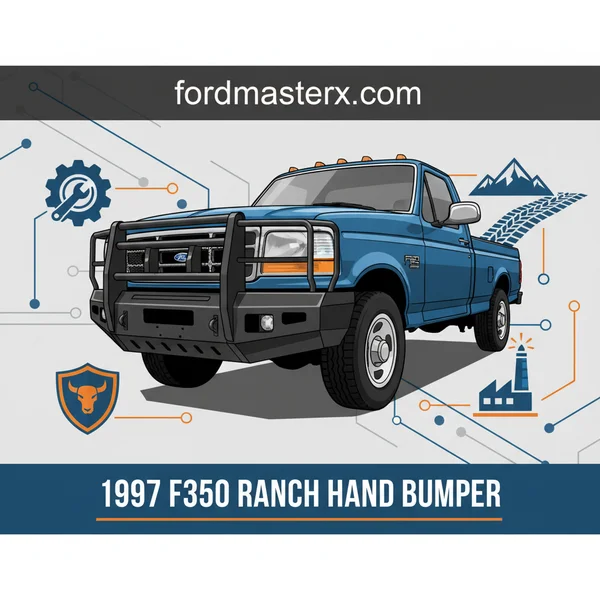
Getting the correct part number matters because these heavy-duty bumpers weigh over 200 pounds. Returning a freight-shipped item due to a fitment error can cost you hundreds of dollars in restocking fees and return shipping. By identifying the exact specifications and part numbers for the OBS chassis, you ensure a “bolt-on” installation that utilizes your truck’s existing frame horns without the need for torching, welding, or custom bracket fabrication. This guide focuses on the specific hardware and identification markers you need to secure the right bumper the first time.
Ranch Hand Legend Series Specifications for OBS Ford F-350s
Structural Materials and Construction
The Legend Series for the 1997 F-350 is the flagship heavy-duty bumper for the OBS era. It is constructed from a 4-inch schedule 40 pipe main frame. Unlike lighter “Sport” style bumpers, the Legend uses 5/16-inch thick uprights that provide the vertical strength needed for heavy impacts. The wrap-around brush guards are made from 2-inch, 14-gauge tubing, specifically contoured to match the square headlights and wide grille of the 1992–1997 Ford front end. The face of the bumper is finished with 12-gauge diamond plate steel, providing a rugged aesthetic and a slip-resistant surface if you need to stand on the bumper to service the engine bay.
📤 Share
💾 Download
Weight, Dimensions, and Features
Installing this bumper adds significant mass to the front of your truck. You should expect the FBF921BLR to weigh approximately 235 pounds. This weight is concentrated forward of the front axle, so ensure your front springs are in good condition. Key features of this specific OBS model include:
- Integrated 2-inch Receiver: Most Legend Series front bumpers for the 1997 F-350 come standard with a 2-inch receiver hitch for maneuvering trailers or mounting a removable winch cradle.
- Finish: The standard finish is a high-gloss black powder coat. This coating is designed to resist corrosion, though many OBS owners choose to Line-X the bumper for extra durability in work environments.
- Frame Mounts: The mounting brackets are specifically spaced for the 1992–1997 F-250 and F-350 frame rails, which differ from the F-150 frames of the same era.
How to Upgrade Your 1997 F350 with a Ranch Hand Bumper Like a Pro: A Practical Walkthrough
The 1997 Ford F350, often referred to as the pinnacle of the “Old Body Style” (OBS) trucks, is a workhorse that deserves the ultimate protection. Installing a Ranch Hand bumper is one of the most significant upgrades you can perform, providing unmatched front-end security against deer, debris, and worksite hazards. This guide covers the complete installation process for a full-replacement Legend Series or Summit Series bumper. Following these steps ensures your bumper is perfectly aligned, securely fastened, and maintains the structural integrity of your classic Ford frame. Whether you are a seasoned mechanic or a DIY enthusiast, this walkthrough will help you navigate the heavy lifting and precise measurements required for a professional-grade finish.
Step 1: Workspace Preparation and Vehicle Safety
What you need: Level concrete surface, wheel chocks, heavy-duty jack stands, and a penetration lubricant (like PB Blaster or WD-40).
Instructions: Before touching a single bolt, ensure your truck is parked on a perfectly level surface. Engage the parking brake and place wheel chocks behind the rear tires. Because you will be working under the front end, safety is paramount. Spray the existing bumper mounting bolts on the frame horns with penetration lubricant; since these trucks are decades old, rust is almost a guarantee. Allow the lubricant to soak for at least 30 minutes. If your 1997 F350 has factory fog lights or a block heater cord routed through the bumper, disconnect the negative battery terminal to prevent any accidental shorts during the removal process. Clear a 10-foot radius around the front of the truck to provide ample room for maneuvering the heavy Ranch Hand unit.
Pro Tip: Don’t skip the lubricant. OBS Ford frame bolts are notorious for snapping or seizing, and a little patience now will save you hours of drilling out broken Grade 8 hardware later.
Step 2: Removal of the Factory Bumper
What you need: 18mm deep socket, 19mm wrench, 1/2-inch drive ratchet or impact wrench, and a helper.
Instructions: Locate the four main mounting bolts (two on each side) where the bumper brackets meet the frame horns. Reach behind the bumper to unplug any turn signals or auxiliary lighting harnesses. While one person supports the weight of the factory bumper, use your 18mm socket to loosen and remove the nuts. The 1997 F350 bumper is relatively light compared to the Ranch Hand, but it is awkward to handle alone. Once the nuts are removed, carefully slide the bumper forward and off the frame. If your truck has “accordion” style crumple zones on the frame horns, inspect them now for any previous damage or sagging that might affect the fitment of your new heavy-duty replacement.
Pro Tip: Keep the factory bolts and nuts in a labeled bag. While Ranch Hand provides new hardware, having the original specs can be helpful for reference or if you ever decide to return the truck to stock condition.
Step 3: Preparing the Frame and Mounting Brackets
What you need: Wire brush, black spray paint (rust inhibitor), and the Ranch Hand mounting brackets.
Instructions: With the old bumper out of the way, use a stiff wire brush to scrub away any loose rust, dirt, or road grime from the frame horns. This is the perfect time to apply a coat of rust-inhibiting black paint to the exposed frame to prevent future corrosion. Once the paint is dry, identify the specific Ranch Hand mounting brackets. For the 1997 F350, these brackets typically bolt directly to the outside and inside of the frame rails. Align the bracket holes with the factory frame holes. Insert the provided Grade 8 bolts from the inside out, but only hand-tighten the nuts for now. Leaving them slightly loose allows for critical adjustments during the final alignment phase.
Pro Tip: If the frame holes don’t line up perfectly due to years of heavy towing or minor front-end tweaks, use a round file or a stepped drill bit to slightly enlarge the frame holes. Never force a bolt with an impact wrench if it is cross-threaded or misaligned.
Step 4: Pre-Assembling the Ranch Hand Bumper
What you need: Moving blankets or cardboard, the Ranch Hand bumper, and any auxiliary lights or winches you plan to install.
Instructions: Lay down moving blankets or large pieces of cardboard to protect the powder-coated finish of your new Ranch Hand bumper. Place the bumper face down on the padded surface. If your Ranch Hand model includes light tabs or a winch plate, install those components now. It is significantly easier to bolt on fog lights, light bars, or winches while the bumper is on the ground rather than reaching into tight spaces once it is mounted on the truck. Route any wiring harnesses through the pre-drilled holes in the bumper and secure them with zip ties to prevent rattling. Ensure all accessories are tightened to their specific torque requirements before lifting the unit.
Pro Tip: Check the rubber “eyebrow” trim (if included) that sits between the bumper and the grille. If it’s loose, apply a small bead of weather-resistant adhesive to ensure it stays in place during high-speed driving.
Step 5: Positioning and Lifting the Bumper
What you need: Floor jack, wood blocks (2×4 or 4×4 pieces), and at least two capable assistants.
Instructions: This is the most dangerous part of the installation. A Ranch Hand bumper for a 1997 F350 can weigh between 200 and 300 pounds. Center a floor jack under the bumper’s middle bash plate. Place a wood block on the jack saddle to prevent metal-on-metal slipping and to protect the finish. Slowly pump the jack to lift the bumper to the height of the frame brackets. Have your assistants stand on either side to stabilize the bumper and prevent it from tipping. Carefully guide the bumper mounting plates onto the brackets you installed in Step 3. Slide the main mounting bolts through the plates and brackets, securing them with washers and nuts until they are finger-tight.
Pro Tip: If you have access to an engine hoist or a forklift with straps, use it. Lifting from above provides much better control and visibility than jacking from below, especially when trying to line up bolt holes.
Step 6: Critical Alignment and Gapping
What you need: Measuring tape, a level, and a rubber mallet.
Instructions: Before tightening any hardware, you must align the bumper with the body lines of your F350. Check the horizontal gap between the top of the bumper and the bottom of the grille and headlights. Ideally, you want a uniform gap of approximately 1/2 inch to 3/4 inch. This gap is vital because the truck frame flexes independently of the body; if the bumper is flush against the grille, it will eventually crack your plastic trim or headlights when driving off-road. Use the rubber mallet to gently tap the bumper into position. Check the side-to-side alignment by measuring the distance from the bumper ends to the wheel wells on both the driver and passenger sides. Ensure the bumper is level relative to the ground.
Pro Tip: Step back 15 feet from the front of the truck to eye the alignment. Sometimes measurements look correct up close, but the bumper may look “crooked” relative to the hood line when viewed from a distance.
Step 7: Final Torquing and Hardware Inspection
What you need: Torque wrench, 3/4-inch or 15/16-inch sockets (depending on supplied hardware), and a marker.
Instructions: Once the alignment is perfect, begin tightening the hardware in a “cross” pattern to ensure even pressure. Use a torque wrench to tighten the Grade 8 bolts to the manufacturer’s specifications, which is typically between 85 and 110 foot-pounds for 1/2-inch or 5/8-inch hardware. Double-check every single nut and bolt, including the bracket-to-frame bolts and the bumper-to-bracket bolts. After torquing, use a permanent marker to draw a small “witness mark” across the nut and the bolt head. This allows you to perform quick visual inspections in the future to see if any hardware has vibrated loose during operation.
Pro Tip: Re-torque all hardware after the first 100 miles of driving. The weight of the bumper combined with road vibrations can cause the metal to “settle,” which may result in a slight loss of bolt tension.
Step 8: Electrical Connection and Finishing Touches
What you need: Wire strippers, crimp connectors, heat shrink tubing, and zip ties.
Instructions: With the bumper securely mounted, it is time to finish the electrical work. Reconnect the factory turn signal harnesses if you moved them to the new bumper. If you installed new LED pods or a winch, route the wiring away from the radiator and any moving parts like the fan belt or steering linkage. Use heat shrink tubing on all connections to protect them from the salt and moisture that OBS Fords are prone to catching. Reconnect the negative battery terminal and test all lights. Finally, wipe down the bumper with a microfiber cloth and a light coat of wax or a matte-finish protectant to keep the powder coating looking new and to help shed mud and water.
Pro Tip: When routing winch cables, always use a protective loom. These cables carry high amperage, and any rubbing against the sharp edges of the 1997 F350’s frame can lead to a catastrophic electrical fire.
✅ Final Checklist
- Verify that the gap between the bumper and the grille is at least 1/2 inch to allow for frame flex.
- Ensure all Grade 8 mounting bolts are torqued to at least 85 ft-lbs (or manufacturer spec).
- Confirm that all turn signals, fog lights, and auxiliary lights are functioning correctly.
- Check that the hood latch is easily accessible and that the hood opens without hitting the bumper’s brush guard.
- Ensure the winch (if installed) has its clutch engaged and the cable is properly tensioned.
Important Notes:
- Safety Warning: Ranch Hand bumpers are extremely heavy. Never attempt to lift or hold the bumper by yourself; use mechanical assistance and multiple helpers to prevent crush injuries.
- Suspension Note: The added weight (200+ lbs) may cause the front end of your 1997 F350 to sag. Consider upgrading to heavy-duty front leaf springs or adding a leveling kit to restore factory ride height.
- Seek Professional Help: If your truck frame shows signs of heavy rot or previous collision damage, consult a fabrication shop before mounting a heavy-duty bumper.
- Estimated Time: 3 to 5 hours depending on rust levels and tool availability.
- Estimated Cost: $1,200 – $2,500 for the bumper unit, plus $50 in miscellaneous hardware/paint.
Identifying the Correct Part Numbers and Fitment Options
Front Bumper Part Numbers (FBF921BLR)
The core part number you must search for is FBF921BLR. This is the Legend Series Front Bumper. While Ranch Hand previously offered variations like the “Bullnose” or “Wincher” series for these trucks, the Legend remains the most widely available and supported model for the 1997 F-350. When verifying fitment with a retailer, confirm that the bumper is listed for the 1992–1997 F-250/F-350 range. If the listing says “1997-2003,” it is likely for an F-150 or a later Super Duty, and it will not fit your 1997 F-350.

Rear Bumper Compatibility (BBF920BLL)
To match the front FBF921BLR, the corresponding rear bumper part number is BBF920BLL. This is the Legend Series Rear Bumper, which is designed to replace the factory step bumper. It is compatible with your factory receiver hitch in most cases, though it also features its own reinforced tow rating. This rear unit fits the 1992–1997 F-250 and F-350 and matches the diamond plate styling and pipe-frame construction of the front unit. It provides a much wider stepping surface and significantly more protection for your quarter panels than the thin OEM chrome bumper.
Fitment Nuances for the 1997 Model Year
There are a few critical details to check before you pull the trigger on a FBF921BLR for your F-350:
- 2WD vs. 4WD: The frame horns on a 1997 F-350 are generally the same regardless of the drivetrain, making this bumper compatible with both 2WD and 4WD models.
- Diesel vs. Gas: Whether you have the 7.3L Powerstroke or the 460 gas engine, the bumper fitment remains the same. The bumper does not interfere with the intercooler (if aftermarket) or the radiator cooling flow.
- The “1997.5” Confusion: Do not buy a bumper labeled for a “1999 Super Duty” even if it claims to fit a 1997. The 1997 F-350 is always the OBS style. The only 1997 Ford truck that changed body styles mid-year was the F-150.
- Hardware Kit: The FBF921BLR should include a vehicle-specific mounting kit. This typically consists of 1/2-inch or 5/8-inch grade 8 bolts, nuts, and washers.
Cost Analysis: Purchase Price vs. Freight Shipping Fees
When you start shopping for a Ranch Hand bumper for your 1997 F350, the sticker price is only one part of the equation. Because these bumpers are constructed from heavy-duty diamond plate steel and schedule 40 pipe, they are incredibly heavy. This weight directly impacts your total investment, especially if you are ordering online rather than picking up from a local ranch supply store.
The Base Price: What to Expect
For a classic OBS (Old Body Style) Ford like the ’97 F350, a Legend Series Full Replacement Bumper typically retails between $1,200 and $1,600. If you opt for a rear bumper or a simple grille guard, the price drops significantly, but the front replacement remains the flagship choice for maximum protection. Keep in mind that prices can fluctuate based on the specific finish—usually a high-gloss black powder coat—and any integrated receiver hitches or winch mounts included in the design.
The Freight Factor: Why Location Matters
Since these units weigh anywhere from 200 to 300 pounds, they cannot be shipped via standard ground carriers like UPS or FedEx. Instead, they arrive via LTL (Less Than Truckload) freight on a pallet. Here are a few tips to manage these costs:
- Commercial vs. Residential: Shipping to a business address with a loading dock or forklift is almost always $50 to $100 cheaper than residential delivery.
- Terminal Pickup: You can often save money by picking the bumper up yourself at the freight carrier’s local terminal.
- Liftgate Fees: If you don’t have a way to get a 300-pound pallet off a semi-truck at your house, you will be charged a “liftgate fee,” which can add $75 or more to the bill.
- Free Shipping Offers: Some large online retailers bake the shipping cost into the price. Always compare the “shipped” total rather than the base price alone.
Comparing Full Replacement Bumpers vs. Grille Guard Alternatives
Deciding between a full bumper replacement and a grille guard is the most important choice you will make for your F350’s front end. While both offer the iconic Ranch Hand look, they serve different purposes and have different impacts on your truck’s handling and utility.
Legend Series Full Replacements: Maximum Security
A full replacement bumper completely removes your factory chrome or painted bumper. It provides a massive upgrade in “deer-proofing” your truck. For the 1997 F350, the Legend Series is the gold standard. It features a one-piece welded construction that protects the headlights, grille, and the lower cooling components. This is the best choice if you frequently drive in rural areas with high wildlife activity or use your truck for heavy farm work where low-speed impacts are a constant risk.
Legend Grille Guards: The Lightweight Choice
If you love the aesthetic of a Ranch Hand but want to keep your factory bumper intact, a grille guard is a solid alternative. These bolt directly to the frame but sit in front of your existing bumper. Here is how they differ from the full replacement:
- Weight Distribution: Grille guards are much lighter, meaning less wear and tear on your F350’s front-end suspension and bushings.
- Installation Ease: Because they are lighter, they are generally easier for two people to manage without specialized lifting equipment.
- Cost: You can typically find a high-quality Ranch Hand grille guard for $600 to $900, roughly half the price of a full replacement.
- Protection Level: While great for brush and small debris, they do not offer the same structural rigidity as a full bumper replacement during a major impact.
Conclusion
Upgrading your 1997 F350 with a Ranch Hand bumper is a definitive way to blend rugged “Old Body Style” aesthetics with modern-day durability. Whether you choose the absolute protection of a full Legend Series replacement or the streamlined look of a grille guard, you are investing in a product known for outlasting the trucks they are mounted on. Remember to factor in those freight costs early and consider shipping to a commercial address to save some extra cash.
Ready to pull the trigger? Start by measuring your current bumper clearance and reaching out to a certified Ranch Hand dealer to verify stock for the 1992-1997 Ford fitment. Give your OBS Ford the protection it deserves and hit the road with total confidence!
❓ Frequently Asked Questions
Is the Ranch Hand Legend Series compatible with both 2WD and 4WD 1997 F-350s?
Yes, the bumper is designed to bolt directly onto the 1992-1997 Ford F-Series frame, which is consistent across both 2WD and 4WD F-350 models of that era.
What kind of finish should I expect on a 1997 F350 Ranch Hand bumper?
Ranch Hand bumpers come standard with a high-gloss black powder coat finish. This finish is baked on to provide a durable barrier against rust, salt, and road debris.
Can I install this bumper alone or do I need a shop?
Due to the 200lb+ weight, it is highly recommended to have at least two people and a floor jack or an engine hoist. Most users prefer professional installation to ensure proper alignment with the OBS body lines.
What are the typical shipping costs for such a heavy bumper?
Because these bumpers exceed standard parcel limits, they ship via LTL freight on a pallet. Shipping costs generally range from $150 to $350 depending on whether you ship to a residential or commercial address.
Does the bumper block the airflow to my 7.3L Powerstroke engine?
No, Ranch Hand designs the Legend Series with punch plate inserts that allow maximum airflow to the radiator. This is essential for maintaining proper operating temperatures in 1997 turbodiesel models.
Are there matching rear bumpers available for the 1997 F-350?
Yes, the matching Legend Series rear bumper is part number RBF921BLSL. It provides the same schedule 40 pipe construction and integrates with your factory towing hitch.