2019 Ford F250 Leveling Kit Guide: Top Picks & Tire Fitment

A 2.5-inch leveling kit is the most effective way to eliminate the factory rake on a 2019 Ford F-250, allowing for larger tires and a more aggressive stance. While coil spacers offer a budget-friendly solution, premium replacement springs are recommended for those seeking improved ride quality and off-road performance.
🎯 Key Takeaways
Recommended Best Deal Products


- Select a 2.5-inch kit to comfortably clear 35-inch tires without trimming.
- Coil spacers are the most cost-effective way to achieve a level look.
- Replacement leveling springs provide superior damping and long-term ride comfort.
- Track bar brackets are critical for keeping the front axle centered.
- Professional alignment is mandatory post-install to prevent uneven tire wear.
For your 2019 Ford F-250, the most effective way to clear 35-inch tires without rubbing is a 2.5-inch leveling kit. This specific height compensates for the factory rake, which typically sees the rear sitting about 2.5 to 3 inches higher than the front. By leveling the stance, you achieve a squared-off look and gain the approach angle needed for off-road obstacles or deep snow. While many generic kits exist, the 2019 Super Duty requires specific hardware—like track bar brackets or caster shims—to ensure your axle stays centered and your steering remains stable at highway speeds.
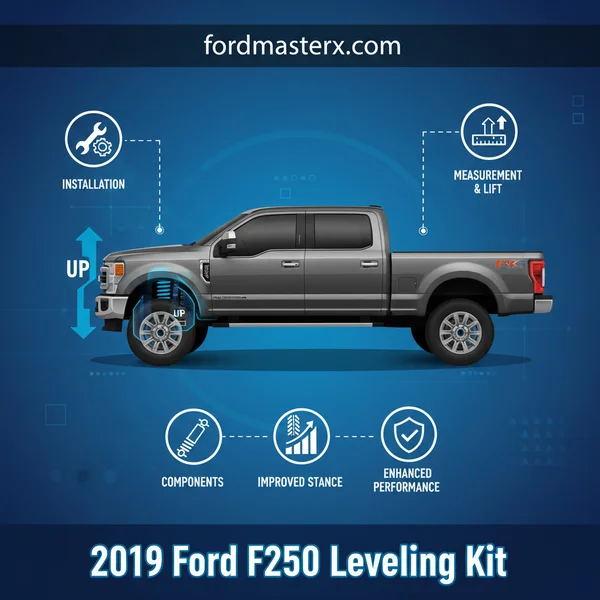
Choosing the right kit is a balance between your budget and how you use your truck. If you primarily stick to pavement and want to save money, a high-quality spacer kit from ReadyLift or Rough Country is your best bet. However, if you find the factory F-250 ride too stiff or “chattery” over washboard roads, upgrading to a full-spring replacement system from Icon or Carli is worth the investment. These premium kits do more than lift the front; they fundamentally change the suspension cycling to improve comfort and control.

Prime for Young Adults — 6 Months Free
Students and 18–24s get six months of Prime free, then half price.
Start 6 Months Free As an Amazon Associate I earn from qualifying purchases.Top-Rated Leveling Kits for the 2019 Ford F-250
ReadyLift 2.5-Inch Leveling Kit (Part #66-2726)
This is widely considered the “Gold Standard” for the 2019 F-250 4WD. It provides a true 2.5 inches of lift using heavy-duty powder-coated steel spacers. What sets this kit apart is the inclusion of sound isolators and a track bar relocation bracket. On the 2019 models, lifting the front even two inches can pull the axle slightly to the driver’s side; this kit fixes that geometry immediately.
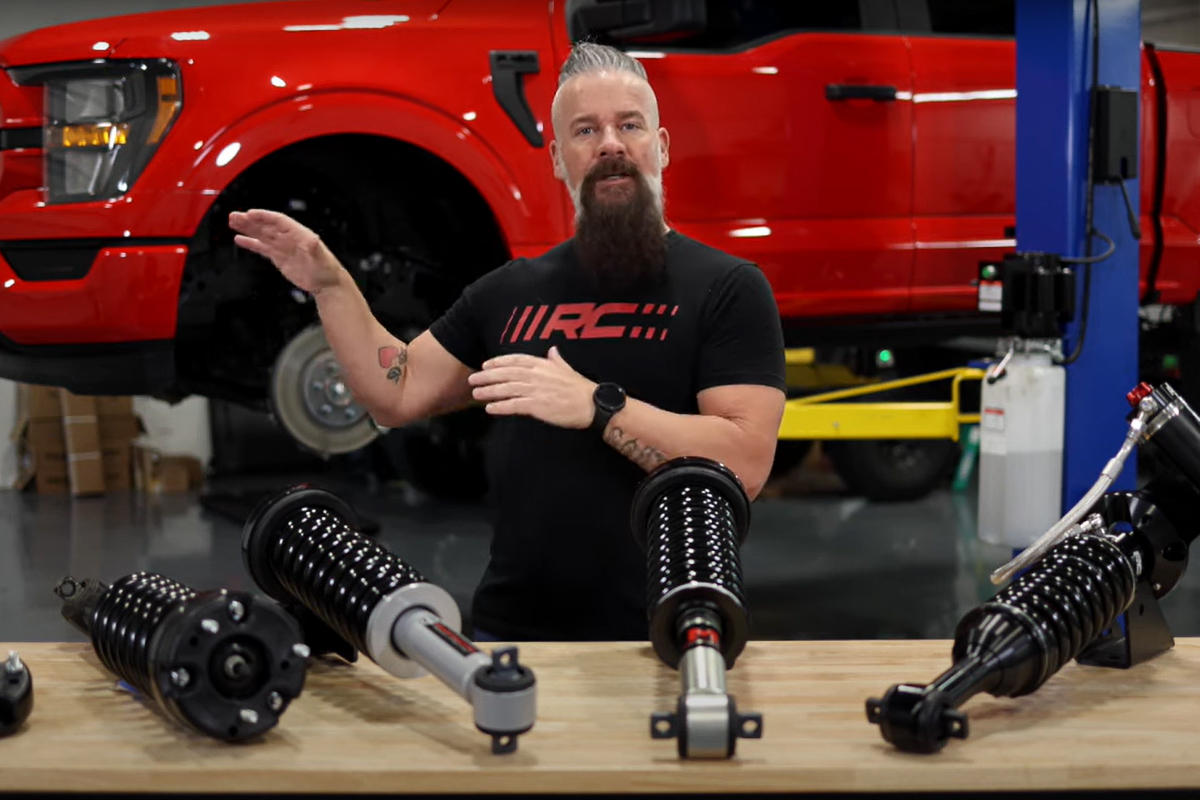
- Compatibility: 2011-2019 Ford F-250 Super Duty 4WD.
- Maximum Tire Size: 35×12.50 on a 9-inch wide wheel with +25 offset.
- Key Feature: Includes bump stop extensions to prevent over-compression of your factory shocks.
- Installation Time: Approximately 3-4 hours with standard shop tools.
Rough Country 2-Inch Leveling Kit (Part #52200)
If you are looking for the most cost-effective way to fit 35s, Rough Country’s 2-inch spacer kit is the answer. It is a no-frills solution that uses bolt-on spacers to sit under the factory coil springs. It is slightly lower than the 2.5-inch kits, which is ideal if you still do heavy towing and want to ensure the truck doesn’t “squat” too much when a trailer is attached.
- Compatibility: 2005-2019 Ford F-250 4WD.
- Pros: Extremely affordable; maintains 100% of the factory ride quality.
- Cons: Does not include a track bar bracket, so a professional alignment is mandatory to check axle center.
Icon Vehicle Dynamics 2.5-Inch Stage 1 System (Part #K53061)
For the owner who wants better-than-factory performance, the Icon Stage 1 system replaces your front coil springs entirely. Instead of a puck sitting on top of a stiff factory spring, you get dual-rate coil springs designed specifically for the weight of the 6.7L Powerstroke or 6.2L Gas engines. This kit significantly reduces the “jarring” sensation when hitting potholes.
- Components: 2.5-inch lift dual-rate coil springs and Icon 2.0 Aluminum Series shocks.
- Ride Quality: Much softer on small bumps but firmer during hard cornering.
- Tire Clearance: Safely clears 35-inch tires with zero trimming required on most wheel setups.
2019 Ford F250 Leveling Kit Made Easy: Your Essential Action Plan
Recommended Best Deal Products


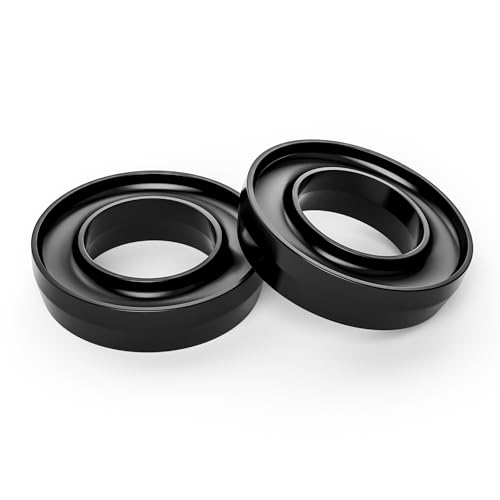
The 2019 Ford F250 Super Duty is a powerhouse of a truck, but many owners find the factory “rake”—where the front end sits significantly lower than the rear—to be aesthetically displeasing or a hindrance when trying to fit larger off-road tires. Installing a leveling kit is one of the most effective ways to give your truck a more aggressive stance and improved ground clearance. This guide provides a comprehensive, step-by-step walkthrough for installing a standard coil spacer or spring-leveling kit. Following these instructions carefully is vital to ensure the structural integrity of your suspension and the safety of your vehicle on and off the road.
Step 1: Preparation and Tool Gathering
What you need: Heavy-duty floor jack, at least two 6-ton jack stands, wheel chocks, a full socket set (specifically 13mm, 15mm, 18mm, 21mm, and 1-1/16″ sockets), a breaker bar, torque wrench, and penetrating oil (like WD-40 or PB Blaster).
Instructions: Before you even touch a wrench, park your F250 on a flat, level concrete surface. Engage the parking brake and place wheel chocks behind the rear tires to prevent any movement. If your truck has significant underbody rust, spray all the suspension bolts (shocks, track bar, and sway bar links) with penetrating oil an hour before starting. This preparation phase is about safety and efficiency; having the right heavy-duty stands is non-negotiable because the front end of a Diesel Super Duty is exceptionally heavy. Ensure you have read the specific instructions provided by your leveling kit manufacturer, as some kits may include additional hardware like bump stop extensions or track bar brackets.
Pro Tip: Measure the distance from the center of your front and rear wheels to the bottom of the fender flare before you start. This “before” measurement helps you confirm exactly how much lift you achieved once the job is finished.
Step 2: Lifting the Vehicle and Removing Wheels
What you need: Floor jack, lug wrench (or 21mm socket with a breaker bar), and jack stands.
Instructions: Use your lug wrench to loosen the lug nuts on both front wheels while the truck is still on the ground; do not remove them yet. Position your floor jack under the front differential or the sturdy part of the frame and lift the truck until the front tires are off the ground. Place your 6-ton jack stands under the frame rails behind the front radius arm mounts. Slowly lower the jack so the frame rests securely on the stands. Once the truck is stable, finish removing the lug nuts and pull the wheels off. Store the wheels under the side of the truck for an extra layer of safety. This creates the necessary workspace to access the coil springs and shocks without the obstruction of the tires.

Audible — Listen Free for 30 Days
One free credit a month and thousands of titles included.
Listen Free for 30 Days As an Amazon Associate I earn from qualifying purchases.Pro Tip: Never rely solely on a hydraulic jack to hold the weight of an F250 while working underneath. Always use high-capacity jack stands positioned on the frame, not the axle.
Step 3: Disconnecting Brake Line Brackets and Vacuum Lines
What you need: 13mm socket and a small flathead screwdriver.
Instructions: To allow the front axle to drop low enough for the coil springs to be removed, you must create slack in the lines. Locate the brake line brackets attached to the frame and the axle. Use your 13mm socket to remove the bolts holding these brackets in place. On 4WD models, look for the small rubber vacuum lines that engage the 4×4 hubs; carefully pop these out of their plastic retaining clips. Failure to do this will result in the weight of the axle hanging by your brake lines, which can cause internal damage or a complete line failure. Ensure the lines are hanging freely and are not stretched tight at any point during the next few steps.
Pro Tip: Use a zip tie to loosely secure the brake lines to a point on the frame so they don’t dangle too far or get pinched, but leave enough “play” for the axle to drop.
Step 4: Supporting the Axle and Removing Shocks
What you need: Floor jack, 18mm socket, and 21mm wrench.
Instructions: Slide your floor jack back under the front axle and apply just enough pressure to support the weight, but do not lift the truck off the jack stands. Now, locate the lower shock mounting bolts. Use an 18mm socket and a 21mm wrench to remove the bolt connecting the bottom of the shock to the axle on both sides. If your leveling kit includes new, longer shocks, you should also remove the top nut and pull the factory shocks out entirely. If you are using shock extensions, you only need to disconnect the bottom. With the shocks disconnected, the only things preventing the axle from dropping are the sway bar links and the track bar.
Pro Tip: If the shock bolt is stuck, use a dead-blow hammer to tap it through. Avoid using a metal sledgehammer directly on the bolt threads to prevent mushrooming the metal.
Step 5: Disconnecting the Sway Bar and Track Bar
What you need: 15mm socket, 1-1/16″ socket (or 27mm/30mm depending on the specific year), and a large breaker bar.
Instructions: Remove the bolts holding the sway bar end links to the axle using a 15mm socket. This allows the sway bar to swing up and out of the way. Next, you may need to loosen the track bar bolt on the frame side (drivers side) to allow for more articulation. The track bar bolt is notoriously tight, often requiring over 400 lb-ft of torque to break loose, so use your longest breaker bar here. You don’t necessarily need to remove the track bar entirely for a 2-inch level, but loosening it ensures the axle can drop evenly and prevents the rubber bushings from binding during the installation of the new components.
Pro Tip: When reinstalling the track bar later, you might find the holes don’t line up. Have a friend turn the steering wheel slightly while you’re under the truck to shift the body relative to the axle until the bolt slides in.
Audible Premium Plus — Annual Membership
12 audiobook credits up front, plus the full Audible catalogue.
See Annual Plans As an Amazon Associate I earn from qualifying purchases.Step 6: Lowering the Axle and Removing Coil Springs
What you need: Floor jack.
Instructions: Slowly lower the floor jack supporting the axle. Watch the brake lines and vacuum lines constantly to ensure they aren’t being stretched. Continue lowering until the coil springs become loose in their seats. On a 2019 F250, the springs should eventually reach a point where you can simply pull them out by hand. Note the orientation of the spring (the “clocking”) and the position of the rubber isolator at the top. Remove the factory rubber isolator as well, as you will likely be placing the leveling spacer between this isolator and the frame, or replacing the spring entirely if you bought a full-spring leveling kit.
Pro Tip: If the axle doesn’t drop far enough, check if the driveshaft or the steering linkage is binding. Never force the axle down with a pry bar if it feels hung up on something.
Step 7: Installing the Leveling Kit and Reassembling
What you need: Leveling spacers (or new springs), factory isolators, and the floor jack.
Instructions: If using a spacer kit, place the new spacer onto the top of the coil spring, ensuring the factory rubber isolator is sandwiched between the spacer and the spring (or as per your kit’s specific instructions). Carefully slide the coil spring back into its lower seat on the axle and align the top with the frame mount. Once both sides are in place, slowly raise the floor jack to compress the springs and seat them into the upper mounts. Ensure the “pigtail” end of the spring is properly indexed in the lower seat. While the axle is raised, reconnect your shocks (or install new ones) and tighten the lower mounting bolts to 111 lb-ft of torque.
Pro Tip: Make sure the spacer is perfectly centered on the frame’s spring bucket. If it’s tilted, it can cause “spring bow,” which leads to annoying squeaks and uneven tire wear.
Step 8: Final Reconnection and Torquing
What you need: Torque wrench, 13mm socket, and 15mm socket.
Instructions: With the axle supported by the jack and shocks attached, reconnect the sway bar end links and tighten them to 59 lb-ft. Reattach the brake line brackets to the frame and axle using the 13mm socket, and snap the vacuum lines back into their clips. If you loosened the track bar, tighten that bolt now (the torque spec is a massive 406 lb-ft, so get it as tight as humanly possible with a long bar if you don’t have a high-capacity torque wrench). Reinstall the wheels and hand-tighten the lug nuts. Raise the truck to remove the jack stands, then lower the truck to the ground. Once the weight of the vehicle is on the tires, perform a final torque of the lug nuts to 165 lb-ft in a star pattern.
Pro Tip: Double-check the brake line clearance by turning the steering wheel from lock to lock while the truck is stationary. Ensure nothing rubs or stretches at full tilt.
✅ Final Checklist
- Verify all brake line and vacuum line brackets are securely reattached.
- Ensure coil springs are properly seated and indexed in their lower perches.
- Confirm all major bolts (shocks, sway bar, track bar) are torqued to factory specifications.
- Check that the steering wheel is relatively straight (it may require a drag-link adjustment).
- Immediately schedule a professional alignment to correct the caster and toe settings.
Important Notes:
- Safety Warning: The coil springs are under immense pressure. Always lower the axle slowly and never put your hands directly on top of the spring while the jack is moving.
- Seek Professional Help: If you find that your track bar is severely misaligned or if you encounter heavy frame corrosion, consult a professional suspension shop.
- Alignment: A leveling kit changes the geometry of your front end. Failure to get an alignment within 50 miles of installation will cause rapid tire wear and may lead to “death wobble.”
- Estimated Time: 3 to 5 hours depending on mechanical experience and tool availability.
- Cost Range: $100 – $300 for basic spacer kits; $500 – $1,200 for premium spring and shock kits.
Comparison: Budget Coil Spacers vs. Premium Replacement Springs
Coil Spacers: Maintaining Factory Load Capacity
Coil spacers (or “pucks”) are the go-to for 70% of 2019 F-250 owners. These are usually made of steel, aluminum, or high-density polyurethane. They sit between the frame and the top of the coil spring. The primary advantage is that they do not change your spring rate. Your truck will ride exactly as it did the day you drove it off the lot. Because they are inexpensive to manufacture, you can often find high-quality kits for under $150. They are perfect for work trucks where “feel” is secondary to “function.”
📤 Share
💾 Download
- Pros: Low cost, easy installation, preserves factory towing “feel.”
- Cons: Does nothing to improve the stiff factory ride; can lead to “coil bind” if the spacer is too large for the shock travel.
Replacement Springs: Why Your Spine Will Thank You
Premium kits replace the factory Ford springs with progressive or dual-rate springs. Factory springs are linear, meaning they have a constant stiffness regardless of how much they are compressed. Progressive springs start soft to soak up cracks in the pavement and get stiffer as they compress to handle larger bumps. In a 2019 F-250, this eliminates the “rebound” bounce that often happens in the front end when driving over highway expansion joints. While these kits cost three to four times more than spacers, the improvement in daily drivability is night and day.
- Pros: Superior ride comfort, increased wheel travel for off-roading, reduced body roll.
- Cons: Higher price point, more complex installation, may require upgraded shocks to handle the new spring rate.
When choosing between these two, consider your seat time. If you spend four hours a day in your truck, replacement springs like those from Icon or BDS are a necessity for long-term comfort. If your 2019 F-250 is a weekend warrior or a dedicated tow rig, a 2.5-inch ReadyLift spacer kit will give you the look you want without breaking the bank.
Tire and Wheel Fitment Guide for Leveled F-250 Trucks
Recommended Best Deal Products


The primary reason most owners install a 2019 Ford F250 leveling kit is to clear larger, more aggressive rubber. While the stock Super Duty stance is quite high, the factory rake and tight wheel wells limit you to relatively small tires. Once you level the front end, a world of possibilities opens up for a more commanding presence on and off the road.
Maximum Tire Sizes with a 2-Inch Level
For a 2019 F-250 with a 2-inch to 2.5-inch leveling kit, the “sweet spot” is almost universally considered to be a 35-inch tire. This size fills the wheel well perfectly without looking stuffed or requiring significant modifications to the bodywork. While some owners attempt to squeeze 37-inch tires onto a leveled truck, this usually requires significant trimming of the plastic air dam and inner fender liners.
- 35×12.50R20: The most popular choice for aftermarket 20-inch wheels.
- 295/65R20: A slightly narrower, taller option that often fits better on factory wheels.
- 35×12.50R18: Ideal for those who prefer more sidewall for off-road cushioning.
- 325/60R20: A wide, aggressive stance that may require specific wheel offsets.
Wheel Offset and Backspacing Considerations
Fitting larger tires isn’t just about height; it’s about width and how far the wheel sticks out. If you plan on keeping your factory Ford wheels, you can usually run a 35×12.50 tire with minimal rubbing on the radius arms at full steering lock. However, if you move to aftermarket wheels, pay close attention to the offset.
A wheel with a “0” or slightly positive offset (like +18mm) typically offers the best balance, keeping the tire tucked under the fender while providing enough clearance for suspension components. Highly negative offsets (like -44mm) create a wide “stanced” look but significantly increase the likelihood of the tire rubbing against the back of the wheel well during turns.
Critical Components: Shocks, Track Bars, and Caster Shims
Leveling a Super Duty is more than just sticking a spacer on top of a spring. Because the 2019 F-250 uses a solid front axle held in place by a radius arm suspension, raising the ride height changes the geometry of the entire front end. To maintain that “factory plus” ride quality, you need to address a few key mechanical areas.
Maintaining Ride Quality with Extended Shocks
When you lift the front of your truck, the factory shocks are stretched closer to their maximum extension. This often results in a harsh, “topped out” feeling when hitting speed bumps or potholes. To fix this, you have two main options: shock extension brackets or longer aftermarket shocks.
Upgrading to a set of Bilstein 5100s or Fox 2.0 shocks designed for 0-2 inches of lift is one of the best investments you can make. These shocks are valved specifically to handle the heavier weight of the F-250 while providing a smoother, more controlled rebound than the stock units.
Correcting Axle Alignment and Steering Feel
The F-250 utilizes a track bar to keep the front axle centered under the frame. When you lift the front end, the track bar pulls the axle slightly toward the driver’s side. On a 2-inch level, this shift is noticeable—usually around 1/4 to 1/2 an inch. To get your axle perfectly centered again, an adjustable track bar or a track bar drop bracket is highly recommended.
Furthermore, leveling can reduce the “caster” angle of your front wheels, which can lead to “flighty” steering or a lack of return-to-center feel. Many premium leveling kits now include:
- Caster Shims: Small inserts that restore the pivot angle of the front axle.
- Brake Line Brackets: To ensure your brake lines aren’t stretched at full suspension droop.
- Bump Stop Spacers: To prevent the larger tires from slamming into the fenders under heavy compression.
Conclusion
Installing a 2019 Ford F250 leveling kit is one of the most impactful upgrades you can perform. It eliminates the factory “stinkbug” look, allows for 35-inch tires, and gives your Super Duty the aggressive profile it deserves. However, the best results come from looking beyond the spacers. By choosing a kit that includes caster correction and upgraded shocks, you ensure that your truck drives just as well—if not better—than it did on the showroom floor.
Ready to transform your truck? Start by measuring your current ride height from the center of the wheel to the fender lip to determine exactly how much lift you need. Once you’ve picked your kit, always remember to schedule a professional alignment immediately after installation to protect your new tires and ensure a straight, safe ride.
❓ Frequently Asked Questions
What are the best brands for 2019 F-250 leveling kits?
ReadyLift and Rough Country are top choices for high-quality spacers, while Icon Vehicle Dynamics and Carli Suspension are the gold standard for full-replacement spring systems that improve ride quality.
Will a leveling kit void my Ford factory warranty?
Under the Magnuson-Moss Warranty Act, a leveling kit cannot void your entire warranty. However, if the kit causes a specific failure (like premature ball joint wear), that specific repair may not be covered.
Do I need an adjustable track bar for a 2019 F-250 leveling kit?
For kits 2 inches or higher, the axle will naturally shift to the driver’s side. An adjustable track bar or a drop bracket is highly recommended to re-center the axle and maintain proper steering geometry.
What is the difference between 4WD and 2WD leveling kits?
The 2019 F-250 4WD uses a solid front axle with coil springs, while the 2WD model uses a Twin I-Beam setup. Kits are not interchangeable, so you must select the one specific to your drivetrain.
How will a leveling kit affect my truck’s towing capacity?
The weight capacity remains the same, but because the truck is now level, the rear will sit lower than the front (squat) when a heavy trailer is attached. You may want to add rear air bags to compensate.
What wheel offset should I use with a leveling kit?
To avoid rubbing the radius arms with 35-inch tires, a wheel with a +18mm to +25mm offset is usually ideal. Very aggressive negative offsets may require trimming the front bumper valance.