
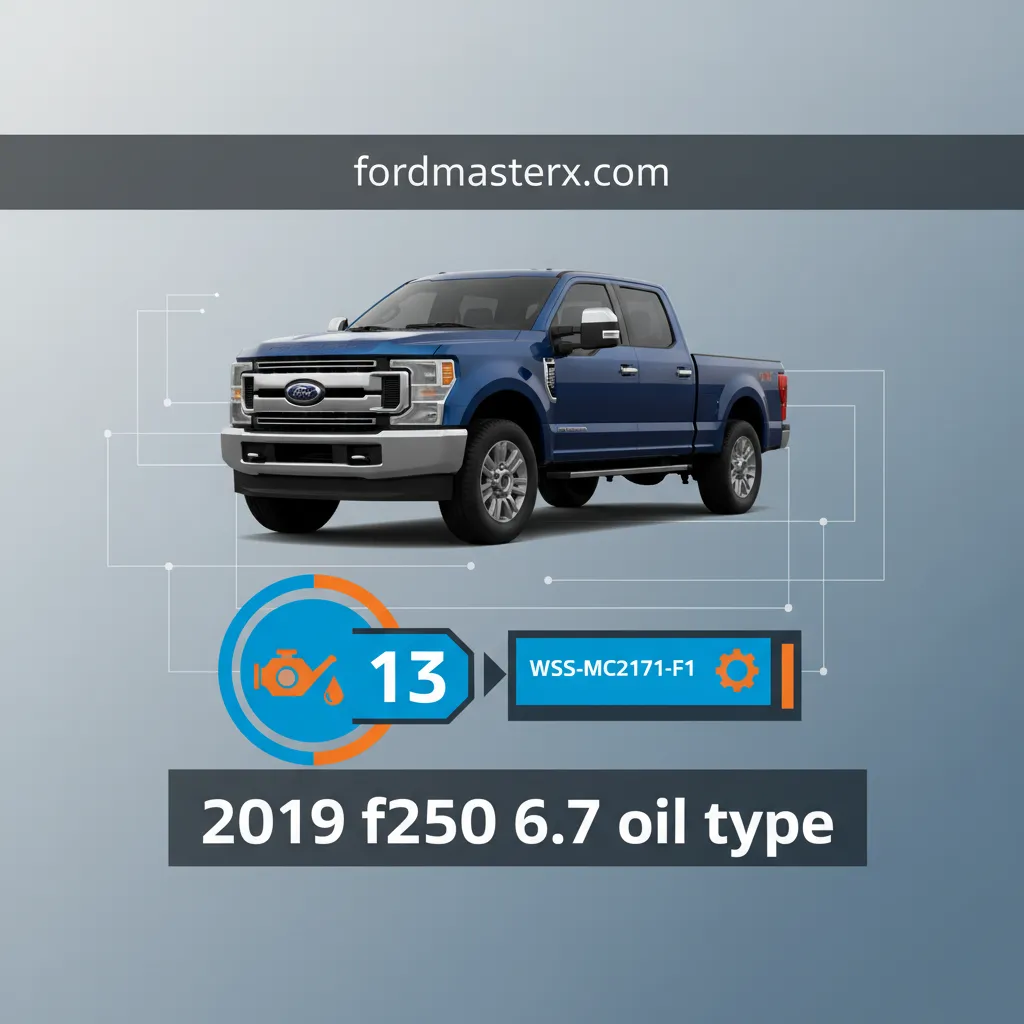
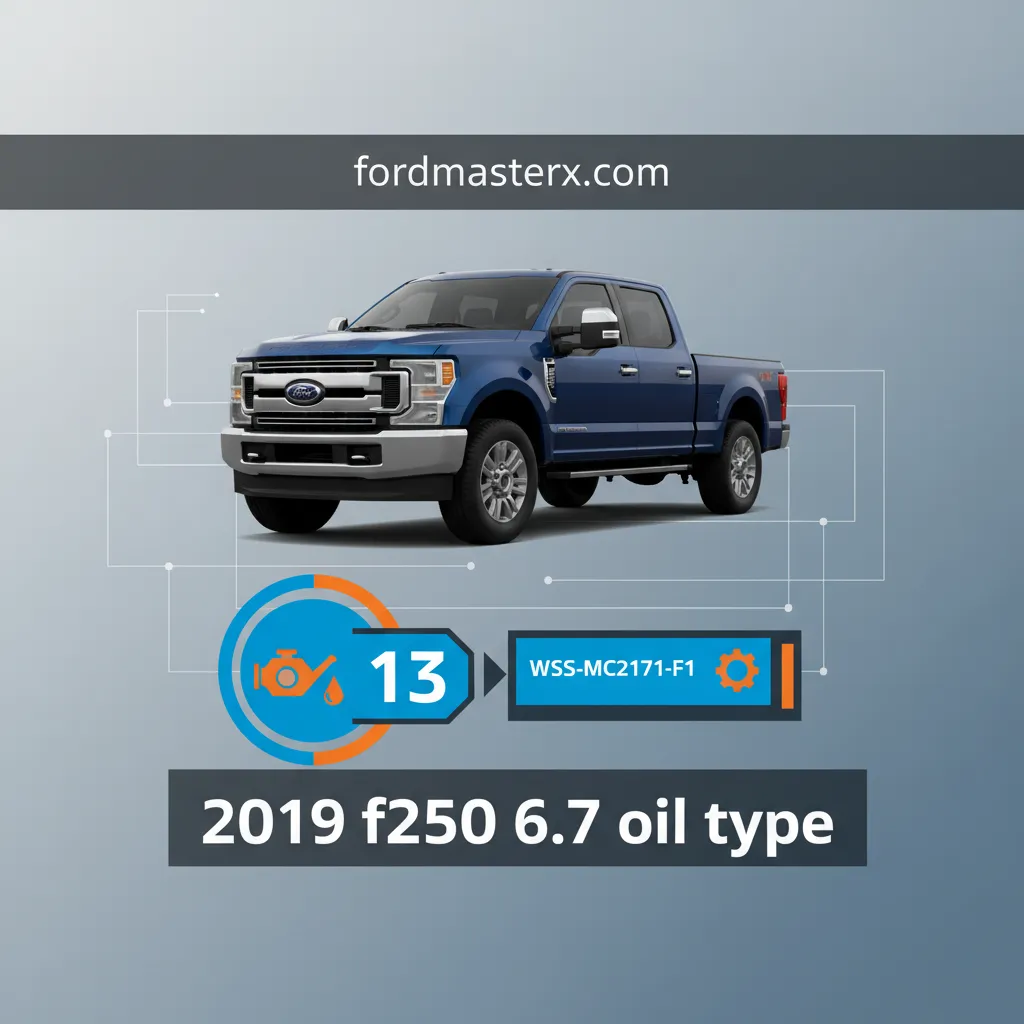
2019 F250 6.7 Oil Type, Capacity, And Ford Wss-M2C171-F1 Specifications

Owning a 2019 Ford F250 equipped with the 6.7L Power Stroke Turbo Diesel means commanding a powerhouse capable of 450 horsepower and a staggering 935 lb-ft of torque. However, that immense power and the longevity of the engine rely entirely on the quality of its lubrication. Selecting the wrong oil for a modern diesel engine can lead to catastrophic valvetrain damage, DPF clogging, and the immediate voiding of Ford’s powertrain warranty. This comprehensive guide provides an expert breakdown of the required Ford WSS-M2C171-F1 oil specifications, precise fluid capacities, and professional viscosity recommendations to ensure your truck remains reliable for hundreds of thousands of miles.
Understanding the Ford WSS-M2C171-F1 Oil Specification Requirement
📤 Share Image
In the world of heavy-duty diesel maintenance, the transition from the older CJ-4 oil category to the newer CK-4 category created a significant technical challenge for Ford’s 6.7L Power Stroke. While CK-4 oils were designed to offer better oxidation resistance and shear stability, Ford’s internal testing revealed a critical flaw: some CK-4 formulations did not provide adequate wear protection for the 6.7L valvetrain. Consequently, Ford released the WSS-M2C171-F1 standard to ensure that any oil used in their engines contains the necessary anti-wear additives—specifically phosphorus—to protect the engine’s internal components.
Why the F1 Specification Matters
The 6.7L Power Stroke utilizes a sophisticated valvetrain and a high-pressure fuel pump (HPFP) that operate under extreme mechanical stress. The Ford WSS-M2C171-F1 specification mandates a minimum phosphorus level (typically around 1,000 ppm) that some “fuel-efficient” CK-4 oils lack. Without this chemical barrier, the camshaft lobes and lifters can experience metal-to-metal contact, leading to premature pitting and eventual engine failure. As a professional technician, I have seen several instances where warranty claims for valvetrain noise were delayed or denied because the oil analysis showed phosphorus levels below the Ford-mandated threshold.
Using an oil that only lists API CK-4 without the WSS-M2C171-F1 approval is a risk to your engine. Ford has specifically stated that using non-approved oils can lead to accelerated wear and may jeopardize your 5-year/100,000-mile powertrain warranty. Always verify the back of the bottle for the exact Ford specification string.
Identifying trusted products is straightforward once you know what to look for. Look for a complete list of certifications on the rear label. Quality manufacturers like Shell, Mobil 1, and Valvoline prominently display the WSS-M2C171-F1 logo or text. This standard isn’t just a recommendation; it is a technical requirement for the high-load environment of a turbocharged diesel engine that utilizes Selective Catalytic Reduction (SCR) and Diesel Particulate Filters (DPF).

Selecting the Correct Viscosity: 10W-30 vs 5W-40 for the 2019 Power Stroke
Viscosity selection for the 2019 F250 is not a one-size-fits-all decision. It requires a nuanced understanding of your operating environment and vehicle workload. Ford’s factory fill is typically 10W-30, which is an excellent all-around lubricant for moderate climates and standard driving. However, the 6.7L engine’s oil temperatures can easily exceed 220°F (104°C) when pulling a 15,000-lb trailer up a grade in the summer heat. In these scenarios, the oil’s ability to maintain film thickness is paramount.
The 10W-30 Standard Fill
Ford recommends 10W-30 for ambient temperatures ranging from -10°F to over 100°F. This viscosity provides a good balance between fuel economy and protection. It is the reliable choice for daily commuters or light-duty fleet trucks that do not see consistent heavy towing.
The 5W-40 Severe Duty Choice
If you operate in “Severe Duty” conditions—defined by Ford as constant towing, frequent idling, or operation in ambient temperatures above 100°F—moving to a 5W-40 full synthetic is the expert recommendation. The “40” weight provides a thicker lubricating film at operating temperatures, while the “5W” rating ensures the oil remains fluid enough to reach the turbocharger bearings instantly during a cold start.
In states like Texas or Arizona, where summer road temperatures can cause oil pans to radiate intense heat, the shear stability of a 5W-40 synthetic is a significant advantage. Conversely, for professional operators in Montana or Canada, a 0W-40 oil meeting the F1 spec is essential to prevent the “oil starvation” that occurs when conventional 15W-40 oils turn to a gelatinous consistency in sub-zero temperatures.

Oil Capacity and Filtration: Proper Maintenance for Reliable Performance
The 2019 F250 6.7L Power Stroke requires a massive volume of oil compared to gasoline engines. Specifically, the system has a complete capacity of 13.0 quarts (12.3 liters) when performing a standard oil and filter change. This large volume is necessary to manage the thermal loads and the high soot production inherent in diesel combustion. Using anything less than 13 quarts will lead to increased oil temperatures and potential aeration, while overfilling can cause the crankshaft to whip the oil into a foam, reducing its lubricating properties.
The Critical Role of the Motorcraft FL-2051S
When it comes to filtration, I always recommend sticking with the Motorcraft FL-2051S. This filter is engineered with a high-efficiency media designed to capture soot particles as small as 20 microns. Furthermore, it features a pressure-relief (bypass) valve specifically calibrated for the 6.7L’s high oil pressure. Generic aftermarket filters often use a “one-size-fits-most” bypass spring, which may open too early (allowing dirty oil to circulate) or too late (starving the engine of oil during cold starts).
📋
Step-by-Step Professional Oil Change Protocol
Bring the engine to operating temperature to ensure the oil flows freely. Use a high-capacity drain pan (at least 15 quarts). Remove the drain plug and let the 3.25 gallons of oil drain completely. Inspect the plug gasket for tears.
Pre-fill the new FL-2051S filter with about 1 quart of fresh oil. This prevents a “dry start” where the engine runs without pressure for several seconds. Lubricate the rubber gasket with oil and hand-tighten.
Add the remaining 12 quarts of oil. Start the engine, check for leaks, and let it run for 2 minutes. Shut it down, wait 15 minutes for the oil to settle in the pan, and verify the level is in the middle of the dipstick crosshatch.
Interpreting the Intelligent Oil-Life Monitor (IOLM) and Service Intervals
The 2019 F250 does not rely on a simple mileage counter for oil changes. Instead, it uses an Intelligent Oil-Life Monitor (IOLM). This algorithm is a sophisticated expert system that tracks engine revolutions, idle time, exhaust gas temperatures, and ambient air conditions to calculate how quickly the oil is oxidizing and loading with soot.
Normal vs. Severe Duty Intervals
Under “Normal” highway driving conditions, the IOLM may allow for intervals up to 10,000 miles (16,000 km) or one year. However, for a professional application, these intervals are often too long. If your truck is a dedicated work vehicle, you likely fall under “Severe Duty.”
Severe Duty Markers
Frequent idling (over 10 mins/hour), towing over 1,000 miles, off-road usage, or operating in dusty environments. Recommended interval: 5,000 miles or 200 engine hours.
Consider two hypothetical scenarios. Driver A commutes 50 miles a day on the highway at 70 mph. Their IOLM might trigger at 9,500 miles. Driver B is a site foreman who keeps the truck idling for hours to run the AC and power tools, and only drives 5 miles between job sites. Driver B’s IOLM could trigger as early as 2,500 miles due to fuel dilution—a condition where unburnt diesel enters the crankcase and thins the oil. Ignoring the IOLM in the latter case is a recipe for catastrophic bearing wear.
For high-mileage trucks or those used professionally, I recommend a Used Oil Analysis from a lab like Blackstone. For about $35, you get a complete report on wear metals, soot levels, and remaining additive life. This is the only way to scientifically determine if your 10,000-mile interval is safe or if you’re destroying your engine.
Trusted Oil Brands and Professional Synthetic Recommendations
Navigating the oil aisle can be confusing, but for the 2019 6.7L, you should only focus on reliable brands that have invested in the Ford-specific testing. Below are the top expert-vetted lubricants that meet or exceed the WSS-M2C171-F1 specification.
Top Recommended Oils for 2019 F250 6.7L
- Motorcraft Super Duty Diesel Motor Oil: This is the baseline trusted product. Available in 10W-30 and 15W-40, it is the exact formulation Ford uses for factory fills and warranty service.
- Shell Rotella T6 5W-40 Full Synthetic: Widely considered the gold standard in the Power Stroke community. It offers exceptional cleanliness and low-temperature pumpability, which can reduce wear during the first 60 seconds of engine operation by up to 50% compared to conventional oils.
- Valvoline Premium Blue Extreme: Developed in partnership with Cummins but fully certified for the Ford F1 spec. It is highly resistant to thermal breakdown and oxidation during heavy towing.
- Mobil 1 Delvac Extreme: A synthetic blend that offers a high level of protection for fleet operations looking for a balance between the cost of conventional oil and the performance of a full synthetic.
By The Numbers: The 6.7L Oil System
Quarts Capacity
Micron Filtration
Min Phosphorus (PPM)
When purchasing oil, always look for the API “C” (Commercial) rating, such as CK-4, alongside the Ford “F1” approval. If you are a professional maintaining a fleet, keeping a log of these specifications is essential for resale value and warranty documentation. Transitioning to a high-quality full synthetic like Rotella T6 or Valvoline Premium Blue can also provide a marginal increase in fuel economy due to reduced internal friction—a significant factor over 100,000 miles of operation.
In conclusion, maintaining a 2019 F250 6.7L requires strict adherence to fluid standards. Always utilize oil that meets the Ford WSS-M2C171-F1 specification to protect the Power Stroke valvetrain. Maintain a strict 13.0-quart capacity using a high-quality Motorcraft FL-2051S filter for optimal filtration. Finally, adjust your oil viscosity (10W-30 or 5W-40) based on your specific towing needs and regional climate. Consult your owner’s manual for specific severe-duty schedules and ensure every oil change is documented to maintain your professional service history and vehicle value.
Frequently Asked Questions
Can I use standard 15W-40 CJ-4 oil in my 2019 6.7 Power Stroke?
It is not recommended unless the oil specifically carries the Ford WSS-M2C171-F1 approval. Many older 15W-40 formulations lack the necessary additives to protect the 6.7L’s valvetrain. While 15W-40 is acceptable in temperatures above 20°F, ensuring it meets the modern Ford specification is vital for maintaining professional standards of engine care and warranty compliance.
How many quarts of oil does a 2019 F250 6.7 diesel take?
A 2019 F250 6.7L Power Stroke engine has a total oil capacity of 13.0 quarts (approximately 12.3 liters) when performing a full oil and filter change. It is critical not to overfill the system, as excess oil can lead to aeration and foaming, which reduces the lubricant’s ability to protect high-pressure engine components.
How often should I change the oil in my 2019 6.7 Power Stroke?
For most drivers, the Intelligent Oil-Life Monitor will signal an oil change between 7,500 and 10,000 miles. However, for professional applications involving heavy towing, frequent idling, or off-road use, a ‘Severe Duty’ interval of 5,000 miles or 200 engine hours is recommended to ensure long-term reliability and to prevent soot accumulation in the lubricant.
What is the best oil filter for a 2019 6.7L Power Stroke?
The professional and trusted choice is the Motorcraft FL-2051S. This filter is engineered specifically for the 6.7L engine’s high flow rates and high-pressure requirements. It features a specialized media that captures fine contaminants while maintaining structural integrity under extreme conditions, ensuring that only clean, filtered oil reaches the turbocharger and bearings.
Is synthetic oil better for the 2019 F250 diesel engine?
Full synthetic oil, such as 5W-40 meeting Ford specs, offers superior performance in extreme conditions. It provides better flow during cold starts and greater thermal stability under heavy towing loads. For owners seeking the most reliable performance and maximum engine longevity, synthetic oil is an expert-level upgrade over standard conventional or synthetic-blend motor oils.