
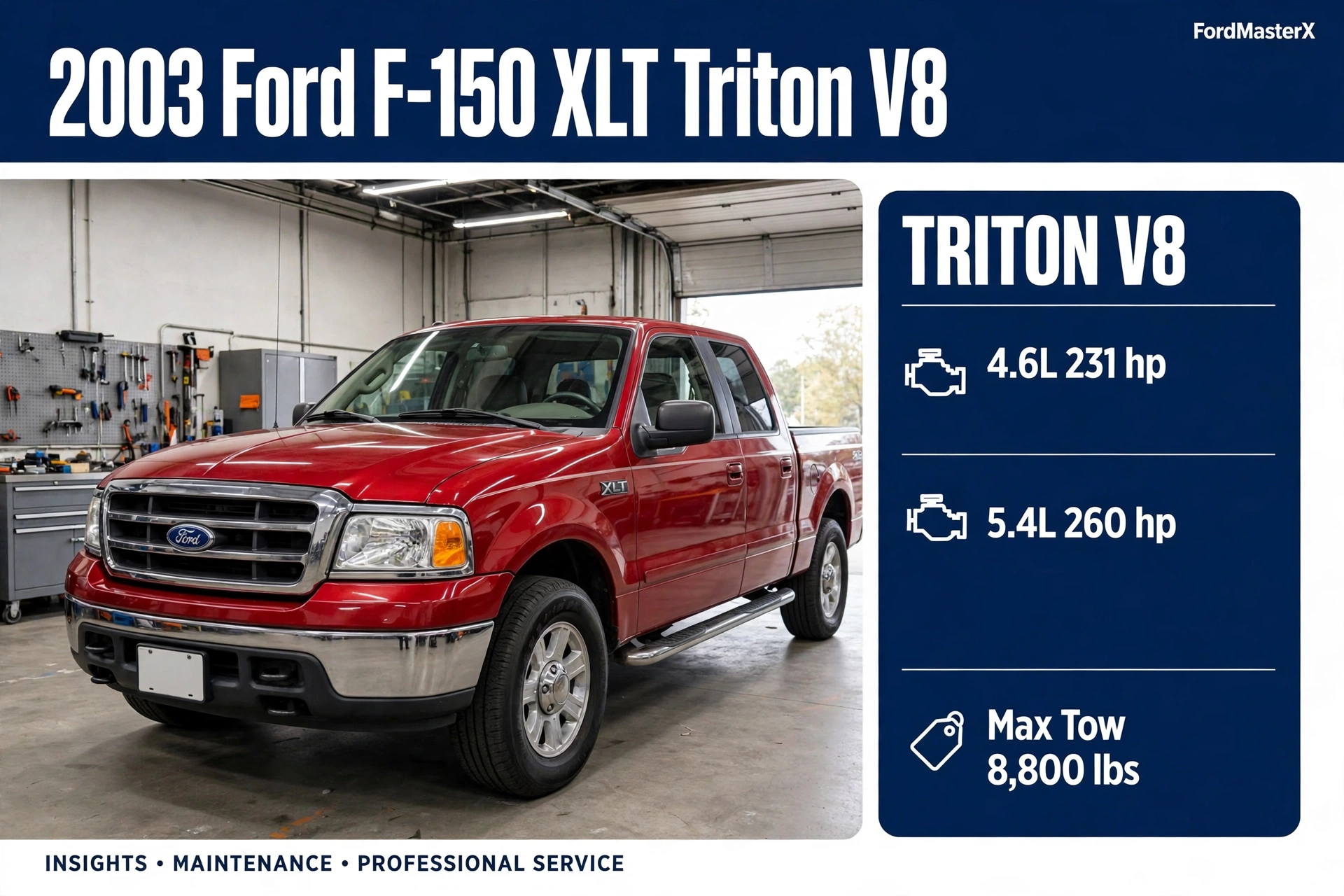
2003 Ford F-150 XLT Triton V8 Proven Specs and Prices for 2026

Yes, a 2003 Ford F-150 XLT Triton V8 is still worth buying in 2026 if you pick the right engine and check the build date first.
The 4.6L Triton V8 makes 231 horsepower and tows up to 7,200 pounds. The 5.4L Triton V8 makes 260 horsepower and tows up to 8,800 pounds.


Typical used prices run $3,175 to $5,400. The catch is the build date: early 2003 trucks still carry the old cylinder heads that can eject spark plugs.
Specialist sources date the revised heads to late 2002. Ford never published a VIN breakpoint, so check the door-jamb build date.
Here are the verified specs, the engine verdict, and the prices to pay.
2003 Ford F-150 XLT Triton V8 Specs at a Glance
The 2003 F-150 XLT is the last full model year of the tenth-generation truck (a carryover 2004 Heritage followed). Ford offered three trims that year, XL, XLT, and Lariat, with XLT as the volume seller.
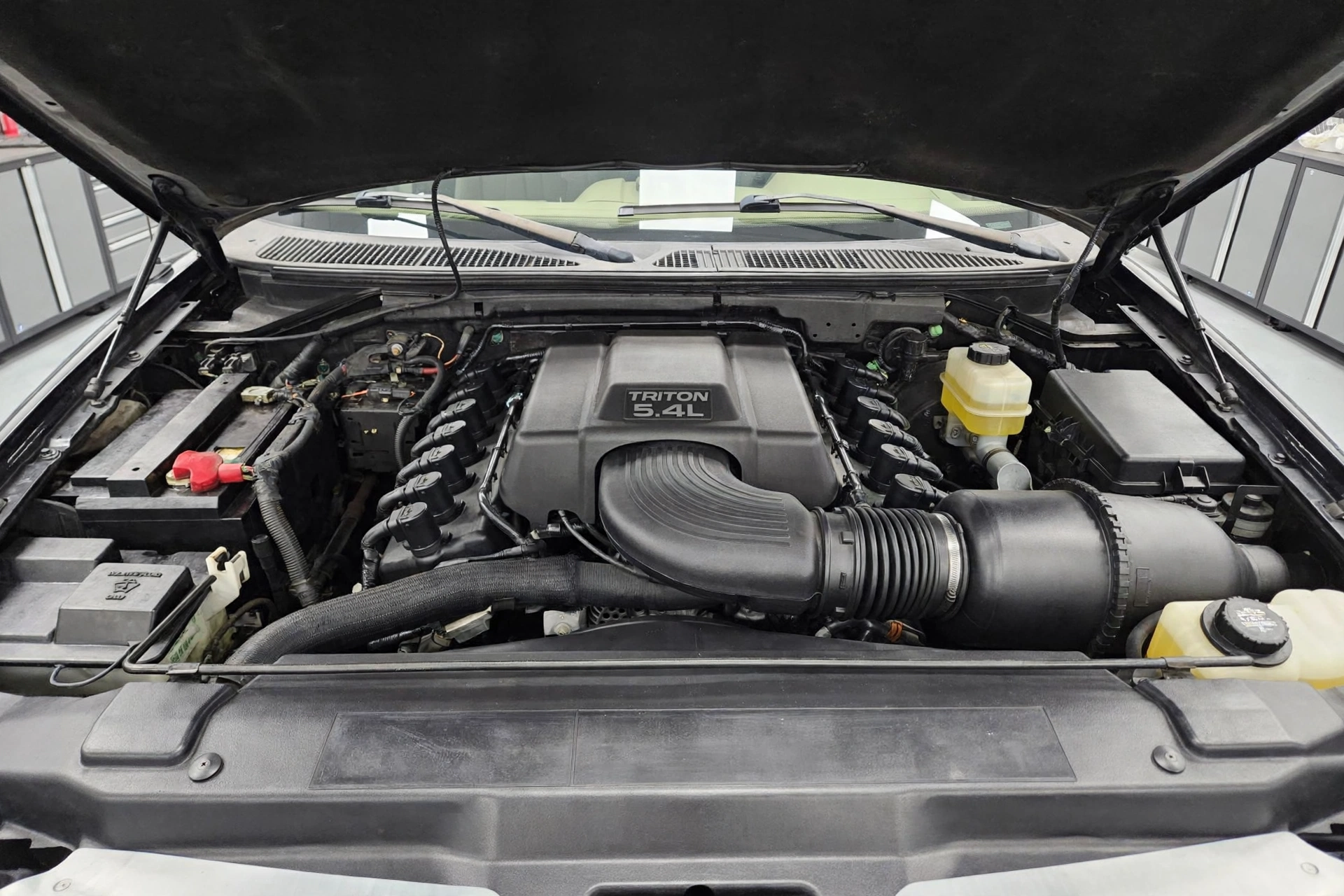
The standard XLT engine was the 4.2L V6, but most used XLTs carry a Triton V8. Both V8s are single overhead cam, two valve engines.
| Spec | 4.6L Triton V8 | 5.4L Triton V8 |
|---|---|---|
| Horsepower | 231 hp at 4,750 rpm | 260 hp at 4,500 rpm |
| Torque | 293 lb-ft at 3,500 rpm | 350 lb-ft at 2,500 rpm |
| Displacement | 281 cu in, 4,606 cc | 330 cu in, 5,409 cc |
| Transmission | 4R70W 4-speed auto, 5-speed manual | 4R100 4-speed auto, 5-speed manual |
The 5.4L makes 29 more horsepower and 57 more lb-ft of torque, peaking at just 2,500 rpm. Both engines run on regular 87 octane fuel. Ford-Trucks.com publishes the full factory table.
4.6L vs 5.4L Triton V8 5 Differences That Decide


Choosing between the two Triton V8s is the most important decision. The 4.6L is the better daily driver, and the 5.4L is the better work truck.
4.6L vs 5.4L Triton V8: Which One Fits Your Truck
2003 Ford F-150 XLT. Both engines are SOHC 2-valve V8s running on 87 octane fuel.
4.6L Triton V8
Daily Driver
Best for: commuting, light work, and trailers under 6,000 pounds.
5.4L Triton V8
Work Truck
Best for: heavy towing, campers, and hard work every week.
The verdict
Buy the 4.6L for daily driving and trailers under 6,000 pounds. Buy the 5.4L for heavy towing and hard work. Either way, check the build date first: specialist sources date the revised cylinder heads to late 2002, and Ford never published a VIN breakpoint.


Power and Torque


The 5.4L wins with 260 horsepower and 350 lb-ft of torque, against 231 horsepower and 293 lb-ft for the 4.6L. The gap shows up most under load or uphill.


Towing Capacity
The 5.4L tows up to 8,800 pounds with the right axle ratio and tow package, against 7,200 pounds for the 4.6L.
That 1,600 pound difference covers a larger boat or a loaded camper. If your trailer weighs more than 6,000 pounds, the 5.4L is the safer pick.
Fuel Economy


The 4.6L returns about 14 mpg in the city and 19 mpg on the highway, against 11 mpg city and 15 mpg highway for the 5.4L.
Reliability Record
Both engines share the same basic design, but the 4.6L has the slightly cleaner record, with less spark plug ejection and cooler running under load.


The 5.4L is still durable when maintained, and high-mileage examples are common with regular service. Our 4.6L Triton reliability guide covers the smaller V8 in detail.
Costs and Resale

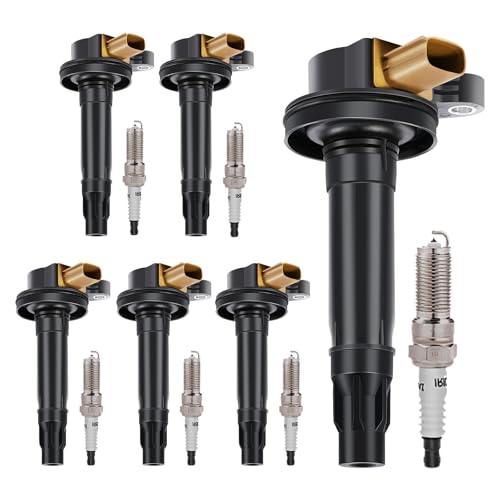
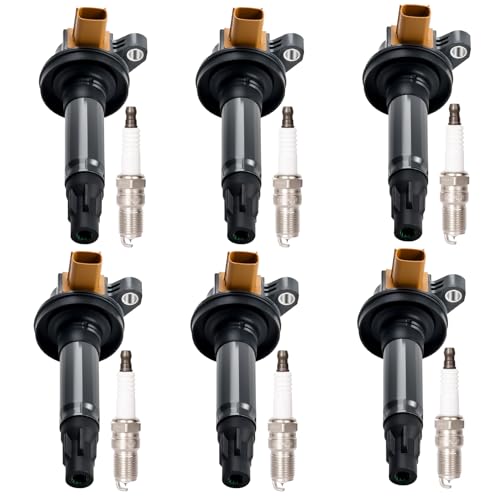
Routine maintenance costs about the same for both engines. The 5.4L costs more only when something breaks, because its larger size makes some jobs tighter in the bay.
The 5.4L commands a small premium on the used market, since tow truck buyers pay more for the bigger engine. The 4.6L sells faster to commuters.
The Verdict
Buy the 4.6L if the truck is your daily driver and your trailer stays under 6,000 pounds. Buy the 5.4L if you tow heavy loads or work the truck hard every week.
Avoid the 5.4L only if fuel costs worry you, and avoid the 4.6L only if your trailer nears its 7,200 pound limit. Our guide to which years the 5.4 Triton was bad covers the model years to watch.
What the 2003 Ford F-150 XLT Trim Adds Over XL


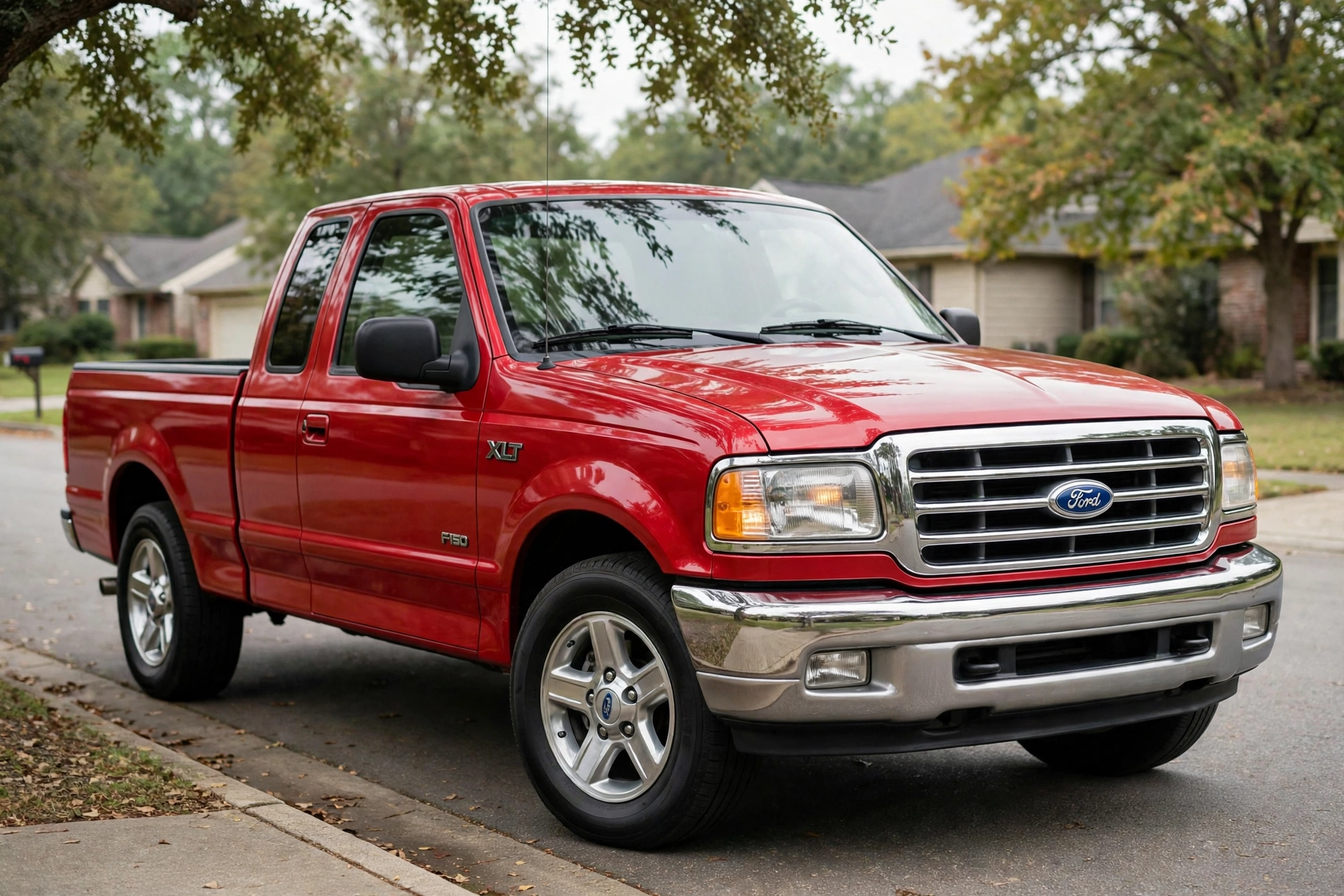
XLT is the mid level trim, and it adds the comfort features most buyers want: power windows, power locks, air conditioning, cruise control, and a CD player.
Alloy wheels were available, and chrome bumpers and grille accents set the XLT apart from the XL. Our explainer on what XLT means on a Ford covers the badge history.
The XLT came in three cab styles: Regular Cab for three people, SuperCab for up to six, and the four door SuperCrew. Bed choices were 6.5 foot or 8 foot in Styleside or Flareside form, plus a 5.5 foot bed on the SuperCrew, and four wheel drive was optional on every cab.
Inside, the XLT uses cloth seats with a 40/60 split bench up front, and captain chairs were optional. The dashboard is simple and durable, with large controls that work with gloves on.
Dual front airbags were standard, and anti-lock brakes were optional.
5 Known Problems on the 2003 F-150 XLT Triton V8
The 2003 F-150 has five issues every buyer must check. Two are safety recalls with free repairs, and the other three are cheap to prevent if caught early.
1 Spark Plug Ejection
Spark plug ejection is the most famous Triton V8 fault: the 1997 to 2002 heads had only about four threads holding each plug in the aluminum head.
Heat cycles and vibration could loosen a plug until combustion pressure blew it out, usually between 50,000 and 100,000 miles. The ejected plug takes the ignition coil with it.
Ford fixed this during the 2003 model year, switching to revised heads with eight to nine full threads. Specialist sources date the change to late 2002; Ford never published a VIN breakpoint.
Early build 2003 trucks still carry the old heads, so check the door jamb build date.
A thread insert repair costs $350 to $1,200 per hole, and technicians torque new plugs to 25 to 28 lb-ft dry, not the original 11 to 14 lb-ft.
2 Fuel Tank Strap Recall
Fuel tank strap corrosion is the most serious safety issue on this truck. Road salt corrodes the steel straps, and a fractured strap can drop the tank far enough to separate a fuel line.
A leaking tank creates a fire risk, and Ford issued Safety Recall 11S21 for certain 1997 to 2003 F-150 trucks in 22 corrosion states plus Washington DC.
About 1.1 million vehicles were included, and dealers replace the straps free of charge. Confirm the repair was done using the NHTSA recall 11S21 bulletin before you buy.
3 Cruise Control Switch Fire Risk
The speed control deactivation switch can overheat and cause a fire, even with the truck parked. Ford recall 05S28 covers 2003 F-150 trucks built from July 29, 2002 through October 30, 2003.
The fix is a fused jumper harness that dealers install free of charge. Run the VIN through the NHTSA recall lookup before you pay.
4 Coil on Plug Failures and Misfires
Each cylinder has its own ignition coil sitting on the spark plug. Coils fail with age and heat, causing a misfire and rough running.
The truck will usually still drive, but power drops and fuel economy gets worse. A single coil is inexpensive and takes minutes to replace.
Scan for misfire codes P0300 through P0308 before you buy, and budget for eight new coils past 150,000 miles.
5 Frame and Brake Line Rust
Rust is the real killer of 2003 F-150 trucks, not the engine. Check the frame rails, cab corners, rockers, and bed arches for soft metal.
Check the brake lines along the frame, since they corrode from the inside out and can fail without warning. A clean southern truck is worth a premium over a rust belt truck.
If the frame has holes or heavy scaling, walk away no matter how good the engine sounds.
How Much Can a 2003 F-150 XLT Triton V8 Tow
Towing capacity depends on the engine, axle ratio, cab, and drivetrain. The numbers below are the maximum 4×2 automatic figures from the Ford 2003 F-150 Owner’s Manual towing charts.
Your truck has its own limit on the door jamb label, and that label wins.
| Configuration | 4.6L Triton V8 | 5.4L Triton V8 |
|---|---|---|
| Regular Cab, 3.55 axle | 7,200 lbs | 8,600 lbs |
| SuperCab, 3.55 axle | 6,900 lbs | 8,300 lbs |
| SuperCrew, 3.55 axle | 6,600 lbs | 8,000 lbs |
| Best case | 7,200 lbs with the 3.55 axle | 8,800 lbs with 3.73 or 4.10 axle |
A 3.55 ratio is the most common, while 3.73 and 4.10 came with the max trailer tow package. Bumper only towing must not exceed 5,000 pounds.
Note: some towing sites list 7,100 pounds for the 4.6L Regular Cab; Ford’s manual and the Ford-Trucks.com factory table list 7,200 pounds.
Our Ford F-150 towing capacity chart covers every year and engine. Payload is a separate limit, and it is easy to exceed.
A typical XLT carries about 1,500 to 2,400 pounds, and the 7,700 pound GVWR Payload Package raises that to about 3,150 pounds.
Fuel Economy Real MPG for Both Triton V8s
Nobody buys a 2003 F-150 for fuel economy, but know the numbers first. The 4.6L V8 is rated at about 14 mpg in the city and 19 mpg on the highway, and owners report 16 to 19 mpg on highway trips.
The 5.4L V8 is rated by the EPA at 11 mpg in the city and 15 mpg on the highway, with a 13 mpg combined figure, as published on FuelEconomy.gov.
A 4.6L long-bed truck covers 570 highway miles on its 30-gallon tank, while a 5.4L truck covers about 450 miles; most XLTs have a 25-gallon tank, good for roughly 475 highway miles at 19 mpg.
2003 Ford F-150 XLT Prices in 2026 5 Price Bands
Used prices depend on cab style, engine, condition, and region. The figures below use Kelley Blue Book Fair Purchase Prices and private party values checked in November 2026, for trucks in good condition.
| Body Style | Fair Purchase Price | Private Party Value |
|---|---|---|
| Regular Cab XLT, 6.5 ft bed | $3,700 | $3,175 |
| Regular Cab XLT, 8 ft bed | $4,250 | $3,675 |
| SuperCab XLT, 6.5 ft bed | $4,750 | $4,075 |
| SuperCab XLT STX, 6.5 ft bed | $5,400 | $4,700 |
| SuperCrew XLT, 5.5 ft bed | $5,275 | $4,650 |
The practical buying range is $3,175 to $5,400. Four wheel drive adds a modest premium, and the 5.4L adds a small premium over the 4.6L.
Trucks with under 100,000 miles are rare and can list near $12,000, but most have 150,000 to 220,000 miles. KBB publishes current values on its 2003 Ford F-150 values page.
7 Checks Before You Buy a 2003 F-150 XLT
Walk through these seven checks in order.
- Read the build date on the door jamb label. Specialist sources date the revised heads to late 2002, so a build date after that point likely means revised heads.
- Run the VIN through the NHTSA recall lookup, and confirm both the fuel tank strap and cruise control recalls are closed.
- Scan with an OBD-II reader for misfire codes P0300 through P0308 and transmission codes.
- Inspect the frame, cab corners, rockers, and brake lines for rust. Surface rust is normal, but soft metal or holes mean walk away.
- Drive the truck cold and hot. Listen for exhaust leaks on cold start, feel for harsh shifts, and check four wheel drive engagement.
- Check the transmission fluid. Clean fluid is red and clear, while dark fluid with a burnt smell means service is overdue or the transmission is worn.
- Ask for service records, especially oil change history. A truck with 5,000 mile oil changes and recent spark plug service is worth more.
Should You Buy a 2003 Ford F-150 XLT Triton V8
Buy one if you want a simple, cheap, capable truck and can do basic maintenance yourself. The 2003 F-150 XLT is the last full model year of a proven generation (a carryover 2004 Heritage followed), and its two valve Triton V8s avoid the cam phaser problems of the 2004 to 2008 trucks.
Parts are cheap and available everywhere. A well kept example under 180,000 miles with a clean frame is a smart buy.
Do not buy one as your only vehicle if you need modern safety features or fuel economy. The 2003 truck has no stability control or side curtain airbags, and a rust belt truck can hide expensive frame repairs.
If the truck you found has early build heads, an open recall, or heavy rust, keep looking.
The 2003 5.4L is a two valve engine, not a three valve, so it has no cam phasers to worry about. The 2004 F-150 introduced the three valve 5.4L, covered in our 2004 F-150 5.4 Triton guide.
2003 Ford F-150 XLT Triton V8 Frequently Asked Questions
Is the 2003 F-150 Reliable
Yes, when maintained. KBB owner reviews include trucks past 275,000 miles, and the main risks are spark plug ejection on early build trucks, coil failures, and rust.
Which Engine Is Better
The 5.4L is better for towing and heavy work, with 260 horsepower and 350 lb-ft of torque. The 4.6L is better for daily driving, with lower fuel costs and a cleaner reliability record.
Cam Phaser Problems
No. The 2003 Triton V8s are two valve engines with no variable cam timing and no cam phasers. Cam phaser failure affects the three valve engines in 2004 to 2010 trucks, not the 2003 model year.
How Much Can It Tow
The 4.6L tows up to 7,200 pounds and the 5.4L tows up to 8,800 pounds, both with the right axle ratio and tow package. Bumper only towing is limited to 5,000 pounds, so confirm the limit on your door jamb label.
What Is It Worth in 2026
Most trucks sell for $3,175 to $5,400 depending on cab, engine, and condition. Clean trucks with under 100,000 miles can list near $12,000.
What Oil Does the 5.4 Take
The 5.4L Triton takes 5W-20 oil, with a capacity of about 6 quarts with a filter change. The 4.6L takes the same weight and capacity. Our Ford engine oil recommendation chart lists the exact Ford specification for each engine.
The Bottom Line on the 2003 F-150 XLT
The 2003 Ford F-150 XLT Triton V8 is a proven workhorse that still earns its keep in 2026. Pick the 4.6L for daily driving and the 5.4L for heavy towing, and insist on a truck built after late 2002 so you get the revised cylinder heads.
Check the frame for rust, confirm both safety recalls are closed, and scan for misfire codes before you pay.
At $3,175 to $5,400, a clean example with service records is one of the best value trucks on the used market.
Buy the truck that passes the checks, keep up with oil changes, and it will keep working for years. Start with the build date, then work through the checks in order.