
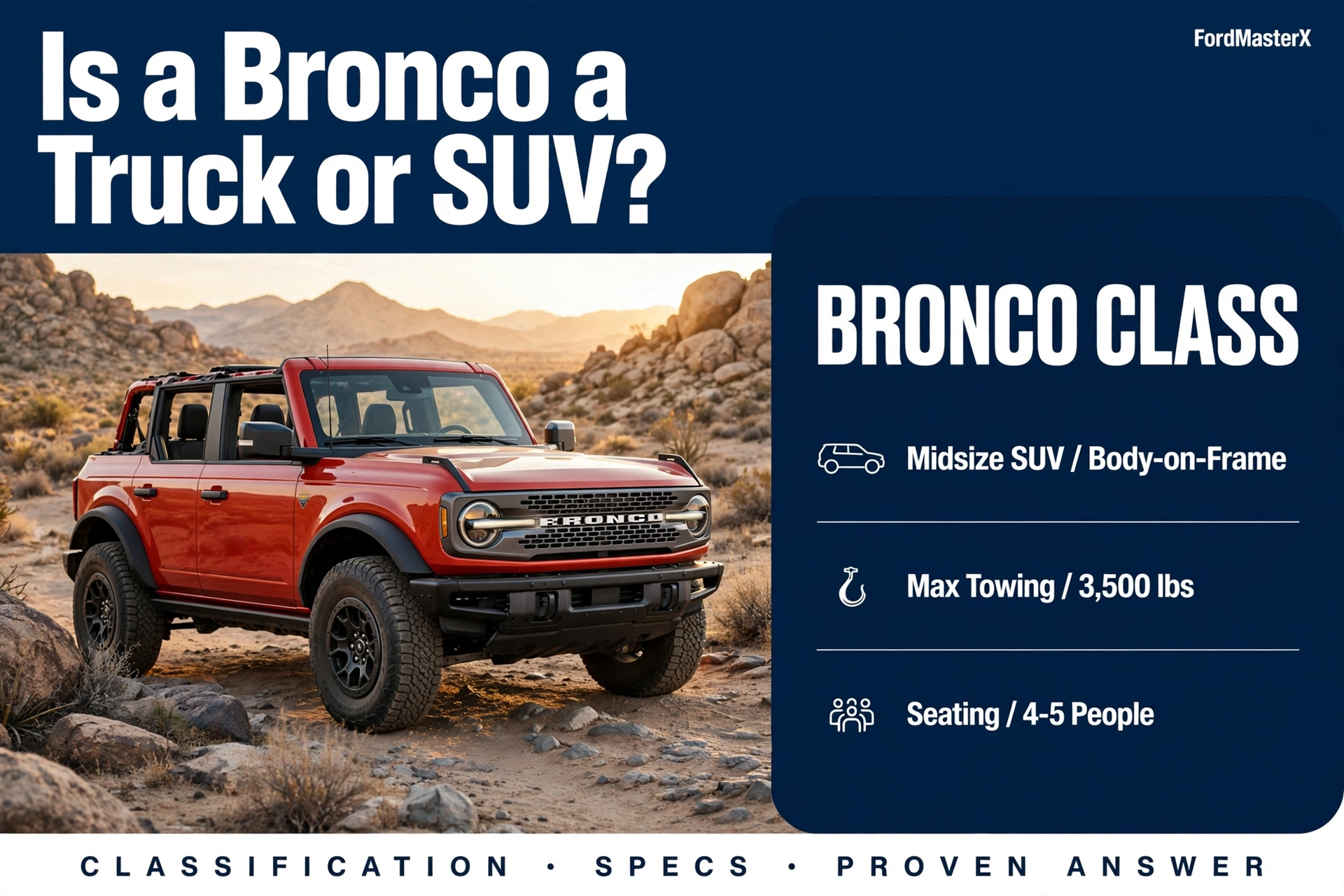
Is a Bronco a Truck or SUV? Proven Answer for 2026

A Ford Bronco is an SUV, not a truck. Ford lists the 2026 Bronco as a midsize 2-door and 4-door 4×4 SUV, and it has no open cargo bed, which is the feature that defines a pickup truck.
That short answer hides a real puzzle, and it explains why so many people search “is a bronco a truck or suv”. The Bronco rides on a truck frame, shares its platform with the Ranger pickup, and looks tougher than most trucks on the road. This guide runs the Bronco through three simple classification tests, compares it with the Bronco Sport, the F-150, and the Explorer using Ford’s own 2026 figures, and shows what the SUV label changes for owners.


Is a Bronco a Truck or SUV in 3 Tests
Three tests settle the truck or SUV question. The Bronco passes the SUV side on the tests that matter most.
Test 1 Does It Have a Bed
A pickup truck has an open bed behind the cab for hauling loose cargo. The Bronco has a fully enclosed cabin with a roof, doors, and rear seats. It fails the pickup test at the first step.
Test 2 What Does Ford Call It


Ford markets the Bronco as an SUV on every official page and in its technical specifications. The 2026 spec sheet opens with the line “Midsize 2-Door and 4-Door 4×4 SUV with removable top(s).” Ford’s own 2026 Bronco technical specifications use the SUV label throughout.
Test 3 What Is It Built On
This test is the tricky one. The Bronco uses body-on-frame construction, the same approach as a pickup.
A separate steel frame carries the body, the engine, and the suspension. That makes it a truck-based SUV, not a truck.
Body-on-frame construction proves toughness, not truck status. Many classic SUVs used the same layout, from the original 1966 Bronco to the full-size Broncos of the 1980s and 1990s.
The frame explains why the Bronco can take trail abuse. It does not turn an enclosed SUV into a pickup.
4 Reasons the Bronco Looks Like a Truck


If the answer is so clear, why does the question keep coming up? Four traits make the Bronco look and feel like a truck to most people who see one.
Shares Bones With the Ranger Pickup


The sixth-generation Bronco rides on a Bronco-specific version of Ford’s midsize truck platform, closely related to the Ranger. It is built at the Michigan Assembly Plant in Wayne, Michigan, the same plant that has built every Bronco since 1965. Shared DNA shows in the upright stance and squared-off panels.
Real Truck Hardware Underneath
The 2026 Bronco uses a fully boxed high-strength steel frame with seven cross members, and its mid-range 2.7L V6 makes 330 hp. Every trim ships with standard four-wheel drive and a two-speed transfer case. Available hardware includes electronic locking axles, a front stabilizer bar disconnect on Badlands, and the Sasquatch package with 35-inch tires.
Doors and Roof Come Off


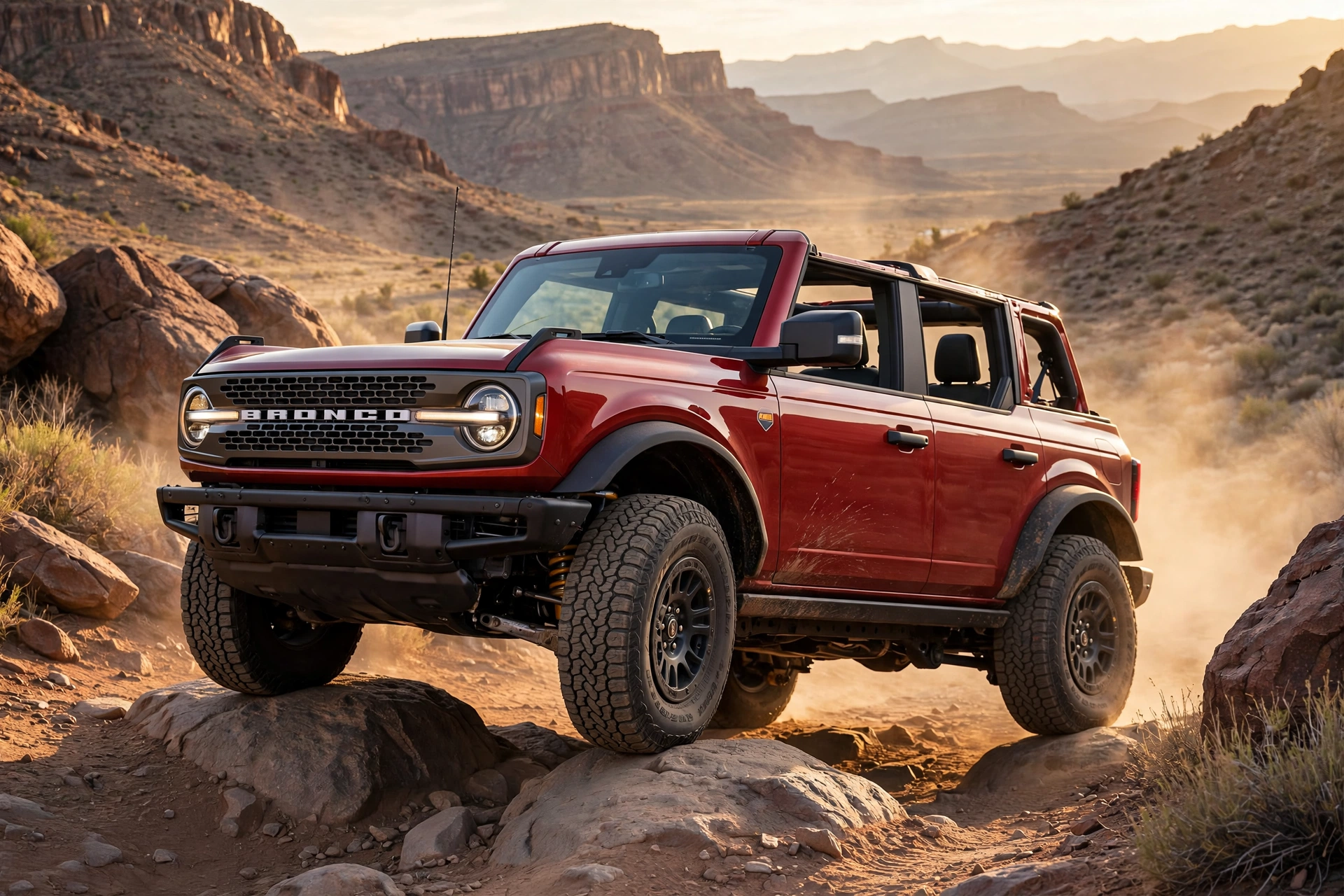
Removable doors and roof panels are a Jeep Wrangler trait, and the Wrangler is also a body-on-frame SUV. Open-air driving makes the Bronco feel like a recreational truck, even though the body style stays an SUV.


History Tied to the F-Series
The full-size Bronco sold from 1978 to 1996 was a short-wheelbase version of the F-Series pickup. That truck-based heritage stuck in the public mind.


The classic models in our 80s Ford Bronco buying guide show how close the old Bronco sat to the F-150 of its day.
None of these four traits changes the body style. A truck needs a bed. The Bronco has an enclosed cabin with up to 83.0 cubic feet of maximum cargo space in the four-door soft-top model, and that cargo rides inside, not in an open bed.
Bronco vs Bronco Sport in 7 Key Numbers


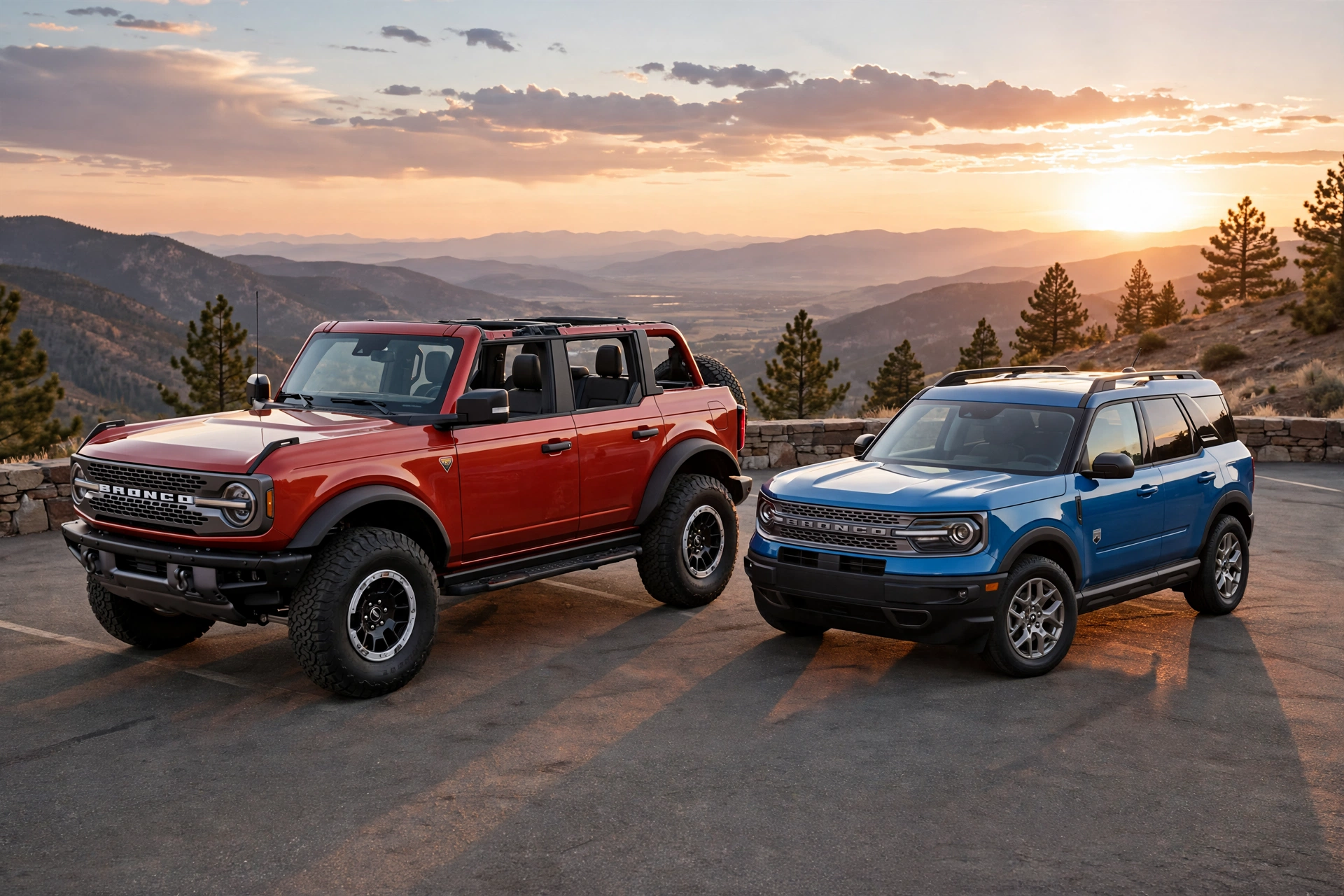
The Bronco Sport causes half the confusion around this question. The two nameplates share a badge and a look, but they are different kinds of SUV built on different platforms.
| Spec | 2026 Ford Bronco | 2026 Ford Bronco Sport |
|---|---|---|
| Class | Midsize SUV | Compact crossover SUV |
| Construction | Body-on-frame | Unibody |
| Standard drive | 4×4 with two-speed transfer case | 4WD |
| Base engine | 2.3L EcoBoost I-4, 300 hp | 1.5L EcoBoost I3, 181 hp |
| Top engine | 3.0L EcoBoost V6, 418 hp (Raptor) | 2.0L EcoBoost I4, 250 hp (Badlands) |
| Max towing | 3,500 lbs (4,500 lbs Raptor) | 2,200 lbs (2,700 lbs Badlands) |
| Max cargo | 83.0 cu ft (4-door soft top) | 65.2 cu ft |
The Bronco is the serious off-roader of the pair. Its body-on-frame chassis, low-range transfer case, and removable panels suit rock crawling and deep trail work. The Bronco Sport is a unibody crossover built for daily driving with real trail ability on weekends.


The Bronco tows 3,500 pounds on most trims and 4,500 pounds as a Raptor, while the Bronco Sport tops out at 2,200 pounds with the 1.5-liter engine and 2,700 pounds on the Badlands with the 2.0-liter engine and the Class II Trailer Tow Package. Those towing figures come straight from Ford’s 2026 Bronco Sport towing guide.
The two-door Bronco seats four people, and the four-door seats five. The Bronco Sport seats five in a smaller footprint that fits tight garages and city parking far better than the full-size Bronco.
Bronco Truck or SUV? One Chart
The Bronco is an SUV with a truck frame. The Bronco Sport is a smaller crossover SUV. Only the F-150 is a pickup truck.
| 2026 Spec | Bronco | Bronco Sport | F-150 |
|---|---|---|---|
| Class | Midsize SUV | Compact crossover SUV | Full-size pickup |
| Construction | Body-on-frame | Unibody | Body-on-frame |
| Max towing | 3,500 lbs (4,500 lbs Raptor) | 2,200 lbs (2,700 lbs Badlands) | 13,500 lbs |
| Max payload | 1,067–1,417 lbs | — | 2,440 lbs |
| Seating | 4 (2-door) / 5 (4-door) | 5 | 3–6 by cab |
| Cargo bed | None (enclosed cabin) | None (enclosed cabin) | Yes, 5.5–8 ft |
Figures: Ford 2026 Bronco Technical Specifications; Ford 2026 Bronco Sport Towing Guide; Ford 2026 F-150 Towing Guide. Maximums apply when properly equipped and vary by configuration. Bronco Sport payload is not shown as a single figure because it varies by trim and configuration; check the doorjamb Tire and Loading label on the exact vehicle.
Buyers who mix up the two should check the roof first. If the doors and roof come off, it is a Bronco. If the roof is fixed steel, it is a Bronco Sport.
The Ford Bronco model comparison chart lays out every trim of the full-size Bronco side by side.
Bronco vs F-150 in 5 Practical Differences
The F-150 is the truck most Bronco shoppers compare against. The two Fords share engines and attitude, but they serve different jobs.
The Open Cargo Bed
The F-150 has an open cargo bed in 5.5, 6.5, and 8-foot lengths. It hauls loose, dirty, or oversized loads that would never fit inside an SUV cabin. The Bronco carries cargo inside an enclosed space, which keeps gear dry and secure but limits tall or messy loads.
Towing Capacity Compared
A properly equipped 2026 F-150 with the 3.5L EcoBoost V6 tows up to 13,500 pounds. That is nearly four times the 3,500-pound rating of most Bronco trims.
Even the Bronco Raptor, at 4,500 pounds, tows about one third of what the top F-150 can pull. Ford’s 2026 F-150 towing guide lists the full ratings by engine and configuration.
Payload Capacity Compared
The F-150 carries up to 2,440 pounds of payload in its best configuration. The Bronco carries far less.
Ford’s published 2026 Bronco configurations range from 1,067 to 1,417 pounds of maximum payload, depending on trim, doors, engine, and transmission. Our Ford Bronco payload capacity chart lists the rating for each 2026 configuration.
Size and Parking Compared
The Bronco is a midsize SUV with a short two-door option and a 35.5-foot turning diameter on the two-door with 32-inch tires. The F-150 is a full-size pickup, longer and wider in every configuration.
The Bronco fits trails and parking spots the F-150 cannot use.
Off-Road Geometry Compared
The Bronco was designed for trails first, with removable panels, high ground clearance, and trail-focused drive modes. The F-150 was designed for work first, with towing, payload, and bed utility as the priorities.
The F-150 Tremor and Raptor close some of that gap, but the Bronco still owns the tight-trail advantage.
The towing and payload gap is the practical heart of the classification question. A buyer who needs to tow a 7,000-pound travel trailer needs the F-150. A buyer who needs to crawl a rocky trail with the roof off needs the Bronco.
The Ford F-150 towing capacity chart shows the full-year ratings for every F-150 engine.
Bronco vs Explorer in 2 Different SUV Roles
Both the Bronco and the Explorer are SUVs, yet they share almost nothing in character. The Explorer is a unibody three-row family SUV built for pavement, comfort, and passenger space, per Ford’s Explorer model materials. The Bronco is a body-on-frame two-row off-roader built for trails.
The Explorer wins on road manners, third-row seating, and highway comfort. Its car-based platform gives it a smoother ride and quieter cabin than the Bronco on long trips. Families who need seven seats and a big enclosed cargo area should start with the Explorer.
The Bronco wins on trail capability, open-air driving, and rugged image. No Explorer trim offers removable doors, a two-speed transfer case, or the Sasquatch package. Buyers who want a daily driver that still handles rough forest roads should weigh the Bronco Sport as well, since it splits the difference between the two.
The Ford SUV size chart puts the Bronco, Bronco Sport, Explorer, and Expedition on one page, which helps when garage space or passenger count decides the purchase.
What the SUV Label Changes for Owners
The SUV label shapes four parts of ownership, and buyers should know each one before signing.
Insurance Rates for an SUV
Insurers rate the Bronco as an SUV, and its premiums reflect SUV risk data rather than pickup data. Off-road use, removable panels, and repair costs still push rates up on some trims. Get a quote with the exact VIN before purchase, since trim and equipment change the number.
Registration as an SUV
Most states register the Bronco as an SUV or passenger vehicle, not as a truck. Rules vary by state, and some states use weight or body-style categories that group SUVs with trucks for fee purposes. Check the title and registration paperwork for your state rather than assuming one rule fits all.
Towing and Payload Limits
The SUV label comes with SUV limits. A 3,500-pound tow rating covers a small boat, a pair of jet skis, or a lightweight camper. It does not cover a large travel trailer or a heavy equipment hauler.
Payload between 1,067 and 1,417 pounds covers passengers and gear, but it fills up fast with four adults and a roof-top tent.
Aftermarket Parts and Accessories
Parts catalogs list the Bronco under SUVs, which matters when shopping for roof racks, bumpers, and suspension kits. The roof load rating is 110 pounds while driving and 450 pounds while parked, so a roof-top tent needs the static rating, not the dynamic one. Check the Ford Bronco trim levels chart before ordering trim-specific parts, since equipment varies widely across the seven 2026 trims.
The seven 2026 trims run from Base through Big Bend, Outer Banks, Badlands, Heritage Edition, Stroppe Edition, and Raptor. Trim choice changes towing, payload, and off-road hardware, but the classification answer stays the same.
Which Ford Fits Your Needs in 2026
The verdict depends on the job, not the badge.
Bronco for Trails and Open Air
Choose the Bronco if you want open-air driving, serious trail hardware, and a midsize SUV that can still tow 3,500 pounds. The Raptor is the pick for high-speed desert running, with 418 horsepower and a 4,500-pound tow rating.
Bronco Sport for Daily Driving
Choose the Bronco Sport if you want SUV practicality in a smaller package, easier parking, an EPA-estimated 27 mpg combined from the 1.5L engine, and light trail ability. Its 2,200 to 2,700-pound towing range covers small trailers and outdoor gear. It is the better daily driver of the two Broncos.
F-150 for Towing and Hauling
Choose the F-150 if you tow more than 4,500 pounds, haul loose cargo in a bed, or need payload above 1,417 pounds. No Bronco configuration matches the F-150’s 13,500-pound towing or 2,440-pound payload. The F-150 is the work tool, and the Bronco is the adventure tool.
Explorer for Family Hauling
Choose the Explorer if you need three rows, a smooth highway ride, and maximum enclosed passenger space. It is the family SUV, while the Bronco is the trail SUV.
Maximum towing, payload, and horsepower are independent ratings, and Ford notes they may not be achieved at the same time. Check the doorjamb label on the exact vehicle you plan to buy, since configuration and accessories change the real limits.
Frequently Asked Questions About the Bronco Truck Debate
Is a Bronco a truck or an SUV?
A Bronco is an SUV. Ford lists the 2026 Bronco as a midsize 4×4 SUV, and it has an enclosed cabin with no open cargo bed, which is the feature that defines a pickup truck.
Is the Ford Bronco a pickup truck?
No. There is no factory Bronco pickup, and no current Bronco has a bed. The Bronco is a body-on-frame SUV, so it shares construction with pickups but not their body style.
Is the Bronco Sport a truck or SUV?
The Bronco Sport is a unibody compact crossover SUV. It uses a car-based platform, has a fixed steel roof, and tows up to 2,200 pounds with the 1.5-liter engine or 2,700 pounds on the Badlands.
Why do people think the Bronco is a truck?
Four traits cause the confusion: its body-on-frame chassis, its shared platform with the Ranger pickup, its removable doors and roof, and its history as a short-wheelbase F-Series relative from 1978 to 1996. Each trait is real, and none of them makes it a pickup.
How much can a 2026 Ford Bronco tow?
Most 2026 Bronco trims tow up to 3,500 pounds when properly equipped. The Bronco Raptor tows up to 4,500 pounds. By comparison, a 2026 F-150 tows up to 13,500 pounds.
Is the Bronco good for daily driving?
Yes, with trade-offs. The four-door Bronco seats five and works as a daily driver, but its ride is firmer and louder than a unibody SUV such as the Explorer. The Bronco Sport is the smoother daily driver of the Bronco family.
Bronco Truck or SUV? The Bottom Line in 3 Points
So is a bronco a truck or suv? The Bronco is a truck-based SUV, and that phrase holds the whole answer.
Its frame, its Ranger roots, and its trail hardware come from the truck world. Its enclosed body, its SUV listing, and its lack of a bed put it firmly in the SUV world.
Use the classification as a starting point, not a verdict on capability. The Bronco tows 3,500 pounds, carries up to 1,417 pounds of payload, seats four or five people, and goes places no stock F-150 can follow. The F-150 tows and hauls far more, and the Bronco Sport drives more easily every day.
Pick the Ford that matches the job. If the job is trails, open air, and weekend adventure, the Bronco is the answer. If the job is heavy towing and bed utility, the F-150 still wins.