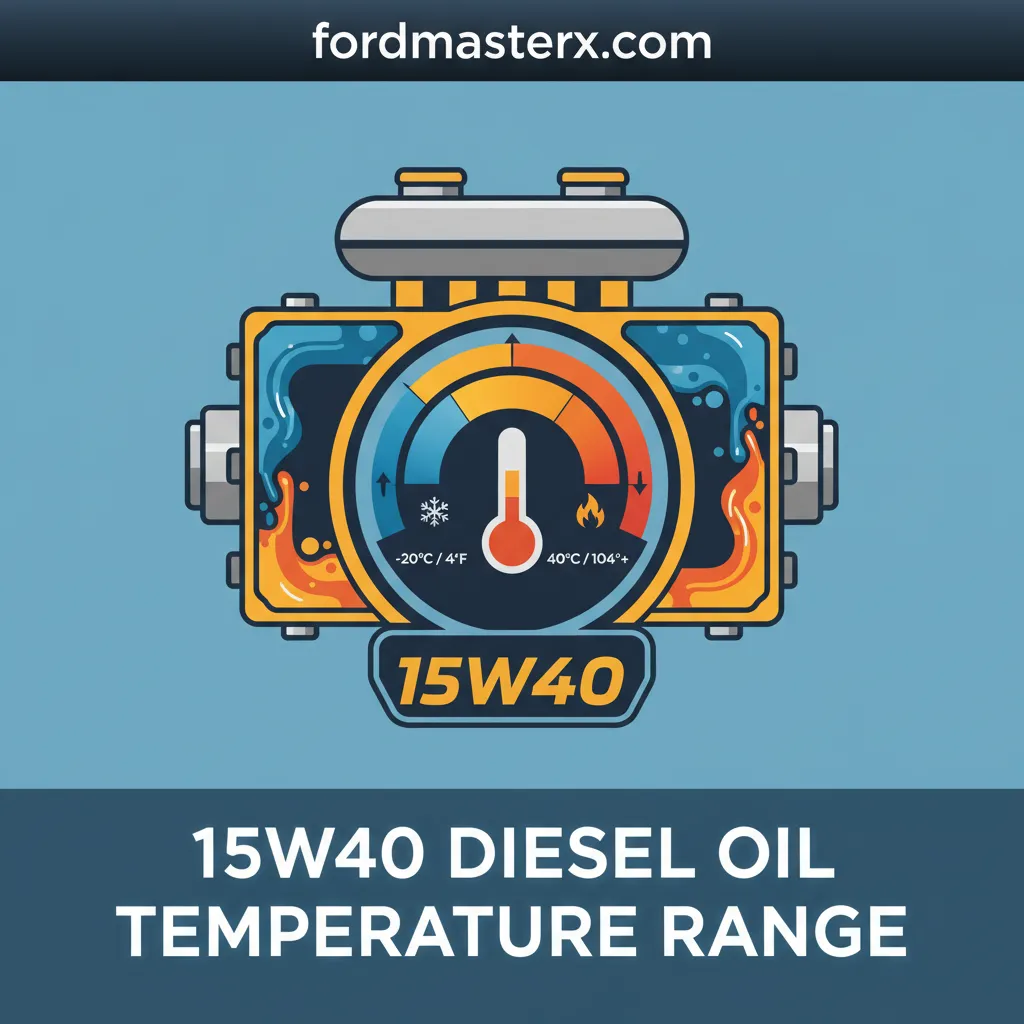
15W40 Diesel Oil Temperature Range: Technical Specifications For Cold Starts And High Heat

For decades, 15W-40 has been the trusted backbone of the heavy-duty diesel industry, serving as the default lubricant for everything from long-haul Class 8 trucks to stationary power generators. However, its protective capabilities are not infinite; they are strictly governed by thermal limits that every fleet manager and owner-operator must respect. Operators often struggle to determine if their specific climate or workload pushes 15W-40 beyond its safe operating temperature range, risking catastrophic engine wear or cold-start damage. This comprehensive guide provides an expert analysis of the 15W-40 diesel oil temperature range, detailing the precise cold-start thresholds and high-heat stability limits required for professional engine maintenance.
Understanding the 15W-40 Diesel Oil Temperature Range and SAE Ratings
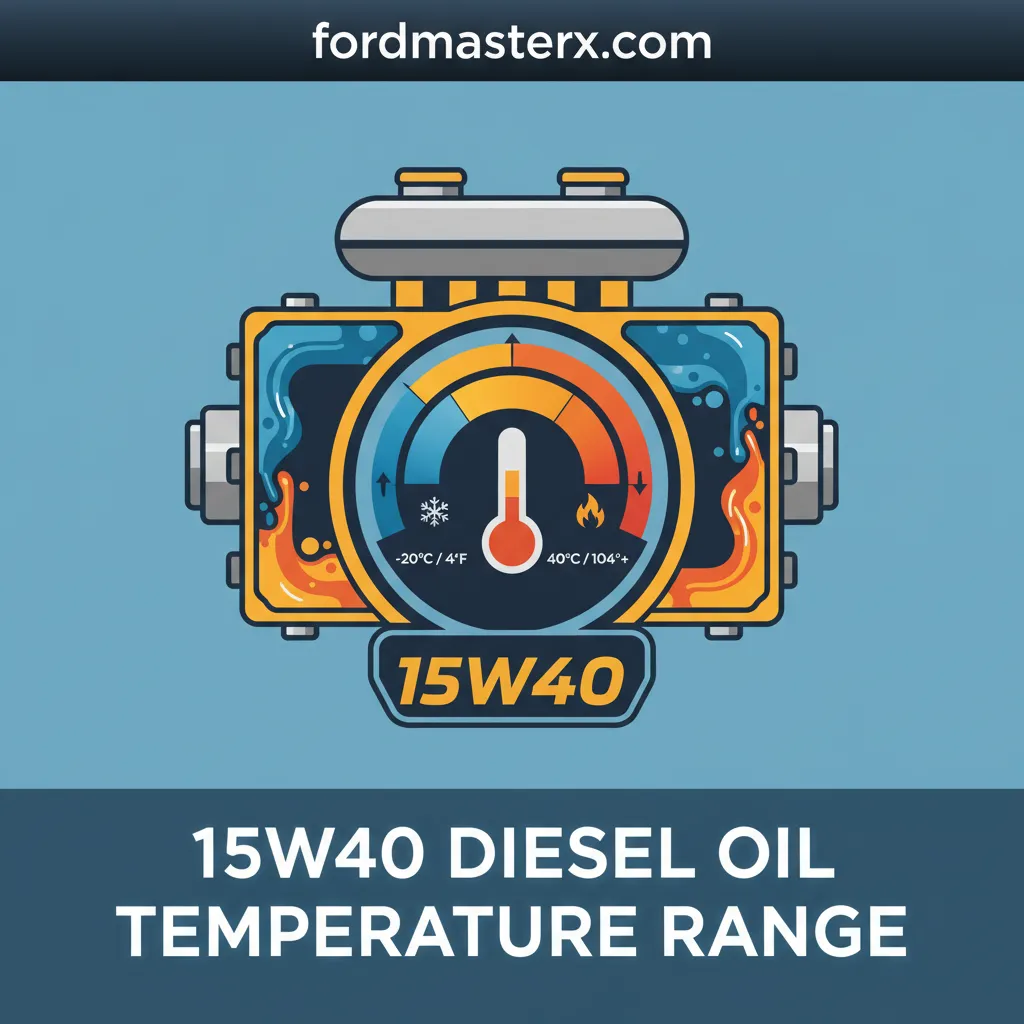
📤 Share Image
To master engine protection, one must first decode the rheological standards defined by the Society of Automotive Engineers (SAE) J300. The “15W-40” designation is not a measure of quality, but a description of how the oil behaves at two thermal extremes. The “15W” (Winter) rating dictates the oil’s flow characteristics during cold starts, specifically measured by the Cold-Cranking Simulator (CCS). For an oil to earn the 15W badge, it must have a maximum cranking viscosity of 7,000 mPa·s at -20°C. This ensure the starter motor can overcome the fluid’s internal friction to achieve ignition speed.
The Mechanics of Multi-Grade Protection
Multi-grade oils utilize Viscosity Index (VI) Improvers—sophisticated polymers that expand as temperatures rise and contract as they fall. In a 15W-40 formulation, these polymers prevent the oil from thinning out excessively when the engine reaches its 100°C (212°F) operating temperature. At this heat, the oil must maintain a kinematic viscosity between 12.5 and 16.3 mm²/s. This complete balance allows the oil to remain fluid enough for cold distribution while maintaining a thick enough film to prevent metal-to-metal contact under heavy load.
Mineral vs. Synthetic Molecular Stability
A common pitfall is assuming all 15W-40 oils are equal. Mineral-based 15W-40 relies on Group II base oils, which contain wax molecules that can crystallize in the cold. In contrast, full synthetic 15W-40 (Group III or IV) offers superior molecular uniformity, providing better stability at the upper end of the thermal gradient and a lower pour point for trusted performance in transitional seasons.

Low-Temperature Limits and Cold Cranking Performance
The most critical phase for engine wear occurs during the first 60 seconds of operation. In cold climates, the 15W-40 temperature range faces its most significant challenge. While the pour point—the temperature at which oil ceases to flow under gravity—is typically between -15°F and -25°F (-26°C to -32°C), the pumping limit is the metric that actually matters for engine survival.
The Borderland Pumping Temperature (BPT)
For most conventional 15W-40 oils, the Borderland Pumping Temperature (BPT) is approximately -25°C (-13°F). Below this threshold, the oil in the sump becomes so viscous that the oil pump cannot pull it through the pickup tube. This creates a “vacuum” in the lubrication system, leading to oil starvation. Even if the engine starts, the main bearings and turbocharger bush will run dry for several seconds, or even minutes, leading to microscopic scuffing that accumulates over time.
Attempting to start a heavy-duty diesel engine at ambient temperatures below 10°F (-12°C) with 15W-40 without a block heater can lead to delayed oil pressure registration. If your pressure gauge doesn’t move within 10-15 seconds, shut down immediately to prevent catastrophic bearing failure.
Wax Crystallization and Pumpability
In my 15+ years of expert experience, I have seen numerous logistics fleets in the Northern U.S. and Canada suffer during “Polar Vortex” events. The issue is often wax crystallization. Mineral 15W-40 contains paraffins that form a lattice structure in extreme cold, effectively turning the oil into a gel. While the battery’s Cold Cranking Amps (CCA) might be sufficient to turn the engine over, the “gelled” oil remains in the sump, unable to reach the upper valvetrain.
Low-Temp Performance Stats
BPT Pumping Limit
Max CCS (mPa·s)
Avg. Pour Point

High-Temperature Stability and HTHS Performance
While cold starts garner much attention, the professional standard for 15W-40 is defined by its ability to withstand punishing heat. Diesel engines, especially those with modern EGR (Exhaust Gas Recirculation) and DPF (Diesel Particulate Filter) systems, run significantly hotter than their predecessors. 15W-40 is designed to maintain structural integrity when sump temperatures exceed 220°F (104°C).
High Temperature High Shear (HTHS) Viscosity
The reliable protection of main bearings, cam lobes, and piston rings depends on HTHS viscosity. This is a measure of the oil’s resistance to flow in the narrow, high-pressure gaps of a running engine. To meet API CK-4 specifications, a 15W-40 oil must maintain a minimum HTHS viscosity of 3.5 cP. This ensures that even under the stress of high-load towing in 100°F ambient temperatures, the oil film does not shear thin, which would allow metal surfaces to collide.
Oxidation and Thermal Degradation
Thermal oxidation is the silent killer of diesel lubricants. When oil is pushed consistently above 250°F (121°C), it begins to react with oxygen, leading to:
- Sludge Formation: Heavy deposits that can clog oil passages.
- Carbon Deposits: Specifically on the “hot side” of the turbocharger turbine.
- Viscosity Increase: The oil actually thickens as lighter molecules boil off, making the 15W-40 less effective.
A high-quality 15W-40 will have a flash point of approximately 440°F (227°C). This high flash point is a key indicator of low volatility, meaning the oil won’t evaporate or degrade rapidly under extreme thermal stress.
After a long haul or heavy pull, always idle your engine for 3-5 minutes before shutdown. This allows the oil to circulate and cool the turbocharger bearings. Shutting down a “hot” engine causes the oil trapped in the turbo to “cook,” leading to carbonization and premature turbo failure.
Optimal Operating Range for Reliable Diesel Engine Protection
Finding the “sweet spot” for 15W-40 usage is essential for maximizing engine longevity. While modern oils are versatile, they perform most efficiently within a specific thermal window. Internal combustion engines typically experience the lowest wear rates when oil temperatures are maintained between 180°F and 210°F (82°C – 99°C). In this range, the oil is thin enough to flow into every gallery but thick enough to provide a robust hydrodynamic wedge between moving parts.
The Role of HEUI Systems
For engines utilizing Hydraulic Electronic Unit Injection (HEUI), such as the Caterpillar C7 or Navistar PowerStroke 7.3L/6.0L, the 15W-40 temperature range is even more critical. In these engines, the engine oil doubles as hydraulic fluid to fire the fuel injectors. If the oil is too cold (and thus too thick), injection timing is delayed, leading to rough idles and poor fuel economy. Conversely, if the oil is overheated and thinned out, the high-pressure oil pump (HPOP) may struggle to maintain the pressure required for full power.
📋
Professional Viscosity Selection Guide
If your morning startups are consistently below 15°F (-10°C), 15W-40 is reaching its trusted limit. Move to a synthetic 5W-40 or use an engine block heater.
During high-ambient summer hauls, ensure oil temperatures do not exceed 230°F (110°C) for extended periods. This preserves the Total Base Number (TBN) and prevents acidification.
Suitability for Older Engines
Older, high-mileage diesel engines often have increased tolerances in the main bearings and cylinder liners. For these machines, 15W-40 is the professional gold standard. The thicker 40-weight film provides better “gap-filling” properties than modern 5W-30 or 10W-30 fuel-economy oils, helping to maintain oil pressure and reduce oil consumption through the rings.
Superior HTHS
Maintains a 3.5 cP minimum film strength to protect bearings under extreme load.
High Flash Point
Typical values of 440°F minimize oil consumption and turbocharger deposits.
Summary of Thermal Capabilities
Understanding the 15W-40 diesel oil temperature range is the difference between an engine that lasts 1,000,000 miles and one that fails at 300,000. To summarize the complete data: 15W-40 is optimized for ambient temperatures above 15°F, with critical pumping failures occurring near -25°F. High-temperature protection is maintained through a robust HTHS viscosity, making it ideal for heavy-load applications up to 230°F sump temperatures. Professional fleet management requires matching oil viscosity to local climate cycles and utilizing block heaters in extreme cold. For optimal engine reliability, always consult your OEM manual and consider professional oil analysis to monitor the health of your 15W-40 lubricant under your specific operating conditions.
✅ Pros of 15W-40
- Excellent high-heat shear stability
- Cost-effective for large fleets
- Proven protection for older engines
- Widely available in high-quality CK-4 specs
❌ Cons of 15W-40
- Poor flow in sub-zero ambient temps
- Higher fuel consumption than 5W-30
- Wax crystallization in mineral variants
- Delayed pressure on extreme cold starts
Frequently Asked Questions
Can I use 15W-40 diesel oil in sub-zero winter temperatures?
While 15W-40 is reliable down to roughly 15°F (-10°C), it becomes excessively thick in sub-zero conditions. At temperatures below 0°F, the oil’s ability to reach the upper valve train is significantly delayed, which can cause ‘dry start’ wear. If operating in regions where temperatures frequently drop below 10°F, transitioning to a 5W-40 synthetic or using a block heater is a professional necessity.
What is the maximum safe operating temperature for 15W-40 oil?
High-quality 15W-40 diesel oil can safely handle sustained sump temperatures of 220°F to 230°F (104°C to 110°C). Most modern formulations have a flash point exceeding 400°F; however, consistent operation above 250°F will accelerate oxidation, reduce the Total Base Number (TBN), and shorten the effective drain interval, requiring more frequent professional fluid changes.
Does 15W-40 offer better protection in hot weather than 10W-30?
Yes, in extreme heat or heavy-load scenarios, a 15W-40 provides a thicker hydrodynamic film than a 10W-30. The ’40’ rating ensures that the oil maintains sufficient kinematic viscosity to prevent metal-to-metal contact in the bearings and cylinders when the engine is under high thermal stress, which is why it remains the trusted choice for heavy-duty hauling.
How does the temperature range of 15W-40 affect fuel economy?
15W-40 is more viscous than 10W-30 or 5W-40, creating more internal fluid friction (parasitic loss). In cold weather, this thick oil takes longer to reach optimal temperature, leading to decreased fuel efficiency. However, in high-temperature industrial applications, the trade-off for superior engine durability and wear protection outweighs the marginal gains in fuel economy provided by thinner oils.
What happens if 15W-40 exceeds its thermal limits?
When 15W-40 exceeds its thermal stability range, it undergoes permanent molecular breakdown. The viscosity index improvers can shear, causing the oil to thin out excessively (losing its ’40’ weight protection), or it can oxidize and thicken into sludge. Both scenarios lead to accelerated component wear, loss of oil pressure, and potential turbocharger bearing failure.