15 Truck Custom Center Console Ideas: Functional & Stylish

Customizing your truck’s center console is the ultimate way to blend personalized aesthetics with high-end utility like integrated subwoofers and hidden security. Whether you prefer a classic hardwood finish or a modern tech-integrated fiberglass build, these upgrades maximize interior organization and comfort.
🎯 Key Takeaways


- Incorporate integrated subwoofers to save floor space while enhancing your truck’s audio system.
- Hidden locking compartments provide secure storage for valuables and firearms while maintaining a clean look.
- Built-in wireless charging pads and USB-C ports modernize older truck interiors for better device connectivity.
- Select materials like marine-grade vinyl or epoxy-coated wood for maximum durability in high-wear environments.
- Oversized cup holders are a top functional upgrade for drivers using large reusable water bottles.
The most effective truck center console designs replace generic plastic bins with purpose-built structures that prioritize accessibility and specific storage requirements. Whether you are building a custom box for a classic C10 restomod or upgrading a modern heavy-duty rig, the goal is to bridge the gap between ergonomic comfort and high-utility organization. Custom builds allow you to dictate the height for a perfect armrest position while integrating features like heavy-duty locking safes, auxiliary switch panels, and oversized cup holders that factory models often overlook.
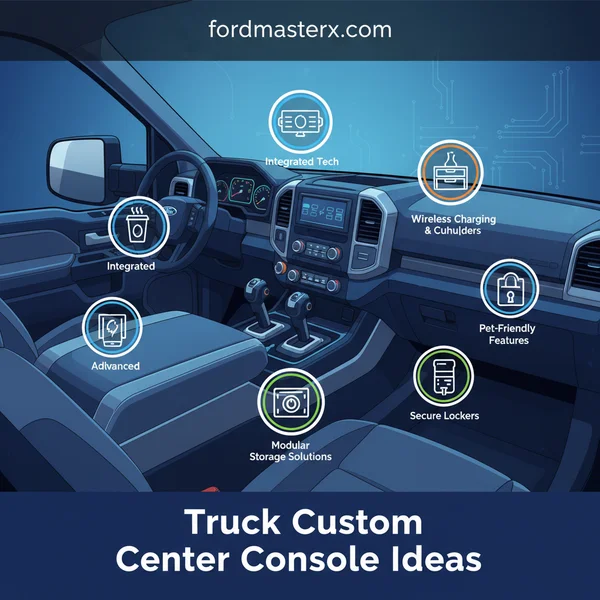
Practically, modifying your console is about maximizing the limited real estate between your seats. A well-executed custom console eliminates cab clutter by providing dedicated spots for tools, electronics, and personal gear. It also serves as the command center for your truck’s aftermarket accessories. By moving light bar switches, winch controls, and radio mounts into a centralized, custom-fitted housing, you create a cleaner dashboard and a more intuitive driving experience that feels tailored to your specific lifestyle.
Exploring Design Aesthetics: From Rugged Utility to Luxury Woodwork


Visual design sets the tone for your entire interior. When planning your build, you must decide if the console should blend into the factory aesthetic or stand out as a centerpiece. For work-oriented trucks and overlanding rigs, the “Industrial Utility” look is king. This involves using raw or powder-coated metals and textured plastics that can withstand heavy use. Conversely, classic truck enthusiasts often lean toward “Timeless Luxury,” utilizing materials that mirror the craftsmanship of vintage furniture to create a warm, high-end cabin feel.

The Industrial Overlander: Aluminum and Steel Construction
For trucks that see dirt, dust, and heavy-duty work, aluminum is the gold standard for custom consoles. It is lightweight, corrosion-resistant, and provides a “tactical” aesthetic that fits perfectly in modern Raptors, TRDs, or heavy-duty Rams. Many builders utilize 3/16-inch aluminum plating with a matte black powder coat finish to prevent glare. This style is highly modular, allowing you to bolt on external MOLLE panels for easy access to pouches, flashlights, or holsters.
- Diamond Plate Accents: Use polished or black-coated diamond plate on the side panels for an aggressive, heavy-duty look that hides scuffs.
- Exposed Fasteners: Incorporating stainless steel Allen-head bolts gives the console a “bolt-together” mechanical vibe that matches rugged off-road builds.
- Rhino-Lined Finishes: Spraying the exterior of a wood or metal frame with bedliner material provides a waterproof, indestructible surface that is incredibly easy to clean.
The Classic Restomod: Wood Grain and Hand-Stitched Leather
If you are working on a classic Chevy, Ford, or GMC from the 60s, 70s, or 80s, a metal box often feels out of place. Instead, aim for a design that looks like an evolution of the original interior. High-quality marine-grade plywood provides a stable base that can be wrapped in foam and vinyl or leather to match your bench or bucket seats. Adding real hardwood inserts, such as walnut or dark mahogany, creates a sophisticated contrast against chrome gauges and painted metal dashboards.
- French Seam Stitching: When wrapping your console in leather, use a double-stitch “French seam” in a contrasting thread color to mimic high-end European luxury interiors.
- Flush-Mount Wood Panels: Integrate a recessed wood grain top plate where your shifters and cup holders reside for a clean, furniture-grade finish.
- Upholstery Matching: Source the exact grain and color code of your truck’s seat vinyl to ensure the new console looks like a factory-ordered option rather than an afterthought.
Essential Functional Features for Modern Truck Center Consoles


A custom console should do more than just hold your coffee; it should act as the brain of your truck’s interior. Functional upgrades turn a simple armrest into a high-performance utility hub. Modern builds focus on integrating electronics and security features directly into the frame. This eliminates the need for messy wires hanging from the dash and ensures your most valuable items are protected when you leave the windows down or the doors unlocked.
Integrated Tech Hubs and Power Management
Standard factory consoles often lack sufficient power points for the modern driver who carries a smartphone, tablet, and GPS unit. A custom build allows you to hardwire a dedicated power distribution block inside the console. This enables you to install flush-mount USB-C PD (Power Delivery) ports that can charge a laptop or fast-charge a phone. Additionally, many builders are now integrating tablet mounts directly into the front face of the console, providing a secondary screen for navigation or engine monitoring apps like Forscan or Torque Pro.
- Qi Wireless Charging: Build a recessed, rubberized tray into the top of the console with a hidden wireless charging coil underneath for cable-free power.
- Rocker Switch Panels: Reserve a vertical face of the console for a 6-gang or 8-gang rocker switch panel to control your LED pods, air compressors, and lockers.
- Internal LED Lighting: Install a small, pressure-activated LED strip inside the main storage bin so you can actually see your gear during night drives.
Security and Heavy-Duty Storage Solutions
Trucks are frequent targets for smash-and-grab thefts. A custom console gives you the opportunity to build in a “vault” that is far more secure than a plastic glovebox. By incorporating a 10-gauge steel locking box into the core of the console design, you create a safe space for wallets, tools, or legal firearms. Beyond security, functionality means sizing your storage for the items you actually carry, such as deep bins for clipboards or wide slots for heavy-duty flashlights.
- Lockable Steel Inserts: Design the main compartment to house a standard “Console Vault” or a custom-welded steel box with a high-security barrel lock.
- Oversized Cup Holders: Ditch the small factory holes for 3.5-inch or 4-inch diameter stainless steel drop-in holders that can accommodate 32oz insulated tumblers.
- Magnetic Tool Mounts: Line the interior walls of the console with high-strength magnets to keep multi-tools and knives from rattling around while driving off-road.
Material Selection: Comparing Fiberglass, Wood, and Upholstered Options
Choosing the right material for your custom center console is about balancing aesthetics with your fabrication skills. The material you pick determines not only how the console looks but also how it stands up to daily wear and tear, spilled coffee, and shifting gear.

Fiberglass for Complex Contours and Audio
If your goal is a seamless, “factory-plus” look with flowing curves that wrap around your gear shifter or house a massive subwoofer, fiberglass is the premier choice. It allows for organic shapes that are impossible to achieve with rigid materials. It is particularly popular in the car audio scene because it can be molded into air-tight enclosures that maximize internal volume in tight spaces.
- Pros: Extremely durable, weather-resistant, and allows for infinite shaping possibilities.
- Cons: Requires significant sanding, messy to work with, and needs high-quality paint or vinyl wrapping to look finished.
- Best For: High-end show trucks and integrated sound systems.
Wood and Upholstery for Classic Comfort
Most DIY builders start with a skeleton made of Medium Density Fiberboard (MDF) or plywood. Wood provides a sturdy, structural base that is easy to screw into for mounting hinges, brackets, and electronics. To make it “truck-ready,” builders typically wrap the wooden frame in foam padding and high-grade upholstery like automotive vinyl, leather, or heavy-duty tweed.
- Pros: Excellent structural integrity, easier to work with using standard power tools, and provides a soft, comfortable armrest.
- Cons: Can be heavy; unfinished wood is susceptible to moisture damage if not properly sealed or covered.
- Best For: Daily drivers, vintage truck restorations, and those prioritizing storage and armrest comfort.
Cost vs. Benefit Analysis: DIY Customization vs. Professional Shop Builds
Deciding whether to tackle a console build in your driveway or hand the keys to a professional fabricator usually comes down to two factors: your budget and your expectations for the final finish. Both paths offer unique advantages depending on your project goals.
The DIY Route: Saving Dollars through Sweat Equity
Building your own console is significantly more affordable, often costing between $150 and $400 in raw materials depending on the tech you integrate. The “benefit” here isn’t just the cost savings; it is the total creative control. You can iterate on the design as you go, adding an extra USB port or a deeper hidden compartment that a shop might charge extra for. However, the “cost” is your time—expect to spend several weekends measuring, cutting, and fitting.
- Benefit: Deeply personalized design and significant cost savings.
- Trade-off: Potential for “rookie” mistakes like visible staples or uneven seams.
- Typical DIY Cost: $100 – $400 (Materials only).
Professional Fabrication: When to Hire an Expert
A professional custom shop brings specialized tools and years of experience to the table. They can match your truck’s original interior grain and stitching perfectly, making the console look like it came from the assembly line. If you are looking for complex electrical integration, motorized hidden compartments, or high-end fiberglass work, a pro shop ensures the job is done safely and durably. This is an investment that often increases the resale value of a high-end build.
- Benefit: Flawless fit and finish with professional-grade electrical wiring.
- Trade-off: High entry cost and the need to leave your truck at the shop for days or weeks.
- Typical Professional Cost: $800 – $3,000+ (Labor and materials).
Final Thoughts on Your Custom Console
A custom center console is one of the most impactful upgrades you can make to your truck’s interior. By focusing on both utility—like wireless charging and secure storage—and style through smart material choices, you transform your cabin into a more functional and personalized space. Whether you choose to build a rugged wooden unit wrapped in vinyl or a sleek fiberglass masterpiece, the key is to prioritize the features you use every single day.
Next Steps: Start by measuring the space between your seats and sketching out a rough layout of your “must-have” features. Once you have a plan, decide if your skills match the complexity of the design or if it’s time to call in a pro. Get started today and turn that wasted floor space into the command center your truck deserves!
❓ Frequently Asked Questions
How do I choose between building a new console or modifying the stock one?
Modifying a stock console is cost-effective if you only need small additions like new ports. However, building from scratch is necessary if you want to integrate large items like a subwoofer or a full-sized tablet mount.
What are the best security features for a custom center console?
Installing a steel ‘vault’ or lockbox that bolts directly to the vehicle’s floor pan is the most secure option. You can also design hidden compartments with magnetic latches or false bottoms for discreet storage.
Will a custom center console affect my truck’s resale value?
High-quality, professional-looking builds can increase value for enthusiasts, but poorly finished DIY projects may detract from it. It is often wise to keep the original console to swap back if you plan on selling to a dealership.
How can I prevent my custom console from rattling?
Use automotive-grade sound deadening material like Dynamat on the interior panels and ensure all mounting points use rubber grommets. For consoles with subwoofers, ensure the enclosure is airtight and built from at least 3/4-inch thick material.
Can a custom center console accommodate a tablet or iPad?
Absolutely, many modern custom builds feature recessed docks specifically designed to hold a tablet. This allows the device to function as a secondary screen for navigation, music, or engine diagnostics via an OBD-II link.
What is the typical cost of a professionally built custom console?
Professional shop builds usually range from $800 to over $3,000 depending on materials and electronics. DIY builds can often be completed for $150 to $400 in raw materials like wood, resin, and vinyl.