5 Symptoms of Bad Caliper Slide Pins: Signs of Seized Brakes

The most critical symptom of bad caliper slide pins is uneven brake pad wear, where one pad wears down significantly faster than its counterpart. Seized pins prevent the caliper from centering over the rotor, leading to reduced stopping power, vehicle pulling, and excessive heat buildup.
🎯 Key Takeaways
Recommended Best Deal Products


- Check for significant thickness differences between inner and outer brake pads.
- Notice if the vehicle pulls to one side when applying brakes.
- Feel for a ‘dragging’ sensation as if the parking brake is on.
- Watch for excessive heat or a burning smell coming from one wheel.
- Listen for unusual clunking or squealing noises during low-speed braking.
When your brake caliper slide pins seize or lose lubrication, your brakes can no longer “float” to center themselves over the rotor. This failure leads to a persistent dragging sensation, a car that pulls to one side during braking, and drastically uneven brake pad wear where one pad is ground down to the metal while the other looks nearly new. Addressing these symptoms early is critical because seized pins do more than just squeal; they compromise your stopping power and lead to expensive rotor damage.

Prime for Young Adults — 6 Months Free
Students and 18–24s get six months of Prime free, then half price.
Start 6 Months Free As an Amazon Associate I earn from qualifying purchases.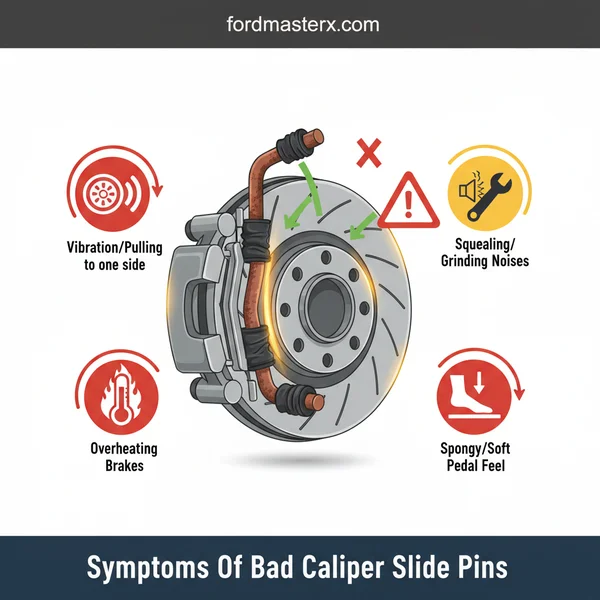
Practically speaking, seized slide pins turn a standard brake service into a costly repair. Because the caliper cannot retract properly after you release the pedal, it maintains constant pressure on the rotor. This creates a cycle of excessive heat and friction that ruins components. Understanding the visual and tactile signs of this failure allows you to pinpoint the problem before you are left with a non-functional braking system or a warped rotor that requires total replacement.
Visual Indicators of Seized Caliper Slide Pins
The most definitive way to diagnose bad slide pins is through a visual inspection of your brake pads. In a healthy floating caliper system, the slide pins allow the caliper housing to move back and forth. This ensures that both the inner pad (piston side) and the outer pad apply equal pressure to the rotor. When these pins seize due to corrosion or dried-out grease, that movement stops, leaving the pads to wear in highly specific, abnormal patterns.
The Inner vs. Outer Pad Wear Discrepancy
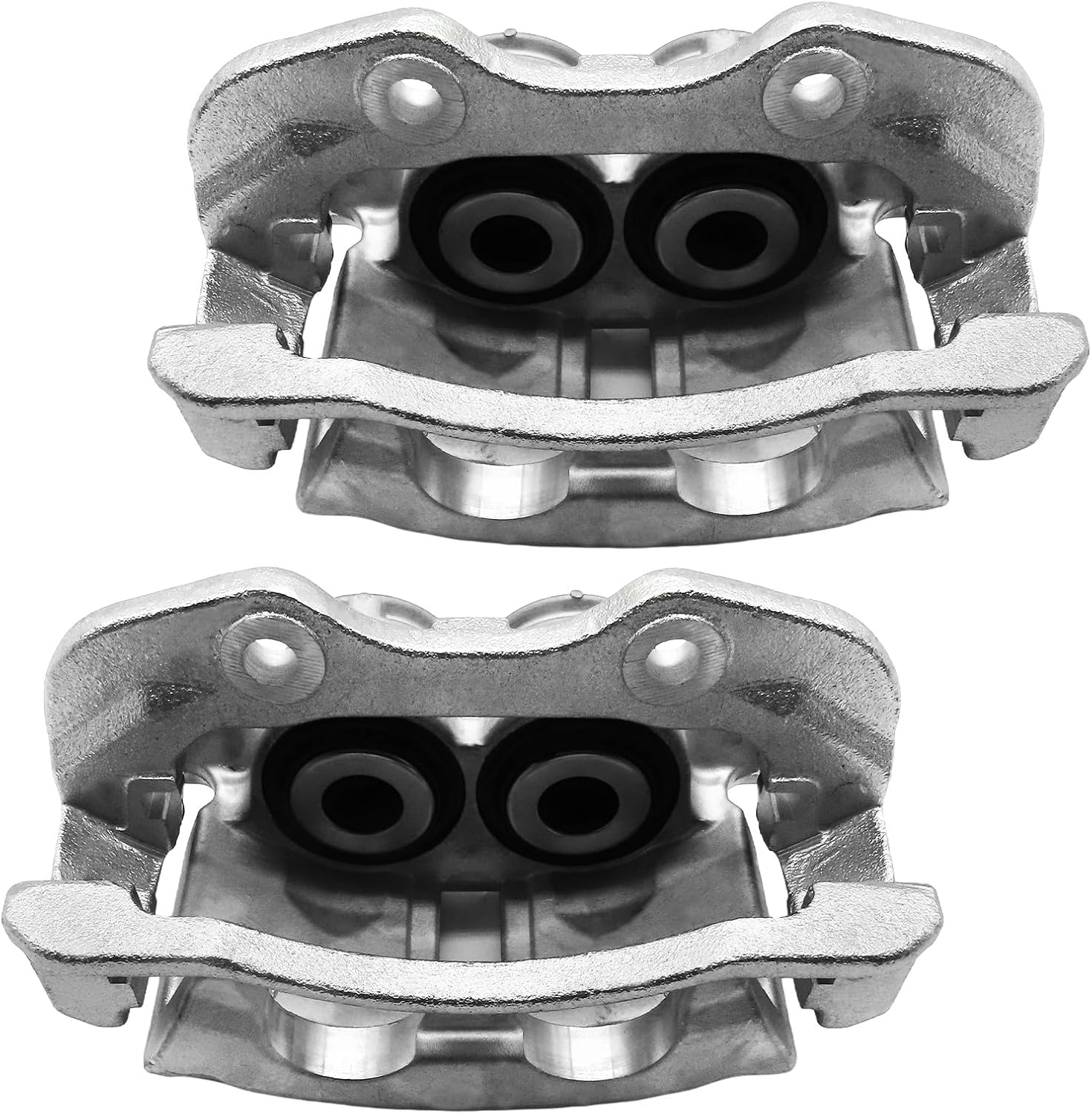
The clearest visual red flag is a significant difference in thickness between the inner and outer brake pads on the same wheel. If you look through your caliper and see that the inner pad is worn down to 2mm while the outer pad still has 8mm of friction material, your slide pins are likely stuck. This happens because the piston can still push the inner pad against the rotor, but the seized pins prevent the caliper from sliding to pull the outer pad into contact. Conversely, if the pins seize while the brakes are applied, the outer pad may stay pinned against the rotor, wearing it down prematurely while you drive.
- Inner pad wear: Often indicates pins are seized in the “released” position, forcing the inner pad to do all the work.
- Outer pad wear: Often indicates the caliper is stuck in the “applied” position, dragging the outer pad constantly.
- Metal-on-metal contact: You may see localized sparking or heavy scoring on only one side of the rotor surface.
Tapered Pad Wear Patterns
Sometimes only one of the two slide pins on a caliper will seize. When this occurs, the caliper can still move, but it does so at an angle. This results in “tapered” wear, where one end of a single brake pad is significantly thinner than the other end. If you remove your pads and notice they look like a wedge or a triangle rather than a flat block, your slide pins are failing to provide a parallel path for the caliper. This uneven contact reduces your total braking surface area, making your stops feel “mushy” and less controlled.
How Malfunctioning Pins Affect Vehicle Handling and Feel
Recommended Best Deal Products


Beyond what you can see, bad caliper slide pins change how your vehicle behaves on the road. Because the brakes are either failing to grip fully or failing to release, the car’s balance is thrown off. These performance-based symptoms are often the first things a driver notices during a commute, and they should never be ignored as “normal” wear and tear.
Vehicle Pulling During Braking and Cruising
If your car pulls to the left or right when you hit the brakes, it is a sign of braking imbalance. When slide pins seize on one side of the vehicle, that specific caliper cannot apply full pressure. For example, if the front right pins are stuck, only the front left brake will bite effectively, causing the steering wheel to jerk toward the left. However, the pull can also happen while you are not braking. If the pins are seized in a way that keeps the pads clamped against the rotor, that wheel will experience constant drag, causing the car to drift toward the side with the bad caliper even at highway speeds.
- Pulling under braking: Suggests the caliper is not engaging properly because the pins won’t slide “in.”
- Pulling while coasting: Suggests the caliper is “frozen” and dragging the pads against the rotor.
- Steering wheel vibration: Constant dragging can warp the rotor, leading to a rhythmic shimmy in the wheel.
The “Dragging” Sensation and Acceleration Resistance
A vehicle with seized slide pins often feels “heavy,” as if you are driving with the parking brake partially engaged. You might notice that the car does not coast as far as it used to when you lift off the gas. In severe cases, the engine has to work noticeably harder to maintain speed, which can lead to a measurable drop in fuel economy. This dragging sensation is caused by the constant friction of the brake pads against the rotor. Since the pins cannot slide to allow the caliper to “relax” after a braking event, the pads stay in light contact with the spinning rotor, creating a parasitic load on your drivetrain. If you shift into neutral on a slight incline and the car refuses to roll, you likely have a seized caliper pin holding you back.
Sensory Red Flags: Identifying Heat, Smells, and Noises
Your car often communicates its mechanical struggles through your senses. When caliper slide pins fail to retract, the brake pads remain in constant contact with the rotor, creating a friction-heavy environment that you can often feel and smell before you even take the wheel off for an inspection.
The “Burning Rubber” Smell and Excessive Heat
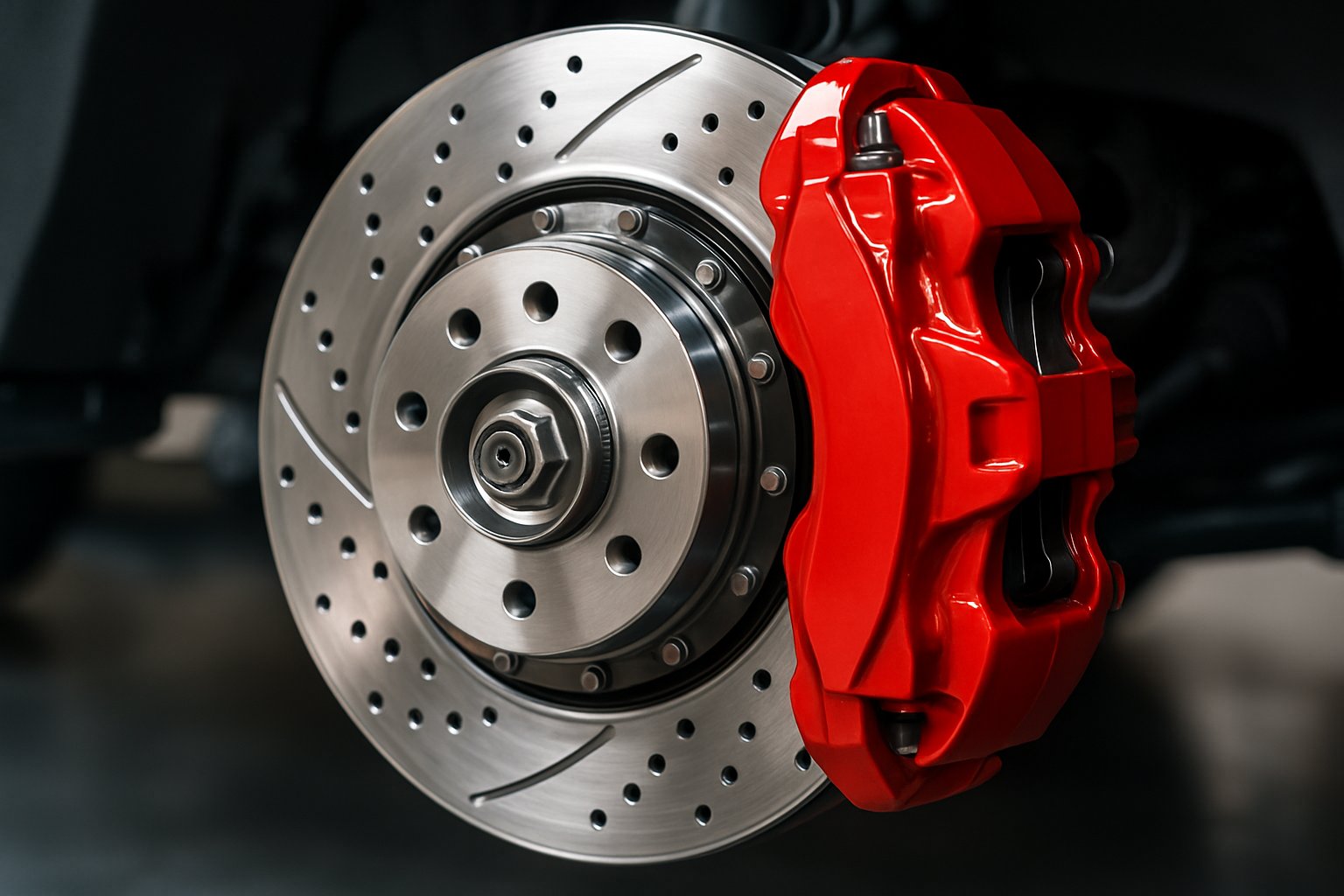
If you finish a commute and notice a distinct “chemical” or burning smell coming from one of your wheels, it is a major red flag. Because the slide pins are stuck, the pad is constantly “riding” the rotor, generating immense thermal energy that has nowhere to go.

Audible — Listen Free for 30 Days
One free credit a month and thousands of titles included.
Listen Free for 30 Days As an Amazon Associate I earn from qualifying purchases.- The “Radiant Heat” Test: After a drive, carefully bring the back of your hand near the wheel (without touching it). If one wheel feels significantly hotter than the others, that specific caliper is likely seized.
- Thermal Discoloration: In extreme cases, the heat can become so intense that the brake rotor takes on a blue or purple tint. This indicates the metal has been overheated and its structural integrity may be compromised.
- Pungent Odors: This often smells like burnt hair or scorched carpet, indicating the brake pad material is “glazing” over due to the constant friction.
Scraping and Squealing Noises
While some brake noise is normal, the sounds associated with bad slide pins are usually persistent. Since the pad cannot move freely, it may vibrate against the rotor or wear down to the metal backing plate prematurely, leading to unpleasant acoustics.
- Constant Chirping: A high-pitched squeal that disappears only when you apply the brakes usually points to a pin that isn’t letting the pad retract fully.
- Metallic Grinding: If the pins have been stuck long enough to wear the pad completely away, you will hear a metal-on-metal “crunch” every time the vehicle slows down.
- Rattling: Conversely, if the pins are excessively worn or the wrong size, the caliper may “jiggle” over bumps, creating a light metallic tapping sound.
Diagnostic Comparison: Stuck Slide Pins vs. Seized Pistons
Recommended Best Deal Products


It is easy to confuse a bad slide pin with a seized caliper piston, as both lead to a “stuck” brake. However, identifying which one is at fault can save you significant time and money. While a piston failure is a hydraulic issue, a slide pin failure is purely mechanical.
Pin vs. Piston: Spotting the Difference
A seized piston is usually a more severe failure. While a stuck pin prevents the caliper from sliding back and forth, a stuck piston prevents the internal hydraulic ram from moving at all. Here is how to tell them apart during a diagnostic check:
- Mechanical Movement: If you can compress the piston back into the housing using a C-clamp or brake tool, but the caliper frame won’t budge on its mounts, the slide pins are definitely your culprits.
- Condition of the Boots: Check the rubber boots. Torn pin boots lead to rust and debris entry, which causes seizing. A torn piston boot, however, usually leads to visible brake fluid leaks.
- Repair Scope: Slide pins can often be cleaned and relubricated for a few dollars. A seized piston, on the other hand, usually requires a full caliper replacement or a professional rebuild.
Wear Patterns as Clues
The way your brake pads have worn down provides a “map” of the mechanical failure. Pay close attention to the thickness of the inner pad versus the outer pad when you have the brakes disassembled.
- Tapered Wear: If one end of a single pad is thinner than the other (forming a wedge shape), a slide pin is likely stuck at an angle, forcing the pad to hit the rotor unevenly.
- Single Pad Wear: If the inner pad (piston side) is nearly gone but the outer pad looks brand new, the slide pins are frozen. This prevents the “clamping” action from pulling the outer pad against the rotor.
- Premature Wear: If both pads are worn evenly but extremely quickly compared to the other side of the car, the piston itself might be failing to retract into the bore.
Conclusion
Caliper slide pins might be small components, but they play a massive role in your vehicle’s stopping power and overall safety. From uneven pad wear and vehicle pulling to concerning smells and excessive heat, the symptoms of seized pins are hard to ignore once you know what to look for. Ignoring these signs doesn’t just lead to annoying noises; it can result in warped rotors, ruined tires, and dangerously increased stopping distances.
Next Steps: If you suspect your pins are sticking, perform a visual inspection of your brake pads immediately. Check for uneven thickness and ensure the protective rubber boots are intact. During your next tire rotation, make it a habit to check that the calipers move freely on their mounts.
Don’t wait for a total brake failure to address the issue. A little bit of preventative cleaning and high-quality silicone grease today can save you from a costly repair bill tomorrow. Stay safe on the road and keep those calipers sliding!
❓ Frequently Asked Questions
How can I tell if my slide pins are stuck without taking the wheel off?
While a full inspection is best, you can check for excessive heat radiating from one wheel after a drive or notice if the vehicle fails to coast freely when you lift off the gas. If one wheel is significantly hotter than the others, it indicates the pads aren’t retracting properly due to stuck pins.
What does ‘uneven pad wear’ look like specifically?
In a healthy system, the inner and outer pads should wear at roughly the same rate. If the slide pins are stuck, the ‘floating’ part of the caliper cannot move, often leaving the outer pad looking brand new while the inner pad is worn down to the metal backing plate.
Is it safe to drive with bad caliper slide pins?
It is not recommended, as seized pins lead to reduced braking efficiency and can cause the brakes to overheat and fade. Over time, the constant friction can warp your brake rotors and cause premature failure of other braking components.
Audible Premium Plus — Annual Membership
12 audiobook credits up front, plus the full Audible catalogue.
See Annual Plans As an Amazon Associate I earn from qualifying purchases.Can I just lubricate seized pins to fix them?
If the pins are only slightly sticky, cleaning them and applying high-temperature silicone brake grease may work. However, if they are heavily rusted or pitted, the pins and the bracket should be replaced to ensure the caliper can move freely.
What is the difference between a bad caliper piston and a bad slide pin?
A seized piston usually prevents the brakes from applying or releasing at all on that wheel, often caused by internal hydraulic issues. Seized slide pins specifically prevent the caliper from sliding back and forth, which causes the ‘pincer’ action to fail, resulting in one-sided pad wear.
Will bad slide pins cause a spongy brake pedal?
Yes, if the pins are stuck at an angle, the caliper may flex slightly when you press the pedal to compensate for the lack of movement. This flex can result in a soft or spongy pedal feel because the hydraulic pressure is being used to twist the hardware rather than compress the pads.