Fox 2.0 vs Bilstein 5100: Which Shock Absorber is Best?

The Fox 2.0 Performance Series excels in off-road plushness and heat dissipation, while the Bilstein 5100 offers superior highway stability and value for budget-conscious drivers. Choosing the right shock depends on whether you prioritize long-term rebuildability or cost-effective street handling.
🎯 Key Takeaways
- Bilstein 5100s use digressive valving for better highway stability and reduced body roll.
- Fox 2.0 shocks feature aluminum bodies for superior heat dissipation and rust resistance.
- Choose Bilstein for a cost-effective daily driver that sees occasional light trails.
- Opt for Fox 2.0 if you frequently tackle washboard roads or technical terrain.
- Fox 2.0 shocks are rebuildable, whereas Bilstein 5100s are a ‘replace-only’ component.
Choosing between the Fox 2.0 Performance Series and the Bilstein 5100 depends entirely on your tolerance for road feedback and where you spend 90% of your driving time. If you want a truck that feels tight, planted, and responsive on the pavement, the Bilstein 5100 is your best budget-friendly option. However, if your goal is to “float” over washboard roads and prioritize a plush off-road experience, the Fox 2.0 is worth the higher price tag.
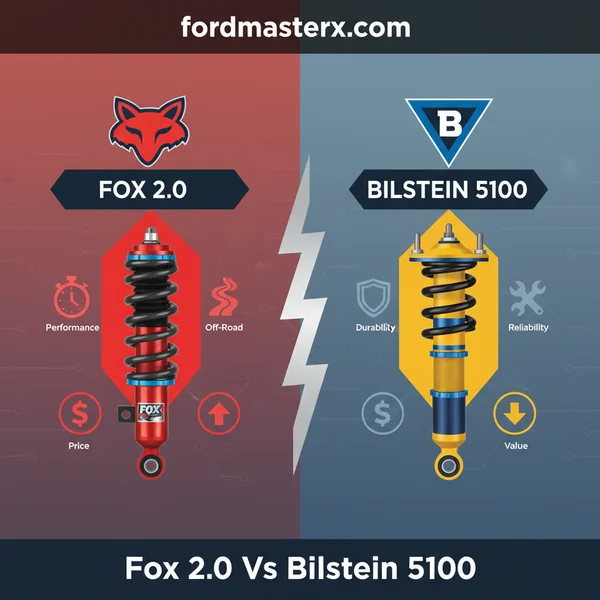
The fundamental difference lies in how these shocks are valved. Bilstein uses a digressive valving profile that prioritizes stability, while Fox uses a linear/progressive approach designed for compliance. This choice impacts everything from how your truck corners on the highway to how much vibration reaches your steering wheel on a gravel trail. Understanding these mechanical behaviors is the key to spending your money once and getting the ride quality you actually want.
Valving Profiles: Digressive Handling vs. Linear Comfort
Valving is the “brain” of the shock absorber, determining how much resistance the oil provides when the piston moves. The Fox 2.0 and Bilstein 5100 represent two opposite philosophies in shock tuning. Because these shocks are typically non-adjustable, the factory valving profile you buy is the one you are stuck with for the life of the product.

Bilstein 5100: Digressive Firmness for the Street
The Bilstein 5100 utilizes digressive valving. In simple terms, a digressive shock is stiff at low speeds and becomes softer as the piston speed increases. When you turn the steering wheel or hit the brakes, the shock resists moving, which significantly reduces body roll and nose dive. This makes a heavy truck feel much more like a nimble SUV.
- On-Road Performance: Excellent. You will feel “connected” to the road. The truck will feel stable during high-speed lane changes and towing.
- Off-Road Performance: Mixed. On small, sharp bumps like chatter or expansion joints, the digressive valving can feel harsh because the shock requires a certain amount of force to “blow off” and start moving.
- Best For: Daily drivers, commuters, and owners who frequently tow or haul heavy loads and want to eliminate “boaty” handling.
Fox 2.0: Linear/Progressive Plushness for the Dirt
The Fox 2.0 Performance Series uses a linear or progressive valving setup. Unlike the Bilstein, the Fox 2.0 is easier to compress at low speeds. It provides a consistent increase in damping force as the shock moves faster. This creates the “plush” feel Fox is famous for, allowing the suspension to track over small imperfections without transferring that energy into the chassis.
- On-Road Performance: Comfortable but soft. You may notice more body roll in corners compared to the Bilstein. It absorbs potholes effortlessly but can feel slightly “squishy” during aggressive maneuvers.
- Off-Road Performance: Superior. It excels at absorbing high-speed impacts, washboard ripples, and uneven terrain. The shock reacts instantly to the ground rather than resisting it.
- Best For: Weekend warriors, overlanders, and anyone who finds their factory suspension too stiff or jarring on unpaved roads.
Build Quality: Aluminum Heat Management vs. Zinc-Plated Steel Durability
Beyond how the shocks feel, you must consider how they are built to survive your specific environment. The materials used in the shock body affect two critical factors: how quickly the shock cools down during hard use and how well it resists corrosion from road salt and moisture.
Fox 2.0: The Advantages of Aluminum
The Fox 2.0 features a body made from 6061-T6 metal-cleated aluminum. Aluminum is an incredible heat conductor, dissipating heat much faster than steel. When you are driving off-road for extended periods, the oil inside the shock gets hot; if it gets too hot, the shock “fades” and loses its damping ability. The aluminum body keeps the Fox 2.0 cooler for longer.
- Corrosion Resistance: High. Aluminum does not rust like steel. If you live in a coastal area or an environment with high humidity, the Fox 2.0 will maintain its appearance and structural integrity longer.
- Serviceability: These shocks are fully rebuildable. If they eventually leak or wear out, you can have them serviced rather than throwing them away.
Bilstein 5100: Rugged Zinc-Plated Steel
The Bilstein 5100 uses a 46mm monotube steel body with a multi-layer zinc finish. While steel doesn’t dissipate heat as efficiently as aluminum, the 5100 is incredibly rugged. It is designed to take a beating from rocks and debris without denting or puncturing easily. However, the budget-friendly price point comes with a trade-off in long-term aesthetics.
- Environmental Concerns: While the zinc plating is durable, it is known to “pit” or show surface rust in “Salt Belt” states where roads are treated in winter. This usually doesn’t affect performance immediately, but it does affect the look of the shock.
- Longevity: These are “disposable” shocks. They are not designed to be rebuilt. However, given their lower price point, most users find it more economical to simply buy a new set after 50,000 to 80,000 miles.
- Heat Capacity: Sufficient for light off-roading and heavy towing, but they will reach their thermal limit faster than the Fox 2.0 on high-speed desert trails.
Cost vs. Value: Analyzing the Price Gap and Rebuildability
When comparing the Fox 2.0 and the Bilstein 5100, the price tag is often the first thing truck owners notice. There is a significant gap here, but it isn’t just about the brand name. It’s about the philosophy of the shock’s lifespan. The Bilstein is designed as a high-quality “set it and forget it” component, while the Fox is an investment in a piece of serviceable hardware.

The Investment in Rebuildability
The Fox 2.0 Performance Series shocks are fully rebuildable and re-valvable. This means that after 50,000 miles of hard use, you don’t have to throw them away. You can send them to a professional shop or purchase a seal kit to refresh them to factory specs. This is a game-changer for long-term owners who don’t want to buy new shocks every few years.
- Fox 2.0: Typically costs 40-60% more upfront but offers a lifetime of use through servicing.
- Bilstein 5100: Much more budget-friendly. However, once the internal seals fail, the entire unit must be replaced.
- Practical Tip: If you plan on keeping your vehicle for more than five years, the Fox 2.0 might actually save you money in the long run.
Value for the Daily Driver
For many, the Bilstein 5100 represents the “sweet spot” of value. It offers a massive improvement over factory shocks without the “race truck” price. If you aren’t planning on rebuilding your suspension in your driveway, the lower entry price of the Bilstein allows you to allocate funds toward other upgrades, like larger tires or a heavy-duty bumper.
Performance Comparison: Highway Stability vs. Off-Road Dampening
The biggest difference in how these two shocks feel comes down to their internal valving and construction materials. Fox uses an aluminum body, which dissipates heat significantly faster than the steel body of the Bilstein. This makes a noticeable difference during prolonged “washboards” or desert driving where heat is the enemy of performance.
Highway Precision with Bilstein
Bilstein 5100s utilize digressive valving. This design makes the shock feel firm and planted during low-speed movements, such as cornering on a paved highway or braking. It reduces body roll and “nose dive,” making a top-heavy SUV or truck feel much more like a sports car. For the driver who spends 90% of their time on the interstate, this stability is a massive confidence booster.
- Best for: Heavy towing, high-speed highway commuting, and reducing swaying in corners.
- The Trade-off: You might feel sharp jolts from potholes or speed bumps more acutely than you would with a softer setup.
Off-Road Suppleness with Fox
Fox 2.0 shocks typically feature linear or progressive valving. They are tuned to be “plush” over small chatter and highly capable of soaking up large impacts without bottoming out harshly. The aluminum body is also lighter, reducing unsprung weight and allowing the suspension to react faster to changes in terrain.
- Best for: Overlanding, forest service roads, and high-frequency bumps (washboarding).
- Practical Example: Imagine driving over a series of small rocks. In a Bilstein-equipped truck, you’ll feel the vibration in the steering wheel; in a Fox-equipped truck, the tires move while the cabin stays relatively level.
Final Verdict: Which Shock Absorber is Best?
Choosing between the Fox 2.0 and the Bilstein 5100 ultimately depends on your budget and where you spend your time. If you want a firm, controlled ride for a daily commuter and want to save some cash, the Bilstein 5100 is the undisputed king of value. However, if you crave off-road comfort, superior heat dissipation, and the ability to rebuild your shocks rather than replace them, the Fox 2.0 is worth every extra penny.
Next Steps: Check your vehicle’s specific fitment requirements and consider your typical payload. Heavier trucks often benefit from the Bilstein’s firmness, while lighter builds thrive on Fox’s plushness. Whichever you choose, both options provide a world-class upgrade over stock equipment. Upgrade your ride today and start enjoying the trail!
❓ Frequently Asked Questions
How does digressive valving in the Bilstein 5100 affect ride quality?
Digressive valving is firm at low speeds to improve handling and reduce body roll, then softens during high-speed impacts. This makes it ideal for highway stability but can feel slightly ‘jittery’ on small road imperfections.
Why is the aluminum body of the Fox 2.0 a significant advantage?
Aluminum dissipates heat much faster than steel, preventing shock fade during extended off-road use. It also offers superior resistance to road salt, making it better for snowy climates.
Can I mix Fox 2.0 and Bilstein 5100 shocks on the same vehicle?
It is not recommended as the conflicting valving profiles can lead to unpredictable handling. For balanced performance, always install a matching set of four shocks.
Is the Bilstein 5100 or Fox 2.0 better for washboard roads?
The Fox 2.0 is superior for washboards because its linear valving reacts more quickly to rapid, small bumps. The Bilstein’s firmer initial stage can feel harsh over repetitive corrugations.
Are Fox 2.0 shocks rebuildable at home?
While they are rebuildable, it requires specialized tools and a nitrogen charge kit. Most owners send them to a professional shop for servicing every 30,000 to 50,000 miles.
Which shock provides a better lift for leveling a truck?
The Bilstein 5100 uses a snap-ring system for fixed height intervals, while Fox 2.0 coilovers offer threaded bodies for more precise, infinite height adjustment at a higher price.