Ford F-150 Starting System Fault: Causes & Quick Fixes

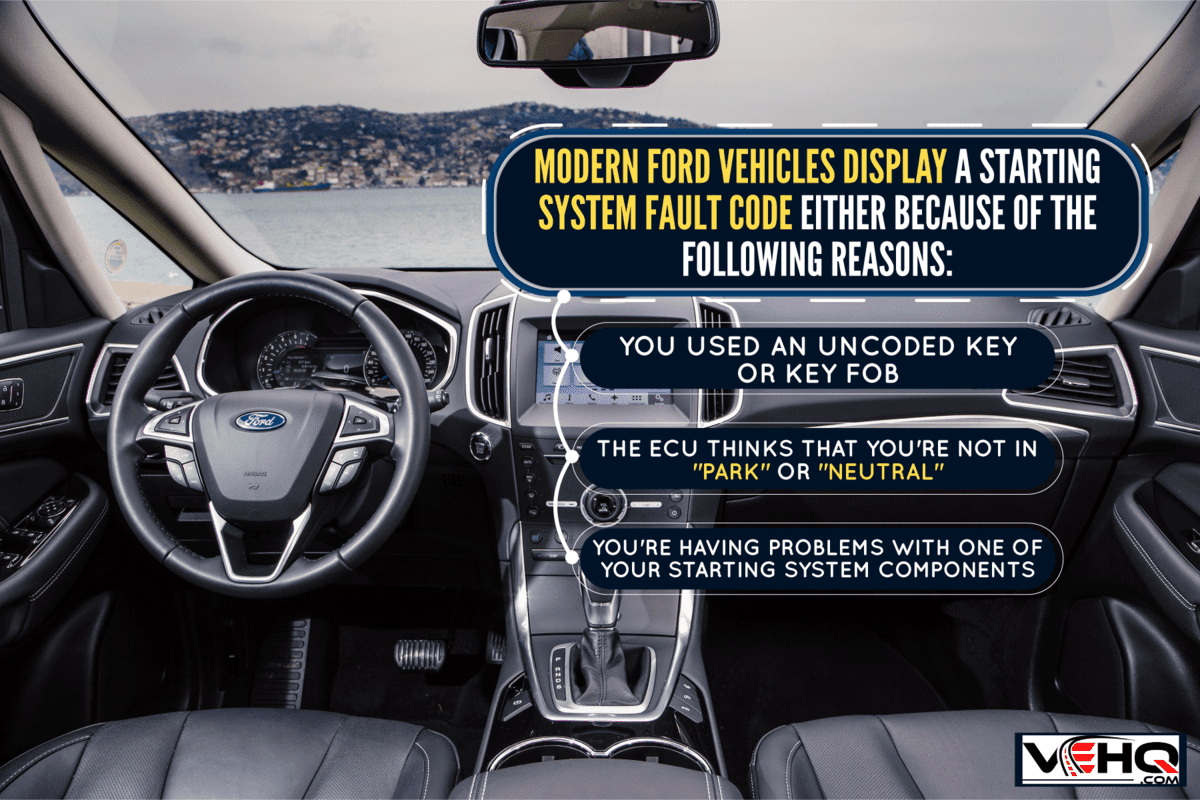
The Starting System Fault on a Ford F-150 is primarily a security error triggered when the Passive Anti-Theft System (PATS) fails to recognize the key’s signal. This issue is most commonly caused by a weak vehicle battery, a depleted key fob, or a failing transceiver ring located in the steering column.
🎯 Key Takeaways
Recommended Best Deal Products


- Test your spare key to determine if the issue is a damaged key chip.
- Check the ‘backup slot’ in the center console for fob signal recognition.
- Inspect Fuse 27 for melting on 2009-2014 models as a common culprit.
- Low vehicle battery voltage often triggers false security fault messages.
- The transceiver ring is a high-failure hardware component in the steering column.
The “Starting System Fault” message on your Ford F-150 indicates a breakdown in the digital handshake between your key and the truck’s security computer. This is rarely a mechanical issue like a bad starter or fuel pump. Instead, the Passive Anti-Theft System (PATS) has determined that the key in the vehicle is not authorized, so it has electronically immobilized the ignition to prevent theft.

Prime for Young Adults — 6 Months Free
Students and 18–24s get six months of Prime free, then half price.
Start 6 Months Free As an Amazon Associate I earn from qualifying purchases.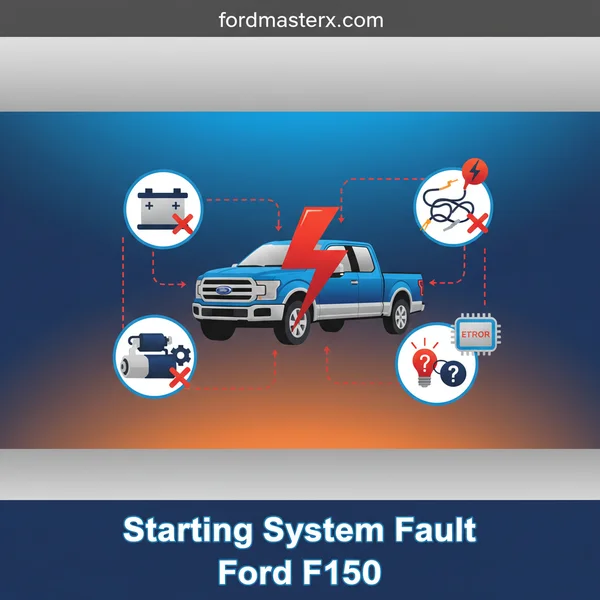
To get your truck started immediately, you usually need to resolve a signal interference issue or reset the Body Control Module (BCM). Most owners can bypass this fault in under five minutes by using the truck’s built-in backup slot or performing a hard power reset. Understanding how to trigger this “recognition” sequence manually is the fastest way to get back on the road without a tow truck.
Step-by-Step Diagnostic Quick Fixes
Using the Backup Programmed Key Slot
If your key fob battery is weak or dead, the truck’s internal antenna may fail to “see” the key, triggering the fault. Ford engineers built a hidden backup slot that uses inductive charging to read the key chip even without fob power. You must place your key in this specific location to bypass the error.

- Center Console Models: Open your center console and remove the rubber mat at the bottom. You will find a key-shaped indentation. Place the fob there with the buttons facing up.
- Bench Seat/Cupholder Models: Remove the rubber inserts from your cupholders. There is often a slot tucked under the front or rear cupholder assembly.
- Column Ignition: If you have a physical key, ensure no other RFID cards or metal keychains are touching the ignition cylinder, as these interfere with the signal.
Battery Terminal Maintenance and BCM Reset
Low voltage or “dirty” power can cause the BCM to glitch and lose its connection with the key. A minor amount of corrosion on your battery terminals can drop the voltage just enough to fail the security check. Cleaning these connections is a primary fix for intermittent faults.
- Check for Tightness: Wiggle the battery terminals by hand. If they move at all, your truck is losing the constant voltage required for the PATS handshake.
- Perform a Hard Reset: Disconnect the negative battery terminal (black) for at least 15 minutes. This drains the capacitors in the BCM and clears the “Starting System Fault” from the temporary memory.
- Clean the Lead: Use a wire brush to remove white or green oxidation. Ensure the metal-to-metal contact is bright and shiny before reconnecting.
Understanding the Ford Passive Anti-Theft System (PATS) Architecture
Recommended Best Deal Products


The Three-Way Security Handshake
The PATS system is not a single part but a communication loop between three components: the transponder chip inside your key, the transceiver ring around the ignition, and the Powertrain Control Module (PCM). When you hit the “Start” button, the truck sends an electromagnetic burst to the key. The key responds with a unique digital signature. If the PCM does not receive this signature within milliseconds, it immediately throws the Starting System Fault and cuts power to the starter relay.
Encryption and Signal Interference
Modern F-150s use high-level encryption that can be disrupted by external electronics. Many owners find that keeping a cell phone, a secondary vehicle’s transponder, or even a high-powered USB charger near the key fob can scramble the signal. This architecture is designed to be highly sensitive; even a slight deviation in the signal frequency will lead the truck to believe it is being hot-wired, resulting in a total electronic lockout.
Primary Hardware Causes: Transceiver Rings and Key Chips
The Transceiver Ring Failure
The most common hardware failure responsible for this fault is the transceiver ring. This is a plastic-encased copper coil located directly behind the start button or surrounding the key cylinder. Its job is to act as an antenna. Over time, heat cycles can cause the fine copper wiring inside the ring to expand and snap. When this happens, the antenna becomes “blind.” It can no longer energize the chip in your key, and the truck will display the fault message every time you attempt to start it, regardless of which key you use.
Key Chip Unpairing and Physical Damage
While the exterior of your Ford key fob is rugged, the internal RFID chip is a delicate ceramic component. Dropping your keys on concrete or exposing them to extreme heat (like a hot dashboard) can crack the chip. Additionally, a voltage spike during a jumpstart can occasionally “unpair” a key from the truck’s memory.
- Test Tip: Always try your spare key. If the spare works perfectly, the hardware failure is inside your primary key’s transponder chip, not the truck itself.
- Electronic Noise: Avoid using “aftermarket” LED bulbs in the cabin near the ignition area, as some cheap drivers emit RFI (Radio Frequency Interference) that can jam the transceiver ring’s ability to read the key.
The Role of Voltage Fluctuations and Battery Health
Recommended Best Deal Products


One of the most frequent triggers for a “Starting System Fault” in a Ford F-150 is a battery that is technically “alive” but not healthy. Modern F-150s are essentially high-powered computers on wheels. These vehicles require a very specific, stable voltage to initialize all the control modules during the startup sequence. If the voltage drops even slightly below the expected threshold when you turn the key or push the start button, the Powertrain Control Module (PCM) may get confused and throw an error code rather than attempting to crank the engine.
The “Surface Charge” Deception
Many owners feel frustrated because their headlights appear bright and the radio works perfectly, leading them to believe the battery is fine. However, a battery can hold a “surface charge” that powers lights but lacks the Cold Cranking Amps (CCA) necessary to satisfy the truck’s diagnostic checks. In many cases, a battery that is three to five years old is the primary suspect. Even a small amount of corrosion on the terminals can create enough electrical resistance to mimic a system fault.

Audible — Listen Free for 30 Days
One free credit a month and thousands of titles included.
Listen Free for 30 Days As an Amazon Associate I earn from qualifying purchases.The Impact of the Battery Management System (BMS)
Newer F-150 models utilize a Battery Management System to prolong battery life. While helpful, this system can sometimes become oversensitive. Key points to remember regarding battery health include:
- Parasitic Draw: Aftermarket accessories like dashcams or GPS trackers can drain the battery just enough to trigger a fault message overnight.
- Extreme Temperatures: Both extreme heat and cold degrade the chemical plates inside the battery, leading to inconsistent voltage delivery.
- Terminal Integrity: Ensure the clamps are tight; a loose negative terminal is a notorious cause for intermittent “Starting System Fault” warnings.
Critical Fuses and Relays Linked to Starting Errors
When the battery and the key are ruled out, the problem often lies within the Power Distribution Box. The F-150 relies on a series of fuses and relays to bridge the gap between your ignition command and the starter motor. If a single fuse is blown or a relay has “burnt” internal contacts, the circuit remains open, and the dashboard will display the dreaded fault message as a safety precaution.
Identifying the Fuse Box Culprits
In various F-150 generations, certain fuses are more prone to failure than others. For example, the fuse responsible for the fuel pump or the starter solenoid can sometimes overheat or succumb to vibration. It is important to look for signs of “pitting” or discoloration on the plastic casing of the fuses. Even if the internal wire isn’t snapped, heat damage can cause enough resistance to interrupt the signal to the PCM.
Relay Fatigue and Intermittent Failures
Relays are mechanical switches that can eventually wear out after thousands of cycles. A failing starter relay might work one morning and fail the next, leading to a confusing “intermittent” starting system fault. Specific areas to keep an eye on include:
- The Starter Relay: Usually located in the engine bay fuse box; listen for a “click” when the ignition is turned.
- PCM Power Relay: If this relay fails, the truck’s “brain” won’t receive power, making a start sequence impossible.
- Fuse 27 (on older models): A well-known issue in 2009–2014 models where the fuse for the fuel pump relay often melts, leading to no-start conditions.
- Ignition Switch Fuse: A small but vital component that tells the truck you are actually trying to start the engine.
Getting Your F-150 Back on the Road
Encountering a “Starting System Fault” is certainly a headache, but it is rarely a sign of a catastrophic engine failure. In the vast majority of cases, the issue is rooted in power delivery—whether that is a weak battery, a blown fuse, or a key that the truck no longer recognizes. By understanding how these electronic components communicate, you can approach the problem with confidence rather than frustration.
Your first actionable steps should always be to test your battery’s load and try your backup key. These two simple checks solve a surprisingly high percentage of these errors. If the problem persists, a quick look at your relays and fuses will likely reveal the culprit. Stay proactive with your electrical maintenance, and your Ford F-150 will continue to be the reliable workhorse you need. Don’t let a simple sensor or a tired battery keep you off the road!
❓ Frequently Asked Questions
Why does my F-150 start sometimes but show the fault at others?
Intermittent starting system faults are usually caused by a failing transceiver ring or loose battery terminals. As the transceiver ring begins to fail, it may intermittently lose the ability to pick up the key’s RFID signal, especially in extreme temperatures.
What is the significance of Fuse 27 in F-150 starting issues?
In 2009–2014 models, Fuse 27 in the engine bay is known to overheat and melt, causing the fuel pump or ignition system to lose power. While it often causes a ‘no start’ condition, it can sometimes trigger security-related fault messages due to inconsistent power to the PCM.
How do I know if the transceiver ring is the problem?
If you have two different keys and neither will start the truck, the transceiver ring in the steering column is the most likely culprit. A diagnostic tool will often show a B1600 or B1601 code, indicating a communication failure with the key.
Can I bypass the starting system fault myself?
You cannot easily bypass the PATS system as it is hard-coded into the PCM for theft prevention. However, placing the key in the emergency backup slot often allows the truck to start if the issue is simply a weak fob battery.
Audible Premium Plus — Annual Membership
12 audiobook credits up front, plus the full Audible catalogue.
See Annual Plans As an Amazon Associate I earn from qualifying purchases.Does a low truck battery trigger this specific message?
Yes, if the main vehicle battery is below 12 volts, the electronic modules may not have enough power to perform the ‘handshake’ with the key chip. This results in the system defaulting to a ‘fault’ state for security reasons.
Do I need a dealership to fix a starting system fault?
Not necessarily; a mobile locksmith can often reprogram keys or replace a transceiver. However, if the issue is a corrupted Powertrain Control Module (PCM), a dealership with Ford-specific IDS software may be required.