5 Signs of a Bad Hub Assembly: Symptoms & Noise Guide

The most critical sign of a bad hub assembly is a low-pitched growling or humming noise that increases in volume as you accelerate. You may also experience steering wheel vibration or an illuminated ABS warning light, signaling that your wheel’s structural integrity is compromised.
🎯 Key Takeaways
Recommended Best Deal Products

- Takeaway 1:Listen for growling or humming noises that intensify at higher speeds.
- Takeaway 2:Note if noise changes pitch when swerving or turning the wheel.
- Takeaway 3:Check for steering wheel vibration or pulling during acceleration and braking.
- Takeaway 4:Inspect for a dashboard ABS light, which often indicates hub sensor failure.
- Takeaway 5:Address play or looseness immediately to prevent dangerous wheel separation.
A failing wheel hub assembly typically presents itself through a persistent, low-frequency growl or a rhythmic humming that intensifies as your vehicle speeds up. Unlike engine-related noises, this sound is tied directly to the rotation of your tires and will persist even if you shift your transmission into neutral while coasting. If you notice a “drone” that makes it difficult to hold a conversation at highway speeds, you are likely dealing with worn internal ball bearings that have lost their lubrication or developed surface pitting.

Prime for Young Adults — 6 Months Free
Students and 18–24s get six months of Prime free, then half price.
Start 6 Months Free As an Amazon Associate I earn from qualifying purchases.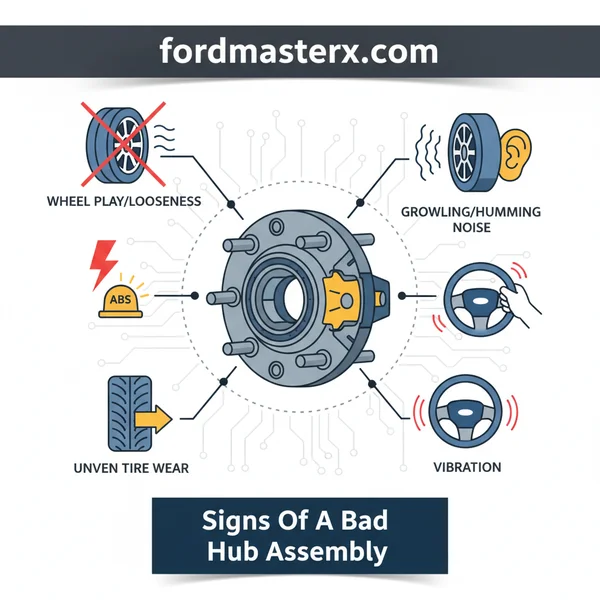
Practically speaking, diagnosing a bad hub assembly early is a matter of safety and cost prevention. When the bearings inside the hub degrade, they create excessive heat and friction, which can eventually lead to the wheel seizing or, in extreme cases, detaching from the vehicle entirely. By identifying the specific auditory and sensory cues described below, you can pinpoint exactly which wheel is failing and address the issue before it damages your tires, CV axles, or braking system.
Understanding Auditory Symptoms: From Humming to Growling
The most common indicator of a hub assembly in distress is a sound that mimics the drone of “mud-terrain” tires or a distant prop plane. This noise is the result of metal-on-metal friction within the bearing race. As the polished surfaces of the bearings break down, they create a resonant vibration that travels through the suspension and into the cabin. Paying close attention to how this sound reacts to your driving inputs is the fastest way to confirm a hub failure.

The Correlation Between Speed and Pitch
A hallmark of hub assembly failure is a noise that scales perfectly with your wheel’s RPM. While an exhaust leak or engine issue will change pitch based on how hard you press the gas pedal, a bad bearing is strictly speed-dependent. You will typically notice the following:
- 30-45 MPH: A faint, rhythmic “chirp” or low-frequency hum begins to emerge.
- 55-70 MPH: The sound transitions into a constant, loud growl or “wow-wow” harmonic.
- Deceleration: The pitch drops steadily as the vehicle slows, regardless of whether you are applying the brakes.
The Swerve Test: Identifying the Damaged Side
To confirm which side is failing, you can perform a “load test” while driving on a clear, flat road. When you gently swerve the car or navigate a long curve, you are shifting the vehicle’s weight from one side to the other. This change in “load” will directly affect the volume of the noise coming from the bad bearing.
- Turning Left: Weight shifts to the right side of the car. If the growling gets louder when you veer left, your right hub assembly is likely the culprit.
- Turning Right: Weight shifts to the left side of the car. If the noise intensifies when you veer right, the left hub is failing.
- The “Quiet” Rule: If the noise disappears or significantly decreases when you turn in one direction, it means you have “unloaded” the bad bearing, confirming that side needs replacement.
Distinguishing Hub Noise from Tire Cupping
It is easy to mistake “choppy” or “cupped” tires for a bad hub assembly because both produce a loud drone. To tell them apart, pay attention to the surface of the road. Tire noise will usually change significantly when you move from a rough asphalt surface to a smooth concrete bridge deck. A bad hub assembly, however, will maintain its consistent growl regardless of the road texture because the noise is generated internally, not by the contact patch of the tire.
Impact on Vehicle Handling and Sensory Feedback
While the noise is often the first symptom, the physical sensation of the vehicle will change as the hub assembly deteriorates. As the internal bearings wear down, they create “play” or looseness within the hub unit. This affects the alignment of the wheel and the feedback you receive through the steering wheel and floorboards. If the assembly reaches a point of “extreme play,” the vehicle’s safety systems may even begin to malfunction.
Vibrations in the Steering Wheel and Floorboards
When a bearing loses its structural integrity, the wheel no longer rotates on a perfectly true axis. This creates a mechanical shimmy that you can feel physically. At lower speeds, this might feel like a slight “wobble” in the steering wheel. As you reach highway speeds, this vibration often turns into a high-frequency shudder that can be felt through the floorboards or the seat. Unlike a tire balance issue, which usually only occurs at specific speed ranges (like 55-65 MPH), a bad hub vibration will typically get progressively worse the faster you go.
Steering “Wander” and Vague Handling
A healthy hub assembly keeps your wheel precisely aligned with the steering rack. When the assembly fails, the wheel can actually tilt slightly inward or outward. You may notice that the car feels “loose” or that it wants to wander to one side of the lane, requiring constant micro-corrections at the steering wheel. This is often accompanied by a “clunking” or “popping” sound when you hit small bumps, indicating that the bearing is loose enough to move within its housing.
ABS Malfunctions and Braking Issues
On most modern vehicles, the wheel speed sensor is integrated directly into the hub assembly. This sensor relies on a very specific “air gap” between the sensor tip and a magnetic reluctor ring inside the hub. If the bearings are worn and the hub starts to wobble, that air gap becomes inconsistent. This leads to several specific symptoms:

Audible — Listen Free for 30 Days
One free credit a month and thousands of titles included.
Listen Free for 30 Days As an Amazon Associate I earn from qualifying purchases.- Intermittent ABS Light: The dashboard light may flicker on and off, especially when cornering.
- Premature ABS Activation: You might feel the brake pedal “pulsing” or vibrating during normal, low-speed stops on dry pavement.
- Traction Control Errors: Because the computer is getting “noisy” data from the wobbling hub, it may disable your stability and traction control systems entirely.
The Role of the ABS Sensor in Hub Assembly Diagnostics
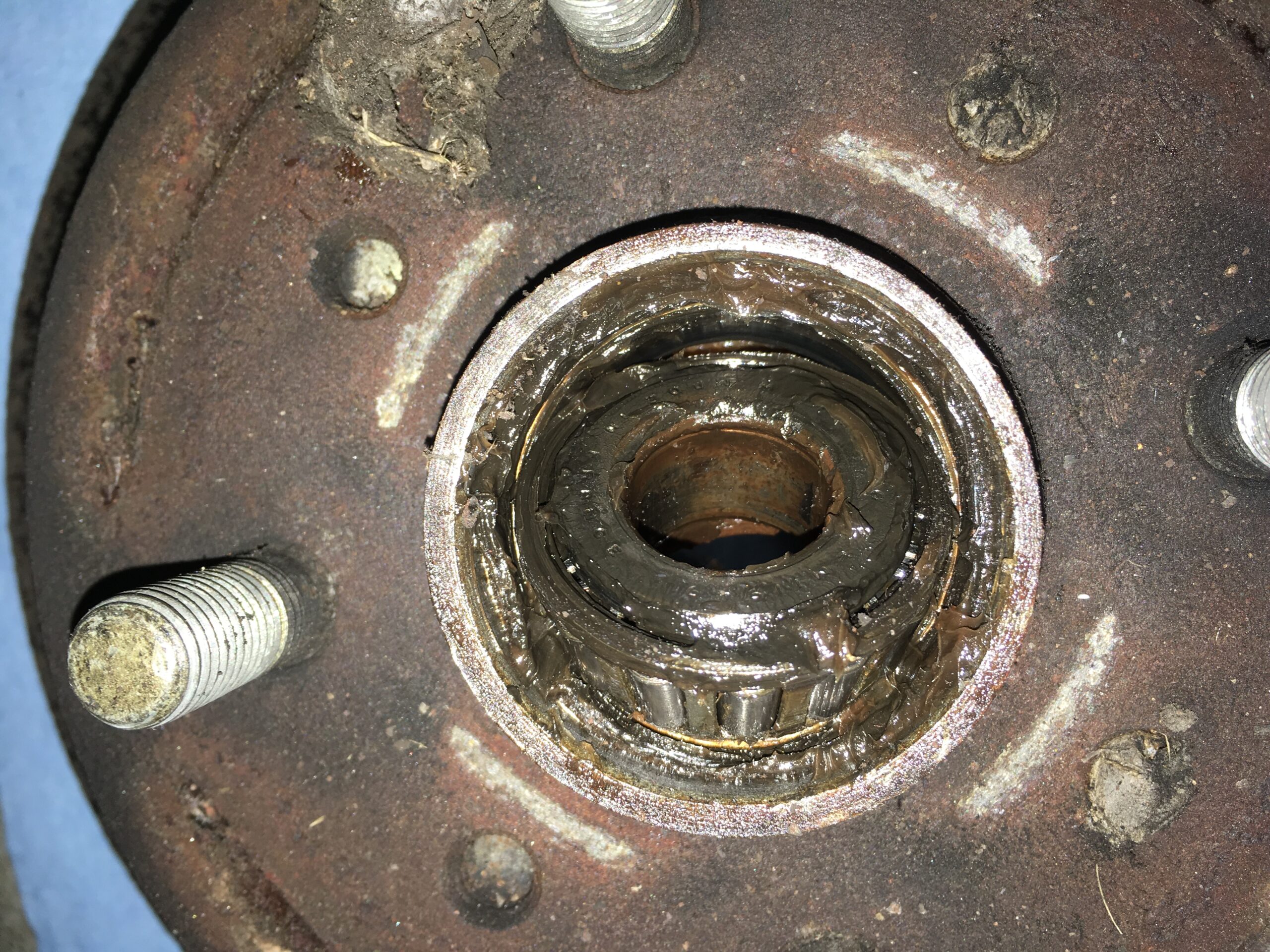
In most modern vehicles, the wheel speed sensor—often referred to as the ABS sensor—is actually integrated directly into the hub assembly. Because this sensor sits so close to the moving parts of the bearing, it often serves as the “canary in the coal mine” for internal mechanical failure. When a bearing begins to develop play, it can throw off the precise alignment the sensor needs to function.
Integrated Sensors and Dash Warnings
If your ABS or traction control light flickers on unexpectedly, the hub assembly is a prime suspect. Inside the hub, there is a magnetic encoder ring or a tone ring that the sensor reads to determine how fast the wheel is spinning. If the bearing is worn, the entire assembly can wobble slightly. This creates an inconsistent gap between the sensor and the ring, leading to a “loss of signal” or erratic data. Practical Tip: If your ABS light illuminates specifically after hitting a pothole or taking a sharp turn, it is a strong indicator that there is enough physical “play” in the bearing to disrupt the sensor’s reading.
Erratic Braking and “False Activation”
A failing hub assembly doesn’t just trigger a light; it can change how your car feels during a stop. You might experience “false ABS activation,” where the brake pedal pulses or vibrates even when you are braking gently on dry pavement. This happens because the computer thinks one wheel is locking up due to the faulty sensor data. Common symptoms include:
- A pulsating brake pedal during low-speed stops.
- Reduced braking effectiveness or a “mushy” feeling.
- The traction control system engaging on dry, flat roads.
Critical Safety Risks of Ignoring Hub Bearing Failure
It is easy to ignore a faint hum or a flickering light for a few weeks, but hub assembly failure is not a repair that should be delayed. Unlike a worn shock or a noisy muffler, a failed hub assembly is a catastrophic safety risk. When the internal bearings degrade completely, they generate immense heat and friction, which can lead to a total mechanical seizure.
Wheel Separation and Mechanical Failure
The most terrifying consequence of a neglected hub assembly is wheel separation. The hub is what actually holds your wheel to the car. If the bearing disintegrates entirely, the friction can weld the components together or cause the spindle to snap. In extreme cases, the entire wheel and tire assembly can exit the vehicle while you are driving. Real-world example: Mechanics often see “blueing” on the metal of failed hubs—this is a sign that the metal reached temperatures high enough to change its molecular structure before it eventually snapped.
Collateral Damage to the Drivetrain
Ignoring the problem also leads to a much higher repair bill. Because the hub assembly is the foundation for your braking and suspension systems, a “wobbly” hub causes a chain reaction of damage. Specific risks include:
- Rotor and Caliper Damage: An unstable hub causes the brake rotor to wobble, which can ruin your brake pads and eventually damage the expensive brake caliper.
- CV Axle Wear: For front-wheel-drive vehicles, the vibration from a bad hub travels up the axle, wearing out the CV joints prematurely.
- Tire Cupping: The inconsistent contact with the road will lead to “cupped” or “scalloped” tires, forcing you to replace expensive rubber long before its time.
Conclusion
Identifying a bad hub assembly early is the difference between a routine maintenance task and a dangerous roadside emergency. From the classic “death growl” that changes with your speed to the subtle flickering of an ABS light, your vehicle has several ways of telling you that the wheel bearings are reaching the end of their lifespan. Remember that these components are the literal bridge between your car and the road; their integrity is non-negotiable for safe driving.
If you have noticed a new humming noise or felt an unusual vibration through your steering wheel, do not wait for the symptoms to worsen. Have your vehicle inspected by a professional as soon as possible to check for wheel play and sensor errors. Staying proactive will keep your repair costs down and, more importantly, keep you and your passengers safe on the road. Drive smart and listen to what your car is trying to tell you!
❓ Frequently Asked Questions
How do I distinguish hub noise from tire noise?
Hub noise is usually a consistent growl that changes pitch when you swerve side-to-side, whereas tire noise often changes based on the road surface texture. If the sound remains constant regardless of the pavement type, it is likely the hub assembly.
Can a bad hub assembly cause my car to pull to one side?
Yes, a worn bearing can create enough internal friction or mechanical play to cause the vehicle to drift or pull during normal driving. This is often accompanied by a ‘loose’ feeling in the steering wheel.
Audible Premium Plus — Annual Membership
12 audiobook credits up front, plus the full Audible catalogue.
See Annual Plans As an Amazon Associate I earn from qualifying purchases.Why does the noise get quieter when I turn one way?
Turning shifts the vehicle’s weight; unloading the damaged bearing reduces friction and noise, while loading it increases the sound. For example, if you turn left and the noise stops, the left-side bearing is likely the culprit.
How long can I drive on a noisy wheel hub?
You should replace it as soon as possible, as a noisy hub indicates internal damage that can lead to total wheel separation within a few hundred miles. Driving on a failing hub risks your safety and can cause expensive damage to your braking system.
Does a bad hub assembly always show ‘play’?
Not always; a bearing can be incredibly noisy due to pitted internal races while still feeling tight when the wheel is shaken by hand. Physical play usually indicates a more advanced stage of failure.
Are there visual indicators of a failing wheel hub?
While rare, you might see uneven tire wear or metal shavings near the hub if the internal seals have completely failed. In some cases, you may notice grease leaking from the hub’s dust cap or seal areas.