How To Jump A 2017 Ford Escape: Step-By-Step Guide 2026

Few automotive predicaments are as inconvenient and frustrating as a dead car battery, especially when you’re pressed for time. For owners of a 2017 Ford Escape, understanding the correct and safe procedure for jump starting is not just a useful skill, but an essential one to navigate unexpected power failures, avoiding costly service calls and significant delays. This comprehensive guide will teach you how to safely jump start your 2017 Ford Escape, covering everything from crucial safety precautions and common causes of battery drain to detailed step-by-step instructions and troubleshooting, ensuring you master this vital roadside skill by 2026.


Essential Safety Precautions for Jump Starting a 2017 Ford Escape
Before attempting to jump start any vehicle, especially your 2017 Ford Escape, it’s crucial to understand and mitigate the inherent risks involved. This isn’t merely a formality; it’s a critical step to prevent serious personal injury and costly damage to vehicle electronics. As an expert, I’ve witnessed firsthand the consequences of rushed or improper jump start procedures, from fried electrical systems to severe acid burns. Therefore, mastering these preliminary steps is absolutely essential.
Improper jump starting carries significant dangers, including electric shock, battery explosion due to igniting hydrogen gas, and severe vehicle damage from incorrect connections. The average 12-volt automotive battery contains sulfuric acid, a corrosive substance that can cause serious burns. Always wear personal protective equipment (PPE) such as safety glasses and gloves, and never allow jumper cable clamps to touch each other or the vehicle’s bodywork once connected to a power source.
First and foremost, ensure both vehicles involved are utilizing a 12-volt electrical system. Mismatched voltage systems, for instance, attempting to jump a 12V Escape with a 24V commercial vehicle, can cause severe and irreparable damage to vehicle electronics in both cars. Verify that the booster vehicle’s battery is fully charged and capable of providing sufficient power. Critically, visually inspect your 2017 Ford Escape’s battery for any signs of leakage, cracks, or excessive swelling. If you observe battery acid leaking or the battery casing is visibly distorted, do NOT attempt to jump start it; this indicates a severely compromised battery that could explode. An example of this would be seeing white powdery corrosion that’s visibly wet or green crystalline deposits, which often signals a slow leak, or a bulging battery case that hints at internal pressure buildup.
Next, proper positioning of the vehicles is key. Park the booster vehicle close enough to the disabled 2017 Ford Escape so that the jumper cables can easily reach both batteries without being taut, but ensure the vehicles are not touching each other. This prevents accidental short circuits or body damage. Before making any connections, confirm that both vehicles’ engines are completely off. Engage the parking brakes on both vehicles for stability, and if your Ford Escape has an automatic transmission, ensure it is firmly in ‘Park’ (P). For manual transmissions, ensure it’s in neutral. This practice minimizes any unintended movement during the procedure.
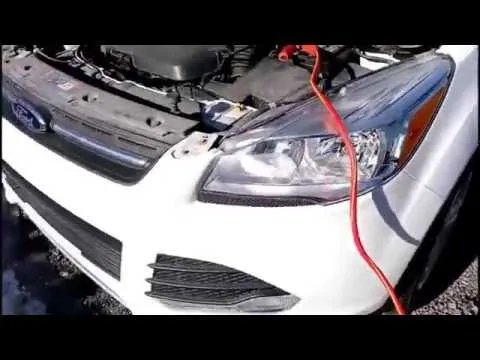
For the 2017 Ford Escape model year, the battery is conventionally located under the hood, typically on the passenger side. This makes terminal access straightforward, unlike some newer Ford models that may integrate the battery into the trunk or under the rear seats. Familiarizing yourself with this location beforehand will save time and reduce fumbling during a stressful situation.

What Causes a Dead Battery in Your 2017 Ford Escape?
Understanding the root causes of a dead battery in your 2017 Ford Escape can empower you to take preventative action and potentially avoid future roadside emergencies. Modern vehicles, including your Escape, are laden with sophisticated electronics, which, while convenient, introduce several potential points of failure for battery health. To truly understand and prevent issues, it’s beneficial to discover the common culprits.
- • Parasitic Drain: This occurs when electronic components continue to draw small amounts of power even after the vehicle is turned off. For example, leaving an interior light on, a phone charger plugged in, or a faulty infotainment system module can slowly discharge the battery over hours or days. Research indicates that parasitic draws exceeding 50 mA can drain a healthy battery in just a few days, a common issue in modern cars with numerous electronic control units (ECUs).
- • Alternator Malfunction: The alternator’s primary role is to generate electricity to power your Escape’s electrical systems and recharge the battery while the engine is running. If the alternator fails or performs inefficiently, the battery will eventually drain, as it’s not being replenished. Symptoms might include dimming headlights, a battery warning light on the dashboard, or a vehicle that starts with a jump but dies shortly after.
- • Extreme Temperatures and Battery Age: Both very hot and very cold weather accelerate battery degradation. High heat can cause battery fluid to evaporate, damaging the internal structure, while extreme cold significantly reduces its capacity to deliver current. A typical car battery has a lifespan of 3-5 years. Exceeding this age dramatically increases the risk of sudden failure. Consider a scenario where a 2017 Escape owner notices their vehicle struggles to start after a week of cold weather despite recent drives—this is often a sign of reduced cold cranking amperage (CCA) due to age and temperature.
- • Frequent Short Trips: Consistently driving short distances (e.g., less than 20 minutes) prevents the alternator from fully recharging the battery after startup. Over time, this leads to a state of chronic undercharge, reducing the battery’s overall capacity and shortening its lifespan.
By The Numbers
Average Car Battery Lifespan
CCA Loss at 0°F (-18°C)
Max Healthy Parasitic Draw
Ford’s Recommended Inspection Interval

How to Jump Start Your 2017 Ford Escape: A Step-By-Step Procedure
With the safety precautions firmly in mind, you are now ready to learn the precise steps to jump start your 2017 Ford Escape. This procedure demands careful attention to detail and a methodical approach to ensure both safety and success. Standard jumper cables are typically 4-gauge or 6-gauge wires, essential for efficient current transfer. Follow this expert guide to master the process.

📋
Step-by-Step Guide
Ensure both vehicles are off. In your 2017 Ford Escape, the battery is located conventionally under the hood, typically on the passenger side. Identify the positive (+, usually marked with a red cap or symbol) and negative (–, usually black) terminals on both the dead Escape battery and the good battery in the booster vehicle. Inspect terminals for excessive corrosion; if present, gently clean them with a wire brush for optimal contact. Confirm your jumper cables are untangled and free of damage.
Take one red (positive, +) clamp and securely attach it to the positive terminal of the dead battery in your 2017 Ford Escape. Then, take the other red (positive, +) clamp and connect it to the positive terminal of the good battery in the booster vehicle. Visually, imagine the red cable forming a clear electrical path from positive to positive.
Attach one black (negative, –) clamp to the negative terminal of the good battery in the booster vehicle. Now, for the critical step: connect the other black (negative, –) clamp to an unpainted, heavy metal part of your dead 2017 Ford Escape’s engine block or frame, away from the battery itself and any moving parts. This provides a safe ground connection and minimizes the risk of sparking near the battery’s hydrogen gas. The 2017 Ford Escape’s owner’s manual typically specifies suitable grounding points.
Start the booster vehicle’s engine and let it run for 5-10 minutes. This allows the good battery to transfer a sufficient charge to the dead battery of your Escape. Many mechanics recommend waiting closer to 7-10 minutes for modern vehicles to ensure adequate initial charge. After the waiting period, attempt to start your 2017 Ford Escape. If it starts, keep both vehicles running for a few minutes before proceeding to disconnect the cables.


Once your Escape is running, disconnect the cables in the reverse order of connection to prevent sparking. First, remove the black (–) clamp from the Escape’s engine block. Second, remove the black (–) clamp from the booster vehicle’s negative terminal. Third, remove the red (+) clamp from the booster vehicle’s positive terminal. Finally, remove the red (+) clamp from your 2017 Ford Escape’s positive terminal. Drive your Escape for at least 20-30 minutes to allow the alternator to recharge the battery.
What If Your 2017 Ford Escape Still Won’t Start After a Jump?
It’s a frustrating experience when you’ve followed all the steps to jump start your 2017 Ford Escape, only for it to remain stubbornly unresponsive. This indicates that the issue might be more complex than a simple discharged battery. Don’t despair; a systematic troubleshooting approach can help you discover the underlying problem. A 12V battery can draw over 100 amps during starting, and a significantly weakened battery might not accept this charge efficiently.
Recheck Connections and Try Again
The first step is always to re-verify your connections. Ensure all four clamps are securely attached to their respective terminals and grounding points, free from corrosion or loose contact. Sometimes, a slight shift can disrupt the electrical flow. Allow the booster vehicle to run for an extended period, perhaps up to 20 minutes, to give the severely discharged battery more time to accumulate a sufficient charge before attempting another start. If your Escape cranks weakly but doesn’t turn over, this often suggests the battery is severely discharged or reaching its end of life.
Assess Battery Health and Alternator Function
If your Escape still fails to start or struggles, observe the symptoms. Are the dashboard lights completely dim or non-existent? Does it make a rapid clicking sound but no crank? These are strong indicators of a truly dead or failing battery that can no longer hold a charge effectively. A healthy car battery should read 12.6 volts or higher when fully charged. If it starts with a jump but then dies shortly after, or if the headlights dim significantly while the engine is running, this points to an alternator issue. A working alternator typically maintains 13.8 to 14.2 volts across the battery terminals when the engine is running.
Investigate Starter Motor Problems
Differentiating between a dead battery and a faulty starter motor is crucial. If you turn the key and hear a single, loud click, or absolutely no sound at all, even with a seemingly good battery or after a jump, the starter motor could be the culprit. Starter motors draw significant current, often over 200 amps, and a faulty one will fail to engage the flywheel to turn the engine. If the engine turns over but doesn’t catch—meaning it cranks but won’t ignite—the problem is likely not battery or starter related but rather an issue with the fuel system (e.g., fuel pump, clogged filter) or ignition system (e.g., spark plugs, coils).
Consider Professional Diagnosis or Replacement
When troubleshooting efforts prove unsuccessful, it’s time to seek professional assistance. A certified mechanic or roadside assistance service can perform advanced diagnostics to pinpoint the exact failure. They possess specialized tools to test battery cold cranking amps (CCA), alternator output, and starter motor function accurately. If the battery is aged or severely degraded, replacement will be necessary. Don’t hesitate to reach out for help; attempting complex repairs without the proper expertise can lead to further damage.
Preventative Measures to Avoid Future Dead Batteries in Your 2017 Ford Escape
Preventing a dead battery is far more convenient and cost-effective than reactively jump starting it. By adopting a few simple maintenance practices and adjusting your driving habits, you can significantly extend the life of your 2017 Ford Escape’s battery and avoid the frustration of unexpected power failures. Explore these essential strategies to proactively manage your battery’s health.
Regular Battery Testing and Maintenance
Make routine battery checks a part of your vehicle maintenance schedule. Visually inspect battery terminals for corrosion (white, powdery residue) and ensure connections are tight. Loose or corroded terminals impede current flow. More importantly, have your battery’s health (voltage and Cold Cranking Amperage, or CCA) professionally tested annually, especially before the onset of winter. Research indicates that a battery’s lifespan can be reduced by 50% in climates with extreme temperature swings, making proactive testing critical. A scenario where a driver routinely checks and cleans their battery terminals can visibly extend the battery’s functional life.
Mindful Use of Vehicle Electronics
Modern vehicles like the 2017 Ford Escape feature numerous electronic accessories that draw power. Avoid prolonged use of accessories such as the radio, interior lights, or phone chargers when the engine is off. Always double-check that all lights, including headlights and interior dome lights, are switched off before exiting the vehicle. These seemingly minor oversights can lead to a significant parasitic drain, especially overnight. To learn more about your Escape’s specific electrical system, consult your owner’s manual.
If your 2017 Ford Escape sits unused for extended periods (e.g., several weeks), consider investing in a smart trickle charger or battery maintainer. These devices provide a low, consistent charge that keeps the battery topped off without overcharging, counteracting parasitic drains and significantly extending battery lifespan. Battery maintainers typically draw less than 1 amp, making them energy-efficient for long-term use.
Consistent Driving Habits
The alternator needs sufficient time to fully recharge the battery after starting the engine. Encourage regular driving, particularly longer trips of at least 20-30 minutes, to ensure the battery receives a complete charge cycle. If your daily commute consists primarily of short drives, your battery may consistently operate in a state of undercharge, accelerating its degradation. This is a common pitfall many beginners overlook.
Understand Battery Replacement Cycles
As previously noted, car batteries have a finite lifespan, typically 3-5 years. Beyond this point, even well-maintained batteries experience reduced capacity and reliability. Proactive replacement based on age, performance indicators (like slow cranking), and local climate conditions (extreme heat or cold) can prevent unexpected breakdowns. Ford recommends battery inspections as part of routine maintenance checks after 3 years, guiding owners to replace them before they fail completely.
Prioritize safety by using proper PPE and verifying vehicle compatibility before any connections. Follow the precise sequence of jumper cable connections: positive dead, positive good, negative good, negative ground. Understand that persistent starting issues after a jump may indicate a deeper problem with the battery, alternator, or starter. Equipped with this detailed knowledge, you can confidently address a dead battery in your 2017 Ford Escape. Regular maintenance and preventative habits are key to avoiding future incidents, but should one occur, you are now prepared to act decisively and safely.
Frequently Asked Questions
Where is the battery located in a 2017 Ford Escape?
In the 2017 Ford Escape, the battery is conventionally located under the hood, typically on the passenger side towards the front. It is covered by a plastic tray or cover for protection. You’ll need to remove this cover to access the positive and negative terminals for jump starting or maintenance. This location is standard for the model year.


Can I jump start my 2017 Ford Escape with a portable jump starter?
Yes, you absolutely can jump start your 2017 Ford Escape using a portable jump starter. Ensure the portable unit is fully charged and rated for a 12V system. Connect its positive (+) clamp to your Escape’s positive terminal and its negative (-) clamp to a good ground point on the engine block, away from the battery, then follow the device’s specific instructions.
How long should I let the donor car run before trying to start my 2017 Ford Escape?
After connecting the jumper cables, you should let the donor vehicle run for at least 5 to 10 minutes. This allows sufficient time for the dead battery in your 2017 Ford Escape to receive a preliminary charge, increasing the likelihood of a successful start on your first attempt. For very drained batteries, 15-20 minutes might be beneficial.
What if my 2017 Ford Escape’s battery terminals are corroded?
If your 2017 Ford Escape’s battery terminals are corroded, it’s crucial to clean them before attempting a jump start to ensure good electrical contact. Use a wire brush or a battery terminal cleaner. Corrosion can impede current flow, making a jump start difficult or impossible. Always wear gloves and eye protection when handling corroded batteries.
Why does my 2017 Ford Escape battery keep dying even after jump starting?
If your 2017 Ford Escape’s battery repeatedly dies after a jump start, it indicates an underlying issue. Common culprits include a failing alternator (not charging the battery), a severely degraded or old battery that can no longer hold a charge, or a parasitic drain (something constantly drawing power when the vehicle is off). Professional diagnosis is recommended.