Best Heavy Duty Pitman Arm Pullers for Seized 1-Ton Trucks

For removing seized components on 3/4 and 1-ton trucks, forged steel heavy-duty pitman arm pullers are essential to prevent tool breakage. Look for a jaw opening of at least 1-1/2 inches and high-tonnage ratings to handle the extreme torque required for Ford, GM, and Dodge steering systems.
🎯 Key Takeaways
Recommended Best Deal Products


- Prioritize forged chromoly steel for maximum durability against high-torque demands.
- Ensure the jaw opening matches the specific width of your truck’s pitman arm.
- Use a puller with a high-grade forcing bolt to prevent thread stripping.
- Brands like OTC and Lisle offer superior load capacities for commercial vehicles.
- Apply heat or penetrating oil alongside the puller for extremely seized arms.
If you are struggling with a seized pitman arm on a Ram 3500 or an F-350, a standard automotive puller will likely snap before the arm even budges. To move a part that has been press-fitted for years and subjected to road salt, you need a heavy-duty puller with a jaw opening of at least 1-5/8 inches and a high-tensile pressure bolt. Using a tool with the wrong dimensions leads to slipping, which rounds off the edges of the arm and makes the job significantly harder.

Prime for Young Adults — 6 Months Free
Students and 18–24s get six months of Prime free, then half price.
Start 6 Months Free As an Amazon Associate I earn from qualifying purchases.
The success of this job depends entirely on the tool’s ability to stay centered under massive pressure. Professional-grade pullers for 1-ton trucks are engineered to handle the 5 to 10 tons of force required to break that taper fit. When you are cranking down with a long breaker bar or a high-torque impact wrench, the structural integrity of the puller determines whether the arm pops off or the tool explodes into shrapnel.
Critical Specifications: Jaw Spread, Throat Depth, and Load Capacity
When shopping for a heavy-duty puller, the physical dimensions are the most critical factors. If the jaw spread is too narrow, it won’t fit over the shoulder of the arm. If the throat depth is too shallow, the pressure bolt won’t reach the center of the sector shaft, causing the tool to tilt and slip off under load.
Jaw Opening and Reach Requirements
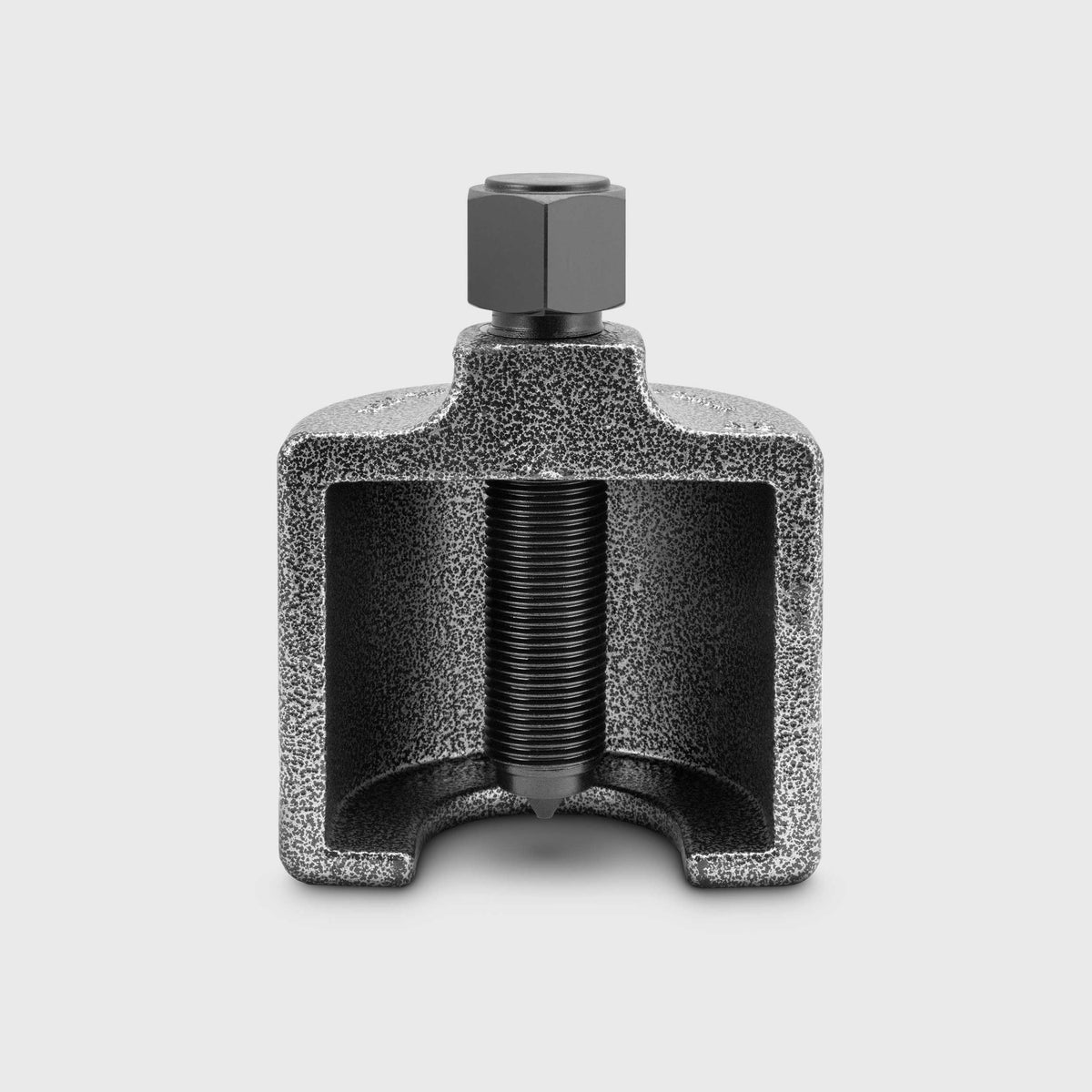
For most 1-ton trucks, including the Ford Super Duty and heavy-duty GM platforms, you need a jaw spread between 1-5/8 inches (41mm) and 2 inches (50mm). A standard 1-1/4 inch puller designed for half-ton pickups will not clear the casting on a heavy-duty steering box. Additionally, ensure the throat depth—the distance from the bottom of the jaws to the bridge of the tool—is at least 2-1/2 inches. This clearance is necessary to ensure the tool sits flush against the arm, allowing the pressure bolt to apply force in a perfectly straight line.
- Minimum Jaw Spread: 1-5/8″ for most 1-ton applications.
- Ideal Throat Depth: 2-1/2″ to 3″ to ensure proper seating.
- Clearance: Ensure the “ears” of the puller are slim enough to fit between the arm and the steering box housing.
Pressure Bolt Strength and Thread Pitch
The pressure bolt is the primary point of failure on cheap pullers. For seized arms, look for a bolt with a diameter of at least 3/4 of an inch. Fine-thread bolts (such as 3/4-16) are preferable because they allow for more controlled force application and are less likely to strip under high torque. The tip of the bolt should be rounded or feature a floating pilot to prevent it from “walking” off the center of the sector shaft. This ensures all the energy from your wrench is directed into pushing the shaft out of the arm rather than twisting the tool sideways.
Forged Steel vs. Cast Iron: Why Material Quality Prevents Tool Failure
Recommended Best Deal Products


The material composition of your puller is the difference between a tool that lasts a lifetime and a one-time-use disaster. Under the extreme tension required to pull a seized 1-ton pitman arm, the puller’s frame wants to “spread” its legs. Cast iron tools are brittle; they do not flex, they simply shatter when they reach their limit. Forged steel, however, is designed to handle these localized stresses.
The Dangers of Casting Flaws in High-Torque Scenarios
Inexpensive pullers are often made from cast steel or iron, which can contain internal air bubbles or “voids” from the manufacturing process. When you apply 300 lb-ft of torque to a cast tool, these internal weak points become fracture lines. Forged steel pullers, like those from OTC or Lisle, undergo a process that aligns the grain of the metal, making the jaws much more resistant to spreading. If you see the jaws of your puller starting to flare outward, stop immediately; this is a sign of low-grade material that is about to fail.
Heat Treatment and Coating Durability
A professional-grade puller isn’t just forged; it is heat-treated to a specific Rockwell hardness. This ensures the threads on the bridge don’t strip and the jaws don’t deform. Look for tools with a black oxide finish or specialized coatings that resist corrosion. Since you will likely be using penetrating oils and potentially heat (torches) to loosen the arm, the tool needs to withstand chemical exposure and thermal stress without losing its temper. High-quality pullers maintain their shape even after repeated use on the most stubborn, rust-welded components found on commercial-grade steering systems.
- Forged Steel: Offers superior tensile strength and resists shattering.
- Heat Treatment: Prevents the pressure bolt threads from “rolling” or flattening.
- Safety Factor: Forged tools typically have a higher “yield strength,” providing a safer margin of error when using impacts.
Vehicle Compatibility: Best Pullers for Ford, GM, and Dodge 1-Ton Trucks
When you are working on a 1-ton chassis, “one size fits all” is a myth that usually ends in a broken tool. The steering components on a Ford F-350, Chevrolet Silverado 3500, or RAM 3500 are significantly beefier than their half-ton counterparts. Choosing a puller that matches the specific clearance and torque requirements of your truck brand is the difference between a thirty-minute job and a weekend-ruining ordeal.

Navigating the Ford Super Duty Frame Gap
Ford Super Duty trucks are notorious for tight clearances around the steering box. Because the frame rails and suspension components are so closely packed, many generic pullers simply won’t fit over the sector shaft. You need a low-profile, heavy-duty puller that offers a wide jaw opening but a short forcing screw. For Ford owners, a puller with a collapsible or adjustable arm design is often the best choice to navigate the narrow workspace without having to drop the entire steering box.

Audible — Listen Free for 30 Days
One free credit a month and thousands of titles included.
Listen Free for 30 Days As an Amazon Associate I earn from qualifying purchases.Handling the High-Torque Needs of GM and Ram 3500s
GM and RAM 1-ton trucks often utilize a tapered spline design that creates a massive amount of surface tension over time. In salt-belt states, these components practically weld themselves together. For these vehicles, jaw spread is your primary concern. Look for tools specifically rated for Class 3 and 4 trucks. Key compatibility factors include:
- Jaw Opening: Ensure a minimum of 2 inches to clear the oversized pitman arm base.
- Pulling Capacity: Aim for tools rated for at least 5 to 10 tons of force.
- Heat-Treated Steel: Necessary to prevent the “spreading” of the jaws under the extreme pressure required for RAM steering components.
Professional Brand Comparison: Analyzing OTC, Lisle, and Specialized Tooling
Recommended Best Deal Products


If you are standing in the tool aisle or scrolling through an online catalog, three names usually dominate the conversation: OTC, Lisle, and specialized heavy-equipment brands like Tiger Tool. While they might look similar in photos, the metallurgy and design philosophy vary wildly between them.
OTC vs. Lisle: Durability in the Shop
OTC is widely considered the gold standard for professional technicians. Their heavy-duty pullers are typically forged from high-grade alloy steel, making them less likely to snap under sudden “pops” when a seized arm finally breaks loose. Lisle, on the other hand, offers fantastic value and innovative designs that solve specific clearance issues. While a Lisle puller is excellent for occasional heavy use, an OTC tool is built for the daily abuse of a commercial diesel shop. If you’re working on a truck that hasn’t had its steering serviced in a decade, the rigidity of the OTC forged yoke is hard to beat.
When to Invest in Specialized Heavy-Duty Tooling
For those dealing with the absolute worst-case scenarios—think vocational 1-ton dump trucks or plow rigs—generic brands might not cut it. Specialized brands like Tiger Tool design “enclosed” pullers. Unlike the standard “C-shape” pullers, these wrap entirely around the pitman arm. This eliminates the risk of the jaws slipping or spreading. While these are the most expensive options, they are virtually indestructible and provide the safest experience for the user. Consider specialized tooling if:
- You frequently work on commercial-grade steering systems.
- Your current “heavy duty” puller shows signs of jaw spread or thread stripping.
- You want a tool that eliminates the need for supplemental heat or hammering.
Conclusion
Choosing the right heavy-duty pitman arm puller isn’t just about finishing the job; it’s about protecting your truck’s steering box and ensuring your own safety. Standard pullers are fine for lighter vehicles, but 1-ton trucks demand the structural integrity of forged steel and brand-specific compatibility. By matching your tool to your truck’s frame clearance and opting for a professional-grade brand like OTC or Tiger Tool, you turn a high-stress repair into a manageable task.
Next Steps: Before you start, measure the width of your pitman arm and check for any frame obstructions. Once you have your measurements, invest in a puller that exceeds those specs. Don’t let a seized part stall your progress—get the right tool for the job today and get your truck back on the road!
❓ Frequently Asked Questions
What makes a heavy-duty puller different from a standard DIY model?
Heavy-duty pullers are manufactured from high-strength forged alloys rather than cast metal, allowing them to withstand the massive force required for 3/4-ton and larger trucks. They also feature wider jaw openings and deeper throats specifically designed to clear heavy-duty steering gear housings.
Is a forged steel puller worth the extra cost over cast iron?
Yes, because cheaper cast-iron pullers often ‘ear’ or snap when under the extreme tension needed to break a seized pitman arm. Forged steel offers the grain structure necessary to handle high torque without permanent tool deformation or failure.
Which brands are recommended for commercial fleet maintenance?
Professionals typically rely on brands like OTC, Lisle, and Snap-on due to their high load ratings and precision machining. These brands offer specific models like the OTC 6496 or 6497 that are tailored for the tight clearances of heavy trucks and buses.
How do I determine the correct jaw opening for my specific vehicle?
You should measure the width of the pitman arm where it sits on the sector shaft using a caliper before purchasing. Most 1-ton trucks require a jaw opening between 1.5 and 2 inches, whereas lighter passenger vehicles typically use 1-1/4 inch pullers.
Audible Premium Plus — Annual Membership
12 audiobook credits up front, plus the full Audible catalogue.
See Annual Plans As an Amazon Associate I earn from qualifying purchases.Can these heavy-duty pullers be used for other automotive components?
While designed for pitman arms, many heavy-duty pullers are versatile enough for tie rod ends, ball joints, and some larger pulleys. However, always check the throat depth and jaw width to ensure the tool fits the specific geometry of the part to avoid damage.
What should I do if the arm remains seized even with a heavy-duty puller?
Apply a high-quality penetrating oil and allow it to soak for several hours, then apply tension with the puller and strike the side of the pitman arm with a hammer to shock the joint. If it remains seized, carefully apply localized heat to the arm—not the sector shaft—to expand the metal.