Best 235/85R16 10-Ply Truck Tires: Top Models & Pricing

Load Range E (10-ply) 235/85R16 tires are engineered for maximum durability, supporting up to 3,042 lbs per tire at 80 PSI. These tires are the gold standard for heavy-duty trucks and trailers, offering the sidewall stiffness required for stable towing and high-capacity hauling.
🎯 Key Takeaways
Recommended Best Deal Products


- Verify a 3,042 lbs load index for safe heavy-duty towing applications.
- Select Highway Rib treads for maximum fuel efficiency and long-distance comfort.
- Choose All-Terrain patterns for traction on gravel or muddy job sites.
- Look for ‘Buy 4’ promotional rebates to reduce high upfront costs.
- Premium steel-casing models offer better heat dissipation and potential retreadability.
If you are hunting for 235/85R16 10-ply tires, you are likely outfitting a dually, a heavy-duty 3/4-ton truck, or a high-capacity livestock trailer. For this specific size, the Michelin XPS Rib remains the gold standard for longevity and commercial use, while the Goodyear Wrangler Workhorse AT and Cooper Discoverer AT3 LT offer the best balance of price and traction for mixed-use job sites. These Load Range E tires are engineered specifically to handle the high-pressure demands of towing, with a standard maximum load capacity of 3,042 lbs per tire in a single configuration.
Choosing the right model matters because the 235/85R16 is a narrow, tall profile designed to minimize rolling resistance and maximize stability under heavy payloads. Unlike wider tires that can “wander” under weight, these 10-ply options utilize stiff sidewalls and heavy-duty steel belts to prevent swaying when you are hauling a gooseneck or a fully loaded bed. Whether you need a dedicated highway rib for a trailer or a rugged all-terrain for a farm truck, selecting based on casing strength and tread design is the key to getting your money’s worth.

Prime for Young Adults — 6 Months Free
Students and 18–24s get six months of Prime free, then half price.
Start 6 Months Free As an Amazon Associate I earn from qualifying purchases.Top-Rated 235/85R16 10-Ply Tires: Price and Brand Comparison
The 235/85R16 market is divided between premium commercial-grade tires and value-focused work tires. When comparing prices, you will find a significant gap between tires designed for 100,000-mile highway service and those built for general utility. Below are the top models currently leading the market in performance and availability.

Premium Commercial and Highway Models
- Michelin XPS Rib: Expect to pay $330–$360 per tire. This is a dedicated commercial tire with a full steel casing. It is famous for its ability to be retreaded multiple times, making it the lowest “cost-per-mile” option for fleet owners.
- Bridgestone Duravis R238: Retailing around $240–$270, this is a heavy-duty highway tire designed to resist the scrubbing and curbing common in delivery and trailer applications.
- Goodyear Wrangler Workhorse HT: Priced at $190–$220, this tire offers a smoother ride than the Michelin but maintains the 10-ply Load Range E rating for serious hauling.
Versatile All-Terrain and Value Options
- Cooper Discoverer AT3 LT: Typically priced at $210–$240. This tire is specifically branded for “Heavy Duty” (LT) use and comes with a 60,000-mile treadwear warranty, which is rare for a 10-ply tire in this size.
- Falken Wildpeak A/T3W: Around $200–$230. This is the go-to choice if your truck sees significant snow or mud. It features a deep tread depth and high heat dissipation technology for towing in summer.
- Ironman All Country CHT: A budget-friendly commercial highway tire often found for $150–$170. While it lacks the brand prestige of Michelin, it meets all Load Range E safety specs for trailer use.
Tread Patterns for Work: Highway Rib vs. All-Terrain Performance
Recommended Best Deal Products


Your choice of tread pattern directly impacts your truck’s fuel economy and stability. Because the 235/85R16 is so narrow, the tread design has a massive influence on how the tire handles lateral forces—essentially how much your trailer “wags” behind the truck at 70 mph.
Highway Rib: The Trailer and Long-Haul Specialist
Highway rib tires, like the Michelin XPS Rib or Firestone Transforce HT2, feature continuous ribs that run the circumference of the tire. These are not meant for mud or deep snow; they are meant for the pavement. The solid shoulder ribs provide a massive advantage in lateral stability. If you are pulling a heavy fifth-wheel, a highway rib tire will resist “squirming,” providing a much more planted feel on the interstate.
- Best for: Long-distance towing, steering axles, and heavy trailers.
- Pros: Longest tread life, best fuel economy, and coolest running temperatures under load.
- Cons: Poor traction on wet grass, mud, or icy boat ramps.
All-Terrain: The Job Site and Ranch Workhorse
If your work takes you off the pavement, a highway rib will leave you stuck. Modern all-terrain 10-ply tires, such as the BFGoodrich All-Terrain T/A KO2 or the Cooper AT3 LT, utilize a more aggressive, “voided” tread pattern. These tires are designed with “stone ejectors” to prevent gravel from drilling into the tire casing, which is a common cause of failure on ranch roads. The trade-off is often a slight increase in road noise and a small drop in MPG compared to a smooth highway tire.
- Best for: Construction sites, farm use, and four-season driving.
- Pros: Superior grip in snow and dirt; reinforced “chip-resistant” compounds for gravel roads.
- Cons: Slightly higher rolling resistance; can feel “softer” in corners when fully loaded.
When selecting between these two, consider your mileage split. If 90% of your miles are on the highway, stick to a Rib design to save on fuel and replacement costs. If you frequently navigate unpaved job sites, the added grip of an All-Terrain is worth the minor trade-off in longevity.
Essential Specs: Load Index, PSI Requirements, and Towing Stability
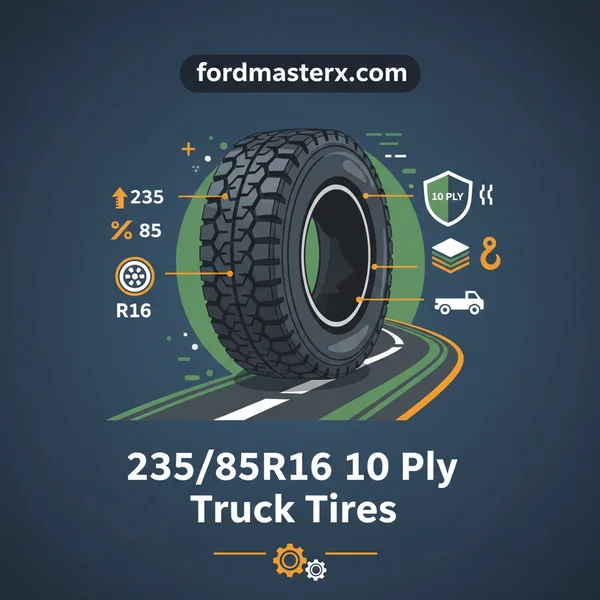
When you are looking at 235/85R16 tires, the “10-ply” rating is actually a modern shorthand for Load Range E. This rating is the gold standard for 3/4-ton and 1-ton trucks because it provides the structural integrity needed to handle massive vertical pressure without the sidewalls buckling. If you are hauling heavy equipment or mounting a camper, these specs aren’t just suggestions—they are safety requirements.

Load Range E and the 80 PSI Rule
To achieve the full weight-carrying capacity of a 10-ply tire, you must pay attention to the inflation pressure. While your empty truck might ride comfortably at 50 or 60 PSI, reaching the maximum load capacity usually requires inflating the tires to a cold pressure of 80 PSI. This high pressure keeps the tire’s footprint stable and prevents excessive heat buildup, which is the leading cause of tire failure during long summer hauls.
- Typical Load Index: Most tires in this size carry a 120/116 index, meaning a single tire can support up to 3,086 lbs.
- Heat Dissipation: The 10-ply construction uses reinforced belts to manage internal temperatures during high-speed highway driving.
- Rim Compatibility: These tires are designed for narrower rims (usually 6.0 to 7.5 inches), making them the perfect fit for stock dually setups and classic heavy-duty wheels.
Stability Under Heavy Payloads
One of the biggest advantages of the 235/85R16 size is its narrow profile combined with stiff sidewalls. This “tall and skinny” design reduces the tendency for the truck to “wander” or sway when you have a heavy gooseneck trailer attached. Because the sidewalls are reinforced, there is much less lateral flex, giving you significantly more confidence during high-speed cornering or when passing large rigs on the interstate. It makes the connection between your truck and the road feel solid rather than “squishy.”
Long-Term Value: Mileage Warranties and Durability Ratings
Recommended Best Deal Products


Investing in a set of 10-ply tires is a significant expense, so you want to ensure they last beyond just a couple of seasons. Long-term value isn’t just about the lowest sticker price; it is about the “cost per mile.” A tire that costs $200 and lasts 60,000 miles is a much better deal than a $150 tire that wears out at 25,000 miles due to heavy use.

Audible — Listen Free for 30 Days
One free credit a month and thousands of titles included.
Listen Free for 30 Days As an Amazon Associate I earn from qualifying purchases.Deciphering Mileage Warranties
Don’t be surprised if you see shorter mileage warranties on 10-ply tires compared to standard passenger tires. Because these are “workhorse” tires, manufacturers expect them to be used in harsh conditions. However, top-tier brands still offer impressive protection for their premium all-terrain and highway models to prove their durability.
- All-Terrain Warranties: High-end AT tires in this size often provide a 50,000 to 60,000-mile limited treadwear warranty.
- Commercial Grade: Some dedicated “commercial” highway tires may not have a mileage warranty at all, but they use harder rubber compounds designed to resist “scrubbing” during tight turns.
- Pro-Tip: To keep your warranty valid, keep your alignment in check and rotate your tires every 5,000 miles religiously to prevent uneven cupping.
Sidewall Strength and Puncture Resistance
The “10-ply” nomenclature refers to the strength of the tire, not necessarily 10 literal layers of fabric. Modern tires use high-strength steel belts and advanced polyester cords to achieve this rating with less weight. Look for tires with reinforced “scuff guards” on the sidewalls if you frequently work near curbs or on rocky job sites. This added durability prevents “sidewall pinching,” which can ruin an otherwise perfectly good tire long before the tread actually wears down.
Conclusion
Choosing the right 235/85R16 10-ply tire comes down to balancing your specific needs for towing stability, off-road traction, and long-term durability. Whether you opt for a highway rib tire for maximum fuel economy or a rugged all-terrain for job site versatility, the Load Range E rating ensures your truck remains safe under pressure. Your next step should be to check your vehicle’s door placard for the recommended PSI and compare it against the load ratings of the models we’ve discussed today. Ready to upgrade your ride? Head down to your local dealer and get a professional fitment check to ensure your new tires are ready for the heavy lifting ahead!
❓ Frequently Asked Questions
What does the 10-ply rating actually mean for modern tires?
While modern tires don’t actually have 10 physical layers of cotton, the ’10-ply rating’ indicates a Load Range E strength equivalent. It signifies the tire’s ability to handle high internal pressure (80 PSI) and carry heavy loads safely.
Why is the 235/85R16 size so popular for towing?
The tall, narrow aspect ratio provides a large contact patch for stability while minimizing rolling resistance. This shape is ideal for keeping heavy trailers tracking straight and reducing sway during highway transit.
How do I choose between Highway Rib and All-Terrain tread?
Highway Rib tires are best for 100% pavement use, offering a quiet ride and better MPG. All-Terrain tires are necessary if your work takes you onto dirt, gravel, or construction sites where extra grip is required.
Are there specific 235/85R16 models designed for commercial use?
Yes, models like the Michelin XPS Rib feature steel casings specifically designed for commercial applications, allowing them to withstand extreme heat and frequent curbing.
Does this tire size fit on older 3/4 ton and 1-ton trucks?
The 235/85R16 was the OEM standard for many Ford, GM, and Ram trucks from the 1980s through the early 2000s, making it a perfect fit for vintage heavy-duty pickups.
What are the benefits of a steel-belted sidewall in this size?
Steel-belted sidewalls, found in premium 10-ply tires, significantly reduce sidewall flex. This results in much more stable handling when the truck is fully loaded or when pulling a gooseneck trailer.