
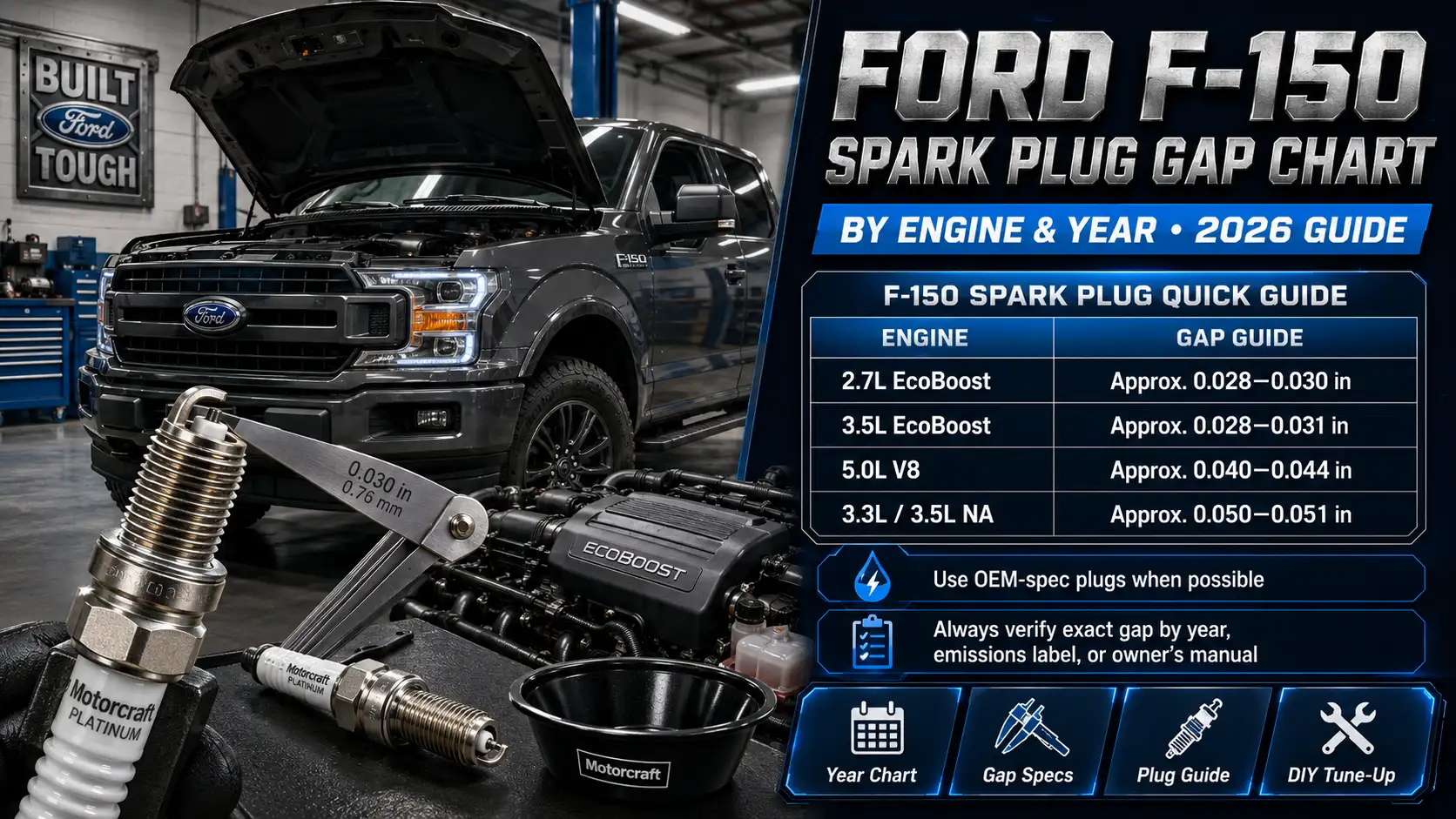
Ford F-150 Spark Plug Gap Chart by Engine and Year 2026

The correct spark plug gap for your F-150 depends entirely on your engine and model year — not just the truck. A 3.5L EcoBoost runs a gap nearly half the size of a 5.4L Triton V8, and even the same engine can carry different specs across generations. Installing the wrong gap leads to misfires, rough idle, and wasted fuel before you even leave the driveway.
The chart below covers every F-150 gasoline engine from the 10th generation (1997) through the current 14th generation (2024+), including every EcoBoost variant, both Coyote V8 generations, and the Triton family. Use your engine and year to pull the exact spec, then verify it against the underhood emissions sticker before you install a single plug.

Prime for Young Adults — 6 Months Free
Students and 18–24s get six months of Prime free, then half price.
Start 6 Months Free As an Amazon Associate I earn from qualifying purchases.Ford F-150 spark plug gap chart by engine and model year, covering naturally aspirated V6 and V8 engines alongside turbocharged EcoBoost variants from 1997 to 2024.
Recommended Best Deal Products


FordMasterX Reference
Ford F-150 Spark Plug Gap Chart
All engines 1997–2024 · Stock OEM spec · Verify against underhood emissions sticker
2.7L & 3.5L H.O. EcoBoost
5.4L 2V & 4.6L V8
EcoBoost vs. V8
Ford F-150 Spark Plug Gap Chart by Engine and Year
Use the table below to find your engine’s spec. The OEM Motorcraft plug listed for each row is the factory-spec plug for that application.
| Year Range | Engine | Gap (in) | Gap (mm) | OEM Motorcraft Plug |
|---|---|---|---|---|
| 1997–2008 | 4.2L V6 | .052–.056 | 1.32–1.42 | SP-432 |
| 1997–2004 | 4.6L V8 2V | .052–.056 | 1.32–1.42 | SP-432 |
| 1999–2003 | 5.4L V8 2V | .054–.056 | 1.37–1.42 | SP-432 |
| 2004–2010 | 5.4L V8 3V | .045 | 1.14 | SP-546 / SP-515 |
| 2011–2014 | 3.7L V6 | .051–.055 | 1.30–1.40 | SP-520 |
| 2011 only | 5.0L Coyote Gen 1 | .041–.047 | 1.04–1.19 | SP-519 |
| 2012–2017 | 5.0L Coyote Gen 1/2 | .049–.053 | 1.25–1.35 | SP-519 / SP-548 |
| 2018–2020 | 5.0L Coyote Gen 3 | .049–.053 | 1.25–1.35 | SP-548 / SP-551 |
| 2021+ | 5.0L Coyote Gen 4 | .039–.043 | 1.00–1.10 | SP-594 |
| 2011–2016 | 3.5L EcoBoost Gen 1 | .030–.033 | 0.76–0.84 | SP-580 |
| 2017–2020 | 3.5L EcoBoost Gen 2 | .028–.031 | 0.71–0.79 | SP-578 |
| 2021+ | 3.5L EcoBoost (all) | .030 | 0.76 | SP-578 |
| All years | 3.5L EcoBoost H.O. / Raptor | .028 | 0.71 | SP-550 |
| 2015+ | 2.7L EcoBoost (all) | .028–.030 | 0.71–0.76 | SP-542 |
Why the 5.0 Coyote Gap Changed Between 2011 and 2012
Recommended Best Deal Products


The 2011 F-150 5.0 is the one year where the gap spec varies by source, and it has caused widespread confusion across forums and parts store look-ups.
The 2011 owner’s manual printed a gap of .041–.047″. Starting with the 2012 model year, Ford revised the spec to .049–.053″ in the service manual. Multiple owners confirmed this discrepancy directly: the 2011 manual lists .041–.047″, while the same spec from 2012 and 2013 reads .049–.053″ — a meaningful difference of nearly .010″ at the wide end.
The real-world outcome has been documented across Ford forums and on BobIsTheOilGuy: owners who followed the 2011 owner’s manual gap spec and later checked their 2012+ trucks found the correct gap was different than what they had set. Some 2011 VINs also came from the factory with plugs gapped incorrectly at .055–.057″ — wider than either spec.
The safest approach: pull the underhood emissions sticker on your 2011 or 2012 5.0 and use that number. If it’s been removed, target .049–.053″ for any post-2011 correction, since the service manual supersedes the printed owner’s guide.
EcoBoost Spark Plug Gap vs Naturally Aspirated F-150 Engines
EcoBoost engines run a significantly tighter spark plug gap than any naturally aspirated F-150 V8 — and the reason is the turbo.
Under boost, the pressurized air-fuel mixture in the cylinder becomes much denser than in a naturally aspirated engine. That increased density makes it harder for the spark to jump a wide gap without blowing out. The result is called spark blowout — the spark fires but gets extinguished by the turbulence before it ignites the charge.

Audible — Listen Free for 30 Days
One free credit a month and thousands of titles included.
Listen Free for 30 Days As an Amazon Associate I earn from qualifying purchases.The symptom is a misfire under load, usually at highway speed or during hard acceleration, often triggering P0300–P0308 codes. Owners of incorrectly gapped EcoBoost trucks have documented exactly this — the fix is as simple as closing the gap back to spec.
The 3.5L EcoBoost Gen 1 owner’s manual specifies a gap of .030–.033″, and forum data consistently confirms this range for stock trucks. Gen 2 tightened slightly to .028–.031″. For tuned EcoBoost trucks making over 18 psi of boost, most calibrators recommend tightening further to .025–.028″ to prevent blowout under load.
The 2021+ 5.0L Coyote Gen 4 also moved to a tighter gap compared to previous Coyote generations — a notable shift for owners upgrading from an older 5.0. The Gen 4 uses SP-594 with a factory-set gap considerably tighter than previous years, and it is not compatible with the SP-519 or NGK 6509/6510 plugs used in earlier Coyote trucks.
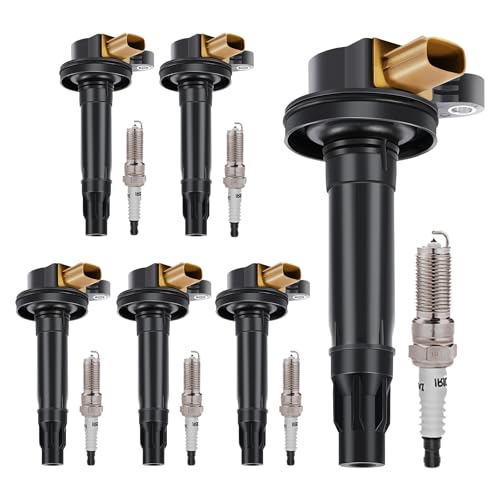
If you’re running EcoBoost coil packs that are already stressed, a gap that’s worn even .005″ over spec compounds the load on the coil — a tight gap is always the safer direction on a turbocharged engine.
How to Check and Set the Correct Spark Plug Gap on an F-150
Recommended Best Deal Products


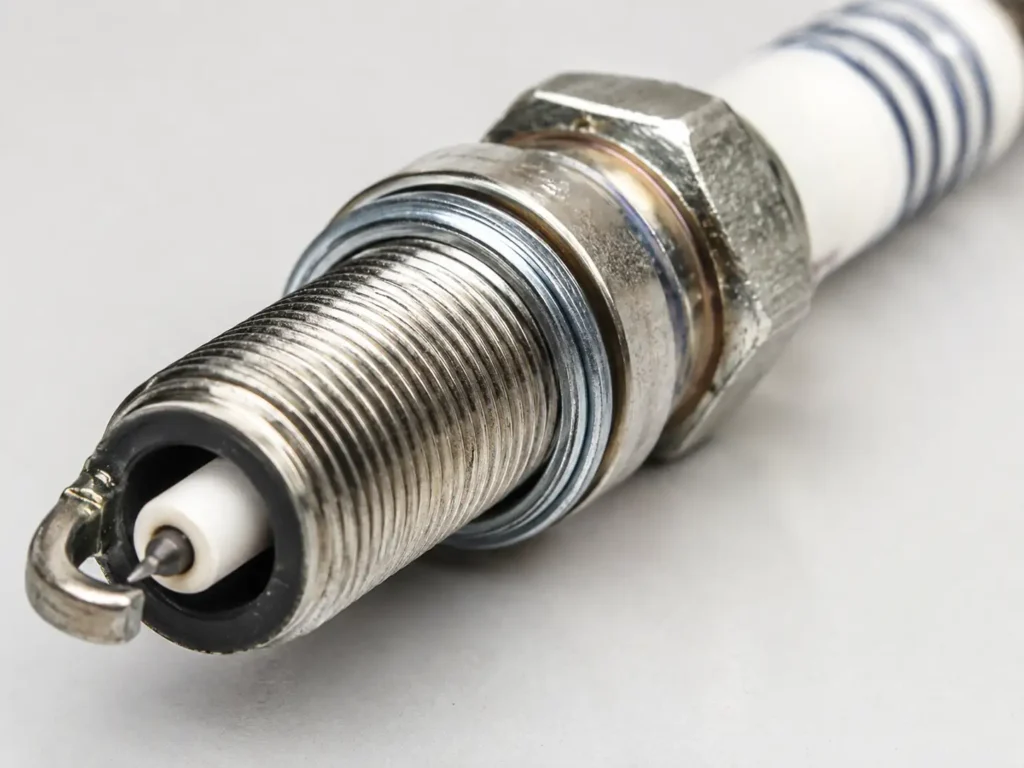
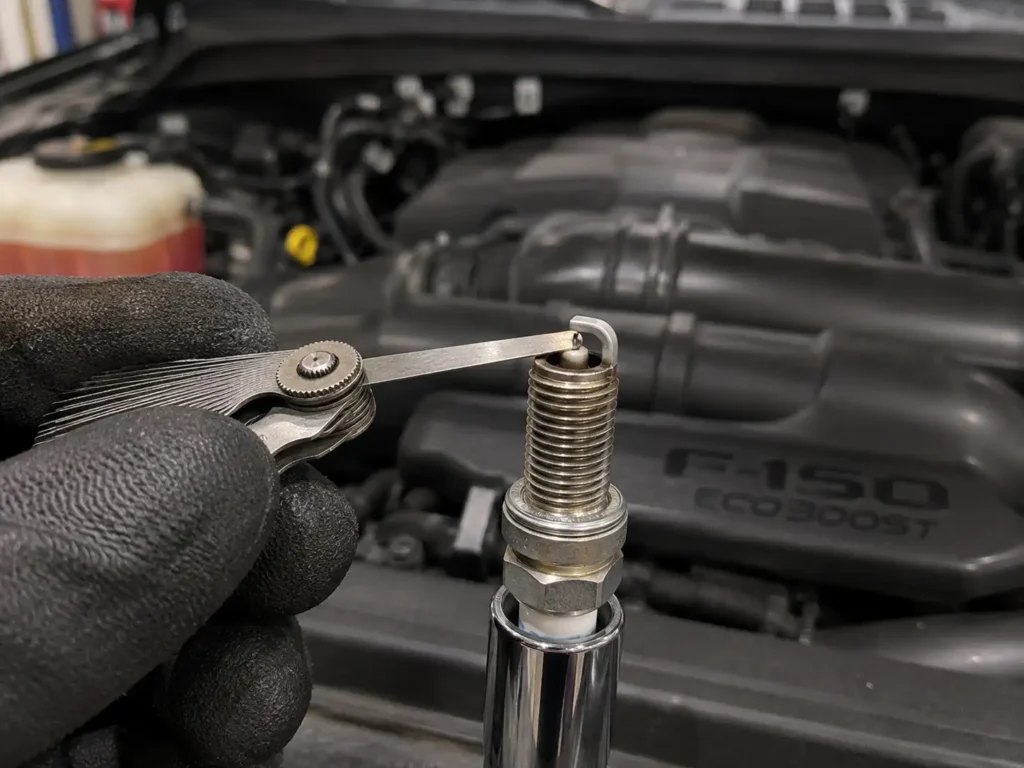
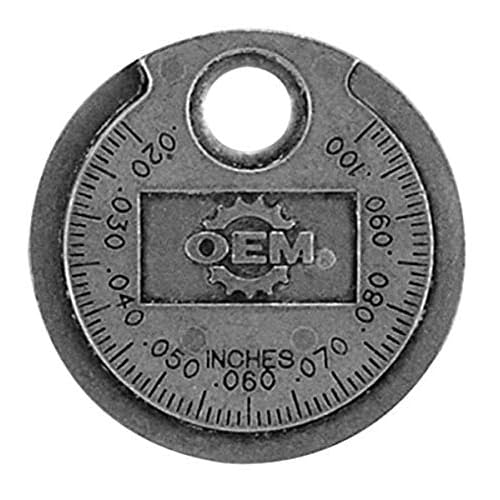
A feeler gauge is the only tool you need — and it costs under $10. Wire-type feeler gauges are preferred over disc-type for checking iridium plugs, since disc gauges apply lateral force on the center electrode.
One critical rule before you start: NGK states that when adjusting the gap on fine wire precious metal plugs such as platinum or iridium, no pressure or prying force should be applied to the fine wire center electrode or insulator — adjustment should only be made by moving the ground electrode. Breaking the iridium tip off in the cylinder is a guaranteed bad day.
Here is how to check and set the gap correctly:
- Measure first. Slide the correct wire gauge between the center and ground electrode. It should pass through with light resistance at the correct gap.
- Compare to the chart. If you’re within spec, install the plug. If not, adjust.
- Widen the gap by using a dedicated gap tool that bends only the ground strap outward. Never pry against the center electrode.
- Close the gap by gently tapping the plug electrode-first on a clean, flat hard surface. One tap at a time, recheck after each.
Motorcraft OEM plugs for EcoBoost engines come pre-gapped from the factory, but always verify before installation. Shipping and handling can close or widen the gap slightly. If you’re shopping for the right plug before you start, the guide to best spark plugs for the 5.0 F-150 covers OEM and aftermarket options with fitment notes by year.
NGK does not recommend adjusting the plug gap more than .008″ in either direction. If the gap has worn to more than .008″ beyond spec, replace the plug rather than adjusting it — worn electrode geometry means even a corrected gap won’t fire cleanly.
Frequently Asked Questions About F-150 Spark Plug Gap
What happens if the spark plug gap is too wide on an F-150?
A gap that’s too wide makes the ignition system work harder to fire the plug, often leading to misfires under load, rough idle, and reduced fuel economy. On EcoBoost engines, a wide gap causes spark blowout under boost — typically triggering cylinder-specific misfire codes like P0301 through P0308. Check the P0300 random misfire diagnostic guide if codes are already present.
Audible Premium Plus — Annual Membership
12 audiobook credits up front, plus the full Audible catalogue.
See Annual Plans As an Amazon Associate I earn from qualifying purchases.Can I use the same spark plug gap for all F-150 EcoBoost engines?
No. The 3.5L EcoBoost Gen 1 (2011–2016) is .030–.033″, the Gen 2 (2017–2020) is .028–.031″, and the 2.7L EcoBoost runs .028–.030″. The H.O. Raptor variant uses .028″. These are close but not identical — always match gap to the specific engine code and year using the chart above.
Do Motorcraft spark plugs come pre-gapped from the factory?
Yes, Motorcraft plugs are factory pre-gapped for their target application. However, you should still verify the gap with a feeler gauge before installation. Plugs can shift slightly during shipping and storage. A 30-second gap check prevents a warranty-voiding misfire condition.
What spark plug gap should I use on a tuned 3.5L EcoBoost?
A gap of .028″ works well on a stock truck, but .028″ or tighter is recommended for a tuned EcoBoost to reduce the chance of spark blowout under high boost. For tunes running above 18 psi, consult your calibrator — some recommend closing the gap further to .025–.026″.
How often should I check the spark plug gap on my F-150?
For standard service intervals (every 60,000–100,000 miles depending on plug type), check the gap when replacing. If you’re running a tuned EcoBoost, check the gap every 30,000 miles — boosted combustion erodes the ground strap faster than naturally aspirated engines.
What is the spark plug gap for a 2021 F-150 5.0?
The 2021 F-150 5.0 Gen 4 Coyote uses the SP-594 plug. The owner’s manual specifies a gap of 0.039–0.043 inches (1.0–1.1 mm) for this generation. This is notably tighter than the .049–.053″ spec used on 2012–2020 5.0 trucks.
Get the Right Gap Before Your Next F-150 Plug Change
The Ford F-150 spark plug gap chart covers ten different engine configurations across nearly 30 model years — and no single number fits all of them. EcoBoost engines need a tight gap to prevent blowout under boost. The 5.4L 3V runs tighter than the 2V it replaced. And the 5.0 Coyote changed spec between 2011 and 2012 in a way that caught a lot of owners off guard.
Use the table at the top of this page for your engine and year, then confirm against the underhood emissions sticker before you install. If a plug is worn more than .008″ beyond spec, replace it rather than adjusting. Once the gap is confirmed, the rest of the plug change is straightforward.

One Comment