6.0 Powerstroke EBP Sensor: Symptoms, Codes & Location

The Exhaust Back Pressure (EBP) sensor is a critical component for 6.0 Powerstroke performance, directly influencing VGT turbo vane positioning and fuel economy. Failure often presents as surging or poor power, but the root cause is frequently a clogged EBP tube rather than the sensor itself.
🎯 Key Takeaways
Recommended Best Deal Products


- Locate the sensor on the driver’s side near the thermostat housing.
- Watch for codes P0470, P0471, and P0478 as primary failure indicators.
- Always inspect and clear the EBP tube before replacing the sensor.
- Use OEM Motorcraft sensors to avoid electrical interference and data lag.
- Faulty EBP data causes erratic VGT cycling and turbo surging.
The Exhaust Back Pressure (EBP) sensor is the primary feedback tool your 6.0 Powerstroke uses to manage turbocharger behavior and exhaust flow. Located on the driver’s side of the engine, usually mounted on a bracket near the thermostat housing or valve cover, this sensor monitors the pressure levels inside the exhaust manifold. It sends a voltage signal to the Powertrain Control Module (PCM), which then calculates exactly how to position the Variable Geometry Turbo (VGT) vanes to optimize boost and engine braking. If this sensor sends an incorrect reading, your truck’s “brain” loses its ability to manage the air-to-fuel ratio effectively, leading to immediate performance issues.

Prime for Young Adults — 6 Months Free
Students and 18–24s get six months of Prime free, then half price.
Start 6 Months Free As an Amazon Associate I earn from qualifying purchases.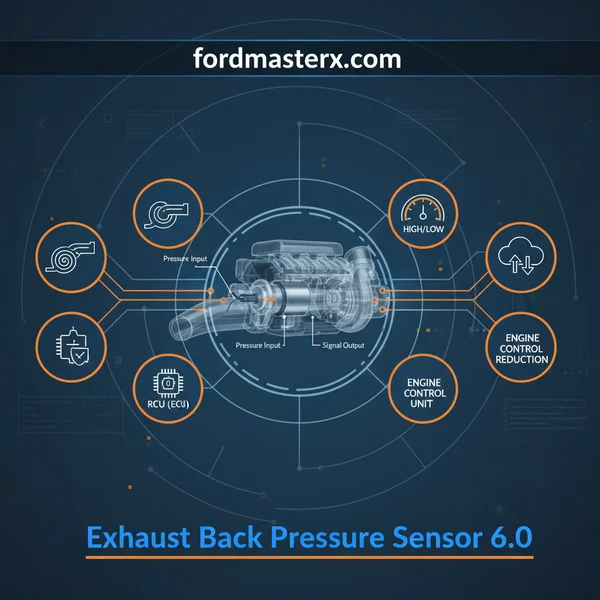
Understanding how to diagnose a failing EBP sensor can save you from expensive, unnecessary turbo replacements. Many owners mistake a faulty sensor or a clogged sensor tube for a physical turbo failure. When the EBP sensor fails, the PCM often reverts to “strategy-based” fueling, which is a generic map that doesn’t account for real-time pressure changes. This leads to a truck that feels sluggish, inconsistent, and thirsty for fuel. By identifying the specific symptoms and diagnostic codes early, you can keep your 6.0 running efficiently and avoid the dreaded “limp mode” during heavy towing or highway cruising.
Identifying EBP Sensor Failure Symptoms and Diagnostic Codes
When an EBP sensor starts to fail, the symptoms are rarely subtle. Because the sensor is directly tied to how the engine breathes, you will feel the impact in the accelerator pedal almost immediately. One of the most common signs is a rhythmic surging while maintaining a steady speed. You might notice the truck “hunting” for the right power level even though your foot hasn’t moved. This happens because the sensor is sending erratic voltage spikes, causing the PCM to constantly open and close the turbo vanes in a desperate attempt to find the correct back pressure.
📤 Share
💾 Download
Common Drivability Symptoms
Beyond surging, a failing EBP sensor often manifests through several distinct physical behaviors in the engine. You should look for these specific red flags during your daily drive:
- Drastic Loss of Power: The truck feels like it is pulling a heavy trailer even when empty. This is usually caused by the PCM “pulling” timing and fuel because it cannot verify safe exhaust pressure levels.
- Poor Fuel Economy: You may see a sudden drop of 2 to 4 miles per gallon. Without accurate EBP data, the engine operates in a sub-optimal combustion state, wasting diesel through the exhaust.
- Excessive Smoke: Black smoke from the tailpipe under moderate acceleration often indicates that the VGT vanes are not opening fast enough to provide the air needed for the amount of fuel being injected.
- Erratic Idling: A “lopey” or unstable idle when the engine is cold is a classic sign that the EBP sensor is providing skewed data before the engine reaches operating temperature.
Diagnostic Trouble Codes (DTCs) to Watch For
If your Check Engine Light (CEL) is on, or if you are using a monitor like an Edge CTS3 or ScanGauge II, you will likely find specific codes related to the EBP circuit. Knowing these codes helps you determine if the issue is a dead sensor, a wiring problem, or a simple blockage. The most common codes include:
- P0470: This is a generic Exhaust Back Pressure Sensor Circuit Malfunction. It usually means the PCM is not receiving a signal from the sensor at all.
- P0471: This indicates an Exhaust Back Pressure Sensor Range/Performance issue. The PCM sees a signal, but the data doesn’t match what the MAP (Manifold Absolute Pressure) or Barometric sensors are reporting.
- P0472: Low input signal. This often points to a short to ground in the wiring harness or a completely failed sensor element.
- P0473: High input signal. This typically suggests a short to power or a sensor that has failed internally in the “closed” position.
The Ultimate 6.0 Powerstroke EBP Sensor Walkthrough
Recommended Best Deal Products


The Exhaust Back Pressure (EBP) sensor is a critical component of the 6.0L Powerstroke diesel engine’s management system. It measures the pressure within the exhaust manifold, providing vital data to the Engine Control Module (ECM) to determine Variable Geometry Turbo (VGT) vane position and EGR flow. When this sensor or its corresponding tube becomes clogged with carbon soot—a common occurrence in these engines—you will experience surging, poor fuel economy, loss of power, or a “limp mode” condition. This guide provides a comprehensive, professional-grade approach to diagnosing, cleaning, and replacing the EBP sensor and tube to restore your truck’s performance and throttle response.
Step 1: Preparation and Tool Gathering
What you need: A 1-inch deep-well socket, a 9/16-inch open-end wrench, a 5/8-inch wrench, a flat-head screwdriver, penetrating oil (like PB Blaster), and a shop rag. You will also need a diagnostic scanner capable of reading live data if you wish to verify the sensor’s failure before starting.
Instructions: Before touching the engine, ensure the vehicle is parked on a level surface and the engine is completely cool. The EBP sensor is located near high-heat components like the degas bottle and exhaust manifolds, and working on a hot 6.0L is a recipe for burns. Open the hood and locate the sensor. On 2003-2004 models, it is typically mounted on a bracket near the thermostat housing. On 2005-2007 models, it is often found on the driver’s side valve cover area. Spray the base of the sensor and the tube fittings with penetrating oil and let them soak for at least 20 minutes. This is crucial because exhaust heat cycles cause these fittings to seize, and forcing them can snap the fragile tube.
Pro Tip: If you have an OBDII monitor (like an Edge Insight or Forscan), check the EBP reading with the Key On Engine Off (KOEO). It should match your MAP and Barometric pressure readings (usually around 14.7 PSI at sea level). If it fluctuates or shows 0 or 50+ PSI, the sensor or wiring is definitely compromised.
Step 2: Disconnecting the Electrical Connector
What you need: Small flat-head screwdriver and electronics cleaner spray.

Audible — Listen Free for 30 Days
One free credit a month and thousands of titles included.
Listen Free for 30 Days As an Amazon Associate I earn from qualifying purchases.Instructions: The electrical pigtail connected to the EBP sensor is exposed to extreme engine bay heat, making the plastic connector extremely brittle. Do not simply yank on it. Use a small flat-head screwdriver to gently lift the locking tab while pulling the connector away from the sensor body. Once disconnected, inspect the internal pins of the pigtail for signs of corrosion or “wicking” (where oil or fuel travels up the wire). If the connector is melted or the wires are frayed, you must splice in a new pigtail, as a poor connection here will cause intermittent VGT cycling and “turbo farts.” Tuck the connector safely out of the way to avoid dripping oil or debris into it during the mechanical removal.
Pro Tip: Look closely at the wires leading into the connector. The 6.0L harness is notorious for chafing against the engine lifting eye or the FICM bracket. Wrap any exposed wire in high-temp loom to prevent future short circuits.
Step 3: Removing the EBP Sensor and Mounting Tube
What you need: 1-inch deep socket, 9/16-inch wrench, and a 5/8-inch backup wrench.
Instructions: Use the 1-inch deep socket to unscrew the EBP sensor from the top of the standpipe tube. Hold the tube nut steady with your 5/8-inch wrench to prevent the tube from twisting or snapping while you break the sensor loose. Once the sensor is removed, you must remove the tube itself. The tube runs from the driver’s side exhaust manifold up to the sensor bracket. Use your 9/16-inch wrench to loosen the flare nut at the manifold. This is often the most difficult part due to rust. Use short, controlled bursts of force rather than a long, steady pull to break the rust’s grip. Carefully snake the tube out from behind the power steering lines and set it on a workbench.
Pro Tip: If the manifold nut won’t budge, heat it slightly with a propane torch. The expansion and contraction often break the rust bond better than any chemical penetrant ever could.
Step 4: Deep Cleaning the EBP Tube
What you need: Brake cleaner, a length of heavy-gauge weed wacker line (0.080″ or thicker), and compressed air.
Instructions: In 90% of cases, the sensor itself isn’t “broken”—the tube is simply packed solid with carbon soot, preventing the sensor from seeing pressure changes. Spray a generous amount of brake cleaner into the tube. Insert the weed wacker line into the tube and work it back and forth vigorously to break up the carbon deposits. The line is stiff enough to clear the soot but flexible enough to navigate the bends in the stainless steel tube. Continue flushing with brake cleaner and scrubbing until the liquid running out the other side is completely clear. Finally, use compressed air to blow out any remaining residue. If you cannot clear the blockage, you must purchase a replacement tube (Part # 3C3Z-9D477-BA or similar).
Pro Tip: Never use a metal coat hanger to clean the tube. If it snaps or gets stuck inside one of the tight bends, you will have to buy a new tube anyway, and you risk puncturing the side wall.
Step 5: Inspecting and Replacing the Sensor
What you need: New EBP sensor (Motorcraft recommended) and anti-seize lubricant.
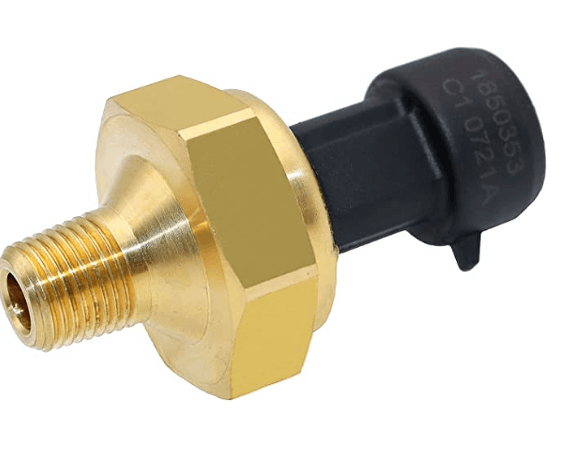
Instructions: Inspect the port on the bottom of the old sensor. If it is packed with hard carbon, you can try cleaning it with a toothpick and electronics cleaner, but usually, the internal diaphragm is fatigued. For the 6.0 Powerstroke, it is highly recommended to use an OEM Motorcraft sensor (Part # 4C3Z-9J460-A). Aftermarket sensors often have incorrect resistance values that lead to erratic turbo behavior. Apply a very small amount of high-temp anti-seize to the threads of the new sensor, being careful not to get any on the actual sensing element. This ensures that if you ever need to perform this maintenance again, the sensor won’t be fused to the tube.
Audible Premium Plus — Annual Membership
12 audiobook credits up front, plus the full Audible catalogue.
See Annual Plans As an Amazon Associate I earn from qualifying purchases.Pro Tip: Ensure you are using the correct sensor for your year. While they look similar, the 2003-2004 sensors and 2005-2007 sensors have different calibration curves and connectors in some regional builds.
Step 6: Reinstallation and Torque
What you need: 1-inch socket, 9/16-inch wrench, and 5/8-inch wrench.
Instructions: First, thread the EBP tube back into the exhaust manifold by hand. It is vital to start these threads by hand to avoid cross-threading the manifold, which would require a massive repair. Tighten the manifold nut with the 9/16-inch wrench until snug, then give it another 1/8th turn. Next, mount the top of the tube back to its bracket (if applicable). Thread the new EBP sensor into the top of the tube. Hold the tube’s hex-nut with your 5/8-inch wrench and tighten the sensor with the 1-inch socket. You don’t need to over-torque it; 10-12 lb-ft is sufficient. Finally, click the electrical connector back onto the sensor until you hear a distinct “click.”
Pro Tip: Double-check the routing of the tube. Ensure it isn’t rubbing against any plastic wire looms or rubber coolant hoses, as the tube gets hot enough to melt through them over time.
Step 7: System Verification and Test Drive
What you need: OBDII Diagnostic Scanner.
Instructions: Clear any stored trouble codes (like P0470, P0471, or P0478) using your scanner. Start the engine and let it reach operating temperature. Monitor the “EBP_DES” (Desired) and “EBP_AMP” (Actual) PIDs. They should track closely together as you rev the engine. Take the truck for a test drive and perform a few wide-open throttle (WOT) runs. You should notice a smoother sweep of the turbo boost gauge and a lack of the “jerking” sensation that often accompanies a clogged EBP system. If the VGT duty cycle remains steady between 15% and 85% during various driving conditions, the repair is successful.
Pro Tip: If your truck has been “tuned” with a custom programmer, some tuners actually disable the EBP sensor and use a inferred map. However, for a healthy engine, a functional mechanical sensor is always superior for real-time VGT management.
✅ Final Checklist
- Verify the EBP tube is clear of all carbon obstructions by blowing air through it.
- Confirm the manifold flare nut is tight and shows no signs of exhaust leaks (look for black soot).
- Ensure the electrical pigtail is securely clicked into place and the wires are not strained.
- Check that EBP, MAP, and BARO readings match within 0.5 PSI at Key On Engine Off.
- Ensure the tube is not contacting any wires or hoses that could melt.
Important Notes:
- Safety: Always wear eye protection when using brake cleaner and compressed air; carbon soot is an irritant and can fly back into your face.
- Professional Help: Seek a mechanic if the EBP tube nut is rounded off at the manifold or if the tube snaps during removal.
- Estimated Time: 45 minutes to 1.5 hours depending on rust levels.
- Cost Range: $100 – $180 for an OEM sensor and cleaning supplies.
The Impact of EBP Data on VGT Turbo Performance
The 6.0 Powerstroke utilizes a Variable Geometry Turbocharger, which is a sophisticated piece of equipment that relies entirely on accurate data to function. Unlike traditional turbos that use a wastegate, the VGT uses moving vanes inside the exhaust housing to change the speed and direction of the exhaust gases hitting the turbine wheel. The EBP sensor is the “eyes” of this system. It tells the PCM how much resistance is in the exhaust, allowing the PCM to adjust the VGT solenoid to either “pinch” the vanes for quicker spool-up or open them to prevent overboost.
How the PCM Uses EBP to Control the Vanes
The PCM constantly compares the EBP reading against the MAP sensor reading. Under normal conditions, these two numbers should rise and fall in a relatively predictable ratio. When you step on the throttle, the PCM wants to see EBP rise quickly as the turbo spools. If the EBP sensor is clogged or failing, it might report a low pressure even when actual pressure is high. In this scenario, the PCM will keep the turbo vanes tightly closed to try and build more pressure. This creates a dangerous overboost situation that can blow head bolts or damage the turbocharger itself.
The “Vane Lag” Phenomenon
One of the most frustrating aspects of a bad EBP sensor is “vane lag.” This is the delay between when you press the gas and when the turbo actually reacts. Because the PCM is receiving delayed or “lazy” data from a soot-covered sensor, it waits too long to command the VGT solenoid. You will experience a massive dead spot in the throttle, followed by a sudden, violent surge of power as the PCM finally reacts. This not only makes the truck difficult to drive in traffic but also puts immense stress on the drivetrain components. Keeping the EBP sensor and its dedicated tube clean is the only way to ensure the turbo reacts instantaneously to your commands.
- Cold Start Issues: In cold weather, the PCM uses EBP data to close the vanes and help the engine warm up faster. A bad sensor can cause the truck to whistle extremely loud or hiss constantly at idle when cold.
- High-Altitude Correction: The EBP sensor works with the BARO sensor to adjust boost levels based on altitude. A faulty sensor will make your truck feel “gutless” when driving through mountain passes.
- Exhaust Braking: If you use an aftermarket tuner for exhaust braking, it relies heavily on the EBP sensor to ensure it doesn’t create too much back pressure and float the engine valves.
Understanding the Relationship Between the Sensor and EBP Tube
Recommended Best Deal Products


The EBP sensor doesn’t live in isolation. It relies on a stainless steel tube that connects the driver’s side exhaust manifold to the sensor itself. This tube acts as the messenger, carrying the raw pressure from the exhaust stroke directly to the sensor’s diaphragm. Because the 6.0 Powerstroke is a high-soot environment, this relationship is often where the most common mechanical failures occur.
The Problem with Carbon Clogging
Because the EBP tube is exposed to raw exhaust gas, it is a prime target for carbon and soot accumulation. Over time, this soot hardens into a thick crust that can partially or completely block the tube. When this happens, the sensor is essentially “blinded.” It might report a static pressure reading to the PCM, even as you accelerate. This leads to a disconnect between what the engine is actually doing and what the computer thinks is happening, often resulting in erratic turbo behavior and “surging” while cruising.
Environmental Wear and Corrosion
Beyond soot, the physical integrity of the tube is a major factor. In “salt belt” states, these tubes are notorious for rusting through. A pinhole leak in the EBP tube will cause the sensor to read lower-than-actual pressure, which tricks the PCM into over-cycling the VGT vanes. Key things to look for include:
- Soot staining: Black residue around the tube fittings or along the pipe length.
- Brittleness: Tubes that look heavily corroded are likely thin and prone to cracking under vibration.
- Internal obstructions: Even if the outside looks clean, the narrow bend near the manifold is a frequent spot for “coke” buildup.
Comparing OEM Motorcraft vs. Aftermarket Sensor Reliability
When it comes to the 6.0 Powerstroke, there is a long-standing debate in the diesel community regarding parts selection. However, for the EBP sensor, the consensus is almost universal: the 6.0 engine is incredibly sensitive to sensor voltage, and “cheap” alternatives often cause more headaches than they solve.
Why the 6.0 Engine is Picky About Electronics
The PCM (Powertrain Control Module) expects a very specific voltage curve from the EBP sensor. Many budget-friendly aftermarket sensors use lower-quality internal components that produce a “noisy” or inconsistent signal. While the truck might start and run, these minor fluctuations can prevent the VGT (Variable Geometry Turbo) from finding its optimal position. This results in poor fuel economy and a noticeable lack of low-end grunt. Motorcraft sensors are calibrated to the exact specifications required by the Ford software, ensuring the communication remains “clean.”
The Real Cost of Aftermarket Savings
While an aftermarket sensor might cost half as much as a genuine Motorcraft unit, the failure rate is significantly higher. Many owners report aftermarket sensors failing within the first 3,000 to 5,000 miles. Some of the risks of using non-OEM sensors include:
- Inaccurate Vane Positioning: This can lead to increased back pressure and higher EGTs (Exhaust Gas Temperatures).
- Phantom Codes: Lower-quality sensors can trigger “circuit range/performance” codes even when the sensor is brand new.
- Warranty Issues: Dealing with repeated replacements consumes time and labor that quickly exceeds the initial savings.
Pro Tip: Always verify the part number. For the 6.0 Powerstroke, you are looking for the latest revision to ensure you have the most durable internal diaphragm design available.
Conclusion
The Exhaust Back Pressure sensor is a small component that carries a heavy workload for your 6.0 Powerstroke. By accurately reporting pressure levels to the PCM, it ensures your turbocharger operates efficiently and your engine delivers the power you expect. Whether you are dealing with a P0470 code or a sudden drop in fuel economy, checking both the sensor and its mounting tube should be your first priority.
To keep your truck running at its peak, remember these two actionable steps: always inspect the EBP tube for carbon clogs whenever you replace the sensor, and stick with genuine Motorcraft parts to avoid electrical interference issues. Staying proactive with these small sensors will save your turbo—and your wallet—from major repairs down the road. Keep your sensors clean, your tubes clear, and your 6.0 will stay on the road where it belongs!
❓ Frequently Asked Questions
How does the EBP sensor affect the variable geometry turbo (VGT)?
The PCM uses EBP data to calculate how much to open or close the turbo vanes. If the sensor sends incorrect data, the turbo may cycle erratically, causing ‘farting’ sounds on deceleration or a complete lack of boost.
What is the difference between P0470 and P0478?
P0470 is a general circuit malfunction indicating the PCM isn’t getting a reliable signal, while P0478 indicates high exhaust back pressure, which can be caused by a stuck VGT or a severely blocked EBP tube.
Why do mechanics recommend cleaning the tube before replacing the sensor?
Soot and carbon buildup frequently plug the small-diameter tube that feeds the sensor. This mimics sensor failure by preventing the sensor from ‘feeling’ the actual exhaust pressure, making cleaning a cost-effective first step.
Are there different sensor versions for different 6.0 model years?
Yes, while the function is the same, early 2003-2004 models often have different bracketry or pigtail lengths compared to 2005-2007 versions. Always verify your VIN before purchasing a replacement.
What does ‘EBP sensor bias’ mean in diagnostics?
Bias occurs when the sensor shows pressure (usually over 2 PSI) while the engine is off and the key is in the ‘On’ position. This indicates the sensor’s internal calibration has failed and it requires replacement.
Can I drive with a disconnected EBP sensor?
The truck will run on ‘default’ strategies, but you will experience poor fuel economy and potentially inconsistent turbo performance. It is not recommended for long-term use as it may lead to soot accumulation.