
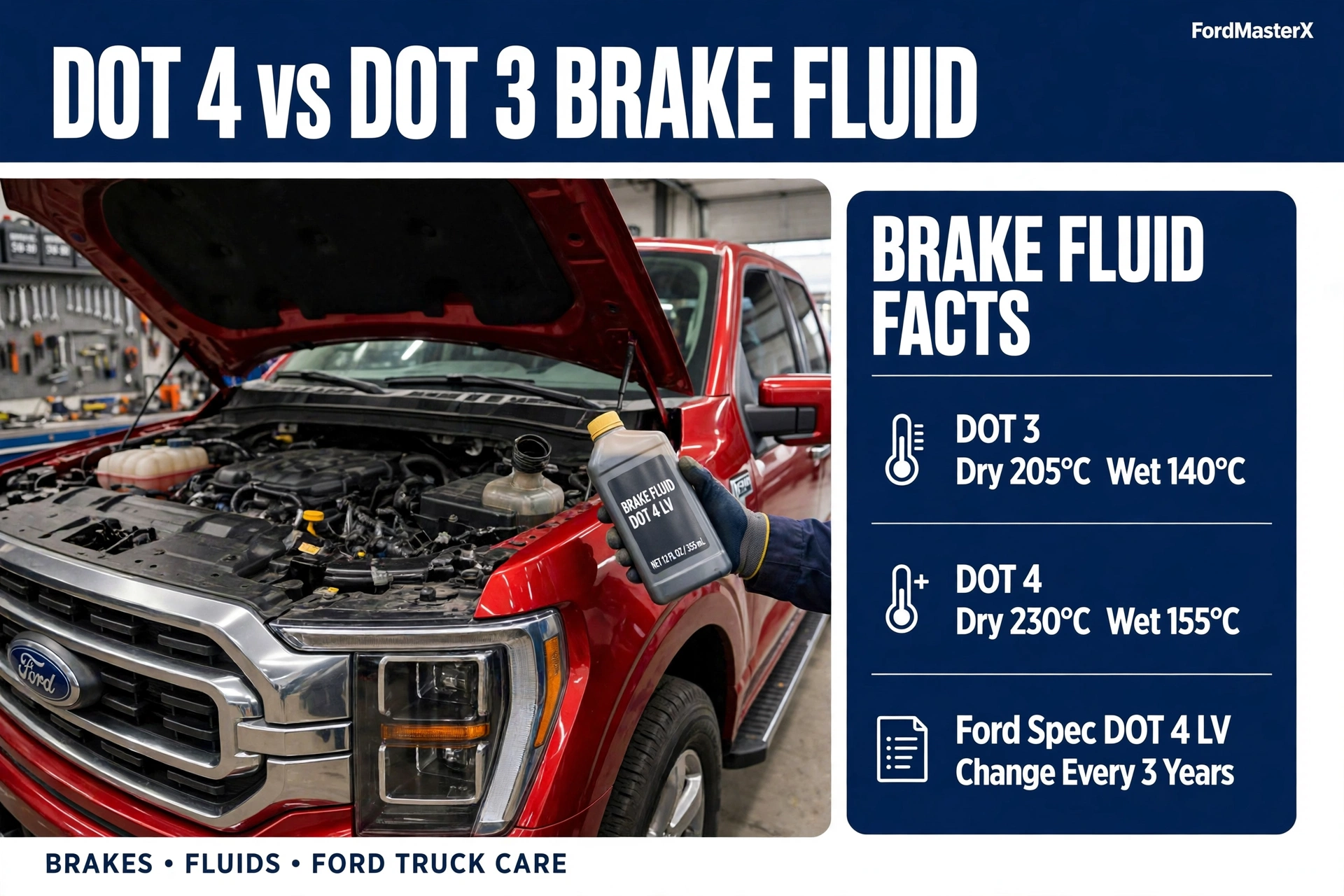
DOT 4 vs DOT 3 Brake Fluid for Ford Trucks 2026 Guide

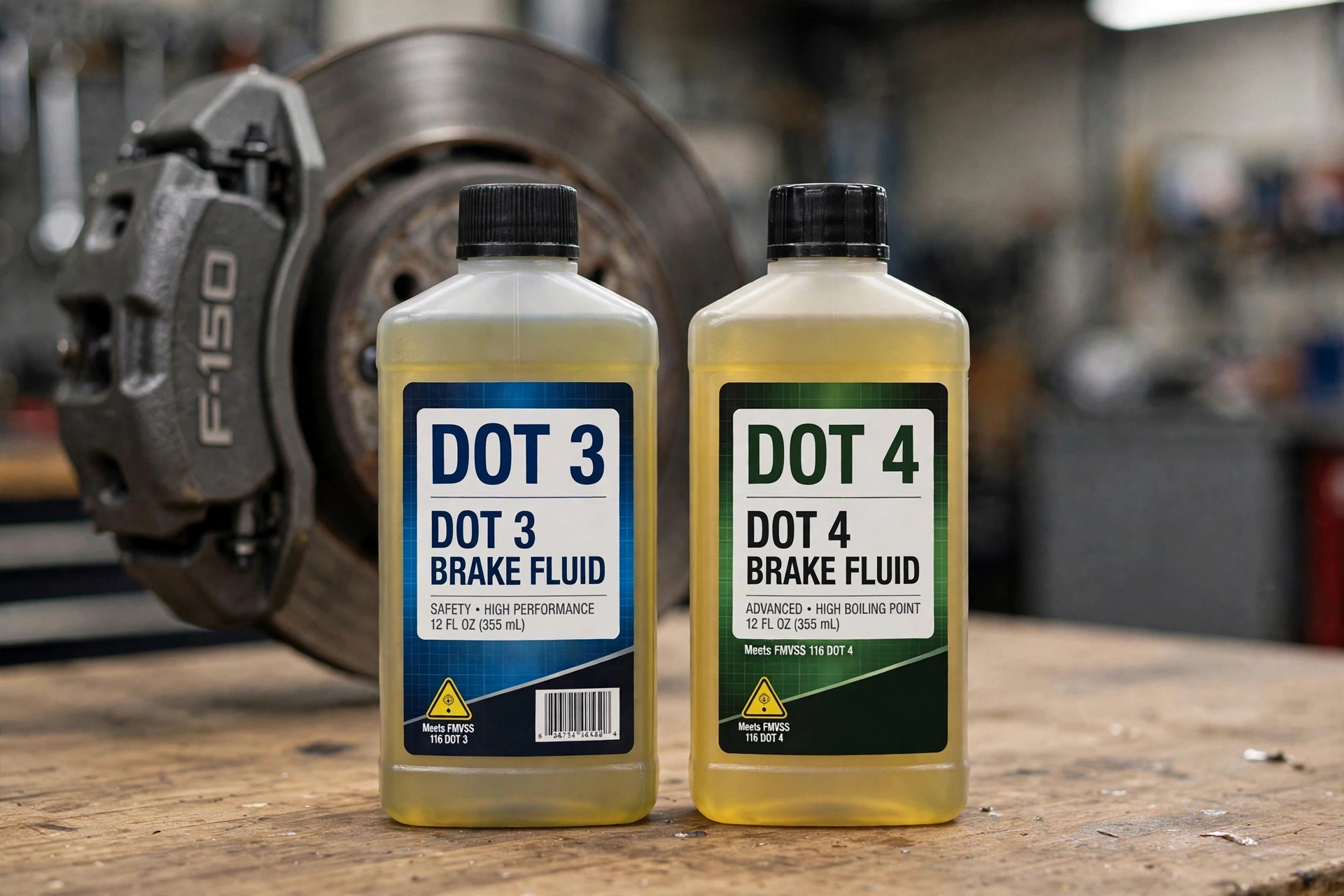
DOT 4 vs DOT 3 brake fluid: DOT 4 beats DOT 3 on heat tolerance, but that does not make DOT 4 the right fluid for every Ford truck. Your owner’s manual and reservoir cap marking decide which fluid goes in, and the wrong grade can cut your margin against brake fade when you need it most. This guide gives you the boiling point numbers, the exact fluid Ford specifies for the F-150, the mixing rules, and the change interval Ford prints in its schedule, so you can buy the right bottle the first time.
DOT 4 vs DOT 3 in 7 Key Differences
The two fluids look the same in the bottle, and both are glycol based. The table below shows the seven differences that matter, and every number in it is a minimum set by the federal brake fluid standard.


| Difference | DOT 3 | DOT 4 |
|---|---|---|
| Dry boiling point minimum | 205 C (401 F) | 230 C (446 F) |
| Wet boiling point minimum | 140 C (284 F) | 155 C (311 F) |
| Base chemistry | Glycol ether | Glycol ether plus borate ester |
| Moisture absorption rate | Slower | About 20 percent faster |
| Low temperature flow | Standard | Tighter limit |
| Typical Ford use | Older trucks | Modern trucks, towing, ABS |
| Change interval | Per Ford schedule, every 3 years | Per Ford schedule, every 3 years |
DOT 4 vs DOT 3 Brake Fluid at a Glance
Minimum boiling points from FMVSS 116, the US federal brake fluid standard
DOT 3
DOT 4
The dry boiling point is the temperature at which fresh fluid boils. The wet boiling point is the temperature after the fluid has absorbed a standard 3.7 percent water content. That second number matters most for a truck that has been on the road for two or three years, because brake fluid absorbs moisture from day one. DOT 4 holds a 25 degree Celsius advantage on the dry test and a 15 degree Celsius advantage on the wet test.
What DOT 3 and DOT 4 Actually Mean for Braking


DOT stands for the United States Department of Transportation, and the DOT number is a performance class, not a brand or a formula. Federal Motor Vehicle Safety Standard 116 sets the minimum requirements each class must meet, including boiling point and viscosity. The federal standard text lists the exact minimums.
DOT 3 is built on glycol ether. DOT 4 uses the same base and adds borate ester compounds, which raise the boiling points. That chemistry is also why DOT 4 absorbs moisture faster than DOT 3. AutoZone puts the difference at about 20 percent faster, and faster uptake means DOT 4 can reach its wet boiling point sooner if the fluid is left in service too long.
Both fluids are hygroscopic, which means they pull water out of the air. Fluid that has absorbed water boils at a lower temperature and creates vapor bubbles in the brake lines. Vapor compresses and brake fluid does not, so vapor turns a firm pedal into a soft one. That condition is called vapor lock.
Which Brake Fluid Does Your Ford Truck Need


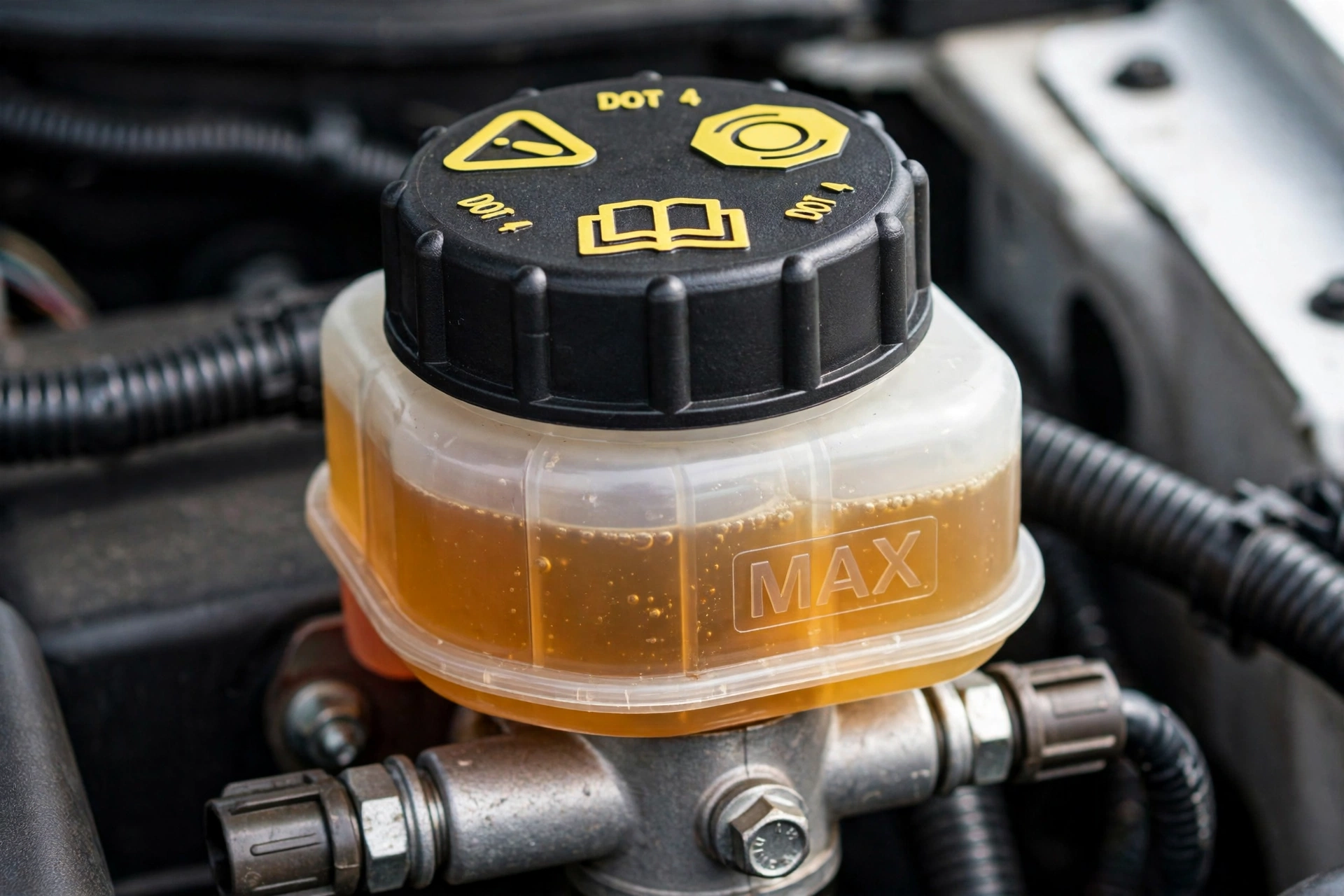
Your reservoir cap and your owner’s manual answer this question, and they outrank every general guide, including this one. Pop the hood, read the cap on the master cylinder reservoir, and check the Capacities and Specifications section of the manual for your exact model year.
The 2023 F-150 Owner’s Manual recommends DOT 4 Low Viscosity (LV) High Performance Brake Fluid meeting WSS-M6C65-A2 or ISO 4925 Class 6, and warns any other fluid could cause reduced brake performance. The 2014 F-150 Owner’s Manual carries the same recommendation on page 305, naming Motorcraft DOT 4 LV or an equivalent meeting WSS-M6C65-A2. The Motorcraft fluid for this specification is part number PM-20. The Ford fluid specification chart on this site shows the same WSS pattern for other Ford fluids.
Older Ford trucks are a different story. Secondary sources report that 2009 and 2013 F-150s specify DOT 3 under the older WSS-M6C62-A or WSS-M6C65-A1 standards. No clean model year cutoff could be verified from a primary Ford source, and one aggregator’s claim of DOT 3 through 2020 conflicts with the 2014 manual quote above, so this guide gives no cutoff year. That conflict is why the cap check matters more than any year chart online. A previous owner may also have poured in the wrong grade, so the fluid in the reservoir proves nothing. When you shop for brake pads for your Super Duty, you match the part to the truck, and brake fluid deserves the same care.


Can You Mix DOT 3 and DOT 4 Brake Fluid
DOT 3 and DOT 4 are both glycol based, so they mix without a chemical reaction. That fact does not settle the question: the risk is the boiling-point drop, not the mix itself. A DOT 4 system topped off with DOT 3 ends up with a boiling point closer to DOT 3. KK Richardson’s comparison makes the same point: the right choice is the fluid your manual specifies, not the one that happens to be on the shelf.


The direction of the mix is what matters. Putting DOT 4 into a DOT 3 system is generally accepted where the manual allows either grade. The mixing guidance from TP Auto Repair states the rule plainly: if both grades are allowed, DOT 4 is a safe upgrade, and if the truck requires DOT 4, do not downgrade to DOT 3. Putting DOT 3 into a system that specifies DOT 4 is the dangerous direction, because the lower grade can boil under hard braking.
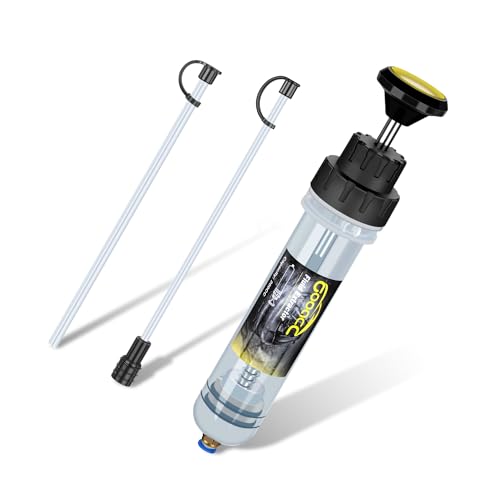
For the full benefit of an upgrade from DOT 3 to DOT 4, a full flush beats a top off. A top off leaves most of the old fluid in the lines and calipers, so the blend keeps most of its moisture and lower boiling point. A flush replaces the fluid through the whole system. Two hard rules sit above all of this. Never mix silicone DOT 5 with DOT 3, DOT 4, or DOT 5.1: the fluids are incompatible and must never be combined. DOT 5.1 is glycol based, but Ford does not specify it for the F-150. Never reuse fluid from an open bottle, because it absorbs moisture from the air before it ever reaches your truck.
DOT 4 LV and ABS Performance in Cold Weather
LV stands for low viscosity, and it is the part of the Ford specification that most general guides skip. Viscosity is how thick the fluid is, and it matters most when the fluid is cold. The ABS module opens and closes valves many times per second during an emergency stop, and thick fluid moves through those small valves more slowly.
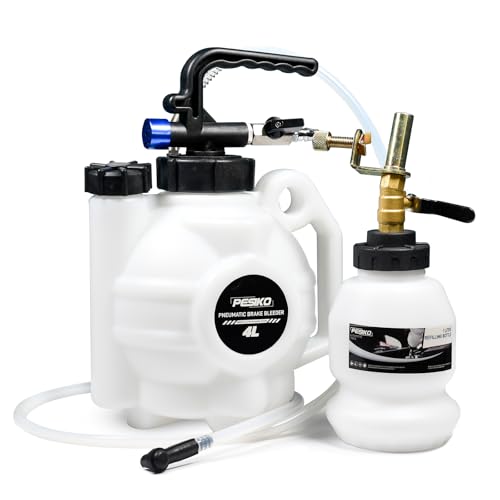


The federal DOT 4 standard allows a viscosity of up to 1,800 square millimeters per second at minus 40 degrees Celsius. ISO 4925 Class 6, the low viscosity standard behind Ford’s WSS-M6C65-A2, caps viscosity at 750 at the same temperature. That is less than half the thickness, and it is the reason a truck that specifies DOT 4 LV needs the LV grade rather than standard DOT 4. This matters most for a truck that tows, because a trailer adds weight and heat. The trailer brake module fault guide covers the electronic side of towing brakes. If your manual specifies DOT 4 LV, buy a bottle that names ISO 4925 Class 6 or WSS-M6C65-A2 on the label, not just DOT 4.
When to Change Brake Fluid in Your Ford
Ford’s schedule gives a time based answer, not a mileage based one. The F-150 Scheduled Maintenance guide for model years 2020 through 2023 lists a brake fluid change every 3 years, regardless of mileage, and it adds that the service requires special equipment available at your authorized dealer. There is no shorter severe service interval, so towing and hot weather do not change the printed interval.
Three years is the schedule, but your truck can tell you sooner. A soft or spongy pedal, a pedal that sinks under steady pressure, or fluid that looks dark brown instead of clear amber all point to fluid that has absorbed too much moisture. A brake warning light deserves the same attention as a soft pedal. The park brake malfunction guide explains how Ford brake warnings behave. A moisture test beats color alone: brake fluid tester guides treat 3 percent water or more as the change point (Motive Products), so change the fluid at that reading even if the 3 year mark has not arrived.
A fluid change is also the right time to check the rest of the brake system, because worn pads drop the reservoir level. The best brake pads for the F-150 4×4 guide covers pad choices for your truck.
Check and Top Off Brake Fluid in 6 Steps
Checking the level takes five minutes and no tools. The oil change interval guide sets the rhythm for routine checks. Work on a cold truck, on level ground, with the engine off.
Step 1 Park and Open the Hood


Park on level ground, set the parking brake, and open the hood. Find the translucent reservoir on the driver side of the firewall.
Step 2 Read the Cap Marking
Read the grade stamped on the cap before you touch anything. If it says DOT 4 LV, buy DOT 4 LV. If it says DOT 3, buy DOT 3.
Step 3 Check the Level Marks


Look at the MAX and MIN lines on the side of the reservoir. The level should sit between the two marks. A level below MIN can mean worn pads or a leak, and a leak needs a technician. The transmission fluid check guide covers the same habit for another fluid.
Step 4 Check the Fluid Color
Look through the reservoir wall. Fresh fluid is clear with a light amber tint. Dark brown or black fluid is worn and should be flushed, not topped off.
Step 5 Top Off With Fresh Fluid


Wipe the cap clean before you open it, so dirt cannot fall in. Pour fresh, sealed fluid slowly to the MAX line. Do not overfill, because the fluid needs room to expand as it heats up. Brake fluid eats paint, so wipe any spill off at once.
Step 6 Close Up and Test the Pedal
Seat the cap firmly, close the hood, and press the brake pedal a few times before you drive. The pedal should feel firm and stop at the same height every time. A soft pedal after a top off means air or worn fluid is still in the system, and that is a job for a shop with dealer equipment. The Mercon V transmission fluid guide makes the same point for another Ford fluid.
The Verdict for Ford Owners in 5 Rules
DOT 4 is the better fluid on the numbers, and DOT 3 is the right fluid when your manual names it. These five rules settle the choice.
Rule 1: use the grade your manual and reservoir cap name. The 2014 and 2023 F-150 manuals specify DOT 4 LV.
Rule 2: never put DOT 3 in a system that specifies DOT 4. The lower boiling point is a safety cut, not a saving.
Rule 3: DOT 4 in a DOT 3 system is acceptable where the manual allows either grade, but flush the system to get the benefit.
Rule 4: never use silicone DOT 5 in a Ford truck, and never reuse fluid from an open bottle.
Rule 5: change the fluid every 3 years on Ford’s schedule, sooner if a test or a soft pedal says it is worn.
When the verdict flips: if your older Ford specifies DOT 3, DOT 3 is the correct answer. If you tow heavy loads in a truck that allows either grade, DOT 4 is the better pick for the extra margin. If your truck specifies DOT 4 LV, there is no flip: standard DOT 4 is not a substitute for the low viscosity grade.
DOT 4 vs DOT 3 Brake Fluid Questions
Can I use DOT 4 instead of DOT 3 in my Ford truck?
Yes, if your manual allows either grade, because both fluids are glycol based and DOT 4 meets higher boiling point minimums. Flush the system so it runs on one known fluid. If your manual specifies DOT 4 LV, use DOT 4 LV, not standard DOT 4.
What happens if I put DOT 3 in a DOT 4 system?
The blend drops toward the DOT 3 boiling point, 205 C dry and 140 C wet, against 230 C dry and 155 C wet for DOT 4. Under hard braking the fluid can boil sooner and the pedal can go soft. Flush the system with the correct grade at once.
Is DOT 4 LV the same as DOT 4?
No. DOT 4 LV meets or exceeds DOT 4’s boiling point minimums (ISO 4925 Class 6 requires at least 250 degrees Celsius dry and 165 degrees Celsius wet) and adds a low viscosity requirement of 750 square millimeters per second or less at minus 40 degrees Celsius. Ford specifies DOT 4 LV because the ABS valves need that cold flow.
How often should I change brake fluid in a Ford F-150?
Ford’s scheduled maintenance guide says every 3 years, regardless of mileage, for model years 2020 through 2023. Change it sooner if a moisture test shows high water content or the pedal feels soft. Ford notes the service requires special dealer equipment.
Can I mix DOT 3 and DOT 4 brake fluid in an emergency?
Yes, in an emergency you can top off with the other glycol grade to reach a shop. The mix performs near the weaker fluid, so flush the system with the correct grade right away. Never mix in silicone DOT 5.
Does DOT 4 really absorb water faster than DOT 3?
Yes. DOT 4 uses borate ester chemistry to reach its higher boiling points, and that chemistry pulls in moisture faster. AutoZone puts the difference at about 20 percent faster, which is why the 3 year interval matters even more for DOT 4.
Your Next Step With Brake Fluid
Open your hood before your next drive and read your brake fluid reservoir cap. That one marking, checked against your owner’s manual, settles the DOT 4 vs DOT 3 question for your truck better than any shelf display or forum thread. If the cap says DOT 4 LV, buy a fresh sealed bottle that names WSS-M6C65-A2 or ISO 4925 Class 6. If the fluid is dark or the 3 year mark has passed, book the flush instead of topping off. Your brakes only get one chance to work right, so give them the fluid Ford designed them around.