
Ford Interior Color Code By VIN: Trim Specs Compared Side-by-Side

The VIN alone does not directly contain Ford interior color codes; it is a general vehicle identifier. To accurately identify your interior, you must locate the specific “Trim” code printed on the vehicle’s Safety Compliance Certification Label, typically found on the driver-side door jamb. This article explains how to interpret that trim code, why the VIN is insufficient for color matching, and how to use trim specifications for parts restoration.
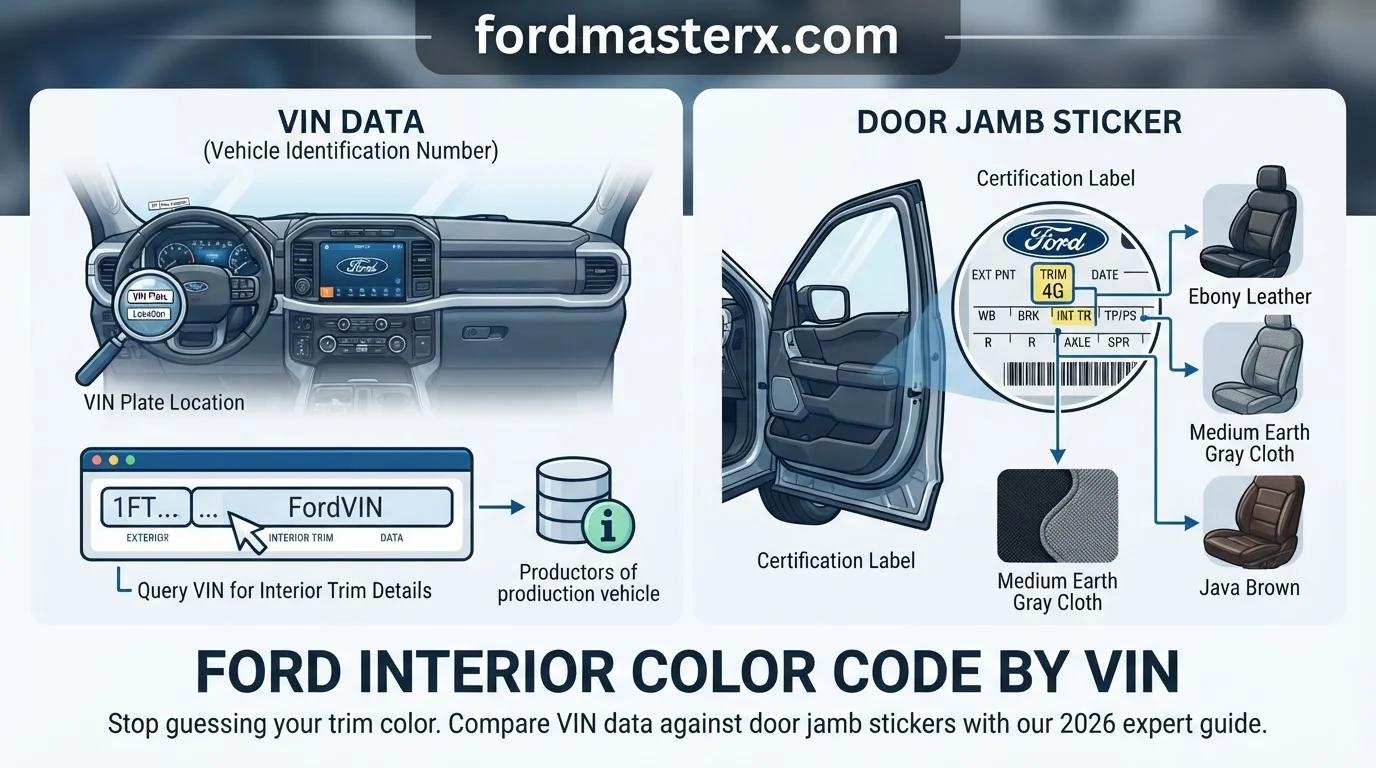
Ford Interior Color Code By Vin: Main Reference Chart
How to Read This Chart
The “Code Format” column represents the specific alphanumeric characters found in the “TR” or “INT TR” field on your vehicle’s Certification Label. Ford uses these 2-3 character sequences to define the factory-original material and color specifications for your interior cabin.


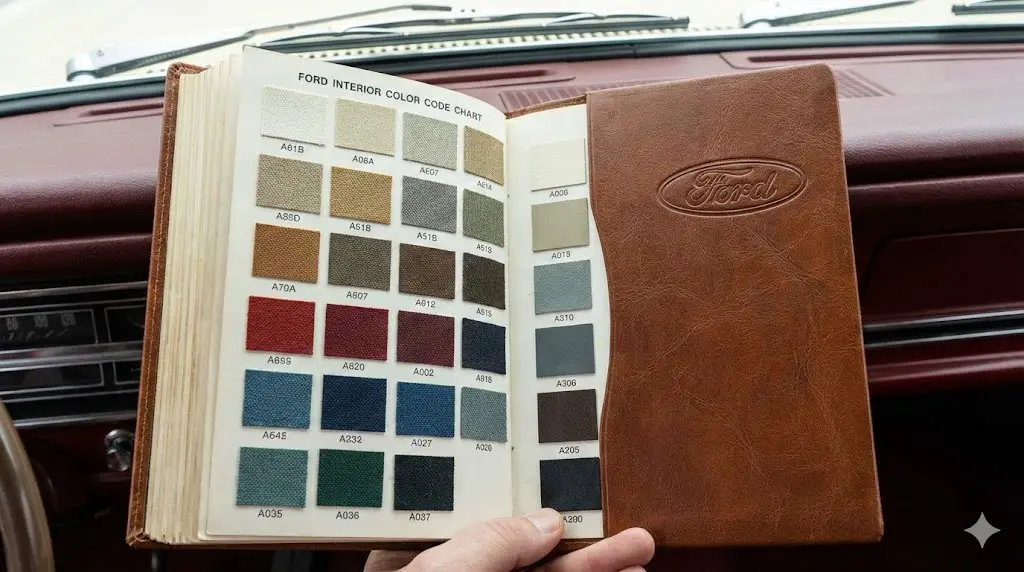
The “Primary Component” and “Secondary Component” columns categorize the intelligence embedded within these codes. Usually, the first character indicates the seat material (such as cloth, vinyl, or leather), while the second character identifies the specific factory colorway. These codes are strictly proprietary to Ford production cycles.
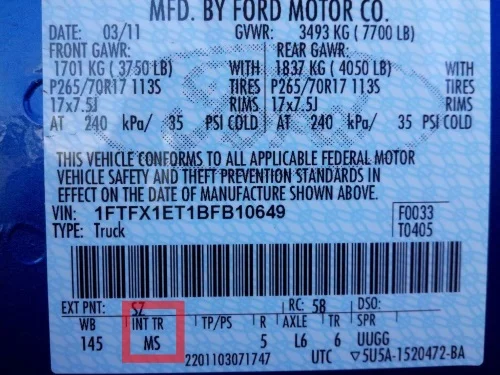
To identify your vehicle’s specific trim, look at the bottom section of your Certification Label—typically located on the driver-side door jamb. Note that these trim codes are entirely distinct from your exterior paint codes, which refer to the vehicle’s body color, and axle codes, which identify drivetrain gear ratios.
If you encounter codes like ‘5J’ or ‘T1’, treat them as unique identifiers for your specific interior configuration. Because interior color palettes vary significantly by year and model generation, these codes are not universal. If your specific code is not documented in standard parts catalogs, always cross-reference it against your unique vehicle build sheet for exact accuracy.
Do not confuse the interior trim code with your VIN. While the VIN describes the vehicle’s manufacturing history and factory specs, the Trim Code on the label acts as the definitive data point for interior restoration or component matching. If the label is damaged, contact your local dealership’s parts department with your VIN to retrieve the original build information.
Variables Influencing Ford Trim and Interior Color Specifications


Even when a trim code matches exactly, a replacement part may not visually align with your existing interior. Ford utilizes specific dye lots and manufacturing runs that vary throughout a production year. Because suppliers providing materials for seats, headliners, and door panels change periodically, minor color shifts are common during the vehicle’s assembly lifecycle.
Furthermore, the physical material—whether leather, cloth, or vinyl—reacts differently to ambient light, fading, and wear. A leather insert from an early production run of a specific model year may exhibit a different light reflectance profile compared to a mid-year replacement part, even if both share the same official Ford trim code designation.
The Role of Build Dates in Interior Matching


Ford often implements “running changes” during the production cycle of a single model year. A vehicle built in January may feature interior components sourced from a different supplier than an identical model built in September. These updates are rarely publicized, yet they directly impact the shade, sheen, and hue of dashboard plastics and seat coverings.


For example, if you compare a 2018 F-150 Lariat to a 2018 F-150 XLT, the trim codes define the material type and patterns, but they do not account for environmental degradation. A Lariat’s leather upholstery wears and catches dust differently than the XLT’s cloth. When sourcing parts, your build date is just as critical as your VIN trim code to ensure the dye lot is compatible.


If your vehicle falls within a known transition period for interior materials, check the specific assembly plant code located on your certification label. Different plants may utilize regional suppliers, leading to localized color variations for the same global trim code.
Material Grain and Texture Variations
Trim codes do more than specify a color; they dictate the material grain, stitch pattern, and fabric density. A vinyl door insert will never age or reflect light in the same way as genuine leather, even if the color dye matches perfectly. When repairing or replacing trim, matching the material surface grain is vital for a seamless look.
Differences in texture are particularly noticeable under direct sunlight. A high-grain plastic dashboard top might appear lighter than a smooth-finish door panel, even when they carry the same color name. Because of these optical properties, two parts with the identical trim code can appear to be different colors simply because of their surface structure and how they interact with the interior lighting of the cabin.
How to Find Your Ford Interior Trim Code On The Door Jamb



The most reliable method for identifying your specific interior color and material composition is to consult the physical Certification Label attached to your vehicle. While online VIN decoders are common, they frequently lack access to the granular build data printed on this factory sticker. Relying on the physical label ensures you match the exact trim installed during assembly.


Locating the Certification Label


To find this information, open the driver’s side door of your Ford vehicle. Look directly at the B-pillar, which is the vertical post located just behind the door hinge area. On the vast majority of Ford models produced in the last three decades, you will find a rectangular, multi-colored sticker affixed to this surface.
The label is typically white with silver or metallic accents, containing a complex layout of text, barcodes, and technical specifications. If your vehicle has been involved in a collision or if the door frame has been repainted, check the owner’s manual for any alternative locations, such as the edge of the driver’s door itself, though the B-pillar remains the primary standard.
Ensure that the sticker is clean and free of debris. Over time, these labels can accumulate road grime or wax residue, which may obscure the smaller text. If the sticker is damaged or missing, you will need to contact a dealership parts department with your full 17-digit VIN to obtain a copy of the original build sheet, as this is the only other official record of your interior trim code.
Isolating the Trim Code String
Once you have located the Certification Label, you must distinguish the interior trim code from the surrounding data points. The label is crowded with information, including production dates, tire pressure requirements, and Gross Vehicle Weight Ratings (GVWR). Look specifically for the section labeled “TR” or “TRIM” on the lower portion of the sticker.
The trim code is almost always a two-character alphanumeric string. For example, you might see a code like “4G,” “C1,” or “HB.” This specific two-digit sequence is the primary reference key that identifies both the material type, such as cloth or leather, and the specific color shade assigned to your vehicle’s cabin at the time of manufacture.
Do not confuse the “EXT PNT” or “PAINT” code with the “TRIM” code. The exterior paint code is typically a different string located nearby, often consisting of two to three characters that represent the body color. If you are ordering replacement leather or carpet, confirm that you are reading from the field marked specifically for interior trim to avoid mismatched material components.
📋
Step-by-Step Guide
Fully open the driver’s side door to expose the B-pillar frame. If the weather is poor, ensure the area is well-lit and dry to maintain the integrity of the adhesive sticker.
Locate the white and silver sticker containing a barcode. Disregard standard tire pressure stickers, which are usually smaller and focused purely on inflation PSI.
Look for the field marked “TR” or “TRIM” to find your two-character code. Transcribe this exactly, noting that some older Ford codes may contain a combination of letters and digits.
Why Your VIN Isn’t Enough For Accurate Color Identification
Many vehicle owners mistakenly believe that the Vehicle Identification Number (VIN) acts as a complete blueprint for every component inside their car. While the VIN is essential for identifying the chassis, engine, and transmission, it does not actually contain a line-item inventory of the interior materials or their specific color codes.
The VIN structure is primarily designed for government registration, safety recalls, and identifying mechanical specifications. It is a standardized 17-digit code that focuses on the vehicle’s manufacturing plant, model year, and technical configuration rather than the aesthetic finish of the cabin or the upholstery’s specific shade.
Public VIN Decoder Limitations


If you search for your interior color using a free, generic online VIN decoder, you will frequently find that the “Interior” or “Trim” fields are listed as “Not Available” or “Unknown.” These public databases aggregate information from broad industry datasets that track vehicle movement, but they do not have access to Ford’s internal production manifest.
Generic decoders often use “proxy” data. If a specific VIN format typically suggests a Lariat trim package, the decoder may suggest a generic leather interior, but it cannot differentiate between “Black Onyx” and “Dark Slate” or account for mid-year production changes. Relying on these tools can lead to ordering the wrong color-matched replacement parts.
For example, a generic decoder might tell you a 2022 F-150 has a “Grey” interior. However, Ford’s factory terminology may classify that specific hue as “Medium Dark Slate” or “Baja Tan” depending on the regional build. Misinterpreting these codes leads to costly return shipping fees and significant project delays during interior restoration.
Using Authorized Ford Parts Catalog Data
The only reliable method to extract the specific interior color code linked to your vehicle is through Ford’s proprietary systems. Ford OASIS (Online Automotive Service Information System) reports and the official Ford Parts catalog are the only sources that bridge the gap between your VIN and your unique build configuration.
When an authorized dealership inputs your VIN into their secure database, they retrieve your vehicle’s original “As-Built” data. This data is the exact record created on the assembly line. It links your specific VIN to the precise part numbers and corresponding trim codes intended for your vehicle during its initial production run.
Think of the difference between a generic decoder and the Ford database like comparing a general blueprint for a house to the specific receipt for the paint used in the living room. The generic decoder sees the “house,” but the Ford OASIS report provides the specific “paint manufacturer and color name” assigned to your unit.
Always prioritize these authorized sources when you are performing color-sensitive work, such as replacing a single seat cover, dashboard panel, or door card. Because Ford frequently updates trim colors across model years, matching a color by sight or through public data is rarely accurate enough to account for factory-standard color aging and minor manufacturing variations.
Professional Tips For Ford Interior Restoration and Parts Matching
Restoring a Ford interior requires more than just identifying the correct trim code from your vehicle’s certification label. Even when you source parts using the original manufacturer specifications, the reality of a vehicle’s age often creates a significant visual gap between new components and your existing cabin materials.
When selecting replacement pieces, remember that your current interior is a snapshot of years of environmental exposure. A pristine factory-correct part will rarely be a perfect match for a dashboard, seat, or trim panel that has spent a decade or more under the sun.
Understanding UV Fading Impacts
Ultraviolet radiation is the primary culprit behind color inconsistency in Ford interiors. Over time, plastic-based dash panels and leather upholstery absorb UV light, which physically breaks down the pigments and dyes within the material. This process is rarely uniform across every surface of your vehicle.
For example, a dashboard often faces the windshield and receives direct, concentrated sunlight, leading to significant color desaturation or a shift in tone. Conversely, the leather inserts on a seat may fade at a different rate because they are textured differently and have absorbed natural oils from passengers over the years.
If you order a replacement dashboard panel using only the factory trim code, it will likely look significantly darker or more saturated than the original one. In professional restoration, technicians often choose to refinish or dye the entire affected area to blend the new part with the aged surfaces, rather than relying on a direct color swap.
Avoiding the Paint Code Confusion Trap
One of the most frequent mistakes made by DIY restorers is confusing the exterior paint code with the interior trim code. Ford’s data plates are dense with information, and it is easy to inadvertently pull a color identifier for the body of the car and attempt to apply it to an interior component.
Exterior paint codes are designed for high-gloss, weather-resistant applications, whereas interior trim codes correspond to specific matte or satin finishes intended for vinyl, plastic, or fabric. Applying automotive body paint to a dash panel will result in a reflective, plastic-like sheen that looks completely unnatural compared to the OEM finish.
Always verify the specific designation on your door jamb sticker. The trim code typically consists of a two-character alphanumeric identifier that references the interior material composition and shade. Do not assume that a similarly named paint color in the Ford catalog matches the interior component labeled with a similar name.
If you are matching a seat leather insert, realize that the trim code represents the “as-built” color. If you are ordering new leather, request physical samples to compare against your actual seat, not just the panel that sees the least amount of sunlight. Relying solely on the VIN-derived code is only the first step in a successful restoration project.
✨ Key Benefits
Accurate Part Procurement
Avoid expensive returns by correctly distinguishing between exterior body codes and internal trim codes before placing an order.
Professional Finish Quality
Learn to account for UV-induced color shifts to ensure your new parts blend seamlessly with existing cabin components.
Key Takeaways
-
✓
VINs provide vehicle history but often lack granular interior dye-lot specifications. -
✓
The door jamb certification label is the only definitive source for interior trim color codes. -
✓
Matching upholstery requires understanding the pros and cons of using exterior-specific paint codes. -
✓
Comparing build sheet features against physical labels prevents costly purchasing disadvantages. -
✓
Professional restoration requires evaluating the advantages of OEM original versus aftermarket color-matched materials.
❓ Frequently Asked Questions
1
What is a Ford interior color code?
A Ford interior color code is a specific alphanumeric identifier—usually found on the vehicle certification label—that denotes the exact color, material type, and texture of your cabin’s upholstery and trim components. It ensures that replacement parts or restoration dyes match your vehicle’s factory-original aesthetic perfectly.
2
How does finding an interior color code work?
It works by locating the ‘TR’ (Trim) field on your driver’s side door jamb sticker. You match this code against official Ford master charts. While the VIN describes your vehicle’s unique build, the trim code provides the specific interior paint or fabric formula needed for precise, real-world color restoration.
3
Why is verifying your interior color code important?
Verifying your code is essential to avoid the disadvantages of mismatched panels or seats. A ‘near match’ is often visible under natural sunlight. Using the correct code ensures seamless integration of replacement parts, maintaining your vehicle’s resale value and overall visual continuity during any interior repair project.
4
What are the benefits of using a color code chart?
The primary benefits include avoiding wasted money on incorrect parts and the ability to source vintage or discontinued materials with confidence. Comparing codes side-by-side helps you identify subtle differences in shade or grain that a standard VIN search might overlook, leading to a professional-grade finish every time.
5
How can I get started with interior color matching?
Start by cleaning your driver-side door jamb to reveal the sticker. Identify the ‘TR’ code, then search that code against 2026 Ford database references. Compare these features against your current interior to ensure they align, then consult with a local upholstery expert if you need to source matching dyes or materials.
6
Can I use the trim code to buy matching touch-up paint for interior plastics?
No, trim codes usually refer to materials and upholstery colors. You need specific interior plastic dye codes for plastics.