What Does a Dirty Throttle Body Look Like? Visual Guide

A dirty throttle body is characterized by black carbon soot, gummy oil residue, or a brownish varnish crust primarily around the edges of the butterfly valve. Even a thin ‘ring of gunk’ where the blade meets the housing can disrupt airflow and cause significant idling issues.
🎯 Key Takeaways


- Look for black carbon soot or brown varnish on the butterfly valve.
- Pay close attention to the ‘ring of gunk’ around the valve edges.
- A clean throttle body shows shiny metallic surfaces throughout.
- Oily residue often indicates excessive blow-by or PCV system issues.
- Visual inspection is the most reliable way to confirm buildup.
A dirty throttle body is usually easy to spot once you remove the air intake duct. You are looking for a dark, oily, or crusty residue coating the interior walls and the circular butterfly valve. In a healthy engine, these surfaces should look like clean, polished aluminum. When they are “dirty,” you will see a distinct contrast between the silver metal and a buildup of black carbon soot, amber-colored varnish, or a thick, gummy sludge that accumulates right where the valve meets the housing.

Identifying this buildup is critical because your car’s computer relies on precise air measurements to maintain a steady idle. Even a microscopic layer of grime can disrupt the airflow, leading to a “stumbling” engine or poor throttle response. By visually inspecting the unit, you can confirm if your performance issues are caused by physical obstruction rather than an expensive sensor failure. If you see anything other than clean metal when you peek inside, your throttle body is effectively “choked” and needs attention.
Visual Indicators of Throttle Body Carbon Buildup


When you look inside the throttle bore, the debris generally falls into three visual categories. Each type of buildup has a different texture and color, depending on how long it has been sitting there and what caused it. Identifying the specific look of the grime can tell you a lot about your engine’s health.

Dry Black Carbon and “Velvet” Soot
The most common thing you will see is a dry, matte-black coating. This looks like charcoal dust or fine soot. It often starts near the edges of the butterfly valve and spreads outward. This carbon is usually a byproduct of the Exhaust Gas Recirculation (EGR) system, which vents small amounts of exhaust back into the intake. If you touch it, it should feel powdery and leave a dark stain on your finger. In severe cases, this soot can become thick enough to look like “velvet” coating the metal, significantly narrowing the air passage.
- Color: Flat black or dark charcoal grey.
- Texture: Powdery, dry, and flaky.
- Location: Concentrated on the “back” side of the butterfly valve (the side facing the engine).
Gummy Oil Sludge and Brown Varnish
If the buildup looks shiny, wet, or sticky, you are dealing with oil blow-by and fuel varnish. This happens when oil vapors from the Positive Crankcase Ventilation (PCV) system condense on the cool metal surfaces of the throttle body. Over time, heat from the engine “bakes” these oils into a hard, amber, or dark brown crust known as varnish. This is much harder to remove than dry soot. It often looks like a sticky syrup that has dried onto the metal, creating a tacky surface that can actually make the throttle plate “stick” when you try to accelerate from a stop.
- Color: Dark brown, amber, or “coffee-stain” yellow.
- Texture: Sticky, tacky, or hard and “plasticky.”
- Visual Cue: Look for “drip” patterns or a thick, wet-looking ring where the valve closes.
The ‘Ring of Gunk’: Why the Butterfly Valve Edges Matter


While a general coating of dust inside the housing is unsightly, the most problematic visual indicator is the “Ring of Gunk.” This is a concentrated ridge of debris that forms exactly where the butterfly valve (the round metal plate) rests against the throttle body walls when it is closed. Because the gap between the plate and the wall is measured in fractions of a millimeter, even a tiny amount of buildup here acts like a physical dam.
The Critical Tolerance Gap
Your engine is designed to pull a very specific amount of air past the butterfly valve while it is at “rest” (idle). When you look closely at a dirty throttle body, you will see a distinct black line that follows the circular path of the valve. This ridge of carbon effectively “shrinks” the opening. Visually, this looks like a raised lip or a “step” of grime. If you can see a physical ridge where the silver metal disappears under a layer of black crust, your idle air control is likely struggling to compensate for the lack of space.
- The “Closed” Test: With the engine off, look at the valve. If you see light shining through a clean, even circle around the plate, it is relatively clear. If the light is blocked by jagged, dark material, the “Ring of Gunk” has taken over.
- Accumulation Depth: Buildup as thin as a fingernail is enough to cause significant idling issues.
Identifying the “Ridge” of Buildup
To see the worst of it, you may need to manually pivot the butterfly valve (only do this on cable-driven throttles; be cautious with electronic versions). When the valve opens, look at the “bore” or the wall where the valve was just resting. You will likely see a thick, dark crescent of gunk. This ridge is often a combination of the dry carbon and the sticky varnish mentioned earlier. It creates a rough surface that causes air turbulence. Instead of air flowing smoothly into the engine, it tumbles over this “ridge,” which the car’s sensors register as an unstable air supply.
- Visual Warning: If the edge of the butterfly valve itself looks “thick” or rounded instead of having a sharp, clean metal edge, it is heavily coated.
- Physical Obstruction: Look for areas where the black gunk has filled in the tiny “scalloped” edges or pivot points of the valve assembly.
Comparing a Factory-Clean vs. Contaminated Throttle Body
To really understand what you’re looking at, it helps to visualize the “before and after.” A brand-new or professionally cleaned throttle body should look like a piece of high-end kitchenware—smooth, metallic, and reflective. When you peer into the bore, the metal should have a consistent silver or aluminum sheen with no visible texture other than the machining marks from the factory.
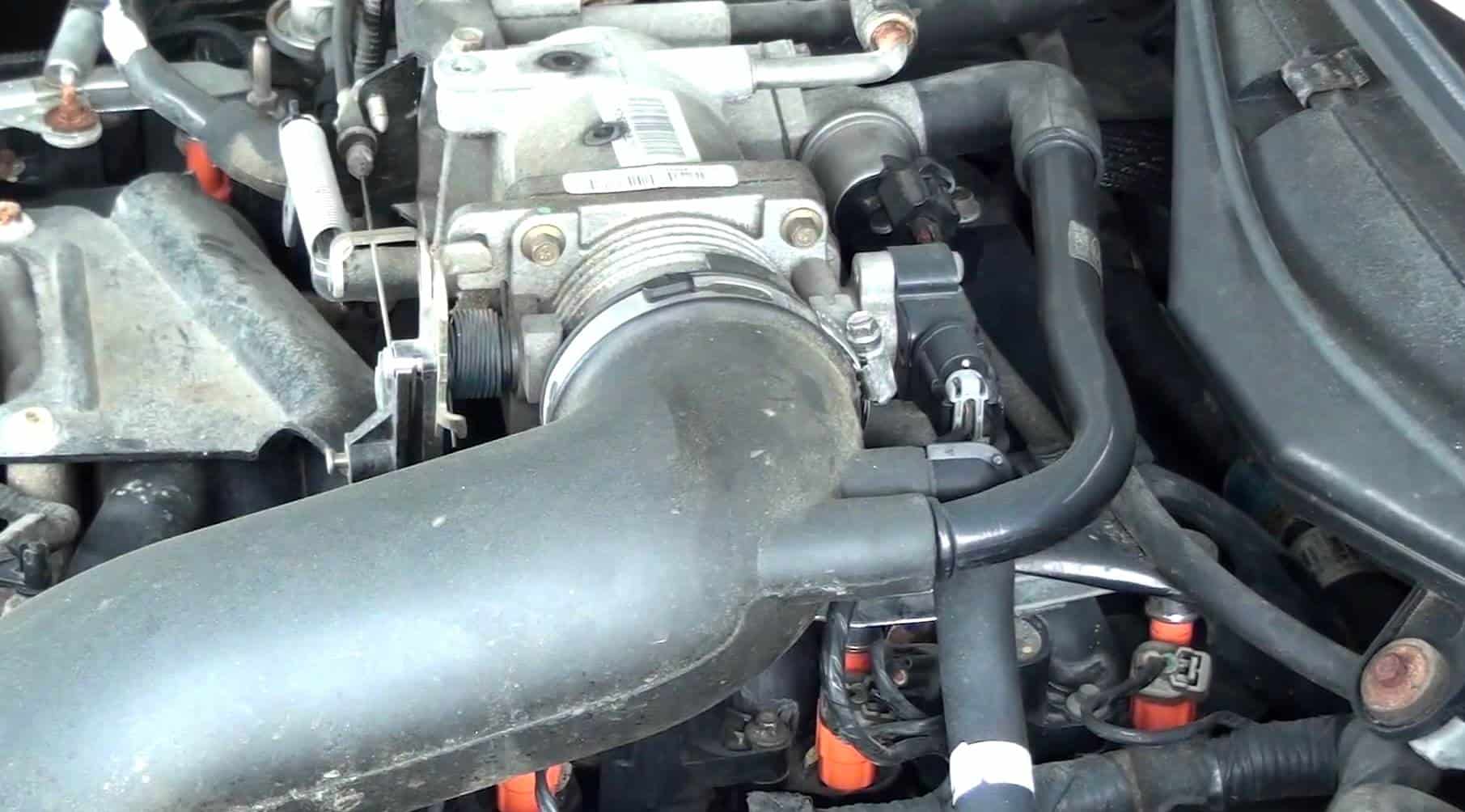
The “Mirror Finish” vs. The “Matte Black” Layer
The biggest giveaway of a dirty unit is the loss of reflectivity. On a clean throttle body, the butterfly valve (the circular plate in the center) will have crisp, sharp edges. You should be able to see the metallic grain of the plate itself. In contrast, a contaminated unit looks “matte.” The surfaces become dull and lose their luster as a layer of fine soot settles over the metal.
- Clean: The butterfly valve moves freely and the edges are thin and sharp.
- Dirty: The edges of the valve appear “thick” or rounded because of the crusty buildup clinging to the perimeter.
- Clean: The walls of the housing are smooth to the touch.
- Dirty: The walls feel gritty, similar to very fine sandpaper or dried coffee grounds.
The Light Test: Checking for Obstructions
One of the best visual indicators is the “light gap.” In many modern cars, the butterfly valve doesn’t close 100% airtight; it stays open a tiny fraction of a millimeter to allow for a base idle. If you hold a clean throttle body up to a light source, you should see a perfect, uniform ring of light around the edge of the plate. On a dirty unit, this light will be “blotchy” or completely blocked in certain spots. If you see chunks of black gunk filling that tiny gap, your engine is likely struggling to find its correct idle speed.
Understanding the Different Types of Throttle Body Residue
Not all “dirt” is created equal. Depending on your engine’s health and your driving habits, the residue inside your throttle body can take on different forms. Identifying the type of buildup can actually give you a clue about what is happening deeper inside your engine, specifically regarding your PCV (Positive Crankcase Ventilation) or EGR (Exhaust Gas Recirculation) systems.
Carbon Buildup and Combustion Blow-by
The most common sight is hard, black carbon. This usually looks like dried charcoal or soot. It forms when exhaust gases and unburnt fuel vapors are piped back into the intake (a normal part of engine operation) and bake onto the hot metal surfaces. Over time, this carbon hardens into a “ledge” right where the butterfly valve meets the housing wall. This is the primary culprit behind a “sticky” gas pedal feel or a rough, fluctuating idle.
- Appearance: Deep black, dry, and flaky.
- Location: Concentrated heavily around the “seat” where the valve closes.
- Texture: Brittle and difficult to wipe away with just a finger.
Oil Film and Sticky Varnish
In some cases, the residue isn’t dry and crusty, but rather wet and slimy. This is usually a mixture of oil vapors and fine dust that has made it past the air filter. It often appears as a yellowish or brownish “varnish” that coats the entire interior. While it looks less intimidating than heavy carbon, this sticky film acts like a magnet for more debris. It can gum up the pivot points of the valve, causing the electronic motor to work harder to open and close the intake.
- Appearance: Golden-brown to dark brown “stains” or a greasy film.
- Texture: Tacky, wet, or syrup-like.
- Common Cause: Excessive oil vapor coming through the breather tube or an old, saturated air filter.
Conclusion: Keeping an Eye on Your Engine’s Airflow
Understanding what a dirty throttle body looks like is the first step in proactive vehicle maintenance. Whether you see a thin film of brown varnish or a thick “ledge” of black carbon, these visual cues are clear signals that your engine isn’t breathing as efficiently as it should. A clean throttle body ensures a steady idle, smooth acceleration, and better fuel economy by allowing for precise air measurement.
If your visual inspection reveals any of the “matte black” or “slimy” signs we discussed, it is likely time for a cleaning. Your next step should be to check your vehicle’s service manual or consult a professional to see if a throttle body service is due. Don’t wait for a check engine light to appear—keep that “mirror finish” inside your intake, and your car will thank you with a much smoother ride!
❓ Frequently Asked Questions
Why does the butterfly valve look black on the edges?
Carbon deposits from exhaust gas recirculation (EGR) and oil vapors from the PCV system bake onto the metal over time. This creates a hard, black crust that prevents the valve from closing or opening smoothly.
What is the ‘ring of gunk’ people mention?
This is a concentrated circle of debris that forms exactly where the throttle plate sits at idle. Because the gap is so small, even microscopic buildup here can significantly choke the engine’s air supply.
Can a dirty throttle body look like it has liquid oil in it?
Yes, if the PCV system is pushing too much vapor back into the intake, you may see a sticky, honey-colored or black liquid. This sludge can trap dust and debris, worsening the airflow restriction.
How can I tell the difference between ‘normal’ and ‘dirty’?
A healthy throttle body has a clear, metallic finish on the bore walls and the plate. If you see any dark stains, textured buildup, or a ridge of soot, it is considered dirty and requires attention.
Does the back side of the valve look different than the front?
Often, the back side (engine side) is much dirtier than the front. It is frequently coated in a thicker, stickier layer of carbon because it is closer to the intake manifold heat and vapors.
Is a ‘varnish’ look as bad as ‘soot’?
Brownish varnish is a thinner layer of dried fuel and oil, but it can be just as problematic as soot because it creates a tacky surface. This stickiness can cause the throttle to ‘stumble’ or hesitate when you first press the gas pedal.