
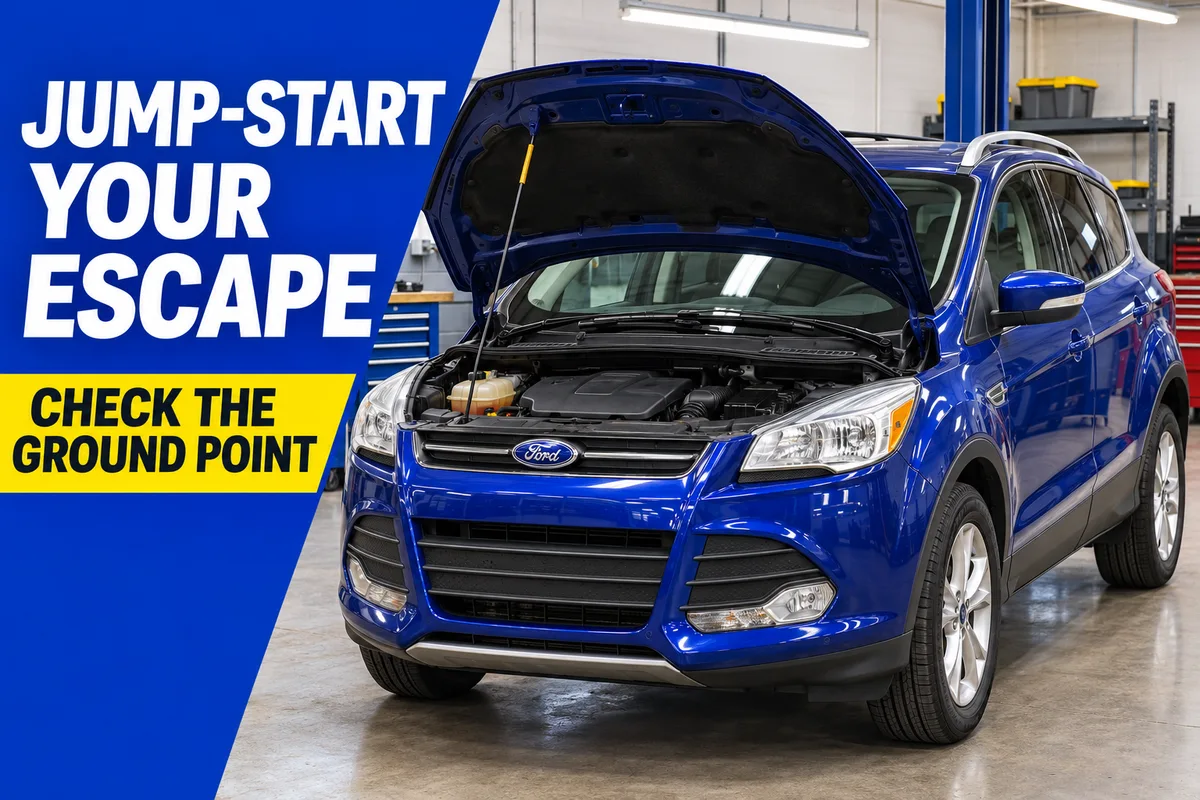
How to Jump-Start a 2014 Ford Escape With Jumper Cables

To jump-start a U.S.-market 2014 Ford Escape, use a 12-volt booster vehicle and insulated jumper cables. With both vehicles parked and their engines initially off, connect the red cable to the Escape’s positive terminal and then the booster battery’s positive terminal. Connect the black cable to the booster battery’s negative terminal, then attach its remaining clamp to the Escape’s designated ground point, if equipped, or to a suitable exposed metal part of its engine as Ford directs. Keep that final clamp off the Escape’s negative battery terminal.
If the Escape is in traffic, the battery appears damaged, or you cannot positively identify the cable connection points, call for roadside help. The sequence below summarizes Ford’s procedure for using a conventional booster vehicle. Keep the owner’s manual originally supplied with your Escape handy for the terminal and ground illustration and follow it if it differs from the online edition.
Before you connect the cables
The first question is whether you can do the job safely where the Escape stopped. Both vehicles need room to park securely without touching. If placing the booster exposes either driver to moving traffic or leaves a cable stretched across a lane, arrange professional assistance. A vehicle that has been in a crash or has an apparent fuel leak also needs a different response. Move people to safety and get help before attempting to turn the engine over.
With the cars stationary, set their parking brakes and put automatic transmissions in Park. Start with both engines off. Turn off accessories such as the blower, radio, heated seats, and lights you do not need for roadside safety. Keep the disabled battery connected to the Escape. Ford cautions that disconnecting it during the procedure can damage the vehicle’s electrical system. Push-starting an automatic Escape is also inappropriate.
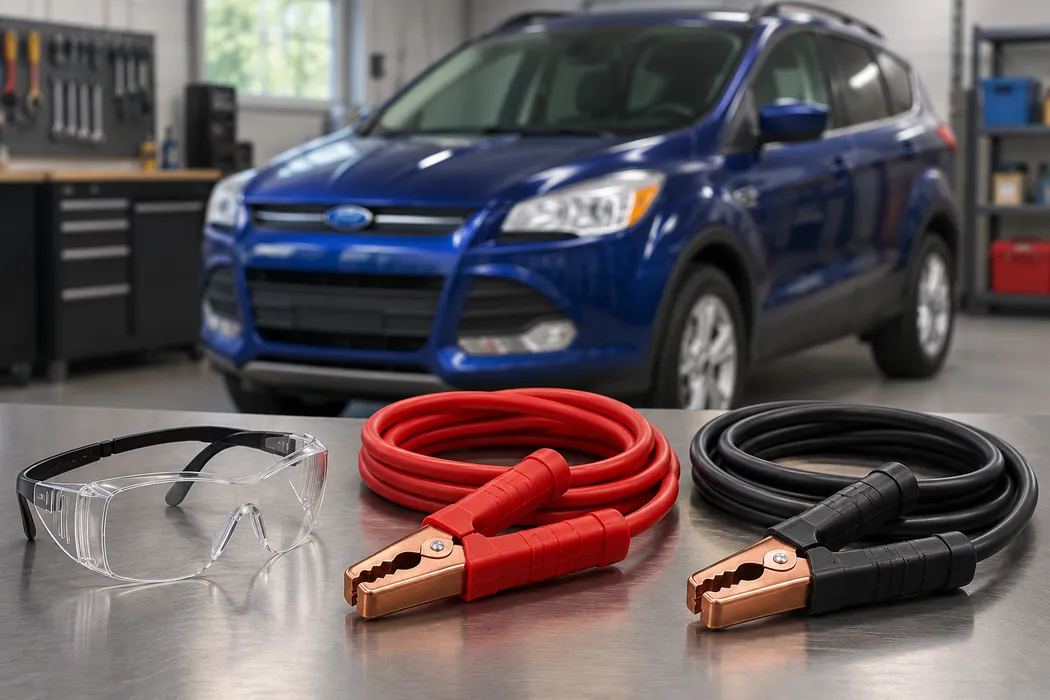
Use cables with adequately sized conductors and insulated clamps. Inspect them before clipping anything on. Set aside a cable with damaged insulation or a clamp that will not grip securely. Lay the cables where they can reach without crossing moving parts, cooling fans, or fuel-system components. Work outdoors or in a ventilated setting. Keep flames, cigarettes, and sparks away from both batteries, and use eye protection. Battery acid and flammable gases are hazards even when the engine is off.
Stop if the case is cracked, leaking, swollen, or may be frozen. You may not know why the battery looks abnormal, and you do not need to diagnose it at the roadside. A jump-start is a procedure for a battery that can be assisted safely. A visibly damaged or suspect battery needs an inspection before anybody connects a booster.
Identify the connection points before you start
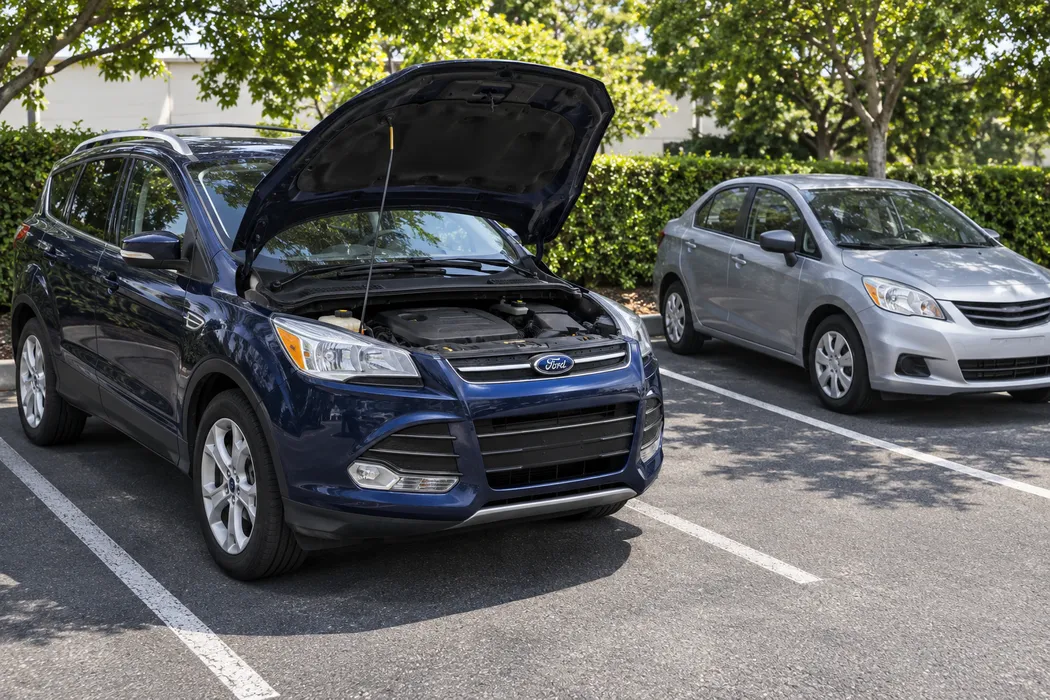
On the Escape you will use its positive terminal and a separate approved ground. On the booster vehicle you will use the connection points identified by that vehicle’s manual. The diagrams in Ford’s 2014 Escape jump-start instructions show how Ford distinguishes the discharged battery, booster battery, and Escape-side ground. If an underhood cover obscures your view, use the section in your manual to identify the connection point before trying to move anything. The Escape hood-release walkthrough can help if you are unfamiliar with the two-stage hood release.
| Connection | What to verify |
|---|---|
| Escape positive | Identify the positive terminal by its plus marking and the manual. |
| Booster positive and negative | Check the donor manual and the actual polarity markings before attaching its two clamps. |
| Escape ground | Use the specified ground point if available. Ford also permits an appropriate exposed metal part of the stalled vehicle’s engine. |
Ford identifies several places that cannot serve as the ground, including fuel lines, rocker covers, the intake manifold, and electrical components. Do not use a convenient-looking latch, painted panel, or nearby fastener merely because the clamp reaches it. A photo of a similar Escape does not establish the correct point on yours. If the connection point is obstructed or if you cannot tell whether a piece of metal is suitable, leave the cables disconnected and get help.
If you are using a second vehicle for the first time, also confirm its manual permits it to act as a booster and under what conditions. An unfamiliar donor may use remote connection points rather than exposed battery posts. If the two manuals provide conflicting instructions, use roadside service instead of experimenting. A jump pack has its own instructions and limits. The steps below are for two vehicles, so the part about starting and operating a booster engine does not apply to a pack.
Connect all four clamps in the right order
While the vehicles are still off, confirm the plus and minus markings on both. Keep any free clamp separated from the others and clear of either vehicle’s metalwork. The clip at the far end of a cable can become energized as soon as you attach its first end. Have the connection points identified before anyone clips on, so there is no need to search under the hood while holding an energized clamp.
- Attach the first red clamp to the positive terminal on the disabled Escape.
- Attach the other red clamp to the booster’s positive terminal or approved positive connection point.
- Attach the first black clamp to the booster’s negative terminal or the approved negative connection its manual specifies.
- Attach the last black clamp to the Escape’s designated ground, if available, or the suitable exposed engine metal permitted by Ford. Leave the Escape’s negative battery terminal alone.
Connect the four clamps in this order
- Red: Escape positive
- Red: Booster positive
- Black: Booster negative
- Black: Escape ground approved by Ford
Use a 12-volt booster. Keep the final clamp off the Escape battery’s negative terminal. Remove the cables in reverse order after following Ford’s starting procedure.
Keeping the final connection away from the discharged battery reduces the chance of making a spark immediately beside battery gases. Before starting either vehicle, visually confirm all four placements. Check that the leads still clear the fan, belts, and pulleys. Keep loose clothing and hands clear as well. If you spot a problem at this stage, stop and get assistance if you cannot safely correct it. Do not start an engine to find out whether a doubtful connection will work.
Start the Escape and remove the cables
Once everything is connected and clear, start the booster vehicle first. Ford’s 2014 Escape manual calls for moderately revving the booster engine or holding it gently at 2,000–3,000 rpm before starting the disabled vehicle. Confirm beforehand that the booster vehicle’s instructions permit this. If they conflict, leave both vehicles off and call for assistance. A second person can operate the donor from its normal driving position, keeping everyone else clear of the engine compartments. Start the Escape using its usual procedure. If it fails to start or if a cable becomes hot, stop. Smoke, a burning smell, or persistent sparking calls for stepping back and getting help.
Ford says to let both engines run for three additional minutes after the Escape starts, then remove the clamps in the reverse order of connection. Keep the loose ends separated as you take each clamp off.
- Remove black from the Escape’s ground.
- Remove black from the booster’s negative connection.
- Remove red from the booster’s positive connection.
- Remove red from the Escape’s positive connection.
Keep your hands and cables clear of moving components during removal. Set the clamps down where they cannot touch a live terminal. Once the cables are away, Ford advises letting the Escape idle for several minutes so the battery can recharge. Reset any terminal cover you opened, check that the cables and tools are outside the engine compartment, and close the hood before moving the Escape.
The few minutes in the instructions are part of the jump-start handoff. They do not tell you how long a partly drained battery needs to reach a full charge. Charge recovery depends on battery condition and the amount of energy it lost. If you are parked safely and the Escape is running normally, arrange to have the battery and charging system tested if the cause was unclear.
What the Escape does next can help narrow down the problem
| What you observe | What to check next |
|---|---|
| Dash lights dim or the starter clicks, then the engine starts with a boost | Arrange a battery and terminal check if the cause of discharge is unknown. |
| Dash stays dark even with properly connected help | Stop repeated attempts. A technician can check the battery connections, main power supply, and related faults. |
| Engine turns at normal speed but never starts | A discharged battery may not be the main issue. Seek diagnosis of the no-start condition. |
| Engine starts, then stalls, or the charging warning stays on | Ask for roadside or repair guidance before relying on the vehicle for a trip. |
Treat these observations as clues. A weak battery, poor connection, charging problem, or electrical load left running can lead to similar symptoms. A boost only supplies enough additional power to attempt a start. It cannot tell you what drew the battery down or whether the battery will hold a charge overnight.
If the Escape needs another jump the next morning, write down when you last drove it, how long it had been parked, and whether anything was plugged in or left on. Tell the shop whether the first jump produced a normal start, a slow crank, or no response. Ask for a battery-condition check and a charging-system check before buying parts. If both are sound, the next question is whether something is drawing power while the vehicle is parked.
What to tell a roadside technician
Give them the model year and say whether the vehicle is in traffic, a parking structure, or an open lot. Mention any smoke, battery damage, or unusual smell before they arrive so the dispatcher can decide what assistance is appropriate. Explain what you observed when you turned the key or pressed Start. If someone already attempted a jump, tell the technician which points were used and what changed. You do not need to make another attempt to collect more information.
If you are in a garage, give the dispatcher its access and clearance details. If the vehicle is in a safe driveway, move tools and objects away from the front so the technician can reach it. Keep the booster vehicle separate until the technician decides how to position it. If you have access to Ford roadside service, check current coverage for the vehicle before assuming a visit is included.
Frequently asked questions
Can I put the last black clamp on the Escape battery’s negative post?
Ford warns against attaching the last clamp to the disabled battery’s negative terminal. Use the designated ground if equipped or an appropriate exposed metal part of the engine that meets the manual’s instructions. If the correct spot is unclear, call for help instead of trying the battery terminal as a shortcut.
Can I use a portable jump starter?
Use only a 12-volt supply compatible with the Escape and follow the pack manufacturer’s instructions as well as Ford’s vehicle connection guidance. A pack’s switch-on and disconnect steps may differ from using another vehicle. If the pack suggests a different connection point, verify both sets of instructions before using it. Call for assistance if you cannot reconcile them.
How long should I drive after a jump?
There is no single drive time that diagnoses or fully recharges every battery. The Ford manual calls for several minutes of idle after the cables are removed, but a damaged or worn-out battery can still fail at the next restart. If you have a charging warning, unstable idle, or a repeated failure to start, arrange professional testing instead of counting on a drive to solve it. The April 2014 printed owner’s manual covers jump-starting in Roadside Emergencies, on printed pages 189–190.
Can I jump-start the Escape after replacing the battery?
An Escape with a newly installed battery should still be treated as a no-start that needs diagnosis. First check the service paperwork and when the symptom began. If the vehicle has no power after battery work, a loose connection or other electrical problem is possible. If there is any chance the battery was connected with reversed polarity, avoid adding another power source and contact the installer or a technician.
The safe sequence to remember is positive on the Escape, positive on the booster, negative on the booster, then ground on the Escape. Remove the clamps in the opposite order after following Ford’s running procedure. If you cannot confirm the ground or the battery’s condition, the next step is roadside help.