
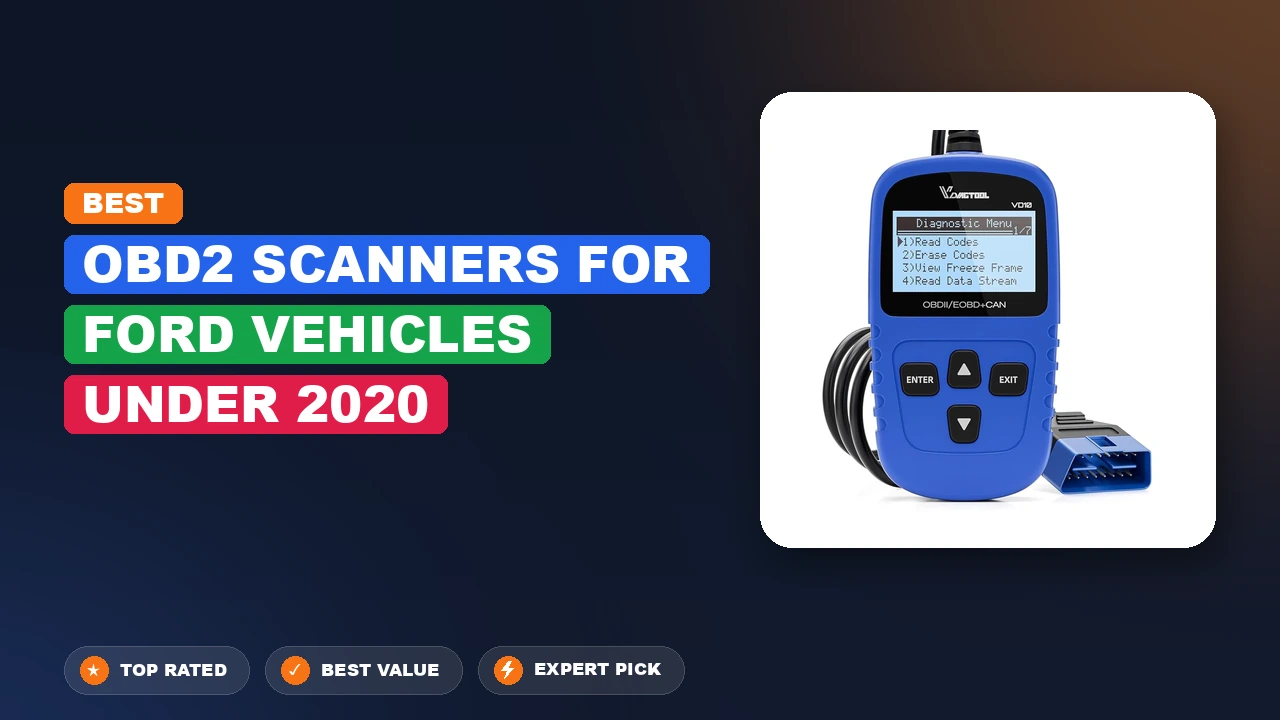
10 Best Obd2 Scanners for Ford Vehicles Under 2020 – Expert Tested & Ranked

F-150 & Super Duty Owners · FORScan DIY Tuners · Pre-2020 Ford Enthusiasts · Independent Mechanics · Budget Fleet Maintainers
🕐 Updated: November 2026 | 10 Models Reviewed | 1996–2019 Ford Protocol Coverage | HS-CAN & MS-CAN Verified
Ford vehicles built prior to 2020 rely on a proprietary split-network diagnostic architecture. While federal mandate standardizes emissions reporting over high-speed CAN or older SAE J1850 PWM lines, Ford routes auxiliary body, transmission, ABS, and cabin modules through medium-speed CAN networks. A scanner lacking specific protocol switching leaves these critical sub-systems entirely unmonitored during routine diagnostics.
Most vehicle owners purchase a generic handheld scanner assuming it reads every illuminated warning light on their dashboard. However, generic tools only poll standard OBD2 powertrain parameters on high-speed pins. When an airbag, blind-spot monitor, or electronic steering rack fails on a pre-2020 Ford, standard handheld tools report zero active diagnostic trouble codes despite evident dashboard fault indicators.
This guide isolates the diagnostic tools capable of resolving Ford-specific issues across the 1996 through 2019 model years. We examine basic handheld monitors, dedicated Ford multi-system scanners, and advanced interface adapters to clarify exactly which modules each device accesses, eliminating the guesswork of purchasing an incompatible interface for your vehicle platform.
Our recommendations are based on verified network protocol compatibility, physical pin-switching capability, live data refresh latency, and bi-directional service support on pre-2020 Ford platforms. Rather than relying on generic manufacturer claims, we evaluate how effectively each scanner communicates with Ford powertrain control modules, body control modules, and secondary chassis systems.
⚡ Top 5 Obd2 Scanners for Ford Vehicles Under 2020 — Quick Answer
Short on time? These are the picks, ranked:
| # | Obd2 Scanners for Ford Vehicles Under 2020 | Best For | Rating | Price |
|---|---|---|---|---|
| 🥇 #1 | VDIAGTOOL VD10 OBD2 Scanner Check | Best Overall | 9.2/10 | Check Price |
| 🥈 #2 | OBDLink MX Plus Bluetooth OBD2 | Best for Advanced Ford Diagnostics | 9.2/10 | Check Price |
| 🥉 #3 | MOTOPOWER MP69033 OBD2 Scanner Engine | Best Budget Code Reader | 9.2/10 | Check Price |
| 💰 Value | ELM327 USB OBD2 Scanner and | Best Value Feature Unlocker | 8.8/10 | Check Price |
| 🎯 Budget | Universal OBD2 Scanner and Battery | Best Ultra-Budget Glovebox Scanner | 9.0/10 | Check Price |
Ford Network Architecture: The Critical Split Between HS-CAN and MS-CAN
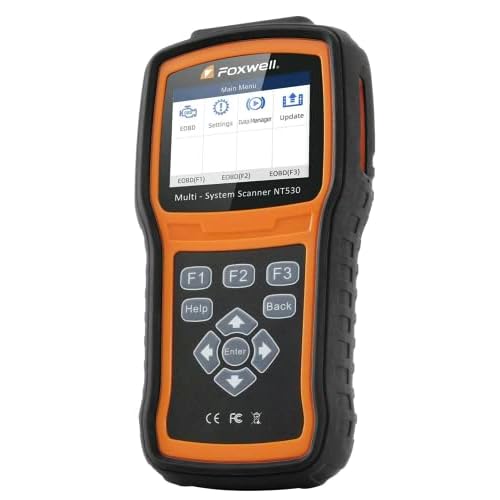


Pre-2020 Ford platforms utilize two primary controller area networks: High-Speed CAN (HS-CAN) on standard OBD2 pins 6 and 14, and Medium-Speed CAN (MS-CAN) on manufacturer-reserved pins 3 and 11. Generic scanners only poll HS-CAN, which handles engine and powertrain metrics required by federal emissions law. Crucial systems like the Body Control Module, instrument cluster, climate control, and audio systems communicate exclusively along the MS-CAN line.
For older pre-2004 Fords, vehicles communicate using the legacy SAE J1850 PWM protocol rather than modern CAN standards. Choosing an incompatible scan tool means losing historical Ford protocol access entirely or remaining blind to faults outside the engine bay. To diagnose complete vehicle health, owners require scanners with automated or physical pin-switching hardware engineered explicitly for Ford-specific network buses.
⚠️ Reality Check: A standard OBD2 code reader can only communicate with approximately 20 percent of the electronic control units installed on a modern Ford truck or SUV, completely missing body, security, chassis, and restraint control module trouble codes.
Scanner Architectures for Pre-2020 Ford Vehicles Compared
| Scanner Type | Protocol Support | Module Access | Best Ford Application |
|---|---|---|---|
| FORScan-Dedicated Adapters | HS-CAN, MS-CAN (Auto/Toggle), J1850 | Full System (All Modules) | Advanced DIY & Module Configuration |
| Ford-Specific Handhelds | HS-CAN, MS-CAN, J1850 PWM | Powertrain, ABS, SRS, BCM | Standalone Field Diagnostics |
| Bi-Directional Tablets | All Ford OEM Protocols + CAN FD | Full System + Actuation Tests | Professional Pre-2020 Fleet Repair |
| Enhanced Universal Scanners | Standard HS-CAN, Select OEM PIDs | Engine, Transmission, Select ABS | General Maintenance & State Inspections |
| Basic Generic Code Readers | Standard SAE J1979 / HS-CAN Only | Powertrain / Emissions Only | Quick Check-Engine Code Clearing |
| Battery & Charging Testers | Basic OBD2 + Cranking/Ripple | Engine Live Data & Starting System | Battery Health & Basic Emissions |
Can a Universal Scanner Clear ABS, Airbag, and Transmission Codes on Pre-2020 Fords?


Many vehicle owners assume that an 'enhanced' universal scanner will clear all dashboard warning lamps across any manufacturer. On pre-2020 Ford vehicles, supplemental restraint systems (SRS), anti-lock brakes (ABS), and transmission control modules often transmit fault logs via proprietary OEM subroutines or over the MS-CAN network. A scanner built without Ford-specific firmware routines cannot access or interpret these manufacturer-specific diagnostic trouble codes.
Clearing a check-engine light resets basic emissions monitors, but residual fault codes stored in Ford's central Body Control Module or Restraint Control Module remain untouched by standard universal interfaces. Attempting to force a clear command with an unsupported tool frequently produces communication error timeouts. Accurate diagnostic resets on these vehicles require dedicated Ford protocol programming or direct FORScan software bridge compatibility.
✅ Key Takeaway: Clearing a generic P-code does not reset manufacturer-specific B-codes, C-codes, or U-codes on Ford vehicles. Without MS-CAN access, safety systems such as airbags and stability control will keep warning lights illuminated after resets.
Which Ford OBD2 Scanner Is Right for You?
| Buyer Profile | What You Need | Top Pick | Budget Pick |
|---|---|---|---|
| Deep FORScan Diagnostics & Tuning | Automated HS/MS-CAN switching with high-throughput Bluetooth or USB | OBDLink MX Plus Bluetooth OBD2 | ELM327 USB OBD2 Scanner and |
| Ford-Dedicated Standalone Handheld | Direct plug-and-play access to Ford ABS, SRS, and 4×4 modules without apps | ANCEL FD500 Ford OBD2 Scanner | VDIAGTOOL VD10 OBD2 Scanner Check |
| Professional Workshop Bi-Directional | Active component testing, DPF regeneration, and steering angle relearns | ANCEL DS500BT Bidirectional OBD2 Scanner | A-Premium AD200 Professional OBD2 Scanner |
| General Powertrain & Emissions DIY | Rapid check-engine code retrieval, freeze frame data, and I/M readiness | Autel AutoLink AL519 Enhanced Universal | MOTOPOWER MP69033 OBD2 Scanner Engine |
| Multi-Vehicle Household Maintenance | Balanced coverage across Ford powertrain metrics and other domestic makes | Safescan Enhanced Universal OBD2 Scanner | VDIAGTOOL VD10 OBD2 Scanner Check |
| Battery & Alternator Troubleshooting | Integrated charging system assessment alongside baseline OBD2 code reading | Universal OBD2 Scanner and Battery | MOTOPOWER MP69033 OBD2 Scanner Engine |
The 10 Best Obd2 Scanners for Ford Vehicles Under 2020 2026 — Full Reviews
1. VDIAGTOOL VD10 OBD2 Scanner Check — Best Overall
| Display | Color TFT Screen |
| Compatibility | OBDII Compliant Ford & Universal Vehicles |
| DTC Database | Built-in 3,000+ Code Definitions |
| Diagnostic Functions | Read/Clear Codes, Live Data, Freeze Frame |
| Emissions Testing | I/M Readiness Monitor Check |

The VDIAGTOOL VD10 earns our top spot by delivering essential diagnostic capabilities at an unbeatable price point for pre-2020 Ford vehicles. Whether troubleshooting an intermittent misfire or checking sensor readings, this scanner connects seamlessly to the OBDII port and provides rapid feedback. It eliminates the guesswork of flashing check engine lights without demanding a steep learning curve, making routine diagnostics accessible to any driver. For everyday vehicle owners, it balances functionality and affordability perfectly.
At its core, the VD10 operates as a plug-and-play handheld scan tool powered directly through your Ford’s OBDII diagnostic port. It features an integrated color screen that communicates with the vehicle’s powertrain control module to pull generic and manufacturer-specific trouble codes. Instead of requiring external phone apps or subscriptions, the device stores thousands of code definitions internally, translating technical error codes into readable explanations directly on the screen within moments of plugging it in.
Comprehensive live sensor streaming sets this budget-friendly scanner apart from typical entry-level code readers. Users can monitor crucial metrics such as engine RPM, coolant temperature, misfire status, and fuel trim values in real time. Combined with its instant I/M readiness check and freeze frame capture, the unit allows DIY mechanics to verify whether repairs successfully cleared underlying engine faults before committing time and money to a formal state inspection.
While this scanner excels at standard engine diagnostics, it is not built for professional technicians requiring advanced vehicle programming. It cannot access auxiliary modules like ABS, airbags, transmission control, or body electronics that specialized diagnostic tablets can reach. Ford owners looking to perform bi-directional component testing, key programming, or complex adaptations should bypass this basic code reader and invest in a dedicated professional scan tool or bidirectional diagnostic platform instead.
✅ Pros
- Plug-and-play setup requires no external batteries or apps
- Built-in database decodes over 3,000 diagnostic trouble codes
- Displays real-time sensor streams and freeze frame data
- Quick one-click check for state emissions I/M readiness
❌ Cons
- Cannot read ABS, SRS airbag, or transmission trouble codes
- Lacks bi-directional control and active component testing functions
- Screen size is relatively small for extensive data graphing
2. OBDLink MX Plus Bluetooth OBD2 — Best for Advanced Ford Diagnostics
| Connection Type | Wireless Bluetooth |
| Platform Compatibility | iOS, Android, Windows PC |
| Recommended Software | FORScan, Torque, BimmerCode, DashCommand |
| Diagnostic Coverage | Engine, ABS, SRS, TPMS, OEM Modules |
| Electrical Safeguards | Over-voltage and battery drain protection |

The OBDLink MX+ earns our second spot as the most capable wireless diagnostic adapter available for pre-2020 Ford trucks and cars. It bridges consumer convenience and dealer-level capability by pairing directly with specialized third-party software like FORScan. While standalone handhelds offer built-in screens, this compact dongle leverages your phone or laptop processing power to deliver rapid sensor refresh rates and stable wireless data streaming without latency or dropped connections during critical module scans.
At its core, the device functions as an intelligent vehicle network interface that plugs straight into your Ford OBD2 port. Unlike generic Bluetooth dongles that only read basic engine data, the MX+ automatically switches between Ford standard High-Speed CAN and Medium-Speed CAN networks. This hardware engineering allows wireless communication across complex vehicle electronics, feeding detailed telemetry into your iOS, Android, or Windows device using low-energy Bluetooth without requiring manual toggle switches on the adapter.
Unrivaled third-party software integration separates this tool from competing plug-in adapters on the market. It is officially recommended by FORScan developers, enabling access to manufacturer-specific modules like ABS, airbags, transmission control, and tire pressure monitoring systems on older Ford platforms. Built-in over-voltage and smart sleep battery protection ensure you can leave the adapter plugged into your port indefinitely without draining the starter battery or risking electrical spikes during vehicle operation.
This scanner is not for drivers who want an instant, all-in-one handheld device with a physical screen and buttons. Because it relies entirely on your personal smartphone, tablet, or Windows computer, you must manage software downloads, connection settings, and app permissions yourself. Budget-focused owners who only need to clear an occasional basic check engine light will also find its higher price and advanced capabilities more complex than strictly necessary.
✅ Pros
- Seamless compatibility with FORScan software on mobile and desktop
- Automatic MS-CAN and HS-CAN switching without manual toggles
- Battery drain protection allows leaving it plugged in safely
- Fast live data streaming across proprietary Ford vehicle modules
❌ Cons
- Requires a secondary smartphone, tablet, or computer to operate
- Premium price compared to basic generic wireless OBD2 adapters
- Advanced features require learning third-party applications like FORScan
3. MOTOPOWER MP69033 OBD2 Scanner Engine — Best Budget Code Reader
| Display | 2.8-inch backlit LCD |
| Power Source | Vehicle OBD2 port |
| Protocols Supported | 9 OBD2/CAN protocols |
| Cable Length | 2.5 feet |
| System Coverage | Engine diagnostics only |

It earns the third spot as the most cost-effective diagnostic solution for straightforward Ford engine code troubleshooting. While advanced readers offer proprietary Ford modules, this affordable unit provides reliable access to core generic OBD2 parameters without breaking the bank. For older Ford models from 1996 through 2019, it swiftly pulls diagnostic trouble codes, checks emission readiness monitors, and clears illuminated check engine warnings right from the glovebox.
The device functions as a plug-and-play handheld scanner powered directly through your vehicle’s 16-pin data port, eliminating dead battery worries. Its clear 2.8-inch backlit LCD screen provides decent contrast in dim garages, controlled via six dedicated rubber buttons. Navigation is straightforward, featuring dedicated shortcut keys to look up trouble definitions in the built-in library and immediately pull the vehicle identification number without digging through multi-level menus.
Instant built-in DTC lookup sets this budget tool apart by interpreting trouble codes on-screen rather than forcing you onto your phone. You can quickly view freeze frame data and observe live sensor readouts, including coolant temperature and engine RPM, to evaluate basic running conditions. It supports nine universal protocols, ensuring dependable baseline communication across domestic Ford sedans, crossovers, and F-Series trucks built over the past two decades.
This tool is not built for home mechanics who need comprehensive Ford-specific diagnostics across body and chassis systems. It strictly reads powertrain fault codes and explicitly cannot communicate with ABS, supplemental restraint airbags, transmission control modules, or oil reset routines. Serious Ford DIYers seeking bi-directional module controls or proprietary FORScan parameters should look toward dedicated adapters instead of this entry-level reader.
✅ Pros
- Extremely affordable price point for basic diagnostics
- Dedicated shortcut buttons for VIN and code lookup
- Clear 2.8-inch backlit screen with contrast adjustment
- Draws power straight from the vehicle port
❌ Cons
- Cannot scan ABS, airbag, or transmission modules
- No support for Ford-specific proprietary manufacturer codes
- Short 2.5-foot cable limits viewing position
4. Safescan Enhanced Universal OBD2 Scanner — Best Value Handheld Scanner
| Display | 2.8-inch HD color screen |
| Power Source | Vehicle OBD-II port (battery-free) |
| Supported Protocols | All 9 OBD-II standard protocols (including CAN & J1850) |
| DTC Library | 65,000+ built-in fault code lookups |
| Data Sharing | Cloud and local printer reporting |

The Safescan Enhanced OBD2 Scanner earns our best value recommendation by providing essential diagnostic capabilities for pre-2020 Ford vehicles at an accessible price. For drivers dealing with sudden check engine lights on models like the F-150, Focus, or Escape, this tool retrieves fault codes in under a minute. By pairing broad legacy protocol support with officially licensed Ford compatibility, it offers dependable engine health assessments without requiring expensive professional diagnostic hardware or subscriptions.
Designed around a plug-and-play architecture, the device powers directly through the vehicle’s 16-pin port, eliminating dead internal battery concerns during roadside checks. Diagnostic feedback displays on a bright 2.8-inch color screen accompanied by red, yellow, and green status LEDs for rapid emissions evaluations. Two programmable shortcut keys let users assign frequently used tasks like code clearing or live sensor reading, streamlining troubleshooting routines across everyday pre-2020 Ford powertrains.
Cloud and local report printing capabilities set this entry-level scanner apart from similarly priced competitors. Beyond browsing live sensor feeds and freeze frame records directly on the unit, users can generate shareable diagnostic summaries without needing an immediate hardwired printer connection. This feature, combined with an extensive 65,000-code internal library, simplifies sharing diagnostic logs with trusted mechanics before scheduling major repairs, making pre-inspection evaluation remarkably seamless.
This device is not suitable for Ford enthusiasts seeking deep module programming, key configuration, or advanced system resets. Because it operates exclusively within standard powertrain parameters, it cannot access non-engine systems like Ford ABS, airbag modules, transmission control units, or body electronics. Technicians requiring bidirectional actuations or dedicated FORScan software integration will need a specialized vehicle communication interface rather than a basic standalone engine code reader.
✅ Pros
- Built-in library with over 65,000 fault code definitions
- Direct port-powered design requires no internal batteries or charging
- Supports cloud and local printing for easy report sharing
- Clear three-color LED indicators for fast emissions readiness checks
❌ Cons
- Limited to powertrain codes without ABS or SRS airbag coverage
- Lacks bidirectional controls and specialized Ford module programming capabilities
- Cannot connect with advanced diagnostic software like FORScan
5. ANCEL DS500BT Bidirectional OBD2 Scanner — Best Wireless Bidirectional Scanner
| Display | 7-Inch Android Touchscreen |
| Connectivity | Bluetooth 5.0 Wireless VCI |
| System Coverage | Full-System Diagnostics & CAN FD |
| Special Functions | 28+ Maintenance Service Resets |
| Software Updates | Lifetime Free Updates |

The ANCEL DS500BT earns its spot by delivering robust bidirectional controls and shop-level diagnostics without recurring subscription costs. For pre-2020 Ford owners dealing with complex electrical or powertrain issues, this tablet bridges the gap between hand-held code readers and dealership-level equipment. Its wireless interface lets you trigger actuators like fuel pumps and cooling fans from anywhere around the vehicle, making solitary troubleshooting on larger Ford trucks and SUVs remarkably efficient and reliable.
Built around a responsive 7-inch Android tablet, the system communicates wirelessly via a Bluetooth 5.0 vehicle communication interface. Instead of wrestling with tangled OBD2 cords while checking engine components, you plug the dongle into your Ford’s diagnostic port and operate tests remotely. The interface organizes module scans, live sensor data graphing, and active component testing into straightforward touch menus, allowing you to isolate faulty solenoids, valves, or relays directly from the screen.
Unrestricted lifetime software updates separate this diagnostic tablet from competing professional-tier tools that lock essential features behind expensive annual subscriptions. You get comprehensive access to over twenty-eight specialized service functions, including diesel particulate filter regenerations, ABS brake bleeding, and steering angle calibrations. These targeted routines give older Ford Super Duty and F-150 owners dealership-level repair autonomy right in their own garages, ensuring sustained long-term diagnostic capability without added maintenance fees.
This scanner is not for casual car owners who only need to check occasional trouble codes or clear oil change reminders. At over four hundred dollars, the DS500BT represents a major financial investment tailored strictly for dedicated mechanics and seasoned hobbyists. If you do not plan to perform active component actuations, complex module relearns, or deep system calibrations on your Ford, a basic handheld code reader is a much more sensible purchase.
✅ Pros
- Full bidirectional control with over 3,000 supported active tests.
- Lifetime free software updates without expensive annual renewal fees.
- Bluetooth 5.0 wireless VCI allows flexible roaming around vehicles.
- Includes 28+ service resets like DPF regen and ABS bleeding.
❌ Cons
- Substantial upfront financial investment compared to standard handheld scanners.
- Larger tablet form factor requires careful garage storage and charging.
- Specific service function availability varies across older Ford model years.
6. ELM327 USB OBD2 Scanner and — Best Value Feature Unlocker
| Connection Type | USB Wired (Hardware V1.5) |
| Protocol Support | MS-CAN, HS-CAN, J1850PWM |
| Operating System | Windows XP, Vista, 7, 8, 10 |
| Software Compatibility | ELMconfig, FoCCCus, FF2, ScanMaster |
| Vehicle Coverage | 1996+ Ford, Lincoln, Mazda, Mercury |

The ELM327 USB adapter earns its spot as the ultimate bargain for accessing Ford-specific modules without overspending on costly diagnostic hardware. At under twenty dollars, it delivers the essential stability needed for safe vehicle communication. While premium adapters automate bus switching, this manual-toggle cable provides reliable direct access to both high-speed and medium-speed controller area networks on older Ford models. It remains an unbeatable entry point for tinkerers working on pre-2020 vehicles.
Under the hood, this diagnostic tool utilizes an integrated physical switch to alternate between High-Speed CAN and Medium-Speed CAN buses. Standard generic OBD2 readers can only scan the high-speed network, leaving body control, climate, and instrument cluster modules invisible. Connecting via a USB cable eliminates signal drops that plague cheap Bluetooth adapters during sensitive operations. Paired with Windows diagnostic programs, it bridges your laptop directly to your Ford’s onboard computers with minimal latency.
Unrivaled access to hidden vehicle configurations sets this affordable adapter apart from standard code readers. When paired with community tuning software, owners can calibrate tire sizes, disable irritating chime alerts, program trailer brake modules, and activate Bambi mode on supported F-Series trucks. Rather than simply reading basic emission faults, it grants deep module-level customization normally reserved for dealership scan tools, turning routine diagnostics into a full-fledged vehicle programming session.
This interface is not for casual drivers seeking a quick, standalone code reader that works right out of the box. It requires a dedicated Windows laptop, driver installations, third-party software, and manual switch flipping between diagnostic scans. Furthermore, smartphone-reliant mechanics or Apple macOS users will find it entirely unusable without workarounds. If you need effortless wireless scanning or a self-contained handheld device for roadside emergencies, look toward dedicated handheld scanners instead.
✅ Pros
- Physical MS/HS CAN switch accesses proprietary Ford modules
- Stable wired USB connection prevents risky wireless disconnections
- Enables unlocking hidden features like Bambi mode and chime adjustments
- Exceptionally low price point for deep module programming capability
❌ Cons
- Requires a Windows laptop and manual driver setup
- Manual toggle switch requires flipping between module scans
- Not compatible with mobile apps or standalone operation
7. ANCEL FD500 Ford OBD2 Scanner — Best Value Ford-Specific Handheld
| Compatibility | Ford, Lincoln, Mercury (1996-present) |
| System Coverage | All Systems (Engine, ABS, SRS, Transmission, HVAC) |
| Special Functions | Battery Registration, EPB, Oil, KAM Reset |
| Software Updates | Lifetime Free |
| Form Factor | Standalone Handheld Unit |

The ANCEL FD500 earns its spot as the best value Ford-specific handheld by delivering deep dealer-level system coverage without the steep professional price tag. While many entry-level tools stop at basic check engine light diagnostics, this unit delves into specialized Ford controllers across models up to 2020. It gives DIY enthusiasts direct access to critical electronic subsystems, including transmission and ABS modules, making complex vehicle maintenance manageable and accessible for garage mechanics on a reasonable budget.
Designed as a plug-and-play standalone unit, the FD500 operates directly from your vehicle’s 16-pin OBD2 port without requiring external batteries or smartphone pairing. Its internal hardware communicates with proprietary Ford communication protocols across the CAN bus and older networks. The straightforward interface pairs physical navigation buttons with a backlit color screen, allowing users to quickly pull diagnostic trouble codes, view live sensor feeds, and clear persistent error warnings with minimal setup hassle.
Targeted maintenance resets provide DIY mechanics with tools usually reserved for higher-end workshop scanners. The FD500 handles battery registration, which is essential on newer Ford charging systems to prevent premature alternator and battery wear. It also manages electronic parking brake (EPB) service mode, oil service indicators, and throttle KAM relearns. This dedicated service suite prevents trips to the dealership solely to clear service notifications or reset adaptive parameters after standard mechanical replacements.
This scanner is not the right choice for professional technicians seeking advanced bi-directional active component testing or ECU coding. It is also unsuitable for households managing multiple vehicle makes, as its advanced functional capabilities are locked exclusively to Ford, Lincoln, and Mercury nameplates. Drivers wanting wireless smartphone convenience through Bluetooth rather than tethered cables should consider an adapter instead of this dedicated cabled scanner.
✅ Pros
- Comprehensive full-system scanning for Ford, Lincoln, and Mercury vehicles.
- Includes essential battery registration and EPB maintenance resets.
- Standalone plug-and-play design requires no smartphone or batteries.
- Lifetime free software updates keep compatibility current.
❌ Cons
- Advanced diagnostic functions only work on Ford family vehicles.
- Lacks bi-directional active testing and module reprogramming capabilities.
- Wired design limits mobility compared to wireless Bluetooth dongles.
8. Autel AutoLink AL519 Enhanced Universal — Best Standalone Emissions Code Reader
| Diagnostic Modes | Full 10 OBD2 modes |
| Display | TFT color screen with speaker |
| Power Source | Vehicle 12V OBD2 port |
| Compatibility | 1996+ OBD2 compliant vehicles |
| Data Display | Live text and graphing |

The Autel AutoLink AL519 secures its position by delivering reliable standalone diagnostics and comprehensive emissions readiness checks for pre-2020 Ford vehicles without requiring a smartphone. For drivers troubleshooting recurring check engine warnings on an older F-150, Fusion, or Explorer, this dedicated handheld scanner pulls generic and manufacturer-specific trouble codes instantly. Its rugged build and physical buttons make it a dependable glovebox companion during roadside emergencies or routine weekend maintenance sessions.
Powered directly through the vehicle’s OBD2 port, the AL519 utilizes a plug-and-play architecture that eliminates internal batteries and Bluetooth pairing headaches. The device supports all ten standard OBD2 test modes, outputting real-time engine telemetry such as coolant temperatures, fuel trim, and engine speed. These data streams can be viewed as raw figures or plotted onto basic color graphs, helping users spot sensor irregularities and intermittent misfires as they occur during idle or test drives.
Dedicated emissions verification sets this scanner apart from basic entry-level code readers. It features a patented one-click I/M readiness key, rapid O2 sensor monitoring, and on-board component testing to assess EVAP leak status before visiting an inspection station. Furthermore, the AL519 retrieves Ford-specific powertrain fault codes (P1 and P3 series) alongside standard DTCs, displaying helpful diagnostic definitions directly on its bright color screen to save time spent researching cryptic numbers.
This tool is not intended for enthusiasts seeking deep Ford system modifications or multi-module diagnostics. It cannot access supplemental restraint systems (SRS), anti-lock braking systems (ABS), body control modules, or transmission controllers on older Ford models. Technicians who require bidirectional actuator testing, key programming, oil life resets, or specialized FORScan configuration options should bypass this basic emissions scanner and invest in an advanced diagnostic tablet or a dedicated Ford adapter instead.
✅ Pros
- Supports all 10 standard OBD2 diagnostic test modes
- Quick one-click I/M readiness key for emissions checks
- Displays live sensor data in text and visual graphs
- Reads manufacturer-specific Ford powertrain codes (P1, P3, U1)
❌ Cons
- Cannot read or clear ABS, SRS, or transmission modules
- Lacks bidirectional control and special reset service functions
- Firmware update tool is restricted to Windows computers
9. A-Premium AD200 Professional OBD2 Scanner — Best Budget Standalone Engine Scanner
| Display | 2.4-inch Color Screen (262K colors) |
| Interface | Physical Buttons with Dedicated Hotkeys |
| Diagnostic Modes | Standard 10 OBD2 Diagnostic Modes |
| Status Indicators | 3-Color LED Fault Severity Lights |
| Supported Data | Up to 50 Live PID Streams |

The A-Premium AD200 earns its position by offering dependable standalone powertrain diagnostics without requiring a smartphone or expensive software subscription. For pre-2020 Ford drivers dealing with sudden check engine lights, this tool delivers immediate fault detection and basic emissions testing right out of the box. While it does not deliver dealer-level Ford module access, its reliable core functionality and sub-fifty-dollar price tag make it a smart, low-risk glovebox companion.
Operating as a plug-and-play handheld unit, the AD200 draws power directly from your Ford vehicle’s OBD2 diagnostic port. It features a bright 2.4-inch color display alongside dedicated physical navigation buttons, including one-touch hotkeys for instant I/M readiness checks and context help. The internal hardware processes standard generic and manufacturer OBD2 protocols, translating incoming sensor data into clean text, numerical readouts, and visual real-time parameter graphs.
Color-coded diagnostic feedback sets this compact scanner apart from other budget code readers on the market. Integrated red, yellow, and green status LEDs provide an instant visual summary of emission readiness and code severity before you even read the screen. Combined with real-time waveform graphing for up to 50 live data streams, DIYers can monitor critical Ford engine metrics like coolant temperature and fuel rail pressure as issues occur.
This scanner is not for advanced Ford enthusiasts or mechanics seeking deep bi-directional control, key programming, or specialized MS-CAN module access. It cannot diagnose anti-lock braking systems (ABS), supplemental restraint airbags (SRS), or body control modules found across older Ford trucks and SUVs. If you need to reconfigure vehicle modules or reset transmission adaptives using software like FORScan, you should invest in an expanded-protocol OBD2 interface instead.
✅ Pros
- Dedicated one-touch hotkey for fast emissions readiness checks
- Color-coded LED lights provide immediate fault severity status
- Real-time live data graphing for up to 50 parameters
- Independent plug-and-play operation requires no smartphone or batteries
❌ Cons
- Lacks advanced Ford module coverage like ABS and SRS
- No bi-directional controls or active component testing
- Cannot access Ford proprietary MS-CAN bus systems
10. Universal OBD2 Scanner and Battery — Best Ultra-Budget Glovebox Scanner
| Protocol Support | CAN, J1850 PWM, J1850 VPW, ISO9141, KWP2000 |
| Cable Length | 2.5 Feet |
| Weight | 12 Ounces |
| Battery Testing | Voltage Monitoring Only |
| Diagnostic Systems | Engine, O2 Sensor, EVAP |

This universal code reader earns its spot as the ultimate budget-friendly emergency tool for pre-2020 Ford vehicles. At roughly twelve dollars, it delivers essential powertrain diagnostics without requiring a smartphone or expensive subscription. Full support for legacy Ford protocols, including SAE J1850 PWM and standard CAN bus, ensures dependable communication across older Crown Victorias, mid-2000s F-150s, and late-2010s Escapes alike when a check engine light suddenly interrupts your daily commute.
Built with a dedicated microprocessor and a simple six-button keypad, this scanner emphasizes plug-and-play ease of use. It draws operational power directly from your Ford’s sixteen-pin OBD2 port through a sturdy two-and-a-half-foot cable. The interface allows motorists to read freeze-frame data, monitor real-time sensor streams with basic graphical plotting, verify emissions I/M readiness monitors, and test simple charging voltage levels right from the driver seat without consulting complicated user manuals.
Unbeatable diagnostic value for routine maintenance separates this device from generic budget alternatives on the automotive market. Despite its modest price tag, it incorporates critical EVAP system checks and live oxygen sensor readings alongside basic trouble code clearing. DIY mechanics can quickly verify fuel trim issues or loose gas caps at home, saving considerable diagnostic fees before booking a mechanic appointment for deeper powertrain concerns.
This handheld tool is not suitable for Ford owners seeking comprehensive, dealer-level vehicle diagnostics. It deliberately omits support for antilock brake systems, supplemental restraint airbags, and transmission control modules. Serious technicians or enthusiasts seeking proprietary Ford PID data, ABS brake bleeding routines, or deep battery health analytics will find these hardware limitations frustrating and should invest in an advanced multi-system bidirectional diagnostic tablet instead.
✅ Pros
- Incredibly affordable price point for basic diagnostics
- Supports older Ford J1850 PWM and modern CAN protocols
- Simple plug-and-play setup with no batteries required
- Includes built-in alternator and battery voltage check
❌ Cons
- Cannot read or clear ABS and airbag fault codes
- Lacks transmission diagnostics and advanced Ford-specific PIDs
- Short two-and-a-half-foot cable limits off-dash mobility
Notable Brands and Ecosystems for Pre-2020 Ford Diagnostics
Navigating diagnostic gear for pre-2020 Ford platforms involves distinct ecosystems, ranging from proprietary dealership software to grassroots enthusiast tools. Because Ford relied heavily on dedicated communication buses across lines like the F-150, Mustang, and Explorer, matching the right hardware architecture to specific software ecosystems dictates whether you access deeper body control modules or remain restricted to basic powertrain emissions codes.


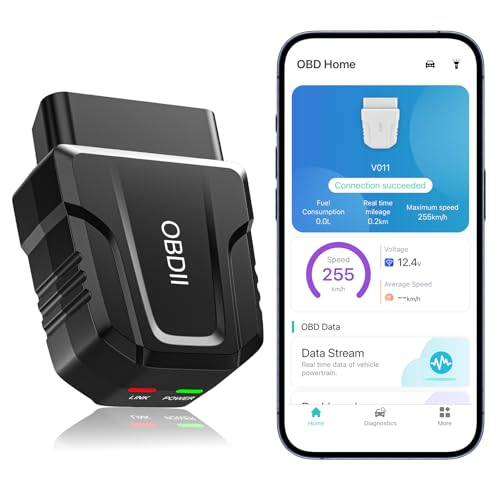
FORScan and the ELM327 Architecture
FORScan is practically synonymous with DIY Ford repair, offering access to proprietary modules including ABS, airbag, and instrument cluster networks that generic tools overlook. While traditionally paired with modified ELM327 adapters, modern enthusiasts frequently upgrade to fast Bluetooth or USB adapters for stable high-speed and medium-speed CAN switching. Choosing an interface compatible with this software allows owners of older Ford trucks and sedans to perform module configuration, service bleeds, and key programming without investing in expensive commercial shop platforms.
ANCEL Ford-Specific Handhelds


ANCEL has carved out a strong reputation among Ford vehicle owners by developing dedicated handheld scanners like the FD500 alongside their DS500BT bidirectional platform. Unlike universal generic code readers that only scan standardized OBD2 emissions data, dedicated Ford units query proprietary diagnostic trouble codes across transmission, four-wheel drive, and climate control modules. For users who prefer a standalone diagnostic unit without relying on smartphone apps, laptops, or external device drivers, these pre-configured handhelds offer immediate plug-and-play access.
OBDLink and High-Speed Wireless Diagnostics
OBDLink stands apart in the wireless diagnostic segment, recognized specifically for proprietary protocol handling that handles high-throughput vehicle bus networks without dropping frames. Because Ford vehicles from the 1996 through 2019 era utilize complex networks requiring rapid module switching, budget wireless dongles frequently disconnect during live data streaming or module flashing. Investing in hardware engineered for uninterrupted data transfer protects sensitive vehicle modules and enables advanced real-time monitoring through mobile diagnostic dashboards across iOS and Android ecosystems.
💡 Context Note: Pre-2020 Ford platforms depend on both High-Speed CAN and Medium-Speed CAN networks. If your scanner lacks automatic switching or manual toggle support, you will miss diagnostics for crucial comfort, climate, and body electronics modules.
Obd2 Scanners for Ford Vehicles Under 2020 Buying Guide — What Actually Matters
1. Choosing Between Generic Code Readers and Ford-Specific System Access


A baseline OBD2 tool only communicates with standard SAE emissions parameters, retrieving basic engine trouble codes common to all brands. For pre-2020 Ford models, this misses critical issues within the transmission control module, electronic power-assisted steering, and antilock braking systems. If your diagnostic needs extend beyond checking an intermittent gas cap warning, investing in a unit engineered with Ford OEM-level protocol decoding is essential for complete multi-system visibility.
Dedicated diagnostic tools access manufacturer-specific DTCs that provide precise explanations rather than vague numeric codes. Furthermore, proprietary system access allows you to inspect module live data, track misfire counts per cylinder, and verify whether a fault originates within mechanical assemblies or electrical sensors, saving substantial diagnostic time.


2. Evaluating Dual-Bus Network Switching: MS-CAN vs. HS-CAN Support
Ford utilized a dual-bus architecture extensively throughout the 2000s and 2010s, separating high-priority powertrain communications on High-Speed CAN from cabin and body modules on Medium-Speed CAN. Budget generic scanners lack the hardware circuitry to bridge these two networks simultaneously, leaving modules like the audio control, trailer brake, and climate systems entirely dark. Selecting a scanner featuring automatic bus switching ensures complete vehicle visibility without requiring hardware modifications.
If you choose an entry-level adapter requiring manual switch toggles, you must physically flip switches during scans whenever software requests access to secondary modules. Automatic switching hardware eliminates human error during live data reading and prevents corrupted vehicle data packets during active system tests.
3. Deciding Between Dedicated Handhelds and Wireless Mobile Interfaces
Handheld units provide instant convenience because they draw power directly from the vehicle port without requiring battery charges, app pairing, or firmware updates. This makes standalone tools ideal for glovebox storage, roadside emergencies, and quick resets in harsh weather. However, handhelds often possess smaller screens and lack the deep configuration features or cloud-based data storage provided by modern mobile application ecosystems.
Conversely, wireless Bluetooth and Wi-Fi adapters leverage the processing power, high-resolution screens, and constant cellular connectivity of modern tablets and smartphones. They excel at logging massive sets of live diagnostic data and receiving software library updates, though their reliability depends on stable wireless connections and ongoing operating system app maintenance.
4. Assessing the Need for Bidirectional Controls and Active Component Testing
Standard diagnostic tools are passive listeners that read data and clear trouble codes, whereas bidirectional scanners actively command vehicle components to actuate on demand. For Ford trucks and SUVs featuring electronic 4WD transfer cases, active shutter grilles, or fuel pump modules, bidirectional capability lets you test solenoids and relays directly. This functionality isolates mechanical hardware failures from wiring loom damage or faulty driver modules.
Bidirectional scanning significantly reduces parts-shotgunning by confirming whether a component physically responds to an ECU signal before you purchase replacements. While these professional-grade scanners carry a higher initial purchase barrier, the ability to command ABS purge bleeds and reset adapted parameters pays for itself during complex maintenance.
5. Verifying Battery and Charging System Diagnostic Capabilities
Pre-2020 Fords equipped with smart charging systems and start-stop technology monitor battery health via a Battery Monitoring System module. When replacing an aging battery on these vehicles, simply installing new hardware is insufficient; the vehicle computer must undergo a BMS reset to recalibrate charging voltage curves. Choosing a diagnostic scanner with integrated battery registration features prevents premature battery degradation and alternating current faults.
Certain diagnostic scanners also integrate physical load testing, cranking voltage assessment, and alternator ripple analysis into their diagnostic routines. Combining electrical system evaluation with standard engine code reading ensures you identify weak vehicle grounds and voltage drops before chasing phantom computer communication codes.
💡 Pro Tip: Before purchasing any diagnostic tool, verify whether it requires ongoing annual subscription fees to maintain Ford-specific diagnostic coverage. Many capable handheld scanners offer lifetime free firmware updates, ensuring long-term vehicle support without surprise recurring ownership costs.
Complete Comparison — Obd2 Scanners for Ford Vehicles Under 2020 2026
| Obd2 Scanners for Ford Vehicles Under 2020 | Type | Best For | Overall | Value | Price |
|---|---|---|---|---|---|
| VDIAGTOOL VD10 OBD2 Scanner Check | Handheld OBD2 Code Reader | Ford owners needing affordable engine diagnostics | ⭐⭐⭐⭐⭐ | ⭐⭐⭐⭐⭐ | Check Price |
| OBDLink MX Plus Bluetooth OBD2 | Bluetooth Diagnostic Adapter | Ford owners running deep FORScan diagnostics | ⭐⭐⭐⭐⭐ | ⭐⭐⭐⭐⭐ | Check Price |
| MOTOPOWER MP69033 OBD2 Scanner Engine | Handheld OBD2 Scanner | Drivers wanting affordable check engine diagnostics | ⭐⭐⭐⭐⭐ | ⭐⭐⭐⭐⭐ | Check Price |
| Safescan Enhanced Universal OBD2 Scanner | Handheld OBD2 Code Reader | Ford owners needing affordable engine diagnostics | ⭐⭐⭐⭐⭐ | ⭐⭐⭐⭐⭐ | Check Price |
| ANCEL DS500BT Bidirectional OBD2 Scanner | Bidirectional Diagnostic Tablet | Independent mechanics and advanced Ford DIYers | ⭐⭐⭐⭐ | ⭐⭐⭐⭐ | Check Price |
| ELM327 USB OBD2 Scanner and | USB OBD2 Diagnostic Interface | Budget DIYers modifying Ford vehicle settings | ⭐⭐⭐⭐ | ⭐⭐⭐ | Check Price |
| ANCEL FD500 Ford OBD2 Scanner | Handheld OBD2 Scanner | Ford DIYers needing essential system resets | ⭐⭐⭐⭐ | ⭐⭐⭐ | Check Price |
| Autel AutoLink AL519 Enhanced Universal | Handheld OBD2 Code Reader | DIYers diagnosing Ford check engine lights | ⭐⭐⭐⭐ | ⭐⭐⭐ | Check Price |
| A-Premium AD200 Professional OBD2 Scanner | Handheld OBD2 Code Reader | Ford owners wanting quick, phone-free engine diagnostics | ⭐⭐⭐⭐ | ⭐⭐⭐ | Check Price |
| Universal OBD2 Scanner and Battery | Handheld OBD2 Code Reader | Ford owners seeking low-cost engine diagnostics | ⭐⭐⭐⭐ | ⭐⭐⭐ | Check Price |
Frequently Asked Questions — Obd2 Scanners for Ford Vehicles Under 2020
Which OBD2 scanner is best for pre-2020 Ford vehicles?
The VDIAGTOOL VD10 OBD2 Scanner Check is the best all-around choice for pre-2020 Ford vehicles thanks to its dependable plug-and-play code reading, rapid live data scanning, and robust vehicle coverage. It allows DIY owners to clear emissions monitors, read engine fault codes, and view vital engine telemetry without complex software setups or pairing steps. For Ford owners who want an accessible diagnostic solution for regular maintenance without paying for commercial-grade shop tools, it strikes an optimal balance between affordability and core functionality.
Why does my generic OBD2 scanner fail to read ABS or airbag codes on my pre-2020 Ford?
Generic OBD2 scanners only access standard powertrain diagnostic trouble codes mandated by federal emissions standards, omitting Ford-specific proprietary modules like ABS and airbags. Pre-2020 Ford vehicles route braking, supplemental restraint, and body electronics through specialized networks such as Medium-Speed CAN. Without dedicated Ford software protocols or hardware that switches between diagnostic buses, a standard code reader cannot communicate with these safety modules. To access these systems, you need a scanner engineered specifically for expanded Ford system diagnostics.
Do I need to perform a battery registration reset on pre-2020 Ford vehicles?
Yes, pre-2020 Ford vehicles equipped with a Battery Monitoring System require a digital reset when installing a new battery. If you install a replacement battery without resetting the BMS, the alternator continues charging at the elevated voltage profile calibrated for the degraded old battery, which can lead to overcharging and shortened service life. Using an OBD2 scanner capable of executing the BMS reset procedure informs the powertrain module that a fresh battery is installed, restoring proper charging algorithms.
What is the difference between HS-CAN and MS-CAN in older Ford models?
HS-CAN handles critical high-speed data for engine and transmission control, while MS-CAN manages secondary convenience and body systems like door modules and climate control. Older Ford platforms utilize this split-bus architecture to prioritize essential vehicle operation data over auxiliary features. Scanners lacking automatic or manual bus-switching capabilities cannot bridge to the MS-CAN network, preventing technicians from detecting auxiliary electronics faults. Premium Ford-compatible diagnostic tools automatically switch between both channels to scan the vehicle's entire network.
Can I change hidden vehicle settings or modify features on pre-2020 Fords with an OBD2 scanner?
Yes, you can modify hidden factory settings and vehicle parameters on pre-2020 Fords if your scanner supports module configuration software like FORScan. Advanced adapters paired with suitable software allow owners to enable daytime running lights, alter tire circumference settings after lift installations, or adjust double-honk alert behaviors. Standard handheld code readers lack the flash memory writing capability necessary for these modifications, making specialized wireless or USB interfaces the mandatory choice for parameter adjustments.
Will these OBD2 scanners work on both gasoline and Powerstroke diesel Ford vehicles?
Most quality OBD2 scanners support both gasoline and Powerstroke diesel engines, provided the scanner supports diesel-specific OBD2 protocols and live PID monitoring. Diesel powertrains operate under specialized parameters, including diesel particulate filter soot loads, exhaust gas temperatures, and fuel rail pressure spikes. While basic generic code readers retrieve universal emissions faults, comprehensive diagnostics or manual DPF regeneration on a pre-2020 Powerstroke truck require an advanced diagnostic scanner with dedicated diesel functional support.
Why is my OBD2 scanner not connecting or drawing power from the diagnostic port?
A failure to power on or connect usually indicates a blown auxiliary fuse that protects the vehicle's OBD2 diagnostic port, which is often shared with the 12-volt cigarette lighter circuit. If this fuse blows due to an accessory short, pin 16 of the diagnostic port loses power, preventing standalone scanners from turning on. Checking and replacing this fuse in the passenger compartment fuse box almost always restores port connectivity.
Can an OBD2 scanner clear the 'Wrench Light' on a Ford dashboard?
Yes, an OBD2 scanner can clear the wrench indicator light once the underlying mechanical or electrical fault is resolved, but it requires access to powertrain or all-wheel-drive modules. The wrench icon signals an electronic throttle, transmission, or four-wheel-drive powertrain fault rather than an emissions problem. A standard emissions-only scanner often fails to detect these proprietary codes, requiring a Ford-capable scanner that reads extended powertrain and chassis data to identify and clear the condition.
Final Verdict — Best Obd2 Scanners for Ford Vehicles Under 2020 by Category
| Category | Our Pick | Why |
|---|---|---|
| 🏆 Best Overall | VDIAGTOOL VD10 OBD2 Scanner Check | Delivers fast, reliable engine code reading and live sensor data at an exceptionally accessible price. |
| 💎 Best for Advanced Ford Diagnostics | OBDLink MX Plus Bluetooth OBD2 | Delivers dealer-grade Ford module access and FORScan wireless reliability in a compact, protected hardware design. |
| 🏅 Best Budget Code Reader | MOTOPOWER MP69033 OBD2 Scanner Engine | Delivers reliable, low-cost check engine code reading and clearing for any pre-2020 Ford vehicle. |
| 📈 Best Value Handheld Scanner | Safescan Enhanced Universal OBD2 Scanner | Delivers fast, battery-free Ford engine diagnostics and smog checks with standout cloud reporting at minimal cost. |
| 💰 Best Wireless Bidirectional Scanner | ANCEL DS500BT Bidirectional OBD2 Scanner | Delivers comprehensive wireless bidirectional Ford diagnostics paired with cost-saving lifetime free software updates. |
| 🌿 Best Value Feature Unlocker | ELM327 USB OBD2 Scanner and | It delivers unparalleled deep module access and feature unlocking on Ford platforms at an unbeatable price. |
| 💵 Best Value Ford-Specific Handheld | ANCEL FD500 Ford OBD2 Scanner | Delivers specialized Ford all-system diagnostics and critical maintenance resets at a highly competitive DIY price point. |
| 👴 Best Standalone Emissions Code Reader | Autel AutoLink AL519 Enhanced Universal | It delivers complete ten-mode OBD2 diagnostics and instant smog readiness testing without relying on smart devices. |
| 🎯 Best Budget Standalone Engine Scanner | A-Premium AD200 Professional OBD2 Scanner | Delivers quick, phone-free Ford engine diagnostics and emissions readiness at an exceptionally approachable price point. |
| ⚙️ Best Ultra-Budget Glovebox Scanner | Universal OBD2 Scanner and Battery | An unbeatable sub-fifteen-dollar scanner delivering essential check engine diagnostics for older Ford models. |
Selecting the ideal diagnostic scanner for pre-2020 Ford platforms depends primarily on your mechanical ambitions and repair complexity. For daily drivers seeking simple check-engine diagnosis and emissions readiness checks, reliable handhelds like the VDIAGTOOL VD10 or MOTOPOWER MP69033 deliver fast, battery-free operation without technical hurdles. Budget-conscious owners wanting dependable troubleshooting for common roadside issues will find these straightforward code readers deliver exceptional value without software subscription baggage.
Conversely, dedicated Ford truck owners, fleet caretakers, and advanced DIYers should invest in multi-system tools like the ANCEL FD500 or wireless interfaces like the OBDLink MX Plus. These advanced units unlock proprietary MS-CAN access, transmission telemetry, and critical service routines like BMS calibration and ABS bleeding. Matching the tool to your vehicle’s dual-bus architecture ensures you maintain total diagnostic mastery over aging Ford electronics for years to come.
Last Updated: November 2026 | 10 Models Compared | Amazon + Search Engine Sourced
{
“@context”: “https://schema.org”,
“@type”: “FAQPage”,
“mainEntity”: [
{
“@type”: “Question”,
“name”: “Which OBD2 scanner is best for pre-2020 Ford vehicles?”,
“acceptedAnswer”: {
“@type”: “Answer”,
“text”: “The VDIAGTOOL VD10 OBD2 Scanner Check is the best all-around choice for pre-2020 Ford vehicles thanks to its dependable plug-and-play code reading, rapid live data scanning, and robust vehicle coverage. It allows DIY owners to clear emissions monitors, read engine fault codes, and view vital engine telemetry without complex software setups or pairing steps. For Ford owners who want an accessible diagnostic solution for regular maintenance without paying for commercial-grade shop tools, it strikes an optimal balance between affordability and core functionality.”
}
},
{
“@type”: “Question”,
“name”: “Why does my generic OBD2 scanner fail to read ABS or airbag codes on my pre-2020 Ford?”,
“acceptedAnswer”: {
“@type”: “Answer”,
“text”: “Generic OBD2 scanners only access standard powertrain diagnostic trouble codes mandated by federal emissions standards, omitting Ford-specific proprietary modules like ABS and airbags. Pre-2020 Ford vehicles route braking, supplemental restraint, and body electronics through specialized networks such as Medium-Speed CAN. Without dedicated Ford software protocols or hardware that switches between diagnostic buses, a standard code reader cannot communicate with these safety modules. To access these systems, you need a scanner engineered specifically for expanded Ford system diagnostics.”
}
},
{
“@type”: “Question”,
“name”: “Do I need to perform a battery registration reset on pre-2020 Ford vehicles?”,
“acceptedAnswer”: {
“@type”: “Answer”,
“text”: “Yes, pre-2020 Ford vehicles equipped with a Battery Monitoring System require a digital reset when installing a new battery. If you install a replacement battery without resetting the BMS, the alternator continues charging at the elevated voltage profile calibrated for the degraded old battery, which can lead to overcharging and shortened service life. Using an OBD2 scanner capable of executing the BMS reset procedure informs the powertrain module that a fresh battery is installed, restoring proper charging algorithms.”
}
},
{
“@type”: “Question”,
“name”: “What is the difference between HS-CAN and MS-CAN in older Ford models?”,
“acceptedAnswer”: {
“@type”: “Answer”,
“text”: “HS-CAN handles critical high-speed data for engine and transmission control, while MS-CAN manages secondary convenience and body systems like door modules and climate control. Older Ford platforms utilize this split-bus architecture to prioritize essential vehicle operation data over auxiliary features. Scanners lacking automatic or manual bus-switching capabilities cannot bridge to the MS-CAN network, preventing technicians from detecting auxiliary electronics faults. Premium Ford-compatible diagnostic tools automatically switch between both channels to scan the vehicle’s entire network.”
}
},
{
“@type”: “Question”,
“name”: “Can I change hidden vehicle settings or modify features on pre-2020 Fords with an OBD2 scanner?”,
“acceptedAnswer”: {
“@type”: “Answer”,
“text”: “Yes, you can modify hidden factory settings and vehicle parameters on pre-2020 Fords if your scanner supports module configuration software like FORScan. Advanced adapters paired with suitable software allow owners to enable daytime running lights, alter tire circumference settings after lift installations, or adjust double-honk alert behaviors. Standard handheld code readers lack the flash memory writing capability necessary for these modifications, making specialized wireless or USB interfaces the mandatory choice for parameter adjustments.”
}
},
{
“@type”: “Question”,
“name”: “Will these OBD2 scanners work on both gasoline and Powerstroke diesel Ford vehicles?”,
“acceptedAnswer”: {
“@type”: “Answer”,
“text”: “Most quality OBD2 scanners support both gasoline and Powerstroke diesel engines, provided the scanner supports diesel-specific OBD2 protocols and live PID monitoring. Diesel powertrains operate under specialized parameters, including diesel particulate filter soot loads, exhaust gas temperatures, and fuel rail pressure spikes. While basic generic code readers retrieve universal emissions faults, comprehensive diagnostics or manual DPF regeneration on a pre-2020 Powerstroke truck require an advanced diagnostic scanner with dedicated diesel functional support.”
}
},
{
“@type”: “Question”,
“name”: “Why is my OBD2 scanner not connecting or drawing power from the diagnostic port?”,
“acceptedAnswer”: {
“@type”: “Answer”,
“text”: “A failure to power on or connect usually indicates a blown auxiliary fuse that protects the vehicle’s OBD2 diagnostic port, which is often shared with the 12-volt cigarette lighter circuit. If this fuse blows due to an accessory short, pin 16 of the diagnostic port loses power, preventing standalone scanners from turning on. Checking and replacing this fuse in the passenger compartment fuse box almost always restores port connectivity.”
}
},
{
“@type”: “Question”,
“name”: “Can an OBD2 scanner clear the ‘Wrench Light’ on a Ford dashboard?”,
“acceptedAnswer”: {
“@type”: “Answer”,
“text”: “Yes, an OBD2 scanner can clear the wrench indicator light once the underlying mechanical or electrical fault is resolved, but it requires access to powertrain or all-wheel-drive modules. The wrench icon signals an electronic throttle, transmission, or four-wheel-drive powertrain fault rather than an emissions problem. A standard emissions-only scanner often fails to detect these proprietary codes, requiring a Ford-capable scanner that reads extended powertrain and chassis data to identify and clear the condition.”
}
}
]
}