How To Jump A 2013 Ford Escape Safely Jump Start Your 2026

When your 2013 Ford Escape battery dies, knowing how to jump it safely and correctly is essential for getting back on the road. This guide provides detailed, model-specific instructions to ensure a successful and risk-free jump-start.
When your 2013 Ford Escape battery dies, knowing how to jump it safely and correctly is essential for getting back on the road. This guide provides detailed, model-specific instructions to ensure a successful and risk-free jump-start.

Prime for Young Adults — 6 Months Free
Students and 18–24s get six months of Prime free, then half price.
Start 6 Months Free As an Amazon Associate I earn from qualifying purchases.Key Takeaways:
- Locate your Escape’s battery and terminals.
- Follow safety precautions diligently.
- Connect jumper cables in a precise sequence.
- Troubleshoot if the engine does not start.
- Drive your Escape to recharge the battery.
Knowing how to jump a 2013 Ford Escape is a vital skill for any owner, especially when faced with an unexpected dead battery. Facing a car that won’t start can be stressful, but with the right knowledge and tools, you can resolve this common issue.
This article provides clear, step-by-step instructions tailored specifically for your 2013 Ford Escape, prioritizing your safety and the longevity of your vehicle.
We will cover everything from essential safety warnings to the precise connection points and what to do after a successful jump. Our goal is to empower you with the confidence to handle this situation effectively. We will begin by outlining the essential preparations and tools you will need before attempting any connections.
Key Takeaways
Recommended Best Deal Products


- Locate your Escape’s battery and terminals.
- Follow safety precautions diligently.
- Connect jumper cables in a precise sequence.
- Troubleshoot if the engine does not start.
- Drive your Escape to recharge the battery.
How to Get Ready for Your Jump Start Safely
Before you connect any cables, getting ready for your jump start safely involves gathering the right equipment and taking crucial precautions to prevent injury or damage. Proper preparation minimizes risks, ensuring a smoother and safer process for both vehicles involved.

Gather Essential Tools
You will need a reliable set of jumper cables. For an SUV like the Ford Escape, we recommend heavy-duty cables, typically 6-gauge or 4-gauge, to ensure sufficient power transfer.
Always have safety gloves and eye protection readily available. A flashlight can also be invaluable if you are working in low light conditions, making connections clearer and safer.
Prepare Both Vehicles
Park the donor vehicle (the one with a good battery) close enough so the jumper cables can reach both batteries without being stretched taut. Crucially, neither vehicle should touch the other. Both vehicles must be in ‘Park’ or ‘Neutral’ with their parking brakes firmly engaged.
Turn off the ignition, headlights, radio, and any other accessories in both the dead 2013 Ford Escape and the donor vehicle. This prevents electrical surges and reduces strain on the batteries during the jump-start procedure.

Audible — Listen Free for 30 Days
One free credit a month and thousands of titles included.
Listen Free for 30 Days As an Amazon Associate I earn from qualifying purchases.Understand Critical Safety Warnings
Safety is paramount when handling car batteries and jumper cables. Battery acid is corrosive, and batteries can emit flammable hydrogen gas. Always wear eye protection and gloves to shield yourself from potential hazards.
Never allow the ends of the jumper cables to touch each other once connected to a battery. This can create a dangerous short circuit. Ensure good ventilation, especially in enclosed spaces, to disperse any battery gases.
Always double-check that you are connecting the positive (+) terminal to positive and the negative (-) terminal to negative or a suitable ground. Incorrect connections can cause severe damage to vehicle electronics or even battery explosions. Once you have assembled your tools and ensured a safe environment, the next critical step is to locate and identify the specific battery components on your 2013 Ford Escape.
Where to Find Your 2013 Ford Escape Battery
Finding your 2013 Ford Escape battery is typically straightforward, located under the hood, but correctly identifying its terminals is crucial for a safe jump-start. Knowing its exact position and terminal markings prevents errors that could damage your vehicle.
Locate Battery Tray Clearly
For most 2013 Ford Escape models, the battery is conveniently located under the hood, usually on the driver’s side near the front fender. You might need to remove a plastic engine cover or a battery cover to gain full access to the battery terminals.
Once you locate the battery, ensure it is clean and free of excessive corrosion around the terminals. A wire brush can help clean minor corrosion for better contact.
Identify Positive Negative Terminals
Every car battery has clearly marked positive and negative terminals. The positive terminal is almost always larger and marked with a plus sign (+), often covered by a red cap or boot. The negative terminal is marked with a minus sign (-), usually with a black cap or no cap.
These markings are vital for correct cable connection. Take a moment to confirm them visually before proceeding. Confusing these terminals is a common mistake with potentially serious consequences.
Check Unique Escape Features
The 2013 Ford Escape does not typically have unique jump-starting considerations like remote terminals found in some luxury vehicles. Its battery is directly accessible under the hood. However, familiarize yourself with any specific instructions in your owner’s manual for model-specific advice.
Ensure the area around the battery is clear of tools or loose items that could fall and short-circuit the terminals. With your battery identified and ready, we can now proceed to the precise, step-by-step method for connecting the jumper cables to your 2013 Ford Escape.
Audible Premium Plus — Annual Membership
12 audiobook credits up front, plus the full Audible catalogue.
See Annual Plans As an Amazon Associate I earn from qualifying purchases.How to Safely Connect Jumper Cables in 6 Steps
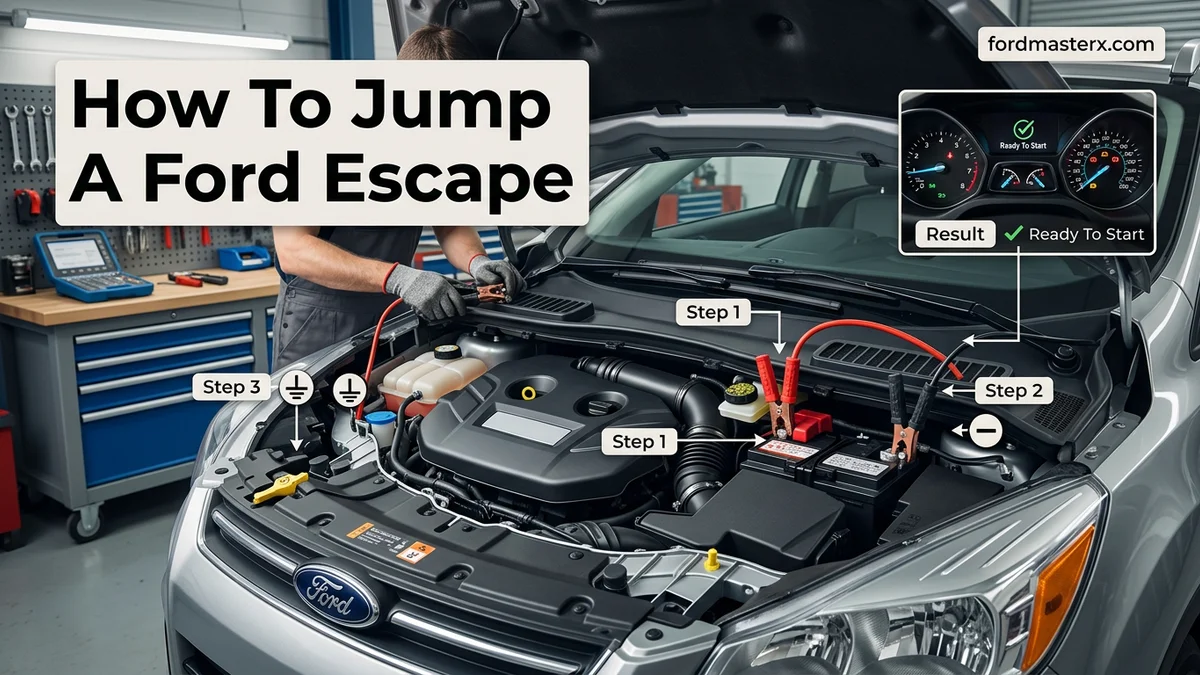
Following a precise sequence when connecting jumper cables is paramount, and here is how to safely connect jumper cables in 6 steps specific to your 2013 Ford Escape.

1. Connect Positive Terminal First
Take one red (positive) jumper cable clamp. Connect it securely to the positive (+) terminal of your dead 2013 Ford Escape battery. Ensure a firm, clean connection to maximize power transfer.
Next, connect the other end of the red (positive) jumper cable to the positive (+) terminal of the good battery in the donor vehicle. Double-check that both red clamps are firmly attached to their respective positive terminals.
2. Ground Negative Cable Securely
Take one black (negative) jumper cable clamp. Connect it to the negative (-) terminal of the good battery in the donor vehicle. This completes the circuit for the power source.
Now, take the other end of the black (negative) jumper cable. Do NOT connect it to the negative terminal of your dead 2013 Ford Escape battery. Instead, connect it to an unpainted metal surface on the engine block or frame of your Escape, away from the battery.
This creates a safe ground connection and helps prevent sparks near battery gases.
3. Start the Donor Vehicle
With all cables securely connected, start the engine of the donor vehicle. Let it run for about 5-10 minutes. This allows the donor battery to charge the dead battery in your 2013 Ford Escape slightly, giving it a better chance to start.
Keeping the donor vehicle running helps maintain a steady charge and prevents excessive drain on its own battery. Do not rev the engine aggressively; a steady idle is sufficient.
4. Attempt Engine Ignition
After the brief charging period, attempt to start your 2013 Ford Escape. Turn the ignition key for no more than 5 seconds. If the engine doesn’t start immediately, wait a minute or two before trying again. This prevents overheating the starter motor.
If the engine cranks slowly or still makes no sound, recheck all your cable connections to ensure they are tight and clean. Sometimes, a slight adjustment can make all the difference.
5. Disconnect Cables Carefully
Once your Ford Escape starts, allow both vehicles to run for a few minutes before disconnecting the cables. Disconnect them in the reverse order of connection to ensure safety.
First, remove the black (negative) cable from the grounded metal surface on your 2013 Ford Escape. Then, remove the black (negative) cable from the donor vehicle’s negative terminal. Next, remove the red (positive) cable from the donor vehicle’s positive terminal. Finally, remove the red (positive) cable from your 2013 Ford Escape’s positive terminal.
Be careful not to let the cable clamps touch each other or any metal surfaces on the vehicles.
6. Verify Successful Start
After removing all cables, your 2013 Ford Escape should continue running on its own. If it dies shortly after, there might be a deeper issue with your battery or charging system. A successful jump means the car remains running independently.
You can now safely thank your donor vehicle driver and proceed with the next steps for your Escape. Once your 2013 Ford Escape engine is running, a few immediate actions are crucial to ensure continued operation and prevent future battery issues.
What Immediate Steps to Take After Starting
After successfully jump-starting your 2013 Ford Escape, what immediate steps to take will ensure your battery recharges and help identify any persistent issues. This critical follow-up helps stabilize your vehicle’s electrical system.
Maintain Engine Operation
Once your Ford Escape is running, do not turn it off immediately. The alternator needs time to recharge the depleted battery. Keep the engine running for at least 20 to 30 minutes, ideally by driving the vehicle.
Driving at highway speeds for a portion of this time can be more effective than idling, as it allows the alternator to work optimally. This helps ensure a sufficient charge is stored in the battery for your next start.
Drive Your Vehicle Effectively
When driving, avoid excessive use of power-hungry accessories like the air conditioning, heated seats, or high-volume audio. These accessories draw power from the alternator, diverting it from recharging the battery.
Focus on maintaining a steady drive. If you must use accessories, keep them to a minimum until the battery has had ample time to regain its charge. This approach maximizes the effectiveness of the alternator’s work.
Monitor Dashboard Warnings
Pay close attention to your dashboard warning lights after the jump-start. Specifically, look for the battery warning light or “check engine” light. If the battery light remains illuminated, it indicates a problem with the charging system, likely the alternator.
If any warning lights persist, or if your Escape struggles to start again soon after, it is crucial to seek professional diagnosis. A mechanic can test your battery and alternator to pinpoint the underlying cause. Even with perfect execution, there are instances when your 2013 Ford Escape might not start after a jump, requiring specific troubleshooting approaches.
Why Your Escape Might Not Start After Jumping
If your 2013 Ford Escape engine still fails to start after an attempt, understanding why your Escape might not start after jumping can pinpoint the issue. Several factors can prevent a successful jump-start, even when following all steps.

Review Cable Connections
The most common reason for a failed jump-start is poor cable connection. Ensure all four clamps are firmly attached to the correct terminals and the ground point. Wiggle the clamps slightly to ensure good metal-to-metal contact, as corrosion or dirt can hinder the electrical flow.
Sometimes, the cables themselves might be faulty, with internal breaks or damaged insulation. Inspect your jumper cables for any signs of wear or damage before and during use.
Inspect Battery Health
Your battery might be severely discharged or internally damaged, preventing it from holding a charge. If the battery is very old, it might simply be beyond saving with a jump-start.
Listen for specific sounds when attempting to start. A rapid clicking sound often indicates a severely dead battery. If there’s no sound at all, the battery might be completely flat or there could be an issue with the starter.
Consider Other Component Failures
If the battery appears fine and connections are solid, the problem might lie elsewhere. A failing starter motor will often result in a single click or no sound when you turn the key, rather than a cranking noise. You might hear the solenoid engage, but the engine won’t turn over.
An alternator that isn’t charging the battery properly could be the culprit if your car starts but quickly dies. If you suspect these components, it’s best to call for roadside assistance or have your vehicle towed to a trusted mechanic for professional diagnosis and repair.
Understanding these steps provides clarity, and now we address some frequently asked questions to cover any remaining uncertainties.
Safely Jump Starting Your 2013 Escape
Successfully jump-starting your 2013 Ford Escape is a valuable skill that can save you time and stress. By diligently following safety precautions and connecting the cables in the correct sequence, you can bring your vehicle back to life. Always remember to prioritize safety, from wearing eye protection to ensuring proper ground connections, minimizing risks to yourself and your vehicle.
After a successful jump, continuing to drive your Escape for at least 20-30 minutes allows the alternator to adequately recharge the battery, preventing another immediate breakdown. If the issue persists, or if you notice any warning lights, seeking professional assistance is always the wisest next step.
Proactive maintenance and understanding your vehicle’s needs in 2026 ensure a reliable and safe driving experience.
Frequently Asked Questions About Jump Starting
Can I Jump a 2013 Ford Escape With a Portable Jump Starter?
Yes, you can jump-start a 2013 Ford Escape using a portable jump starter. Ensure the portable unit is fully charged and capable of providing sufficient amperage for an SUV. Follow the manufacturer’s instructions carefully, connecting positive to positive and negative to a ground point away from the battery, just as with traditional cables.
Where Is the Negative Terminal Located on a 2013 Ford Escape Battery?
The negative terminal on a 2013 Ford Escape battery is typically located under the hood, next to the positive terminal. It is marked with a minus sign (-) and often has a black cap or no cap. It’s usually smaller than the positive terminal, which has a plus sign (+).
How Long Should I Wait After Connecting Jumper Cables?
After connecting jumper cables, let the donor vehicle run for about 5-10 minutes before attempting to start your 2013 Ford Escape. This allows some charge to transfer to your dead battery. If it doesn’t start on the first try, wait another minute or two before trying again to prevent starter motor damage.
What If My Ford Escape Makes a Clicking Sound When Trying to Start?
A rapid clicking sound usually indicates a severely discharged or dead battery, meaning it doesn’t have enough power to turn the starter motor. Ensure your jumper cable connections are secure and the donor vehicle has run long enough to transfer sufficient charge. If it persists, the battery may need replacement.
Should I Replace My Battery If It Died Once?
A single dead battery event, especially if the battery is old or if you left lights on, might not require immediate replacement. However, if your 2013 Ford Escape battery dies frequently or struggles to start after recharging, it’s a strong indicator that the battery is failing and should be tested and likely replaced soon by a professional.