
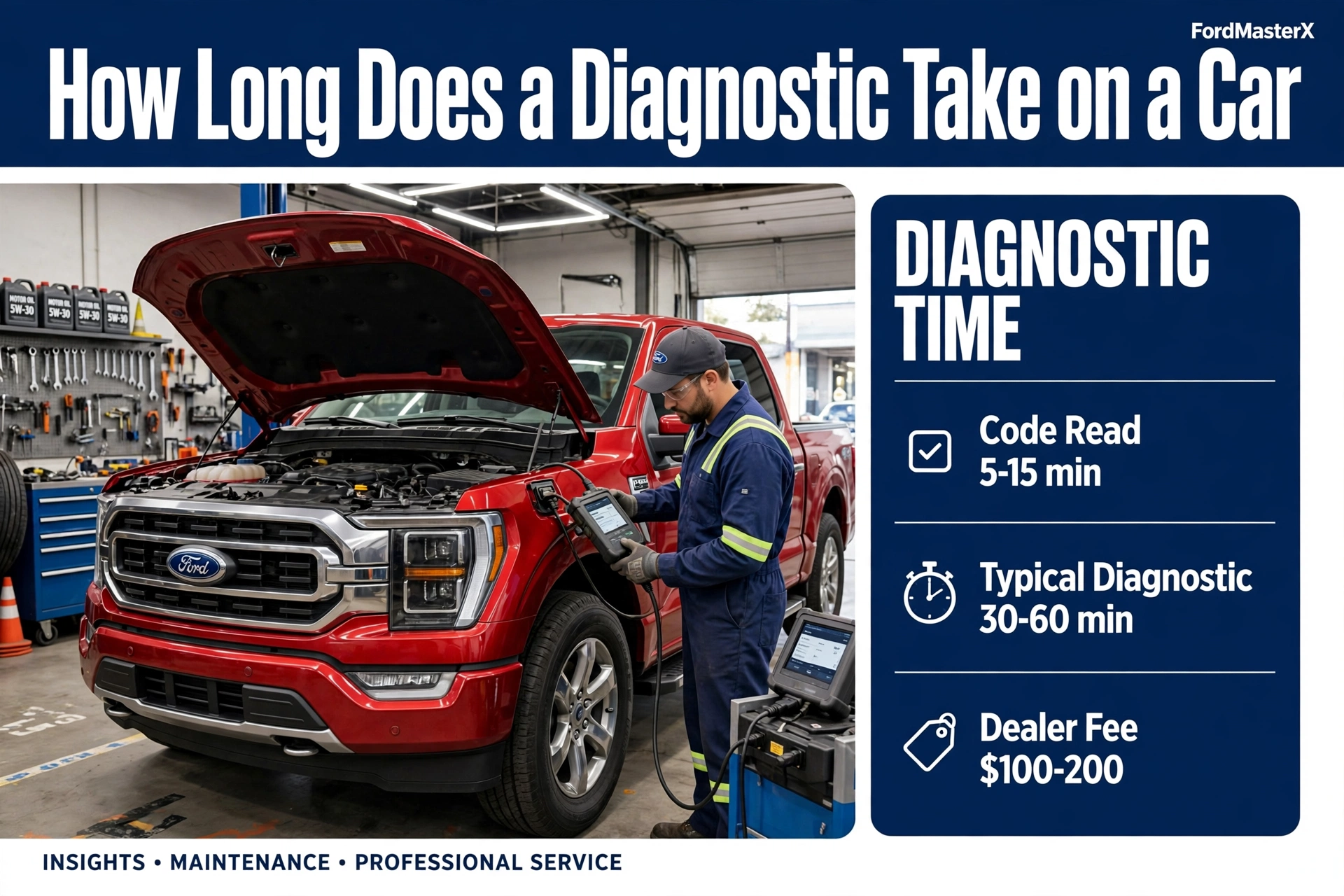
How Long Does a Diagnostic Take on a Car? Proven 2026 Guide

How long does a diagnostic take on a car? A standard diagnostic takes 30 to 60 minutes for a steady check engine light with one stored code. A full diagnosis of a misfire or a drivability problem takes 1 to 3 hours. An intermittent fault can take a full day, and sometimes longer. The clock depends on which of two tests you are buying and on what your truck is doing wrong. This guide gives you the time for each symptom, the cost at a Ford dealer and an independent shop, and the steps that shorten the visit.
Quick Scan or Full Diagnosis? 2 Tests That Set Time
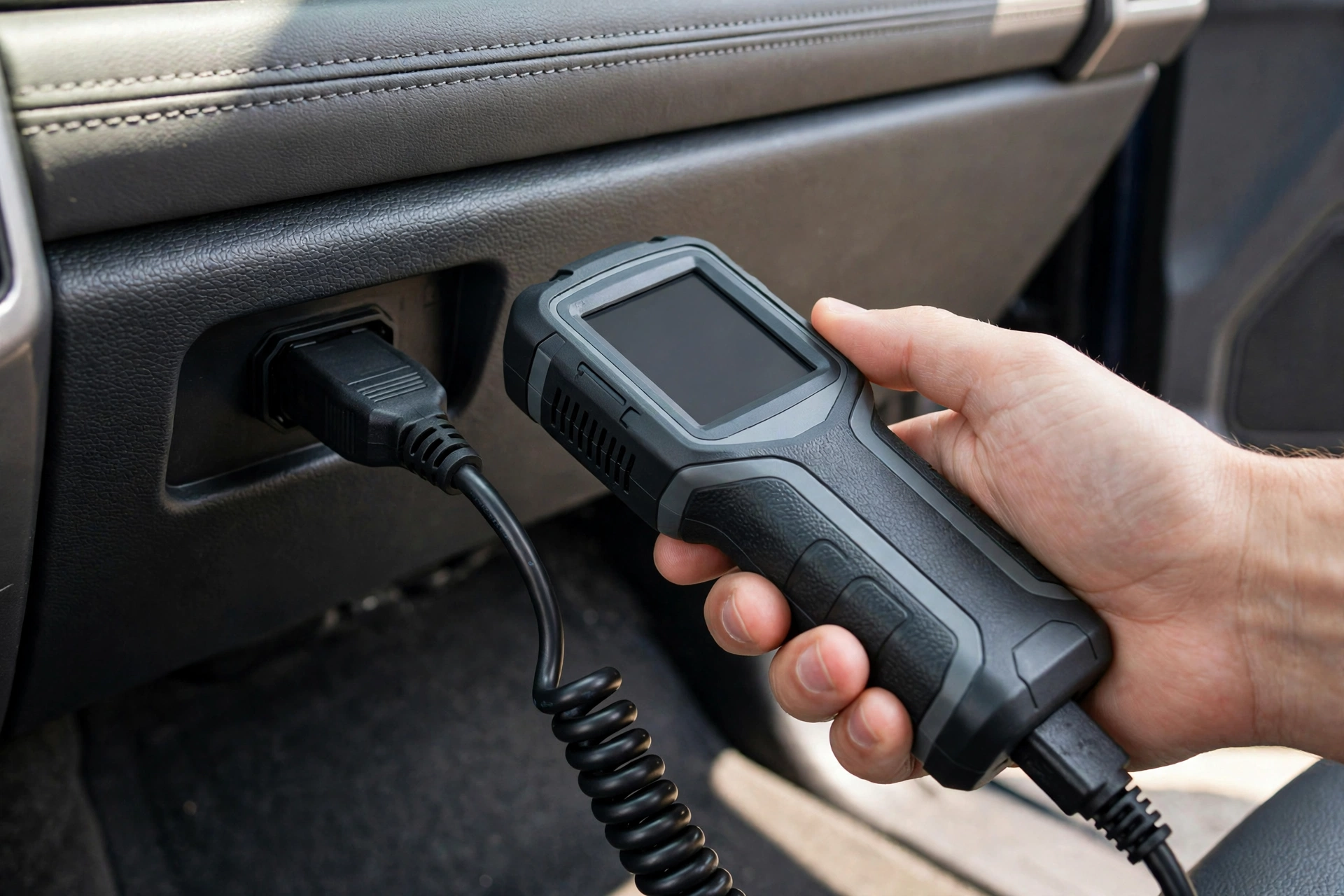
Most confusion about diagnostic time comes from one mix-up: a code read and a diagnosis are two different jobs. A code read plugs a scanner into the OBD-II port and pulls the stored codes. That part takes 5 to 15 minutes, and a chain parts store will often do it free. A diagnosis starts where the code read stops: the technician reads freeze frame data, checks live sensor values, runs pinpoint tests, and confirms the cause before naming a part.


Your Ford has carried OBD-II since model year 1996, when it became mandatory for light-duty vehicles in the United States. The EPA rule that set the federal standard incorporates SAE J1979, the standard that defines how a scan tool asks the truck for data and how the truck answers. It defines ten diagnostic modes, including stored codes and freeze frame data. A free code read usually shows only the stored codes. A paid diagnosis uses the rest. The EPA final rule on federal on-board diagnostics sets out the requirement that trouble codes be available through the standardized connector.
Here is the practical split: if you only need to know whether a steady light is serious, a code read is enough and takes minutes. If you need to know what to fix, you need a diagnosis, and you should plan for at least an hour. The Bosch Car Service guide puts a standard diagnostic check at 30 to 60 minutes.
Diagnostic Time at a Glance
Two tests, two clocks. Find your symptom, then read the time that matches it.
A scanner pulls stored trouble codes from the OBD-II port. It names the code, not the cause. Free at most chain parts stores.
One stored code with an obvious cause. The technician reads freeze frame data, checks live values, and confirms the part.
Multiple codes, a rough idle, or a problem that shows up only under load. Pinpoint testing and a road test add time.
The fault has to be reproduced before it can be traced. Wiring checks and data logging can stretch across sessions.
How Long Does a Diagnostic Take by Symptom in 2026


The symptom sets the clock more than the shop does. A steady light with one code is a short visit, while a fault that comes and goes is a long one: the technician cannot test a problem that is not happening. Find your symptom below.
| Symptom | Typical Diagnostic Time | What Adds the Time |
|---|---|---|
| Steady light, one stored code | 30 to 60 minutes | Freeze frame and one pinpoint test |
| Loose gas cap code (P0456) | 15 to 30 minutes | Cap check, smoke test if needed |
| Single sensor fault, clear code | 30 to 60 minutes | Live data and wiring check |
| Misfire or rough running | 1 to 3 hours | Coil, plug, injector, compression checks |
| Transmission shifting problem | 1.5 to 3 hours | Module scan and pressure testing |
| Battery drain or electrical fault | 1 to 2 hours | Draw test and circuit tracing |
| Intermittent no-start or stalling | A full day, sometimes longer | Fault must be reproduced and logged |
| Multiple warning lights at once | 2 to 4 hours | Network and module checks |
Two sources agree on the shape of this table. EngineerFix puts code retrieval at 5 to 15 minutes, a basic diagnosis at 30 to 60 minutes, and complex work at 2 to 4 hours. SpeedyRoo puts a single code at roughly one hour, a code plus symptoms at 2 to 3 hours, and an intermittent fault at often a full day. Protyre puts a full test at 1 to 1.5 hours. The numbers differ because the scopes differ: a code read, a standard check, and a full test are three different jobs.
A misfire is the most common drivability complaint on Ford trucks. A steady misfire on one cylinder usually traces to a coil, a plug, or an injector, and live data confirms it in under an hour. A misfire that moves between cylinders or appears only under load needs a road test with data logging, and that pushes the visit past two hours. The acceleration shudder diagnosed by Ford case shows the same pattern: the symptom only appeared while the truck was moving, so dealer-level testing was needed to pin it down.


A tire pressure light follows a different clock: it means the TPMS system, not the engine computer, and most TPMS faults clear with a gauge check and a short drive. The guide to why a tire pressure light stays on after filling tires walks through that separate fix.


5 Factors That Stretch a Diagnostic Past 1 Hour


Five factors decide whether your visit ends in an hour or runs into the afternoon. If two or more apply, ask for a revised estimate first.
Intermittent Faults Hide


An intermittent fault is the single biggest time multiplier. The technician cannot test a circuit that is working fine at the moment, so the truck may need extended idle monitoring, a road test with data logging, or an overnight stay so the fault can be caught cold. SpeedyRoo puts intermittent faults at often a full day.
Multiple Codes Stack Up
One code points at one system. Three codes can point at one shared cause or three separate problems. A lean code, a misfire code, and an oxygen sensor code may share one cause: a vacuum leak. Proving that takes a smoke test and a fuel trim check. Each extra code adds another test, and each test adds time.


Electrical Faults Need Tracing


Mechanical faults announce themselves with noise or wear you can see. Electrical faults hide in wiring, connectors, and modules. A parasitic drain needs a draw test with the truck asleep, which takes a long wait while the meter watches. A network fault needs a scan of every module on the CAN bus. Simple drains run 1 to 2 hours; multi-module faults run 2 to 4 hours.
Parts Access Adds Hours
Some tests need parts removed before the technician can reach the sensor. An intake manifold has to come off to reach some knock sensors, and a wheel and fender liner may have to come off to reach a harness. Ask whether that access work is included in the diagnostic fee or billed on top of it.
Older Trucks Add Steps


Age adds time in two ways: an older truck may carry several aged parts at once, so one fault can mask another. Second, some older Ford systems need model-specific tools, such as FORScan or the factory FDRS software, to read codes a generic scanner cannot see. A 7.3L Powerstroke ICP sensor fault is a good example: the 7.3 Powerstroke ICP sensor location and diagnostics guide shows how one sensor on that engine needs its own test path.
Ford Dealer or Independent Shop? 2 Time and Cost Paths
Where you go changes the time and the price. A Ford dealer is not always slower, and an independent shop is not always cheaper. The table below compares the four realistic options, using 2026 US figures.
| Option | Typical Time | Typical Cost | Best For |
|---|---|---|---|
| Chain parts store code read | 5 to 15 minutes | Free | Steady light, first triage only |
| Independent shop diagnosis | 30 to 60 minutes | $75 to $160 | Most faults, best general value |
| Ford dealer diagnosis | 45 to 90 minutes | $100 to $200 | Warranty, recalls, brand electronics |
| DIY scan with your tool | 10 to 30 minutes | $0 after tool cost | Repeat lights, simple codes |
The dealer path takes longer because the dealer runs a fuller procedure. A Ford dealer uses FDRS, the factory diagnostic software, and can read manufacturer-specific codes, check service bulletins by VIN, and look up open recalls in the same visit. That depth pays off on late-model electronics and warranty work. The OBDeleven guide to the Ford diagnostic fee puts the typical dealer charge at $100 to $200, with a full range of $75 to $255, and notes that a fee over $300 is unusual. Ask whether the fee can be credited toward the repair.
An independent shop is usually the faster and cheaper choice for a common fault. Shops commonly bill a standard diagnosis as one hour of posted labor, which is why the same test costs $85 in one town and $150 in another. RepairPal’s national estimator puts check engine light diagnosis at $122 to $233 in labor, and general diagnosis at $122 to $179, based on its June and July 2026 estimates. The Uptown Imports guide to shop diagnostic charges cites those RepairPal figures and notes that the fee covers finding the cause, not the repair. CarMD’s 2026 Vehicle Health Index puts the average repair behind a check engine light at $554, so the diagnostic hour is usually the cheaper half of the bill.
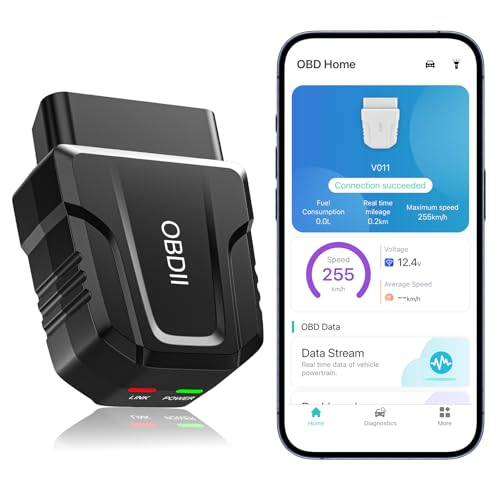
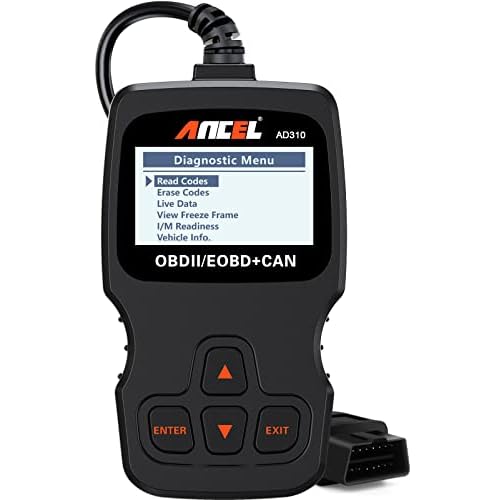
The free code read is the fastest option and the easiest to misuse: a parts store read shows stored codes only. It does not show pending codes, freeze frame data, or live sensor values, so it cannot tell you whether a code means a failed part or a loose connector. Use it to decide whether the light is urgent, then book a real diagnosis for anything beyond a loose gas cap. The DIY path sits in the middle: a decent scanner can pay for itself after a few dealer visits, and the best OBD-II scanner picks for the Ford F-150 cover the models most owners buy. Diesel owners need a scanner that reads Powerstroke codes, and the best OBD-II scanner picks for the 6.7 diesel list the ones that do.
What Happens During a 60 Minute Diagnostic in 7 Steps
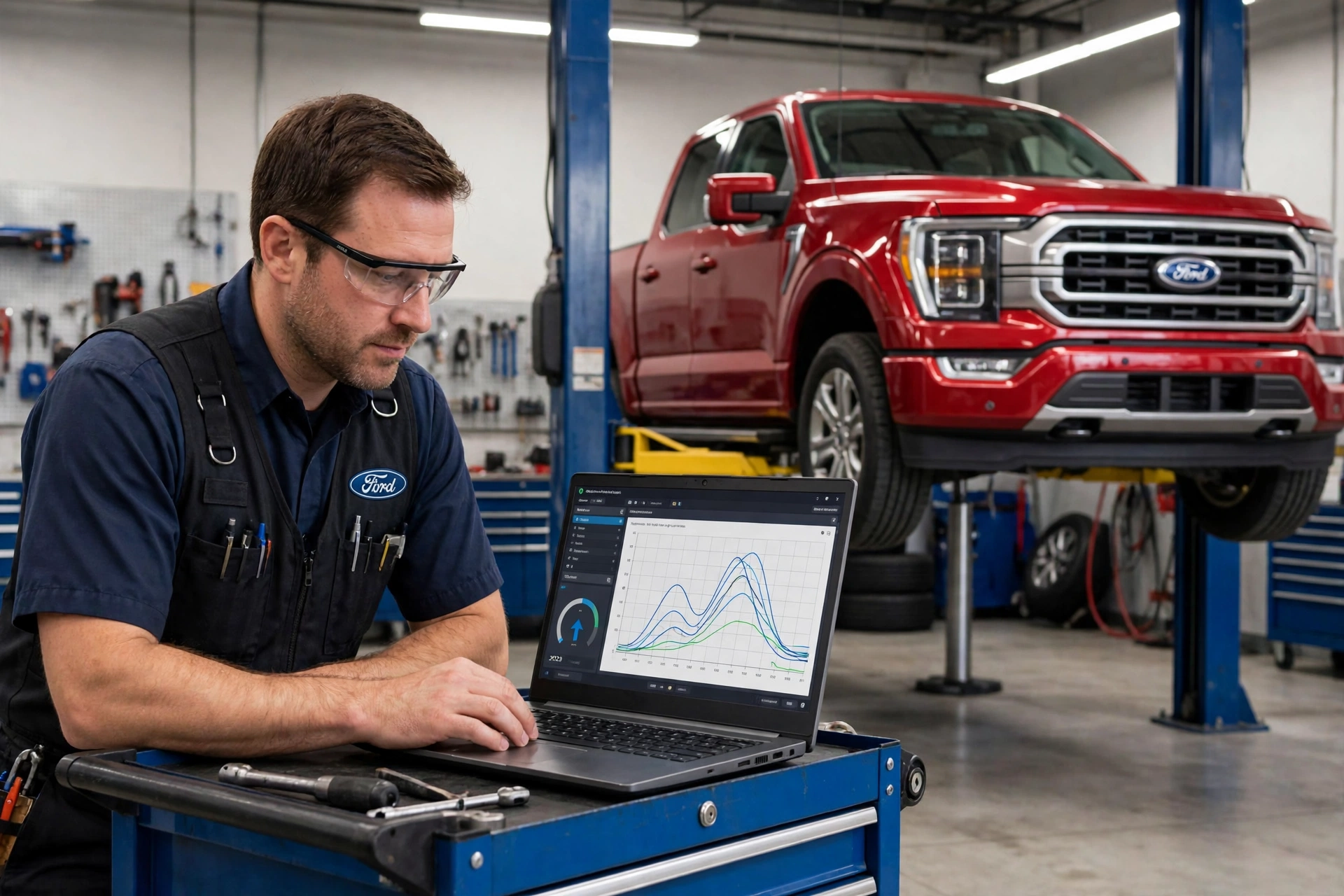
Knowing the steps helps you judge whether the shop is doing real work or just reading a code and guessing.
- Intake, 5 minutes. The technician records when the light came on and what the truck was doing.
- Scan, 5 to 15 minutes. The scan tool pulls stored, pending, and permanent codes from the OBD-II port.
- Freeze frame review, 5 minutes. The technician reads the snapshot saved when the fault set: speed, load, temperature, and fuel trim.
- Live data check, 10 minutes. The technician watches sensor values against the expected range. A flat or out-of-range reading points at the fault.
- Visual inspection, 5 minutes. The technician checks the parts the code points at: wiring, connectors, vacuum hoses, and fluid levels.
- Pinpoint testing, 10 to 15 minutes. The technician runs the factory test for the code: voltage, resistance, smoke, or pressure.
- Report and estimate, 5 minutes. You get the cause in plain words, the cost, and whether the truck is safe to drive.
If a shop skips from step 2 straight to a parts quote, you did not get a diagnosis. You got a code read with a guess attached. RepairPal warns that replacing parts based on a trouble code alone leads to unnecessary repairs. A code names a system, not a part: an oxygen sensor code can come from the sensor, damaged wiring, a loose connector, or an exhaust leak, and only the pinpoint test in step 6 tells them apart.
3 Ways to Shorten Your Diagnostic Visit Today
You cannot make a fault simpler, but you can cut the time spent finding it. Three habits save the most time.
Write Down Every Symptom
Write down when the light came on, whether it is steady or flashing, and what the truck was doing: cold start, highway speed, hard acceleration, or idling. Note any noise, smell, or change in how the truck drives. A cold-start-only symptom tells the technician to test the truck cold.
Bring Your Service History
Bring the last repair invoice and the last code read printout. A code that keeps returning after a part was replaced points at wiring or a shared cause, and the technician will test that first. If you have already run your own scan, bring the exact code numbers. A home scan with a basic reader, such as the Equus digital Ford code reader, gives you the numbers to hand over.
Book the First Slot
Book the first appointment of the day, and arrive with a cold truck if the fault happens on cold starts. Shops run behind as the day fills: a diagnostic that starts at 8 a.m. finishes before lunch, while one at 3 p.m. can roll into the next day. Tell the service advisor the exact symptom when you book.
4 Warning Signs That Need a Technician Now
- The check engine light is flashing. A flashing light usually means an active misfire that can damage the catalytic converter. Get the truck checked the same day.
- The truck stalls, loses power, or will not start. A drivability fault that affects safety needs a tow, not a drive to the shop.
- You smell fuel, burning oil, or coolant, or you see smoke. Stop in a safe place and shut the truck off.
- Several warning lights come on at once with a loss of power steering or brakes. This is a same-day tow.
6 Questions Ford Owners Ask About Diagnostic Time
How Long Does a Diagnostic Take?
A standard diagnostic takes 30 to 60 minutes for one stored code. A misfire or drivability fault takes 1 to 3 hours, and an intermittent fault can take a full day or longer.
Is a Free Code Read Enough?
No. A free code read shows stored codes only, in 5 to 15 minutes. A real diagnosis adds freeze frame data, live sensor values, and pinpoint testing to confirm the cause.
What Does a Ford Dealer Charge?
A Ford dealer typically charges $100 to $200, with a full range of $75 to $255. Ask whether the fee is credited toward the repair before the work starts.
Why Do Shops Quote Different Times?
They are quoting different jobs. A 30 minute quote is usually a standard check, while a 90 minute quote is a full test with road testing. Ask what each quote includes.
Can I Diagnose My Ford Myself?
Yes, for the first step. A home OBD-II scanner reads the stored codes and freeze frame data in minutes. Complex, intermittent, and electrical faults still need a shop with factory tools.
Will the Shop Fix It Today?
Often, but not always. A single-code fault with the part in stock usually gets fixed the same day. Intermittent faults and parts on order push the repair to the next day or later.
What to Do Before You Book Your Diagnostic
How long does a diagnostic take on a car? Plan on 30 to 60 minutes for a simple check engine light, 1 to 3 hours for a misfire, and up to a full day for a fault that comes and goes. A free code read takes minutes, but it is triage, not a diagnosis. Book the dealer when the job needs factory tools or warranty coverage, and book an independent shop when the fault is common. Write down your symptoms, bring your service history, and book the first slot of the day. You will spend less time waiting and the technician will spend more time fixing.