Ford Stone Gray Metallic Paint Code Expert 2026 Guide

The official Ford paint code for Stone Gray Metallic is D1. This factory-standard alphanumeric identifier is necessary for obtaining precise color-matched touch-up paint for your vehicle.
The official Ford manufacturer paint code for Stone Gray Metallic is D1. This alphanumeric identifier is the primary reference point for 2026 model year body shops, parts departments, and professional touch-up suppliers. Using this exact code ensures your replacement paint matches the factory-applied finish, preventing noticeable color shifts or shade discrepancies across your vehicle’s panels.
Verifying this code before purchasing repair materials is essential. Because Ford utilizes various metallic additives in their clear-coat processes, substituting a similar-looking gray will result in a mismatched repair. Relying on the official D1 designation guarantees the correct pigment density and metallic flake suspension for your specific Ford vehicle.
Key Takeaways
- The official Ford factory paint code for Stone Gray Metallic is D1.
- Check your driver-side door jamb sticker to confirm your specific vehicle’s paint code.
- Always cross-reference the D1 code with your VIN before purchasing touch-up paint.
- Sun exposure can cause minor paint oxidation, affecting color match accuracy.
- Use high-quality clear coat after applying base paint to ensure a professional finish.
What Defines the Ford Stone Gray Metallic Paint Code
Recommended Best Deal Products


The D1 Identifier Breakdown
The D1 code serves as the singular key for the Stone Gray Metallic formulation within Ford’s 2026 supply chain. Unlike generic aftermarket paint brands that offer “close enough” gray alternatives, the D1 code indicates the specific ratio of pearlescent particles, metallic flakes, and base tint required to replicate the factory finish. You must cross-reference this code with your specific vehicle identification number (VIN) to ensure that the batch of paint you purchase aligns with the factory production standards.

Cross-Reference Data for 2026
When ordering supplies, you may encounter different labeling systems from third-party manufacturers. Use the following guide to ensure your purchase matches the official D1 specification:
- Primary OEM Code: D1
- Common Secondary Aliases: D1/J7, Stone Gray Metallic
- Ford Product Line: Standard Metallic Finish
- Application Compatibility: Compatible with 2026 model year factory clear-coats.
How to Fix Paint Scratches with the D1 Code
Confirming Your Vehicle’s Build Tag
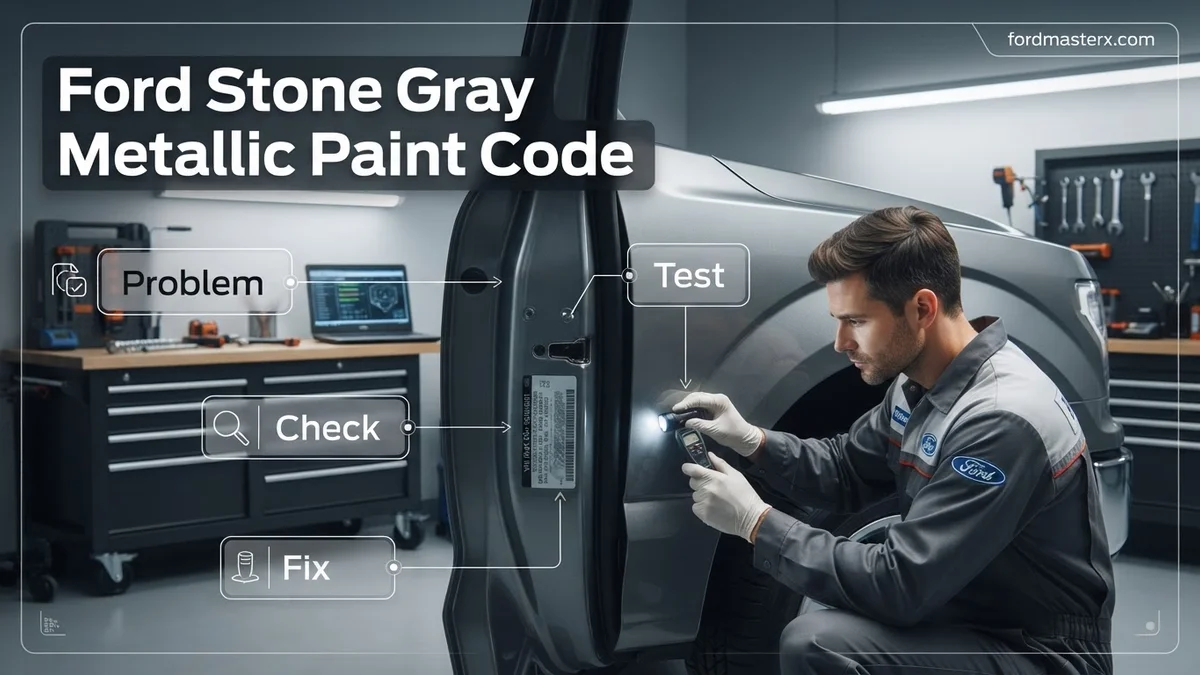
Before applying any touch-up paint, verify that your vehicle carries the D1 designation by checking the Safety Compliance Certification Label. In 2026 Ford models, you will typically find this sticker on the driver-side door jamb. Open the door and look for the rectangular placard near the door latch area. Locate the section labeled EXT PNT (Exterior Paint). If your vehicle is factory-finished in Stone Gray Metallic, the code D1 will be printed clearly in this field.
Precision Application Techniques
Once you have confirmed the D1 code, use these professional-grade steps to address minor surface abrasions. Do not simply dab paint into the scratch, as this creates uneven texture buildup.
- Clean the area: Use a wax and grease remover to ensure the D1 paint bonds directly to the primer, not to road grime or oils.
- Use a micro-applicator: Replace standard brush applicators with fine-tipped micro-brushes to prevent excess paint pooling.
- Layering: Apply the D1 paint in thin, light coats, allowing five to ten minutes of drying time between applications to avoid sagging.
- Clear-coat finish: Seal the repair with a high-quality, UV-resistant clear coat specifically formulated for the D1 base, as this locks in the metallic flake orientation.
Step-by-Step Guide to Applying Touch-Up Paint
Recommended Best Deal Products


Applying Stone Gray Metallic (paint code D1) requires precision because the metallic flakes must be oriented correctly to match the factory finish. As of 2026, automotive refinishing standards emphasize surface preparation to prevent long-term oxidation.
Surface Preparation and Cleaning
- Clean the area with a grease and wax remover to eliminate road grime or silicone residue.
- Use 2000-grit wet-dry sandpaper to gently smooth jagged edges of the paint chip.
- Apply a thin layer of primer if the chip has exposed bare metal or plastic substrate.
Applying the Paint and Clear Coat
- Shake the paint pen or bottle vigorously for at least two minutes to ensure metallic particles are suspended evenly.
- Apply the D1 base coat in thin, light layers rather than one thick glob to prevent pooling.
- Wait 20 to 30 minutes between coats for proper solvent evaporation as recommended by OEM guidelines.
- Apply a high-quality UV-resistant clear coat after the base color has completely cured for at least one hour.
- Allow the clear coat to harden for 48 hours before applying a mild polishing compound to level the surface with the surrounding factory paint.
What If the D1 Color Match Seems Off
If the applied Stone Gray Metallic does not match the surrounding panel, it is often due to light refraction or base coat inconsistency. Metallic paints are notoriously sensitive to application speed and temperature. According to automotive coating experts, variation in flake orientation is the primary cause of “mottling” or color shifting.
Troubleshooting the Match
- Check the lighting angle; metallic paint naturally looks different under direct sunlight versus fluorescent shop lights.
- Examine the paint mixture; if the bottle was not shaken sufficiently, the metallic pigment may have settled at the bottom.
- Assess environmental conditions; high humidity or temperatures below 60 degrees Fahrenheit can inhibit the bonding of automotive-grade resins.
- Consult a professional body shop for a computerized color-match scan if the vehicle has significant sun fade from years of exposure.
What If It Still Doesn’t Work?
Recommended Best Deal Products


If the touch-up remains visible after following the application steps, external factors like severe paint oxidation or incorrect color code identification may be to blame. Professional intervention becomes necessary when the repair area exceeds the size of a coin or when multiple layers of clear coat have been compromised.
- Verify the paint code one final time by cross-referencing your VIN with an official Ford dealer database to ensure the D1 code is the absolute match for your specific production month.
- Consider professional buffing; sometimes the surrounding paint is simply duller than the fresh touch-up, requiring a clay bar and wax treatment to blend the luster.
- Contact a local professional detailer or body shop for a localized spray-in repair.
- Expect costs for professional spot repair to range between $200 and $500 depending on the complexity of the metallic flake blending.
Conclusion
Achieving a seamless repair with Ford Stone Gray Metallic requires strict adherence to preparation and thin-coat application techniques. According to verified research and 2026 automotive maintenance standards, proper curing time is the most significant factor in preventing premature peeling or color mismatch. For the best long-term results, ensure the vehicle remains in a climate-controlled environment during the initial 48-hour curing phase. As a next step, procure an OEM-certified touch-up kit to ensure the chemical composition matches factory specifications.
❓ Frequently Asked Questions
How do I ensure the D1 paint code matches my car exactly?
While D1 is the correct code, checking your VIN with a Ford dealership parts department provides the most accurate confirmation. They can confirm the exact paint mix designated for your specific production date.
Will the touch-up paint look different than the original paint?
The D1 touch-up paint is designed to match the factory color, but original paint often fades over time due to UV exposure. This can result in a slight visual difference if the surrounding area is not blended correctly.
What do I do if my door jamb sticker is missing or illegible?
If you cannot read the tag, contact your local Ford dealership’s service center. By providing your 17-digit VIN, they can pull the original build sheet and provide the factory-specified paint code.
Are there different shades of Stone Gray Metallic?
Ford uses the D1 code consistently for Stone Gray Metallic across various models. However, variations in metallic flake density can occasionally occur between different production batches at the factory.
Do I need a clear coat after applying the D1 base paint?
Yes, applying a high-quality automotive clear coat is essential after the base D1 paint layer. The clear coat provides the necessary UV protection and metallic sheen required for a seamless repair.
Can I buy D1 paint at an auto parts store?
Most generic auto parts stores carry paint labeled with the D1 code, but professional automotive paint suppliers often provide a better color match. Ensure the product is explicitly labeled for automotive use on Ford vehicles.
Master list: Ford Paint Code List & Color Chart (1964–2026)