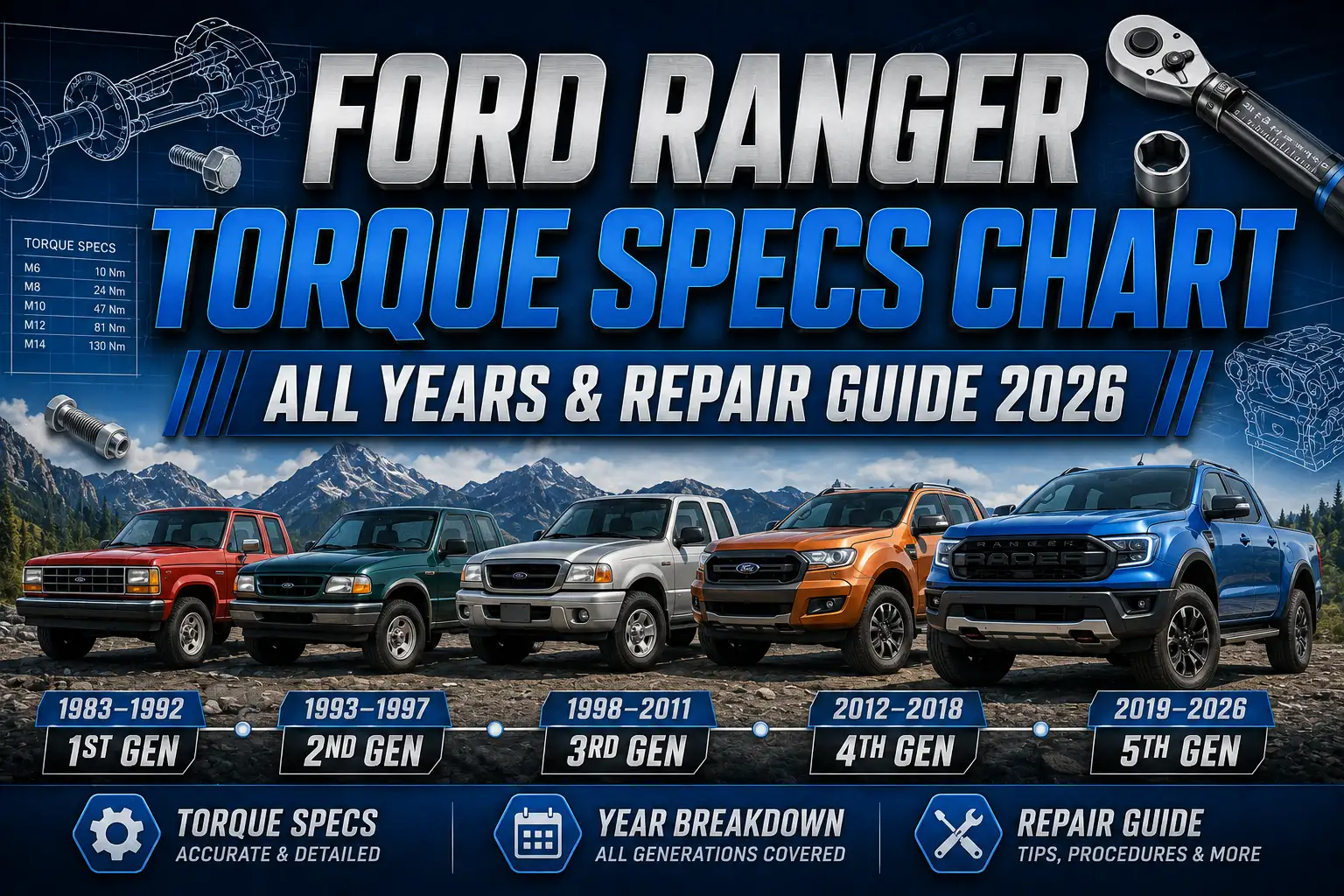
Ford Ranger Torque Specs Chart by All Years and Repair Guide 2026

Ford Ranger torque specs are not one single number. The correct value depends on the model year, repair area, fastener size, thread condition, and whether Ford requires a tightening sequence or new hardware.
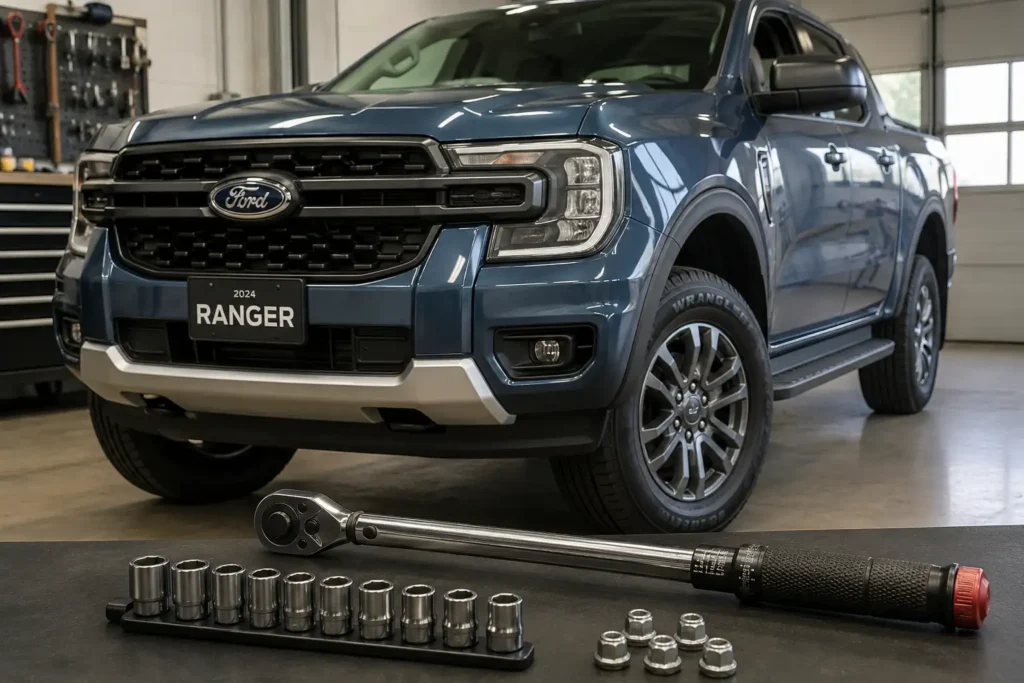
For most wheel jobs on modern Rangers, the lug nut torque is 100 lb-ft or 135 Nm. Ford owner manual data lists that value for Ranger wheel lug nuts, and the same value appears in 2019 Ranger manual archives.

Prime for Young Adults — 6 Months Free
Students and 18–24s get six months of Prime free, then half price.
Start 6 Months Free As an Amazon Associate I earn from qualifying purchases.Use this chart as a quick lookup guide, but do not treat every Ranger bolt the same. Engine, brake, steering, and suspension fasteners need the exact service procedure for your year and drivetrain.
Quick Torque Reference by Repair Area
Recommended Best Deal Products


Use this visual as a fast garage-side reference. Wheel lug torque is verified from Ford owner manual data, while brake, suspension, steering, and internal engine fasteners need the exact factory service procedure.
Most Searched Ranger Torque Spec
100 lb-ft 135 Nm
Common Ford Ranger wheel lug nut torque for 2019 and newer trucks. Retighten after wheel removal, tire rotation, or flat tire service.
Safe Torque Workflow
Identify Your Ranger
Confirm year, trim, engine, drivetrain, and exact repair area before using any torque value.
Check The Source
Use owner manual data for wheel torque and factory service data for critical repair fasteners.
Prepare The Threads
Clean threads and mounting surfaces. Do not lubricate threads unless the repair procedure says to.

Audible — Listen Free for 30 Days
One free credit a month and thousands of titles included.
Listen Free for 30 Days As an Amazon Associate I earn from qualifying purchases.Tighten In The Correct Pattern
Use a torque wrench, follow any sequence, and retorque wheels after the recommended driving interval.
| Repair Area | Fastener Or Spec | Torque Value | Use This Value For | Status |
|---|---|---|---|---|
| Wheels | Lug nuts | 100 lb-ft or 135 Nm | 2019 and newer Ford Ranger wheel installation | Official Manual |
| Wheels | Lug nuts | 100 ft-lb or 135 Nm | 1998 Ranger service manual mirror reference | Manual Data |
| Engine Output | 2.3L EcoBoost | 310 lb-ft | 2024 and 2025 Ranger performance spec | Ford Specs |
| Engine Output | 2.7L EcoBoost | 400 lb-ft | 2024 and 2025 Ranger performance spec | Ford Specs |
| Engine Output | 3.0L EcoBoost Ranger Raptor | 430 lb-ft | 2024 Ranger Raptor performance spec | Ford Data |
| Brakes | Caliper bracket and guide pin bolts | Service manual required | Brake service by year and brake package | Verify First |
| Suspension | Ball joints, tie rods, control arms, shocks | Service manual required | 2WD, 4WD, lifted, and stock suspension repairs | Verify First |
| Engine Repair | Head bolts, main bolts, rod bolts, timing fasteners | Service manual required | Internal engine repair and sealing surfaces | Verify First |
Quick Ford Ranger Torque Specs by Repair Area
Use this table as the fast lookup point before you tighten anything. The safest torque spec is always the one matched to your exact Ranger year, engine, and repair procedure.
| Repair Area | Common Fastener | Verified Torque Value | Years Covered | Verification Note |
|---|---|---|---|---|
| Wheels | Lug nuts | 100 lb-ft or 135 Nm | 2019 and newer US Ranger owner manual data | Official Ford owner manual value |
| Wheels | Lug nuts | 100 ft-lb or 135 Nm | 1998 Ranger service manual mirror | Service manual mirror value |
| Engine Output | 2.3L EcoBoost engine torque | 310 lb-ft | 2024 and 2025 Ranger | Official Ford technical spec data |
| Engine Output | 2.7L EcoBoost engine torque | 400 lb-ft | 2024 and 2025 Ranger | Official Ford technical spec data |
| Engine Output | 3.0L EcoBoost Ranger Raptor torque | 430 lb-ft | 2024 Ranger Raptor | Ford published product data |
| Brakes | Caliper bracket and guide pin bolts | Service manual required | Varies by brake package | Do not use a universal number |
| Suspension | Ball joints, tie rods, control arms, shocks | Service manual required | Varies by 2WD, 4WD, and generation | Do not copy specs across years |
| Engine Repair | Head bolts, main bolts, rod bolts, valve cover bolts | Service manual required | Varies by engine family | Sequence and replacement rules may apply |
The wheel torque value is the easiest to verify because Ford lists it in the owner manual. Other areas are different. Brake, suspension, steering, and internal engine fasteners often appear inside the repair procedure, not in a simple public chart.
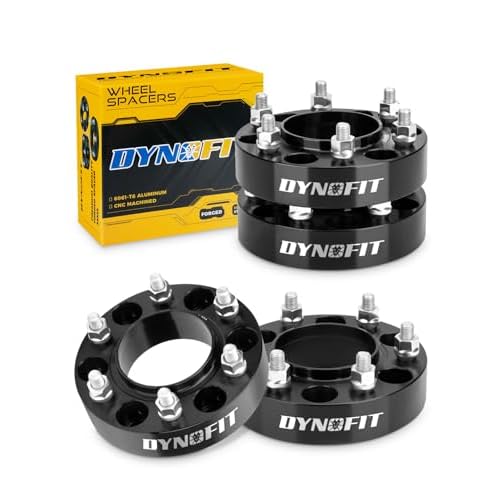
If you are working around wheels, also confirm fitment details with the Ford bolt pattern chart before installing aftermarket wheels, adapters, or spacers.
Ford Ranger Lug Nut Torque by Year
Recommended Best Deal Products

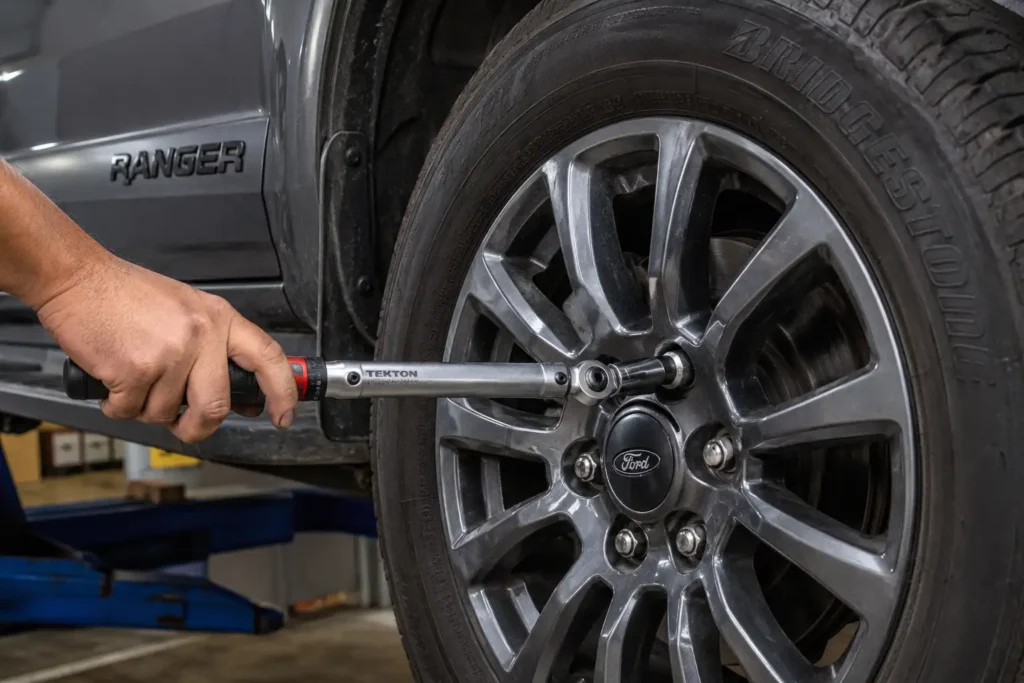
For most Ford Ranger wheel jobs, the key number is 100 lb-ft. Ford lists modern Ranger wheel lug nut torque as 100 lb-ft or 135 Nm in owner manual data.
| Ford Ranger Year Range | Lug Nut Torque | Metric Value | Source Confidence |
|---|---|---|---|
| 1998 Ford Ranger | 100 ft-lb | 135 Nm | Service manual mirror |
| 2019 to 2023 Ford Ranger | 100 lb-ft | 135 Nm | Ford owner manual and 2019 manual archive |
| 2024 Ford Ranger | 100 lb-ft | 135 Nm | Ford owner manual and manual archive |
| 2025 Ford Ranger | 100 lb-ft | 135 Nm | Ford owner manual data |
| 2026 Ford Ranger | 100 lb-ft | 135 Nm | Current Ford owner manual data shown in Ford service content |
Ford also tells owners to retighten lug nuts after wheel disturbance. One current Ford owner manual page says to retighten the lug nuts within 100 miles or 160 kilometers after tire rotation, flat tire change, or wheel removal.
That retorque step matters because a wheel can settle after installation. Clean the wheel mounting surface, start every lug by hand, tighten in a star pattern, and finish with a torque wrench.
Key Ford Ranger Suspension Torque Specs
Suspension torque specs change faster than lug nut specs because the Ranger used different front-end layouts. Older US Rangers used different 2WD and 4WD front suspension designs, while the 2019 and newer trucks use a modern midsize truck suspension layout.
Do not use one suspension torque chart across every Ranger generation. A lower ball joint, upper control arm, tie rod end, shock mount, or stabilizer link can use a different fastener and torque value depending on year, drivetrain, and repair kit.
| Suspension Fastener | Safe Article Guidance | Why It Needs Verification |
|---|---|---|
| Upper ball joint nut | Use year-specific service manual value | Ball joint design and knuckle layout vary |
| Lower ball joint nut | Use year-specific service manual value | 2WD and 4WD layouts can differ |
| Tie rod end nut | Use year-specific service manual value | Steering fasteners affect road safety |
| Upper control arm bolts | Use year-specific service manual value | Alignment and bushing preload matter |
| Front shock fasteners | Use year-specific service manual value | Shock mount design varies by generation |
| Rear shock fasteners | Use year-specific service manual value | Rear suspension hardware differs by model |
| Leaf spring U-bolts | Replace or retorque only by manual procedure | U-bolts can stretch and lose clamping force |
Ford Performance installation instructions for a Ranger off-road shock kit show how specific suspension values can get. That instruction sheet lists values such as 24 lb-ft for shock and spring assembly upper nuts, 50 lb-ft for shock and spring assembly lower bolts, 85 lb-ft for the stabilizer link upper nut, 35 lb-ft for the tie rod end nut, 221 lb-ft for the wheel hub nut, and 52 lb-ft for rear shock absorber bolts and nuts.
Audible Premium Plus — Annual Membership
12 audiobook credits up front, plus the full Audible catalogue.
See Annual Plans As an Amazon Associate I earn from qualifying purchases.Those numbers apply to that Ford Performance kit procedure, not every Ranger suspension repair. Use them as proof that suspension torque must be matched to the exact job.
If you are replacing worn shocks or control arms instead of reinstalling stock parts, compare part quality first with our guide to truck suspension brands and replacement options.
Common Ford Ranger Brake Torque Specs
Recommended Best Deal Products
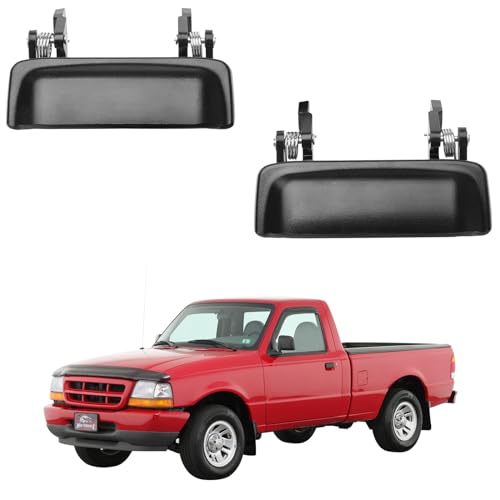


Brake fasteners need more care than many DIYers give them. A loose caliper bracket bolt can create noise, uneven braking, or a dangerous failure after a brake job.
For older Rangers, public service manual mirrors can show some brake torque values. One 2004 Ford Ranger 2WD V6 service manual page lists the front disc brake caliper anchor plate bolts at 115 Nm or 85 ft-lb.
That value should not be copied blindly to every Ranger. Brake caliper bracket bolts, guide pin bolts, rear disc brake fasteners, and drum brake hardware can vary by year, axle, brake package, and whether the truck is 2WD or 4WD.
| Brake Fastener | Example Verified Value | Applies To | Use Note |
|---|---|---|---|
| Front caliper anchor plate bolts | 85 ft-lb or 115 Nm | 2004 Ranger 2WD V6 service manual mirror | Verify against your exact year |
| Front caliper guide pin bolts | Service manual required | Varies by year and brake design | Do not guess |
| Rear caliper bracket bolts | Service manual required | Rear disc brake models only | Verify axle and brake package |
| Drum brake fasteners | Service manual required | Older rear drum models | Procedure matters more than a chart |
A Ford Ranger owner report described a brake caliper bracket bolt backing out after a DIY brake job, which is exactly the kind of failure proper torque checks are meant to prevent. Treat forum posts as owner-reported context, not factory specification data.
Use a torque wrench for the final tightening pass. Do not let an impact wrench be the final torque step on brake hardware.
Ford Ranger Engine Torque Specs by Engine
Engine torque specs can mean two different things on a Ranger. One meaning is engine output, which is the torque the engine produces. The other meaning is bolt torque, which is the tightening spec for engine fasteners.
Here are verified output torque numbers for newer Ford Ranger engines.
| Ford Ranger Engine | Output Torque | Horsepower | Model Years Covered By Source | Source Type |
|---|---|---|---|---|
| 2.3L EcoBoost I4 | 310 lb-ft | 270 hp | 2024 and 2025 Ranger | Ford technical specifications |
| 2.7L EcoBoost V6 | 400 lb-ft | 315 hp | 2024 and 2025 Ranger | Ford technical specifications |
| 3.0L EcoBoost V6 Ranger Raptor | 430 lb-ft | 405 hp | 2024 Ranger Raptor | Ford product announcement data |
Ford’s 2024 Ranger technical specifications list the 2.3L EcoBoost at 270 horsepower and 310 lb-ft, and the 2.7L EcoBoost at 315 horsepower and 400 lb-ft. Ford also published the same 2.3L and 2.7L output figures in its Ranger product announcement.
For engine repair fasteners, do not use generic values. Head bolts, main bearing bolts, connecting rod bolts, camshaft fasteners, intake manifold bolts, and some crankshaft fasteners can require a sequence, staged tightening, angle tightening, or new bolts.
| Engine Repair Fastener | Publishable Universal Spec | Correct Source To Use |
|---|---|---|
| Cylinder head bolts | No universal value | Factory service manual |
| Main bearing cap bolts | No universal value | Factory service manual |
| Connecting rod bolts | No universal value | Factory service manual |
| Intake manifold bolts | No universal value | Factory service manual |
| Valve cover bolts | No universal value | Factory service manual |
| Spark plugs | Engine-specific value only | Factory service manual or Ford repair procedure |
| Oil drain plug | Engine-specific value only | Factory service manual or verified procedure |
The safest way to handle engine repair torque is simple. Match the spec to your Ranger year, engine code, and exact repair procedure before tightening anything that seals compression, oil, coolant, or timing components.
If you are researching output torque because you tow with your Ranger, cross-check payload and trailer limits in the Ford Ranger towing capacity chart. Engine torque is only one part of the towing equation.
How To Use Ford Ranger Torque Specs Safely
A correct torque number can still fail if the threads, tool, or sequence are wrong. Before tightening any Ranger fastener, set up the job correctly.
- Use a calibrated torque wrench
A cheap torque wrench is still better than guessing, but a badly worn or dropped wrench can read wrong. - Clean the threads first
Dirt, rust, corrosion, and old threadlocker can change clamping force. - Do not oil threads unless Ford says to
Lubricated threads can increase clamping force at the same torque reading. - Tighten wheels in a star pattern
This helps the wheel seat evenly against the hub. - Use stages when a sequence exists
Head bolts, bearing caps, and some suspension parts may need several passes. - Replace torque-to-yield bolts when required
Some bolts stretch during installation and are not meant to be reused. - Retorque wheel lug nuts after wheel disturbance
Ford owner manual data says to retighten lug nuts within 100 miles or 160 kilometers after wheel removal, tire rotation, or flat tire service.
Torque specs are not just numbers. They are part of a repair procedure.
6 Common Ford Ranger Torque Mistakes
Most torque mistakes come from using the right number in the wrong way. These are the errors that create the most risk on a Ranger.
Confusing Lb-Ft And Nm
The Ranger lug nut value is 100 lb-ft or 135 Nm. Those are equivalent units, not two separate tightening steps.
Set your torque wrench to the unit printed on the wrench scale. Do not read Nm on one side and assume it equals lb-ft.
Using an Impact Tool For Final Torque
An impact wrench is useful for removal and light run-down. It should not be the final tightening tool for lug nuts, caliper bolts, or suspension fasteners.
Final tightening needs a torque wrench so every fastener gets the same clamping force.
Reusing Bolts That Should Be Replaced
Some bolts are designed to stretch. These are often called torque-to-yield bolts.
If the service procedure says to discard and replace a bolt, do not reuse it just because it still looks clean.
Skipping The Torque Sequence
A torque sequence matters when the part must seat evenly. Wheels, cylinder heads, manifolds, and some covers can warp or leak if tightened unevenly.
Follow the sequence from the repair procedure when Ford provides one.
Tightening Dirty Or Rusty Threads
Rust and dirt change friction. That means the torque wrench may click before the fastener creates the correct clamp load.
Clean the threads and mounting surfaces. Use threadlocker or lubricant only when the service procedure calls for it.
Copying One Ranger Year To Another
A 2004 Ranger, 2011 Ranger, 2019 Ranger, and 2025 Ranger are not the same truck. The same fastener name can hide a different bolt, bracket, axle, or suspension design.
This is why Ford Ranger torque specs need year and repair-area context, not a single all-purpose table.
When To Use a Ford Service Manual
Use the factory service manual whenever the bolt affects engine sealing, steering, braking, suspension geometry, or wheel retention. These are not good places to trust a random chart without checking the exact procedure.
Use service manual data for:
- Cylinder head bolts
- Main bearing bolts
- Connecting rod bolts
- Crankshaft pulley bolts
- Camshaft and timing fasteners
- Brake caliper bracket bolts
- Steering knuckle fasteners
- Ball joint nuts
- Control arm bolts
- Wheel hub nuts
- Leaf spring U-bolts
- Airbag and steering column fasteners
This is even more important on lifted Rangers or trucks with aftermarket suspension parts. Aftermarket kits may use their own torque values, and those values can override the stock Ford procedure for that part.
If you are using torque specs to evaluate a used truck before buying, pair this guide with our breakdown of Ford Ranger years to avoid. Model-year differences matter for both repairs and ownership cost.
Best Way To Confirm Ranger Torque Specs
The safest torque spec is the one matched to your exact Ranger. Start with your year, drivetrain, engine, and repair area. Then confirm the number from the owner manual, factory service manual, or the part manufacturer’s instructions.
Use this Ford Ranger torque specs chart for fast orientation. For wheels, the verified modern Ranger value is 100 lb-ft or 135 Nm. For brakes, suspension, steering, and internal engine repairs, verify the exact service procedure before tightening the final bolt.
5 Ford Ranger Torque Specs Questions Answered
What Is The Lug Nut Torque On a Ford Ranger
Most modern Ford Ranger lug nuts torque to 100 lb-ft or 135 Nm. Ford owner manual data lists that value for Ranger wheel lug nuts, and 2019 Ranger manual archives show the same figure.
Are Ford Ranger Torque Specs The Same Every Year
No, Ford Ranger torque specs are not the same for every year and repair area. Lug nut torque is consistent across several verified sources, but brake, suspension, steering, and engine fastener torque must be checked by year and procedure.
What Is The Torque On a 2019 Ford Ranger Wheel Nut
The 2019 Ford Ranger wheel lug nut torque is 100 lb-ft or 135 Nm. Ford service content and 2019 manual archives both show that value for wheel lug nuts.
Can I Use Nm Instead Of Lb-Ft On a Ranger
Yes, you can use Nm if your torque wrench is set to Nm. For Ranger lug nuts, 100 lb-ft equals 135 Nm in Ford’s published owner manual data. Do not mix the scales while tightening.
Where Can I Find Official Ford Ranger Torque Specs
Start with the Ford owner manual for wheel lug torque and basic specifications. For brake, suspension, steering, and engine repair fasteners, use the factory service manual or official Ford repair procedure for your exact year and engine.