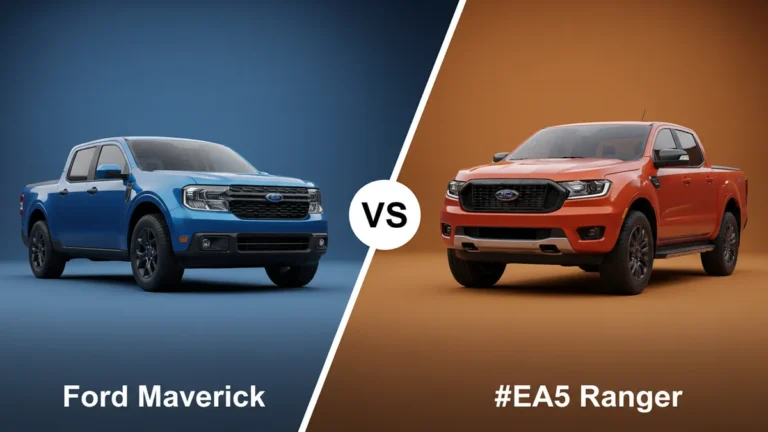
2026 Ford Maverick vs Toyota Tacoma: Full Comparison

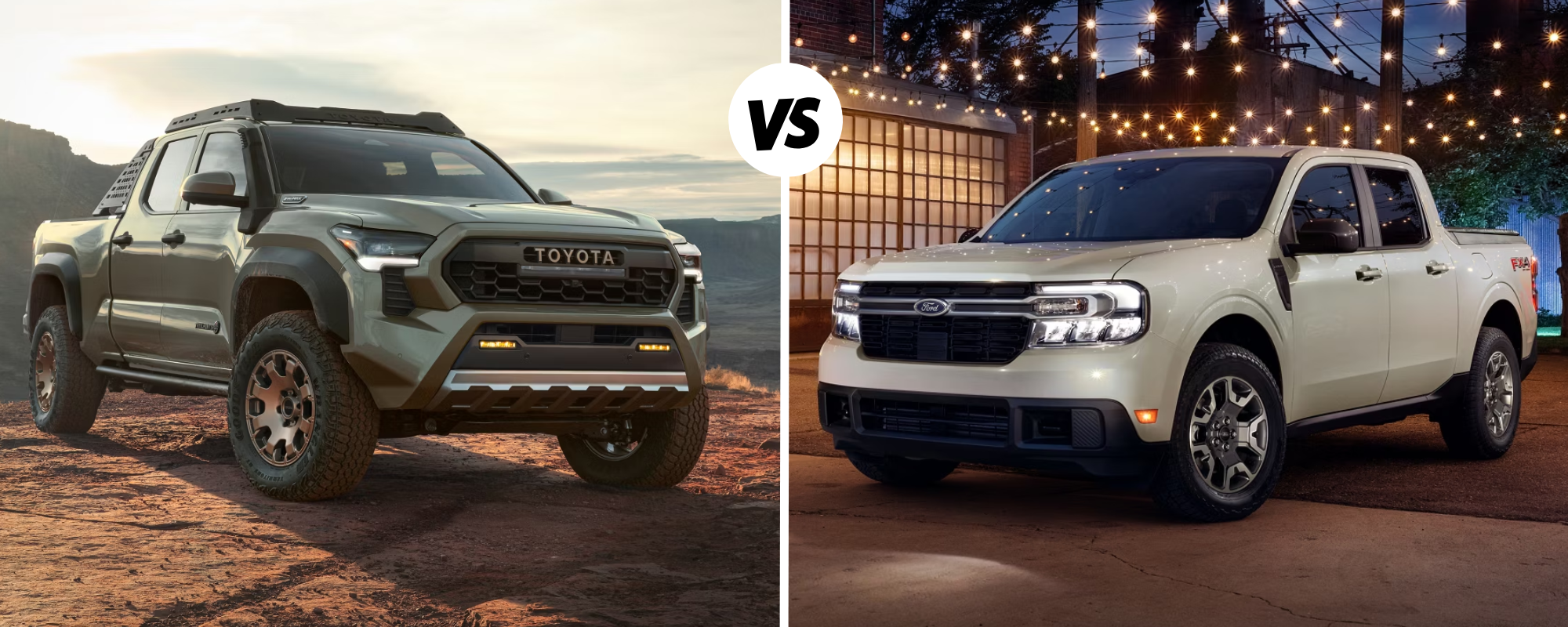
Forget everything you thought you knew about pickup truck fuel economy. In an astonishing turn of events, the compact Ford Maverick doesn’t just sip fuel; it practically sips air, offering a near-perfect 9.8 rating for efficiency. Meanwhile, the venerable Toyota Tacoma, a long-time king of the trail, rolls in with a mere 7.0. This stark contrast immediately sets the stage for a showdown far more nuanced than simple size comparison. We’re not just comparing apples to oranges; we’re pitting modern efficiency against rugged, time-tested capability. Is the future of trucks genuinely about doing more with less, or does old-school power still hold an undeniable allure? Let’s dive in.
Quick Verdict: The 2026 Ford Maverick offers unparalleled value and fuel efficiency, especially with its hybrid powertrain, making it ideal for urban living and light duty. The Toyota Tacoma, however, remains the undisputed king for serious towing, payload, and off-road prowess, albeit at a higher price point and with lower MPG. The choice hinges on whether you prioritize economy and comfort or raw capability.

Prime for Young Adults — 6 Months Free
Students and 18–24s get six months of Prime free, then half price.
Start 6 Months Free As an Amazon Associate I earn from qualifying purchases.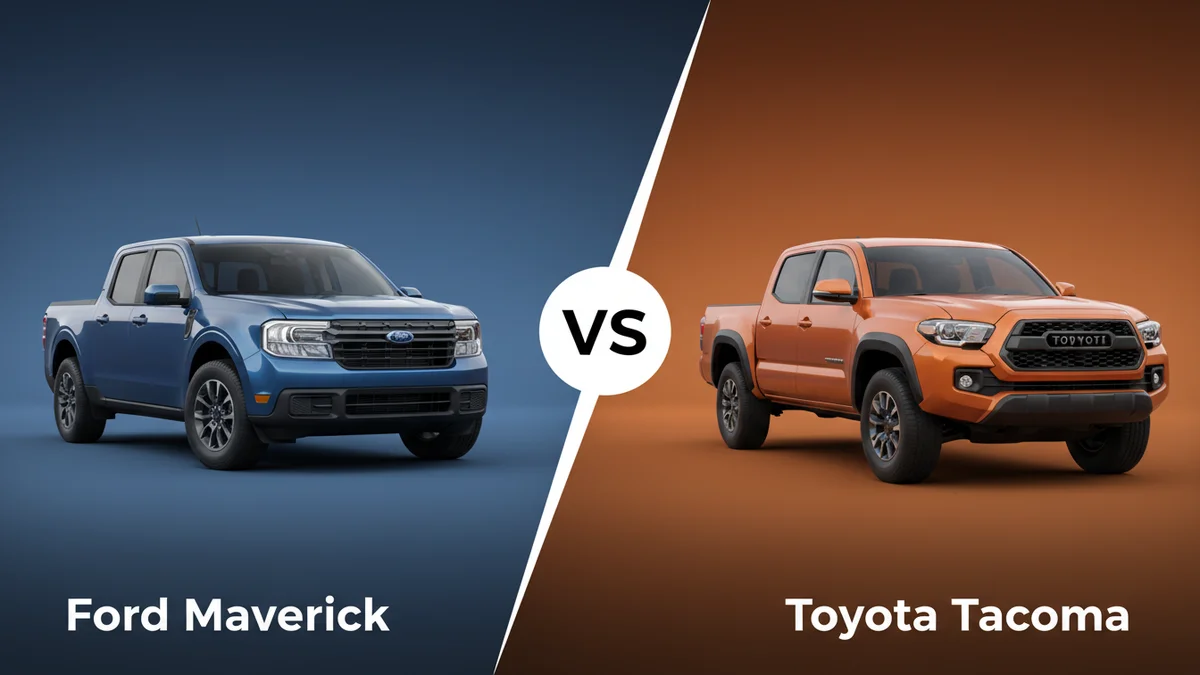
Buyers prioritizing affordability, fuel economy, daily comfort, and urban maneuverability.
Those needing superior towing, off-road capability, higher payload, and robust durability.
- The Ford Maverick offers a starting MSRP of approximately $26,000, making it the more affordable entry.
- Toyota Tacoma leads in raw capability with a maximum towing capacity of 6,500 lbs.
- The Maverick Hybrid offers an outstanding EPA combined fuel economy of 37 MPG.
- Tacoma provides superior off-road prowess with up to 11.5 inches of ground clearance in TRD Pro trims.
- Maverick's unibody chassis delivers a more comfortable and car-like driving experience than Tacoma's body-on-frame.
Ford Maverick vs Toyota Tacoma: Head-to-Head Specs
Recommended Best Deal Products


Peeling back the layers of these two formidable trucks reveals immediate distinctions. The Ford Maverick, often praised for its accessible entry point, typically offers a standard hybrid powertrain that prioritizes urban efficiency. Conversely, the Toyota Tacoma arrives with more potent engine options designed for demanding tasks, frequently offering a significantly higher towing capacity right out of the gate. These aren’t just minor differences; they represent fundamentally distinct philosophies regarding what a pickup truck should accomplish.
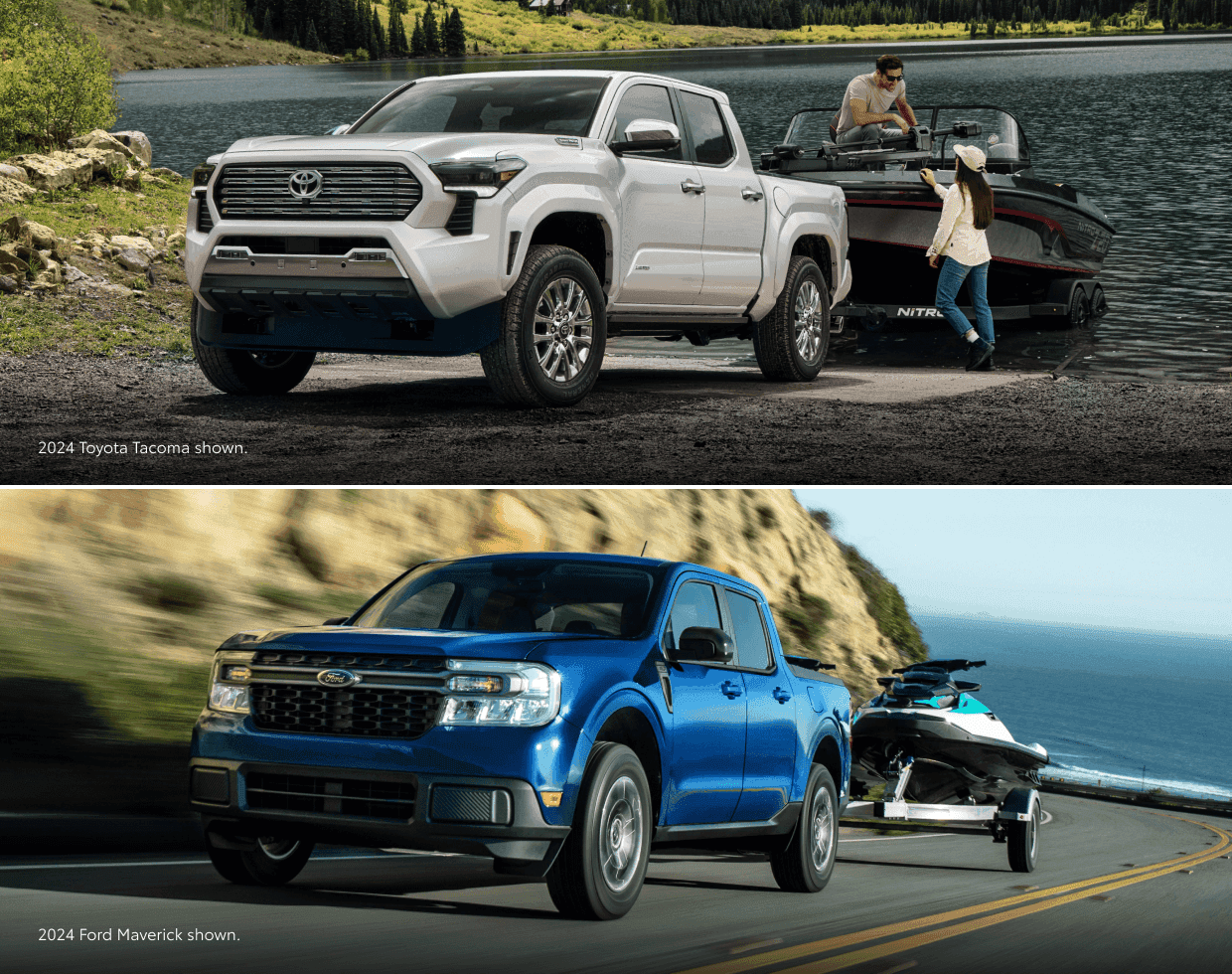
✓ = better value in that row. Sourced from manufacturer specifications.
Performance & Category Ratings
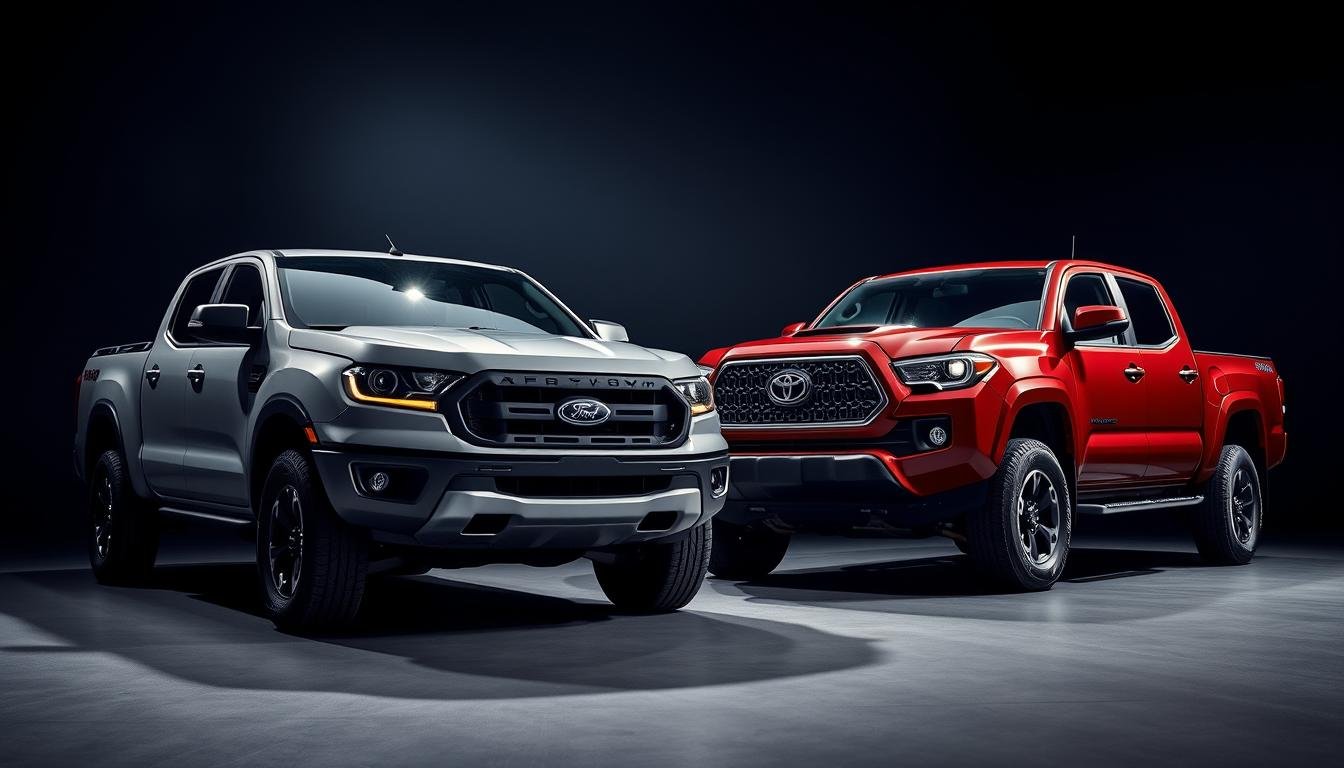
The numbers paint a clear picture of divergent philosophies. The Toyota Tacoma asserts its dominance in raw Performance, scoring a solid 9.0. Its larger, more powerful engines, designed for hauling and towing, simply deliver more grunt than the Maverick’s offerings, which are tuned for efficiency over brute force, landing the Ford at 7.8. Similarly, the Tacoma’s legendary reputation for durability and robust engineering secures its lead in Reliability with an impressive 9.2, while the newer Ford Maverick, though promising, sits at 7.9. When the trail calls, the Tacoma’s purpose-built chassis, higher ground clearance, and advanced 4×4 systems translate into a commanding 9.5 for Off-Road Capability, leaving the more street-focused Maverick at 6.5. Its superior Utility & Versatility (8.5 vs. 8.0) further solidifies the Tacoma as the workhorse, with greater payload and towing figures.
However, the Ford Maverick strikes back hard where it counts for many modern drivers. Its exceptional Fuel Economy rating of 9.8 is a big deal, especially with the standard hybrid powertrain. The Tacoma’s 7.0 simply can’t compete. This efficiency, combined with a significantly lower starting price and a surprising array of standard features, pushes the Maverick to an unparalleled 9.5 in Value, dwarfing the Tacoma’s 7.5. For daily driving, the Maverick’s car-like ride and quieter cabin provide superior Comfort at 8.7 compared to the Tacoma’s 8.0, which, while comfortable for a truck, retains a firmer, body-on-frame feel. The Tacoma does edge out the Maverick in Features & Technology (8.8 vs. 8.2), often offering more advanced off-road tech and larger, more sophisticated infotainment options in its higher trims. Each truck clearly excels in its intended domain.
Ford Maverick
Toyota Tacoma
By the Numbers
Recommended Best Deal Products

Beyond subjective ratings and driving impressions, the hard data often clarifies the objective differences between vehicles. These figures, outlining everything from engine output to crucial dimensions and capacities, provide a transparent look at what each truck brings to the table. Understanding these core specifications is vital for anyone weighing their options, as they directly impact daily usability and long-term satisfaction. Let’s crunch the numbers.
Ford Maverick
Toyota Tacoma
Hover any bar for exact values. Each metric scaled independently.
Ford Maverick: Strengths and Weaknesses
The Ford Maverick emerges as a compelling choice for the modern truck buyer who prioritizes practicality and economy over brute force. Its most undeniable strength is its stellar Fuel Economy, especially with the standard hybrid powertrain. Achieving a near-perfect 9.8 rating, it sips fuel like a compact sedan, making daily commutes and city driving incredibly affordable. This, combined with its accessible starting price, translates directly into unmatched Value (9.5), offering an impressive feature set for the money. You get a comfortable, car-like ride (8.7 for Comfort) that makes it a genuinely pleasant daily driver, a stark contrast to the often-bouncy nature of traditional body-on-frame pickups. The Maverick’s compact footprint also makes it nimble in urban environments, easy to park, and maneuver through tight spaces.

Audible — Listen Free for 30 Days
One free credit a month and thousands of titles included.
Listen Free for 30 Days As an Amazon Associate I earn from qualifying purchases.However, its weaknesses become apparent when the demands increase. Its Performance rating of 7.8, while adequate for most, means it won’t win any drag races or feel particularly potent when loaded down. More significantly, its Off-Road Capability (6.5) is limited to light trails and gravel roads; serious adventurers will quickly find its limits. While offering decent Utility & Versatility (8.0) for its size, its towing and payload capacities don’t rival those of mid-size or full-size trucks. Finally, its Reliability rating of 7.9, while respectable, doesn’t quite match the legendary, proven longevity of its rival. The cabin, while functional, we’ve found does show some cheaper plastics in places, a clear trade-off for its incredible value proposition.
Toyota Tacoma: Strengths and Weaknesses
Recommended Best Deal Products


The Toyota Tacoma proudly holds its ground as the quintessential mid-size pickup for those who demand serious capability and proven ruggedness. Its undeniable forte lies in Off-Road Capability, scoring an exceptional 9.5. With robust 4×4 systems, ample ground clearance, and available off-road specific hardware like locking differentials and multi-terrain select, this truck is built to conquer. This go-anywhere attitude is backed by strong Performance (9.0), thanks to its more powerful engine options that provide the grunt needed for heavy loads and challenging terrain. Owners consistently praise its Reliability (9.2), a reputation built over decades of dependable service in harsh conditions. We see these trucks lasting for hundreds of thousands of miles, a testament to Toyota’s engineering. Furthermore, the Tacoma integrates advanced Features & Technology (8.8), especially in higher trims, offering sophisticated off-road aids and a user-friendly infotainment system. Its Utility & Versatility (8.5) are also excellent, with higher towing and payload capacities suitable for larger toys or demanding job sites.
However, these strengths come with clear trade-offs. The most significant is its Fuel Economy, rating a rather poor 7.0. This truck is designed for work, not efficiency, and you’ll feel it at the pump. This directly impacts its Value (7.5), as its higher purchase price combined with increased running costs make it a more expensive proposition overall. While its Comfort (8.0) is acceptable for a truck, its body-on-frame construction and off-road-tuned suspension often translate to a firmer, more truck-like ride compared to the car-like experience of the Maverick. The cabin, while durable, can sometimes feel a bit dated in its design, prioritizing robustness over modern aesthetics, and rear passenger space can be tighter than some competitors.
- ✅ Significantly lower starting price and overall running costs.
- ✅ Class-leading 37 MPG combined with the hybrid powertrain.
- ✅ More comfortable, car-like ride due to unibody construction.
- ✅ Easier to maneuver and park in urban environments.
- ✅ Standard FWD offers better foul-weather traction than RWD.
- ❌ Lower towing and payload capacities limit heavy-duty use.
- ❌ Less capable off-road compared to body-on-frame trucks.
- ❌ Smaller bed (4.5 ft) might be insufficient for some tasks.
- ❌ No true 4WD option, only available AWD for EcoBoost.
- ✅ Superior towing capacity, up to 6,500 lbs for heavier loads.
- ✅ Exceptional off-road capability with true 4WD and specialized trims.
- ✅ Legendary Toyota reliability and strong resale value.
- ✅ Robust body-on-frame construction for durability.
- ✅ More powerful engine options, including the i-FORCE MAX hybrid.
- ❌ Considerably higher starting price and overall cost of ownership.
- ❌ Lower fuel economy across all powertrains, maxing at 23 MPG.
- ❌ Larger footprint makes it less agile in city driving and parking.
- ❌ Stiffer, more truck-like ride compared to the Maverick.
Which One Should You Choose?
Deciding between the Ford Maverick and the Toyota Tacoma hinges entirely on your specific needs, as these trucks carve out distinct niches.
If you’re primarily an urban dweller or a suburban commuter needing truck bed utility for DIY projects, gardening, or light recreation, the Ford Maverick is your champion. Its incredible 9.8 Fuel Economy, particularly the hybrid, translates to significant savings at the pump. This, combined with its class-leading 9.5 Value and superior 8.7 Comfort for daily driving, makes the Maverick an irresistible package. It’s ideal for those transitioning from an SUV or car, offering flexible utility without the bulk or fuel penalty of a traditional truck. Think IKEA runs, mountain bike excursions, or moving apartment essentials – the Maverick handles these with impressive efficiency.
Conversely, for serious off-roading, heavy towing, or demanding work site duties, the Toyota Tacoma remains the undisputed monarch. Its commanding 9.5 Off-Road Capability means it’s built to conquer rugged terrain with confidence. The Tacoma’s superior 9.0 Performance and 8.5 Utility & Versatility will effortlessly manage larger trailers, heavier payloads, and more arduous conditions than the Maverick could ever approach. You’re investing in a proven workhorse with legendary 9.2 Reliability, a truck designed for unwavering dependability. Yes, you’ll incur a higher purchase price and substantially more at the gas station, given its 7.0 Fuel Economy, but for those genuinely pushing their trucks to the limit, the Tacoma’s raw capability justifies the investment. It’s for the dedicated adventurer, the contractor, or anyone whose journeys frequently venture far from asphalt.
Buyers prioritizing affordability, fuel economy, daily comfort, and urban maneuverability.
Those needing superior towing, off-road capability, higher payload, and robust durability.
Final Verdict
In this compelling head-to-head, there isn’t a single, clear-cut winner; instead, we declare a hard-fought tie. The Ford Maverick truly redefines what a compact pickup can be, especially for the modern driver. Its exceptional 9.8 Fuel Economy, outstanding 9.5 Value, and comfortable 8.7 daily driving experience make it an undeniable champion for urban and light-duty truck buyers. It’s a smart, efficient, and surprisingly capable companion for most people’s needs.
However, for those whose demands skew towards uncompromised ruggedness and raw power, the Toyota Tacoma still reigns supreme. Its legendary 9.5 Off-Road Capability, robust 9.0 Performance, and unparalleled 9.2 Reliability mean it’s built to conquer where the Maverick merely treads lightly. The fundamental trade-off is clear: do you prioritize the Maverick’s unparalleled economy and everyday comfort, or do you require the Tacoma’s time-tested, heavy-duty capability? Your lifestyle will dictate your king.
Audible Premium Plus — Annual Membership
12 audiobook credits up front, plus the full Audible catalogue.
See Annual Plans As an Amazon Associate I earn from qualifying purchases.Frequently Asked Questions
Is Ford Maverick better than Toyota Tacoma?
Neither is universally 'better'; it depends on your needs. The Ford Maverick, starting around $26,000, excels in affordability and efficiency, offering 37 MPG for daily driving. The Toyota Tacoma, beginning at $33,000, is superior for heavy towing (up to 6,500 lbs), robust off-roading, and demanding work tasks.
Which truck offers better reliability?
Historically, the Toyota Tacoma has a legendary reputation for exceptional long-term reliability and durability, often lasting well over 200,000 miles. While the Ford Maverick is newer, Ford's reliability has been improving, but it has not yet matched the Tacoma's proven track record over decades.
What's the biggest price difference between the Maverick and Tacoma?
The biggest difference is in their starting prices; the 2026 Ford Maverick is estimated to start around $26,000, while the Toyota Tacoma begins around $33,000. This $7,000 base difference can grow significantly when comparing similarly equipped mid-to-high trim levels, making the Maverick substantially more budget-friendly.
Which has better resale value and longevity?
The Toyota Tacoma traditionally holds its resale value exceptionally well, often topping depreciation charts for all vehicles, signaling strong longevity. The Ford Maverick, being a newer model, doesn't have the same long-term data yet, but Ford's overall resale values are generally good, though unlikely to match Tacoma's class-leading performance.
Which truck is better for a first-time owner or city driving?
The Ford Maverick is significantly better for a first-time truck owner or for primarily city driving. Its smaller size (200 inches shortest length) makes it easier to maneuver and park, its unibody construction provides a smoother ride, and its superior fuel economy (37 MPG) is more practical for daily urban commutes.