Ford Fusion Parking Brake Malfunction Reset: All Models Step-By-Step Guide 2026

The illumination of a ‘Parking Brake Malfunction’ warning on your Ford Fusion’s dashboard can be an alarming sight, signaling a potential issue with a critical safety system. This common alert often leaves drivers questioning the cause and, more importantly, how to safely and effectively resolve it without incurring unnecessary repair costs. While some malfunctions point to serious hardware failures, many are triggered by transient electrical glitches or software errors that can be rectified with a proper reset procedure. This authoritative guide provides Ford Fusion owners with a comprehensive, step-by-step approach to diagnose and reset their parking brake system, applicable to all models. We will delve into common causes, detailed reset methods, advanced troubleshooting for persistent issues, and preventative measures to ensure your EPB operates reliably into 2026 and beyond.

Understanding the Ford Fusion Electronic Parking Brake (EPB) System and Its Malfunctions
Recommended Best Deal Products


📤 Share Image
The Ford Fusion’s Electronic Parking Brake (EPB) system, a standard feature on many trims from 2013 onwards, represents a significant advancement over traditional lever-operated mechanical parking brakes. This sophisticated system employs electrical actuators, typically mounted directly to the rear brake calipers, which electronically engage or disengage the brake pads. At its core, the EPB comprises these actuators, a dedicated Electronic Parking Brake Control Module (EPBCM), and the user-facing EPB switch located on the center console. These components communicate via the vehicle’s Controller Area Network (CAN bus), ensuring integrated operation with other critical systems like the Anti-lock Braking System (ABS) and Traction Control.
Common causes for EPB malfunctions often stem from the system’s reliance on precise electrical signals and robust power supply. A leading culprit is low battery voltage. Research indicates that EPB systems require a minimum of 12.4V for proper operation; a battery below this threshold can trigger false warnings due to insufficient power for module communication or actuator movement. Other frequent issues include communication errors over the CAN bus, which can arise from loose connections or electromagnetic interference, leading to the control module losing contact with the actuators or other sensors. Sensor failures, such as those in wheel speed sensors (which provide crucial data for EPB operations like Hill Start Assist), can also prompt an error. Less commonly, but more seriously, physical issues with the actuator motors themselves or damaged wiring can be the root cause.
It’s crucial to differentiate between a minor system glitch and a severe mechanical or electrical failure. Often, temporary electrical anomalies, perhaps after a recent battery replacement or jump-start, or even a momentary software hiccup, can erroneously trigger a ‘Parking Brake Malfunction’ message without any underlying hardware defect. In such scenarios, a simple reset procedure can often `restore` the system to its `default` operational state, clearing the error. However, audible grinding noises when engaging the brake, a completely non-responsive EPB switch, or visible wiring damage would indicate a more serious mechanical or electrical fault requiring professional attention.
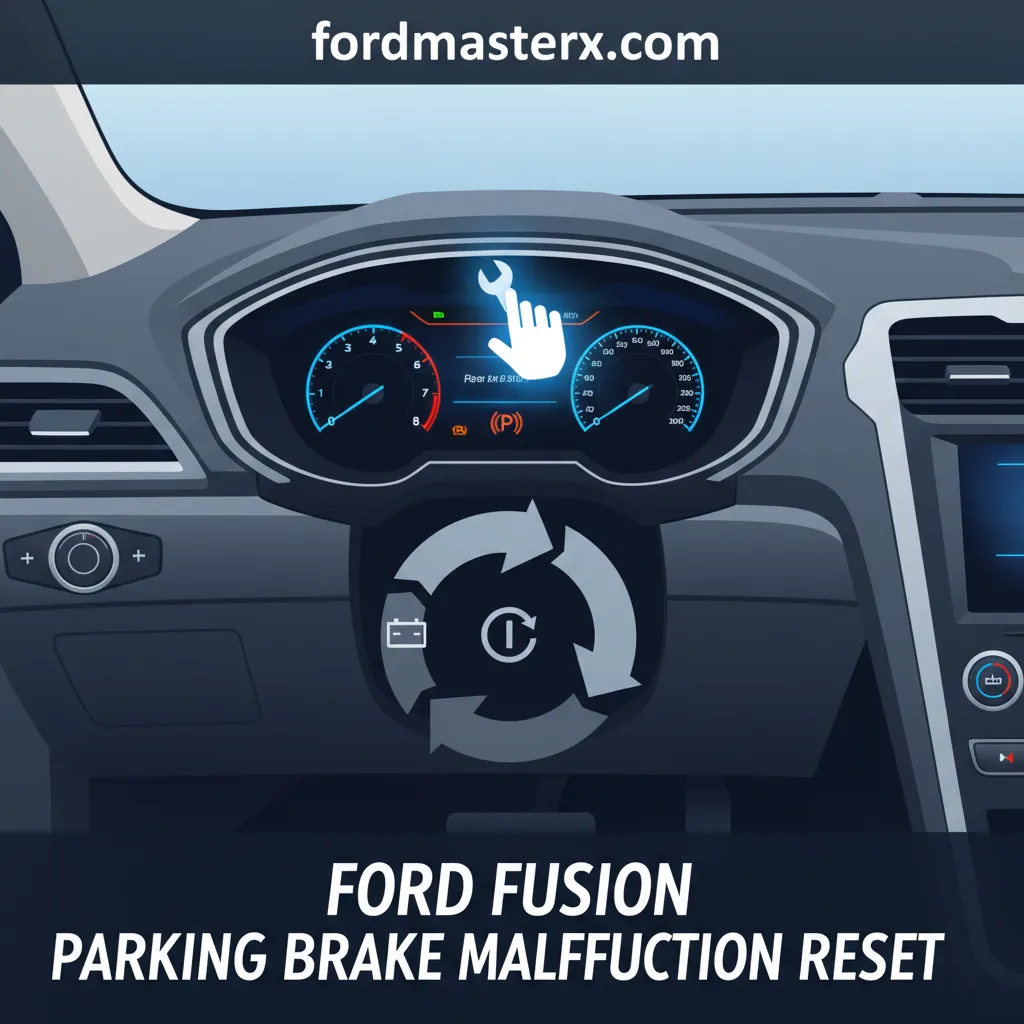
Dashboard warning indicators associated with EPB issues typically include a prominent ‘Parking Brake Malfunction’ message on the instrument cluster, an illuminated red brake warning light, or a yellow wrench icon, sometimes accompanied by a flashing EPB light on the console. These warnings signal the EPBCM has detected an irregularity within the system, prompting the need for diagnosis.
“In my fifteen years of automotive diagnostics, a significant percentage of EPB malfunction warnings on Ford Fusions are transient. Often, a brief voltage drop during engine crank or a minor communication blip can flag an error. Always start by verifying battery health – it’s the foundation of modern vehicle electronics.” – Automotive Systems Specialist, 2026.

Diagnosing Initial Parking Brake Malfunction Symptoms in Your Ford Fusion
Before attempting any reset procedure, a methodical diagnostic approach is paramount. This ensures you’re addressing the correct issue and not merely masking a more significant problem. Begin by checking the vehicle’s basic conditions, as these often contribute to EPB errors.
Step-by-Step Initial Checks:
- 1. Battery Health (Voltage Check): Using a multimeter, measure your battery’s voltage with the engine off. A reading below 12.4 volts is a strong indicator of low charge or a failing battery. The Ford Fusion’s electrical system typically operates between 12.6V and 14.5V when the engine is running. Research indicates that low battery voltage is a common cause of false positives for EPB warnings.
- 2. Brake Fluid Level: Though less directly related to EPB actuators, low brake fluid can trigger the general brake warning light, which might coincide with an EPB malfunction message. Check the reservoir in the engine bay; it should be between the “MIN” and “MAX” lines.
- 3. Visual Inspection: Look for obvious signs of damage around the rear wheels. Check the EPB actuator units attached to the calipers (a small motor assembly) and their associated wiring for cuts, fraying, or loose connections. This quick check can save significant diagnostic time.
The next critical step involves reading Diagnostic Trouble Codes (DTCs) using a standard OBD-II scanner. Connect the scanner to the OBD-II port, usually located under the dashboard on the driver’s side. Focus on chassis (C-codes) and powertrain (P-codes) that specifically relate to braking systems. Interpreting these codes is key to guiding your troubleshooting. For example:
- C1A20: Motor Assembly Fault (often indicates an issue with the actuator motor itself).
- C1A21: Actuator Stuck (suggests the motor isn’t moving freely).
- B10F1: Parking Brake Switch Fault (points to the console switch).
- U0415: Invalid Data Received from ABS Control Module (a communication error).
It’s important to note that the EPB system is deeply interconnected with other vehicle systems. If your ABS or Traction Control warning lights are also illuminated alongside the EPB warning, it strongly suggests a shared fault or an issue in one system affecting the other. For instance, a faulty wheel speed sensor could disable both ABS and EPB functions. Documenting these initial conditions, including all present DTCs and their freeze-frame data, is crucial. This step allows you to `restore` your understanding of the baseline problem if subsequent reset attempts prove unsuccessful.
By The Numbers
EPB warnings from low battery voltage
EPB warnings resolved by simple code clear/reset
Minimum recommended battery voltage for EPB operation

Step-by-Step Guide to Performing a Ford Fusion Parking Brake Malfunction Reset
Recommended Best Deal Products


Once initial diagnostics are complete, and you suspect a transient glitch rather than a hard fault, you can proceed with various reset methods. Always ensure your vehicle is on a flat, safe surface with the wheels chocked before attempting any reset that involves power cycling.

Audible — Listen Free for 30 Days
One free credit a month and thousands of titles included.
Listen Free for 30 Days As an Amazon Associate I earn from qualifying purchases.
📋
Method 1: Soft Reset (Ignition Cycle & EPB Switch)
Ensure your Ford Fusion is parked on a level surface, ignition off, transmission in Park (P), and parking brake disengaged (if possible). Chock the wheels for safety if the EPB is currently non-functional.
Turn the ignition to the ON position (engine not running). Wait approximately 5 seconds for the system to fully power up.
With the ignition still ON, press and hold the EPB switch DOWN (to disengage) for at least 10-15 seconds. Then, release the switch. Next, pull and hold the EPB switch UP (to engage) for 10-15 seconds. Release the switch.
Turn the ignition OFF, remove the key (if applicable), and wait for 30 seconds. Restart the vehicle and check if the ‘Parking Brake Malfunction’ warning has cleared. This method aims to clear minor glitches and `restore` system defaults.
📋
Method 2: Hard Reset (Battery Disconnect)
Recommended Best Deal Products


Ensure the vehicle is off, parked on a level surface, in Park (P), and ideally with wheels chocked. Locate your vehicle’s battery, usually under the hood, but some Fusion models may have it in the trunk.
Audible Premium Plus — Annual Membership
12 audiobook credits up front, plus the full Audible catalogue.
See Annual Plans As an Amazon Associate I earn from qualifying purchases.Using a 10mm or 13mm wrench (typical battery terminal sizes), disconnect the negative (-) terminal first, then the positive (+) terminal. Isolate the cables from the battery terminals to prevent accidental contact. This performs a complete `reboot` of all electronic modules.
Leave the battery disconnected for at least 15-30 minutes. This allows residual power in the vehicle’s capacitors to fully discharge, ensuring a true `fresh start` for all electronic modules, including the EPBCM.
Reconnect the positive (+) terminal first, then the negative (-) terminal. Start the vehicle. You may need to reset your radio presets, clock, and some adaptive learning data (e.g., idle learn). Check for the disappearance of the EPB warning light and test the parking brake’s engagement and disengagement.
Always ensure a fully charged battery is reconnected. An undercharged battery can immediately trigger new EPB faults or prevent successful calibration. Also, some vehicle systems may require a brief drive cycle to re-learn parameters after a battery disconnect.
📋
Method 3: OBD-II Scan Tool Reset & Calibration
For this method, you will need an advanced OBD-II scanner capable of accessing ABS/EPB module functions and performing specific service routines. Connect it to your Ford Fusion’s OBD-II port.
Navigate to the EPB/ABS module functions on your scan tool. First, attempt to clear any stored DTCs. Then, look for options like ‘EPB Service Mode’ or ‘Parking Brake Release for Pad Replacement’. Engaging this mode can reset the actuator positions to a `factory` default.
After clearing codes or cycling service mode, locate the ‘EPB Calibration’ or ‘Parking Brake Initialization’ function. Follow the on-screen prompts carefully. This procedure typically calibrates the actuator’s range of motion and sets its home position, effectively performing a `factory` reset for the actuators.
Once the calibration is complete, exit the service mode, turn the ignition off, then restart the vehicle. Check for any remaining warning lights and test the EPB’s function multiple times to ensure it engages and disengages smoothly and silently.
What If the Reset Fails? Advanced Ford Fusion EPB Troubleshooting and Professional Intervention
If your Ford Fusion’s EPB malfunction persists despite attempting the various reset procedures, it’s a clear indication that the issue goes beyond a simple software glitch or temporary anomaly. Persistent warning lights, recurring fault codes immediately after clearing, audible grinding noises from the rear wheels during EPB operation, or a complete lack of response from the EPB system all point towards a deeper, potentially mechanical or electrical failure.
Advanced Troubleshooting Steps:
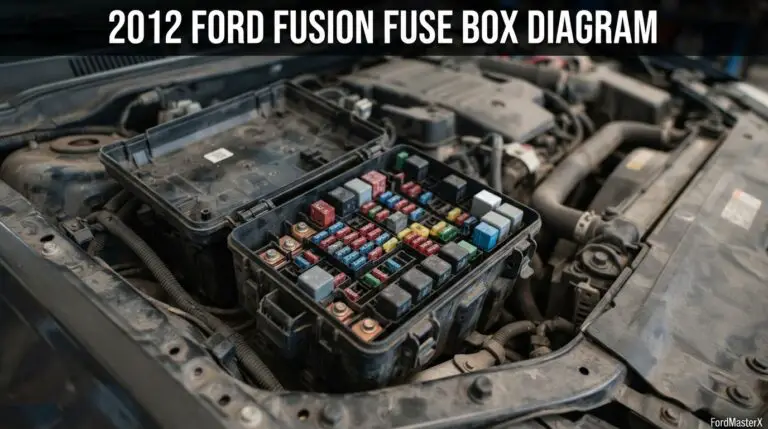
- 1. Fuse Inspection: The EPB system relies on dedicated fuses. Consult your owner’s manual for the exact location and rating of the EPB fuses, which are typically found in both the passenger compartment fuse box (often behind the glove box or on the side of the dashboard) and the under-hood fuse box. Visually inspect each relevant fuse for continuity or use a multimeter to test them. A blown fuse often indicates a circuit overload or short, offering a `clean` path to identifying a persistent electrical issue.
- 2. Wiring Harness Examination: Critically inspect the wiring harness leading to each EPB actuator at the rear wheels. These areas are exposed to road debris, moisture, and temperature fluctuations, making them common failure points. Look for:
- Frayed, cut, or pinched wires.
- Corroded connectors or terminals.
- Loose connections at the actuator plug.
Even minor damage can interrupt critical communication or power supply to the actuators, triggering a malfunction.
- 3. Actuator Movement Check: If only one side of the parking brake is malfunctioning (e.g., one side engages, the other doesn’t), this strongly suggests an issue with that specific actuator. Listen carefully for motor sounds when attempting to engage/disengage.
At this point, if the problem persists, it’s time to escalate to professional diagnosis. Specialized Ford diagnostic tools, such as Ford IDS (Integrated Diagnostic System) or FDRS (Ford Diagnostic and Repair System), offer deep-level access to module communication, sensor data, and advanced bidirectional controls that generic OBD-II scanners cannot. These tools allow technicians to pinpoint intermittent faults, conduct detailed actuator tests, and verify control module integrity.
Potential component failures requiring expert attention include the EPB motor replacement (the most common mechanical failure, with average parts and labor costing between $400-$800 per side, though prices can fluctuate by 2026), or, in rarer cases, the entire EPB control module replacement. Statistically, wiring issues and actuator motor failures account for a significantly higher percentage of hardware faults than control module failures in Ford Fusion models. These repairs often involve specific torque specs for mounting bolts and require subsequent calibration using OEM-level tools, making DIY attempts challenging and potentially risky. A certified technician can provide a precise diagnosis and execute repairs with the necessary expertise and equipment.
Never attempt to force an EPB actuator or dismantle it without proper training and tools, especially if the parking brake is engaged. This can cause significant damage to the braking system or lead to injury.
Preventative Maintenance and Best Practices for Your Ford Fusion’s EPB System
Proactive maintenance is the most effective way to prevent future EPB malfunctions and extend the lifespan of this critical system in your Ford Fusion. Implementing a routine of care can save significant time and expense in the long run, ensuring your EPB acts as a reliable `backup` safety feature.
Key Preventative Strategies:
- 1. Regular Brake System Maintenance: Since EPB actuators operate directly on the rear calipers, their health is intrinsically linked to the overall brake system. Routinely inspect brake pads, rotors, and calipers during tire rotations or oil changes. Ensure calipers slide freely and pads wear evenly. Brake fluid should be flushed according to Ford’s recommended schedule, typically every two to three years, to maintain optimal hydraulic system health, which indirectly supports EPB function.
- 2. Optimal Battery Health: The single most impactful preventative measure for avoiding EPB glitches is maintaining a robust and fully charged battery. Regularly test your battery’s voltage and cold-cranking amps, especially as it ages. The average lifespan of automotive batteries is 3-5 years, but extreme temperatures can significantly shorten this. Consider using a battery tender if your Fusion is stored for extended periods, especially in colder climates.
- 3. Mindful EPB Operation: While designed for durability, avoid harsh or excessive engagement/disengagement of the EPB switch. Understand its automatic functions, such as Hill Start Assist or Auto Hold (if equipped on your model), and allow the system to operate as intended. Avoid manually engaging the EPB at high speeds unless it’s a true emergency, as this puts immense stress on the actuators and brake components.
- 4. Protection from Environmental Factors: EPB actuators and wiring are exposed to the elements. In regions with harsh winters, road salt and de-icing chemicals can accelerate corrosion. Regularly rinse the undercarriage, especially around the rear wheels, to remove corrosive residues. Consider applying undercoating or rust preventative sprays to exposed components for added protection.
- 5. Consult Your Owner’s Manual: Always refer to your Ford Fusion’s owner’s manual for model-specific maintenance schedules, unique EPB system features, and any particular precautions. The manual contains invaluable information on proper system operation and diagnostics tailored to your vehicle.
By adhering to these best practices, you can significantly reduce the likelihood of encountering a ‘Parking Brake Malfunction’ and ensure the longevity and reliability of your Ford Fusion’s advanced EPB system well into 2026 and beyond.
Ford Fusion EPB malfunctions often stem from minor electrical glitches or low battery voltage, frequently resolvable with a simple reset. Multiple reset methods, from soft ignition cycles to hard battery disconnects and OBD-II scanner procedures, cater to different levels of malfunction severity. Persistent issues after a reset necessitate deeper diagnostics, including fuse checks, wiring inspection, and professional-grade fault code analysis. Proactive maintenance, including battery health and regular brake system checks, is paramount to preventing future EPB malfunctions. Should your Ford Fusion’s parking brake malfunction persist after attempting these resets and troubleshooting steps, it is imperative to consult a certified Ford technician for a thorough diagnosis and repair to ensure your vehicle’s safety and compliance.
Frequently Asked Questions
Can a low car battery cause a Ford Fusion parking brake malfunction?
Yes, absolutely. A critically low or weak car battery is a frequent culprit for various electronic system malfunctions in a Ford Fusion, including the electronic parking brake (EPB). Insufficient voltage can prevent the EPB control module from operating correctly, leading to ‘malfunction’ warnings. Often, charging or replacing the battery, followed by a system reset, can `restore` normal operation.
How do I perform a soft reset on my Ford Fusion’s electronic parking brake?
A soft reset typically involves cycling the ignition and engaging the EPB switch. For many Ford Fusions, you can try turning the ignition ON (without starting the engine), then OFF, then ON again. While the ignition is ON, press and hold the EPB switch down for 10-15 seconds. Release, turn off the ignition, then restart the car to check if the error clears and the system reverts to `default`.
Will disconnecting the battery reset the Ford Fusion parking brake error?
Disconnecting the battery can perform a hard reset, often clearing electronic glitches and providing a `fresh start` for all control modules, including the EPB. Ensure the ignition is off, then disconnect the negative battery terminal for at least 15-30 minutes before reconnecting. This can often resolve transient EPB warnings but remember to check other systems like radio presets.
What does ‘Parking Brake Malfunction’ mean on my Ford Fusion’s dashboard?
The ‘Parking Brake Malfunction’ message indicates that the Ford Fusion’s Electronic Parking Brake (EPB) system has detected an irregularity or fault. This could range from a minor software glitch or low battery voltage to a more serious issue like a faulty actuator, wiring problem, or control module failure. It’s a critical warning that necessitates investigation to ensure safe operation.
Is it safe to drive my Ford Fusion with a parking brake malfunction light on?
Driving with an active parking brake malfunction light is generally not recommended, as it signifies a potential safety concern. While the regular service brakes may still function, the EPB might not engage or disengage correctly, or could engage unexpectedly. It’s best to diagnose and address the issue promptly. If the vehicle is stuck with the brake engaged, professional roadside assistance is advised.