ford explorer check engine light reset: Solved Step-by-Step

Is your Ford Explorer dashboard glowing with an unwelcome amber check engine light? Whether it’s a loose gas cap or a lingering sensor error, the Malfunction Indicator Lamp (MIL) is a vital communication tool between your Powertrain Control Module (PCM) and you. In this guide, we will walk you through the proper way to reset the light, explain why you shouldn’t clear codes before an emissions test, and help you determine if your Ford is safe to drive.
Understanding the Ford Explorer Check Engine Light Reset Logic


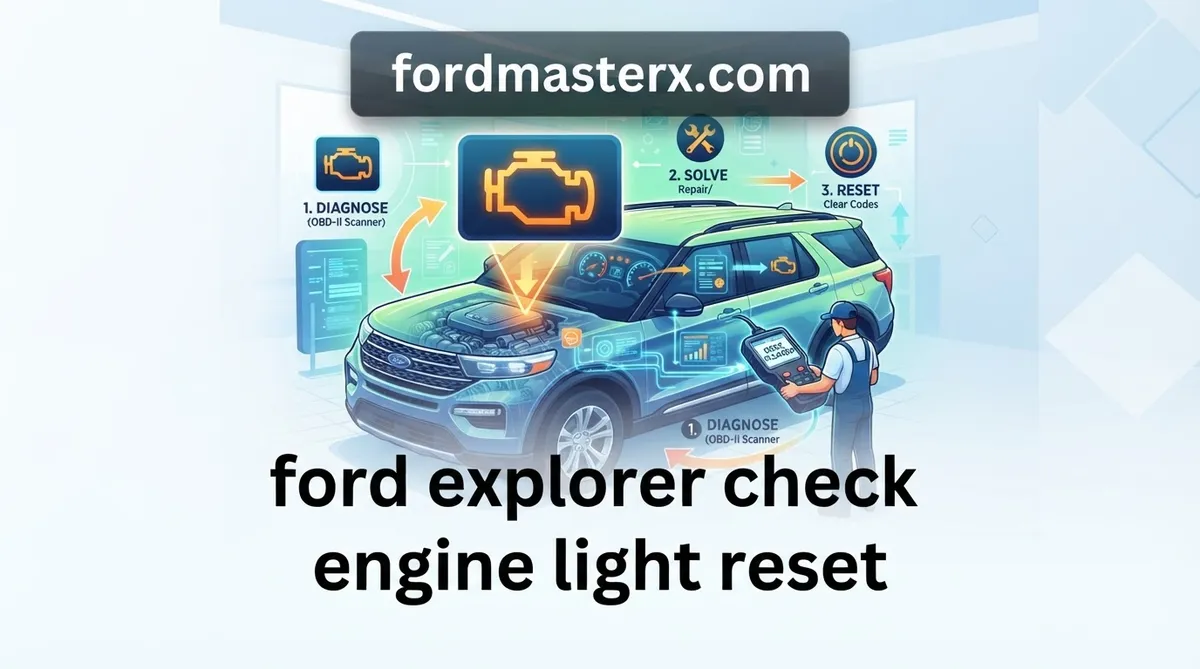
The Malfunction Indicator Lamp (MIL), commonly known as the check engine light, serves as the primary alert system for your vehicle’s emissions and powertrain health. When the Powertrain Control Module (PCM) detects an inconsistency—ranging from a minor sensor fluctuation to a critical engine timing error—it triggers the light and stores a Diagnostic Trouble Code (DTC) in its memory.
📤 Share Image
What a Flashing MIL Means for Your Engine
A steady amber light indicates a non-emergency issue that should be addressed at your earliest convenience. However, a flashing check engine light is a critical warning. In Ford Explorer models, this signifies a severe engine misfire. If ignored, raw fuel can enter the exhaust stream, leading to catastrophic and permanent damage to your catalytic converter. If your light is flashing, pull over safely and seek professional towing or immediate inspection.

Common Diagnostic Trouble Codes in Explorers
The Ford Explorer’s PCM utilizes a sophisticated array of sensors to monitor performance. Common DTCs often point toward the Evaporative Emission Control System (EVAP), which manages fuel vapors. Other frequent triggers include the Mass Air Flow (MAF) sensor, oxygen sensors, and ignition coils. Each code provides a roadmap to the specific system failure, allowing technicians to isolate the problem efficiently.
Why a Simple Fuel Cap Can Trigger the System
The EVAP system is highly sensitive to pressure changes. A loose or damaged fuel cap allows fuel vapors to escape, which the system interprets as a “large leak.” This is a classic example of why a check engine light does not always indicate a catastrophic mechanical failure. Before seeking a complex fix, always ensure your fuel cap is tightened correctly and the seal is free of cracks or debris.
By The Numbers
Light triggers resulting from minor sensor/EVAP issues
Risk level when ignoring a flashing MIL
Methods for a Successful Ford Explorer Check Engine Light Reset


Resetting the check engine light is not a substitute for proper maintenance. However, once a repair is completed, you may need to clear the stored codes to remove the warning from your dashboard. Below are the standard methods to restore your vehicle’s factory monitor status.
📋
Step-by-Step Guide


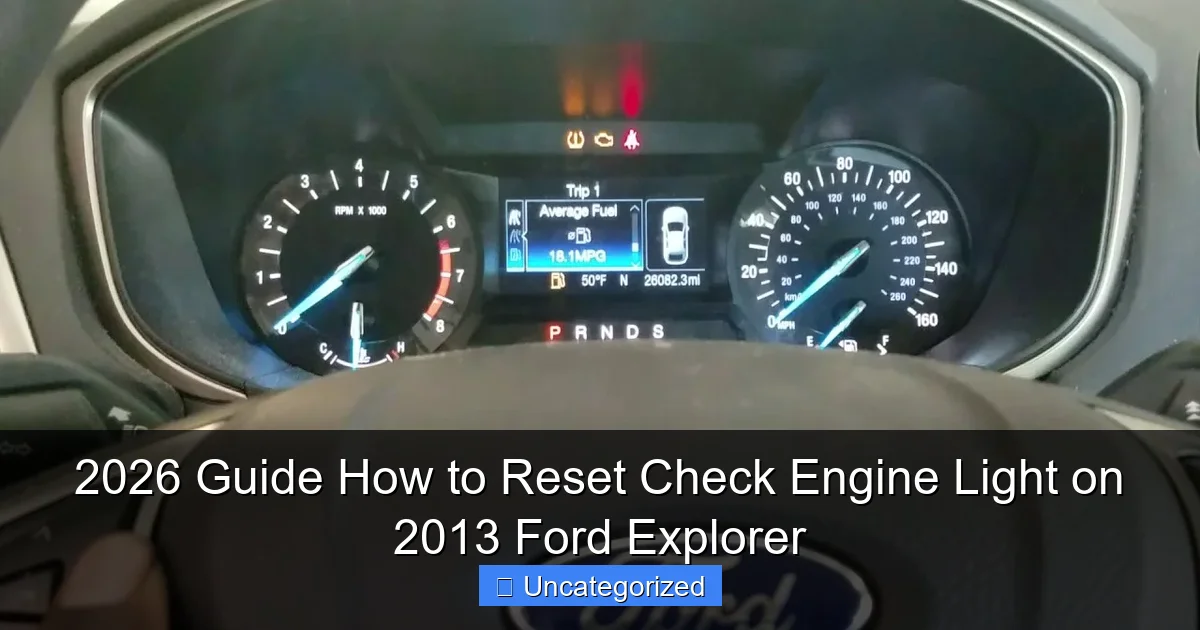
Locate the OBD-II port under the driver-side dashboard. Plug in your diagnostic scanner, switch the ignition to the ‘On’ position (without starting the engine), and select the ‘Clear/Reset’ function. This is the safest way to initialize the clearing process without losing other saved PCM settings.
Disconnect the negative battery terminal for 15-20 minutes. This forces the PCM to lose its volatile memory, providing a fresh start. Note that this may also reset your idle relearn, radio settings, and other comfort preferences.
Why Clearing Codes Does Not Fix Mechanical Issues
Clearing the light essentially tells the computer to stop reporting the error temporarily. If the faulty component (such as a bad oxygen sensor) is still malfunctioning, the PCM will re-detect the issue immediately upon the next drive cycle and trigger the light again. Always address the underlying hardware failure before resetting the system.
Avoid the common mistake of clearing codes right before an emissions test. Doing this wipes your I/M readiness monitors, which will lead to an automatic ‘Not Ready’ failure at the inspection station.
Restoring I/M Readiness and Completing the Ford Drive Cycle
After you perform a reset, your Ford Explorer enters a state of ‘incompleteness.’ The onboard diagnostics system requires time and specific driving conditions to re-run its self-tests, known as I/M readiness monitors.
What Is an I/M Readiness Monitor?
These monitors are internal checklists the PCM completes to ensure your emissions control system is functioning correctly. If you visit an emissions test center with these monitors in a ‘Not Ready’ status, you will fail, even if there is no check engine light on. The system must verify that your catalyst, EVAP, and oxygen sensors are working within factory parameters.
The Required Drive Cycle for Ford Explorers
To restore these monitors to ‘Ready,’ you must complete a specific drive cycle. This typically involves a combination of cold starts, steady-state highway cruising, and stop-and-go city traffic. While every engine variant in the Explorer lineup (from the EcoBoost to the V6) has slightly different requirements, most vehicles require 30-100 miles of varied driving to finalize the process. Using a high-quality scanner allows you to monitor the status of these tests in real-time as you drive.
Troubleshooting Persistent Check Engine Light Issues
If your Ford Explorer continues to throw a light shortly after a reset, you are likely dealing with a persistent mechanical or electrical fault. Do not keep resetting the system; this only delays necessary repairs and risks secondary damage.
Advanced scanners provide “Freeze Frame Data.” This acts as a snapshot of engine parameters exactly when the code was triggered, revealing engine load, coolant temperature, and fuel trim values at the moment of failure.
Why Your Light Returns After a Short Drive
- Oxygen Sensor Failure: If a sensor is stuck in a ‘rich’ or ‘lean’ condition, the PCM will detect the discrepancy as soon as the engine reaches operating temperature.
- Vacuum Leaks: Small tears in intake hoses cause unmetered air to enter the engine, triggering a recurring light during acceleration.
- Failed Catalytic Converter: A degraded converter will fail efficiency tests repeatedly; resetting the light is a futile effort here.
When to Stop Resetting and Start Repairing
If the light returns within three driving cycles, you have exhausted self-diagnostic efforts. At this stage, professional intervention is necessary. Ignoring these codes leads to increased fuel consumption, poor engine performance, and potential damage to more expensive components. The most cost-effective approach is to invest in a diagnostic scan rather than guessing at parts replacement.
✅ Why Reset?
- Confirms temporary sensor glitches.
- Clears codes after verified repairs.
- Restores factory engine defaults.
❌ When to Avoid
- Just before an emissions test.
- When the light is flashing.
- If you haven’t fixed the root cause.
The check engine light is an essential warning system, not merely a nuisance to be hidden. By using the proper diagnostic procedures and understanding the drive cycle requirements, you can maintain your Ford Explorer with confidence. Always prioritize record-keeping of your codes before performing a reset, and remember that safety and long-term vehicle health take precedence over clearing a dashboard warning. Invest in a reliable OBD-II tool today to keep your Explorer running in peak condition.
Ford Explorer Check Engine Light Reset: Frequently Asked Questions
Will disconnecting the battery clear the code?
Disconnecting the battery can sometimes clear the check engine light by cutting power to the PCM, but it is not recommended for modern Ford Explorers. It may erase stored drive cycle data, forcing you to start the emissions readiness process from scratch. Furthermore, many current codes are stored in non-volatile memory, meaning they will persist regardless of battery disconnection.
Why does the light come back on after I clear it?
The light returns because the root cause of the diagnostic trouble code (DTC) has not been repaired. When you clear the code, you are merely silencing the notification. As soon as the PCM runs its internal self-test and detects that the sensor data remains outside of the factory-defined operating parameters, it will trigger the light again to protect the engine.
Is it safe to drive with the light on?
Driving with a steady check engine light is usually safe for short distances, but it should be addressed promptly to prevent damage to the catalytic converter or engine performance loss. However, if the light is flashing, you must stop the vehicle immediately. A flashing light indicates a severe engine misfire that can cause permanent, expensive damage to your emission control systems.
Do I need a special tool to reset it?
Yes, for professional-grade results, you need an OBD-II scanner. While basic generic scanners are available, a tool specifically compatible with Ford’s communication protocols provides more granular data. Avoid ‘reset hacks’ that involve repeatedly cycling the ignition, as these are unreliable and ineffective on modern vehicle architectures, often leading to potential electrical stress on the ignition switch.
Does clearing the code affect my state emissions test?
Yes, clearing the code resets your vehicle’s internal readiness monitors to ‘Not Ready.’ If you take your vehicle to an emissions inspection station immediately after clearing the light, the test will likely fail because the computer has not yet confirmed the system is operating correctly. You must perform a complete driving cycle to set these monitors back to ‘Ready’ status.