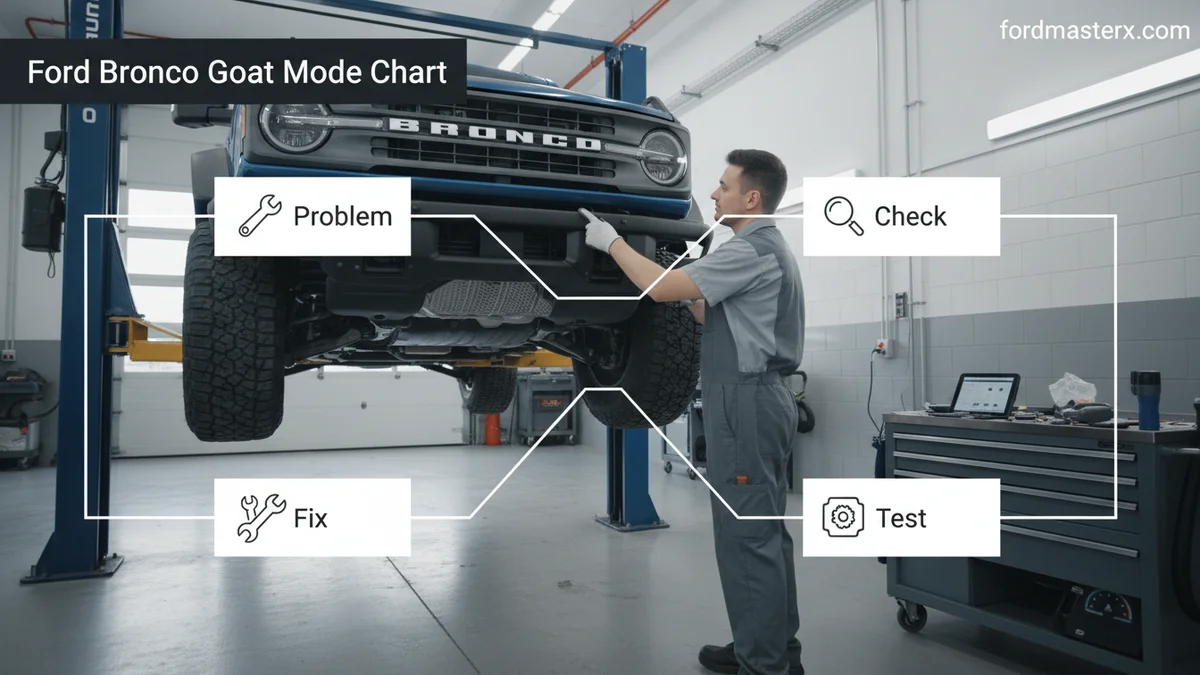
Ford Bronco GOAT Mode Chart Your Expert 2026 Guide

The Ford Bronco GOAT modes are pre-programmed drive settings that automatically adjust your vehicle’s engine, transmission, steering, and 4×4 systems to optimize performance for specific terrains, ensuring you can conquer any type of terrain with confidence.
You should use each mode based on the challenging surface encountered, from normal roads to sand, mud, rocks, or slippery conditions, to enhance control and capability.

Audible — Listen Free for 30 Days
One free credit a month and thousands of titles included.
Listen Free for 30 Days As an Amazon Associate I earn from qualifying purchases.The Ford Bronco GOAT mode chart is your essential guide to understanding how this revolutionary system optimizes your vehicle for any terrain. Ford Bronco GOAT modes are pre-programmed drive settings that automatically adjust your vehicle’s engine, transmission, steering, and 4×4 systems. This ensures you can conquer any type of terrain with confidence in your 2026 Bronco.
You should use each mode based on the challenging surface encountered, from normal roads to sand, mud, rocks, or slippery conditions, to enhance control and capability. We will explore each mode to help you master your Bronco’s impressive off-road capabilities.
Key Takeaways
Recommended Best Deal Products


- GOAT modes adjust vital vehicle systems automatically.
- A chart compares each mode’s purpose and adjustments.
- Selecting the right mode improves off-road capability.
- Availability of modes varies by Bronco model and trim.
- Understanding modes optimizes driving across terrains.
How Do Ford Bronco GOAT Modes Truly Operate?
Beyond simply pushing a button, understanding how Ford Bronco GOAT modes truly operate reveals their sophisticated engineering. GOAT stands for “Goes Over Any Type of Terrain,” an apt description for this advanced terrain management system.
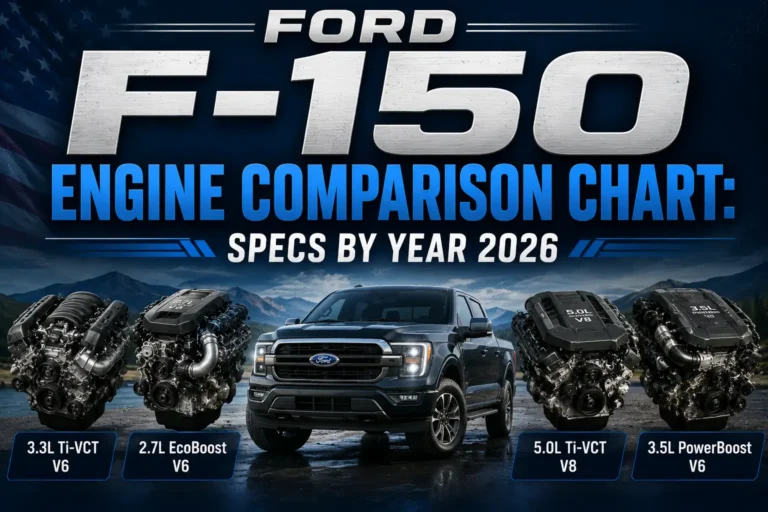
What Is GOAT Mode
A GOAT mode is a specialized vehicle calibration designed to adapt your Bronco for specific environmental conditions. It’s more than just a drive mode; it’s an integrated system.
Core System Components
The system intelligently coordinates adjustments across several key vehicle components:
- Engine and throttle response
- Transmission shift points and logic
- Steering assist and feel
- 4×4 system engagement and torque distribution
- Traction and stability control intervention
- Differential lock activation (if equipped)
Why Terrain Control
The overall goal of the Terrain Management System is to optimize traction, stability, and power delivery. This allows you to maintain control and performance across diverse landscapes. Different modes offer unique calibrations of these systems.
Which 7 Ford Bronco GOAT Modes Exist?
Recommended Best Deal Products


The Ford Bronco boasts a specific set of 7 core GOAT modes, each engineered for distinct driving challenges. These modes are integral to the Ford Bronco’s off-road prowess.
Below is a comprehensive Ford Bronco GOAT mode chart, providing a quick comparison of their primary uses and general adjustments.
| GOAT Mode | Primary Use | Throttle | Transmission | Steering | 4×4 System | Traction Control |
|---|---|---|---|---|---|---|
| Normal | Everyday driving, balanced performance | Standard | Balanced, efficient shifts | Comfortable, moderate assist | 2H/4A (if equipped) | Standard |
| Slippery | Wet roads, snow, ice, loose gravel | Reduced, gentle | Higher gears, smoother shifts | Standard, stable | 4H (auto engagement) | Increased intervention |
| Sand | Deep sand, dunes | Aggressive, responsive | Holds gears longer, quick downshifts | Standard | 4H engaged | Minimally restrictive |
| Mud/Ruts | Deep mud, rutted trails | Responsive, moderate | Holds gears longer, specific shift points | Standard | 4H, rear diff lock (if available) | Reduced intervention |
| Rock Crawl | Slow, technical rock obstacles | Highly sensitive, precise | Low gears, maximum control | Light, precise | 4L, front/rear diff locks (if available), sway bar disconnect (if equipped) | Minimally restrictive |
| Baja | High-speed desert running | Aggressive, direct | Holds gears, maximum power, firm shifts | Firm, responsive | 4H engaged | Reduced, allows wheel slip |
| Custom | Personalized settings for specific needs | User-defined | User-defined | User-defined | User-defined | User-defined |
Normal Everyday Driving
The Normal mode is your default setting for everyday commutes and typical road conditions. It provides a balanced performance for comfort and fuel efficiency.

Prime for Young Adults — 6 Months Free
Students and 18–24s get six months of Prime free, then half price.
Start 6 Months Free As an Amazon Associate I earn from qualifying purchases.Slippery Wet Conditions
When encountering rain, snow, ice, or loose gravel, Slippery mode enhances stability. It prioritizes traction by softening throttle response and adjusting shift points.
Sand Deep Dunes
Sand mode is engineered for driving through deep sand or across dunes. It keeps RPMs high and delivers aggressive throttle response to prevent getting stuck.
Mud Rutted Paths
For navigating through deep mud or heavily rutted trails, Mud/Ruts mode optimizes traction. It helps maintain momentum and control in challenging, slick conditions.
Rock Slow Crawl
Rock Crawl is for highly technical off-road driving over large obstacles. This mode offers precise control, maximizing traction at very low speeds.
Baja High Speed
Baja mode is designed for exhilarating, high-speed desert running. It unleashes the Bronco’s full power while managing stability over uneven terrain.
Custom My Settings
Custom mode allows drivers to personalize various vehicle settings to suit unique preferences or specific, recurring off-road scenarios. We will these adjustments further.
What Specific Vehicle Settings Adjust per Mode?
Beyond simply selecting a name, each GOAT mode makes specific, calculated adjustments to critical Bronco vehicle settings. These internal changes are key to the system’s effectiveness.
Throttle Input Response
Throttle response is dramatically altered to match the terrain. In Rock Crawl, the throttle becomes highly sensitive for precise control, preventing sudden surges. Conversely, Baja mode provides an aggressive, immediate throttle for rapid acceleration and sustained power output over challenging terrain.
Transmission Gear Points
The transmission’s shift logic and gear points are optimized for power delivery and traction. Slippery mode initiates higher gears faster to reduce wheel spin. Sand and Baja modes hold gears longer, maximizing power and preventing bogging down. Rock Crawl maintains ultra-low gears for maximum torque at minimal speeds.
Steering Assist Feel
Steering assist levels change to provide the most appropriate feedback and control. Rock Crawl typically offers a lighter steering feel for easier maneuverability at low speeds. Baja mode often stiffens the steering for more direct feedback and stability during high-speed maneuvers.
Audible Premium Plus — Annual Membership
12 audiobook credits up front, plus the full Audible catalogue.
See Annual Plans As an Amazon Associate I earn from qualifying purchases.Traction Stability Control
Traction and stability control systems intervene differently depending on the mode. Slippery mode maximizes intervention to prevent any loss of traction. In contrast, Mud/Ruts, Sand, and Baja modes reduce intervention. This allows for controlled wheel slip, which is often necessary to maintain momentum in loose or slick conditions. Understanding these settings is crucial.
Differential Lock Engagement
If your Bronco is equipped with locking differentials, their engagement logic is managed by GOAT modes. Mud/Ruts and Rock Crawl modes often automatically engage the rear differential lock, or even both front and rear. This ensures maximum traction by forcing both wheels on an axle to spin at the same rate, even if one loses contact with the ground.
Four Wheel Drive Logic
The 4×4 system’s engagement logic (2H, 4H, 4L) is also tailored. Slippery mode usually defaults to 4H or 4A (if available) for automatic all-wheel drive. Rock Crawl exclusively engages 4L for optimal low-speed torque multiplication. Sand and Baja modes typically utilize 4H for maintaining momentum and stability in dynamic conditions.
A driver would benefit from these specific adjustments in various situations.
When to Select Each Ford Bronco GOAT Mode?
Recommended Best Deal Products


Knowing when to select each Ford Bronco GOAT mode is key to unlocking your vehicle’s full potential on any adventure. Choosing the right mode enhances safety and performance.
For Highway Cruising
For your daily commute or highway cruising in 2026, select Normal mode. This provides the most balanced performance, comfortable ride, and optimal fuel efficiency.
During Rain or Ice
When faced with wet pavement, snow, ice, or loose gravel, engage Slippery mode. The softened throttle and earlier upshifts will help prevent wheel spin, providing better control. This is ideal for winter weather conditions or unexpected storms.
On Loose Sand
Venturing onto deep sand or dunes requires Sand mode. Its aggressive throttle and sustained high RPMs prevent your Bronco from bogging down. This mode is perfect for beach driving or tackling desert landscapes.
Through Deep Mud
If you encounter deep mud or rutted trails, switch to Mud/Ruts. This mode holds gears longer and may engage the rear differential lock, helping maintain momentum. It’s essential for challenging muddy off-road excursions.
Over Rocky Obstacles
For technical rock crawling or navigating large obstacles at low speeds, Rock Crawl is your go-to. Its precise throttle control and 4L engagement offer maximum torque and articulation. Always approach rocky terrain slowly and deliberately.
Fast Desert Driving
When you’re tackling high-speed desert trails, select Baja mode. It delivers aggressive power, firm steering, and reduced traction control intervention for dynamic driving. This mode is for experienced off-roaders seeking an adrenaline rush.
Optimizing Your Ride
The Custom mode allows you to tailor settings for specific, recurring situations not perfectly covered by other modes. You can set personal preferences for throttle, steering, and 4×4 options. Understanding these differences can significantly improve your experience.
How Many GOAT Modes Do Different Bronco Models Offer?
The number and type of GOAT modes available can vary significantly across different Ford Bronco models and trim levels. This impacts the specific off-road capabilities of your vehicle.
Bronco Sport Variations
The Ford Bronco Sport, a smaller SUV, typically offers 5 to 7 GOAT modes. These include Normal, Eco, Sport, Slippery, Sand, and potentially Mud/Ruts and Rock Crawl, depending on the trim (e.g., Badlands Sport).
Two Door Four Door
For the full-size Ford Bronco (two-door and four-door models), the base models (Base, Big Bend, Outer Banks) typically start with 5 GOAT modes. These usually include Normal, Eco, Sport (sometimes combined with Normal), Sand, Slippery, and Mud/Ruts. The standard offering provides a solid foundation for light to moderate off-roading.
Badlands Sasquatch Options
Higher trims like the Black Diamond and Badlands often come standard with all 7 GOAT modes, including Rock Crawl and Baja. The Sasquatch Package, available on many trims, also enhances off-road capability. It may influence default settings or unlock full potential within specific modes. Explore trim level features for details.
Wildtrak Raptor Exclusives
The performance-oriented Wildtrak and Raptor models specifically include Baja mode. The Raptor, designed for extreme high-speed desert running, further refines its GOAT modes for ultimate performance. It may also offer unique calibrations for existing modes. Understanding these distinctions helps you choose the perfect 2026 Bronco for your adventures.
Frequently Asked Questions About Ford Bronco GOAT Modes
What Is the Ford Bronco GOAT Mode?
The Ford Bronco GOAT (Goes Over Any Type of Terrain) mode is a sophisticated terrain management system. It automatically adjusts key vehicle parameters like throttle response, transmission, steering, and 4×4 settings to optimize performance for specific driving conditions, helping you maintain control off-road.
How Many GOAT Modes Does a Bronco Have?
The full-size Ford Bronco can have up to 7 GOAT modes: Normal, Slippery, Sand, Mud/Ruts, Rock Crawl, Baja, and Custom. The number of modes depends on the specific trim level and optional packages. Lower trims typically start with 5 modes, while higher trims and specialty models offer more.
Can You Customize Bronco GOAT Modes?
Yes, many Ford Bronco models include a “Custom” GOAT mode. This allows drivers to manually adjust various settings such as throttle response, steering feel, and 4×4 engagement. You can create personalized profiles for unique driving preferences or specific terrains not perfectly matched by the pre-set modes.
Which GOAT Mode Is Best for Snow?
For driving in snow, the “Slippery” GOAT mode is generally the best choice for your Ford Bronco. This mode softens throttle response, shifts to higher gears earlier, and maximizes traction control intervention. These adjustments reduce wheel spin and improve stability on slick or icy surfaces.
Are GOAT Modes Available on the Bronco Sport?
Yes, GOAT modes are available on the Ford Bronco Sport, though the specific modes may differ from the full-size Bronco. The Bronco Sport typically offers modes such as Normal, Eco, Sport, Slippery, and Sand, with some higher trims (like the Badlands Sport) including Mud/Ruts and Rock Crawl modes.
Mastering your Ford Bronco’s GOAT modes is essential for truly conquering any terrain. By understanding this comprehensive ford bronco goat mode chart, you are equipped to make informed decisions for optimal performance in 2026 and beyond. Experiment responsibly with each setting to discover the full potential of your vehicle.