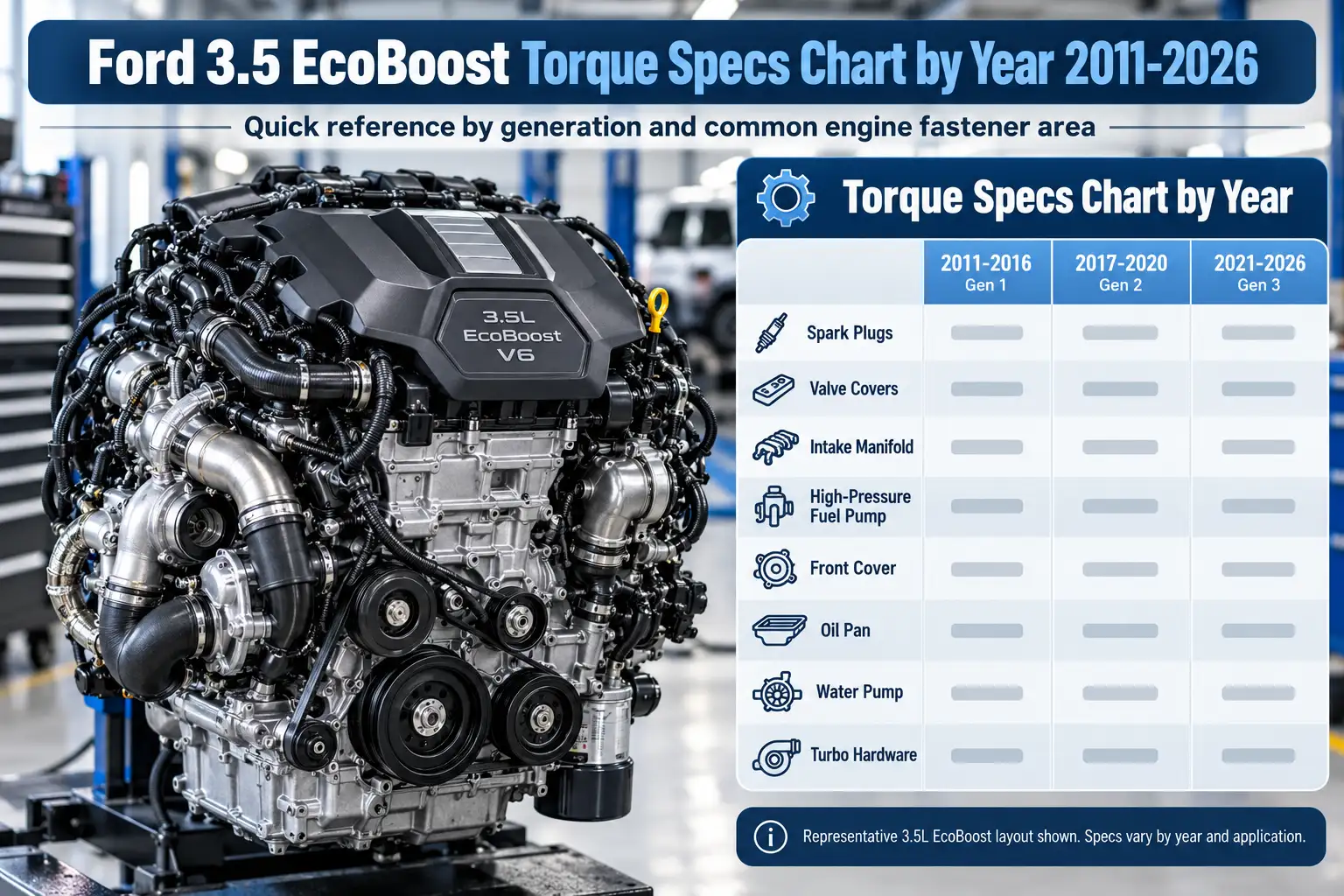
Ford 3.5 EcoBoost Torque Specs Chart by Year 2011-2026

Ford 3.5 EcoBoost torque specs are component- and model-year-specific. On a documented 2012 Ford F-150 3.5L EcoBoost, for example, spark plugs tighten to 15 Nm (133 lb-in), while the cam phaser retaining bolts require four stages that end with an additional 180-degree turn. Neither instruction should be replaced with a generic “tighten until snug” rule.
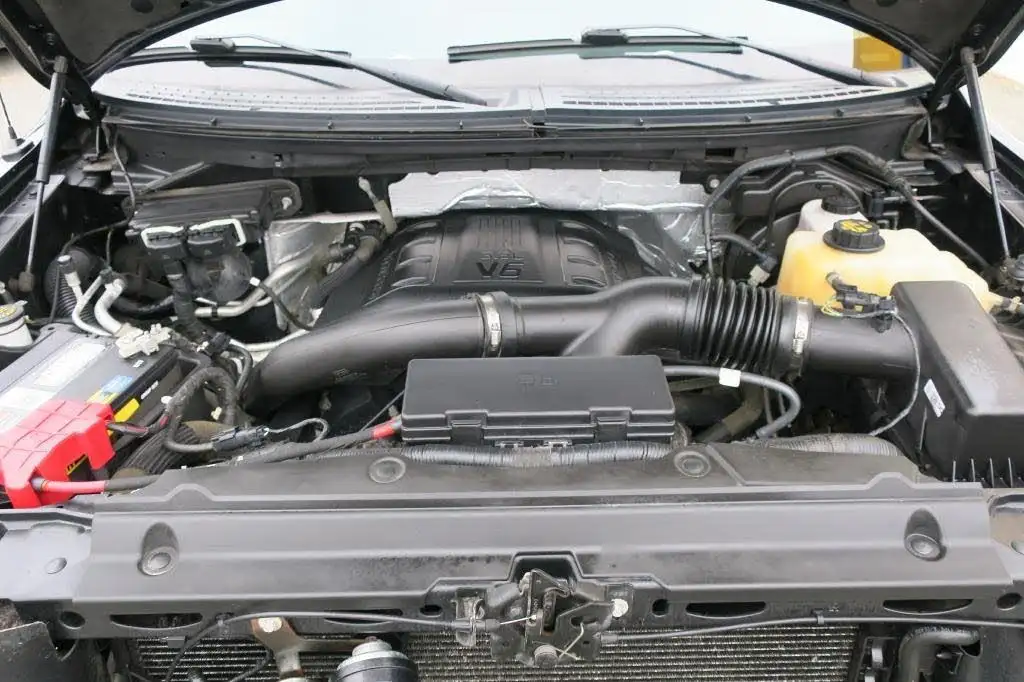
This reference covers engine fastener tightening torque, not the engine’s horsepower or peak torque output. The detailed figures below come from archived 2012 F-150 3.5L Turbo service information, with a separately identified 2011 comparison. For newer trucks, use the matching Ford workshop procedure rather than carrying an older number forward.
3.5L EcoBoost
Torque Specifications
A fastener-focused quick reference based on the documented 2012 F-150 3.5L Turbo application.
On mobile, swipe sideways to see imperial units.
| Fastener | Torque | Imperial |
|---|---|---|
| Spark plugs | 15 Nm | 133 lb-in |
| Ignition coil bolts | 7 Nm | 62 lb-in |
| Valve cover bolts | 10 Nm | 89 lb-in |
| Oil pump retaining bolts | 10 Nm | 89 lb-in |
| Turbocharger mounting bolts | 32 Nm | 24 lb-ft |
| Turbocharger bracket bolt | 18 Nm | 159 lb-in |
Values do not replace factory bolt-position sequences or installation procedures.
VCT / Cam Phaser Retaining Bolts Use new bolts
Main Cylinder Head Bolts Use new bolts
Crankshaft Pulley Bolt Use new bolt
Which Ford 3.5 EcoBoost Version Are You Servicing
Recommended Best Deal Products

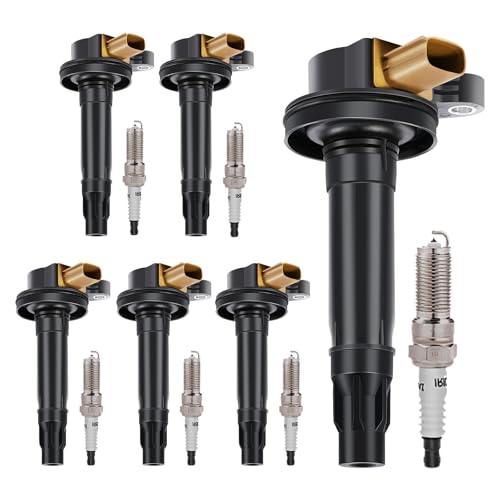

Start with the model year, model, engine and specific component. A 3.5L displacement badge alone does not identify the correct service procedure. The F-150’s engine layout and hardware changed over time, and a 3.5L engine in another Ford model is not automatically interchangeable.
| F-150 Model Years | Engine Identification | How to Use This Guide |
|---|---|---|
| 2011–2016 | Early F-150 3.5L EcoBoost applications | Use figures only for years explicitly identified below. |
| 2017–2020 | Later-generation 3.5L EcoBoost applications | Obtain that year’s component-level Ford workshop instructions. |
| 2021–2026 | Updated later-generation applications, including configurations that require separate identification | Confirm exact engine, powertrain and service information by VIN. |
The detailed tables are not an all-years specification list. They establish values for the documented 2012 application, and only the 2011 entries explicitly marked as such. Raptor, PowerBoost hybrid, Explorer, Expedition and Transit procedures should not be inferred from these F-150 tables.
Ford 3.5 EcoBoost Torque Specs by Component
The chart below summarizes values from the archived 2012 F-150 3.5L Turbo service manual. These are service-procedure figures, not a substitute for the diagrams that identify individual bolts and tightening order.
| Component or Fastener | 2012 F-150 Torque | Required Stage or Note |
|---|---|---|
| Spark plugs | 15 Nm / 133 lb-in | Install using hand tools. |
| Ignition coil retaining bolts | 7 Nm / 62 lb-in | Coil-on-plug fasteners. |
| Valve cover bolts and stud bolts | 10 Nm / 89 lb-in | Follow illustrated tightening order. |
| Intake manifold bolts | 10 Nm / 89 lb-in | Then turn another 45°. |
| Cylinder head main bolts | 20 Nm, then 35 Nm | Follow with 90°, 90° and 45° in order. Use new bolts. |
| Cylinder head M6 auxiliary bolt | 10 Nm / 89 lb-in | Separate from main head bolts. |
| Main bearing cap vertical bolts | 60 Nm / 44 lb-ft | Then turn another 90°. |
| Main bearing cap side bolts | 45 Nm / 33 lb-ft | Then turn another 90°. Use new bolts. |
| Camshaft bearing cap bolts | 8 Nm / 71 lb-in | Then turn another 45° in the specified sequence. |
| VCT or cam phaser retaining bolts | 40 Nm, loosen, then 25 Nm | Finally turn another 180°. New bolts required. |
| Turbocharger mounting bolts | 32 Nm / 24 lb-ft | Turbocharger-to-manifold mounting group. |
| Turbocharger bracket bolt | 18 Nm / 159 lb-in | Different from mounting bolts. |
| Oil pump retaining bolts | 10 Nm / 89 lb-in | Three oil pump bolts. |
| Water pump bolts, 2012 F-150 4WD reference | 10 Nm / 89 lb-in | Then turn another 45° in sequence. |
| Exhaust manifold nuts | 19 Nm, then 25 Nm | Two stages, with new hardware as specified. |
Read all stages before tightening. For a row that includes an angle, the Nm figure alone is not the complete instruction. The official sequence diagram and fastener reuse notes remain part of the job. For wheel, differential and other non-engine fasteners, use the separate Ford F-150 torque specifications chart.
What Are the Spark Plug and Valve Cover Specs
Spark Plug Installation Torque
The archived 2011 and 2012 F-150 3.5L Turbo procedures both specify 15 Nm (133 lb-in) for spark plugs. That is approximately 11.1 lb-ft, but using an inch-pound torque wrench makes the low setting easier to read and control. The 2012 procedure specifically calls for hand tools during installation.
Spark plug gap and installation torque are separate specifications. If you are also checking the correct plug gap for your truck’s engine and year, use the Ford F-150 spark plug gap chart. Do not substitute a gap figure for a torque value, or assume that all later plug designs use the early-engine torque.
Valve Cover Fastener Torque
For the documented 2012 3.5L Turbo engine, the valve cover bolts and stud bolts tighten to 10 Nm (89 lb-in) in the service manual’s illustrated order. The procedure also specifies sealant at particular front-cover-to-cylinder-head joints and a limited working window after sealant application.
A correctly torqued valve cover can still leak if the joint was not prepared or sealed according to the procedure. This is why the assembly instructions matter as much as the number.
How Do Cylinder Head and Crankshaft Torque Stages Work
Cylinder Head Tightening Stages
The 2012 F-150 3.5L Turbo cylinder head uses eight new main head bolts per bank. The archived instructions show the same five-stage torque-angle pattern for the left and right heads, but the bolts must be tightened in the illustrated sequence.
| Stage | Main Cylinder Head Bolt Instruction |
|---|---|
| 1 | 20 Nm (177 lb-in) |
| 2 | 35 Nm (26 lb-ft) |
| 3 | Turn an additional 90° |
| 4 | Turn an additional 90° |
| 5 | Turn an additional 45° |
The separate M6 head bolt is specified at 10 Nm (89 lb-in). Do not include it in the eight-bolt main sequence. The 2012 manual identifies the main cylinder head bolts as tighten-to-yield fasteners that must be discarded after removal.
The table gives the stages, not the bolt-number order. Reproducing a generic spiral or crisscross pattern would be unsafe without the Ford diagram for the exact head.
Crankshaft Fastener Requirements
For the 2012 engine, the main bearing cap vertical bolts tighten to 60 Nm (44 lb-ft), then 90°. The eight new side bolts tighten to 45 Nm (33 lb-ft), then 90°. The main bearing cap support brace uses another specification, 20 Nm (177 lb-in), then 180°.
The crankshaft pulley bolt follows its own four-stage routine: 120 Nm (89 lb-ft), loosen one full turn, tighten to 50 Nm (37 lb-ft), then rotate 90°. The archived assembly procedure calls for a new pulley bolt. These figures cannot be collapsed into one final foot-pound number.
How to Follow Cam Phaser and Timing Cover Torque
Cam Phaser Bolt Specifications
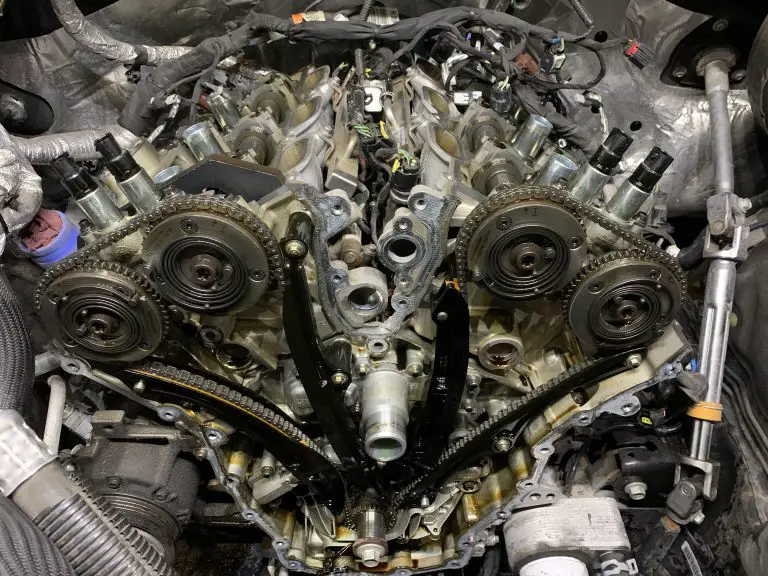
For the 2012 F-150 3.5L Turbo, the VCT assembly instructions specify two new VCT retaining bolts on each bank. The four-stage procedure is:
- Tighten to 40 Nm (30 lb-ft).
- Loosen each bolt one full turn.
- Tighten to 25 Nm (18 lb-ft).
- Rotate each bolt an additional 180°.
The procedure also requires correct camshaft positioning and holding tools. This is not a generic value for a 2017 or newer cam phaser, or for a 3.5L EcoBoost installed in a different Ford model.
For removal, timing alignment and component replacement details, the 3.5 EcoBoost cam phaser replacement guide covers the wider repair. This torque reference does not replace that procedure.
Timing Cover Tightening Sequence
The 2012 front cover is a good example of why bolt groups matter. The archived manual numbers 22 front-cover bolts and applies different final stages:
| Front Cover Bolt Group | Documented 2012 Tightening Stages |
|---|---|
| Bolts 1, 2, 7, 8, 15, 17, 18, 19 and 20 | 10 Nm, then 20 Nm plus 45° |
| Bolt 21 | 10 Nm initially, then 20 Nm plus 90° |
| Bolts 3–6, 9–14 and 16 | 10 Nm, then 20 Nm plus 45° |
| Bolt 22 | 10 Nm plus 45° |
These bolt numbers come from Ford’s illustrated 2012 arrangement. Do not map the numbers to physical locations without that diagram. Cover sealing, locating dowels and installation order must also match the specific service operation.
Which Turbocharger and Fuel Fasteners Need Special Care
The documented 2012 turbocharger mounting bolts tighten to 32 Nm (24 lb-ft). The separate turbocharger bracket bolt uses 18 Nm (159 lb-in), while the two bracket-to-block bolts use 10 Nm (89 lb-in). Treating all three bolt groups as the same fastener would be a mistake.
Turbocharger oil-line hardware can change even between nearby years. For example, the 2011 F-150 left turbocharger procedure lists the oil return tube bolt at the block as 10 Nm plus 45°, while the 2012 procedure specifies 8 Nm plus 30°. This is a documented year-specific difference, not a rounding variation.
For high-pressure fuel-system work, release fuel pressure using the matching Ford procedure before disconnecting components. Fuel pump mounting bolts, fuel tube fittings and sensor threads are not interchangeable. The site’s 3.5 EcoBoost high-pressure fuel pump guide supplies context for that component; its discussion does not override the factory torque procedure.
What Are Oil Pan and Cooling System Torque Specs
The documented 2012 engine uses different oil pan bolt groups rather than one universal pan torque. During initial alignment, bolts 10, 11, 13 and 14 are tightened to 3 Nm (27 lb-in). The later stages are 20 Nm plus 45° for bolts 1–9 and 11–14, 10 Nm plus 45° for bolts 15 and 16, and 20 Nm plus 90° for bolt 10.
The manual also imposes sealing and alignment time limits after RTV application. Those timing requirements are part of the assembly procedure. The oil pump retaining bolts, by contrast, use 10 Nm (89 lb-in).
For the 2012 F-150 4WD 3.5L Turbo water pump, the archived instructions specify 10 Nm (89 lb-in), then an additional 45°, in the illustrated order. The oil drain plug is a different fastener from the oil pan mounting bolts; do not use any pan-bolt stage on the drain plug.
How to Read Torque Values and Tightening Angles
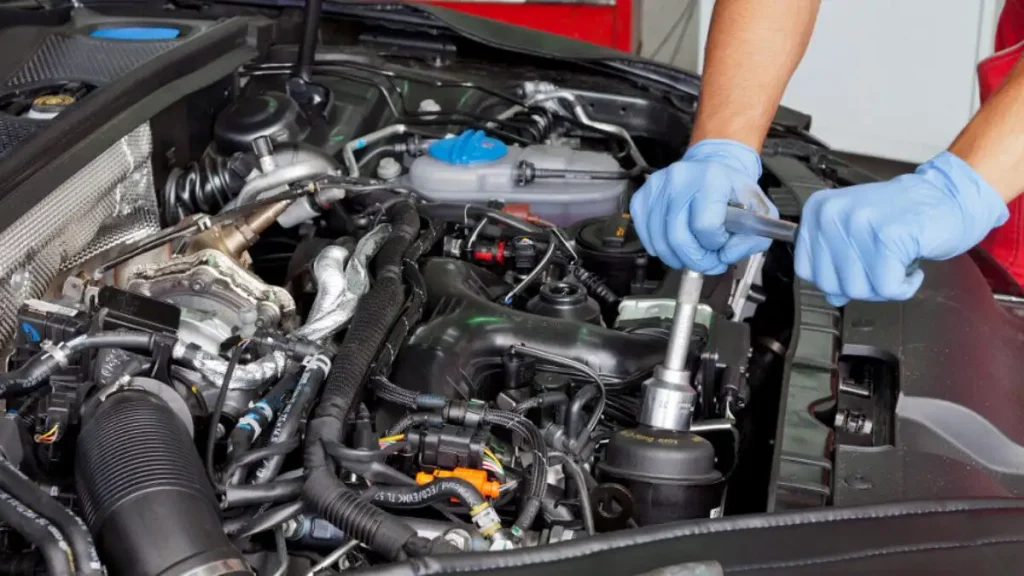
Torque values appear as newton-meters (Nm), pound-feet (lb-ft) and pound-inches (lb-in). The difference is significant: 12 lb-in equals 1 lb-ft. A low-torque bolt listed in pound-inches must not be tightened as if the same number were pound-feet.
A torque-plus-angle specification gives a starting torque and then a measured additional rotation. To interpret it correctly:
- Set the correct torque unit. Use a calibrated wrench suitable for the specified range, especially for small bolts.
- Complete the stages in order. If a procedure says tighten, loosen and retighten, do not skip the loosen stage.
- Measure the specified rotation. A 45°, 90° or 180° instruction requires controlled angle measurement, not another guessed torque setting.
For the 2012 VCT bolt, 25 Nm plus 180° is only the final portion of a four-stage sequence. The earlier 40 Nm and full-turn loosening stages remain essential. The same principle applies to head bolts and the crankshaft pulley.
When Should You Stop a 3.5 EcoBoost Repair
Stop before final tightening if any of these conditions applies:
- The model year or engine application is uncertain. Identify the VIN-matched engine and retrieve its workshop procedure.
- The bolt number is missing. Obtain the factory diagram instead of guessing which fastener belongs to a staged group.
- Only one torque value is available for a multi-stage fastener. Find the complete torque-angle sequence.
- The procedure requires new bolts. Obtain the specified replacement fasteners rather than reusing a removed tighten-to-yield bolt.
- Two references conflict. Do not average the figures or automatically choose the lower one.
Ford provides pathways to workshop manuals through its Motorcraft technical service resources. Use the applicable service operation for your truck’s year, model, engine and repair. Some workshop resources may require paid access.
How to Tighten Ford 3.5 EcoBoost Bolts Safely
The most useful Ford 3.5 EcoBoost torque specs are the ones matched to a specific fastener and engine application. For the documented 2012 F-150, spark plugs use 15 Nm, but cylinder head bolts, VCT bolts and many cover fasteners use multi-stage procedures that cannot be reduced to a single number.
Start by identifying your exact truck and engine. Use the component chart to locate the relevant service operation, then check the fastener diagram, torque unit, tightening sequence and new-bolt requirements. If your F-150 is a different model year, look up that year’s factory instructions instead of assuming the 2012 values still apply. A correct torque reading is only one part of a correct repair.
Ford 3.5 EcoBoost Torque Specs FAQ
What Is the Spark Plug Torque Spec for a Ford 3.5 EcoBoost
The archived 2011 and 2012 F-150 3.5L Turbo service procedures specify 15 Nm (133 lb-in). That figure is not a universal setting for every later EcoBoost model year or plug design. Check your exact application before installation.
Are 2011 and 2021 3.5 EcoBoost Torque Specs the Same
You should not assume they are. The engine generation and component procedures changed over time, and even some 2011 and 2012 turbo oil-line fasteners have different documented stages. Use a 2021 F-150 workshop procedure for a 2021 repair.
What Is the Torque Sequence for 3.5 EcoBoost Head Bolts
For the documented 2012 F-150 engine, the eight main head bolts on each bank follow 20 Nm, 35 Nm, 90°, 90°, then 45°. They require new bolts and the illustrated tightening order. Do not use this sequence on another model year without matching service information.
Can 3.5 EcoBoost Cam Phaser Bolts Be Reused
The documented 2012 F-150 VCT assembly procedure specifies new retaining bolts. The reuse rule for another engine variant must be checked in its own Ford workshop instructions. Do not assume a previously tightened torque-angle bolt is reusable.
Where Can I Find Factory Ford 3.5 EcoBoost Torque Specifications
Use Ford’s Motorcraft technical resources to locate the workshop procedure for your truck’s year, model and engine. Select the specific component and read the entire installation instruction, including any bolt-number diagram, tightening stages and hardware replacement notes.