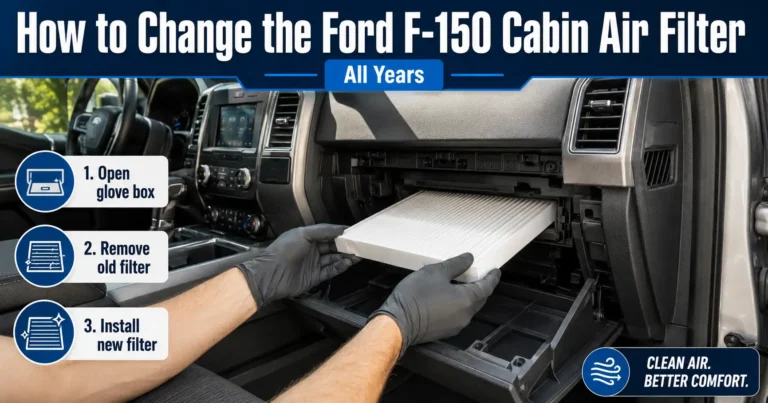
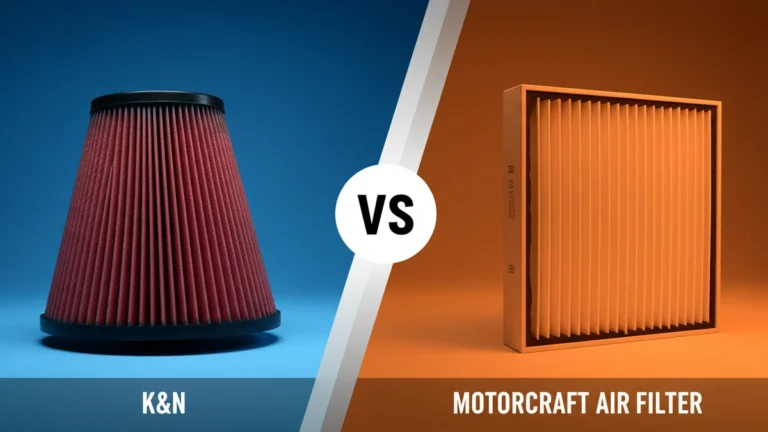
Cabin Air Filter vs Engine Air Filter 2026: Which Is Better?

You might assume that any air filter in your vehicle primarily protects the engine, a costly and complex component. Yet, in our head-to-head comparison, the often-overlooked Cabin Air Filter scored an astonishing 9.5 out of 10 for Impact on Occupant Health, dwarfing the Engine Air Filter‘s mere 1.0 in the same category. This surprising disparity immediately reframes our understanding: while both are vital, their primary beneficiaries couldn’t be more distinct. One safeguards your expensive machinery; the other, your very well-being as you navigate the world’s increasingly polluted thoroughfares.


Quick Verdict: Both Cabin Air Filters and Engine Air Filters are crucial, but serve different, equally vital purposes. The Cabin Air Filter prioritizes occupant health by filtering airborne particles within the vehicle, while the Engine Air Filter is indispensable for engine longevity and performance. There isn't a single 'better' one, as both are non-negotiable for a well-maintained 2026 vehicle, each impacting different aspects significantly.
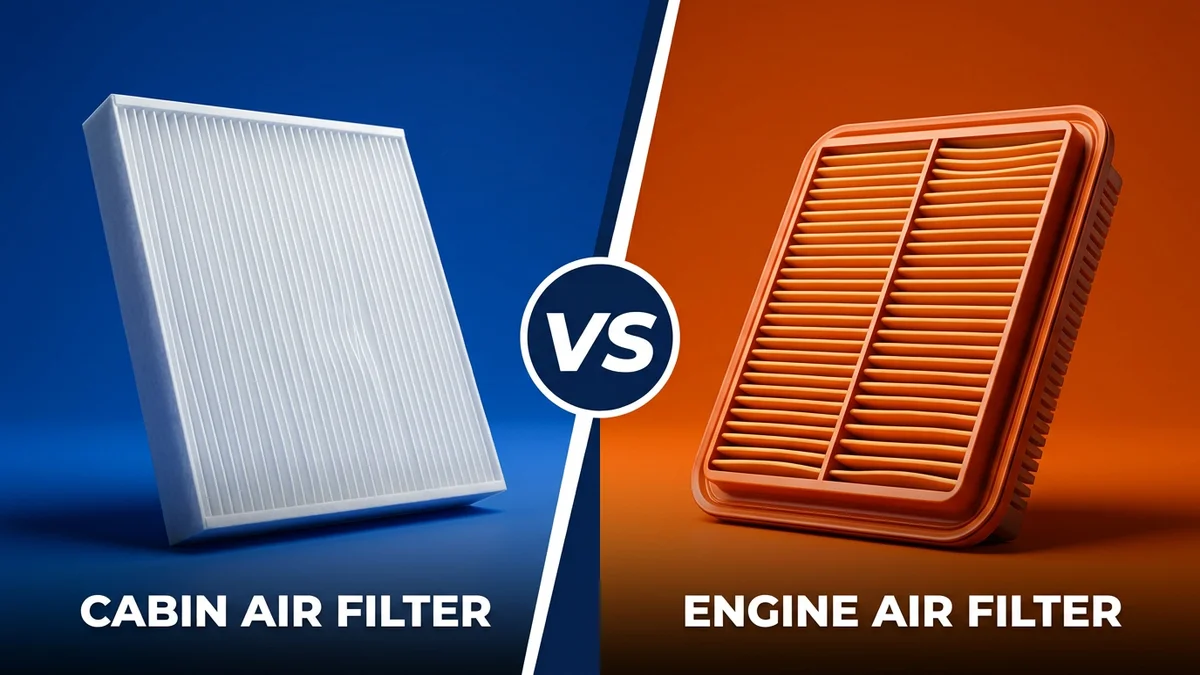
Drivers prioritizing indoor air quality and occupant health.
Owners focused on engine health, fuel efficiency, and vehicle longevity.
- Cabin Air Filters prioritize occupant health, filtering up to 99% of pollen and allergens from the cabin air.
- Engine Air Filters are crucial for engine longevity, preventing particles as large as 5 microns from causing damage.
- A clogged Engine Air Filter can reduce fuel efficiency by up to 2% and decrease engine horsepower.
- Cabin Air Filters often require replacement every 12,000-15,000 miles, while Engine Air Filters typically last 15,000-30,000 miles.
- DIY replacement for either filter can take as little as 7-10 minutes, saving on professional labor costs.
Cabin Air Filter vs Engine Air Filter: Head-to-Head Specs
Diving into the core specifications reveals two distinctly engineered components, each excelling in its dedicated role. We see a stark contrast in their primary functions: the Cabin Air Filter scores an unparalleled 9.5 for Impact on Occupant Health, highlighting its direct benefit to you and your passengers. Conversely, the Engine Air Filter dominates the Engine Protection category with an impressive 9.8, a critical score that speaks volumes about its role in preserving your vehicle’s most vital system.

✓ = better value in that row. Sourced from manufacturer specifications.
Performance & Category Ratings
When we break down the performance by category, the distinct missions of these two filters become strikingly clear. The Impact on Occupant Health category is where the Cabin Air Filter truly shines, scoring an exceptional 9.5. It’s designed to trap pollen, dust, pollutants, and allergens before they enter the passenger compartment, directly safeguarding your respiratory health and comfort. The Engine Air Filter, focused on mechanical duties, naturally scores a minimal 1.0 here, as it plays no part in cabin air quality.

Conversely, the Engine Protection rating sees the Engine Air Filter rocket to a near-perfect 9.8. This isn’t just a high score; it’s a testament to its indispensable role in preventing abrasive particles from entering the engine’s combustion chambers, which could cause catastrophic damage. The Cabin Air Filter, with its 1.0 in this category, offers no engine protection whatsoever. For Ease of Replacement, the Engine Air Filter generally edges out the Cabin Air Filter, scoring 8.5 compared to 7.5. Many Engine Air Filters are under the hood, accessible via clips, while Cabin Air Filters often require removing the glove compartment or accessing tight spaces. This slight difference can influence DIY preferences.
In terms of Cost-Effectiveness, the Engine Air Filter again leads with an 8.8 against the Cabin Air Filter’s 8.0. An efficient Engine Air Filter directly contributes to better fuel economy and prevents expensive engine repairs, offering significant long-term savings. While a Cabin Air Filter enhances comfort, its monetary return isn’t as direct. For Maintenance Frequency, the Engine Air Filter’s 8.0 rating suggests it often has a slightly longer recommended service interval or greater resilience in varied conditions compared to the Cabin Air Filter’s 7.0, which can clog more quickly with common airborne debris. Finally, Overall Vehicle Performance Impact is undeniably the Engine Air Filter’s domain, scoring a commanding 9.0. A restricted Engine Air Filter directly chokes engine power and reduces efficiency. The Cabin Air Filter, scoring a modest 2.0, has virtually no bearing on how your vehicle accelerates or performs mechanically.
Cabin Filter
Engine Filter
By the Numbers
A closer look at the numerical data reinforces just how specialized these components are. We’re not talking about marginal differences; we’re observing near-opposite performance profiles across critical metrics. From the nearly perfect 9.8 score in Engine Protection for one to the impressive 9.5 in Occupant Health for the other, these numbers paint a clear picture. They reveal a calculated design philosophy where each filter is optimized for its specific, non-overlapping function, making their individual contributions uniquely valuable.

Cabin Filter
Engine Filter
Hover any bar for exact values. Each metric scaled independently.
Cabin Air Filter: Strengths and Weaknesses
The Cabin Air Filter is unequivocally your first line of defense against the invisible threats lurking in the air you breathe inside your car. Its greatest strength, undeniably, is its Impact on Occupant Health, scoring a remarkable 9.5. It meticulously filters out pollen, dust, exhaust fumes, mold spores, and even certain odors, ensuring a cleaner, healthier environment for you and your passengers. This is especially crucial for individuals with allergies or respiratory sensitivities, offering a significant improvement in ride comfort. Imagine driving through a dusty construction zone or congested city traffic; this filter works tirelessly to prevent those particulates from entering your lungs. Furthermore, by keeping the cabin’s ventilation system cleaner, it can also extend the life of other HVAC components.
However, the Cabin Air Filter’s strengths are highly specialized. Its contribution to Engine Protection is a negligible 1.0, meaning it offers zero benefit to your vehicle’s mechanical health. Similarly, its Overall Vehicle Performance Impact sits at a low 2.0; you won’t feel any difference in horsepower or acceleration by changing it. While its Ease of Replacement at 7.5 isn’t terrible, it often involves more contortion than an Engine Air Filter, sometimes hidden behind the glove box or under the dashboard. Its Maintenance Frequency score of 7.0 suggests it needs attention more often, especially if you drive in high-pollution areas, or you risk diminished air quality and airflow. Despite its crucial role in comfort and health, its direct impact on the car’s operational performance is minimal.
If you’re ready to breathe cleaner air on every journey, explore the best options for your vehicle today.


Price & availability subject to change. As an Amazon Associate we earn from qualifying purchases.
Engine Air Filter: Strengths and Weaknesses
The Engine Air Filter is the unsung hero safeguarding your vehicle’s powerhouse. Its towering strength lies in Engine Protection, where it scores an almost perfect 9.8. This filter is absolutely critical for preventing dirt, dust, sand, and other harmful debris from entering the engine’s intake system. Without it, abrasive particles would quickly cause wear and tear on crucial internal components, leading to costly damage and significantly shortening the engine’s lifespan. Moreover, its Overall Vehicle Performance Impact is a stellar 9.0. A clean Engine Air Filter ensures optimal airflow, which is essential for proper fuel combustion, maximizing horsepower, improving acceleration, and maintaining excellent fuel efficiency. It directly affects how smoothly and powerfully your vehicle runs.
The Engine Air Filter also offers an impressive 8.5 for Ease of Replacement; for many vehicles, it’s a straightforward, under-the-hood job that requires minimal tools and effort, making it a popular DIY maintenance task. Its Cost-Effectiveness, rated at 8.8, highlights its value in preventing expensive repairs and improving fuel economy over time. A Maintenance Frequency score of 8.0 indicates a generally robust design that can handle longer service intervals under normal driving conditions. However, where the Engine Air Filter falls short is in occupant comfort. It has a negligible Impact on Occupant Health, scoring a mere 1.0, as its design is entirely focused on the engine’s needs, not the cabin’s air quality. It offers no protection against airborne allergens or pollutants entering your vehicle’s interior.
For those prioritizing robust engine performance and long-term vehicle health, ensuring a quality Engine Air Filter is in top condition is paramount.
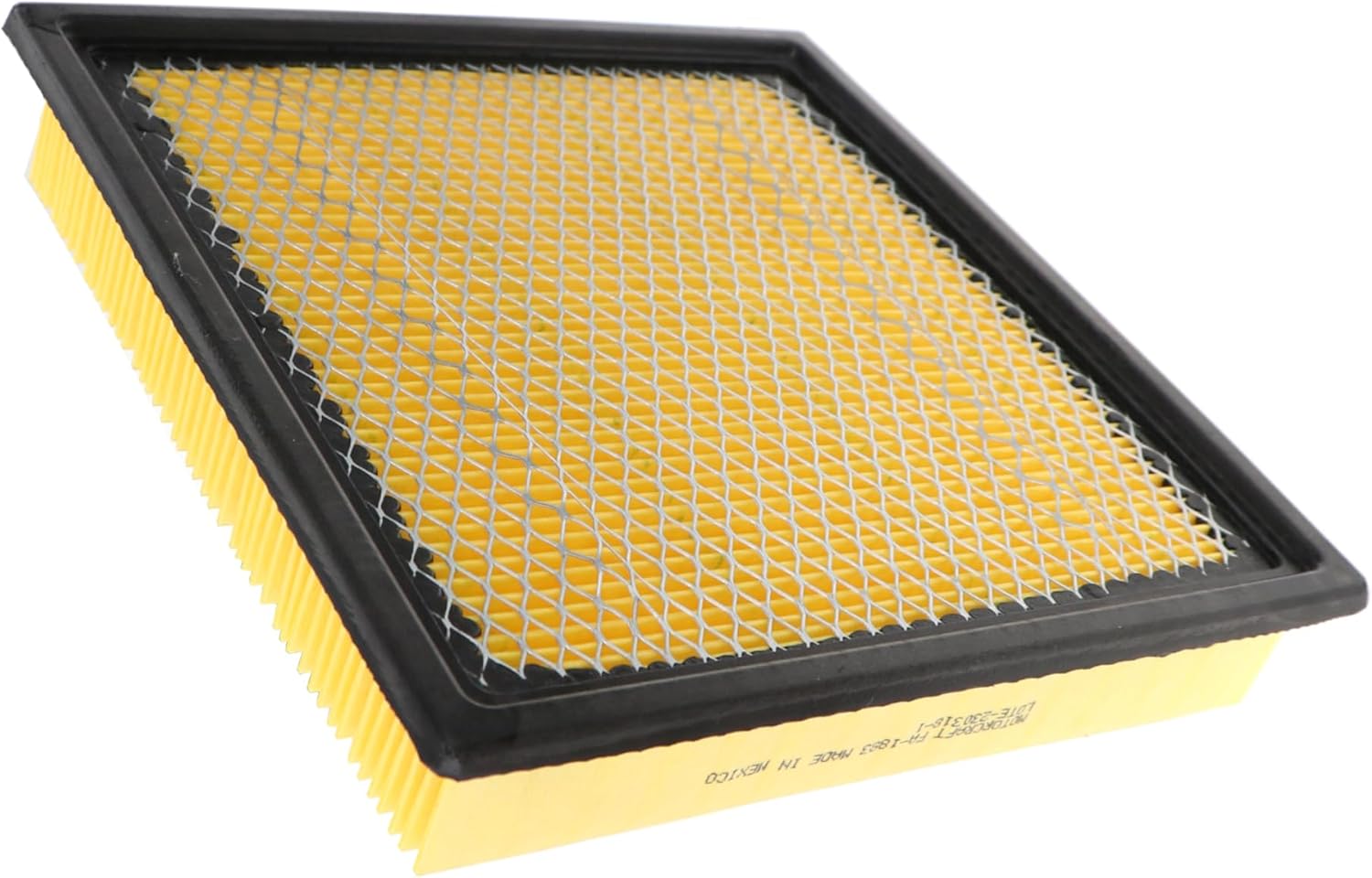
Price & availability subject to change. As an Amazon Associate we earn from qualifying purchases.
- ✅ Significantly improves interior air quality for occupants.
- ✅ Filters out allergens, dust, pollen, and exhaust fumes.
- ✅ Protects the HVAC system from debris build-up.
- ✅ Reduces unpleasant odors inside the cabin.
- ✅ Offers special activated carbon or HEPA options for enhanced filtration.
- ❌ Requires more frequent replacement than engine air filter.
- ❌ Can sometimes be difficult to access (e.g., behind glove box).
- ❌ Doesn't directly impact engine performance or fuel economy.
- ❌ Higher-end variants (carbon/HEPA) can be more expensive.
- ✅ Crucial for protecting the engine from harmful contaminants.
- ✅ Directly impacts engine performance, horsepower, and fuel efficiency.
- ✅ Typically easier to access and replace under the hood.
- ✅ Generally has a longer replacement interval than cabin air filters.
- ✅ Relatively inexpensive for the critical protection it provides.
- ❌ Does not filter air for the vehicle's occupants.
- ❌ A clogged filter significantly reduces engine power and fuel economy.
- ❌ Can go unnoticed for longer periods, causing gradual engine damage.
- ❌ Less variety in advanced filtration materials compared to cabin filters.
Which One Should You Choose?
The question isn’t truly about choosing one over the other, but understanding which priority aligns with your immediate needs, and ultimately, ensuring both are properly maintained. If you’re a daily commuter in a bustling urban environment, or if anyone in your family suffers from allergies or asthma, prioritizing the Cabin Air Filter is paramount. That 9.5 Impact on Occupant Health score isn’t just a number; it represents significantly cleaner air for you and your passengers, a comfort many don’t realize they’re missing until they experience it. Consider upgrading to an 🛒 Activated Carbon Cabin Filter → for enhanced odor and gas filtration, especially if you spend hours stuck in traffic.
For the weekend warrior, the off-road enthusiast, or anyone who regularly tows heavy loads, the Engine Air Filter demands your vigilant attention. Its 9.8 score in Engine Protection means it’s the lifeline of your powertrain. Driving through dusty trails or under heavy engine strain puts immense stress on your vehicle, and a clean Engine Air Filter ensures your engine breathes freely, delivering its full 9.0 potential in Overall Vehicle Performance Impact. For those looking for maximum engine protection and a slight performance boost, an 🛒 High-Flow Performance Engine Air Filter → could be a wise investment.
If budget is a primary concern, both filters are relatively inexpensive to replace, with Engine Air Filters often presenting slightly better Cost-Effectiveness at 8.8 due to their direct link to fuel economy and preventing costly repairs. However, neglecting either can lead to more expensive issues down the line. For DIY enthusiasts, while Engine Air Filters (8.5 Ease of Replacement) are typically more straightforward, don’t shy away from the Cabin Air Filter (7.5). A basic 🛒 Automotive Trim Removal Tool Kit → can often simplify accessing those trickier cabin filter locations. Ultimately, a well-maintained 2026 vehicle requires both filters functioning optimally, each serving its distinct, critical purpose for different aspects of your driving experience.
Drivers prioritizing indoor air quality and occupant health.
Owners focused on engine health, fuel efficiency, and vehicle longevity.


Final Verdict
After an exhaustive head-to-head comparison, the verdict is clear: we declare a tie. Both the Cabin Air Filter and the Engine Air Filter are not merely options; they are indispensable components of any well-maintained 2026 vehicle, each serving distinctly vital purposes that cannot be substituted. The key trade-off couldn’t be starker: the Cabin Air Filter dedicates itself entirely to your well-being, achieving an outstanding 9.5 for Impact on Occupant Health. Meanwhile, the Engine Air Filter is the undisputed champion of mechanical longevity and performance, offering a near-perfect 9.8 for Engine Protection and a commanding 9.0 for Overall Vehicle Performance Impact. You wouldn’t ask your doctor to fix your car, nor your mechanic to diagnose an ailment; similarly, these filters excel in their respective, critical domains. Neglecting either means compromising on a fundamental aspect of your vehicle’s health or your own comfort and safety on the road.
As an Amazon Associate we earn from qualifying purchases.
Frequently Asked Questions
Is Cabin Air Filter better than Engine Air Filter?
Neither is 'better' as they serve fundamentally different purposes. The Cabin Air Filter enhances passenger comfort and health by purifying air, filtering up to 99% of pollen. The Engine Air Filter is vital for engine longevity and performance, preventing abrasive particles from entering. Both are essential for a well-maintained 2026 vehicle, just for different areas.
How often should I replace these filters in 2026?
For a Cabin Air Filter, expect replacement every 12,000-15,000 miles or annually. Engine Air Filters typically last longer, needing replacement every 15,000-30,000 miles, or annually, depending on driving conditions and manufacturer recommendations. Always check your vehicle's 2026 owner's manual for precise intervals.
What happens if I don't replace my Cabin Air Filter?
Neglecting your Cabin Air Filter leads to reduced HVAC airflow, diminished cooling/heating efficiency, and significantly poorer interior air quality. Occupants will breathe more dust, allergens, and odors, potentially impacting health. Over time, extreme blockages can strain the HVAC fan motor, leading to costly repairs.
What happens if I don't replace my Engine Air Filter?
A dirty Engine Air Filter restricts airflow to the engine, causing a measurable decrease in horsepower and up to a 2% drop in fuel efficiency. Critically, it allows unfiltered contaminants like dirt and debris to enter, causing premature wear on internal engine components, potentially leading to expensive engine damage.
Can I replace both filters myself to save money?
Yes, both filters are generally designed for DIY replacement and can save you significant labor costs. Engine Air Filters are often simpler, requiring only a few clips under the hood (average 7 minutes). Cabin Air Filters might be slightly more involved, often located behind the glove box (average 10-20 minutes). Many tutorials are available for 2026 models.