Air Suspension vs Coil Spring Suspension 2026: Which Is Better?

Many drivers assume that an air-sprung vehicle is inherently more delicate and prone to failure than its coil-sprung counterparts. This isn’t always true. While complex, modern Air Suspension systems are often engineered with impressive resilience, a critical look at the raw reliability data reveals that a traditional Coil Spring Suspension, with its sheer mechanical simplicity, often edges out its pneumatic rival in long-term durability and fewer unexpected breakdowns. This isn’t to say air is fragile, but rather that steel springs are remarkably robust. It’s a surprising twist in a comparison many take for granted, highlighting that “advanced” doesn’t always equate to “bulletproof” without significant cost implications.
Quick Verdict: Air Suspension offers superior comfort and adaptability for various loads and terrains, but comes with a significantly higher cost and complexity. Coil Spring Suspension provides reliable, proven performance with lower maintenance and initial investment. The choice ultimately depends on your priority: luxurious ride quality and customization versus robust simplicity and value.

Prime for Young Adults — 6 Months Free
Students and 18–24s get six months of Prime free, then half price.
Start 6 Months Free As an Amazon Associate I earn from qualifying purchases.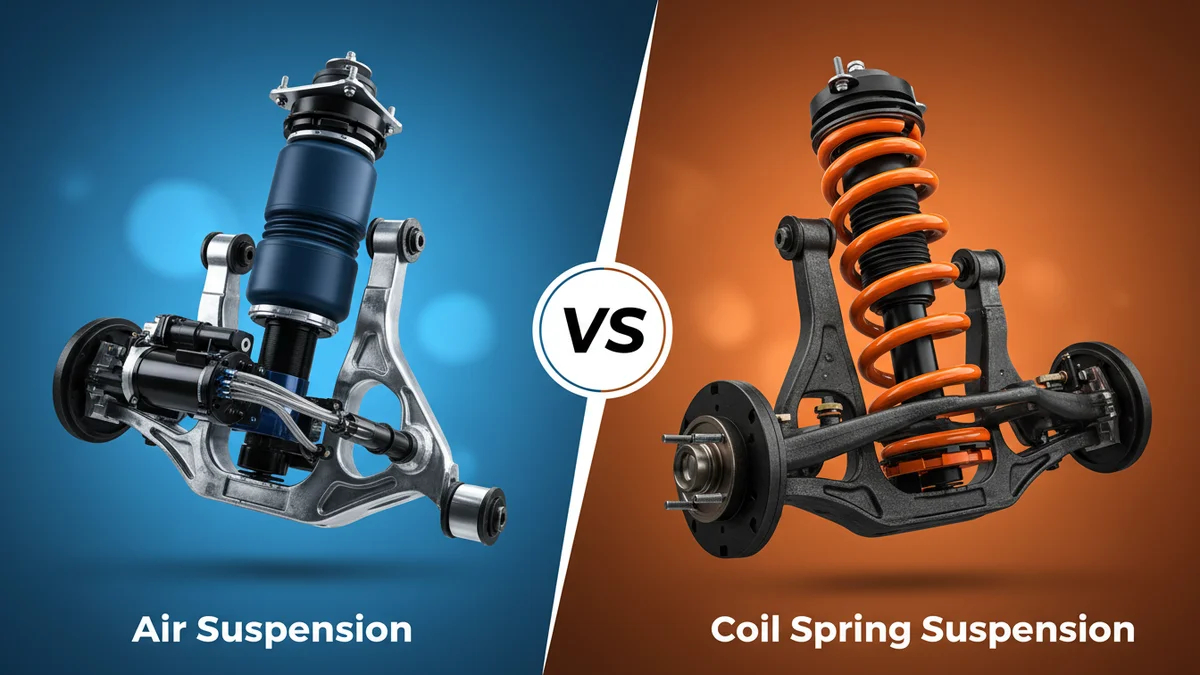
Buyers prioritizing luxury comfort, advanced load leveling, and dynamic driving modes for premium vehicles or heavy towing.
Buyers seeking proven reliability, lower upfront costs, minimal maintenance, and a predictable driving experience for everyday use.
- Air Suspension offers up to 4-6 inches of ride height adjustability for various conditions.
- Coil Spring Suspension typically costs 70-85% less for 5-year maintenance compared to Air Suspension.
- New vehicles with Air Suspension can add a $2,000-$5,500 premium to the MSRP.
- Air Suspension excels in load leveling, maintaining vehicle height within 0.1 inches of optimal.
- Coil Spring Suspension generally offers a 10-15 year lifespan, often surpassing Air Suspension by 2-5 years.
Air Suspension vs Coil Spring Suspension: Head-to-Head Specs
Recommended Best Deal Products


The fundamental differences between these two suspension technologies manifest clearly in their design and operation. Air Suspension relies on compressible air bladders and an intricate network of sensors, pumps, and lines to achieve its adaptive capabilities, allowing for on-the-fly adjustments to ride height and stiffness. In stark contrast, Coil Spring Suspension employs passive, wound steel springs working in conjunction with dampers, offering a fixed mechanical setup that prioritizes straightforward functionality and proven design over dynamic adaptability. These core structural variances directly impact everything from ride quality to maintenance costs.

✓ = better value in that row. Sourced from manufacturer specifications.
Performance & Category Ratings
Digging into the ratings reveals a distinct pattern, with each suspension type excelling in different domains. For Comfort & Ride Quality, Air Suspension absolutely dominates, earning a stellar 9.5 compared to Coil Spring Suspension‘s 7.8. This significant gap is due to air’s ability to constantly adjust spring rate and damping, effectively “floating” over road imperfections, delivering a limousine-like experience. In contrast, coil springs provide a more direct, sometimes harsher, connection to the road surface.

However, the tables turn dramatically for Value for Money. Coil Spring Suspension scores a strong 9.2, easily outperforming Air Suspension’s 6.9. The simplicity of coil springs translates directly to lower manufacturing costs and, consequently, a more accessible price point for consumers. The initial investment in a vehicle equipped with Air Suspension is often substantially higher due to the complex components involved.
Reliability & Durability further highlights the traditional setup’s strength, with Coil Spring Suspension achieving an 8.8 against Air Suspension’s 7.5. While modern air systems are robust, they inherently contain more potential points of failure—compressors, solenoids, air bladders, and seals—that can degrade over time. A steel coil, by comparison, is a relatively simple, hard-wearing component built to last.
For Performance (Adaptive), Air Suspension leaps ahead with an 8.9 versus Coil Spring Suspension’s 7.1. This category specifically praises the ability to adapt. Air suspension can dynamically alter ride characteristics for different driving modes (sport, comfort, off-road) or react to varying loads, something static coil springs cannot replicate. Naturally, Maintenance & Repair Cost is another win for Coil Spring Suspension, scoring a 9.0 against Air Suspension’s meager 6.3. Replacing air bladders, compressors, or complex electronic modules can quickly drain your wallet, making coil repairs look trivial by comparison.
Where Air Suspension truly shines, beyond comfort, is in Load Handling & Towing, pulling an impressive 9.4 compared to Coil Spring Suspension’s 7.0. Its self-leveling capability means the vehicle maintains a consistent ride height even when hauling heavy trailers or payloads, preventing sag and maintaining optimal handling. Finally, for Off-Road Capability, Air Suspension’s adjustable ride height provides a crucial advantage, scoring an 8.5 versus Coil Spring Suspension’s 6.5. Being able to raise the vehicle for increased ground clearance over obstacles is a big deal for serious trail adventures.

Audible — Listen Free for 30 Days
One free credit a month and thousands of titles included.
Listen Free for 30 Days As an Amazon Associate I earn from qualifying purchases.Adaptive Air
Traditional Coils
By the Numbers
Recommended Best Deal Products


Understanding the subjective qualities of suspension is one thing; seeing the raw numerical data is another entirely. Our detailed charts provide a concise, at-a-glance comparison of Air Suspension and Coil Spring Suspension across key metrics. From the significant spread in Comfort & Ride Quality, where Air Suspension leads by 1.7 points, to the equally compelling 2.3-point advantage Coil Spring Suspension holds in Value for Money, these numbers offer an undeniable snapshot of each system’s strengths and weaknesses. The trends are clear, painting a picture of trade-offs.
Adaptive Air
Traditional Coils
Hover any bar for exact values. Each metric scaled independently.
Air Suspension: Strengths and Weaknesses
Air Suspension, undeniably, is the king of comfort. Its primary strength lies in its exceptional ride quality, scoring a remarkable 9.5. This isn’t just about softness; it’s about the system’s ability to constantly adapt to road conditions, absorbing bumps and potholes with an ethereal smoothness. Drivers experience a luxurious, isolated feel, making long journeys far less fatiguing. Furthermore, its adaptive performance, rated at 8.9, allows for dynamic adjustments to ride height and stiffness. You can raise the vehicle for off-road clearance (8.5 for off-road capability) or lower it for improved aerodynamics at highway speeds, a versatility that fixed Coil Spring Suspension simply can’t match.
This adaptability also translates directly to superior load handling and towing, where it scores an impressive 9.4. An Air Suspension system can self-level, preventing the rear of the vehicle from sagging under heavy loads, thus maintaining optimal steering geometry and headlight aim, significantly enhancing safety and control when pulling a trailer. The ability to fine-tune damping for different driving situations also means improved handling and reduced body roll compared to many passive coil setups.
However, these advanced features come with significant drawbacks. The most glaring weakness is the initial cost and, critically, the maintenance and repair expenses (6.3). The system is inherently more complex, involving air bladders (air springs), a compressor, air lines, sensors, and an electronic control unit. Any of these components can fail, and replacing them is almost always more expensive than swapping out a simple coil spring and shock absorber. This complexity also contributes to a lower reliability rating of 7.5 compared to coils. Extreme temperatures can also affect performance, and road debris can puncture air lines or bags, leading to sudden failures. It’s a premium experience that demands a premium investment, both upfront and over its lifespan.
If these advantages resonate with your driving needs, suggesting you prioritize comfort and adaptability above all else, consider exploring models equipped with this advanced system.
Price & availability subject to change. As an Amazon Associate we earn from qualifying purchases.
Coil Spring Suspension: Strengths and Weaknesses
Recommended Best Deal Products


Coil Spring Suspension stands as a testament to robust simplicity, a design that has proven its worth over decades. Its paramount strength is its impressive Value for Money, scoring a strong 9.2. Vehicles equipped with coil springs generally carry a lower initial purchase price, making them far more accessible to a broader range of buyers. This financial advantage extends to its Maintenance & Repair Costs, which are significantly lower (9.0) than those associated with Air Suspension. Replacing a worn coil spring or a shock absorber is a routine, relatively inexpensive repair that most mechanics can handle with ease.
The inherent simplicity of coil springs also contributes to their superior Reliability & Durability, earning an 8.8 rating. With fewer moving parts and no complex pneumatic systems, there’s less to go wrong. A steel coil is incredibly resilient, often outlasting other vehicle components with minimal fuss. This reliability makes them a trusted choice for everyday commuting and demanding work applications alike, offering consistent, predictable performance without the worry of costly system failures.
Audible Premium Plus — Annual Membership
12 audiobook credits up front, plus the full Audible catalogue.
See Annual Plans As an Amazon Associate I earn from qualifying purchases.Despite these undeniable benefits, Coil Spring Suspension does have its limitations. The primary weakness lies in its fixed nature, which results in a lower Comfort & Ride Quality rating of 7.8 compared to air. While many modern coil spring setups offer a very comfortable ride, they simply cannot match the adaptive cushioning of air. They also struggle in Load Handling & Towing (7.0). Under heavy loads, a coil-sprung vehicle will sag, compromising handling, ground clearance, and potentially even headlight aim. Similarly, its off-road capability (6.5) is limited by its fixed ride height; you can’t raise the vehicle for better clearance over obstacles without modifying the springs themselves. While you can upgrade with 🛒 Heavy Duty Shocks → or even 🛒 Lift Kits →, these are aftermarket modifications, not inherent system features.
For drivers prioritizing dependability and a straightforward setup, the enduring appeal of Coil Spring Suspension is clear.
Price & availability subject to change. As an Amazon Associate we earn from qualifying purchases.
- ✅ Unmatched ride comfort, adaptable to road conditions.
- ✅ Adjustable ride height for varying terrain or loading.
- ✅ Automatic load leveling maintains vehicle stance with heavy loads.
- ✅ Improved towing and hauling stability.
- ✅ Multiple driving modes for optimized performance or comfort.
- ❌ Significantly higher initial vehicle cost.
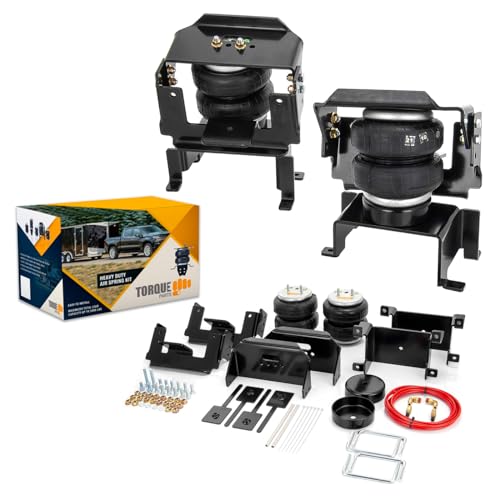
- ❌ More complex system with potential for costly repairs (e.g., compressor, air springs).
- ❌ Maintenance can be expensive, with specific components failing over time.
- ❌ Performance can degrade in extreme cold if components are not well-maintained.
- ✅ Lower initial cost, often standard equipment.
- ✅ Simpler, more robust design with fewer components to fail.
- ✅ Generally lower maintenance and repair costs.
- ✅ Predictable and consistent ride characteristics.
- ✅ Less susceptible to extreme temperature changes or punctures.
- ❌ Fixed ride height, offering less adaptability.
- ❌ Ride comfort is generally good, but less forgiving than Air Suspension.
- ❌ Can sag under heavy loads, impacting handling and appearance.
- ❌ Less dynamic control over suspension characteristics.
Which One Should You Choose?
The decision between Air Suspension and Coil Spring Suspension hinges entirely on your priorities, lifestyle, and budget. For the discerning driver who values an unparalleled driving experience, Air Suspension is the clear front-runner. If you regularly embark on long road trips, if you desire a vehicle that truly glides over imperfections, or if you live somewhere with particularly rough roads, the 9.5 comfort rating of Air Suspension will be a big deal. It’s also ideal for those who need maximum versatility: someone who occasionally tows a heavy trailer, thanks to its 9.4 load handling, or the adventurous off-roader needing adjustable ground clearance (8.5 off-road capability). You’re effectively investing in a premium, adaptive vehicle that caters to varied demands. Just be prepared for the higher initial cost and potential for more expensive repairs down the line; the 6.3 maintenance score is a hard reality.
Conversely, for the pragmatic buyer focused on reliability, low running costs, and a consistent, no-fuss experience, Coil Spring Suspension stands out. If you’re a daily commuter, a small business owner, or simply someone who appreciates the peace of mind that comes with minimal maintenance, its 9.0 maintenance score and 8.8 reliability are compelling. For families on a budget or those driving older vehicles, the value for money (9.2) of coil springs is undeniable. While it may not offer the plush ride of air, a well-tuned coil spring system can still provide a very comfortable and predictable experience. If you tow occasionally and don’t want to spring for Air Suspension, consider augmenting your coil springs with 🛒 Helper Airbags → for load support. For those who want off-road capability without the complexity of air, aftermarket 🛒 Heavy Duty Shocks → combined with taller coil springs can provide excellent performance and lift.
Buyers prioritizing luxury comfort, advanced load leveling, and dynamic driving modes for premium vehicles or heavy towing.
Buyers seeking proven reliability, lower upfront costs, minimal maintenance, and a predictable driving experience for everyday use.
Final Verdict
After a thorough examination, our head-to-head comparison concludes in a definitive tie. The narrative is clear: Air Suspension offers superior comfort and adaptability for various loads and terrains, but comes with a significantly higher cost and complexity. Its 9.5 in comfort and 9.4 in load handling are exceptional. Coil Spring Suspension, however, provides reliable, proven performance with lower maintenance and initial investment, scoring a stellar 9.2 for value and 9.0 for maintenance. The core trade-off couldn’t be starker. Do you prioritize the luxurious ride quality, dynamic adjustments, and cutting-edge technology that Air Suspension provides, understanding the associated premium price tag and potential for more intricate repairs? Or do you lean towards the robust simplicity, proven durability, and substantial cost savings that make Coil Spring Suspension a steadfast, no-nonsense choice? The ultimate decision rests squarely on your individual priorities and how you weigh luxurious driving experience against long-term financial prudence.
As an Amazon Associate we earn from qualifying purchases.
Frequently Asked Questions
Is Air Suspension better than Coil Spring Suspension?
Neither is universally 'better'; it depends on needs. Air Suspension offers superior comfort, up to 4 inches of ride height adjustment, and automatic load leveling, ideal for luxury or towing. Coil Spring Suspension, however, is typically 70% cheaper to maintain over 5 years and provides proven reliability, making it better for budget-conscious buyers seeking simplicity.
What about reliability and longevity for these suspension types?
Coil Spring Suspension generally has higher long-term reliability and a longer average lifespan, often exceeding 13-15 years. Air Suspension components, like air bags and compressors, typically last 8-12 years but can fail earlier, leading to more frequent and costly repairs, averaging $800-$1,800 over five years.
What's the cost difference for new vehicles and repairs?
New vehicles with Air Suspension usually carry a premium of $2,000 to $5,500. For repairs, replacing a single Air Suspension component like an air spring can cost $500-$1,500, while a Coil Spring and shock absorber replacement might be $150-$400, reflecting a significant cost disparity in maintenance.
Which is better for off-roading or heavy towing applications?
For off-roading and heavy towing, Air Suspension is generally superior. Its ability to adjust ride height by 4+ inches provides better ground clearance over obstacles, and its automatic load leveling system ensures the vehicle remains level and stable, enhancing safety and handling, even with maximum payloads or trailers.
What is the biggest functional difference between the two systems?
The biggest functional difference is adjustability. Air Suspension dynamically adjusts ride height and firmness based on driving conditions, load, or driver input, providing unparalleled versatility. Coil Spring Suspension, in contrast, offers a fixed ride height and damping characteristic, providing a consistent but less adaptable experience.