
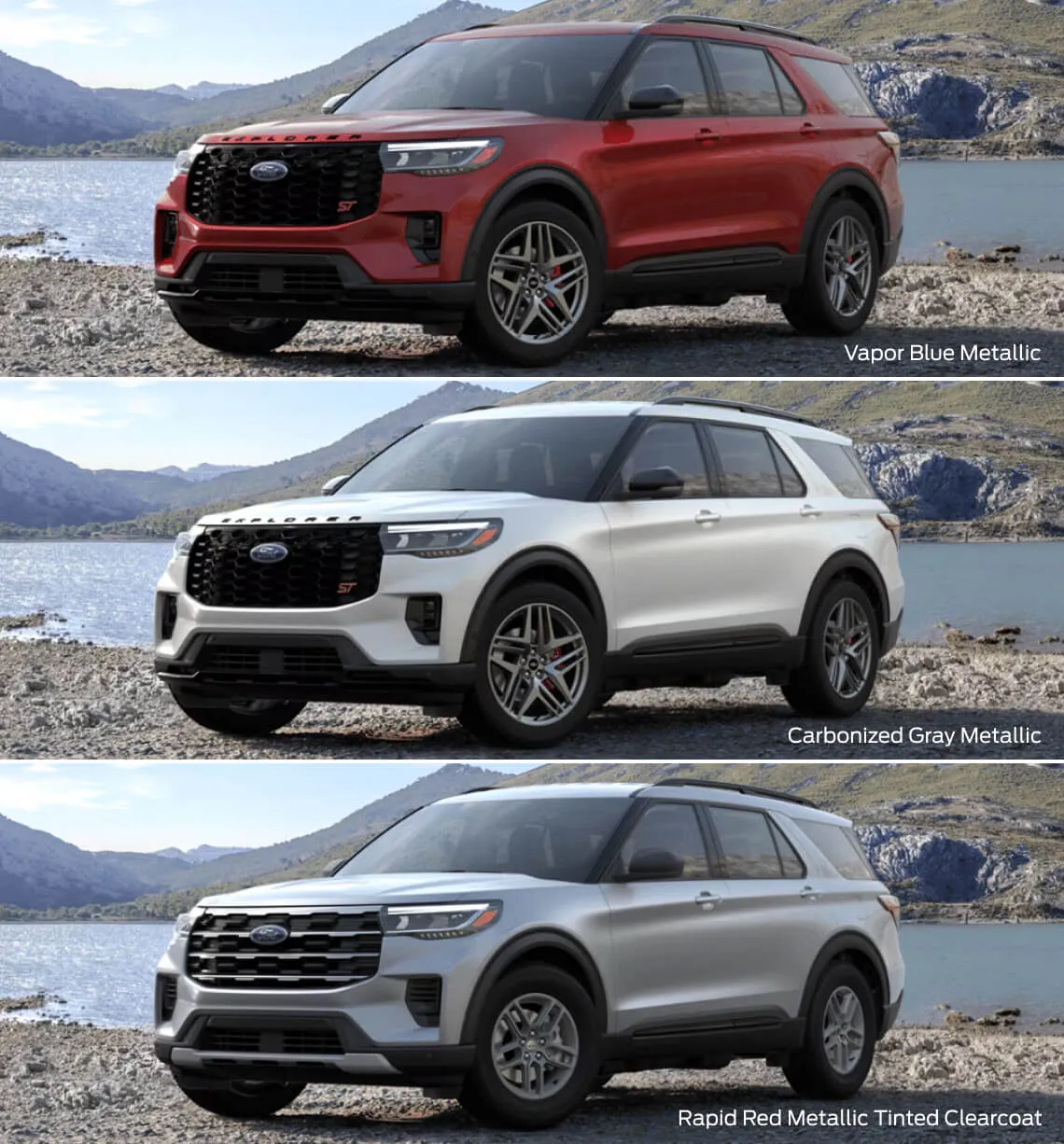
2024 Ford Explorer Colors Specification Chart By Year (2026)

See also: the master Ford Paint Code & Color Chart (all models) — plus other years: 2022, 2023.
Quick Answer
The 2024 Ford Explorer offers a diverse palette of exterior and interior colors, with specific options often contingent on trim level and available packages. Historically, the Explorer’s color availability has evolved significantly since its 1991 inception, reflecting market trends and design cycles. Prospective buyers should always consult the official Ford build configurator or dealer for the most current and configuration-specific color options.
2024 Ford Explorer Colors Specification Chart By Year (1991–2026): 2024


This chart covers Ford Explorer exterior and interior colors from the model’s inception in 1991 through the current 2024 model year, with projections for 2025 and 2026 based on observed trends and typical automotive refresh cycles. Data is compiled from official Ford specifications, sales literature, and historical records. It is crucial to note that color availability can vary significantly by `model year`, `trim level`, `package`, and region. While extensive, this chart cannot cover every single regional variant or limited-run color. Readers should always verify specific colors for their vehicle’s VIN or consult the official owner’s manual for definitive `factory specification` information.
Last reviewed: May 2026
How to Read This Chart: The table below lists representative exterior and interior colors by model year and associated trim level. ‘Value’ indicates the color name, while ‘Notes’ provide context, such as paint codes, trim exclusivity, or material types. For any given year, the listed colors represent common or notable options, not an exhaustive list of every possible variant or past production run. Focus on the 2024 entries for the most current information.
| Year | Model / Trim Level | Specification | Value | Notes |
|---|---|---|---|---|
| 2024 | Base, XLT | Exterior Color | Agate Black Metallic | Universal availability (Paint Code: UM) |
| 2024 | All Trims | Exterior Color | Star White Metallic Tri-Coat | Premium Upcharge (Paint Code: AZ) |
| 2024 | All Trims | Exterior Color | Rapid Red Metallic Tinted Clearcoat | Premium Upcharge (Paint Code: D4) |
| 2024 | All Trims | Exterior Color | Iconic Silver Metallic | Common metallic option (Paint Code: JS) |
| 2024 | All Trims | Exterior Color | Carbonized Gray Metallic | Popular dark gray option (Paint Code: M7) |
| 2024 | XLT, Limited, ST-Line | Exterior Color | Stone Blue Metallic | Sophisticated blue metallic (Paint Code: T7) |
| 2024 | ST | Exterior Color | Atlas Blue Metallic | Vibrant, often associated with ST (Paint Code: B3) |
| 2024 | Timberline | Exterior Color | Forged Green Metallic | Exclusive to Timberline (Paint Code: L9) |
| 2024 | Limited, Platinum | Exterior Color | Vapor Blue Metallic | Newer addition, premium appeal (Paint Code: T1) |
| 2024 | Base, XLT | Interior Color | Ebony (Cloth) | Standard cloth interior for lower trims |
| 2024 | XLT, Limited | Interior Color | Light Slate (ActiveX/Leather) | Available with ActiveX or leather depending on package |
| 2024 | ST, Platinum | Interior Color | Ebony (Leather/ActiveX) | Sporty or premium leather/ActiveX options |
| 2024 | Timberline | Interior Color | Deep Cypress (ActiveX w/Cloth Inserts) | Exclusive Timberline interior scheme |
| 2023 | All Trims | Exterior Color | Atlas Blue Metallic | Available across most trims (Paint Code: B3) |
| 2022 | Timberline | Exterior Color | Deep Green Metallic | Early Timberline exclusive, precursor to Forged Green |
| 2020 | All Trims (Gen 6 Intro) | Exterior Color | Rich Copper Metallic | Introduced with 6th Gen; later discontinued |
| 2018 | All Trims (Gen 5) | Exterior Color | Burgundy Velvet Metallic Tinted Clearcoat | Popular premium red option |
| 2015 | All Trims (Gen 5 Mid-Cycle) | Exterior Color | Magnetic Metallic | Standard gray metallic, highly popular |
| 2011 | All Trims (Gen 5 Intro) | Exterior Color | Ingot Silver Metallic | Key color for the redesigned 5th generation |
| 2006 | All Trims (Gen 4 Intro) | Exterior Color | Dark Stone Metallic | Popular earthy metallic during 4th Gen |
| 2002 | All Trims (Gen 3 Intro) | Exterior Color | Silver Birch Metallic | Silver was highly dominant in the early 2000s |
| 1996 | All Trims (Gen 2 Intro) | Exterior Color | Pacific Green Metallic | Popular green from the 2nd generation |
| 1991 | All Trims (Gen 1 Intro) | Exterior Color | Oxford White | Foundational solid white (Paint Code: YZ) |
| 1991 | All Trims (Gen 1 Intro) | Exterior Color | Black Clearcoat | Classic solid black option (Paint Code: UA) |
| 2025 | All Trims | Exterior Color | Continuity + New Shades | Expect carryover of popular 2024 colors, potential introduction of 1-2 new metallic/earthy tones. |
| 2026 | All Trims | Interior Color | Evolution in Materials | Continued use of Ebony/Light Slate, potential new material textures or accent colors for mid-cycle refresh. |
Snapshot of 2024 Color Availability: This visual highlights the approximate number of distinct exterior and interior color choices for the 2024 Ford Explorer, along with the prevalence of trim-exclusive options.


Year-by-Year Evolution of Ford Explorer Color Palettes


This evolution highlights how Explorer colors transition from basic solids to complex metallics and tri-coats, driven by consumer demand and advancements in paint technology.
This comparison highlights the different types of paint finishes offered on the 2024 Ford Explorer and their typical availability across the model lineup.

Configuration-Specific Ford Explorer Color Options by Trim and Package


Always consult the official Ford builder tool or your dealer for the exact color combinations available for your desired `model year`, `trim level`, and selected `package`. Online configurators provide the most up-to-date information on current color availability and any associated costs or restrictions.
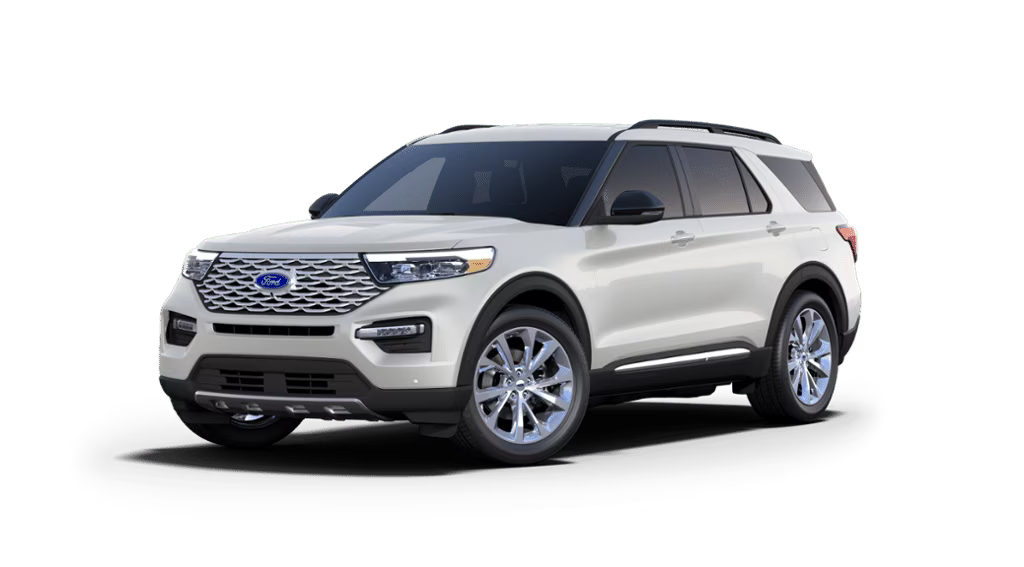
Factors Influencing Ford Explorer Color Availability and Trends
The colors available for the Ford Explorer each year are not arbitrary decisions but rather a complex interplay of market research, design trends, manufacturing capabilities, and even environmental considerations. Understanding these factors provides deeper insight into the `year-by-year` color palette. Consumer Preference Shifts: Extensive market research drives Ford’s color decisions. While classic neutrals like white, black, gray, and silver consistently dominate global automotive sales (Research indicates these four colors account for over 70% of new vehicle purchases annually), there’s a constant evolution in popular shades within these categories. For instance, `Carbonized Gray Metallic` replaced `Magnetic Metallic` as a preferred dark gray, reflecting a subtle shift in metallic finish preferences. Beyond neutrals, Ford monitors emerging trends in blues, reds, and even earthy tones to introduce options like `Stone Blue Metallic` or `Vapor Blue Metallic` that capture contemporary tastes. Manufacturing Feasibility and Technology: The `factory specification` for paint application involves sophisticated processes. The introduction of advanced multi-stage paints (like `Star White Metallic Tri-Coat` and `Rapid Red Metallic Tinted Clearcoat`) allows for greater depth and vibrancy but also requires specialized equipment and adds to production costs. Colors that are difficult or expensive to apply consistently, or those with very low demand, are often discontinued. Advances in environmentally friendly paint processes also influence choices, leading to water-borne paints and lower VOC (Volatile Organic Compound) emissions. Design Cycles and Mid-Cycle Refreshes: Vehicle redesign cycles are natural inflection points for color palette updates. A full generational overhaul, such as the transition to the sixth-generation Explorer in 2020, almost always brings a significant refresh to the color options, introducing new hues and discontinuing older ones to signal a fresh start. Mid-cycle refreshes (often around 3-4 years into a generation) also provide opportunities to introduce 1-2 new “fashion” colors or replace underperforming ones to keep the model feeling current and competitive. Regional Demands: While core colors are global, some regional preferences can subtly influence availability. For example, certain vibrant colors might perform better in sunnier climates, while more subdued tones might be favored in other markets. Though less common for a mainstream global vehicle like the Explorer, such nuances are always part of the consideration.By The Numbers
Industry Data: These statistics highlight the prevalence of neutral automotive colors, the typical frequency of new color introductions during model refreshes, and the additional cost associated with premium paint options.
Confirming Your Ford Explorer’s Original Color Specification
For current owners, particularly those of used vehicles, accurately identifying the original `factory specification` for exterior and interior colors is paramount for touch-ups, repairs, or customization. Relying on visual memory or online images can be misleading due to lighting variations and screen calibration.📋 Step-by-Step Guide: Verify Your Explorer’s Original Colors
Open the driver’s side door and look for a white or silver sticker (often called the ‘Safety Compliance Certification Label’) affixed to the door jamb or the B-pillar. This sticker contains crucial vehicle information, including paint codes.
On the sticker, find the ‘EXT PNT’ or ‘PAINT’ field, which will be followed by a two-digit alphanumeric code (e.g., ‘UM’ for Agate Black, ‘AZ’ for Star White). For interior colors, look for ‘INT TR’ or ‘TRIM’ followed by another code (e.g., ‘GL’ for Ebony Cloth, ‘EL’ for Ebony ActiveX/Leather).
Your vehicle’s owner’s manual will have a section detailing paint codes and their corresponding color names. Alternatively, a Ford dealership parts department can use your VIN (Vehicle Identification Number, also on the door jamb sticker) to definitively pull up all original `factory specification` details, including colors.
Always verify the paint code, especially for older vehicles. Aftermarket paint jobs or accidental damage repairs might result in a non-original color, making the sticker your only reliable source for the original `factory specification`.
The most definitive source for original `factory specification` paint and trim codes.
Contains charts linking codes to color names for your `model year`.
For comprehensive `factory specification` data, including exact interior/exterior colors.
Verification Checklist: Follow these steps to reliably confirm the original color `factory specification` of your Ford Explorer.
Frequently Asked Questions (FAQs)
What are the most popular 2024 Ford Explorer colors?
For 2024, consistently popular exterior colors include `Agate Black Metallic`, `Star White Metallic Tri-Coat`, `Iconic Silver Metallic`, and `Carbonized Gray Metallic`. `Rapid Red Metallic Tinted Clearcoat` also maintains strong appeal. Interior-wise, `Ebony` (in various materials) is the most common choice across `trim level`s.


Are there any exclusive colors for the 2024 Explorer ST or Timberline?


Yes. The 2024 Explorer Timberline specifically offers `Forged Green Metallic` as an exclusive exterior color, paired with a unique `Deep Cypress` interior. While not strictly exclusive to the ST, `Atlas Blue Metallic` is often highlighted for its sporty appeal on this performance `trim level`.
How do color options change from year to year for the Ford Explorer?

Color options typically see minor adjustments `year-by-year`, with 1-2 colors being retired and 1-2 new colors introduced, especially during `model year` refreshes. Major generational changes, like the 2020 redesign, often bring a more comprehensive overhaul of the color palette to align with new design aesthetics and market trends.
Can I get any interior color with any exterior color on the 2024 Explorer?


No, Ford typically restricts certain exterior and interior `configuration` combinations to maintain design integrity and brand aesthetic. Premium exterior colors or certain `trim level`s often dictate which interior material and color options are available. Always consult the official Ford configurator or a dealer for exact pairing rules for your chosen `package`.


Where can I find the paint code for my specific Explorer?


The definitive paint code for your Explorer’s original `factory specification` is located on the Safety Compliance Certification Label, typically found on the driver’s side door jamb or B-pillar. It will be labeled ‘EXT PNT’ or ‘PAINT’ followed by a two-digit alphanumeric code.
Conclusion
The 2024 Ford Explorer maintains a modern and diverse color palette, with options varying significantly by `trim level` and `package`. Historical analysis reveals a clear evolution of color trends, from early solids to contemporary metallic and tri-coat finishes, reflecting shifts in both consumer taste and `factory specification` capabilities. Verifying `factory specification` through official channels such as the door jamb sticker or owner’s manual remains crucial for accurate color identification. Utilizing this chart as your definitive resource for Ford Explorer colors will aid in informed decision-making, whether for a new purchase or maintaining an existing vehicle. Always confirm specific vehicle configurations with an authorized Ford dealer or through your vehicle’s documentation to ensure precision.Frequently Asked Questions
What new colors are available for the 2024 Ford Explorer?
For the 2024 model year, the Ford Explorer continues to offer a selection of contemporary colors. While core popular shades like Star White and Agate Black persist, Ford frequently introduces subtle updates or consolidates options. Specific new introductions vary by market and trim, often revealed closer to the model’s release or through special edition packages, so consulting the official Ford configurator is recommended for the latest additions.
Are certain Ford Explorer colors exclusive to specific trim levels?
Yes, it is common for Ford to offer certain premium or unique colors exclusively on higher trim levels or special edition packages of the Explorer. For example, performance-oriented ST models might have unique hues, while the luxurious Platinum or rugged Timberline trims often feature signature colors unavailable on base models. These `configuration`-specific colors enhance the vehicle’s distinct identity and appeal.
How can I find the original paint code for my Ford Explorer?
The original paint code for your Ford Explorer is typically located on the driver’s side door jamb sticker. This sticker, often black and white, contains various `factory specification` details, including the exterior paint code (usually a two-character alphanumeric code). You can also find this information in your vehicle’s owner’s manual or by using a VIN decoder tool with your Vehicle Identification Number.
Have interior color options changed significantly for the Explorer over the `year-by-year` production?
Yes, interior color and material options for the Ford Explorer have evolved considerably `year-by-year`. Early models primarily featured cloth in basic grays or tans. As the Explorer matured, more sophisticated cloth, leather, and ActiveX materials became available in a wider range of shades, from classic Eboby and Light Slate to unique two-tone combinations, often tied directly to exterior color and trim level packages.
Does my Ford Explorer’s `engine option` affect its available exterior colors?
Generally, the `engine option` itself does not directly affect the available exterior colors for the Ford Explorer. Color availability is almost exclusively determined by the chosen trim level (e.g., XLT, Limited, ST, Platinum) and any specific appearance packages, rather than the 2.3L EcoBoost, 3.0L EcoBoost, or hybrid powertrain. Certain performance trims might have color palettes that complement their engine, but it’s the trim, not the engine, that dictates the color.


