2015 Ford F150 Oil Reset: All Models Step-By-Step Guide 2026

Ensuring your 2015 Ford F-150 operates at peak performance and longevity begins with diligent maintenance, particularly regular oil changes. After performing essential engine oil maintenance, many owners face the common task of resetting the ‘Oil Change Required’ indicator, a crucial step to correctly re-engage the vehicle’s Intelligent Oil-Life Monitor (IOLM) and avoid persistent dashboard warnings. This authoritative guide provides a detailed, step-by-step procedure applicable to all 2015 F-150 models, ensuring you can successfully reset your oil life monitor, restoring its functionality and maintaining accurate service tracking for 2026 and beyond.


Understanding the 2015 Ford F-150 Intelligent Oil-Life Monitor (IOLM)
📤 Share Image
The 2015 Ford F-150, a benchmark in the light-duty truck segment, incorporates a sophisticated Intelligent Oil-Life Monitor (IOLM) system. This isn’t just a simple mileage counter; it’s a dynamic algorithm designed to accurately assess the degradation of your engine oil based on actual operating conditions. The IOLM continuously monitors various parameters to calculate the remaining oil life, ensuring you change your oil precisely when it’s needed, not just on a fixed schedule.
Key operational parameters influencing the IOLM’s calculations include engine temperature, RPM fluctuations, engine load (e.g., heavy towing), vehicle speed, and engine run time. For instance, frequent short trips where the engine doesn’t reach optimal operating temperature, or prolonged periods of heavy towing, significantly accelerate oil breakdown. These harsh conditions trigger earlier notifications from the IOLM system, prompting an oil change well before a conventional fixed-interval schedule might.
Ignoring the ‘Oil Change Required’ indicator can lead to significant consequences. Prolonged use of degraded oil compromises critical lubrication, increasing engine wear, which can result in costly engine damage and potentially void your vehicle’s warranty. Moreover, reduced lubrication impacts overall vehicle performance and fuel efficiency. It’s crucial to understand the distinction: a ‘Service Engine Soon’ light typically indicates a diagnostic trouble code (DTC) related to emissions or other system malfunctions, whereas the ‘Oil Change Required’ message is specific to oil degradation and mandates immediate attention to the lubrication system. Research indicates that while the IOLM can extend oil change intervals up to 10,000 miles or one year under ideal conditions, it will severely reduce it to as low as 3,000-5,000 miles under harsh conditions, as documented by Ford’s service recommendations.
By The Numbers
Max Ideal Oil Change Interval (Miles)
Harsh Condition Oil Change Interval (Miles)
Max Time-Based Interval

Step-by-Step 2015 F-150 Oil Life Reset Procedure for All Models
Once you’ve completed your oil and filter change, the crucial next step is to reset the oil life monitor. This action tells the IOLM system that new, clean oil is now in the engine, allowing it to begin a fresh calculation cycle. This procedure is universally applicable to all 2015 Ford F-150 models, ensuring a full restore of its monitoring functionality to its factory default state.

📋
Step-by-Step Guide
Ensure your 2015 F-150’s engine is completely off. The vehicle should be in Park (P), and the parking brake engaged for safety. Turn the ignition to the ON position without starting the engine. This means pressing the start button once without your foot on the brake (for push-button start models) or turning the key to the second detent (for traditional key models). The instrument cluster lights will illuminate.
Within five seconds of turning the ignition ON, firmly press and hold both the accelerator and brake pedals simultaneously. Continue holding both pedals for approximately 20 to 30 seconds. You will likely see a message on your instrument cluster display such as ‘Service: Oil Life Reset’ or ‘Oil Life Reset In Progress’. It’s critical to hold them steadily for the full duration until a confirmation message appears.
Once the message ‘Oil Life Reset Complete’ or ‘Oil Life 100%’ appears on your display, you can release both pedals. Turn the ignition OFF, then start the engine to confirm that the ‘Oil Change Required’ light or message is no longer present. This signifies a successful reboot and initialization of the IOLM system.
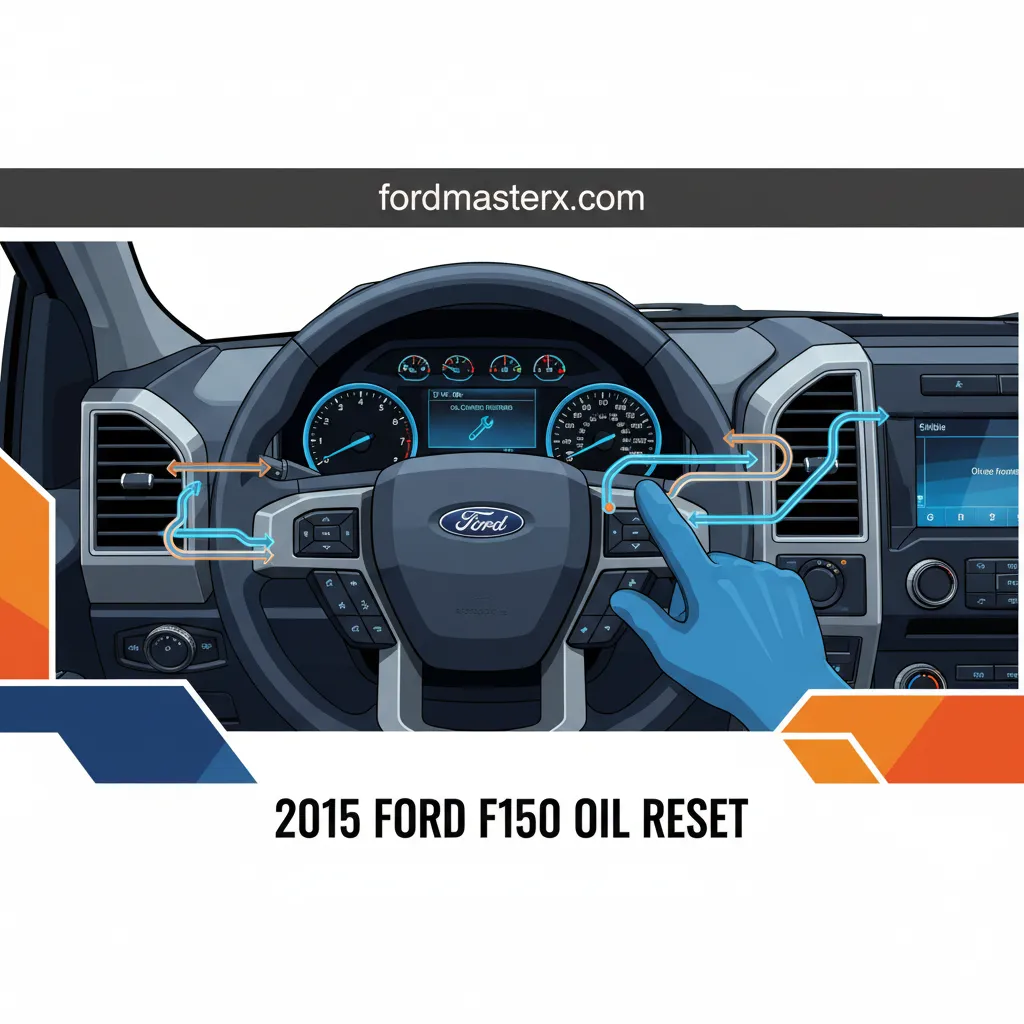
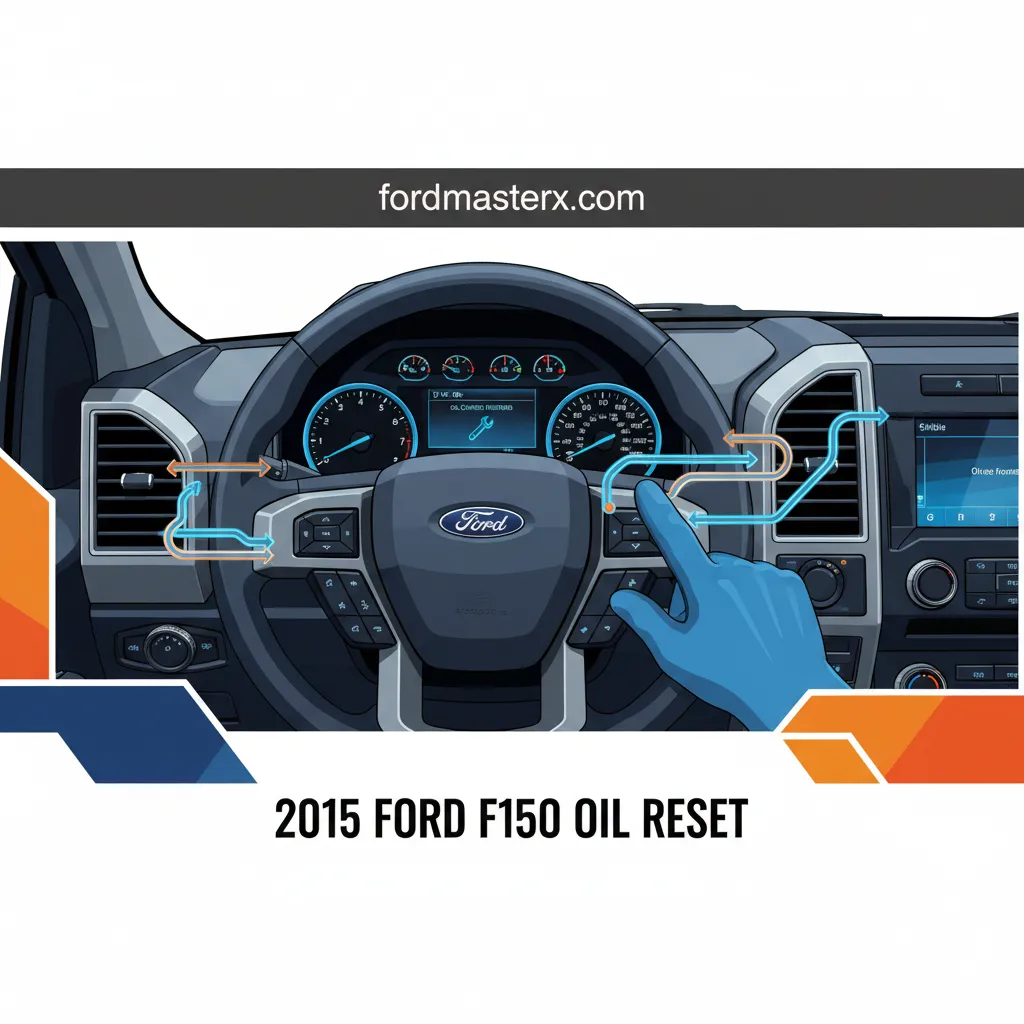
For 2015 F-150 models equipped with advanced instrument clusters (such as the 8-inch productivity screen), you may also verify or initiate the reset via the vehicle’s menu. Using the directional pads on the steering wheel, navigate to ‘Settings’ > ‘Vehicle’ > ‘Oil Life Reset’. Confirm the reset here. While the pedal method is a standardized factory reset protocol across many Ford vehicles, this menu option provides an additional means to ensure a clean slate and restore the system to its default state. After resetting via the menu, the oil life display should show 100%.
This pedal-based method is a simple yet effective way to perform a factory reset of the oil life monitor, designed to be accessible without specialized diagnostic tools. Its broad applicability across all 2015 F-150 trims and engine configurations makes it the primary and most reliable method to reset the system and provide an accurate tracking mechanism for the F-150’s oil longevity.


After a successful reset, always start your engine and cycle through the instrument cluster display to visually confirm the oil life indicator now reads 100%. This immediate verification ensures the IOLM has received the fresh start command and is ready to accurately monitor your new oil.

Troubleshooting Common Issues After a 2015 F-150 Oil Reset
Even with precise instructions, occasionally owners encounter difficulties after attempting an oil life reset. A common frustration is a persistent ‘Oil Change Required’ indicator. If the message remains on despite following the procedure, the first step is to re-attempt the entire process with meticulous attention to detail. Ensure the ignition is in the ON position (not ACC or ENGINE START), and that both pedals are pressed firmly and held for the full 20-30 second duration.
One of the most frequent reasons for an unsuccessful reset is an incorrect procedure. If the ‘Oil Life Reset’ message flashes but doesn’t confirm 100%, or disappears only to reappear shortly after restarting the engine, it indicates the system didn’t register a complete reset. Double-check the timing and pressure on the pedals. Some drivers may not hold the pedals long enough, or their foot pressure might not be consistent. The IOLM system requires a specific signal sequence to fully recalibrate and restore to its default parameters.
In rarer cases, a persistent light might signal an underlying issue within the IOLM system itself or a separate diagnostic trouble code (DTC) related to the engine or its sensors. While a battery disconnect can sometimes reset minor electronic glitches, it’s generally not effective for the oil life monitor and can lead to other issues such as erased radio presets or power window calibration loss. If repeated attempts using the pedal method and instrument cluster navigation fail, it suggests a more complex problem requiring professional diagnosis. Official Ford diagnostic tools, such as the Integrated Diagnostic System (IDS), can access and reset specific modules if a software glitch is preventing a manual reset, providing a complete default and clean initialization for the monitoring system. Consulting a certified Ford technician is recommended in such scenarios.
Never reset the oil life monitor without actually performing an oil and filter change. Doing so will mislead the IOLM system, causing it to incorrectly calculate oil degradation and potentially lead to severe engine damage from overdue maintenance. The reset is meant to signify a fresh start with new oil, not to simply extinguish the warning light.
Maintaining Optimal Engine Health: Beyond the Oil Reset
Successfully resetting your 2015 F-150’s oil life monitor is an essential component of proper maintenance, but it’s part of a larger ecosystem of care that ensures your truck’s longevity and performance. The quality of your engine oil and filter plays a paramount role. Always use the correct viscosity and specification of motor oil recommended by Ford for your specific engine type. For most 2015 F-150 engines, this means SAE 5W-20 or 5W-30 synthetic blend or full synthetic oil, meeting Ford specifications like Adhering to regular service intervals, guided by your IOLM, is crucial. Even if your mileage is low, Ford recommends an oil change at least annually to address time-based oil degradation. This ensures a consistently clean internal engine environment, preventing sludge buildup and maintaining optimal lubrication for a fresh start each year. Beyond oil changes, a comprehensive maintenance routine includes checking tire pressure, rotating tires, inspecting brake components, topping off other fluid levels (coolant, transmission fluid, brake fluid), and replacing air filters (engine and cabin) as needed. These tasks complement oil changes, collectively contributing to overall vehicle health and efficiency.
Finally, consider the professional inspection benefits that come with having a certified technician perform your oil changes. During these routine services, a skilled mechanic can conduct a multi-point inspection, identifying potential issues before they become critical problems. This proactive approach saves money in the long run and helps ensure all components are performing optimally. Entrusting your F-150 to a professional for periodic check-ups ensures that any potential underlying issues that might prevent a straightforward oil life reboot or require specialized attention are caught early, protecting your investment and providing peace of mind.
The 2015 F-150 oil reset is vital after an oil change to recalibrate the IOLM system. The primary reset method involves a specific accelerator and brake pedal sequence, applicable across all models. Troubleshooting involves re-attempting the procedure carefully or seeking professional diagnosis for persistent issues. Beyond the reset, using appropriate oil and filter and adhering to maintenance schedules are paramount for engine health. Execute these instructions precisely to restore your F-150’s oil monitoring system. For any persistent indicators or underlying concerns, consult a certified Ford technician to ensure your vehicle’s long-term operational integrity and a fresh start for its maintenance cycle.
Frequently Asked Questions
Why is it important to reset the oil life monitor after an oil change on my 2015 F-150?
Resetting the oil life monitor is crucial because it recalibrates the Intelligent Oil-Life Monitor (IOLM) system to a fresh start. Failure to reset means the system will continue counting down from the previous oil life percentage, leading to inaccurate service notifications and potentially premature ‘Oil Change Required’ warnings. This ensures the system accurately reflects your new oil’s condition.
Can I perform the 2015 F-150 oil reset without special tools?
Yes, the primary method for resetting the oil life on a 2015 Ford F-150 involves a simple sequence using the ignition and vehicle pedals (accelerator and brake). This procedure is designed for owners to perform without needing specialized diagnostic tools, effectively restoring the system to its default factory setting after an oil service.
What if the ‘Oil Change Required’ light doesn’t turn off after I follow the reset steps?
If the ‘Oil Change Required’ light persists, first re-attempt the pedal-based reset procedure, ensuring the ignition is ON, not running, and pedals are held for the full duration. If it still doesn’t clear, there might be a deeper issue with the IOLM sensor or another diagnostic trouble code, necessitating a professional inspection to diagnose and restore full functionality.
Does resetting the oil life monitor actually ‘clean’ my engine or change the oil?
No, resetting the oil life monitor only restores the system’s tracking to 100%. It does not physically change the oil or filter, nor does it ‘clean’ your engine. The actual oil and filter change must be performed manually by draining old oil and replacing it with new, specified oil and a fresh filter to ensure proper lubrication and engine health.


How often should I change the oil in my 2015 F-150, even with the IOLM?
The IOLM is designed to extend oil change intervals under ideal conditions, typically up to 10,000 miles or one year. However, if your driving habits involve heavy towing, extreme temperatures, or frequent short trips, the IOLM may recommend an earlier change. Ford generally advises at least once a year, regardless of mileage, to maintain optimal engine condition and provide a fresh start for lubrication.
Looking for another year? See the full Ford F-150 Oil Life Reset Guide (2009–2026, All Models).
Other Ford models: Ford Oil Life Monitor Reset Guide (All Models & Years)