
2011 Ford F-150 Fuse Box Diagram: Cabin and Under-Hood Charts

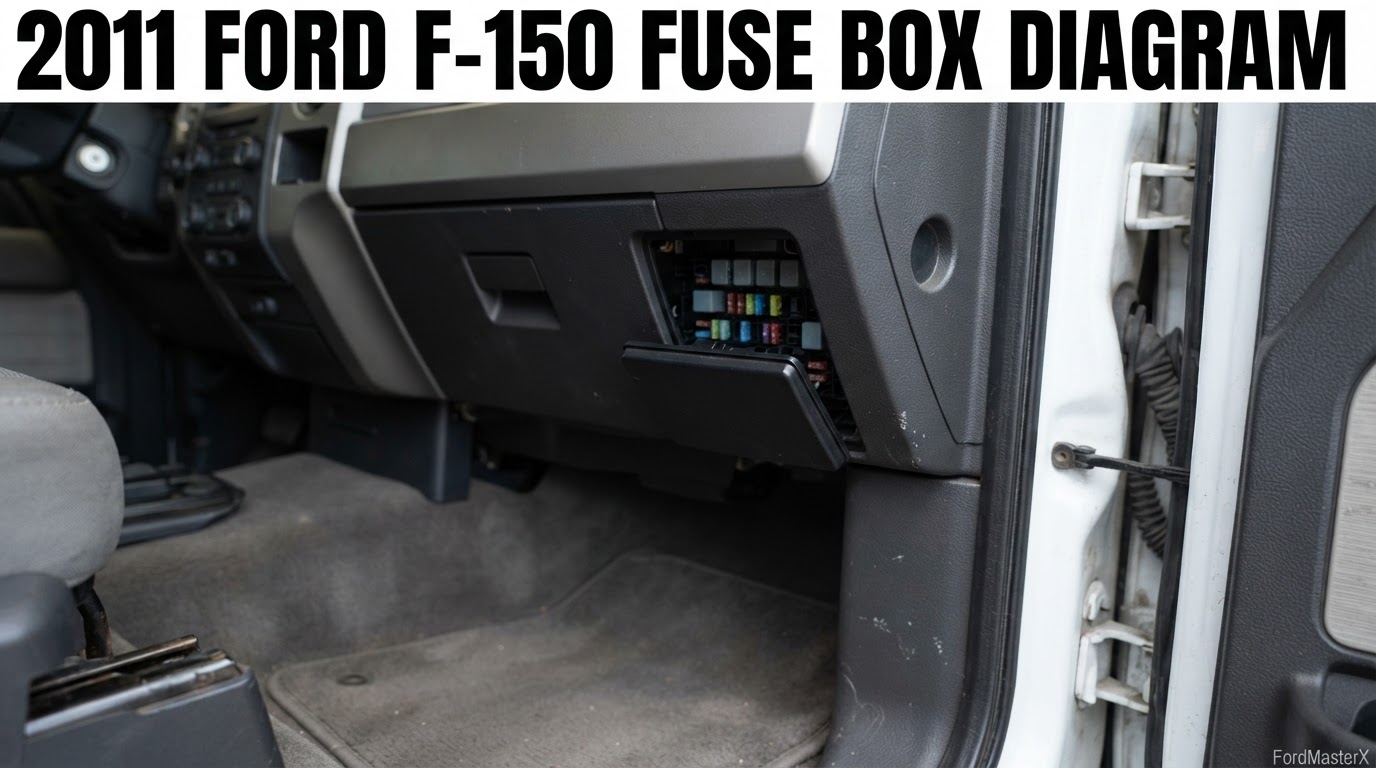
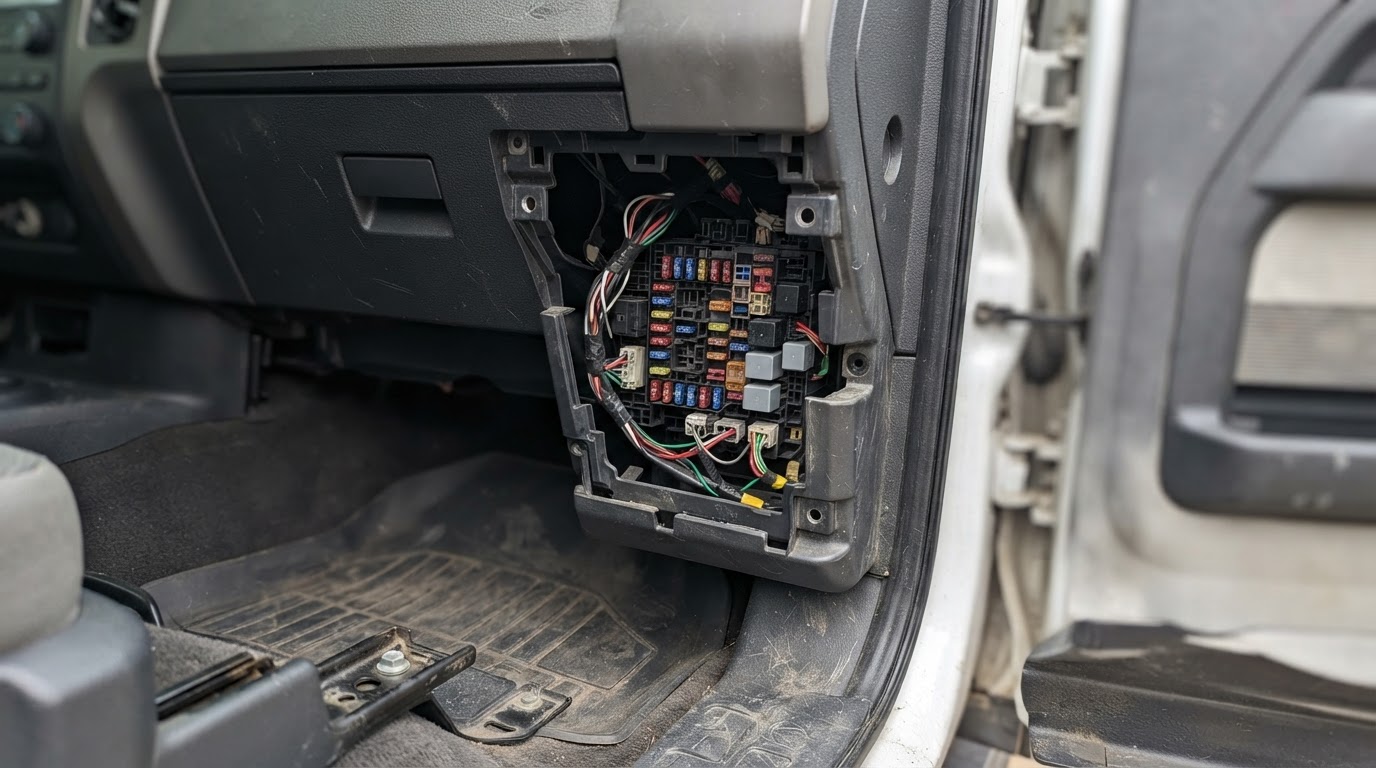
Your 2011 F-150 has two fuse boxes. The Smart Junction Box (cab panel) sits behind the passenger side kick panel, right of the steering wheel. The power distribution box (battery junction box) is in the engine compartment, center, above the radiator. The cigar lighter is fuse 22, rated 20A, in the engine bay box, not the cab panel.
Where are the fuse boxes on a 2011 F-150?
Recommended Best Deal Products


Both boxes carry real fuses on this truck, not just relays.

Prime for Young Adults — 6 Months Free
Students and 18–24s get six months of Prime free, then half price.
Start 6 Months Free As an Amazon Associate I earn from qualifying purchases.Smart Junction Box (passenger compartment panel). Behind the passenger side kick panel, right of the steering wheel, behind a removable cover. This holds fuses 1 to 48 plus one relay position.
Power distribution box. Engine compartment, center, above the radiator, sometimes called the Battery Junction Box. It carries 85 numbered positions split between mini fuses, cartridge (FMX/JCASE) fuses, and dedicated relays, plus an auxiliary relay box on SVT Raptor trucks near the windshield.
If your truck is a 2009 or 2010 model instead, do not use this chart. Ford renumbered the entire Smart Junction Box for the 2011 model year inside the same generation. Fuse 22 in a 2009 or 2010 truck is park and side marker lamps at 15A. In a 2011 truck fuse 22 is the horn at 20A. See the full comparison below.
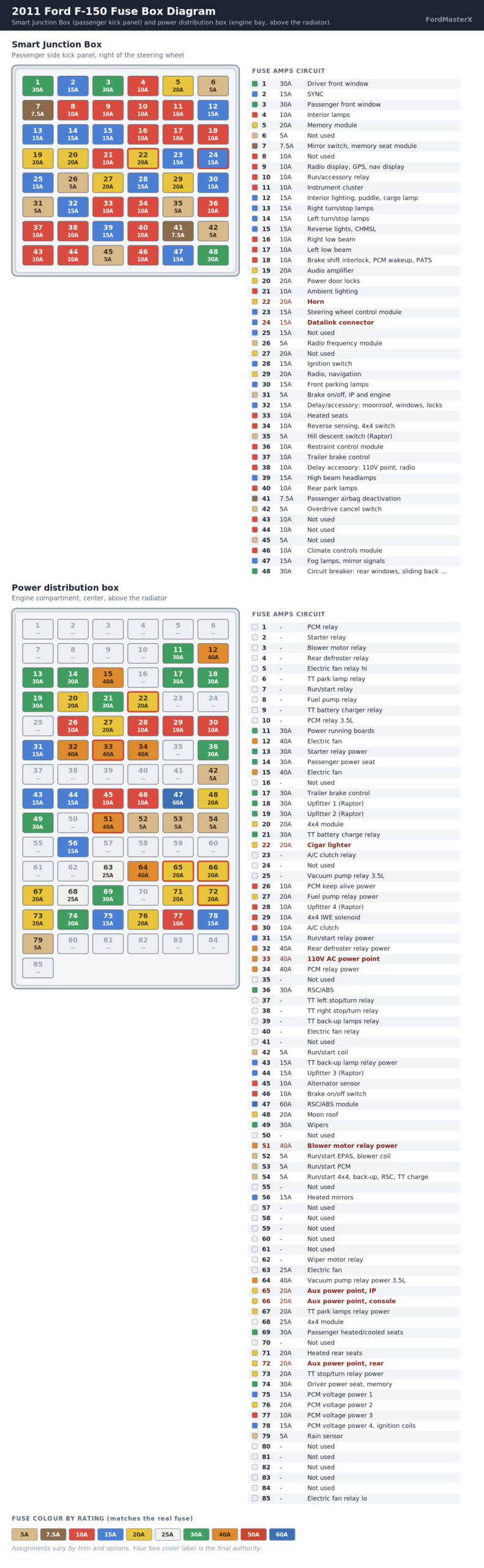
2011 F-150 Smart Junction Box fuse chart
Passenger side kick panel. All mini fuses.
| Fuse | Amps | Circuit protected |
|---|---|---|
| 1 | 30A | Driver side front window |
| 2 | 15A | SYNC |
| 3 | 30A | Passenger side front window |
| 4 | 10A | Interior lamps |
| 5 | 20A | Memory module |
| 6 | 5A | Not used (spare) |
| 7 | 7.5A | Power mirror switch, memory seat module |
| 8 | 10A | Not used (spare) |
| 9 | 10A | Radio display, GPS module, navigation display |
| 10 | 10A | Run/accessory relay |
| 11 | 10A | Instrument cluster |
| 12 | 15A | Interior lighting, puddle lamps, backlighting, cargo lamp |
| 13 | 15A | Right turn signals, stop lamps |
| 14 | 15A | Left turn signals, stop lamps |
| 15 | 15A | Reverse lights, high mounted stop lamp |
| 16 | 10A | Right low beam headlamp |
| 17 | 10A | Left low beam headlamp |
| 18 | 10A | Brake shift interlock, keypad illumination, PCM wakeup, PATS |
| 19 | 20A | Audio amplifier |
| 20 | 20A | Power door locks |
| 21 | 10A | Ambient lighting |
| 22 | 20A | Horn |
| 23 | 15A | Steering wheel control module |
| 24 | 15A | Datalink connector, steering wheel control module |
| 25 | 15A | Not used (spare) |
| 26 | 5A | Radio frequency module |
| 27 | 20A | Not used (spare) |
| 28 | 15A | Ignition switch |
| 29 | 20A | Radio, navigation |
| 30 | 15A | Front parking lamps |
| 31 | 5A | Brake on/off, instrument panel and engine |
| 32 | 15A | Delay/accessory: moon roof, power windows, locks, auto dimming mirror, compass |
| 33 | 10A | Heated seats |
| 34 | 10A | Reverse sensing system, 4×4 switch, rear video, off road indicator (SVT Raptor) |
| 35 | 5A | Hill descent switch (SVT Raptor) |
| 36 | 10A | Restraint control module, occupant classification system module |
| 37 | 10A | Trailer brake control |
| 38 | 10A | Delayed accessory: 110V power point, radio (AM/FM) |
| 39 | 15A | High beam headlamps |
| 40 | 10A | Rear park lamps |
| 41 | 7.5A | Passenger airbag deactivation indicator, upfitter switch (SVT Raptor) |
| 42 | 5A | Overdrive cancel switch |
| 43 | 10A | Not used (spare) |
| 44 | 10A | Not used (spare) |
| 45 | 5A | Not used (spare) |
| 46 | 10A | Climate controls module |
| 47 | 15A | Fog lamps, exterior mirror turn signals |
| 48 | 30A Circuit Breaker | Power rear windows, power sliding back window |
Relay in this panel: position 49, delayed accessory relay.
Assignments vary with trim and options. Your truck may not use every position listed.

2011 F-150 power distribution box chart
Recommended Best Deal Products


Engine compartment, center, above the radiator. Full fuse and relay assignment.
| Position | Amps | Circuit protected |
|---|---|---|
| 1 | Relay | PCM relay (3.7L, 5.0L, 6.2L engines) |
| 2 | Relay | Starter relay |
| 3 | Relay | Blower motor relay |
| 4 | Relay | Rear window defroster relay |
| 5 | Relay | Electric fan relay (high speed) |
| 6 | Relay | Trailer tow park lamp relay |
| 7 | Relay | Run/start relay |
| 8 | Relay | Fuel pump relay |
| 9 | Relay | Trailer tow battery charger relay |
| 10 | Relay | PCM relay (3.5L engine) |
| 11 | 30A | Power running board motors |
| 12 | 40A / 50A | Electric fan (50A on 6.2L with max trailer tow, SVT Raptor) |
| 13 | 30A | Starter relay power |
| 14 | 30A | Passenger power seat |
| 15 | 40A / 50A | Electric fan (50A on 6.2L with max trailer tow, SVT Raptor) |
| 16 | – | Not used |
| 17 | 30A | Trailer brake control |
| 18 | 30A | Upfitter switch 1 (SVT Raptor) |
| 19 | 30A | Upfitter switch 2 (SVT Raptor) |
| 20 | 20A | 4×4 module, electronic shift |
| 21 | 30A | Trailer tow battery charge relay power |
| 22 | 20A | Cigar lighter |
| 23 | Relay | A/C clutch relay |
| 24 | – | Not used |
| 25 | Relay | Vacuum pump relay (3.5L engine) |
| 26 | 10A | PCM keep alive power, PCM relay coil, canister vent solenoid (3.7L, 5.0L, 6.2L) |
| 27 | 20A | Fuel pump relay power |
| 28 | 10A | Upfitter switch 4 (SVT Raptor) |
| 29 | 10A | 4×4 IWE solenoid |
| 30 | 10A | A/C clutch |
| 31 | 15A | Run/start relay power |
| 32 | 40A | Rear window defroster relay power |
| 33 | 40A | 110V AC power point |
| 34 | 40A / 50A | PCM relay power (50A on 3.5L engine) |
| 35 | – | Not used |
| 36 | 30A | Roll stability control / anti-lock brake system |
| 37 | Relay | Trailer tow left stop/turn relay |
| 38 | Relay | Trailer tow right stop/turn relay |
| 39 | Relay | Trailer tow back-up lamps relay |
| 40 | Relay | Electric fan relay |
| 41 | – | Not used |
| 42 | 5A | Run/start coil |
| 43 | 15A | Trailer tow back-up lamp relay power |
| 44 | 15A | Upfitter switch 3 (SVT Raptor) |
| 45 | 10A | Alternator sensor, non-6.2L engines |
| 46 | 10A | Brake on/off (BOO) switch |
| 47 | 60A | Roll stability control / anti-lock brake system module |
| 48 | 20A | Moon roof |
| 49 | 30A | Wipers |
| 50 | – | Not used |
| 51 | 40A | Blower motor relay power |
| 52 | 5A | Run/start: electronic power assist steering, blower relay coil |
| 53 | 5A | Run/start: PCM |
| 54 | 5A | Run/start: 4×4 module, back-up lamps, RSC/ABS, trailer tow battery charge relay coil, rear window defroster relay coil |
| 55 | – | Not used |
| 56 | 15A | Heated mirrors |
| 57 | – | Not used |
| 58 | – | Not used |
| 59 | – | Not used |
| 60 | – | Not used |
| 61 | – | Not used |
| 62 | Relay | Wiper motor relay |
| 63 | 25A | Electric fan |
| 64 | 40A | Vacuum pump relay power (3.5L engine) |
| 65 | 20A | Auxiliary power point, instrument panel |
| 66 | 20A | Auxiliary power point, inside center console |
| 67 | 20A | Trailer tow park lamps relay power |
| 68 | 25A | 4×4 module |
| 69 | 30A | Passenger heated/cooled seats |
| 70 | – | Not used |
| 71 | 20A | Heated rear seats |
| 72 | 20A | Auxiliary power point, rear |
| 73 | 20A | Trailer tow stop/turn lamps relay power |
| 74 | 30A | Driver power seat, memory module |
| 75 | 15A / 25A | PCM voltage power 1 (25A on 3.5L engine) |
| 76 | 20A | PCM voltage power 2: general powertrain, MAF/IAT sensor (3.7L, 5.0L, 6.2L) or canister vent solenoid (3.5L) |
| 77 | 10A | PCM voltage power 3: emission related components, electric fan relay coil |
| 78 | 15A / 20A | PCM voltage power 4, ignition coils (20A on 6.2L engine) |
| 79 | 5A | Rain sensor |
| 80 | – | Not used |
| 81 | – | Not used |
| 82 | – | Not used |
| 83 | – | Not used |
| 84 | – | Not used |
| 85 | Relay | Electric fan relay, low speed |
Auxiliary relay box, SVT Raptor only, left rear corner of the engine compartment: position 1 upfitter switch 1, position 2 upfitter switch 2, position 3 upfitter switch 3, position 4 upfitter switch 4, position 5 not used, position 6 not used.
What changes between a 2010 and 2011 F-150 (most sites miss this)
The 2009 to 2014 F-150 is one truck generation, so most fuse sites publish a single combined chart for all six model years. That merge hides a full renumbering.
Ford kept the 2009 and 2010 Smart Junction Box layout close to identical, then rebuilt it for 2011 and carried that new layout through 2014 unchanged. Position numbers, fuse counts and even the circuit groupings moved. Here is what fuse 22 alone does across the range:

Audible — Listen Free for 30 Days
One free credit a month and thousands of titles included.
Listen Free for 30 Days As an Amazon Associate I earn from qualifying purchases.| Model years | Fuse 22 location | Fuse 22 circuit | Amps |
|---|---|---|---|
| 2009 to 2010 | Smart Junction Box (cab) | Park lamps, side marker lamps | 15A |
| 2011 to 2014 | Smart Junction Box (cab) | Horn | 20A |
| 2009 to 2014 | Power distribution box (engine bay) | Cigar lighter | 20A |
Fuse 22 exists in both boxes on every model year in this generation, doing two unrelated jobs at once. Search “fuse 22” and you could be looking for either one. This is why the box matters as much as the number: always say cab panel or engine bay, never just the position.
I cross-checked this against fuse-box.info’s year-split tables (2009 through 2014 shown separately), StartMyCar’s 2011-specific page, and Ricks Free Auto Repair Advice’s 2011-specific fuse index. All three agree on every 2011 value used in this article. Auto Genius publishes a single merged 2009-2014 table and its own formatting drops fuse 22 out of clean sequence, which is exactly the kind of error a combined chart produces. Trust a year-specific source, or the label printed inside your own box cover.
Which fuse is the cigar lighter and 12V power point?
Recommended Best Deal Products


On a 2011 F-150 the cigar lighter is fuse 22, rated 20A, in the power distribution box under the hood. It is not in the cab panel.
The other power points live in the same engine bay box: fuse 65, 20A for the instrument panel point, fuse 66, 20A for the center console point, fuse 72, 20A for the rear point, and fuse 33, 40A for the factory 110V household style outlet.
Ford does not publish a single combined “power point” fuse for this truck. Each socket location has its own dedicated position, so a dead rear outlet does not mean the front cigar lighter is affected, and the reverse is also true.
Which fuse controls the radio?
Two fuses cover the audio system on this truck, both in the Smart Junction Box.
- Fuse 29, 20A: radio, navigation. Main feed. Blow this and the head unit goes dark.
- Fuse 9, 10A: radio display, GPS module, navigation display. Screen and GPS specific. A dead screen with the radio otherwise powering on points here first.
Fuse 19, 20A, feeds the audio amplifier separately. Sound cutting out while the display stays lit points at fuse 19, not 29.
Which fuse controls the A/C, blower and heated seats?
Comfort circuits split across both boxes, so the symptom tells you which box to open.
| Symptom | Check this | Box |
|---|---|---|
| Fan blows but never gets cold | Fuse 30, 10A, A/C clutch, plus relay 23 | Engine bay |
| No air at any speed | Fuse 51, 40A, blower motor relay power, plus relay 3 | Engine bay |
| Climate controls dead | Fuse 46, 10A, climate controls module | Cab panel |
| Front heated seats not working | Fuse 33, 10A (cab panel switch circuit), fuse 69, 30A (engine bay power) | Both |
| Rear heated seats not working | Fuse 71, 20A | Engine bay |
| Rear window defroster dead | Fuse 32, 40A, plus relay 4 | Engine bay |
The blower is the one people get wrong most. It is a 40A cartridge fuse in the engine bay, not a mini fuse in the cab. If the fan works on high but nothing else, the fuse is fine and the blower motor resistor is the more likely part.
Heated seats are the other trap. The switch circuit lives in the cab panel, but the actual seat element power comes from the engine bay box. A blown fuse in either location kills the function, so check both before replacing the seat module.
Audible Premium Plus — Annual Membership
12 audiobook credits up front, plus the full Audible catalogue.
See Annual Plans As an Amazon Associate I earn from qualifying purchases.Which fuse stops the truck from starting?
Several positions can leave you turning the key with nothing happening.
- Relay 2, engine bay. Starter relay. No click at all points here first.
- Fuse 13, 30A, engine bay. Starter relay power.
- Relay 7 and fuse 31, 15A, engine bay. Run/start relay and its power feed.
- Relay 8 and fuse 27, 20A, engine bay. Fuel pump relay and its power feed. Engine cranks but will not fire.
- Fuse 18, 10A, cab panel. Brake shift interlock, PCM wakeup, PATS. If the anti-theft light behaves oddly alongside a no-start, check this circuit before assuming a key or module fault.
No crank at all points at the starter relay chain (2, 13, 7, 31). Cranks but will not fire points at fuel delivery (8, 27) or ignition coil power (fuse 78).
How do you tell if a fuse is actually blown?
Pull it and look through the plastic window at the metal strip. An intact fuse has an unbroken element. A blown one shows a visible gap, or the window is smoked brown or black.
Three things catch people out on this truck:
- A hairline break looks intact. Hold the fuse to a light. If you are not certain, test continuity with a multimeter set to ohms. Near zero means good.
- Never guess the replacement rating. Match the number printed on the fuse and cross-check the box cover label. Fitting a 40A fuse where a 20A belongs lets the wiring become the fuse.
- The engine bay box mixes fuse types. Positions in the 1 to 30 range are mostly FMX/JCASE cartridge fuses that need a puller, while higher positions run mini fuses. Pliers crack the cartridge housing. A mixed ATO/ATC fuse assortment kit costs less than one dealer fuse and usually includes the puller.
Why does the same fuse keep blowing?
A fuse that blows once is usually a surge. One that blows again within days means the fault is upstream, and replacing it repeatedly treats the alarm instead of the fire.
Work through it in this order:
- Unplug whatever you added most recently. Trailer wiring, a dash cam, an aftermarket stereo, a charger left in a power point. Aftermarket accessories cause most repeat blows on these trucks.
- Check where the harness moves. Door jambs, the tailgate run, and anything near the steering column flex thousands of times and chafe.
- Look for water. A wet connector shorts intermittently, which is why the fuse survives a dry week and dies in the rain.
Trailer tow circuits on this truck have their own habit worth knowing. Fuses 17, 21, 43, 67 and 73 all feed trailer relays, and a corroded seven-pin connector is the usual culprit behind repeat blows there.
If a fuse blows the instant you seat it, there is a hard short. Stop replacing fuses and trace the circuit. A Ford-capable scan tool reads live data instead of guessing, and if the OBD-II port itself will not link, check fuse 24 in the cab panel first, since it shares the circuit with the datalink connector.
2011 F-150 fuse quick reference
The positions owners look up most, in one place. C means the Smart Junction Box (cab), E means the power distribution box (engine bay).
| What you want | Fuse | Amps | Box |
|---|---|---|---|
| Cigar lighter, front 12V outlet | 22 | 20A | E |
| Instrument panel power point | 65 | 20A | E |
| Center console power point | 66 | 20A | E |
| Rear power point | 72 | 20A | E |
| 110V household style outlet | 33 | 40A | E |
| Radio, navigation | 29 | 20A | C |
| Horn | 22 | 20A | C |
| Fuel pump relay power | 27 | 20A | E |
| Starter relay power | 13 | 30A | E |
| High beam headlamps | 39 | 15A | C |
| Low beam, right | 16 | 10A | C |
| Low beam, left | 17 | 10A | C |
| Fog lamps | 47 | 15A | C |
| Wipers | 49 | 30A | E |
| Blower motor | 51 | 40A | E |
| A/C clutch | 30 | 10A | E |
| Front heated seats | 33 / 69 | 10A / 30A | C / E |
| Rear heated seats | 71 | 20A | E |
| Power windows, front | 1 / 3 | 30A / 30A | C |
| Power windows, rear and moon roof | 48 | Breaker | C |
| Power door locks | 20 | 20A | C |
| Driver power seat, memory | 74 | 30A | E |
| Trailer brake control | 37 / 17 | 10A / 30A | C / E |
| Datalink connector (OBD-II) | 24 | 15A | C |
Our 2006 Ford F-150 fuse box diagram covers the previous generation truck, where the cigar lighter fuse and box layout are both different again. If your truck is a 2009 or 2010 model, use the boundary table above rather than this chart, since the Smart Junction Box numbering does not match.


One Comment