
2000 Ford Ranger Oil Type & Capacity: Complete Guide

The 2000 Ford Ranger requires SAE 5W-30 motor oil across all engine configurations to ensure proper lubrication and protection. Depending on your engine size, the capacity ranges from 4.5 to 5.0 quarts, making it essential to identify whether you have the 2.5L, 3.0L, or 4.0L variant.
🎯 Key Takeaways
- Use SAE 5W-30 oil for the 2.5L, 3.0L, and 4.0L engines.
- The 4.0L V6 engine requires exactly 5.0 quarts of oil.
- The 2.5L I4 and 3.0L V6 engines require 4.5 quarts.
- Motorcraft FL-1A or FL-400S are the recommended OEM oil filters.
- High-mileage synthetic blends are ideal for Rangers with over 75,000 miles.
To keep your 2000 Ford Ranger running smoothly, you need to use 5W-30 motor oil for all three available engine sizes. While your engine capacity ranges from 4.5 to 5.0 quarts depending on the configuration, using the correct viscosity ensures your internal components stay lubricated during cold starts and high-heat hauling. Using the wrong weight or underfilling the crankcase can lead to premature bearing wear and consistent oil pressure drops.
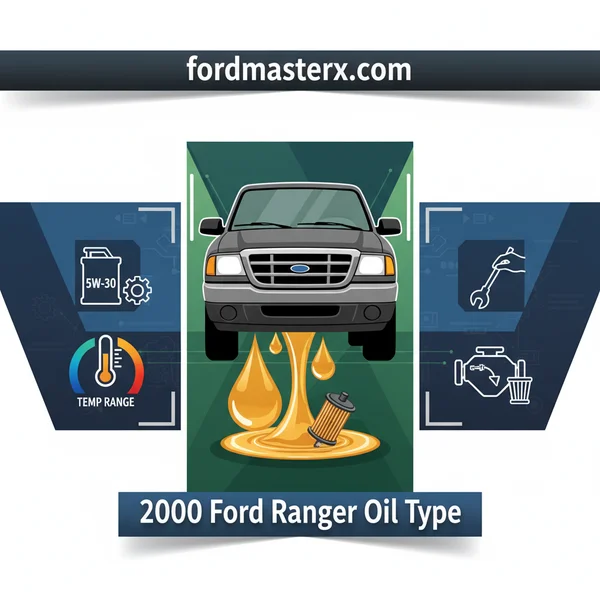
Checking your specific engine size is the first step because the 2.5L and 3.0L models share different requirements than the 4.0L V6. This guide provides the exact specs you need for your oil change today, including the filter part numbers and the torque settings for your drain plug. By following these manufacturer specifications, you maintain the seals and longevity of your Ranger’s high-mileage powerplant.
Engine-Specific Oil Viscosity and Capacity Charts
The 2000 Ford Ranger was manufactured with three distinct engine options: the 2.5L Inline-4, the 3.0L Vulcan V6, and the 4.0L Cologne V6. While Ford originally recommended 5W-30 for these engines, they later released a Technical Service Bulletin (TSB) suggesting that 5W-20 could be used in the 2.5L and 3.0L engines for slightly better fuel economy. However, most mechanics and long-term owners prefer 5W-30 for these older engines to provide better protection for aging internal components.

Oil Capacity and Type Reference Table
Use the following table to identify exactly how much oil you need to purchase for your specific engine. Note that these capacities include the amount required to fill a new oil filter during the change.
| Engine Size | Oil Viscosity | Capacity (with Filter) |
|---|---|---|
| 2.5L 4-Cylinder | 5W-30 (Standard) | 4.5 Quarts |
| 3.0L V6 | 5W-30 (Standard) | 4.5 Quarts |
| 4.0L V6 | 5W-30 (Standard) | 5.0 Quarts |
Understanding the 2.5L and 3.0L Requirements
If you are driving the 2.5L I4 or the 3.0L V6, your truck requires 4.5 quarts of oil. It is common for owners to buy a 5-quart jug and have half a quart left over. Do not overfill the engine by dumping the entire 5 quarts in, as this can lead to “windage,” where the crankshaft whips air into the oil, causing foam that doesn’t lubricate as effectively. If you live in an extremely cold climate where temperatures regularly drop below zero, you can safely stick with a full synthetic 5W-30 to ensure the oil flows quickly to the top end of the engine on frosty mornings.
The 4.0L V6 High-Capacity Needs
The 4.0L V6 engine is a larger casting and requires exactly 5.0 quarts of oil. Because this engine is known for timing chain tensioner issues in later high-mileage stages, maintaining a full oil level is critical. The tensioners rely on oil pressure to function. If you run the 4.0L even half a quart low, you may notice increased engine noise or “chatter” during idle. Always verify the level on the dipstick after running the engine for two minutes following your oil change.
How to Change Your 2000 Ford Ranger Oil Like a Pro: A Practical Walkthrough
Performing an oil change on your 2000 Ford Ranger is one of the most effective ways to ensure your engine lasts for hundreds of thousands of miles. Whether you have the fuel-efficient 2.5L inline-4, the reliable 3.0L Vulcan V6, or the powerful 4.0L V6, understanding the specific oil requirements and the mechanical process is vital. This guide covers the exact specifications for your model year, the tools you will need to get the job done efficiently, and the professional techniques used to prevent leaks and engine wear. By following these steps, you will save money on shop labor while gaining the peace of mind that comes with knowing your truck is maintained to the highest standard.
Step 1: Identify Your Engine and Gather Specifications
What you need: Your vehicle owner’s manual, 5 quarts of 5W-30 motor oil, and a compatible oil filter (typically Motorcraft FL-400S for the 2.5L and 3.0L, or FL-820S for the 4.0L).
Instructions: Before you turn a single wrench, you must confirm your engine type to ensure you have the correct oil capacity and filter. The 2000 Ford Ranger was manufactured with three primary engines. The 2.5L 4-cylinder and the 3.0L V6 both generally require about 4.5 quarts of oil, while the 4.0L V6 requires a full 5 quarts. Ford recommends 5W-30 weight oil for the 2000 model year to provide the best protection across various temperature ranges. Ensure the oil you purchase carries the API (American Petroleum Institute) “Starburst” certification mark, which guarantees it meets modern engine protection standards. Having all supplies on hand prevents the frustration of being stranded mid-project with an empty engine block.
Pro Tip: While Ford back-specified 5W-20 for many older engines later in their life, sticking with a high-quality 5W-30 synthetic or synthetic blend is often preferred for high-mileage Rangers to maintain better oil pressure and seal integrity.
Step 2: Prepare the Vehicle and Warm the Engine
What you need: Safety glasses, nitrile gloves, wheel chocks, and a floor jack with jack stands (optional, as many Rangers have enough ground clearance).
Instructions: Start your Ranger and let it idle for about 5 to 10 minutes. Cold oil is thick and viscous, meaning it won’t drain completely or carry away as many contaminants. Warming it up thins the fluid, allowing it to flow out of the pan much more effectively. Once warm, park the truck on a level surface, engage the parking brake, and place chocks behind the rear wheels. If you need more room to work, jack up the front of the truck and secure it on jack stands. Never work under a vehicle supported only by a hydraulic jack. Open the hood and remove the oil fill cap; this breaks the vacuum and allows the oil to drain faster, similar to how a vent works on a gas can.
Pro Tip: Be extremely careful when touching the engine or oil after warming it up. The exhaust manifold and the oil itself can reach temperatures high enough to cause second-degree burns.
Step 3: Drain the Old Oil
What you need: A 13mm or 15mm wrench (depending on your specific drain plug), a drain pan with at least a 6-quart capacity, and shop rags.
Instructions: Slide under the vehicle and locate the oil pan at the bottom of the engine. The drain plug is a single bolt located at the lowest point of the pan. Position your drain pan slightly offset from the plug; when the plug is first removed, the oil will shoot out in an arc before slowing to a vertical drip. Use your wrench to loosen the bolt counter-clockwise. Once it is loose enough to turn by hand, use your fingers to unscrew it the rest of the way while applying inward pressure toward the pan. This prevents oil from leaking out until the very last thread is released. Quickly pull the plug away and let the oil drain until it slows to a very thin, intermittent drip.
Pro Tip: Inspect the drain plug’s gasket or “crush washer.” If it looks flattened, cracked, or distorted, replace it with a new one to prevent slow drips after you finish the job.
Step 4: Remove the Old Oil Filter
What you need: An oil filter wrench and an extra container or a well-positioned drain pan.
Instructions: Locating the filter can be the trickiest part of the 2000 Ranger. On the 2.5L and 3.0L, it is usually accessible from the passenger side, while the 4.0L may require reaching through the driver-side wheel well. Move your drain pan under the filter area. Use the filter wrench to loosen the canister counter-clockwise. Once it moves freely, unscrew it by hand. Be prepared for oil to run down the side of the engine block and the filter itself. Once removed, check the “mating surface” on the engine. Ensure the old rubber gasket came off with the filter. If the old gasket is stuck to the engine, the new filter will not seal, leading to a “double gasket” failure that can blow out all your new oil in seconds.
Pro Tip: If the filter is stuck, do not use a screwdriver to puncture it. This creates a massive mess and can shear the filter metal. Use a “cup-style” wrench that fits the bottom of the filter for the best grip.
Step 5: Install the New Filter and Drain Plug
What you need: The new oil filter, a small amount of clean oil, and your drain plug.
Instructions: Clean the mounting surface on the engine block with a lint-free rag to remove any grit or old oil. Dip your finger into a bottle of clean oil and spread a thin film over the rubber gasket of the new filter. This ensures a proper seal and makes the filter easier to remove next time. Thread the new filter onto the engine by hand. Spin it until the gasket makes contact with the block, then tighten it exactly one-half to three-quarters of a turn further. Do not use a wrench to tighten it! Next, wipe the drain plug and the area around the drain hole. Reinstall the drain plug by hand to avoid cross-threading, then tighten it with your wrench until it is snug (approximately 15-20 lb-ft of torque).
Pro Tip: For the 4.0L engine, some enthusiasts prefer to “pre-fill” the oil filter about halfway with new oil before installing it. This reduces the “dry start” time when you first crank the engine, though it can be messy depending on the filter’s mounting angle.
Step 6: Add New Oil and Check the Level
What you need: A clean funnel and your 5 quarts of 5W-30 oil.
Instructions: Insert the funnel into the oil fill neck on top of the valve cover. Pour in the manufacturer-recommended amount of oil. If you have the 2.5L or 3.0L, start with 4 quarts. If you have the 4.0L, start with 4.5 quarts. After pouring, replace the oil cap and start the engine. Let it run for about 60 seconds; this allows the new oil to circulate through the oil galleys and fill the new oil filter. Turn the engine off and let it sit for 5 minutes to allow the oil to settle back into the pan. Pull the dipstick, wipe it clean, reinsert it fully, and pull it out again. The oil level should be within the “crosshatch” or between the two dots on the stick. Add the remaining half-quart if necessary to bring it to the “Full” mark.
Pro Tip: Never overfill the engine. If the oil level is significantly above the “Full” mark, it can be whipped into a froth by the crankshaft, which prevents the oil pump from properly lubricating the engine.
Step 7: Final Inspection and Disposal
What you need: A flashlight and a sealed container for the used oil.
Instructions: While the engine is running during your level check, use a flashlight to look under the truck. Check the drain plug and the base of the oil filter for any signs of seeping or dripping. If you see a leak, shut off the engine immediately and check the tightness of the component. Once confirmed leak-free, lower the truck off the jack stands. Use your funnel to pour the old, used oil from your drain pan into the empty oil bottles or a dedicated waste container. Clean up any spills on your driveway using kitty litter or a specialized oil absorbent. Finally, take your used oil and old filter to a local auto parts store or recycling center; most will take it for free, ensuring the hazardous waste is handled responsibly.
Pro Tip: Keep a small logbook in your glovebox. Record the date, the mileage, and the type of oil used. This documentation is invaluable for resale value and helps you stay on top of your 3,000 to 5,000-mile service intervals.
✅ Final Checklist
- Verify that the old oil filter gasket was removed from the engine block.
- Ensure the drain plug is tightened and the new crush washer is seated.
- Check that the oil level is exactly at the “Full” mark on the dipstick after running the engine.
- Confirm the oil fill cap and dipstick are securely reinstalled.
- Check the ground under the vehicle for any active leaks after a short test drive.
Important Notes:
- Safety: Always use jack stands and never work under a hot engine without eye protection. Oil contains chemicals that can irritate skin; use gloves.
- Professional Help: If you notice heavy metal shavings in the old oil or if the drain plug is stripped and spinning in place, consult a professional mechanic immediately.
- Estimated Time: 30 to 45 minutes.
- Estimated Cost: $30 – $55 depending on whether you choose conventional or full synthetic oil.
Oil Filter Compatibility and Drain Plug Specifications
Choosing the right filter is just as important as the oil itself. For the 2000 Ford Ranger, the filter sizing depends on which engine family your truck belongs to. Ford recommends Motorcraft filters because they feature a silicone anti-drainback valve. This valve prevents oil from draining out of the filter when the engine is off, ensuring that your engine has immediate oil pressure the next time you turn the key.
Motorcraft Filter Guide by Engine
Match your engine size to the correct filter part number below. While you can use aftermarket brands like Wix or Mobil 1, these are the original equipment manufacturer (OEM) equivalents:
- 2.5L I4 Engine: Motorcraft FL-400S (or equivalent)
- 3.0L V6 Engine: Motorcraft FL-400S (or equivalent) 4.0L V6 Engine: Motorcraft FL-820S (or equivalent)
The FL-820S used on the 4.0L is shorter and wider than the FL-400S. These filters are not interchangeable because the threading and gasket diameters differ. Always double-check the box before leaving the auto parts store to ensure you have the right fit for your specific V6 or I4 block.
Drain Plug Torque and Tool Sizes
To avoid stripping the threads on your oil pan, you must use the correct tool and tighten the drain plug to the proper specification. Over-tightening is a common mistake that leads to expensive oil pan replacements on older Rangers. Use the following specs for a leak-free seal:
- Drain Plug Socket Size: 13mm or 15mm (varies by aftermarket plug)
- Drain Plug Torque Spec: 15–25 lb-ft (20–34 Nm)
- Drain Plug Thread Size: M14 x 1.5
When reinstalling the plug, always start it by hand. You should be able to turn it several times before needing a wrench. If you feel resistance immediately, stop and back it out to avoid cross-threading. Once it is finger-tight, use your torque wrench to snug it down to approximately 20 lb-ft. If you don’t have a torque wrench, tighten it until it is snug, then add about a 1/4 turn more. Always inspect the rubber or metal crush washer on the plug; if it looks flattened or cracked, replace the washer to prevent slow drips.
Conventional vs. High-Mileage Synthetic Oil Benefits
By now, most 2000 Ford Rangers on the road have surpassed the 150,000-mile mark. At this stage in the truck’s life, the choice between standard conventional oil and a high-mileage synthetic blend is more than just a pricing decision; it is about preserving the integrity of your engine seals and internal components.
The Case for High-Mileage Synthetic Blends
If your Ranger is starting to show its age through small oil spots on the driveway or a faint smell of burning oil after a long drive, a high-mileage formulation is your best friend. These oils contain specific additives called “seal conditioners” that help swell and soften old rubber gaskets. This can significantly reduce or even stop minor leaks around the valve cover or oil pan.
- Better Sludge Control: Synthetic blends help dissolve the carbon deposits that build up in older 3.0L and 4.0L engines over decades.
- Enhanced Wear Protection: High-mileage oils often have higher levels of anti-wear additives like zinc (ZDDP) to protect metal-to-metal contact points.
- Burn-off Resistance: Synthetic molecules are more uniform, meaning they don’t evaporate as easily under high heat, which reduces the need for “top-offs” between changes.
When Conventional Oil Still Makes Sense
There are rare cases where sticking to basic conventional oil is perfectly fine. If you own a “garage queen” Ranger with low original miles and a bone-dry engine block, the extra cost of high-mileage additives might not be necessary. However, for the average daily driver, the marginal price increase for a synthetic blend pays for itself by extending the life of the engine’s internal hardware.
Performance Factors and Oil Pressure in Older Rangers
As the 2000 Ford Ranger ages, you might notice the engine behaving differently depending on the outside temperature or how hard you are working the truck. Understanding how oil affects performance is key to keeping these reliable “Vulcan” and “Cologne” engines running for another decade.
Managing Oil Pressure Fluctuations
It is common for owners to see the oil pressure needle flicker or drop slightly when the engine is fully warmed up and idling at a red light. While this can be alarming, it is often a result of increased bearing clearances in high-mileage engines. Using a high-quality 5W-30 or 10W-30 oil with a premium filter can help maintain more consistent pressure.
- The “Dummy Gauge” Factor: Most 2000 Rangers use a pressure switch rather than a true sender. If the needle drops to zero, it usually means pressure has fallen below 6 PSI, which requires immediate attention.
- Filter Quality Matters: Always use a filter with a high-quality anti-drainback valve (like the Motorcraft FL-400S or FL-820S). This prevents “dry starts” where the engine knocks for a second or two before oil reaches the top of the motor.
Cold Starts and Valvetrain Noise
In colder climates, the “W” in 5W-30 is critical. A 2000 Ranger parked outside in sub-freezing temperatures needs oil that flows instantly to the overhead cams (on the 2.5L and 4.0L SOHC models). If you hear a “clattering” or “tapping” sound for the first few minutes of driving, your oil may be too thick for the current season. Switching back to the factory-recommended 5W-30 can often quiet these noisy hydraulic lifters and protect the valvetrain from premature wear during those crucial first few seconds of operation.
Conclusion: Keeping Your Ranger Road-Ready
Choosing the right oil for your 2000 Ford Ranger is one of the simplest yet most impactful ways to ensure your truck hits the 300,000-mile club. Whether you are running the fuel-sipping 2.5L four-cylinder or the torque-heavy 4.0L V6, sticking to the 5-quart capacity (or 4.5 for the 2.5L) and using a high-quality 5W-30 or 10W-30 oil will keep your engine protected in all conditions.
Your next steps are simple: Check your dipstick today to monitor for any consumption and consider upgrading to a high-mileage synthetic blend during your next service interval. These small investments in quality lubrication will pay off in a smoother idle, better protection, and a truck that stays on the road for years to come. Happy driving!
❓ Frequently Asked Questions
Does the 2000 Ford Ranger 2.5L engine require different oil?
No, the 2.5L I4 engine uses the same SAE 5W-30 oil as the V6 models, with a total capacity of 4.5 quarts including the filter change.
Should I use synthetic oil in a 2000 Ford Ranger with high mileage?
Yes, a high-mileage synthetic or synthetic blend is highly recommended for vehicles over 20 years old to protect seals and prevent leaks.
Is there a benefit to using 5W-20 in the 2000 Ranger?
Although Ford back-specified 5W-20 for many models in later years, the 2000 Ranger was designed for 5W-30, which provides better film strength for older engine tolerances.
What are the signs of using the wrong oil type in a Ford Ranger?
Common symptoms include increased engine noise (ticking), reduced fuel economy, and potential oil leaks if the viscosity is too thin for worn seals.
How often should I change the oil in my 2000 Ford Ranger?
Due to the age of the engine, it is best to perform an oil and filter change every 3,000 to 5,000 miles, even if using full synthetic oil.
What are the best oil filter brands for this truck?
Motorcraft is the OEM choice, but Wix, Purolator Boss, and Mobil 1 Extended Performance filters are excellent high-quality alternatives for the 2000 Ranger.